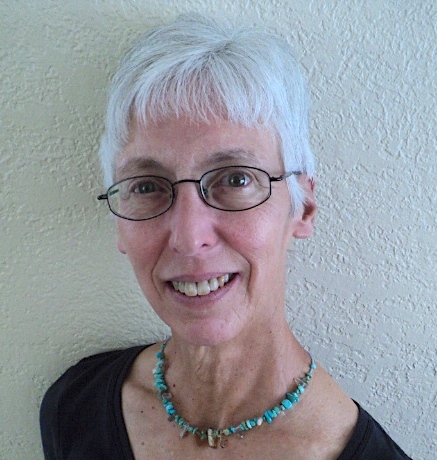
Guest Bloggers- Dr. Judy Melinek & T.J. Mitchell

The Working Stiffs: How We Get Our Ideas

by Dr. Judy Melinek and T.J. Mitchell

Judy: I do autopsies in a big city medical examiner morgue. The murder mystery ideas come strolling through the door most every day!

T.J.: Take the plot of First Cut, our debut novel. The seed for the story came from an actual homicide, where Judy got called out to the death scene. The decedent was a petty thief. He jacked a laptop off a man sitting in a café—and the robbery victim pulled out a gun. He shot the thief a bunch of times, in front of witnesses and under security cameras, took the computer out of his dead hands, and walked away.

Judy: I was there to answer questions from the homicide detectives about the gunshot wound trajectories, but all I kept thinking was, “what was so important on that laptop that someone would kill over it?” The book’s story took off from that mystery.

T.J.: You see a lot of overdoses, too. Those came in handy for First Cut.

Judy: Fatal drug overdoses are fascinating to me, because they can be any of several manners of death. When a poison is self-ingested, it could be a suicide or an accident. If it is administered by another person, it could be a homicide. It’s the same cause of death—a poisoning—but the actions people take behind that poisoning might be accidental, intentional, or nefarious. It’s my job to make that call. The police only get involved when we are certain the case is a homicide.

T.J: And even then you can’t always convince them. The tension between the determination of the medical examiner and the findings the police can make for some juicy conflict.

Judy: Just like the tension between the district attorney trying a case and the medical examiner who gets called as a witness. Trial lawyers have to build their cases based on what the witnesses are claiming, but if those witnesses are lying—or just mistaken—their testimony might not comport with the ME’s physical findings from the autopsy.

T.J.: So that’s how we work. Judy brings these stories home and we toss them around until we’ve come up with the case-based outlines for a murder plot. She gives me the story and I work to fashion it into the narrative structure of the American noir detective novel—our corner of the genre-fiction world. When I get stuck, we talk out additional scenarios from her long experience in forensic investigation, and the plot gains a new twist. She never lets me cut corners with the science, though!

Judy: It can be really satisfying—because, unlike in real life, we get to determine the outcome of the cases and the fates of the characters. We take poetic license in the narrative, but we always write our mysteries with scientific rigor, too. It’s a lot of fun!
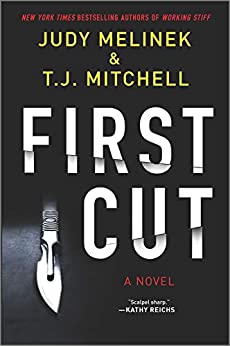
First Cut

A young rookie medical examiner. A suspicious case. An underworld plot only she saw coming.

From the New York Times bestselling authors of Working Stiff

For San Francisco’s newest medical examiner, Dr. Jessie Teska, it was supposed to be a fresh start. A new job in a new city. A way to escape her own dark past.

Instead she faces a chilling discovery when an opioid-overdose case contains hints of something more sinister. Jessie’s superiors urge her to close the case, but as more bodies land on her autopsy table, she uncovers a constellation of deaths that point to an elaborate plot involving drug dealers and Bitcoin brokers.

Drawing on her real-life experiences as a forensics expert, Judy Melinek teams up with husband T.J. Mitchell to deliver the most exhilarating mystery of the year. Autopsy means “see for yourself,” and Jessie Teska won’t stop until she has seen it all—even if it means that the next corpse on the table could be her own.

https://www.amazon.com/First-Cut-M-D-Judy-Melinek-ebook/dp/B07P1B4CJL
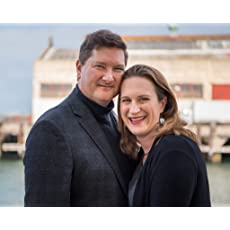
Bio: The Working Stiffs are the married writing team of forensic pathologist Dr. Judy Melinek and writer T.J. Mitchell. They are coauthors of the New York Times bestselling memoir Working Stiff: Two Years, 262 Bodies, and the Making of a Medical Examiner (Scribner, 2014), and the new novel First Cut, the debut in a forensic detective series from Hanover Square Press. Its sequel, Aftershock, is coming in February, 2021. You can follow the Working Stiffs on Twitter @drjudymelinek and @TJMitchellWS, and Facebook/DrWorkingStiff.
What to Write, What to Write, What to write? by Heather Haven

Heather cartoon-smallest copyThey say A Day Without Writing is Like a Day Without Sunshine. Unless ‘they’ don’t. Maybe nobody else says that but me. I know I’ve been paraphrasing something or other for so long, I can’t even remember what the original phrase is. A Day Without Wine is a Day Too Sober?
Hmmm. Maybe not.

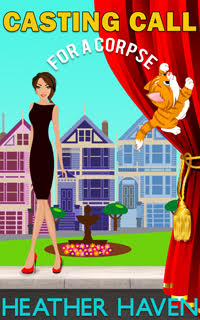
In any event, for the past few days, I have CCFAC-SMdone very little writing. July 1st saw the preorder status for Casting Call for a Corpse, which debuts August 1st, and I am at loose ends. I know I want to start another book as soon as possible, but which series do I choose?  I am at a loss as to what that book should be. I was thinking to start Spring Thaw, Book 2 of the Snow Lake Romantic Suspense Novels. But then, Percy Cole is calling me to write The Mother’s Day Murders, Book 4 of the Persephone Cole Vintage Mysteries.  Then, of course, I could write Book 3, Divorce Can Be Murder of the Love Can Be Murder Mystery Novellas. And let’s not forget….wait. I just forgot.

Oh, yes! I could start Book 8 of the Alvarez Family Murder Mysteries, titleless at the moment. But let’s face it, Book 7, Casting Call blah blah, hasn’t even gotten off the assembly line yet. What to write? What to do?

So here’s what I’ve done. Or am doing. I’m sending out a survey in my next newsletter asking my readers which series they like the best, from which series they’d like to have the next book. On a lot of levels, the question is presumptuous. I am assuming that these people will take the time to respond, care enough to respond, or even read my work in the first place. Then I add to the presumption by asking if they will be reading more of my work.

But what they hey. This is my 14th novel and sometimes I wish I had my nerve in my teeth. If you can’t throw out a little presumption at my age, when can you?

You know what this all stems from? Or rather, from which all this stems? Loose ends. This is the most useless time to be a writer that I know. That’s because, as I’ve stated, A Day Without Writing is Like a Day Without Sunshine.

Guest Author June Trop

ANCIENT FORENSIC SCIENCE

My mysteries are set in Roman-occupied Alexandria during the first century of the Common Era. Why then? Well, one reason is I thought my protagonist, Miriam bat Isaac, wouldn’t have to deal with forensic technology. Little did I know that, although the Romans didn’t have a formal body of forensic knowledge, they used some methods similar to what we have today. One example is bloodstain pattern analysis.

In The Deadliest Sport, Miriam examines the blood spatters in the room of a sleazy waterfront inn to solve a “locked-room mystery”, that is, a mystery about a crime, usually murder, that appears impossible to have been committed. The crime need not take place inside a locked room, as it does in The Deadliest Sport, but in any utterly inaccessible place.

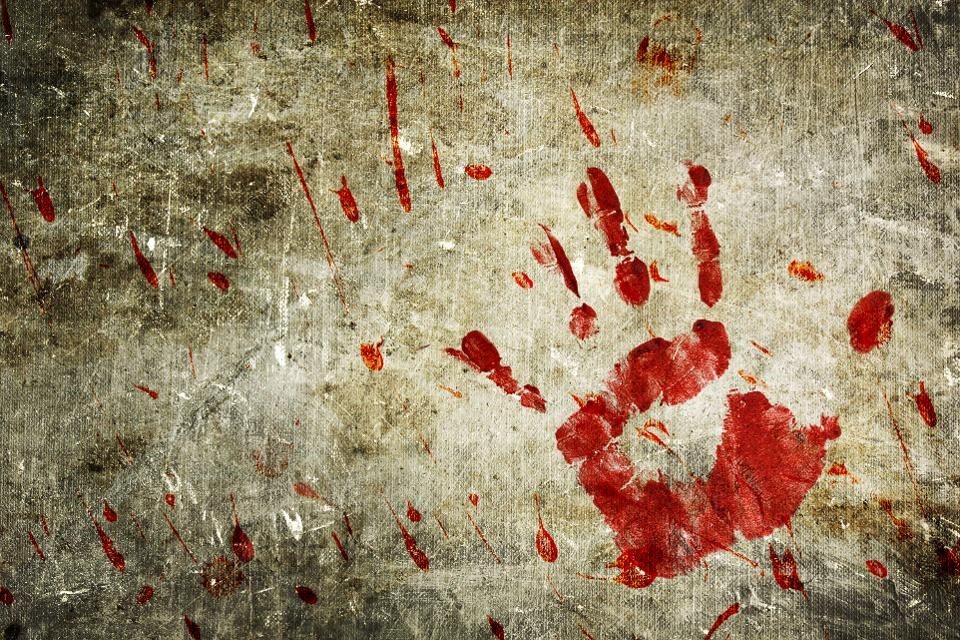
The most famous case of a Roman jurist analyzing a bloody handprint is titled “Paries Palmatus” or “The Wall of Handprints.” A blind son is accused of stabbing his father in his sleep to obtain his inheritance. Purportedly, the blind man took his sword from his room, walked across the house in the dead of night, and entered his father and stepmother’s bedroom. Then he stabbed his father once, killing him instantly without waking his stepmother, who found her husband dead in bed when she awoke. A trail of bloody handprints led from the parents’ room back to the blind son’s room, and his blood-covered sword was found as well.

The defense argued that the stepmother did it, upset because she would lose out on the father’s fortune to his blind son. So, she framed the blind man using his own father’s blood:

It was the stepmother, yes, the stepmother who set this up with her sure sight; it was she, with her right hand, who brought that poor blood there and made the imprint of [her] hand [on the wall] intermittently! The wall bears the imprints of one palm, has them at intervals, with a certain empty space in the middle, and everywhere the palm-print is intact; a blind man, on the other hand, would have dragged his hands [along the wall].

What other forensic techniques did the Romans use? Emperor Tiberius used footprints and drag marks to argue that his praetor, Silvanus, threw his wife out their bedroom window rather than, as the husband asserted, she chose to jump. Unfortunately for Silvanus, the marks of her struggle and his forcible ejection convinced the Senate of his guilt.

The point for me was that I learned every setting, especially a historical setting, is going to have its challenges, even its surprises. So, set your story in a time and place you’ll enjoy researching and then take your readers there. 

FOR THE DEADLIES SPORT by June Trop

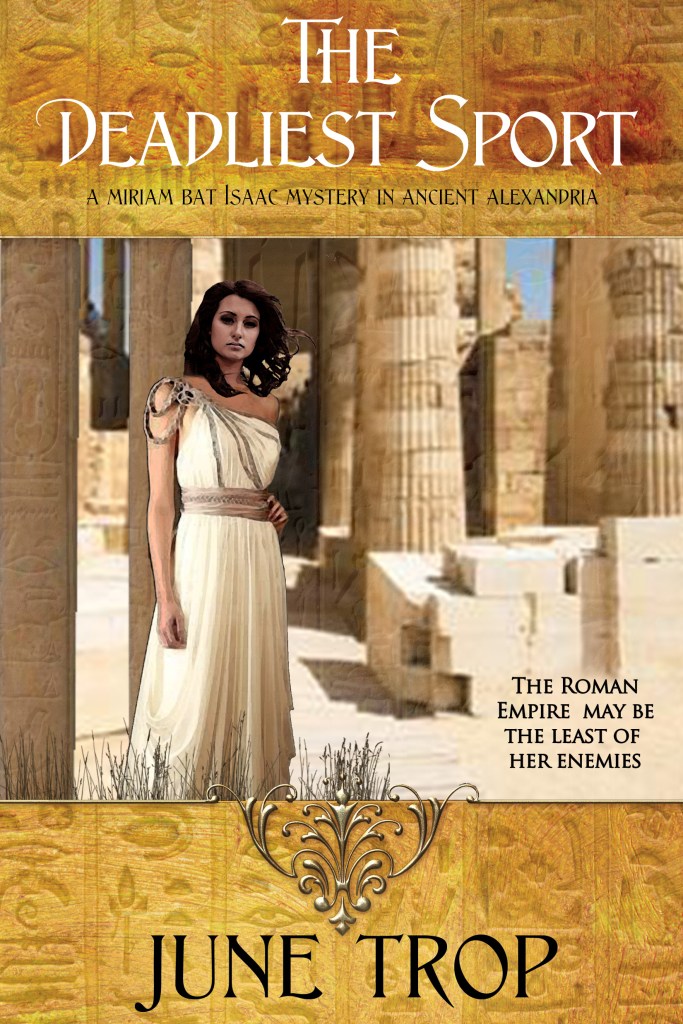
Miriam bat Isaac, a budding alchemist in first-century CE Alexandria, welcomes her twin brother Binyamin home to fight his last gladiatorial bout in Alexandria. But when he demands his share of the family money so he can build a school for gladiators in Alexandria, Miriam explains that he forsook his share when he took the gladiatorial oath. When she refuses to loan him the money for what she feels is a shady, and dangerous, enterprise, Binyamin becomes furious. Soon after, the will of Amram, Miriam’s elderly charge, turns up missing, Amram becomes seriously ill, and the clerk of the public records house is murdered. Could Binyamin really be behind this monstrous scheme? If not he, who could be responsible? And is Miriam slated to be the next victim?

Buy links: https://www.amazon.com/Deadliest-Sport-June-Trop/dp/1626947554

https://www.barnesandnoble.com/w/the-deadliest-sport-june-trop/1127167995

As an award-winning middle school science teacher, June used storytelling to capture her students’ imagination and interest in scientific concepts. Years later as a professor of teacher education, she focused her research on the practical knowledge teachers construct and communicate through storytelling.

Her books have been cited for excellence at the New York Book Festival, by Wiki Ezvid, the Historical Novel Society, and as a 5-star Readers’ Favorite.

An active member of the Mystery Writers of America, June lives with her husband Paul Zuckerman in New Paltz, NY where she is breathlessly recording her plucky heroine’s next life-or-death exploit.

Connect with June on her website www.JuneTrop.com or her Facebook page: June Trop Author.

Writer’s Block or Writer’s Rest

During the last month or so my mind has been a blank. I haven’t had a single new idea and have plodded forward on the fiction I’ve been working on—editing and proofing—all the while wondering where I would be when this work was finished. This is called writer’s block, but I have learned to call it Writer’s Rest.

At first I called it a drought. I felt dry, used up, empty, as though I had reached the end of the line, the finish line for fiction, the moment when I retire and try something else. Photography? Embroidery? Gardening? Sleeping? I’ve been dabbling in these for years. Was one of them about to take center stage? Unlikely. I began writing as a teenager and knew at once that this was something I had to do. The desire was far stronger than something I wanted to do. It was something I had to do, something I could not not do.

Over the years I’ve become accustomed to my personal quirks and mostly learned to live with them. Inspiration comes in the form of a general idea for a short story or a novel, the vivid image of a person or a situation from which a character emerges. In the AHMM July/August 2020 issue is my story “The Pledge.” The idea came from a news report of a police chief talking about a young man from the Midwest who got himself into trouble in the winter because he couldn’t read the landscape—what looked familiar to his rural eyes was quite different in New England. The police chief’s comments remained with me until the story idea shook them into shape.

In another short story I was struck by the relatives of a foster child who tolerated him but didn’t really want him around. He showed up after school and lingered till he was sent home at dark. This seemed cruel until it occurred to me there might be a reason for their awkwardness. From that came “Just Another Runaway” in AHMM November/December 2019.

These and other story ideas show up on their own, not when I’m rattling around at my desk looking for a good writing prompt and definitely not when I’m trying to force an idea into existence. Since I’m writing every day, you might say I always have a writing prompt in progress so what need do I have for more? Well, how about the moment Writer’s Block hits?

My suggestion in this post is different. It is to think about the purpose of a month or perhaps only a week of writer’s block. While I’m fretting about coming to the end of my career, my unconscious is rearranging the snippets of life I’ve collected and looking for something interesting, intriguing, riveting, revealing. My unconscious is at work creating while I’m fretting consciously about losing my imagination to ageing or boredom or something else.

While I typed the first few words of this blog post I got an idea for a short story and had to stop to write it down. Fifty years ago I met a Catholic priest who had such a clear dislike for secular women (and perhaps women religious as well, though I can’t say) that I had to force myself to keep appointments with him and conduct the business I was required to do. That kind of experience remains with you, and as I began typing this evening, the story revolving around him finally came to me. I’ve waited for a long time for this. After fifty plus years I’m going to get that man out of my head, and in a way that preserves his offensive biases and the damage they can do.

When I’m not obsessed with it, Writer’s Block is nothing more for me than the required rest for my unconscious to work out problems and deliver the results to my conscious mind. Sometimes a number of ideas arrive all at once in an afternoon, so I spend a few days trying them out. Do they resonate with something I learned or experienced recently? Do they give me a new way of looking at someone or a particular problem? Do I feel this will lead to personal discovery and deepen my understanding of a character? By asking these questions I get deeper into the idea and discover if it will sustain attention over several pages or thousands of words. Is there a story here worth the effort? Am I drawn in deeper just by thinking about it? If the idea falls apart on closer inspection, then I’m glad to let it go. But if it rewards me with twists and surprises, then I’m glad to write out a short paragraph about it and think about when I can begin work.

My drought, or Writer’s Rest, has ended. It came to an end while I was preparing this blog post and left me an idea for a short story featuring Ginny Means, a social worker, and a novel featuring a fortuneteller who has more talent than she realizes. I’d say that’s a pretty good ending to what can be a grim time.

Questioning Everything

This is actually a good place to be, though it sounds dismal. I’m questioning why I’m writing my work in progress. Readers get very attached to my series characters, but in each book there needs to be something meaningful to engage them as well. The story needs marrow in its bones. The key question is: why do I need to tell this story?

The problem with my work in progress is that the initial idea intrigued me and amused me, but it didn’t make me excited or impassioned. The villains were “inspired,” if I can call it that, by people who annoyed me, not people who outraged me. None of my villains are murderers, but they use, betray, and manipulate people in a variety of ways, based on actions that have appalled me in real life. A clever plot and a great setting blinded me to the weaknesses in the work in progress. I started it three years ago, set it aside to write book seven, Shadow Family, and now that I’ve resumed revisions on book eight, I understand why it’s been so hard to finish.

Perhaps I can recycle elements but change the villains and the crime. Or perhaps I simply need to start over from scratch. What matters is the quality of the book, not the speed at which I finish it. I’ve always been a slow writer, and I’m willing to slow down more to get this book to work.

As I said, I’m questioning everything, and glad I’m doing it.