Guest Blogger ~ Lorie Lewis Ham

Why I Write Mysteries

I have been writing in some form for most of my life—poems, songs, short stories, articles, and of course, mystery novels. It was in my mid-teens that I discovered mysteries, thanks to my younger brother who introduced me to Sherlock Holmes and Agatha Christie. From that moment on, I was hooked—not only as a reader, but I knew that was what I wanted to write.

In my early twenties, I took a creative writing class and my teacher kept trying to get me to write Christian romances. I think she saw me as an innocent Christian girl so she felt that was what I should write—but how wrong she was (a story for another time LOL). Not only was I not a fan of romances, but every time I tried to write one to appease her, I ended up killing someone. I think it is important to be a fan of the genre that you write or else you can’t really do it justice.

The reason I write mysteries is the same as the reason I read mysteries. I love the puzzle of them—I love crafting one as a writer and as a reader, I love trying to figure it out. There is also satisfaction in seeing criminals brought to justice—of getting a satisfying conclusion that too often doesn’t happen in real life. In the real world things may be a mess and sometimes there is very little we can do about it—but in a mystery suddenly we have control—we can provide order and justice. Or as a reader, we get to experience it. I believe that is partially why mysteries have been so popular during the pandemic. I get a thrill out of putting together all of the clues and leading my main character, and the reader, to the solution. There is nothing quite like how it feels when it all comes together.

Personally, I also feel that mysteries give you the chance to delve deeper into your characters than you might in a romance because you are seeing more than the good side they may present to win the one they love—you see that no one is black and white. Not even our heroes are all black and white in a mystery—look at Sherlock Holmes—it is the “grayness” of his character that makes him so appealing. To find out what makes an ordinary person commit a crime fascinates me. What in their life, their journey, and their personality led them to this dark place? While I’m sure you can do this in any genre, in a mystery you almost have to.

I guess the bottom line is that a mystery can have everything-romance, murder, even at times fantasy or science fiction, but at its heart, it has to have a puzzle and a search for justice. This is what I love to read and to write.

One of Us
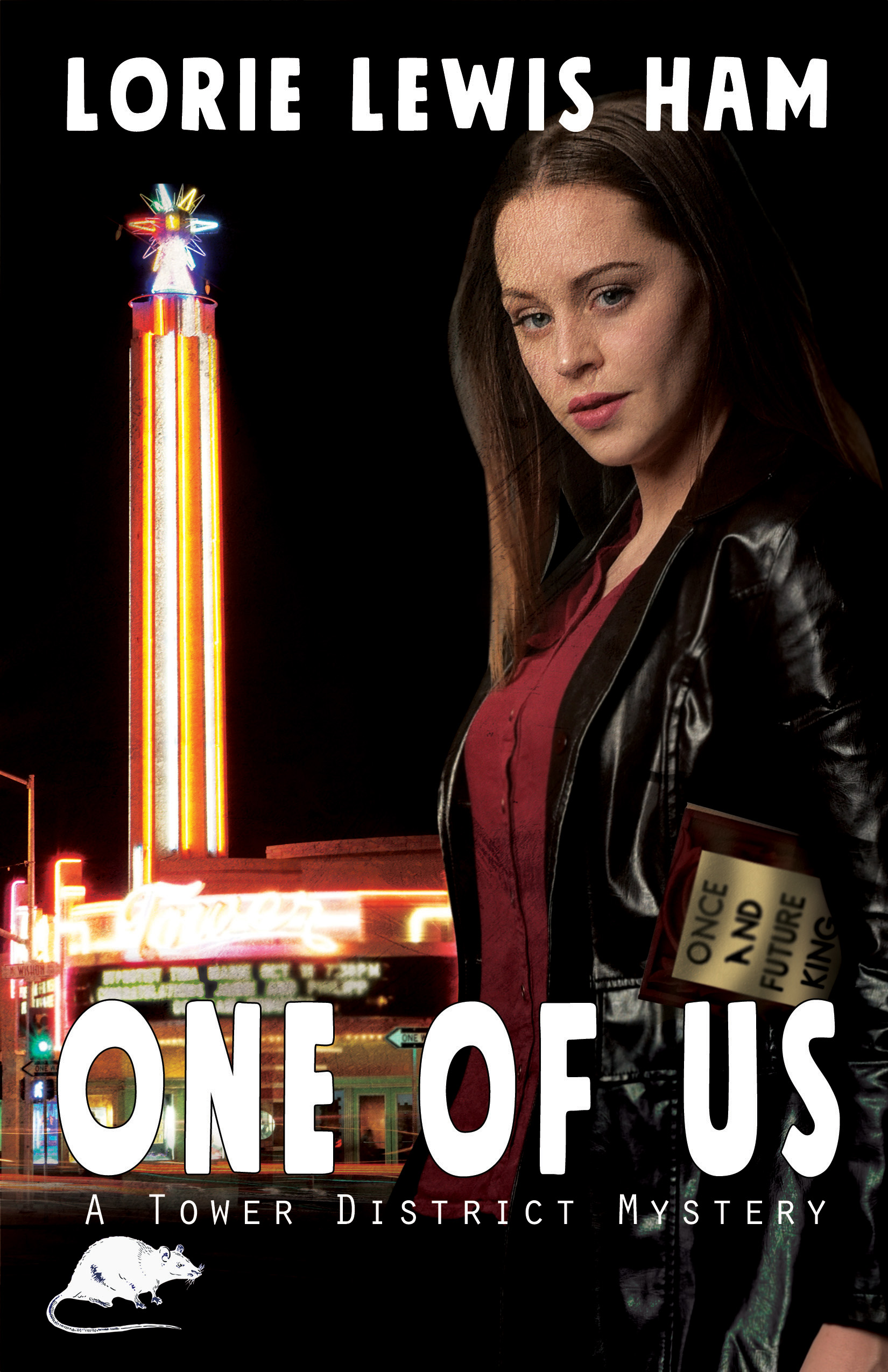
At thirty-five, children’s book author Roxi Carlucci finds herself starting over again after her publisher drops her book series. With no income, she has to pack up her life on the California Coast, along with her pet rat, Merlin, and move in with her cousin, P.I. Stephen Carlucci, who lives in Fresno, California. The one redeeming factor is that Stephen lives in the Tower District—the cultural oasis of Fresno. 

Stephen talks Roxi into helping out with a community theatre production, which is also a
fundraiser for a local animal rescue. Then someone is murdered during a rehearsal in the locked theatre, and now she and Stephen are hired to find the killer. The killer has to be one of Roxi’s new acquaintances since the theatre was locked at the time of the murder, but no one seems to have a motive. How can they solve a murder without a motive? Could the local gossip website hold any clues? Can they stop the killer before they strike again?

My new mystery One of Us is available on Amazon, Barnes and Noble online, and Kobo.

Lorie Lewis Ham lives in Reedley, California and has been writing ever since she was a child, and publishing since she was 13. For the past 11 years, Lorie has been the editor-in-chief and publisher of Kings River Life Magazine, and she produces Mysteryrat’s Maze Podcast where you can now hear an excerpt of her new book One of Us. You can learn more about Lorie and the new book on her website mysteryrat.com, where you can also sign up for her newsletter, and you can find her on Twitter @mysteryrat and Facebook.
On Reading Reviews by Heather Haven

Some authors never read their reviews. I am not one of those people. I don’t read reviews often, but I like to go in every now and then and see what’s going on. If I get several people giving the same criticism in their reviews, I check it out. Unless they’ve written I’m terrific. Then I leave it alone. But I have found when the same thing is said, like comments about editing or misspelling, it probably has validity. It doesn’t matter how many eyes have seen the manuscript, one or two things are bound to get by. And they are bound to catch the eye of a reader. Fortunately, these errors are easily correctable. And I correct them as soon as I can.

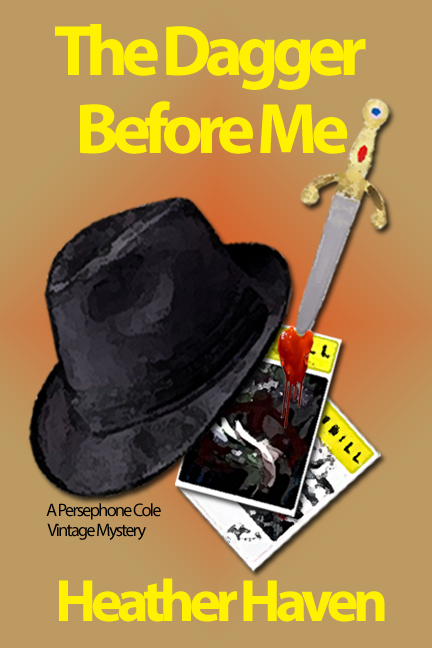
It’s the other stuff. The comments on research or incorrect details. This always sends me running to an encyclopedia, either online or from my bookshelf. I try to get things right, honestly. Nine times out of ten — and I have to say this — the reader is misinformed. For instance, in The Dagger Before Me, book one of the Persephone Cole Vintage Mysteries, I mention a small refrigerator. Mini-refrigerators have been around since the 1920’s, mostly for the rich, but there. So an affluent, Broadway producer having one in his office in 1942 is not out of line. There are a few other reviews where people simply cannot believe some things were invented way back when. Everything old is new again.

The criticism about the mini-fridge is one I came across only a few days ago and prompted this article. I had done my research at the time of writing the novel, but looked it up again to be sure I was right. I was. When the reader is wrong, I chalk it up to human nature. If they are right –which has happened upon occasion — I correct the error and silently thank the person for letting me know. Speaking of being wrong, one time in another book of the Percy Cole series, I mentioned the Macy’s Thanksgiving Day Parade taking place in 1942. It didn’t. True, the parade has been around since 1924, but when the USA entered WWII, the parade was cancelled from 1942 to 1944. I had neglected to catch that. As it was only once sentence in the story, I simply eliminated the sentence altogether. And once again, silently thanked the reader for catching my error.

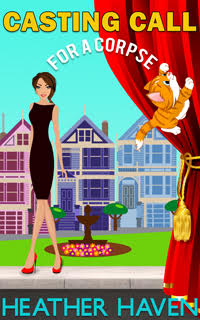
Recently, I got criticism in Casting Call for a Corpse, book seven of the Alvarez Family Murder Mysteries, because I .had called a Scottish policewoman’s hat a bowler. I’m just going to say that in pictures of their uniforms, one of the hat styles looked like a bowler to me. And still does. But not being a hatter, I bow to the reader’s knowledge. And because I had written the word ‘bowler’, the reader gave me only 3 stars and stated that was the reason. As I used the word only one time in the entire novel, I went in and changed ‘bowler’ to ‘hat’. Why? Because it makes no different to the story. Really, truly. If it had been integral in any way, I would have left it alone.

I have my standards. They may be low, but I have them. Deciding what to change, what not to change, when to capitulate, when not to, becomes something most of us writers get used to. For me, it’s just part of the game.

Guest Blogger ~ Pamela Cowan

When I start a new mystery as a reader, it’s like starting a puzzle. I watch breathlessly as a character I’ve become invested in finds clues, solves riddles, and eventually sees justice delivered.

As a writer I find that it’s fun to develop that character, as well as setting and plot and it’s challenging to plant information that the reader can use to solve the puzzle. I just want to be sure the reader doesn’t discover that solution until the last page!

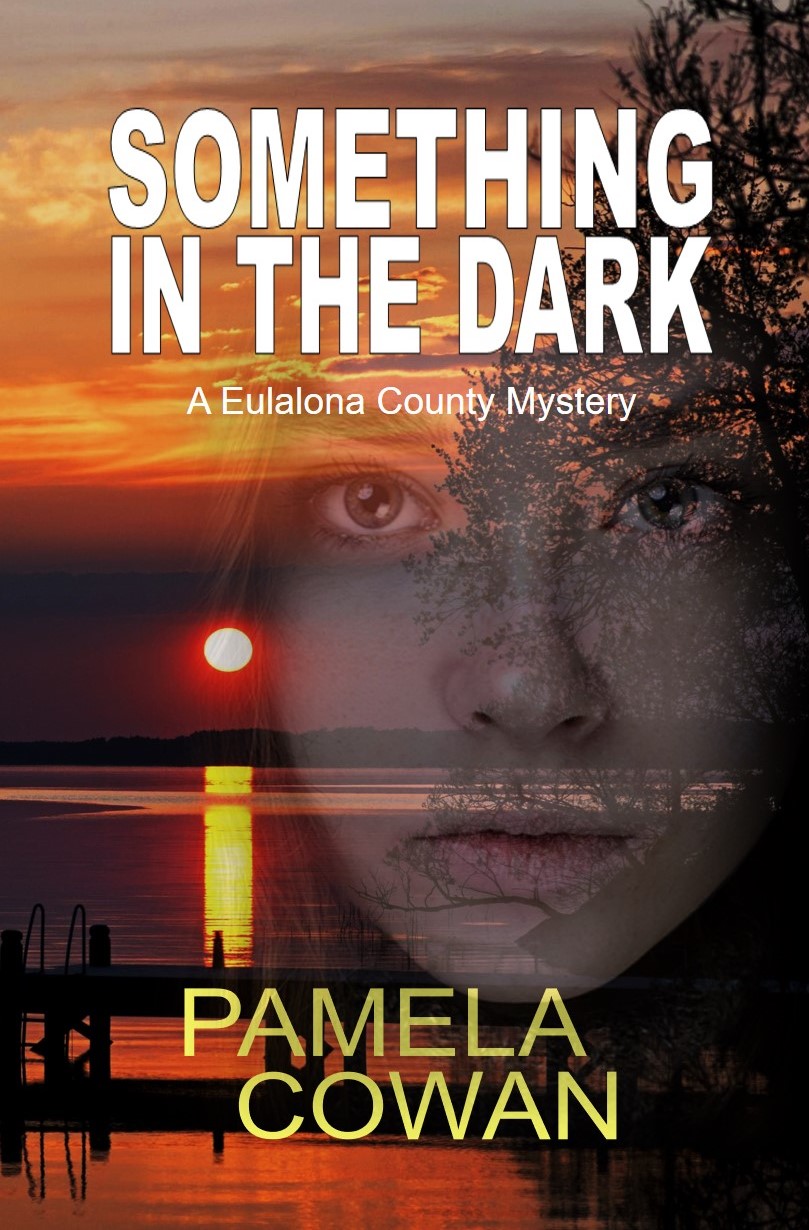
When I wrote my first mystery, SOMETHING IN THE DARK, I wanted to keep that element of surprise. I didn’t want my readers to know who the killer was until I told them, but before I could create a nice, twisty ending, I had to find a compelling place to start.

They say most first novels are somewhat autobiographical in nature and I certainly wouldn’t argue with that.  The idea for SOMETHING IN THE DARK came directly from my childhood.

When I was young, eight or nine, my family lived in military housing on an army base in Germany. There was a laundry room in the basement of our apartment building. While the mothers did laundry the children played in the hallway. The hallway was long and narrow, perfect for races, and had white and dark gray floor tiles, perfect for hopscotch.  For races we’d usually start near the laundry room and end at the big hole-in-the-wall.

The hole was the entrance to an old cold war shelter. Its thick metal door had been wired open so that no one could get in, shut the door, and accidentally be locked inside. Beyond the door, a narrow band of light from the hallway fluorescents showed a strip of dirt floor. Beyond that, nothing but impenetrable darkness. No doubt our older and braver siblings would have explored that shadow-filled space. My friends and I preferred to stick with the familiar well-lit corridor.

As an adult who loved to read mystery and suspense thrillers, the memory of the scary atmosphere of that shelter came back to me. I wondered what it would have been like as a child to have entered that room only to have the door slam shut behind me, to be trapped in that room in the dark? Below is an excerpt from the book.

              ‘After a while, not knowing what else to do, she knocked on the door again, first rapping with her knuckles, then with her balled fists, and finally with the palms of her hands. Smack, smack, went her hands. Just like patty cake. Slap, slap, slap.’ 

After this sort of trauma, I suspected that even as an adult she would hate the sense of being closed in, that she’d avoid crowded rooms, airplanes, or elevators, and prefer the outdoors. Maybe finding herself in the dark would trigger a panic attack so severe she’d lose consciousness.

I decided she’d own a lawn maintenance company and work outdoors. She’d also own a small plant nursery. (With lots of delicious buildings in which she could be trapped.) She would have a supportive brother, a close friend, and a handsome therapist. Because, why not?

Wouldn’t it be strange and horrible though, if every time her phobia triggered an attack and she blacked out, that she’d come to, only to find someone close to her had been murdered?

All that remained to finish outlining my plot was to decide who was responsible for the murders and how Austin could keep the body count from rising. Was a serial killer playing games with her? Was something evil inside her, driving her to kill? Or had something in that bomb shelter come back with her—something she’d met in the dark?

Once I knew the answer, all I needed was one final element. A few days later I picked up a novel by a favorite writer of mine. It started out with a man standing under a group of pine trees in the snow, waiting. I realized that the element of setting, the Pacific Northwest, and the sense of hushed waiting that a fresh snowfall can give you was just the mood I needed. I sat down and six hours later had the basic outline, and first few chapters, of SOMETHING IN THE DARK.

Although I’ve published eight more novels and numerous short stories since then, and even though SOMETHING IN THE DARK has all the flaws and failings of a first book, it is still one of my favorites. 

If you’d like to read SOMETHING IN THE DARK free or check out my other novels, please visit my website at, http://www.pamelacowan.com where you can sign up for my monthly newsletter and subscriber drawing.

I also have a Facebook page,  https://www.facebook.com/pamelacowanwriter where I post new releases, reviews, and slightly dark but almost always hilarious humor.

Something in the Dark

Austin Ward thinks she’s learned to live with her fear of the dark. She’s put the past behind her and there’s even a new man in her life.

But when people she cares about are brutally murdered Austin realizes she can no longer pretend. To find the truth behind the deaths she must face and overcome her fear.

But who is the killer? Is it someone out to get her? Has a serial killer come to her small Pacific Northwest town? Or, has something sinister followed her from childhood, something she met once before…in the dark?

This is Eulalona County, where the trees whisper and the deep lakes hide secrets you don’t want to know. 

Pamela Cowan is an award-winning, Pacific Northwest author best known for her psychological thrillers. Cowan is the author of the Storm Series which includes Storm Justice, Storm Vengeance and Storm Retribution, books which follow Probation Officer Storm McKenzie on her single-minded quest for justice. She is also the author of two stand-alone novels based in fictional Eulalona County, Oregon, Something In The Dark and Cold Kill. She recently published Fire And Lies, the first in the new El & Em Detective Series

Guest Blogger ~ Sharon L. Dean

(Re)appearing Ladies

It’s Halloween. What better time to write about ghosts, real and imagined. I spent my academic career writing about the nineteenth-century novelist Constance Fenimore Woolson. Woolson had her own family ghost story to tell about the haunting of the bedroom where her sister Emma died. A scholar I know claims she felt Woolson’s presence when she visited the apartment where Woolson leapt or fell to her death in Venice.

 I  felt no such presence there, but like so many scholars I know, once Woolson gets hold of us, we can’t let her go. She materialized for me in my second novel, Death of the Keynote Speaker, where I imagined her as a fictionalized Abigail Brewster in a setting on one of the Isles of Shoals off the coasts of New Hampshire and Maine. Woolson never visited those islands, but I drew on real life historical figures for an appearance in that novel: Celia Thaxter, who held a literary salon on Appledore Island; Karen and  Anethe Christensen who were murdered on Smuttynose Island in 1873; and abortionist Madame Restell, who was known as “The Wickedest Woman in New York.”

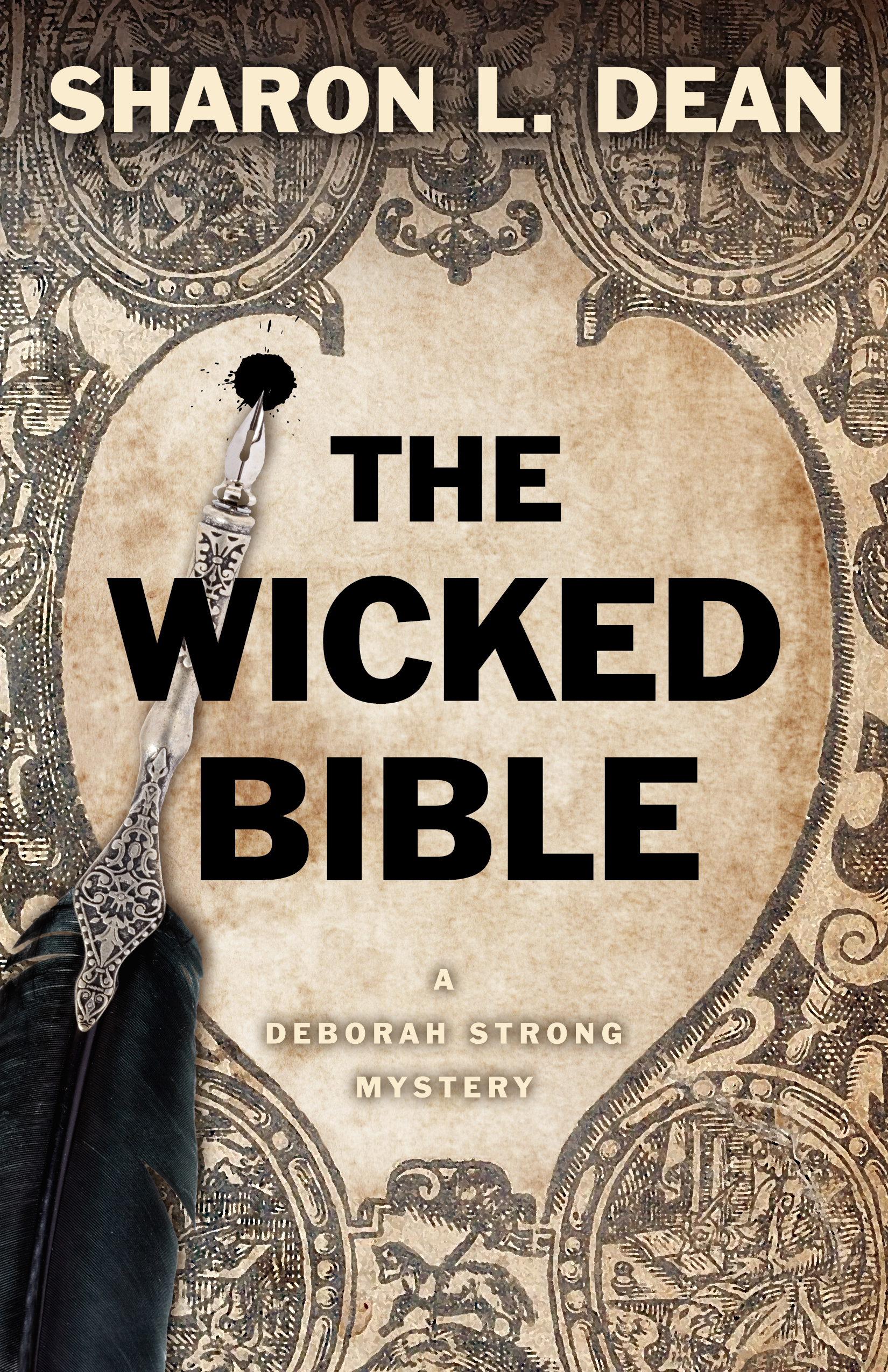
            After I published Death of the Keynote Speaker, I wasn’t finished with my ghosts. My newest novel, The Wicked Bible, reimagines Abigail Brewster and Madame Restell. How could I not reprise “The Wickedest Woman in New York” in a novel titled after an actual 1631 Bible dubbed “The Wicked Bible?”

            I’m not done with reappearances. The novel I’m working on now reprised a character I named Connie in Leaving Freedom. Woolson left her childhood home in Cleveland to accompany her mother to Florida and the beginnings of a writing career. My Connie also leaves her hometown in Freedom, Massachusetts, to care for her mother in Florida where she also finds success as a writer. My novel in progress is bringing Connie, now eighty years old, back to Freedom. It’s tentatively titled Finding Freedom. I don’t know yet what Connie will find, but I know that the ghost of Constance Fenimore Woolson has given me plenty of inspiration. I wonder what ghosts live for you, whether they be haunting or inspirational?

After a winter when she solved the cold case of a high school friend found dead in a barn, Deborah Strong needs a distraction. She joins a conference, “Libraries: Where Have We Been, Where Are We Going?” that will be useful for her work as a librarian in the small town of Shelby. The setting at a picturesque college in New Hampshire should also be healing.

Deborah’s project for the week plunges her into a mystery that would delight most researchers. What are the connections between a Bible dubbed “The Wicked Bible,” a woman called “The Wickedest Woman in New York,” a book written by a nineteenth-century author, and a letter penned to the author? As she slowly unravels the connections, Deborah confronts an event from her own past and anticipates a future that could be as brilliant as New Hampshire’s September foliage.

Buy links: Amazon- https://www.amazon.com/Wicked-Bible-Deborah-Strong-Mystery/dp/1645992810

Goodreads: https://www.goodreads.com/review/new/59432097-the-wicked-bible

Sharon L. Dean grew up in Massachusetts where she was immersed in the literature of New England. She earned undergraduate and graduate degrees at the University of New Hampshire, a state she lived and taught in before moving to Oregon. Although she has given up writing scholarly books that require footnotes, she incorporates much of her academic research as background in her mysteries. She is the author of three Susan Warner mysteries and of a literary novel titled Leaving Freedom. Her new seriesfeatures librarian and reluctant sleuth Deborah Strong. In The Barn, Deborah solves a thirty-year-old cold case. The Wicked Bible, scheduled for an October 2021 release by Encircle Publications,brings Deborah to a college campus and a search for who stole a Bible and a letter from the library’s archives. The third in the series, Calderwood Cove, forthcoming in 2022, will bring her to the coast of Maine and a murder. She continues to write and research in the landscape she’s discovering the Northwest.

Social Media:

Website: https://sharonldean.com/ Publisher: https://encirclepub.com/

The Paths through the Forest

A storm is brewing out my windows, clouds dense with rain hang heavy over the hills. You can feel the damp in your bones, in the air you breathe, and the chill that falls at your feet. Depending on your perspective, the promise of a deep drenching rain either fills you with trepidation or joy. Joy for me…always.

Weather has been part of my being since I was a child, thanks to my father, who flew through it all. And though I spent my time in the Navy in weather, I never once dreamed of taking that path in my life. But my broad brush with it has enriched me and my writing. I look at the sky, read the signs, and assess how what I see will affect my world, real or imaginary. In my stories, rocks, dirt, and slush roil down hillsides, a dry roadway on a frosty night hides a bridge slick with black ice, and the ocean sucks life from the beaches depositing its victims with the tide.

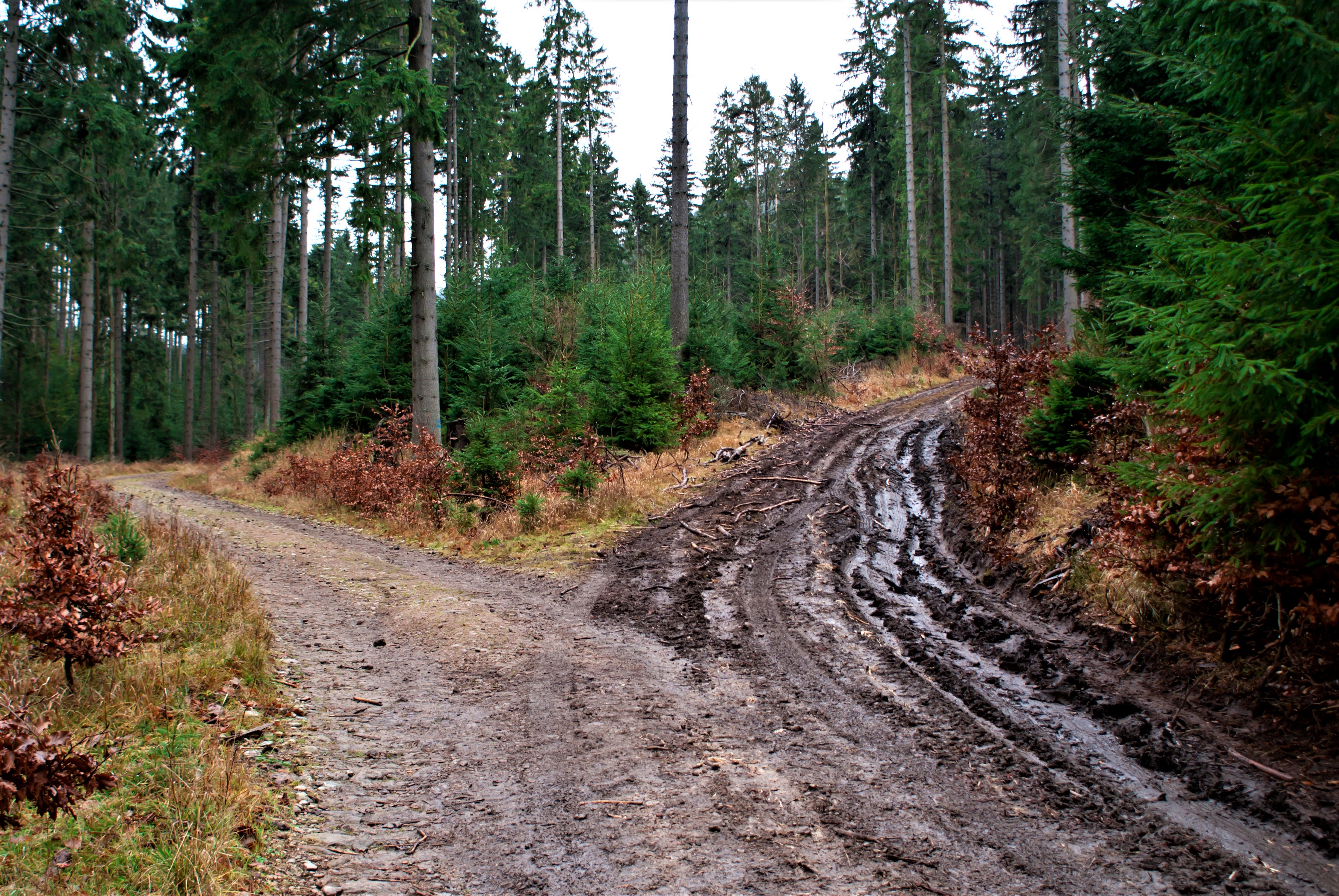
I have an affinity for the muddy side!

Like all of us, I’ve stared down many forks in the road and chosen a path through the forest of opportunity, fear, and hope lying undefined before me. I reinvented myself time and again to succeed in male-dominated businesses. I bucked trends, bosses, been on bucking horses, driven sixty-thousand miles a year back and forth over two states in a station wagon filled with educational assessments, flown hundreds of thousands of miles in the same quest, set up on demand scoring facilities nationwide, and my husband wants me to add, ridden an elephant.

My point is this . . . one of the great joys of writing is the ability it presents to follow anew the paths not taken. Each plot is an opportunity to ask what if I had become an anthropologist, a minister, a professor of English literature, a Naval aviator, or taken the bigtime NY advertising agency job when it was offered. Maybe I should have apprenticed at Vogue like my great aunt wanted or started at the bottom at National Geographic and worked my way up? What if I had purchased the family farm and lived that dream?

How different would my life have been if I had grown up in the town we were born in, married my high school sweetheart, and lived there still. Who would I be? I know I would be mad as a hatter and ready for the brick sanitarium with barred windows that once overlooked a sharply manicured lawn in the town I consider home. I can imagine being that person, bound to a town, a husband, a job, children, and family. How does that me react to the current me when we meet head-on in a plot?

Each path we don’t take informs and colors us as much as the one we did. The curiosity that drove us toward that choice lingers inside us. What we learned before we turned away still piques our curiosity and benefits our knowledge base. Writing is our opportunity to find out through our characters what might have been. Of course, as ladies of mystery, we spice it all up with a dead body or two, a conspiracy, a disappearance, or perhaps just the evil that stalks the dark of night. Boo!

I chose to leave the Navy when the life of one of my division members was destroyed by an unethical decision, supported by the Uniform Code of Military Justice, and three fearful men. What if I had chosen to stay in? I’ll never know. But the incident and my resulting decision rode my shoulder as I drafted the final book of the Cooper Quartet, my series about a military family in the Vietnam Era. Don’t Tell will be released November 11 and is already a Reedsy Must Read, noting, “This author is an expert at action-packed intrigue and mystery.” And just in, from Booklife, “In this military milieu, Church—a Vietnam-era Navy veteran herself—does a remarkable job of keeping multiple plotlines running with clarity and power. Church spins a lively tale where motives are unclear in a vividly realized hothouse naval environment. The engaging characters and their detailed histories make this a satisfying capstone to a wide-ranging epic.”

Don’t Tell will be available November 11 on Amazon as an ebook, paperback, or in hardcover. In the meantime here is a link to the Booklife Review: https://booklife.com/project/don-t-tell-59592