The Not-So-Distant Past

Left Coast Crime 2022 is coming up in Albuquerque, and I’m on a panel called “20th Century Historicals.”

A historical novel is defined as one that has “its setting in a period of history and that attempts to convey the spirit, manners, and social conditions of a past age with realistic detail and fidelity which is in some cases only apparent fidelity) to historical fact.”

Another definition, from the Historical Novel Society, says a historical novel is one set fifty or more years in the past. I moderated a similar panel at an earlier LCC, and one of my panelists had written a mystery set in 1967. That was sobering. I graduated from high school in 1967.

I write a series of historical mysteries featuring Jill McLeod, who is a Zephyrette, or train hostess, working onboard the California Zephyr, a historic train that ran during the 1949-1970 time period. The first book, Death Rides the Zephyr, takes place in December 1952, with subsequent books set in 1953.

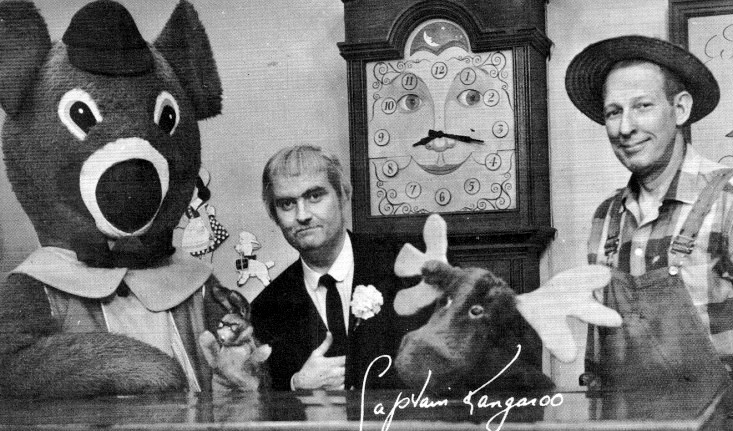
Since I’m old enough to have graduated from high school in the sixties, I was certainly alive in the early 1950s. But I was a kid. What I remember is a mixed bag—Captain Kangaroo and Miss Frances and the Ding Dong School on television. I figured out that the days were getting longer in the spring when I realized that it was still light outside when I tuned in to The Mickey Mouse Club.
Ike was president. I don’t remember much about the Red Scare, the McCarthy hearings, and the Rosenbergs. My school was segregated. So were the downtown department stores. I remember seeing signs for segregated rest rooms and water fountains.

In The Ghost in Roomette Four, there’s a scene where Jill and her sister are cleaning up the kitchen after a family dinner. Were they doing those dishes by hand? Or did the McLeod family have a dishwasher? When I was growing up, we did have a dishwasher. But that was later in the Fifties and my dad sold appliances.

That’s when I turn to the Internet. Off I went to my search engine, to find out when dishwasher hit the market. I was surprised to learn that the appliance was available in the Thirties.

An example of what happens when 21st century assumptions bump up against writing 20th century historicals? When I was researching Death Rides the Zephyr. I was fortunate to discover two retired Zephyrettes living near me. One evening, I bought them dinner and listened to them talk for over two hours. I asked what the onboard crew of the California Zephyr would have done if they’d found a dead body in a Pullman car, which is what happens to Jill, my Zephyrette protagonist. Would they radio ahead to the next station to contact the authorities?

The Zephyrette who had been riding the rails in the early Fifties shook her head. Back then they could radio from car to car, but not as far as a station or a town. No, the engineer would stop the train, the brakeman would climb a telegraph pole, and send a Morse code message to the next station.

That’s how it was done way back when. Of course, that went into the book. It made the telling more accurate and certainly added layers to the isolation of a train deep in a remote mountain canyon.

If you are attending Left Coast Crime in Albuquerque, check out my panel. It’s schedule on Thursday, April  7, at 1:15 PM on Thursday, April 7. The panel is moderated by Susan McDuffie, and fellow panelists are Michael Kurland and Rosemary Lord.
Guest Blogger – Judy Willmore

I am a history buff, and years ago I stumbled on the Affair of the Poisons: in the 17th century poison and witchcraft permeated the court of Louis XIV. I was fascinated: did Louis’ mistress have a black mass celebrated over her beautiful naked body? Historians have been arguing over that for years. The tempestuous marquise was certainly no angel, and she was competing with every pretty face at court for Louis’ wandering eye. When the King learned about poison and witchcraft at court, he appointed Lieutenant-General of Police Nicolas de La Reynie to investigate. Soon, suspects were pointing their grimy fingers at the marquise—but how do you arrest the King’s mistress?

My varied background helped me figure it all out: I have a MS in Clinical Psychology and a former career as a private investigator, plus I am a practicing astrologer. I devoured stacks of trial transcripts, diaries and letters, focusing on the marquise and La Reynie, the first modern police officer, who uncovered a massive ring of poisoners and con artists. These so-called “witches” were nothing like “wise women” or today’s Wicca: they lured in gullible clients with promises of love spells, then advised them how to get rid of a troublesome spouse—with poison. The suspects claimed the marquise was a client of the witch La Voisin, burned at the stake. Worse, she was linked to the infamous black mass.

But she wasn’t the only one. Several noblewomen also got caught up in the scandal, and like the desperate marquise, they were all trapped: prisoners of their fathers, brothers, husbands. Disobey, and you might find yourself locked up in a convent. The noblemen too could not leave Versailles and the King’s presence, or they would risk losing any chance of advancement. In my book, the courtiers compare their existence with the creatures trapped in the Versailles menagerie, with His Majesty as the gamekeeper dispensing both discipline and rewards. Desperate, they resorted to fortunetellers and purveyors of poison.

The suspects whispered of a criminal mastermind behind the poisons, and even a plot to kill the marquise. What really happened? To fill in the blanks I needed to create a fictional character, someone wide-eyed and innocent; so along came Sylvie, a young embroiderer. She went to work in the household of a prime suspect, and the gates of the Versailles menagerie clanged shut behind her.

I am now working on a sequel to The Menagerie set in Les Gobelins, the manufactory that made Versailles’ tapestries. The artisans were Huguenots, Protestants faced with either converting at sword point or leaving—and leaving was illegal.

FranÇoise-AthÉnaÏs de Rochechouart de Mortemart had to have Louis, King of France, but his other mistresses stood in the way. Then she meets the very helpful sorceress and AthÉnaÏs gets her wish. But soon Louis hears tales of witchcraft and poison, a conspiracy spreading through his court—like the beasts in the Versailles menagerie, courtesans are clawing their way to his favor, and his bed. He orders Lieutenant General of Police Gabriel-Nicolas de la Reynie to investigate. Mysterious deaths mount while La Reynie presses on, hauling in witches, charlatans, and the nobility alike. Grimy fingers point to AthÉnaÏs, the King’s mistress, with whispers of a black mass celebrated over her naked body. Then La Reynie discovers a plot to kill her.

Buy link: https://smile.amazon.com/Menagerie-Passion-Power-Poison-Court-ebook/dp/B08XQXMG6Q

Judy Willmore is a former journalist, then private investigator, and now a psychotherapist who practices in Albuquerque, New Mexico. Her historical mystery The Menagerie was published in 2021 by Artemesia Press, and she is now working on a sequel.

https://www.facebook.com/JudyWillmoreAuthor

https://judywillmoreauthor.com/

SAYING GOODBYE TO ROCKY BLUFF

Rocky Bluff, California is not a real place, but it has been alive and active through sixteen Rocky Bluff P.D. mysteries with one more yet to come. The fictional beach town is much like the one I lived in many years ago although located a little farther up the coast. It seems quite real to me.

The decision to end the series came to me while I was writing the newest, now with my editor. My reasons to do this are many.

First, I’m up there in years, and much slower in so many ways.

Second, policing has changed so much since I first started writing this series. I’ve been fortunate to have many persons to call upon for research, starting with my now deceased police officer son-in-law, plus the wonderful members of the Public Safety Writers Association who’ve always answered my questions.

Third, though I’ve always had my police department be understaffed and underfunded and using the nearest big city for many of their needs such as the coroner, forensics etc., it limited much of what I could include in a plot.

Fourth, I’ve been reading some of the big name author’s police procedurals and I feel like I’m not up to addressing the modern day issues for police officers in the outstanding way they’re doing.

As I was writing this last RBPD, I decided to tie up some loose ends for some of my characters, part of why I came to my decision to end the series.

No, I’m not giving up writing. I love to write and I can’t imagine not having a writing project. I’ve got some ideas for a new Deputy Tempe Crabtree mystery floating around in my imagination. (I truly thought I’d ended that series with End of the Trail but ended up writing The Trash Harem.)  I’m also considering writing a young adult mystery set during WWII—and yes, I will use a lot of my memories of what it was like to be growing up during that time period.

I’d like to hear from other authors who’ve decided to end a series, and how they felt about it.

Marilyn

Typos and the rest of it

I’ve read several posts lately about the carelessness of authors and editors today, with typos and other errors missed, often to the point of driving the reader to dump the book for something else to read. I too notice the misspellings, confusion of names, missing words, and other slips in the text. And I too have learned to read right past them. No text is going to be perfect, and holding the writer to a strict standard of three or five errors misses the point of reading fiction or any other prose. I cringe just as much as any other writer when I come across a goof in what I’ve written, and for self-serving reasons I argue that it doesn’t hurt to be generous as a reader. That said, I have another perspective that hovers in the back of my mind.

The rate of error for any human endeavor is two percent. I first learned this in the library at the University of Pennsylvania when I occasionally thought I’d come across an error in the card catalogue (remember those?). A librarian, skeptical, mentioned that figure while examining the card in question one day, found it correct, and explained why I might have thought its location to be inaccurate. Two percent sounds minuscule, but in a collection of twenty-two million items, such as at the Boston Public Library, that means 440,000 could harbor an error. That’s not a negligible number even though it’s only two percent.

I think of this percentage when I come across an error in a printed book. In a novel of 80,000 words, the reader could expect to encounter 1,600 typos or other mistakes. That’s a lot of goofs in a typical book, and I’m guessing most of us would be too disgusted to continue reading past the first dozen.

There’s a reason we’ve come to expect a nearly perfect text. Over the decades, publishers have trained us to expect a clean page, and they achieved this with a battery of experts. Writers turned in a type-written, or sometimes a handwritten, manuscript, which then went to a content editor, next to a line editor, and finally to a copy editor. At each stage the writer reviewed the work. The text was then sent to a compositor who put words into type, and don’t think the compositor wasn’t also sometimes reading, noting what he was seeing. But once the text was set, it was printed, went into galleys, and was sent to at least one proofreader as well as the writer. Think of the number of trained people reading the novel, catching those 1,600 slips, saving the writer from embarrassment. (And consider this: many publishers charged for the correction of errors in proofs after the first ten or twenty. That may explain why some nonfiction books were riddled with errors in earlier decades.)

Most of those people don’t exist today, and if they do, they’re probably working in very specialized areas where accuracy counts more. Think of chemistry, mathematics, and other technical subjects.

I think of these things when I’m reading along and trip over a missing word or letter. Occasionally I think about writing the author so she or he can make a change in the next iteration, but I don’t do it. Instead I marvel at how proficient we’ve become at catching these little stumblers, and how clean our texts are now. We demand a lot of writers today, and for the most part we writers deliver a clean, readable narrative with few flaws to make a reader feel brilliant for catching the slip or smug that she or he never made that one. At least, we haven’t yet. Every time I catch an error in whatever I’m reading, I remember to be humble. That could be me next time.

Just Checking – Grammar Checkers

I am a famous comma masher. Once I’m in the groove, I tend to put commas where my head stops and let my gerunds run wild like mustangs on the plains, resulting in images like one my mother once blurted out: I saw an eagle driving down the road. I teased her mercilessly for years, not anymore. My challenge is ensuring commas are where they need to be and not where they’re not. So, I use Microsoft Editor and/or Grammarly to keep me on the straight and narrow (or arrow, as a friend believed, an image unto itself).

For fun, I ran two draft paragraphs through Grammarly and Microsoft Editor. One thing is clear; they rely on different stylebooks with commas and semi-colons coming and going between them.

ME vs. GRAMMAR CHECKERS – The apps’ suggestions are in parenthesis after my text; Grammarly (G), Editor(E),both(GE).

“You,” Cora called, “Despite the signs set out earlier, our water is for the boarders (borders GE) here. It is not public. And we have sick in this house (, G) so I cannot attest to the water’s cleanliness.”

One man backed; the others stood their ground. “Can’t be both, (; G) either its good water for your boarders (borders G) or it’s bad,” one of the two said.

And another . . .

A skinny body in faded tweed pants ran up the street (, G) calling her name. Cora waited until Tommy Newsom reached her, flushed from his run, his plain face sweating under a ragged straw hat, dust (, E) and dirt billowing behind him.

“Miss Countryman, please,” he pulled on the sleeve of her dress. “Please, I just come from the undertaker’s, ma’am. Two men brung (brought GE) Mr. Kanady in there, (; G) now he’s layin’ all white like the rest of them (the GE) dead bodies. He don’t (doesn’t GE) belong in (delete in, G) there, not with them. He’d rise if he could. No matter if’n he was dead or not.”

COMMENTS and OBSERVATIONS

My observation is that in its drive to be the go-to grammar app for business, Grammarly has become a swampy bog for storytellers. I miss the early versions of Grammarly when you could check grammar, spelling, or punctuation one at a time. Not anymore, now it gloms onto your file and drills through your text relentlessly totaling up the error count while reconstructing sentences, seeking improvements such as the house’s door instead of the door to the house. There is, in my head, a place for both. But then, it is my head, which may or may not be a safe or sane place.

It used to be easy to add a word to Grammarly’s dictionary. It isn’t now or I just can’t figure it out.. So, Grammarly endlessly corrects perfectly correct words (boarders) and colloquialisms every blooming time they appear. Unlike Microsoft Editor which learns boarders is a word after the first correction, much appreciated since one of my main characters runs a boarding house with boarders.

And, charmingly, Grammarly offers irrelevant word options such as president, chairperson, or head as an alternative for a chair (he sat on the president) to freshen up your text. Or, as it did two paragraphs above, suggests the text read: the house’s door instead of the entrance to the house. Microsoft Editor does no such thing. But is Editor as good as Grammarly at catching what needs caught? Know this — Editor is not as intrusive or overwhelming. Grammarly will happily inform you that you have 2,400 errors in 80,000-words when most are repetitive or irrelevant, as above. My immediate response is the desire to slit my wrists followed by the resolve to drill down through the text — days— to find the nuggets which, in all fairness, are there.

GRAMMARLY or EDITOR

I leave it up to you to decide which is best or whether you even want to bother with either. As for me, I reckon until the next best thing comes along, a quick run through Editor or a slog through Grammarly is better than ending up with an eagle driving down the road.