MY LAST POST FOR 2021

This past year has flown by. Christmas is over except for the memories. So what are your plans for the New Year?

Unlike some long-ago past New Year’s Eves, we won’t be doing anything special except for having tamales for dinner and toasting with hot cider. Our big celebration is on New Year’s Day. I always make my version of Seafood Gumbo and various members of my family turn up to eat crab legs and shrimp in a tasty broth served over rice. Afterwards we usually play a rollicking game of Estimation.

What about the rest of 2022?

First, I’m surprised I’m still here to see it.  My hope is to finish the book I’ve been working on.

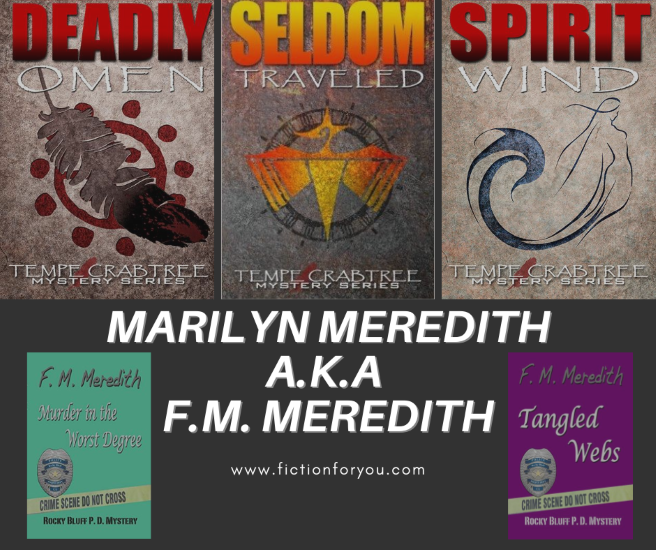
I’m also having a .99 cent sale of a Kindle copy of Invisible Path, a Deputy Tempe Crabtree mystery, from January 17 to January 21.

Like many, I’m hoping times will get back to normal—or at least a near-normal. A few days ago I had lunch with two of my writing buddies, and we decided to do it once a month. It was great to be together again. We are also contemplating setting up a book signing event.

Though I am no longer on the Public Safety Writers Association’s board of directors, they’ve asked me to attend their next meeting in February, sort of a transition. Since it’s in Vegas, I’m going since I’ll also be able to visit my sister who lives there. And I’ve already signed up for the PSWA writing conference in July.

I have an in-person event scheduled for April—we’ll see if that actually happens.

Though no one ever really knows what will happen in the future, it’s always fun to plan.

What are your hopes and plans for 2022?

And to all of you, I’m wishing for a happy and most wonderful New Year.

Marilyn

The Sounds of Christmas

When I noticed that my post was due on Christmas morning, my first reaction was to cringe and wonder, What on earth could I talk about that wouldn’t seem banal on such a morning? Not sure what to do, I do what I always do. I put the worry aside and took the dog for a walk. 

The various churches in our area often play recorded music. There is little live bell ringing in churches today, which is a loss. As a former bell-ringer, I miss the sound of bell music. When I was barely twelve years old, I was part of a group from my school that performed for the mayor of Boston (in a public concert) during the holiday season as well as for my community. When I hear bell ringing now I actually listen as though I understand what I’m hearing—the different bells, the timing, the way a ringer has to pitch and snap the bell forward, etc. 

On my walk I heard the recorded music from a small nondenominational church nearby, and let my mind drift. In the distance a dog barked and I knew another dog walker was out and about. Briefly a car with the bass ramped up sped by, crushing the bells and the dog. I registered all this and more as I waited for the world to fall quiet so I could enjoy the bells again.

This was one of those moments when a writer recognizes the obvious. In my recent work I’d forgotten the sensation of sound—the music that alters how I feel, the pain of shouting voices, the laughter that starts me smiling and makes me curious, the chorus of dogs barking in response to each other, and the snatch of conversation from two people walking past. The world is one long musical composition of which we hear only bits and pieces. But what if we listen?

The morning of a holy day is a good time to begin to listen well and carefully, to set aside the urge to add a comment or tell a story. Now is the time to listen to the world around us, the sounds we screen out instead of embracing as part of the fullness of life. There is a rhythm to movement and the noise it creates, and if we listen carefully and long enough we’ll see people walking up the steps in time to the beat of a car coming around the corner, or the landing of birds while a tree branch bends. If we listen we can hear the rhythm that holds us in sync with each other, each sound a grace note of life. 

May your holiday be rich in all the best ways.

Bad Boys and Girls

Some of the most fun I have when writing is fleshing out the character of the bad boys and girls who may not be the villain(ess) but who add depth and color to the hero(ine) ‘s troubles. Occasionally, one bad boy or girl will demand more reader time. No matter how carefully plotted a book or series is, they refuse their assigned part, wanting more. I always think of Mercutio in Romeo and Juliet when characters pitch a fit, because to my way of thinking, Shakespeare killed Mercutio because Mercutio insisted on vibrantly stealing the show.

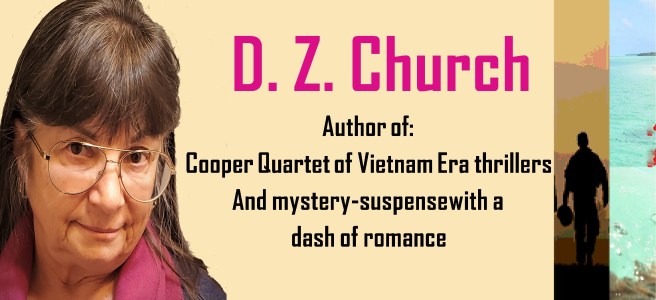
A rampant bad boy or girl in a mystery or thriller can be a problem or add unexpected depth to the plot and to the main character. I have had more than one walk-on demand extra story time. Sometimes like Shakespeare, I just whack them, either write them out or whack them, not as in cutting them from the text, but as in off them in the story. Still some refuse to take their curtain call, one example is an Indochine named Pierre Minotier who slunk his way into my Cooper Quartet series. He is a walk-on in Dead Legend, a shadowy figure in Head First, a player in Pay Back, and that’s just the first three books. Trust me, Pierre inhabits Don’t Tell, the newly published final book in the series..

What is it about Pierre?

Pierre was raised on the family plantation, Bonne Chance, southeast of Saigon. His father, a French plantation operator, was both a legitimate businessman and head of one of the five French sanctioned opium cartels. As his father leaves for Dien Bien Phu and his death, he burdens Pierre with the family business(es), entreating his son to ensure his sister Chloe’s safety, not that Pierre’s sister needs much saving. Chloe is a pistol, too. Still, Pierre makes a deal to get Chloe out of Vietnam that brings him to near ruin, requiring him to consider his future, the cartel’s future, and whose side he takes in the Vietnam War.

Pierre is a raptor, and I’m very fond of him. I hadn’t meant it to be that way. At first, I felt betrayed by his refusal to fade away before realizing he had an irresistible sleazy, rotten, wonderfulness about him and welcomed him to each successive book. And in turn he enlivened the books, adding a bit of rot to each, and moral ambiguity to my hero Laury Cooper’s journey. That’s a lot to carry for a bit player that wasn’t supposed to exist.

Is it his sleaze or his power?

Before Pierre appears in Dead Legend, Laury Cooper considers Pierre’s reputation:

The one-hundred-year-old Minotier franchise was operated by Chloe’s brother, Pierre. Laury knew him by reputation. They had never met.

Over drinks in Saigon, Philippe Latondre, the photographer, had ratted that Pierre bought and resold downed pilots for exorbitant amounts of lucre. Latondre boasted, as though Pierre was some how his, that Pierre was adrift, immoral, deadly, corrupt, loaded with funds and impossible to find, moving as he did in the dappled gray of the shadow business.

In Head First, Robin Haas, Laury Cooper’s cousin, finds an envelope folded between the pages of Jolie Minotier’s diary (Chloe’s daughter). Robin shares it with the darling Chief Warrant Officer Dan Cisco, another bit player who refused to stay within the bounds set for him. His footprint grows in each ensuing book, a bit of a ying to Pierre’s yang. If Pierre is a dark knight, Dan is a dumpling.

“The address on the envelope is in San Leandro.”

“She’s sixteen. Her mother and her pack of Rottweilers are in town. They tried to nab her in Berkeley, she came to you. There aren’t a whole lot of people she trusts. For some reason, you appear to be one of them. Pierre Minotier may be another.”

“Not Pierre, Dan. No.” Robin disagreed.

By Pay Back, Pierre demands everyone’s attention:

A small, elegant man in his mid-forties perched on the cot at the back of the chamber. He was blond and dark-eyed with a two- or three-day growth of reddish-blond beard. He was dressed, not unlike Cooper, in white linen slacks, with socks, blue canvas shoes, and a soft, yellow lawn shirt that fit. He crossed to Cooper with his right hand extended, showing the copper bracelet he wore around his wrist.

“Mais, oui.” Pierre directed Cooper away from the others, his silky gate silent in his canvas shoes. Cooper and Minotier were a study; one dark, one light, one tall, one short, yet both moved as though their timing belts were tuned perfectly for combustion.

And, finally, in Don’t Tell. Pierre Minotier and Laury Cooper are joined by mutual daring and admiration:

Pierre rotated the envelope so that the flap faced Laury. “Avant de l’ouvrir, I have had the contents for a month. It was a gift of sorts, more a bribe, je pense. These people, they are not what they wish you to believe, mon cher. They do not play with fairness.”

“And you are overcome by French-ness,” Laury quipped.

Pierre lifted one shoulder, stared into the brightening fog, and said, “Mais oui. I find these things difficult with those I have strong feelings for—good or bad.” A frisson rode up Laury’s back at the softness in Pierre’s voice.

Or the whole package?

I took great care in writing Pierre’s character, and in return he offered shading, nuance, moral ambiguity and more than a few thrills. He has his fierce loyalties. To those he trusts, he is patient, caring, and slyly supportive. Over the arc of the Quartet, Pierre skulks from a shadowy, frightening participant in a horrifying scam to an ally, the kind you can rely on when all of the cards are against you — for a price — a price you may not expect or want to pay. I’m glad he fought for his place in the telling, stayed true to himself and the Coopers, and let me have fun with a character that, like Crabby Appleton of yore, is rotten to the core. Or is he?

The books of the Cooper Quartet, Dead Legend, Head First, Pay Back and Don’t Tell are available in ebook, papeback and hardcover on Amazon. Pierrre starts here: https://www.amazon.com/Dead-Legend-Cooper-Quartet-Church/dp/1735520829.


The Darkest Hour is Just Before Dawn by Karen Shughart

One of my favorite songs of the 60’s and 70s is “Dedicated to the One I Love,” which was performed by multiple groups, my two favorites the ones sung by The Mamas and the Papas and The Shirelles. The last line in the first stanza ends with the words, “And the darkest hour is just before dawn.”

The line in that song has both a literal meaning-the darkest hour is just before dawn-but also a metaphorical one. During our personal struggles and darkest emotional hours, when doom and gloom seem to permeate our lives, sometimes light and happiness are truly just around the corner, if we can hold on long enough to wait until that happens. If we’re patient, and sometimes we must pay attention before we are aware of it, dawn comes.

The song has meaning to me in another way.  Living here in the north, on the south shore of Lake Ontario, the days are short and the nights long this time of year. But it’s not as depressing as it sounds, because if you’re willing to rouse yourself in the middle of one of these nights, you can sometimes view a breathtaking display of Northern Lights over the lake.

Light is a theme in our village, especially from Thanksgiving through Christmas. Our tiny visitors’ center is decorated to look like a gingerbread cottage, trimmed with bright, colorful lights and surrounded by decorated, brightly lit trees.  A tree-lighting ceremony in the park brings villagers out to sing carols, enjoy hot beverages and snacks and warm themselves around brightly burning fire pits.

Photo by cottonbro on Pexels.com

You’ll notice telephone poles wrapped with garlands of evergreens twinkling with white lights and topped with red bows. Lights glimmer on bushes, are wrapped around trees and woven through fences. Candle-lit luminaria line walks, and fairy lights peek through holiday wreaths and garlands.

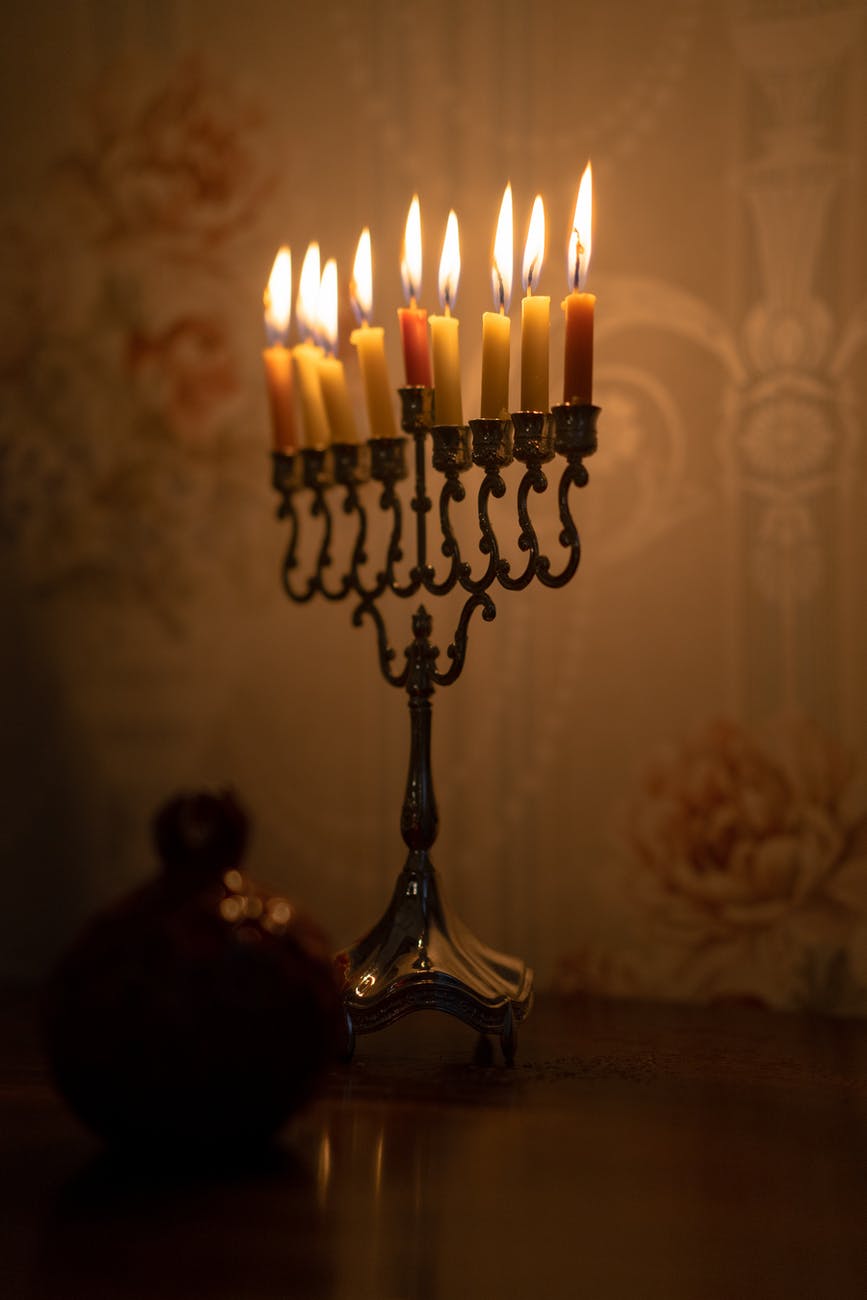
It’s not by accident, I think, that so many cultures celebrate holidays and festivals from late fall into winter that revolve around light. In many communities you’ll see Menorahs in windows, candles burning brightly, to celebrate the Jewish holiday of Chanukah which commemorates a miracle that happened thousands of years ago. 

Candles also burn in Kinaras as Black families celebrate Kwanzaa, to remember their cultural heritage and traditional family values. Hindu families decorate with lights in-and-outside their homes for Diwali, a festival in remembrance of a period in their history when good triumphed over evil. I expect there are others, too.

So, when the days are short and the nights long, how comforting it is to know that many cultures celebrate holidays and festivals that bring light into their lives and homes to brighten those darkest hours just before dawn.

Guest Blogger ~ Julie Weston

The Nellie Burns and Moonshine Mystery series began one full moon night. My husband and I had visited Galena Lodge in south central Idaho, near where we live, for a full moon dinner. On our way back down from this mountain pass between the Boulder Mountains and the Sawtooth Mountains, we stopped at Last Chance Ranch. My husband is a photographer and he longed to take a photograph of this ranch in the moonlight and snow. No lights were lit, so we climbed through the fence, he carrying his large format camera, tripod, and other camera gear. As he set up the camera to take the photograph, I watched the house and decided there could be a dead body in there. And lo, my Moon series of books began.

My protagonist is a young woman photographer who comes west from Chicago in the early 1920s. She yearns to be an artistic landscape photographer. Photographing Moonshadows (the name of the first book in the series) is high on her list. In addition to my husband, I have a line of photographers in my family on my maternal side, who came first to Idaho in the 1870s on their way to Oregon via wagon train. They stopped in Boise and never left Idaho. My grandmother and mother were born there, and I grew up in North Idaho in a mining town. The photographers in my family were named Burns. In early North Idaho, a woman photographer arrived from Chicago. Her name was Nellie Stockbridge. And lo, I had my first character: Nellie Burns.

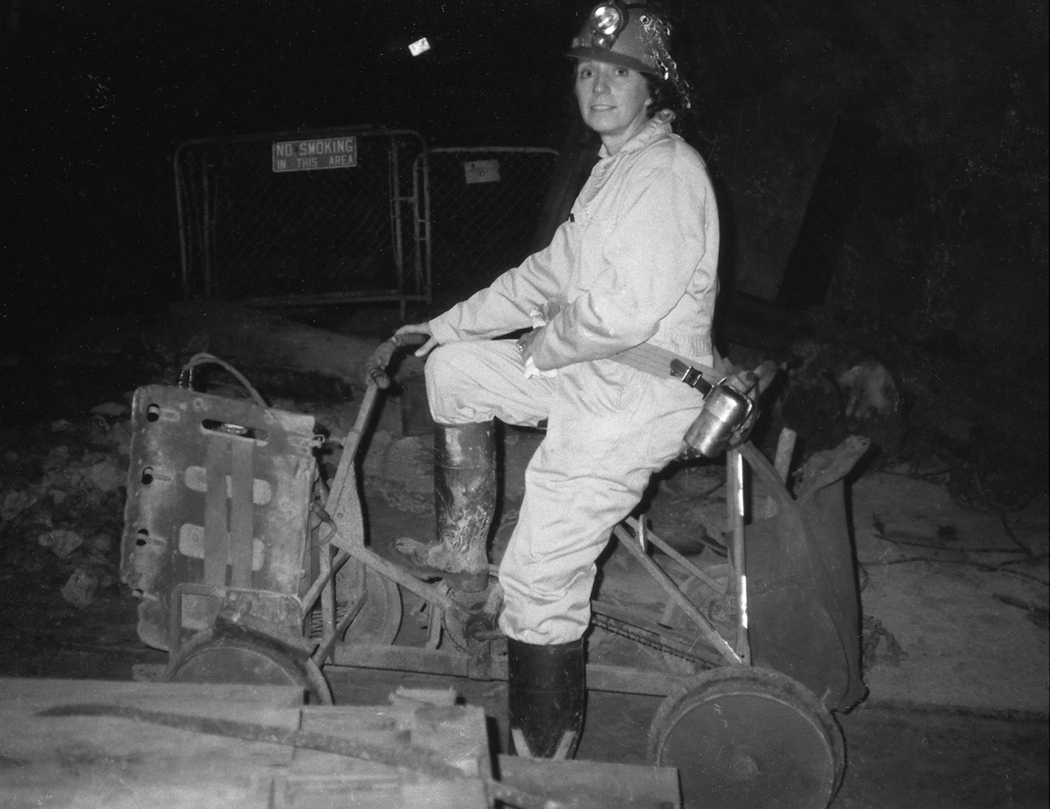
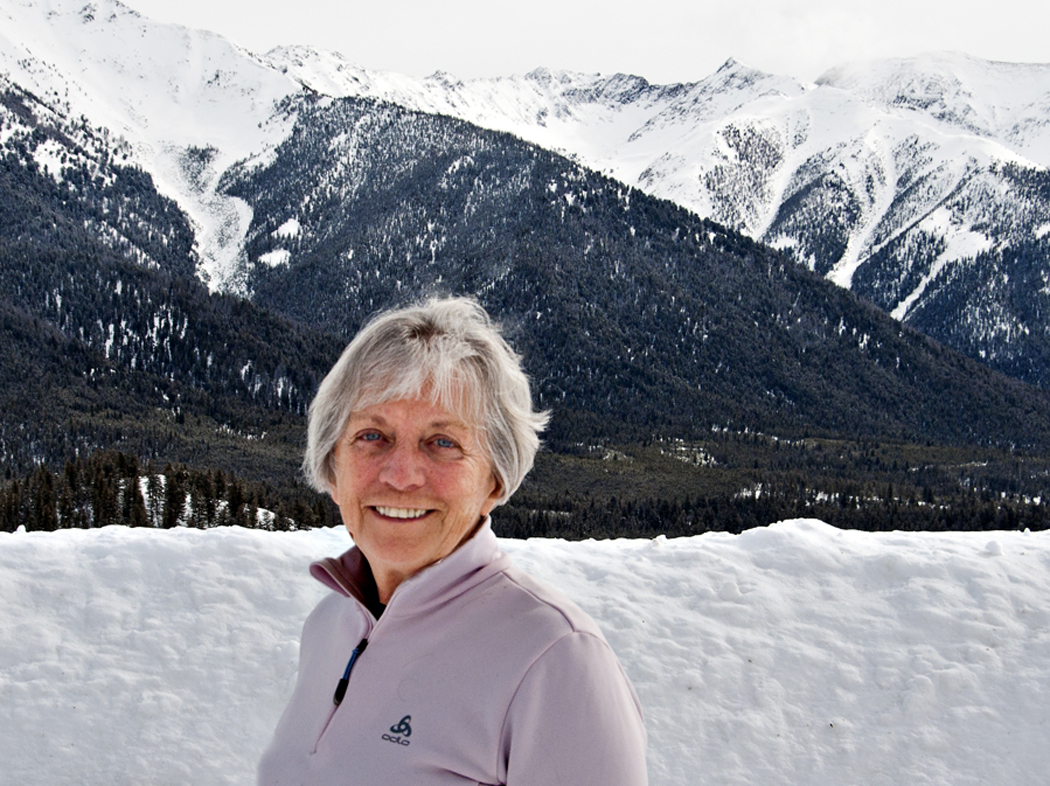
Author in a mine near where she grew up.

Other characters turned up almost immediately: Rosy Kipling, a retired miner from Hailey (our hometown now); Charlie Asteguigoiri, the Basque sheriff for the county; Goldie Bock, the owner of a rooming house in Ketchum; a Chinese mother and son; a sheep rancher, and other persons of interest. Nellie and her photographs help solve the mystery of the dead man at the ranch, along with Moonshine, a black Labrador dog, that Nellie adopts. He becomes her constant companion. And lo, I have a sidekick.

The second and third books in the series live in Idaho—in the Stanley Basin (Basque Moon) and in Craters of the Moon (Moonscape). Each time the landscapes become characters as well, partly because of my heritage and partly because I live here after having practiced law in Seattle for many years. My books have each won honors, including Basque Moon, which was a WILLA winner in historical fiction.

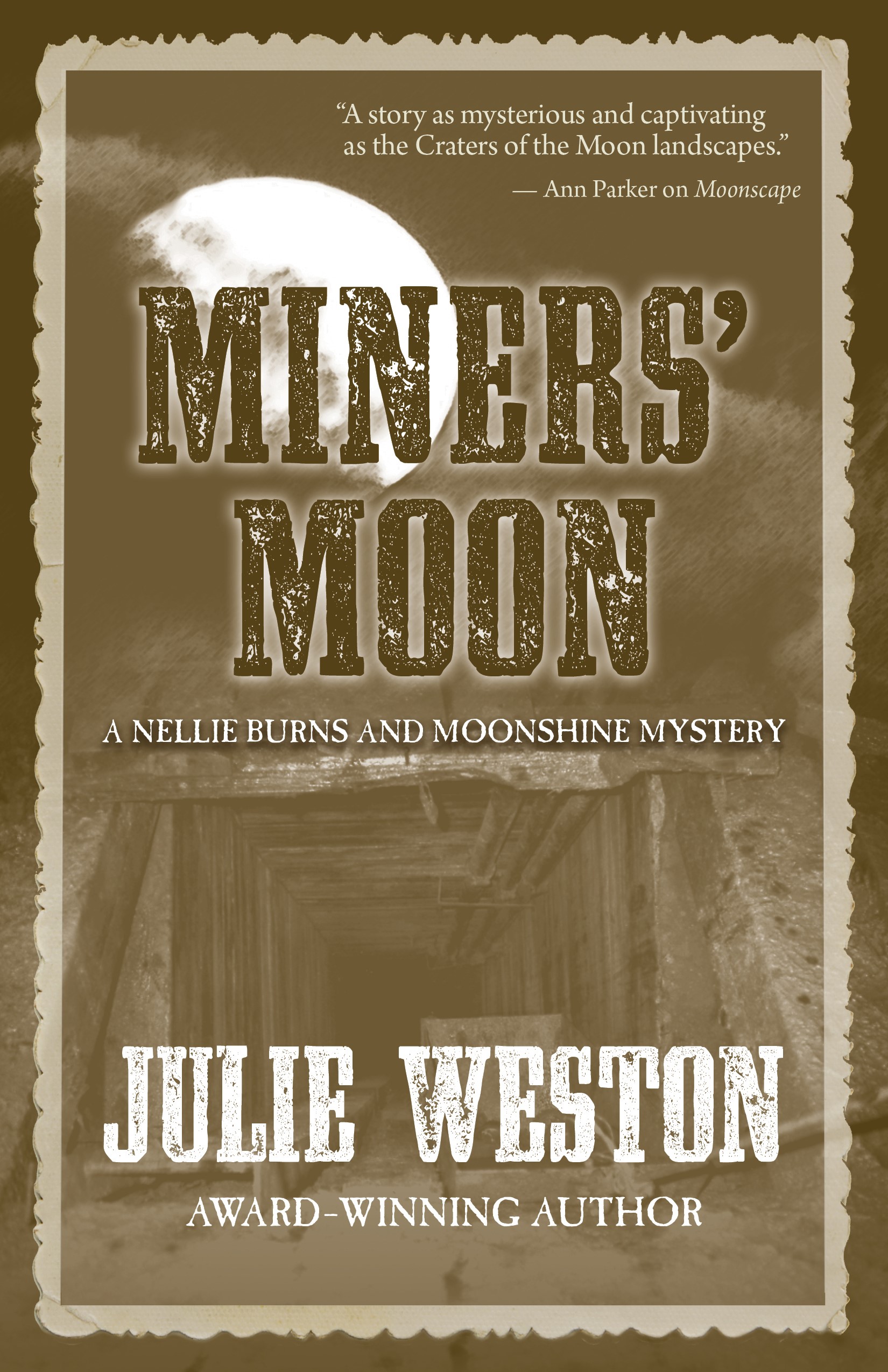
My latest book, MINERS’ MOON, coming out in December, 2021, grew out of my mining town of Kellogg. I descended the mines a while ago, and all I did and learned then became the basis for this newest book. Rosy, Charlie, and Nell get tangled up in two investigations: a mine explosion where several miners are killed, and bootlegging the federal revenuers seek to stop.

Idaho has so many wonderful and strange places and history, I see no end to my Nellie Burns and Moonshine series.

Miner’s Moon

Crime photographer Nellie Burns and Basque Sheriff Charlie Asteguigoiri travel from central to northern Idaho to investigate bootlegging and possible complicit town officials. A suspicious mine explosion pulls them into a second investigation. Retired miner Rosy Kipling joins them, bringing Nell’s black Lab Moonshine.

While Charlie roams the backcountry in search of illegal stills, Nell questions survivors of the explosion and a madam. Rosy descends the principal mine to listen and pry. The two investigations lead all three to discover secrets and lies—from “soda drink” parlors, local brothels, worker hints deep in the mine shafts—that have deadly consequences. Predictably, Nellie gets in over her head. A rock burst seals off Charlie and Rosy in a mine collapse. Moonshine plays an instrumental role, and Nellie tries to rise to the occasion in spite of her debilitating fear. All four long to return to their high desert home, but cannot until they lay bare the crimes before their luck runs out.

Buy Links:

Indiebound:  https://www.indiebound.org/book/9781432888046

Amazon:   https://www.amazon.com/Miners-Nellie-Burns-Moonshine-Mystery/dp/1432888048/ 

Five Star Publishing:  gale.orders@cengage.com

Julie Weston’s publications include mysteries set in Idaho in the 1920s, a memoir of place about Kellogg, Idaho, where she grew up; and a coffee table book with her photographer husband, Gerry Morrison. Essays and Stories have appeared in a variety of journals, including The Threepenny Review, The Saint Ann’s Review, IDAHO magazine and others.

Awards for Weston include the WILLA Award for Historical Fiction, Story Circle Finalist award for Moonshadows, Foreword Bronze Award for Mystery and Honorable Mention for her memoir in the 2009 Idaho Book of the Year Award, among others.

Social Media:

Facebook: Julie Weston and JulieWestonAuthor

Instagram: westmorjw

Email: westmorjw@aol.com, juliewweston@gmail.com

www.julieweston.com

www.bigwoodbooks.com