Plotting while Coloring Fish

Have you ever had one of those moments when you just don’t know what comes next? That moment when you have a plot outline, you know where you are going, but it is not coming together. The moment when you realize a character’s storyline is signaling something is out of whack.

For example, one of my main characters in Pay Back, Laury Cooper, was stuck in the Honolulu Airport for months. Just stuck. Wouldn’t leave, didn’t want to, just sat in a seat waiting for me to send him on his fateful way to Saigon before April 29, 1975. Part of the problem was probably fear of facts; historical fiction can do that, accompanied by images of readers throwing rocks at your books or cursing your name for a truth they don’t accept. Like many topics, Vietnam has that effect on those who lived through the era. The other problem was me; I knew once Laury left that airport, I faced writing his scenes like a fiend in a semi-frenzy, possibly without bathing, until his part of the book was drafted.

It held up the book’s publication. So, recently when one of the main characters in my new historical series started balking about his storyline in book two and refusing to leave another main character’s pantry, it began to impinge on the publication date of the first book in the series. This led to my discovery of plotting while coloring fish. Had I known the technique earlier, poor old Laury Cooper (Pay Back: The Cooper Quartet) would have been on his way from Honolulu to Saigon and the book published on time.
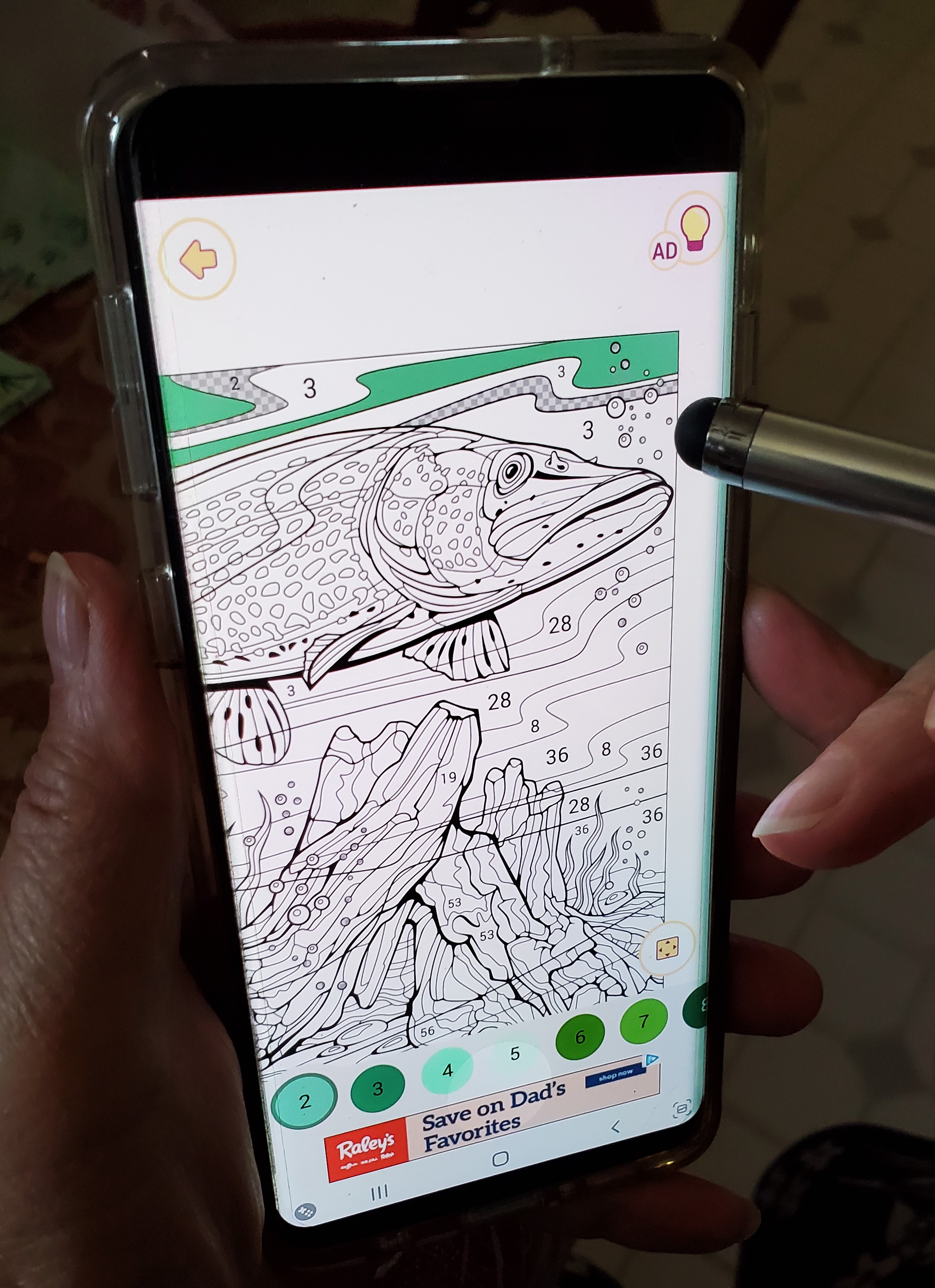
How did I discover the wonder of plotting while coloring fish? I downloaded an online coloring book to my phone for something to do while standing in lines, etc. Quite by accident, I discovered the Zen of it all. With my hands and eyes occupied finding numbered colors, my brain began to noodle over my plot predicament, working it out with each color, my eyes locked on the screen, my senses engaged in the picture filling in before my eyes. Any scientist will tell you that one time is not proof, so the next time I was stumped, I did the same thing, and again, the plot resolved itself, enabling me and the characters to move on.

Which is wonderful, but unless I grab a notebook or run to my computer, my thoughts are lost in the ether even if repeated out loud seven times. I used to be one of the notebook people, spiral-bound notebooks in different colors with the book’s working title written across the front in indelible ink. The troubles with that method are the following: which notebook is the note in, where is the notebook (never where I am), and on which page are the glorious words that take the plot from mediocre to the heights (I tended to write on the backs of pages, up the sides, and in no particular order).

I now have my ReMarkable2 (https://remarkable.com/) at my elbow, not a notepad, not a notecard, or a sticky note. When inspiration strikes, I scribble my brilliance on a page in my ReMarkable, name the file so I can find it, file it under the appropriate book, and keep coloring or keep scribbling depending on where the flow is best, comfortable that my genius has been captured. When I do get to the computer, I prop my ReMarkable on a bookstand, open the appropriate file, and have my thoughts, new direction, and any new text at hand as I write.

I can hardly wait to color each morning. It gets my juices flowing, allowing me to revisit where I left off writing the day before and resolve any outstanding issues before applying the seat of my pants to the seat of my chair and succumbing to the discipline of writing.

And if I get stuck, I can always color fish or birds or flowers or . . .

It Take a Village by Karen Shughart

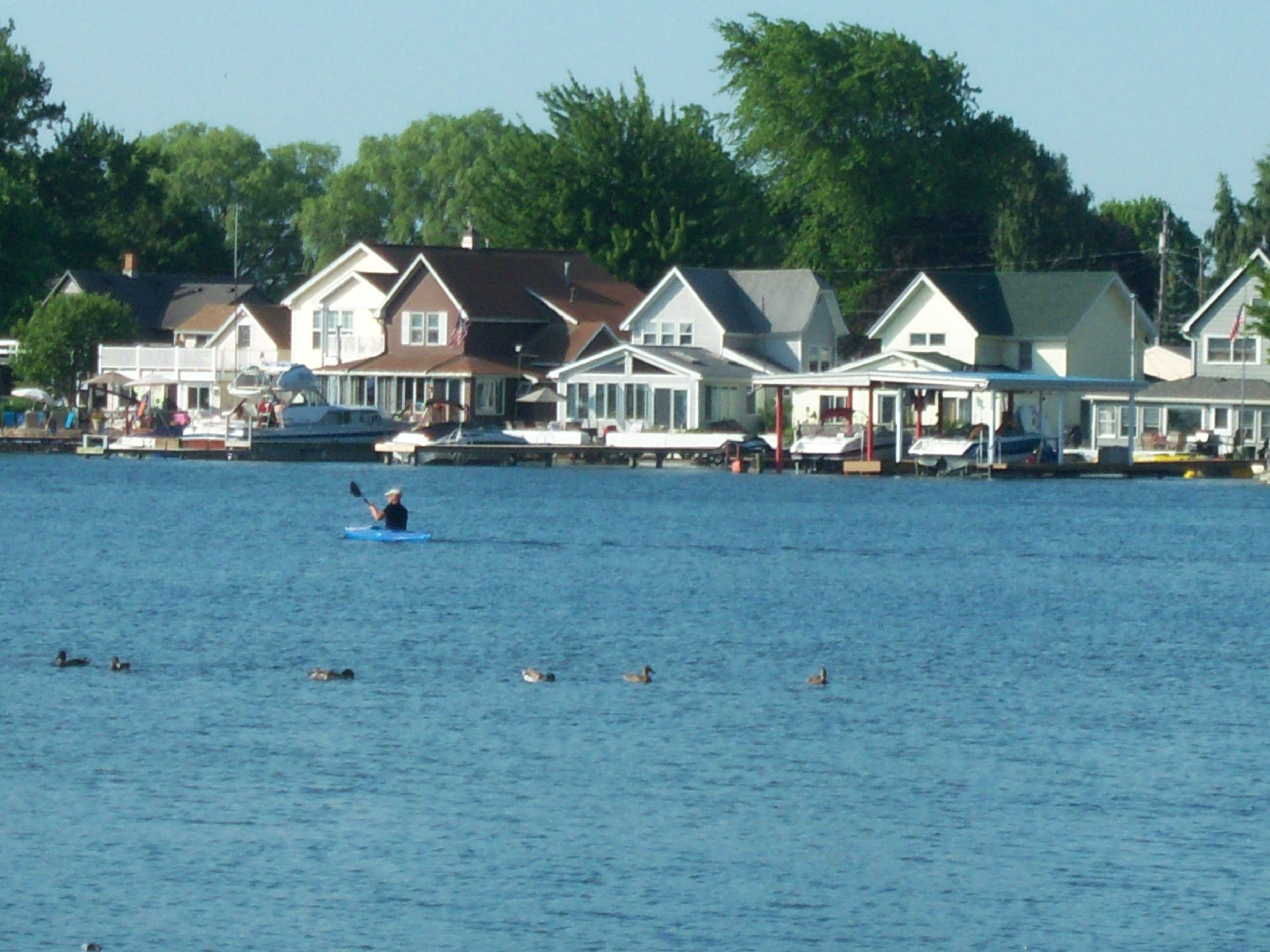
The setting for the Cozies I write is a village on the south shore of Lake Ontario in New York, and while fictionalized, it closely resembles the village where I live. If you’ve read the books, you might remember that typical of the genre, there’s a close-knit group of characters who, in addition to solving crimes, also get together for social and community events and to provide support in times of stress.

It’s no accident that I chose to model Lighthouse Cove after Sodus Point. It’s much easier to write about what you know, and while the characters in the book are mainly figments of my imagination, the preponderance of people here are as kind and caring as those, other than the villains, portrayed in the books.

Without going into a lot of explanation, a couple of weeks ago our 21-pound Blue Tick beagle, Nova, escaped from our fenced-in yard on a bright, sunny day.  My husband was out running errands, and when I discovered she was gone, I sprang to action and started walking the streets calling her name. One of my neighbors checked to see if she had perhaps wandered into her carriage house. Another, on her way out of town, took a few minutes to drive around to see if she could spot her. A young woman I’d never met was walking her dog and said she’d look, too, and would bring her home if she found her.

After my husband arrived, we fanned the neighborhood on foot to no avail. We decided to post her photo on a couple of local Facebook sites and then get into the car to continue the search, but before we did, I checked my phone. There was a message. One woman who lives about three blocks away had spotted her, and while she wouldn’t come when called, that person herded her to the home of a friend who always keeps treats and a lead at her house. Fortunately, Nova had identifying tags with phone numbers, and we were notified.  Within an hour of her escape she was home safe and sound, tired and a bit scared, but no worse for the wear.

Around dinner time that evening, my phone rang. A friend, who had heard about her escape from another, asked if we’d found Nova and said that earlier, when he’d heard the news, he’d gotten on his bike and ridden around our village looking for her. The next morning, when my husband walked her, a man he didn’t know stopped him on the street and told him he was glad we’d found our dog.

For some, living in such a tight-knit community would be claustrophobic and confining; for us it’s been a blessing. There are many more incidents I can recall where people have banded together to help those experiencing some sort of crisis that I’ll write about at a different time. But for now, I’ll end with expressing gratitude for living in a village where the call for help is always answered.

Guest Blogger ~ Suzanne Trauth

How did I come up with the main character in the series?

     The heart of the Dodie O’Dell mystery series is, of course, Dodie herself, restaurant manager and amateur sleuth. I began the first book in the series, Show Time, around 2014, only a couple of years after Hurricane Sandy devastated much of the New Jersey shore area. I’d been toying with the idea of a female amateur detective and I knew I wanted her to reside in northern Jersey, in the general area where I lived. And I wanted her to be new to the location…not born and raised there. So my goal was to find a way to get this character to my fictional small town of Etonville. In the first book, after Hurricane Sandy destroyed the restaurant she managed, as well as her home, Dodie was ready for a new life. When a job opened up in a restaurant owned by a relative of her former boss, she jumped at the chance for a second chapter. As luck would have it, the Windjammer restaurant was located next door to the Etonville Little Theatre, providing an abundance of opportunities to showcase interesting menus and the foibles of small town community theatre in my books!

     Dodie became friends with many of the theatre’s members and before long she was helping out on her days off—sewing costumes, hanging lights, assisting at auditions. And then she got a brainstorm, a way to boost the Windjammer’s business while supporting the Etonville Little Theatre: create theme food for every production. For example, seafood for Dames At Sea, Italian fare for Romeo and Juliet, a 1940s Brooklyn food festival for Arsenic and Old Lace. It was a smash success except for one problem…dead bodies started to turn up. Although no one blamed Dodie for the mysterious murders, she had to admit they did begin to appear once she moved to town. She assumed the role of unofficial detective, helping, or sometimes hindering, Etonville’s police chief with her quick-witted, outside-the-box detection skills. Not to mention her ability to navigate the town rumor mill at the local hair salon.

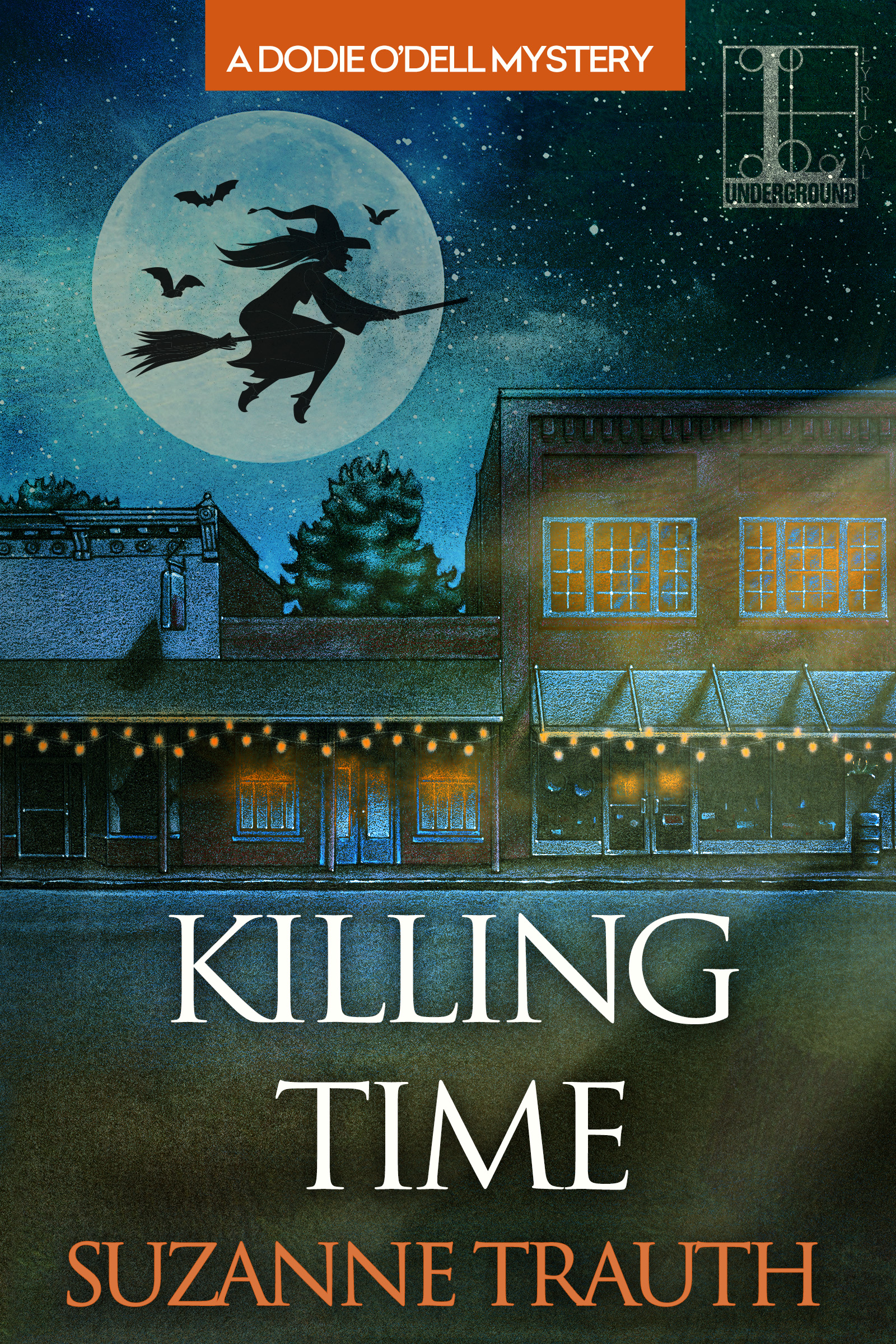
     The latest Dodie O’Dell mystery, Killing Time, is set on the eve of Halloween and the theatre is rehearsing Dracula. When a stranger appears in the town cemetery with a stake in his heart, Dodie shifts her attention from the production-themed food—a garlic infused menu from appetizers to entrees—to solving the murder in order to rescue the production.

     Every book in the series is focused on a different play paired with theme food served at the Windjammer restaurant…and with a murder related to the theatre’s current production, with victims such as the box office manager, a guest director, a musical accompanist, even a stranger found on the set on an opening night. Dodie has her hands full solving mysteries, managing the restaurant, and supporting her theatre friends. She’s up to the challenge!

With Halloween just around the corner, Dodie O’Dell is making preparations for the town costume party while the Etonville Little Theatre is staging Dracula. But casting the titular Transylvanian is proving challenging. The amateur actors in the company are not shy about chewing the scenery, but who among them can convincingly sink their fangs into a victim’s neck? When a mysterious newcomer with a transfixing Eastern European accent lands the part, rumors that he might be an actual vampire start to take flight—not unlike the bat who’s recently been spotted in the town park. But everyone’s blood really runs cold when a stranger is found in the cemetery with a real stake in his heart. Dodie decides to stick her neck out to bring the killer into the light of day. She’d better keep her wits about her, though—or Dodie may be the next one to go down for the Count . . .

Buy Links:

https://www.barnesandnoble.com/w/killing-time-suzanne-trauth/1132868201?ean=9781516107261

https://bookshop.org/books/killing-time-9781516107261/9781516107261

Suzanne Trauth is the author of the Dodie O’Dell mystery series—Show Time, Time Out, Running out of Time, Just in Time, No More Time, and Killing Time—and What Remains of Love, an historical romance, as well as plays and non-fiction books. In her previous career, she spent many years as a university professor of theatre. When she is not writing, she coaches actors and serves as a celebrant performing weddings. She lives in Woodland Park, New Jersey.

Visit her website: http://www.suzannetrauth.com or connect on Facebook: https://www.facebook.com/SuzanneTrauth


Thank God for Beta Readers

I am closing in on finishing my 14th novel. By which, I really mean that I just finished my rough draft. So, as most authors know, the real work begins: soliciting feedback, rewriting, planning for launch. And I absolutely, positively, could never finish without beta readers.

I do have a few critique partners who read chapters along the way as I write, but for the most part, I wait until I have a complete rough draft before sharing it. That’s because I am a pantser who changes a lot along the way, so it can be frustrating and sometimes a waste of time to share rewritten material over and over again.

My favorite description of how the novel writing process typically goes was written by bestseller Lisa Gardner in Plotting the Novel: Otherwise Known as The Real Reason Writers are Neurotic, which you can get from her website. Her description is hilarious, and oh, so true! And it’s how the process works for me every time, except that I rarely create an outline, so my process is even more chaotic. But it’s true that, like Lisa, I always start off thinking I have a brilliant idea, and then, as I work on the dang manuscript over and over, I inevitably end up thinking I have a worthless book that nobody will ever want to read. (We writers tend to be an insecure lot.)

For Cascade, my sixth Sam Westin novel, I wanted to use the experience I gained years ago at the Writers Police Academy of crawling through a collapsed building. My novels mostly take place in outdoorsy settings, so I had an avalanche destroy a ski lodge. And my Sam Westin books include wildlife, so I threw wolverines into the mix (not in the ski lodge!). But did I really have a story? As I wrote and rewrote the scenes, I began to wonder if I’d totally forgotten how to write at all.

This probably happens to every novelist who does not suffer delusions of grandeur. By the time I reach the rough draft stage, I’m so bored with my characters and plot that I want to throw the manuscript in the trash. Every scene, every conversation seems repetitious. But I know this largely comes from thinking, rereading, and rewriting the same material over and over again. At least I hope it does.

So, I really rely on a handful of beta readers to tell me whether or not I’ve created a novel or I should just stick to weeding my garden from now on. Some authors have a whole team of alpha readers to read the first draft, and then a different team of beta readers to read the rewritten version. I like to think that now I’m a little more efficient than that (probably a delusion of grandeur), so I generally skip the alpha step and go straight to beta readers.

These brave souls are willing to read a rough draft and tell me what they like, what they hate, and where I went totally off the rails. (This does not replace a thorough copyedit, by the way; I always hire a real pro for that as a last step.)

I am now in the “Help Me with my Rough Draft” phase, and I can only hope that my beta readers save me again. Meanwhile, I’ll be weeding my garden.

Help a Writer Save a Wolverine

On The Road

As you are reading this, I’m off on a research trip for the next Gabriel Hawke novel. This one is set in Montana. I have an place in the middle of the two areas I need to research.

This story started about 5 years ago, before I had even started writing the Gabriel Hawke series. My husband and I were driving from the south to the north of Montana headed to visit my cousin in near Flathead Lake. As we followed this lake, I looked out and spotted a resort on an island in the lake. My first thought was “what a great place to have a writers retreat!”

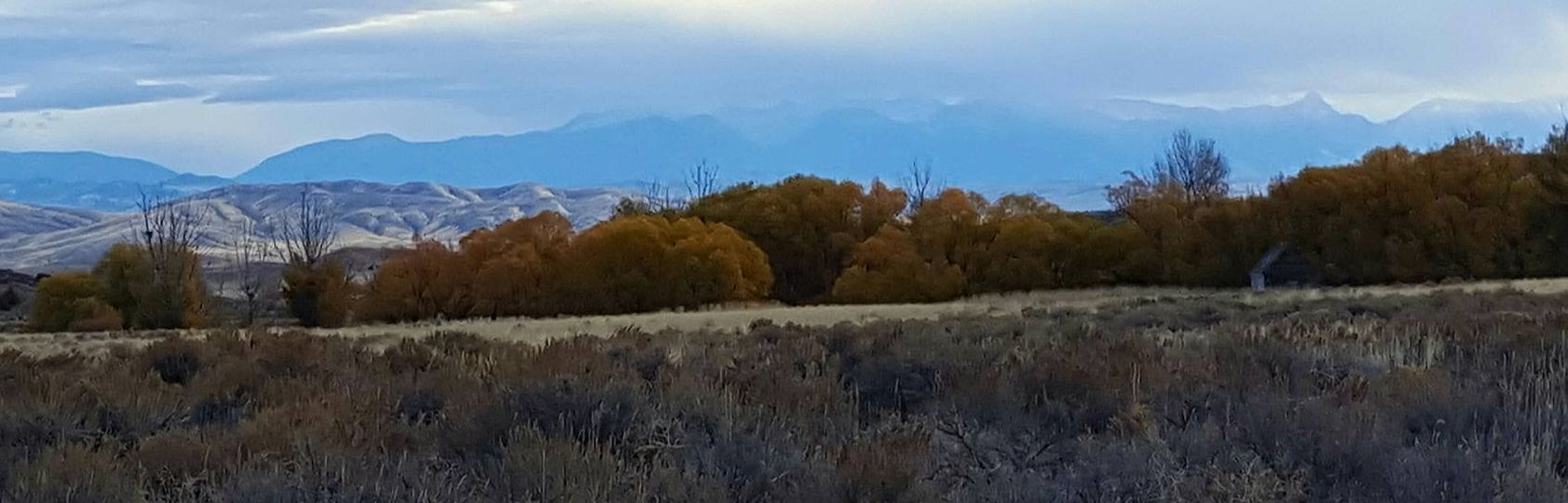
A photo from when I was in Montana before. This is south of the lake.

That island and building kept coming back to me and when I decided on the premise of book 10 in the series, I knew that resort would be in the story.

I didn’t know the name of it and hubby and I were of a different opinion of which road we’d been on. One of my oldest daughter’s friends lives and works in Helena, MT. I contacted her and asked if she’d seen the place on her weekend drives. She knew the place and sent me a link to their website. I had been right! It was off the road I had said we’d driven up to my cousin, not the road, hubby had thought. Score one for me! That doesn’t happen often when it comes to driving and roads since hubby was a truck driver for 30 years.

With the website I looked up the island and the resort. I had hoped to stay there one night and get a feel for the place. Not at $2000 a night! So then I emailed and asked if I could just come hang out for a couple of hours (you have to get there by boats that are run by the resort). I explained I was a writer and wanted to use the resort for a couple of scenes in my book.

The person who wrote back to me asked if I was the author who had requested the same a while back. I said no. When I told her when I’d be in the area, she said there would be guest at the resort and no one else was allowed. But she would be happy to answer my questions and send me any photos I might need. You can bet after I go scope it out from the side of the lake, I’ll have more questions for her. Luckily it is only being used as the place where Hawke’s sister is attending a corporate retreat and it is more of a starting point for the story than a main setting.

The other place I’ll be visiting is the Flathead Indian Reservation. I’m debating on where the sister will run to, the reservation or the wilderness. That will depend on what I find out on my trip.

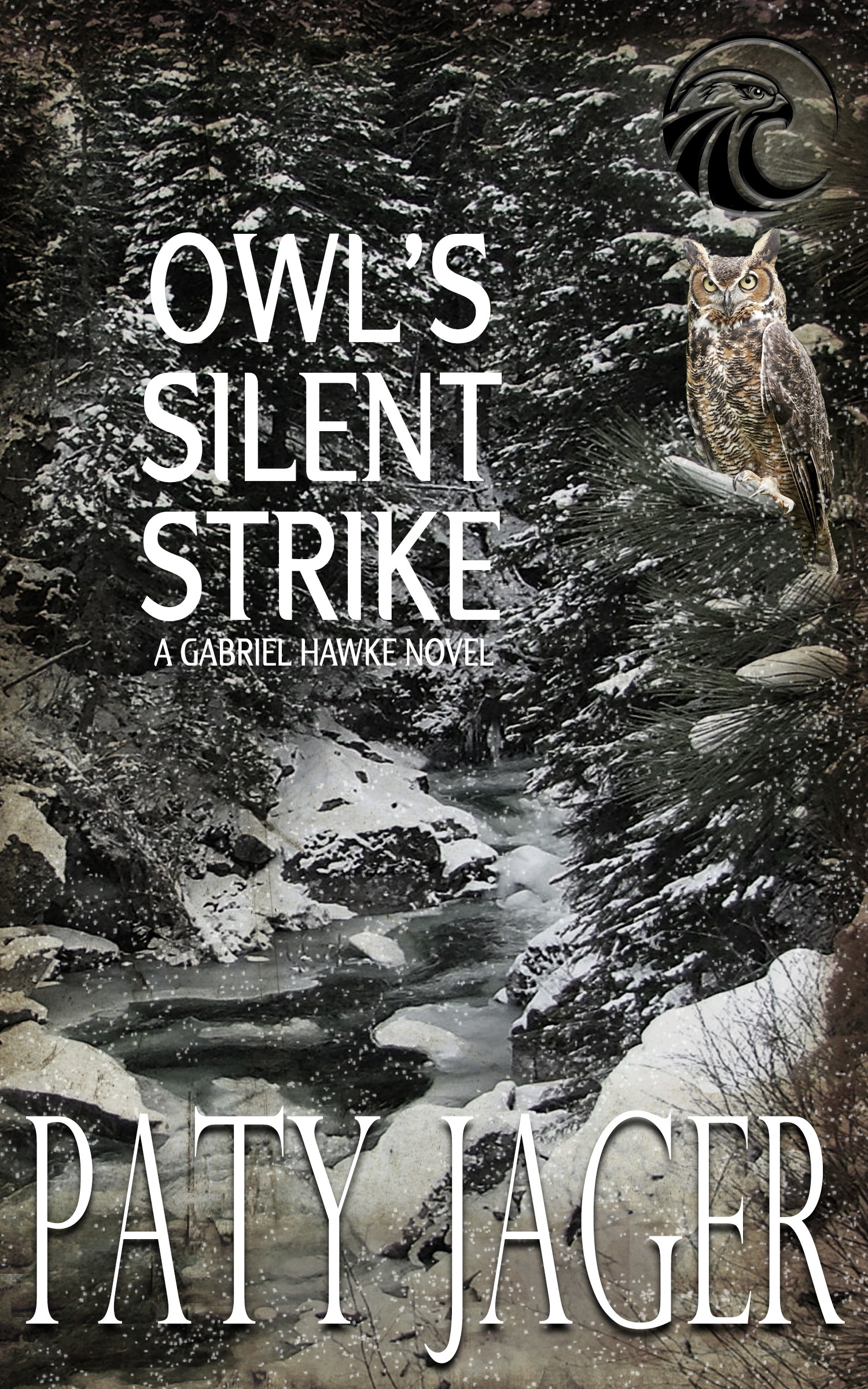
Right now, I’m pleased to say that book 9, Owl’s Silent Strike, is now available in ebook and print. My narrator is working on the audiobook.

Unexpected snowstorm…

Unfortunate accident…

And a body…

What started out as a favor and a leisurely trip into the mountains, soon turns State Trooper Gabriel Hawke’s life upside down. The snowstorm they were trying to beat comes early, a horse accident breaks Dani Singer’s leg, and Hawke finds a body in the barn at Charlie’s Lodge.

Hawke sets Dani’s leg, then follows the bloody trail of a suspect trying to flee the snow drifted mountains. Hawke is torn between getting the woman he loves medical care and knowing he can’t leave a possible killer on the mountain.

Before the killer is brought to justice, Dani and Hawke will put their relationship to the test and his job on the line.

universal buy link: https://books2read.com/u/bw19DG