What I’m Thankful For, Yes, it is that Time of the Year

Isn’t it a good thing that we can reflect on all the things we’re thankful for?

I’m thankful for my beliefs–my God and my church. And of course I’m thankful for my husband I’ve had all these many years.

I have a wonderful and big family and I’m thankful so many of them will be sitting around our Thanksgiving table–and I’m thankful for all the Thanksgivings in the past. I’m also thankful for my health and ability to still cook and host a big dinner.

I’m thankful for my writing and that I still enjoy doing it. I’m also thankful for those who read my books and let me know that they’ve enjoyed them.

And I’m thankful that I’ve sent my next Rocky Bluff P.D. mystery off to my publisher.

For fun, I’m offering one of my older books, Lingering Spirit, for .99 cents on Kindle from December 7- 11. No, it’s not a mystery, it’s a romance with a touch of the supernatural. It’s actually one of my favorite books as it’s based on something that happened in our family–of course fictionalized, but containing a lot of truth.

Ling Spirit Front Cover

http://www.amazon.com/Lingering-Spirit-Marilyn-Meredith-ebook/dp/B017J2QEOM/ref=sr_1_1?s=digital-text&ie=UTF8&qid=1447170247&sr=1-1&keywords=lingering+spirit+by+marilyn+meredith&pebp=1447170266835&perid=0VDJD62KDMGW88SB2TX0

Blurb:

After her police officer husband is killed in the line of duty, Nicole Ainsworth struggles with the changes forced on her life. Her efforts to focus on her daughters and cope with her grief are kept off-balance by images of Steve, her deceased husband who seems to be trying to communicate with her. Eventually, Nicole finds that Steve isn’t the only one watching over her, and discovers a second chance at happiness.

And I’m thankful for everyone who takes the time to read this blog.

Marilyn

EVOKING A TIME AND PLACE

copy

I read a lot of mysteries, naturally, because friends write books and there are always new and exciting mysteries to dive into. But sometimes I take a break from these and read other books: non-mystery novels, biographies, and nonfiction in general. I also belong to a book club, and the choices of the members are often different from the books I read on my own. Since I’ve become a writer, I’ve become much more aware when I’m reading a book of the skill of the author in taking me into a place or time so fully that I feel as if I am actually there.
I recently read a book by Sigrid Nunez called THE LAST OF HER KIND, which takes place in New York at the end of the sixties and into the seventies. This was a book that plunged me back to that time. It was a time of civil unrest: the 1968 Democratic convention in Chicago, riots and takeovers of buildings by university students, the assassinations of Bobby Kennedy and Dr. King, among other events. There is an evocation of an LSD trip by the woman experiencing it that made me remember how assiduously I had avoided trying the drug. The book made me uncomfortable in the same way that I remember being uncomfortable then, as though I had been dropped back almost fifty years and somehow entered a strange planet full of people who were entirely different from those I thought I knew.
Some books bring me such a sense of actually being in the setting among the characters that a return to mundane life is almost painful, returning to earth from a fantasy trip and being forced to pick up my bookmark to mark my place and go back to work or to whatever task faces me. I was like that as a child, always lost in the world of a book, reluctant to face the monotony of long division or algebra.
James Lee Burke’s Louisiana mysteries bring me into the oppressive heat of New Orleans; Tony Hillerman’s description of the Navajo world makes it come alive; I don’t remember the settings of Agatha Christie’s books because I was always too immersed in the puzzle; but Ellis Peters’ medieval tales evoked the monastic setting and the period; and Elizabeth George created a fascinating English world including an entire Oxford college in one of her mysteries.
Recently I visited my friend in Florida where I have set my two mysteries: A REASON TO KILL and SO MANY REASONS TO DIE. We made a trip to Vero Beach, a city north of where my friend lives and where I had never been. It’s quite a well-to-do area, and I immediately began to set some scenes from the book I’m currently working on in that town: more expensive than Burgess Beach where Andi and Greg, my two detectives live and work, with houses set both on the Indian River and on an island facing the Atlantic Ocean. I find myself absorbing details of new places, trying to remember my feelings when I’m there, in an attempt to recreate new settings in my writing.
Do you enjoy new settings in your reading or writing? I’d love to hear about books that evoked memories from you or made you want to travel there.

The Story Within the Story

thumb_IMG_1225_1024

One of the things I love about murder mysteries – traditional mysteries such as those I write, cozy mysteries, police procedurals, noir, all of them – is that the investigation is simultaneously crucial to the story and tangential to it.

The mystery, the puzzle the detective – and the reader along with her – has to solve is “whodunit”?puzzle dog

But before that, long before the butler is strangled or the chef chopped up or the heiress shot, before any of those things, there’s another story. The story behind the crime. The story of the criminal.

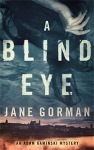
A-Blind-Eye-Web-SmallI love writing about the criminal. What intrigues me, what challenges me as an author, is writing that story. Because you have to write it within the story of the detective.

The detective who solves the puzzle is the protagonist. He examines the dead body, sees the scene of the crime. She must dig up clues, talk to witnesses, learn about the character and background of the suspects. That all happens on the page.

The other story, embedded deep within the surface story, is the story of the criminal. In my books, this person’s story starts long before the detective shows up. A wrong was endured, for example. Or an innocent mistake made. A mistake that snowballs. That propels someone inexorably toward murder.

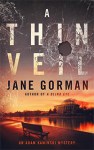
As an author, I can’t simply go back and write that story. It would ruin the puzzle! It’s a A-Thin-Veil-Web-Smallhidden story. Somehow, I have to find a way to paint a picture of events happening now in a way that exposes events of long before.

Telling the killer’s story means revealing feelings, actions and thoughts that led the killer to commit the crime. Exploring the passions that drove him months, perhaps years, earlier. But telling them in such a way that the reader experiences them as if they were new, fresh wounds.

That’s the story within the story of any murder mystery. The story of the killer. A story of pain, despair and ultimately a story of evil. A story that unfolds, bit by bit, piece by piece, as the detective unravels the killer’s lies, exposes the killer until his story rises to the surface.

The detective’s story and the killer’s story intertwine. By the end of the book, the two stories collide. The puzzle pieces all fit together.

BOOKS I’D LIKE TO WRITE

DSC_0194-final      I often think about the books I’ve started or thought about but never really got down to writing. Lawrence Block in TELLING LIES FOR FUN AND PROFIT, said he had a friend who, on being asked where he got his ideas, said that he said that “there was a magazine published twice a month called The Idea Book,” and that he, as a professional writer, had a subscription. There isn’t any magazine called The Idea Book, but there are lots of stories in everyone’s life that can become novels or short stories.

I started to write a mystery novel a long time ago, set in a just post-colonial African country. I didn’t get very far, but it was clearly based on my experiences in East Africa as a Peace Corps volunteer. I’d love to go back to that. I have lots of ideas about what would happen, and, because it would be a murder mystery, who was the victim and who the murderer. But when I started writing the story in the pre-computer age, it was so difficult to edit my work on a manual typewriter that I gave up.

How did writers manage before computers? I have to give them a lot of credit for perseverance. I know writers who still write by hand, but I would never have the patience. I want to correct as I go along, and having to rewrite paragraphs or put arrows directing me to some other section would be unbelievably frustrating.

Another idea I had, which began a novel that never got beyond the first chapter, was the result of talking with a woman I met on an airplane. I don’t remember where we were going, but she told me that she worked during the day as an attorney and had a night life as a rock singer. It may well have been something she made up for my benefit, but it gave me a wonderful idea for a novel. I worked on it for a while, but I never got very far. Not enough courage at the time, I guess.

The more I write, the more ideas come to me. I loved the report that fellow Ladies of Mystery blogger Jane Gorman wrote about on September 21st regarding the buried mystery train. That would make a great story. Murders reported in the local paper give me ideas for mystery novels. I kept a clipping for a long time about a man who was arrested years after the body of a woman he worked with was found in the trunk of her car. In a mystery story, the hero–cop, private investigator or amateur sleuth–would have found out much earlier that he was the murder. Fiction can be much more organized than life.

Most recently, I read a book called PSYCHIC JUNKIE: A Memoir by Sarah Lassez.Jans PhotoThe book made me think of creating a mystery about a woman who is addicted to going to psychics and letting  them guide her life. This led me to write PSYCHIC DAMAGE, a thriller which is due out in early 2016. I hope you’ll look for it.

Ideas for stories are everywhere. You just have to look around you. What do you do with your ideas? Don’t throw them away! Save them for stories.

Raising the curtain on stage mysteries

By Sally Carpenter

I love watching plays as well as reading and writing mysteries. However, despite the fact that longest running play in history is a mystery (Agatha Christies’ “The Mousetrap,” continuously running in London since 1952), mysteries are seldom produced in local theater.

One reason could be that musicals sell more tickets than non-musicals and comedies are more popular than dramas. “A Gentleman’s Guide to Love and Murder” is doing well on Broadway because it’s a musical comedy and also is based on the same novel as the well-known movie “Kind Hearts and Coronets.”

Some mystery plays that I’ve seen on stage:

“Arsenic and Old Lace.” Not a mystery but plenty of murder and dead bodies. Is there any amateur company that hasn’t done this show? I ran props for my high school’s production and saw it years later at a community theater. Its popularity seems odd due to the questionable moral ethics: the killer aunts are not punished or stopped for their crimes, neither do they show regret or remorse.

“Prescription: Murder.” Richard Levinson and William Link adapted their play into the pilot episode for “Columbo.” The play takes place in New York City but the TV movie was set in Los Angeles for filming purposes. In the play, the detective wears an overcoat, not a raincoat. The ending of the original script and the movie are different. For the 2004 production at West Valley Playhouse (Canoga Park, Calif.), Link rewrote the ending to match the movie version. Bob Van Dusen, who played Columbo, fortunately didn’t attempt a Peter Falk imitation. He played the detective as quirky, inquisitive imp and I loved it.

“The Mystery of Edwin Drood.” A musical based on an unfinished novel by Charles Dickens. Since the book doesn’t name the killer, at the play’s conclusion the action stops long enough for the audience members can vote for the killer. After ballots are tallied, the play is resumed with a final scene based on the votes. When I saw the show in 2007 at the Simi Valley Cultural Arts Center, the voting results were not released, so I don’t know if the company presented the same ending each night or not. It’s possible the actors rehearsed a variety of endings.

“Victor.” Not a mystery but an adaptation of the “Frankenstein” story. I saw this in 2007 at the High Street Arts Center (Moorpark, Calif.). Spooky atmosphere and great acting in this production.

“Angel Street.” The American title for the British play “Gaslight” in which a husband tries to drive his wife insane so he can search for missing jewels. Seen at Conejo Players Theatre in Thousand Oaks, Calif.

“The Murder Room.” I never heard of this play until I saw it in 2007 at the tiny, 50-seat Stage Door Theater (now closed) in Agoura Hills, Calif.  It’s a funny, zany spoof of British mysteries with the standard upper-crust characters, foggy evenings, loony plot twists and secret compartments build into the set. Catch it if you can.

“And Then There Were None.” An adaptation of Christies’ “Ten Little Indians.” I’ve seen this play at theaters in two states. A good show except as the characters are killed off, the suspect pool dwindles until the killer’s identity is fairly obvious.

“Pack of Lies.” An interesting script set in England and something of a spy thriller. A man, who seems connected with the police, uses the home of an ordinary family to spy on their neighbors. Are the family’s best friends up to no good? That’s the mystery. I saw the show staged by Panic Productions in T.O.

I’ve seen the movies made from “Witness for the Prosecution,” “Anatomy of a Murder,” “Deathtrap” and “Sleuth” but not the stage versions. I’m hoping someday a local theater will a production of any or all of these.

What are your favorite mystery plays?