And Now the Fun Begins

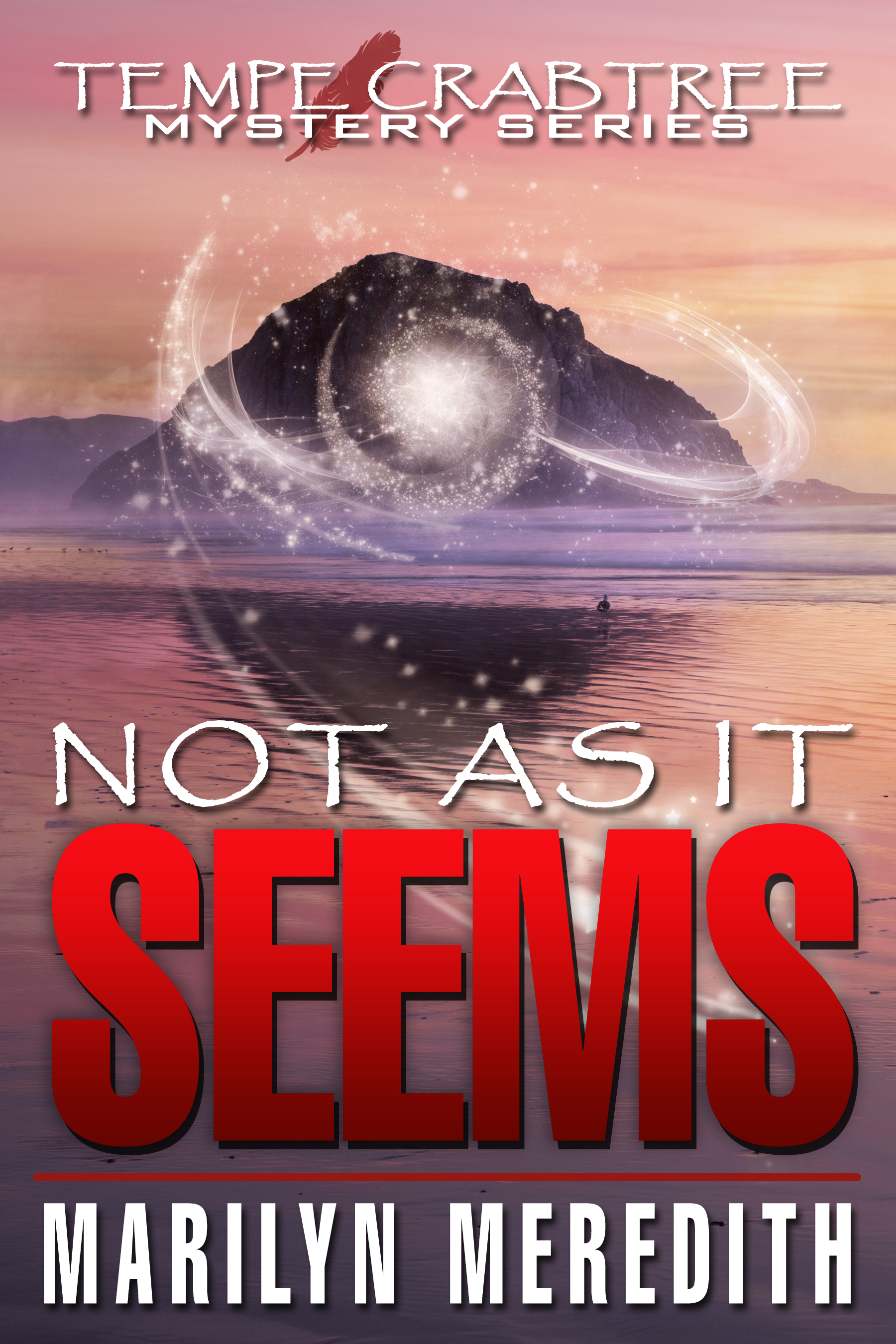
Because my latest Deputy Tempe Crabtree mystery, Not as it Seems, is available in all the usual places, in paper and as ebooks, of course I’ve been busy with promotion.

I’m nearing the end of a blog tour with today’s post being on Paty Jager, my follow Lady of Mystery’s personal blog, http://patyjager.blogspot.com/ and I’ve already participated in one big book fair over in the area where the new mystery is set, the central coast of California.  I’m headed to another, The Great Valley Bookfest in Manteca CA on October 10th, and I’ll be in my publisher’s booth at the Art Festival in Visalia on October 17th. You never know how these things will go as far as book selling is concerned, but it’s a great way to meet a lot of book lovers.

To be perfectly honest, I’m never really done with promotion because I have two series, which mean I have two new books coming out each year. Nor am I ever done writing–when I’ve sent one book off to a publisher, I’m busily working on one for the other publisher.

Is it all worth it? To be honest, if I’m talking about money, no.

You might wonder why I don’t quit. The reason is I love the characters in both series, the only way to know what’s going to happen to them next is to write the next book(s).

So, is it fun what I’m doing? Yes, for me it is. I love writing and the worlds I’ve created. I love talking to other writers and readers.

What I’m wondering is, is it fun for the rest of you writers? And readers, do you enjoy meeting writers at book fairs and other places?

Marilyn

NotAsItSeems-lg

WHAT DO YOU DO WHEN YOU GET STUCK?

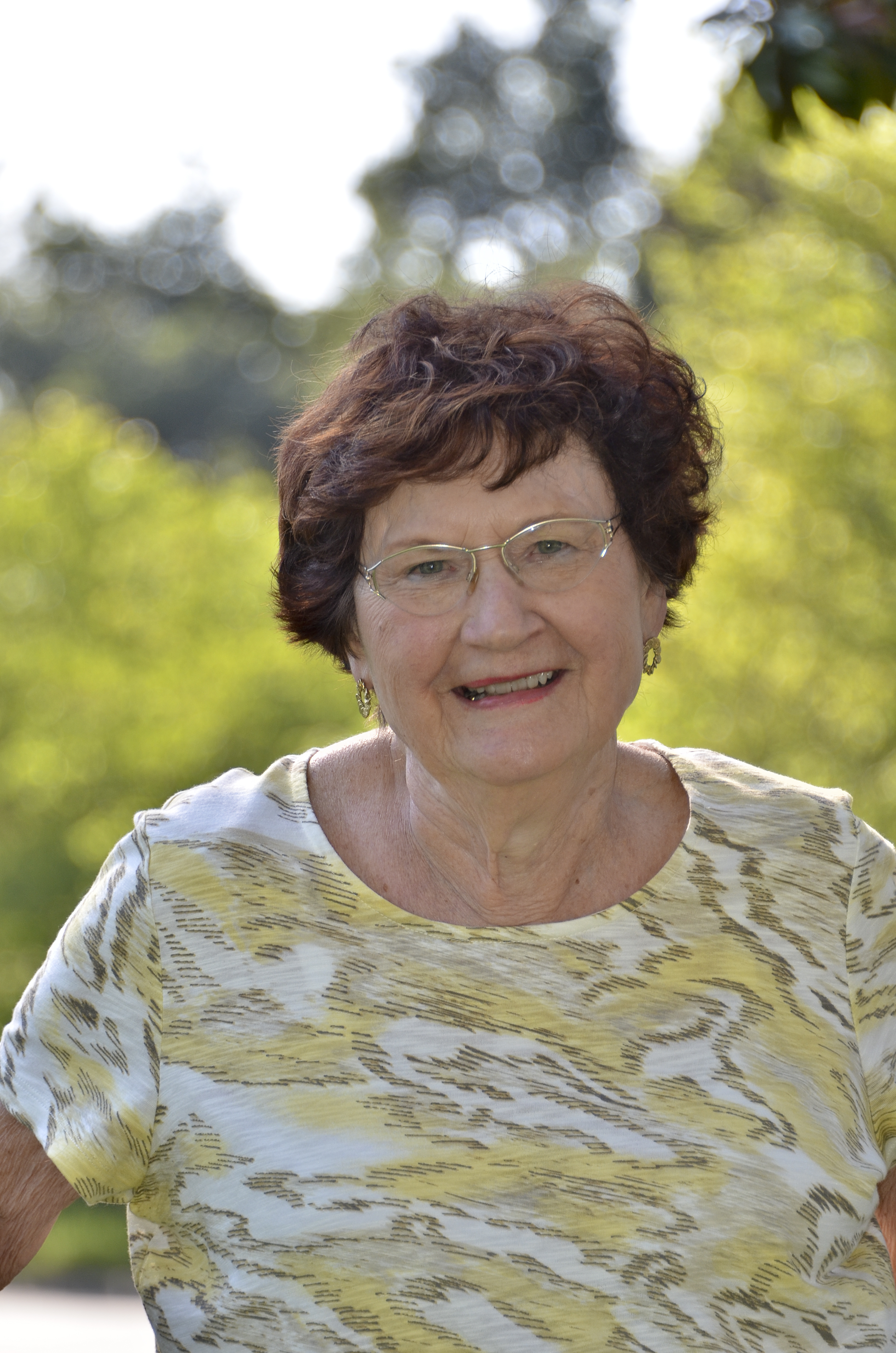
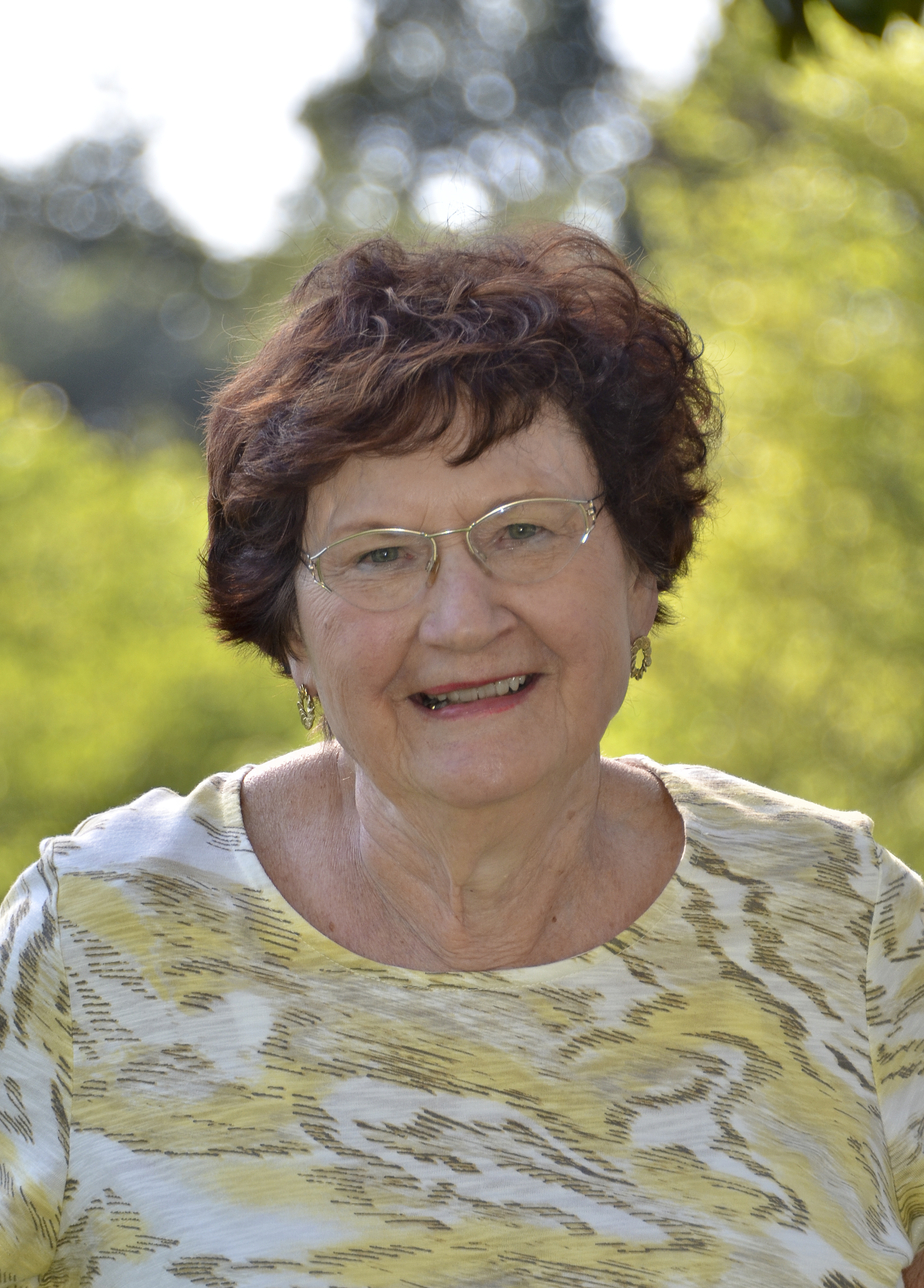
DSC_0194-finalMarilyn Meredith, another of the Ladies of Mystery, wrote a blog in July about whether you as a writer are a plotter or a pantser and how to know which you are. Plotters of course plan everything out even before they start to write. They may outline or write all the scenes down on 3 x 5 cards which they post on bulletin boards. Maybe they don’t do a formal outline, but they have a pretty good idea of who the characters are, what the plot is, and who the bad guy is.

I was never able to do an outline, even when it was a school assignment. The whole process seemed beyond me. So, clearly, I have to be a pantser, someone who sits down daily at the computer and doesn’t have a clue where the story is going. Most of the time this works for me. I have a vague idea when I finish one day where I’m going to do the next. The scene unfolds in my head as I write, the characters take over and the story moves along. I said, usually it works. Sometimes, though, it doesn’t and that’s when I pull up the unsticking ideas I’ve gathered over the years.

Stephen J. Cannell, a great mystery writer, now deceased, spoke at a meeting of the Sisters in Crime/Los Angeles chapter to which I belong and passed on a good thought: when you’re stuck, think about, “What are the bad guys doing?” He said he used that often as a way to approach the story from a different perspective.

As the writer, this works because you are now out of the head of your protagonist, the head in which you’ve become stuck, and are thinking about the story from the point of view of the bad guys. Sometimes, often for me, I don’t know where the bad guys are going either, but looking at the story from their point of view usually gives me an idea of what they’re up to.

I used this dictum in the book I’m currently editing, PSYCHIC DAMAGE, which is due out in the spring. I had two of the bad guys talking about the heroine who has something they want. I wrote a scene, and the scene got me unstuck. Later I realized I didn’t need it, but it had served as an unsticking tool.

As a pantser, I find that my subconscious often puts clues in the book which help me get unstuck. What does this discovery, found in Chapter Two, mean in the scheme of the novel when I write it? Often I don’t know when I write it, but I’ve learned to have faith that I will find out the meaning further along in the book. And it is often an unsticking tool, something that clarifies where the story is going. I’ve learned not to delete those clues that I don’t understand when I write them. They may come in handy later.

I got another unsticking suggestion from a friend, also a writer. She suggestion that I try writing from the point of view of another character or characters and see what that told me about the story. And it worked. I wrote from the point of view of a man who disappeared, and he told me enough about what his plans were to get me unstuck.

I suppose writers who outline don’t get stuck, or they get stuck in the outline process, not in the writing. But I do enjoy writing when I don’t know how things are going to turn out. If I had it all outlined, I’m afraid I’d feel as though I’d already written the book.

I remember one writer saying that when she got to the end of her book, she realized that no one could have committed the murder, so she had to go back and make it possible to solve. That does happen to us pantsers, but it’s all part of the fun of writing.

What about you other writers? How do you get unstuck?

Guest Blogger – Lea Wait

Old houses have always fascinated me.

I’ve lived in old houses – in fact, I’ve never lived in a home or apartment built after 1920. I’ve even bought old homes that needed a lot of love (and money) to give them amenities like plumbing and heat.

The house I live in now was built in 1774 on an island in a Maine river. In 1832 it was moved across the frozen river and pulled up a steep hill to where it is today. My family has only owned this home since the mid-1950s, but I often think of the people who lived here in the eighteenth and nineteenth centuries, and I’ve actually included them in some of my historical novels.

The history of the house itself was the basis for Shadows on the Coast of Maine, the second in my Shadows Antique Print Mystery series. (And – no – the mystery is fictional. We didn’t find THAT when we uncovered the original fireplace.)

I’ve loved the homes I’ve lived in. But I’ve always had a special fascination for old deserted, dilapidated, houses.

Victorian farmhouses crumbling next to their barns on land that’s now fallow. Elegant mansions that became too expensive to heat, or too easy to tax, that were abandoned, perhaps eventually to become office buildings, or apartments, or turned into nursing homes or bed and breakfasts. Or, sadly and too often, bulldozed to make way for more modern, more cost-effective, buildings.

I love books centered around mysterious houses, too. I can’t resist books by authors like Mary Stewart and Daphne du Maurier and Kate Morton. I love mysteries by Linda Fairstein because, although they’re not exactly about large houses, they do incorporate the hidden history of famous New York City landmarks.

I even dream of immense houses full of rooms. I dream of walking through corridors and planning how I’m going to fix up the rooms for people in my family, or for people who are homeless. The houses in my dreams are always in poor condition, but I know they can be brought back to life. The empty rooms can become a home.

I’ve been having dreams like that since I was a child. (Any psychoanalysts out there?)

So it probably isn’t a surprise that my latest book is about – guess what? A large nineteenth century estate on the coast of Maine that, in 1970, was the place a teenaged girl died.

No one has lived in the house for years.

No question. It’s my kind of house.

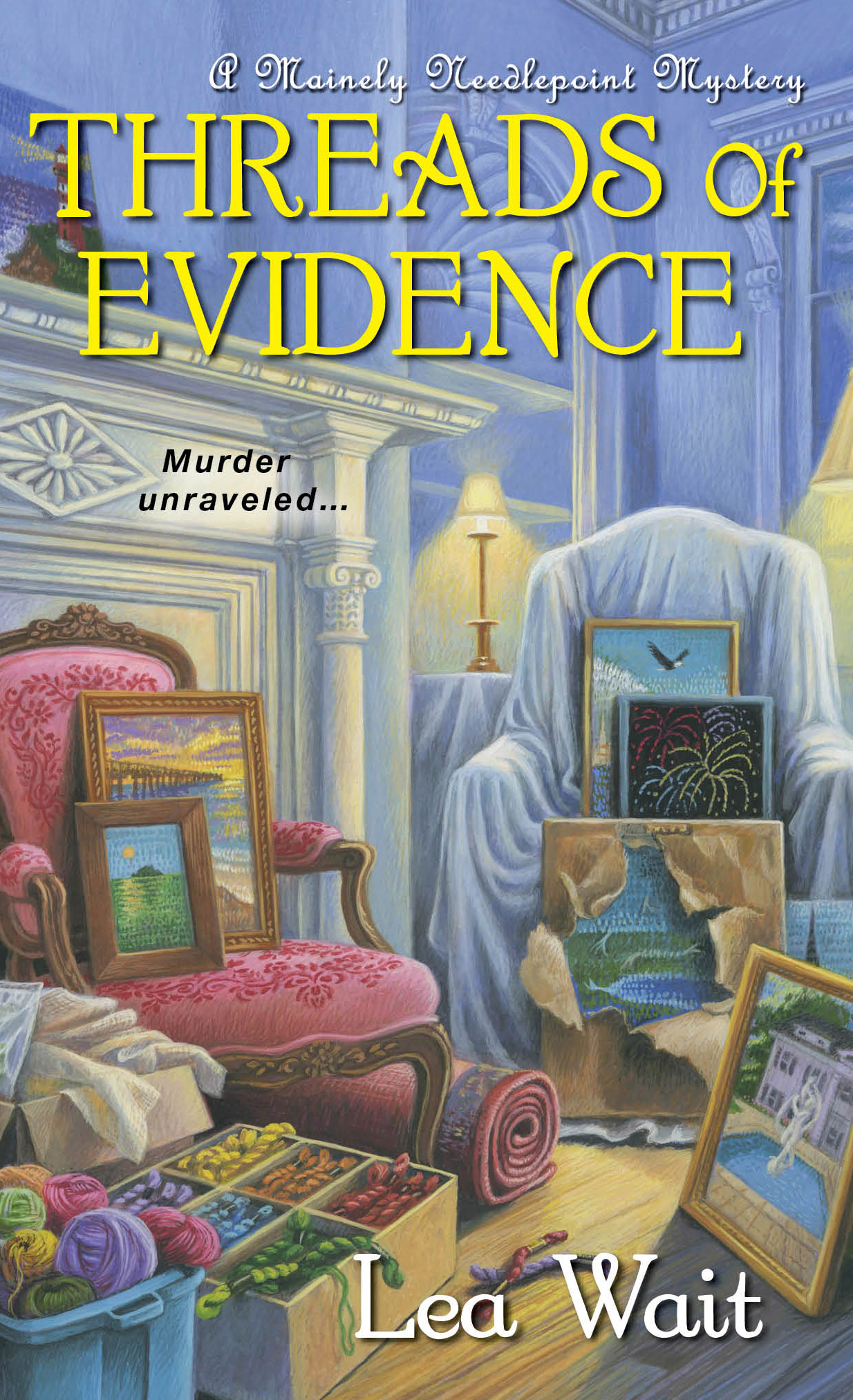
THREADSOFEVIDENCELea’s latest book is THREADS OF EVIDENCE. The old Gardner estate in Haven Harbor, Maine been deserted for years. Folks in town thought it should be torn down. But now a famous Hollywood actress has bought it. Does she have a special reason to come to Haven Harbor? The small village is full of old secrets. When needlepointer Angie Curtis is asked to restore a series of old needlepoint pictures found in the Gardener house, she finds clues that may lead to discovering what really happened in 1970, when seventeen-year-old Jasmine Gardener died there.

Amazon link:

http://www. amazon.com/Threads-Evidence-&pebp=1433544126655&perid=OTJPND2814N6ZJ8AS7F1

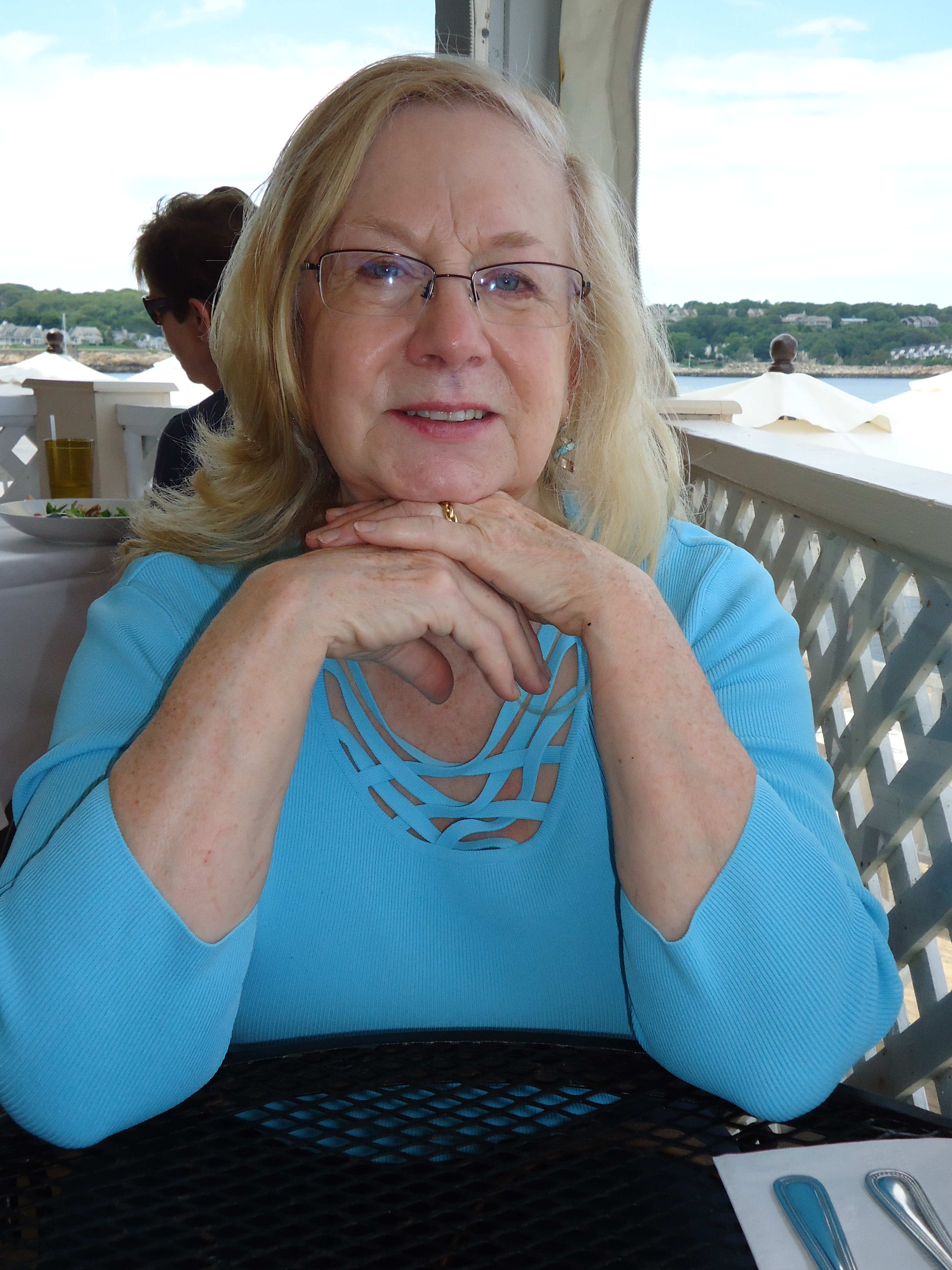
DSC01566Lea Wait writes the Shadows Antique Print mystery series, the Mainely Needlepoint series, and historical novels for young people. As a single parent she adopted her four daughters from different Asian countries. She’s now the grandmother of eight, and lives on the coast of Maine with her husband, artist Bob Thomas, and their black cat, Shadow. To learn more about Lea and her books, see http://www.leawait.com and friend her on Facebook and Goodreads.

WHAT’S IN A NAME?

casojka123's avatarcasojka

copyHave you ever read a book in which the characters’ names don’t seem to fit them? Or the names don’t stay in your mind, and you have to keep looking back to find out who it was who just appeared in a scene? When I write, characters’ names are as important as their physical descriptions and their personality quirks.

Almost everyone I know who has read the great Russian novels complains that she can’t keep track of the characters because the names keep changing. You’re not likely to refer to Levin as Constantin Dmitrich in the middle of your story, but don’t start calling John Smith Johnny or Smitty if you don’t want to lose your reader.

Charles Dickens came up with some truly appropriate names for his secondary characters, names so fitting that they are identified with their characteristics: Uriah Heep for the unctuous clerk in DAVID COPPERFIELD and…

View original post 610 more words

Short Stories v. Novels

copy The Short Mystery Fiction Society (SMFS) has been hosting an on-line discussion about whether a writer should begin by writing short stories before tackling novels. Several of the contributors think that writing short stories is a good way to hone writing skills before tackling the longer work. Others say short stories often provided material which later turned into novels, while there are some who feel that these are separate skills to master. I like to write short stories between novels, giving myself a break, developing other characters and situations, but I wouldn’t say I am an accomplished short story writer. Short stories aren’t easy to write. They require at least as much skill as writing novels, maybe more. The idea that an aspiring writer can learn how to write novels by writing short stories doesn’t seem accurate to me. Generally, the best short story writers write only those. I have a tendency to add too much extraneous material in a short story, turning it into not quite a novella but something which is too long for a story and too short for anything else. The short story writer needs to stick to the point of the story, forget the extra material that crops up, and, particularly with mystery short stories, work toward an ending that will at least slightly surprise the reader. O’Henry, of course, was the master of the plot twist, as was Saki, but those are classics, and few of us write classics. But readers often feel cheated if the story ends with a whimper, not with at least a small bang. Literary short stories are different in that they don’t need a surprise ending, but they do need an epiphany of some sort on the part of the protagonist, some change in him or her. Alice Munro, a favorite of mine, writes only short stories, and she is a master. Most of her stories take place in rural Canada, and I identify with her characters and the setting because of years I spent as a child in rural upstate New York. Her stories are long for short stories, encompassing a lot of her characters’ experiences and often their whole lives. But the main character always experiences some change, some new realization in the way she sees the world. Read them all, and you’ll see. Such writing isn’t easy to do. In my opinion, writing short stories requires an equal or greater amount of skill than writing novels. The writer can hone her writing skills on them, but in order to write them well, she needs to master that art. Still, writing a short story from beginning to end can be very rewarding. There’s no need to go back to it day after day, week after week, month after month, as with a novel. Short stories may have a dreaded middle, but it’s a short middle, unlike the middle of the novel. The dreaded middle of the novel occurs when the writer, full of enthusiasm, has set up the premise, developed the characters and setting, told the reader what the conflict is, and has the reader in suspense about how the conflict will be resolved; but there are at least a hundred pages before the beginning of the ending. We’ve all read those: the novel that starts out terrifically with great characters and an interesting plot and setting that then goes limp in the middle.  We wonder why we started reading the novel in the first place, wonder if we should just quit, but we can’t just jump ahead because something may happen that makes the ending understandable. The shortness of the story makes that middle not nearly so dangerous. Just make it a shorter story! I’ve had people say to me, “I don’t like short stories because it takes time to figure out who’s doing what and why and then the story’s over, and I have to start all over again.” Those readers like novels. They like to immerse themselves in a world where they’ve met the characters and know the setting, the problems, and the difficulty of finding the solution. Then they can luxuriate in that world for days or even weeks. Others like short stories because they can move quickly into a new setting with new characters, determine the problem and reach the climax, all in a short time. Each story is an exploration of a new experience. What do you, my readers, think? Do you read short stories? Do you like them, or do you prefer novels? Why? Let’s talk.