The Grand Dame of Mystery Writing
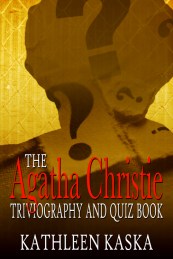 Agatha Christie is regarded as the most popular mystery writer of all times. Since the publication of her first book in 1920, more than one billion copies of her books have been sold worldwide. She wrote her first detective story while working in a dispensary during the First World War. Her sister, Madge, bet Christie that she could not write a mystery in which she gave her readers all the clues to the crime and stump them at the same time. Christie proved Madge wrong, and The Mysterious Affair at Styles was published. Her second book sold twice as many copies as her first, and she found that writing flowed easily for her. In 1926, The Murder of Roger Ackroyd, gained her world acclaim. It is one of the most talked about detective stories ever written. Using a technique that had not been used before, many of her colleagues and readers accused her of breaking the mystery-writing rules. In her defense, she stated that rules are made to be broken and if done well, prove effective. Almost ninety years later, the controversy still remains. She’s gone on record to say that this Hercule Poirot mystery was her masterpiece.
But my two favorite Christie mysteries are two of her lesser-known novels. In these two action-packed stories, The Man in the Brown Suit and They Came to Baghdad, Christie ventured away from Miss Marple and Hercule Poirot and drove into light-hearted adventure. She sent her young heroines, Anne Beddingfeld and Victoria Jones, to mysterious locales, exposes them to harrowing danger, and allowed them to live life on the edge.
“I had a firm conviction that, if I went about looking for adventure, adventure would meet me halfway,” Anne Beddingfeld proclaimed. He archaeologist father has decently died. On her own for the first time in her life, Anne is ready for adventure. But her eighty-seven pound legacy would not last long. After a discouraging job interview, Anne was waiting to catch the train home, which put her in the right place at the right time. A man, startled by something, stumbled and fell off the train platform onto the third rail. Another man claiming to be a doctor, examined the body, declared the man dead, and hurried away, dropping a piece of paper with the words, “17.122 Kilmorden Castle,” written on it. Anne retrieved the paper and tried to catch up with the doctor, but he disappeared into the crowd.
Anne was determined to find the man in the brown suit. He obviously was not a doctor, since he examined the victim’s heart by palpating the right side of his body. After a clever bit of detecting, Anne was aboard a ship to South Africa. In Anne’s life there are no coincidences.
A few days later, she was in her cabin, recovering from seasickness when there came a knock on her door. Or to be more exact, an explosion. Her door flew open and a man tumbled inside.
“Save me,” he says. “They’re after me.” Anne shoved him under her bunk and got rid of the nosy stewardess, who was tracking the apparently drunk passenger. However, alcohol was not the reason for his clumsiness. A knife wound and the loss of blood gave cause for the young man’s unsteadiness. As Anne dressed his wound, they exchanged insults and cold stares, along with a bit of shoving. As he felt, she realized that it was him—the man in the brown suit! But he was gone again, and she was left standing with clenched fists and a racing heart. There was no doubt about it. Anne was in love, and she would find him no matter what.
“To Victoria an agreeable world would be one where tigers lurked in the Strand and dangerous bandits infested Tooting.” Victoria Jones, unemployed secretary, flighty female, habitual liar, is the star of They Came to Baghdad. Fired from her job for poking fun at her employer’s wife, Victoria found herself on her favorite park bench, eating a tomato and lettuce sandwich, and contemplating her future with no income. Before her pondering became too serious, however, she noticed a handsome blue-eyed man sitting next to her, and her plans for finding a new job were forgotten. A quick exchange of life stories, a few laughs, and Edward declared he must leave. “I don’t suppose you’ll ever think of me again,” said Edward. “Oh, Hell—I must fly.” Duty called and Edward was off to Baghdad. Victoria decided to follow the young man. Undaunted by the 3,000-mile distance and the mere three pounds to the name, she conned her way to the Middle East and quickly found herself penniless and alone in a strange hotel.
All of a sudden, there is a knock at Victoria’s door. Could it be Edward? Had word reached him that she was in Baghdad? Without hesitation, she opened the door and found a handsome stranger seeking refuge.
“For God’s sake hid me somewhere—quickly,” he pleaded. Victoria, never one to shrug off adventure, shoved him under the bed cover, propped up the pillows and leisurely leaned back while the hotel manager searched the room. Satisfied that the fugitive was not present, the manager left. Victoria pulled back the covers just in time to hear the dying man’s cryptic message. Now she must found Edward, but where should she begin? After all, she didn’t even know his last name.
Following the adventures of these two young women is almost as exciting as following Indiana Jones into the Temple of Doom. The Man in the Brown Suit and They Came to Baghdad are truly two of Agatha Christie’s most delightful mysteries.
Kathleen Kaska writes the award-winning Sydney Lockhart mysteries set in the 1950s. She also writes the Classic Triviography Mystery Series, which includes Th e Agatha Christie Triviography and Quiz Book, The Alfred Hitchcock Triviography and Quiz Book, and The Sherlock Holmes Triviography and Quiz Book. The Alfred Hitchcock and the Sherlock Holmes trivia books are finalists for the 2013 EPIC award in nonfiction. Her nonfiction book, The Man Who Saved the Whooping Crane: The Robert Porter Allen Story, (University Press of Florida) was released in 2012. Kathleen has a new mystery series, which will debut later in 2016.
http://www.kathleenkaska.com
http://www.facebook.com/kathleenkaska
https://twitter.com/KKaskaAuthor





 preliminary meeting, and then, many pages later, the murder happened. By that time, I now realize, I would have lost any readers who had begun the book. Readers want to get to the conflict in a reasonable length of time. They don’t want to know all the characters intimately before anything happens. That can be filled in later, in back story.
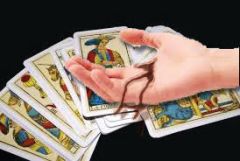 overhear something mysterious—some foul deed about to be done or just having been done. It became the setting for the first scene of PSYCHIC DAMAGE when the protagonist, Eva Stuart, overhears talk about a murder which has been committed: the driveby shooting that had originally been the first scene. I think it reads better that way. I hope you’ll agree.
 I recently ran across a story in the local paper written by an Oregon State University Professor. He brought to light the first female murderer in Oregon’s territorial prison. Her story is interesting to my mystery writer mind. Back when she took an ax to her husband, they didn’t take spousal abuse into consideration for a woman’s actions. But this story lends itself well to several directions a mystery writer could take it.


You must be logged in to post a comment.