There’s Always More to Learn

thumb_IMG_1225_1024

I love learning. Always have. There was a time in my life when I thought I’d have the privilege of being a perpetual student (which is to say, a professor…). That didn’t turn out to be my career, but it hasn’t stopped me from pursuing my dream. I read. I travel. I listen. And wherever I am, I learn something.

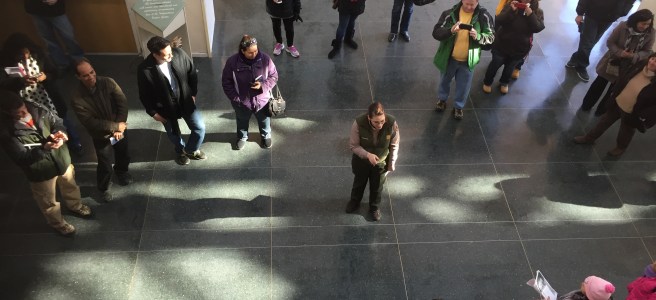
I’m taking a course now on body language — how to read it, how to write it, how to use it to communicate more effectively. I’m definitely learning a lot. Experts on body language will read postures, gestures and facial expressions to understand what people are really saying, their hidden words. It can be fun to test out in the real world!
IMG_2324

One of the things that struck me in this course on body language is how differently people learn. Some of us learn best by reading, others by listening, and others simply by doing — the old trial and error technique. I’m not surprised to hear that, but I’d never thought about how to apply that knowledge when I was teaching. I am now thinking very much about how to apply that knowledge when I am writing.
IMG_2011
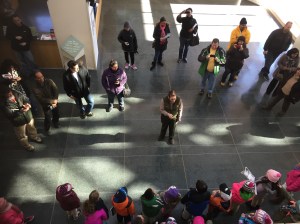
Learning in a group setting by listening to an expert

Writing is a skill, and while there is an art to it that perhaps cannot be learned, there is certainly a craft that can be. With each book I write, I strive to improve. Throughout the year, through the benefit of courses, conferences and workshops, I learn more about technique, style, character development. I practice, beyond what appears on the pages of my book. I write short stories, enter competitions, seek feedback from experts. Membership in organizations like the Sisters in Crime is invaluable.
IMG_2097
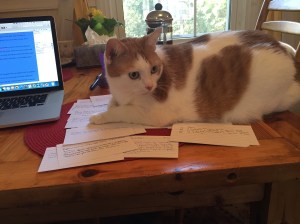
I practice writing whenever I can — and whenever the cats will let me!

I’ve always thought I was the type of person who learned best through reading. But as I write more, and work on my craft more, I realize that I also learn through doing. Practice and more practice, as they say. Of course, it doesn’t feel like practice when it’s something you love to do, does it?

I hope the work pays off, and that as my readers work their way through the books of my series, they find that each book is better than the one before.

More information about my books and links to online retailers can be found at janegorman.com.

Guest Blogger -JL Greger

Mystery Writers Are Like Scientists

No way you say.

Wait! I think I can convince you that writing a mystery novel is similar to conducting a science experiment.

  1. Writers and scientists both do a lot of sleuthing. Granted, scientists try to quantitate their observations more than writers. And writers’ descriptions of their observations are hopefully more colorful than journal articles.
  1. They both organize their observations into a whole, which writers call plots and scientists call hypotheses.
  1. They both test and refine their “whole.” Writers edit their prose; scientists run additional experiments.
  1. Both require a lot of hard work to gain occasional flashes of insights. To paraphrase Thomas Edison, they’re “one percent inspiration and ninety-nine percent perspiration.”

Why did I drag you through this discussion? I’m trying to explain why so many scientists and physicians became writers of mysteries and thrillers. Consider Michael Crichton (a physician by training), Kathy Reichs (a forensic anthropologist), Robin Cook (a physician). I’m also explaining how as a retired biology professor I came to write mystery/suspense novels with tidbits of science. My latest thriller is I Saw You in Beirut.

Through this discussion, I hope you learn how bits of science add realism to a mystery.

Did you know? In the early 1960s, scientists identified zinc deficiency in peasants in Iran. At that time, two to three percent of the villagers in some regions of Iran didn’t pass the physical for the army because of stunted growth. Dr. James Halstead, Sr. who was married to President’s Roosevelt’s daughter, Anna, headed the research team at Shiraz. Surprised?

I created Doc Steinhaus, a fictional character in I Saw You in Beirut, who worked on the project in Shiraz as a grad student. He was a logical way to “show not tell” readers about Iran and advance the plot. Let’s face it most foreign agents don’t look or act like James Bond, but they can be a lot more nuanced.

What’s thrilling in I Saw You in Beirut? A mysterious source of leaks on the Iranian nuclear industry, known only as F, sends an email from Tabriz: Help. Contact Almquist. Intelligence sources determine the message refers to Sara Almquist, a globetrotting epidemiologist, and seek her help to extract F from Iran. As Sara tries to identify F by dredging up memories about her student days with Doc Steinhaus at the University of Wisconsin-Madison and her work in Lebanon and the Emirates, groups ostensibly wanting to prevent F’s escape, attack her repeatedly. She begins to suspect her current friendship with Sanders, a secretive State Department official, is the real reason she’s being attacked.

Maybe, John Addegio’s comments will convince you that smart scientists make this mystery a real thriller. “Greger writes about international agencies and scientific exigencies with authority, and I SAW YOU IN BEIRUT is a thrilling spy tale with compelling female actors asserting their intelligence in both exotic and domestic, male-dominated, high-stakes political environments.”

Where can I get I Saw You in Beirut?CF I Saw You in Beruit 300 copy

The paperback at Amazon: http://www.amazon.com/dp/1610092201 and the eBook from Nook: http://www.barnesandnoble.com/w/i-saw-you-in-beirut-jl-greger/1123184446?ean=2940158046957

Bio: JL Greger’s thrillers/mysteries include: Malignancy (winner of 2015 Public Safety Writers’ annual contest), Ignore the Pain, Murder: A New Way to Lose Weight, Coming Flu, and I Saw you in Beirut. The Albuquerque area is the home base for her stories, but Sara (like the author) travels to Cuba and Bolivia in Malignancy and Ignore the Pain, respectively. Her website is: http://www.jlgreger.com


Guest Blogger – Keenan Powell

Writing mysteries is hard. Like other writers, we try to create engaging and sympathetic characters caught up in a story that moves along, yet has depth (and loads of tension) set in an evocative location. Unlike the task of those other writers, we need to frame the story within a puzzle.

I love the puzzle. I love reading a good story that keeps me guessing. I love it when I find out who did it at the end of the book and I had actually considered that person but eliminated him from my list of suspects. If the culprit is someone I didn’t suspect, I’ll go back through the book to look for clues just to make sure the writer was playing fair. It’s rare when I correctly guess the murder early and when I do, I’m disappointed. But when I reach the end of good mystery and I’m surprised by whodunit, I get a little splash of pleasure – like when I was a kid and found an Easter egg.

So when I write a story for my fellow mystery fans, I try to build a puzzle the solution of which gives them that same little splash of pleasure.

The puzzle I build looks like a maze inside my head with lots of wrong turns, dead-ends, and circuitous routes. What I try to do is create that same maze inside the reader’s head. But the reader doesn’t have the omniscient view I have, she can only see as far as the next turn.

In guiding the reader through the maze, I try to use her human tendencies toward suspicion, sympathy, confirmation bias (looking for evidence to support an opinion), and anchoring (the tendency to rely on the first piece of information one acquires) as well as the sophisticated mystery reader’s familiarity with certain devices like the red herring and the double-blind solution. These tendencies can be exploited to guide, or misdirect, the readers as she wanders through the maze.

It’s not a contest of who is smarter: writer versus reader. Writing mystery is like hostessing an Easter egg hunt on a fine spring day. We’re all wearing lovely white Victorian gowns and frolicking through the rose hedges on a lush green lawn as we sleuth out the solution. I, as your hostess, have devised the entertainment. I hope you enjoy.

***

Keenan Powell.2 (169x300)Keenan Powell is a practicing attorney in Anchorage, Alaska, and the author of the Maeve Malloy legal mysteries set in contemporary urban Alaska. Visit her at:
https://www.facebook.com/keenanwrites/?ref=hl

https://twitter.com/KeenanPowell6


Resolutions, goals and writing

By Sally Carpenter

Happy New Year! Did you make any resolutions on January 1? How many are you still keeping?

A few years ago I quit making New Year’s resolutions because my good intentions always faded in a few weeks.

Recently I replaced “resolutions” with “goals.” That seemed more manageable. “Resolutions” are too vague: “I will eat better.” “I will exercise.” “I will write more.” I have the personality type that craves closure, so such ongoing aims just wandered around aimlessly.

But goals are result oriented with measurable outcomes. “I will eat two more servings of vegetables each day.” “I will take a 30-minute walk three times a week.” “I will finish writing a novel by Dec. 31.” Now I have targets clearly in view and I can gauge now close or far I am from hitting the bull’s-eye.

I started 2015 with the goal of writing two cozies. As the year started, I became involved in other activities and fell into a writing slump. I’d just released my third book but sales were weak and I couldn’t get motivated to start the new cozy. After 50 pages the story wasn’t working. I wanted to dump the book and quit writing altogether.

My gallant publisher encouraged me to finish the book and told me to take my time (she doesn’t set deadlines for new releases). With no author events scheduled for the year, I had no compelling reason to shoot out another book right away. I could work like a dog and drive myself crazy or relax and enjoy writing. I could relish the Christmas season without the stress of doing promotion for a new book.

So I revised my goal. I’m looking at an early 2016 release for this book. I’m also setting a goal of one book a year and no short stories or other pieces unless someone makes me an offer I can’t refuse. Since I work a full-time day job, this seems a reasonable goal that won’t leave me exhausted and cranky.

I did complete one goal I set in 2015: read the entire Sherlock Holmes canon by Doyle. I did it, but don’t ask me to remember every story. A reading goal for 2016 is to keep chugging through the 15 Nancy Drew and 23 Hardy Boys books I bought some time ago at a library bookstore.

Another goal for 2016 is to start work on a presentation I hope to give in 2017 (more on this as it develops).

Also for this year, my local library asked me to participate in two events-the city’s annual arts festival and the library’s author panel. I said yes, of course. I’ll consider other author events if I feel the exposure and sales will justify the travel and effort.

On top of this, I have three ongoing monthly writing projects: my faith column in a newspaper and two group blogs including Ladies of Mystery. And there’s the cats to feed. This is plenty enough for my plate.

So 2016 looks like a busy year ahead. Let’s get going!

What are your goals/resolutions for the new year?

What Does it Take to Write Nearly 40 Books?

That was the topic I was given by a new Sisters of Crime group when I was invited to come and speak. Here are some of the things I told them:

I didn’t get published until I was a grandmother, but I’d been writing since I was a kid. And I read everything I could get my hands on.

My first book to be published was an historical family saga based in my mother’s genealogy. That wasn’t so easy–it was rejected nearly 30 times, and rewritten over and over–before it was finally accepted. So that meant I had it made, right? Not so, the editor that took the first book moved on. When I sent in the book written about my father’s genealogy, the new editor wasn’t interested. Took a long time before I found another publisher–and many more rejections.

The point is I wasn’t easily discouraged–and  despite many set-backs (crooked publishers, publishers who died, agents who did nothing) I kept plugging away.

When I finished the two family sagas, I wondered what I should write next? What did I like to read? Mysteries–so writing one seemed what I should do next.

I started with a book I called The Astral Gift. It found a publisher right away–one of the crooks. It has been republished twice, once by the first publisher of my Deputy Tempe Crabtree series, and again by the publisher of my Rocky Bluff P.D. series.

The first book in the Rocky Bluff P.D. series, Final Respects, was published as an e-book long before anyone had a clue what that meant, and there was no such thing as an e-reader. Another publisher picked up the first two books in the series, but wasn’t a good relationship. A new publisher published the next two books in the series, and then decided not to continue as a publisher. The fifth, No Sanctuary, was picked up by Oak Tree Press who also reprinted the earlier books, and is still the publisher of that series.

The publisher of the first four books in the Deputy Tempe Crabtree series passed away. The series is now being published by Mundania Press.

In between all of this, I wrote other books, psychological horror, Christian horror, and my romance with a touch of the supernatural, and a few others that never got published for one reason or another.

I’ve left out many of the set-backs and problems I faced, but I’m sure you’ve gotten the idea and the reasons I’ve had nearly forty books published. It’s really quite simple:

  1. I learned from rejections and was willing to rewrite.
  2. Nothing that happened discouraged me.
  3. Most importantly, I kept on writing.

Marilyn Meredith, who also writes under the name F. M. Meredith