BOOKS I’D LIKE TO WRITE

DSC_0194-final      I often think about the books I’ve started or thought about but never really got down to writing. Lawrence Block in TELLING LIES FOR FUN AND PROFIT, said he had a friend who, on being asked where he got his ideas, said that he said that “there was a magazine published twice a month called The Idea Book,” and that he, as a professional writer, had a subscription. There isn’t any magazine called The Idea Book, but there are lots of stories in everyone’s life that can become novels or short stories.

I started to write a mystery novel a long time ago, set in a just post-colonial African country. I didn’t get very far, but it was clearly based on my experiences in East Africa as a Peace Corps volunteer. I’d love to go back to that. I have lots of ideas about what would happen, and, because it would be a murder mystery, who was the victim and who the murderer. But when I started writing the story in the pre-computer age, it was so difficult to edit my work on a manual typewriter that I gave up.

How did writers manage before computers? I have to give them a lot of credit for perseverance. I know writers who still write by hand, but I would never have the patience. I want to correct as I go along, and having to rewrite paragraphs or put arrows directing me to some other section would be unbelievably frustrating.

Another idea I had, which began a novel that never got beyond the first chapter, was the result of talking with a woman I met on an airplane. I don’t remember where we were going, but she told me that she worked during the day as an attorney and had a night life as a rock singer. It may well have been something she made up for my benefit, but it gave me a wonderful idea for a novel. I worked on it for a while, but I never got very far. Not enough courage at the time, I guess.

The more I write, the more ideas come to me. I loved the report that fellow Ladies of Mystery blogger Jane Gorman wrote about on September 21st regarding the buried mystery train. That would make a great story. Murders reported in the local paper give me ideas for mystery novels. I kept a clipping for a long time about a man who was arrested years after the body of a woman he worked with was found in the trunk of her car. In a mystery story, the hero–cop, private investigator or amateur sleuth–would have found out much earlier that he was the murder. Fiction can be much more organized than life.

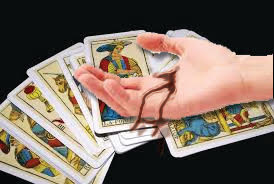
Most recently, I read a book called PSYCHIC JUNKIE: A Memoir by Sarah Lassez.Jans PhotoThe book made me think of creating a mystery about a woman who is addicted to going to psychics and letting  them guide her life. This led me to write PSYCHIC DAMAGE, a thriller which is due out in early 2016. I hope you’ll look for it.

Ideas for stories are everywhere. You just have to look around you. What do you do with your ideas? Don’t throw them away! Save them for stories.

Raising the curtain on stage mysteries

By Sally Carpenter

I love watching plays as well as reading and writing mysteries. However, despite the fact that longest running play in history is a mystery (Agatha Christies’ “The Mousetrap,” continuously running in London since 1952), mysteries are seldom produced in local theater.

One reason could be that musicals sell more tickets than non-musicals and comedies are more popular than dramas. “A Gentleman’s Guide to Love and Murder” is doing well on Broadway because it’s a musical comedy and also is based on the same novel as the well-known movie “Kind Hearts and Coronets.”

Some mystery plays that I’ve seen on stage:

“Arsenic and Old Lace.” Not a mystery but plenty of murder and dead bodies. Is there any amateur company that hasn’t done this show? I ran props for my high school’s production and saw it years later at a community theater. Its popularity seems odd due to the questionable moral ethics: the killer aunts are not punished or stopped for their crimes, neither do they show regret or remorse.

“Prescription: Murder.” Richard Levinson and William Link adapted their play into the pilot episode for “Columbo.” The play takes place in New York City but the TV movie was set in Los Angeles for filming purposes. In the play, the detective wears an overcoat, not a raincoat. The ending of the original script and the movie are different. For the 2004 production at West Valley Playhouse (Canoga Park, Calif.), Link rewrote the ending to match the movie version. Bob Van Dusen, who played Columbo, fortunately didn’t attempt a Peter Falk imitation. He played the detective as quirky, inquisitive imp and I loved it.

“The Mystery of Edwin Drood.” A musical based on an unfinished novel by Charles Dickens. Since the book doesn’t name the killer, at the play’s conclusion the action stops long enough for the audience members can vote for the killer. After ballots are tallied, the play is resumed with a final scene based on the votes. When I saw the show in 2007 at the Simi Valley Cultural Arts Center, the voting results were not released, so I don’t know if the company presented the same ending each night or not. It’s possible the actors rehearsed a variety of endings.

“Victor.” Not a mystery but an adaptation of the “Frankenstein” story. I saw this in 2007 at the High Street Arts Center (Moorpark, Calif.). Spooky atmosphere and great acting in this production.

“Angel Street.” The American title for the British play “Gaslight” in which a husband tries to drive his wife insane so he can search for missing jewels. Seen at Conejo Players Theatre in Thousand Oaks, Calif.

“The Murder Room.” I never heard of this play until I saw it in 2007 at the tiny, 50-seat Stage Door Theater (now closed) in Agoura Hills, Calif.  It’s a funny, zany spoof of British mysteries with the standard upper-crust characters, foggy evenings, loony plot twists and secret compartments build into the set. Catch it if you can.

“And Then There Were None.” An adaptation of Christies’ “Ten Little Indians.” I’ve seen this play at theaters in two states. A good show except as the characters are killed off, the suspect pool dwindles until the killer’s identity is fairly obvious.

“Pack of Lies.” An interesting script set in England and something of a spy thriller. A man, who seems connected with the police, uses the home of an ordinary family to spy on their neighbors. Are the family’s best friends up to no good? That’s the mystery. I saw the show staged by Panic Productions in T.O.

I’ve seen the movies made from “Witness for the Prosecution,” “Anatomy of a Murder,” “Deathtrap” and “Sleuth” but not the stage versions. I’m hoping someday a local theater will a production of any or all of these.

What are your favorite mystery plays?


And Now the Fun Begins

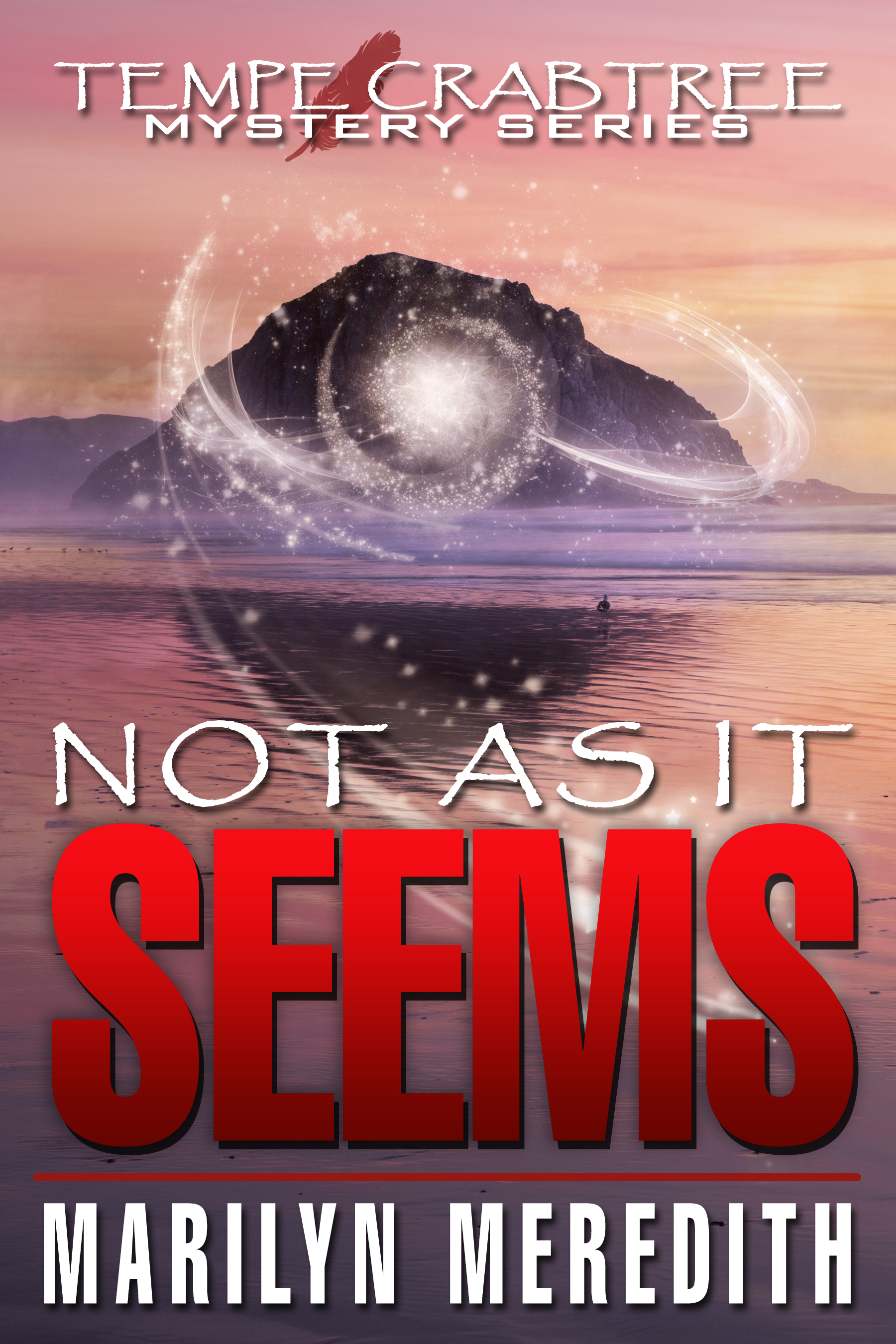
Because my latest Deputy Tempe Crabtree mystery, Not as it Seems, is available in all the usual places, in paper and as ebooks, of course I’ve been busy with promotion.

I’m nearing the end of a blog tour with today’s post being on Paty Jager, my follow Lady of Mystery’s personal blog, http://patyjager.blogspot.com/ and I’ve already participated in one big book fair over in the area where the new mystery is set, the central coast of California.  I’m headed to another, The Great Valley Bookfest in Manteca CA on October 10th, and I’ll be in my publisher’s booth at the Art Festival in Visalia on October 17th. You never know how these things will go as far as book selling is concerned, but it’s a great way to meet a lot of book lovers.

To be perfectly honest, I’m never really done with promotion because I have two series, which mean I have two new books coming out each year. Nor am I ever done writing–when I’ve sent one book off to a publisher, I’m busily working on one for the other publisher.

Is it all worth it? To be honest, if I’m talking about money, no.

You might wonder why I don’t quit. The reason is I love the characters in both series, the only way to know what’s going to happen to them next is to write the next book(s).

So, is it fun what I’m doing? Yes, for me it is. I love writing and the worlds I’ve created. I love talking to other writers and readers.

What I’m wondering is, is it fun for the rest of you writers? And readers, do you enjoy meeting writers at book fairs and other places?

Marilyn

NotAsItSeems-lg

WHAT DO YOU DO WHEN YOU GET STUCK?

DSC_0194-finalMarilyn Meredith, another of the Ladies of Mystery, wrote a blog in July about whether you as a writer are a plotter or a pantser and how to know which you are. Plotters of course plan everything out even before they start to write. They may outline or write all the scenes down on 3 x 5 cards which they post on bulletin boards. Maybe they don’t do a formal outline, but they have a pretty good idea of who the characters are, what the plot is, and who the bad guy is.

I was never able to do an outline, even when it was a school assignment. The whole process seemed beyond me. So, clearly, I have to be a pantser, someone who sits down daily at the computer and doesn’t have a clue where the story is going. Most of the time this works for me. I have a vague idea when I finish one day where I’m going to do the next. The scene unfolds in my head as I write, the characters take over and the story moves along. I said, usually it works. Sometimes, though, it doesn’t and that’s when I pull up the unsticking ideas I’ve gathered over the years.

Stephen J. Cannell, a great mystery writer, now deceased, spoke at a meeting of the Sisters in Crime/Los Angeles chapter to which I belong and passed on a good thought: when you’re stuck, think about, “What are the bad guys doing?” He said he used that often as a way to approach the story from a different perspective.

As the writer, this works because you are now out of the head of your protagonist, the head in which you’ve become stuck, and are thinking about the story from the point of view of the bad guys. Sometimes, often for me, I don’t know where the bad guys are going either, but looking at the story from their point of view usually gives me an idea of what they’re up to.

I used this dictum in the book I’m currently editing, PSYCHIC DAMAGE, which is due out in the spring. I had two of the bad guys talking about the heroine who has something they want. I wrote a scene, and the scene got me unstuck. Later I realized I didn’t need it, but it had served as an unsticking tool.

As a pantser, I find that my subconscious often puts clues in the book which help me get unstuck. What does this discovery, found in Chapter Two, mean in the scheme of the novel when I write it? Often I don’t know when I write it, but I’ve learned to have faith that I will find out the meaning further along in the book. And it is often an unsticking tool, something that clarifies where the story is going. I’ve learned not to delete those clues that I don’t understand when I write them. They may come in handy later.

I got another unsticking suggestion from a friend, also a writer. She suggestion that I try writing from the point of view of another character or characters and see what that told me about the story. And it worked. I wrote from the point of view of a man who disappeared, and he told me enough about what his plans were to get me unstuck.

I suppose writers who outline don’t get stuck, or they get stuck in the outline process, not in the writing. But I do enjoy writing when I don’t know how things are going to turn out. If I had it all outlined, I’m afraid I’d feel as though I’d already written the book.

I remember one writer saying that when she got to the end of her book, she realized that no one could have committed the murder, so she had to go back and make it possible to solve. That does happen to us pantsers, but it’s all part of the fun of writing.

What about you other writers? How do you get unstuck?

Guest Blogger – Lea Wait

Old houses have always fascinated me.

I’ve lived in old houses – in fact, I’ve never lived in a home or apartment built after 1920. I’ve even bought old homes that needed a lot of love (and money) to give them amenities like plumbing and heat.

The house I live in now was built in 1774 on an island in a Maine river. In 1832 it was moved across the frozen river and pulled up a steep hill to where it is today. My family has only owned this home since the mid-1950s, but I often think of the people who lived here in the eighteenth and nineteenth centuries, and I’ve actually included them in some of my historical novels.

The history of the house itself was the basis for Shadows on the Coast of Maine, the second in my Shadows Antique Print Mystery series. (And – no – the mystery is fictional. We didn’t find THAT when we uncovered the original fireplace.)

I’ve loved the homes I’ve lived in. But I’ve always had a special fascination for old deserted, dilapidated, houses.

Victorian farmhouses crumbling next to their barns on land that’s now fallow. Elegant mansions that became too expensive to heat, or too easy to tax, that were abandoned, perhaps eventually to become office buildings, or apartments, or turned into nursing homes or bed and breakfasts. Or, sadly and too often, bulldozed to make way for more modern, more cost-effective, buildings.

I love books centered around mysterious houses, too. I can’t resist books by authors like Mary Stewart and Daphne du Maurier and Kate Morton. I love mysteries by Linda Fairstein because, although they’re not exactly about large houses, they do incorporate the hidden history of famous New York City landmarks.

I even dream of immense houses full of rooms. I dream of walking through corridors and planning how I’m going to fix up the rooms for people in my family, or for people who are homeless. The houses in my dreams are always in poor condition, but I know they can be brought back to life. The empty rooms can become a home.

I’ve been having dreams like that since I was a child. (Any psychoanalysts out there?)

So it probably isn’t a surprise that my latest book is about – guess what? A large nineteenth century estate on the coast of Maine that, in 1970, was the place a teenaged girl died.

No one has lived in the house for years.

No question. It’s my kind of house.

THREADSOFEVIDENCELea’s latest book is THREADS OF EVIDENCE. The old Gardner estate in Haven Harbor, Maine been deserted for years. Folks in town thought it should be torn down. But now a famous Hollywood actress has bought it. Does she have a special reason to come to Haven Harbor? The small village is full of old secrets. When needlepointer Angie Curtis is asked to restore a series of old needlepoint pictures found in the Gardener house, she finds clues that may lead to discovering what really happened in 1970, when seventeen-year-old Jasmine Gardener died there.

Amazon link:

http://www. amazon.com/Threads-Evidence-&pebp=1433544126655&perid=OTJPND2814N6ZJ8AS7F1

DSC01566Lea Wait writes the Shadows Antique Print mystery series, the Mainely Needlepoint series, and historical novels for young people. As a single parent she adopted her four daughters from different Asian countries. She’s now the grandmother of eight, and lives on the coast of Maine with her husband, artist Bob Thomas, and their black cat, Shadow. To learn more about Lea and her books, see http://www.leawait.com and friend her on Facebook and Goodreads.