Guest Bloggers- Dr. Judy Melinek & T.J. Mitchell

The Working Stiffs: How We Get Our Ideas

by Dr. Judy Melinek and T.J. Mitchell

Judy: I do autopsies in a big city medical examiner morgue. The murder mystery ideas come strolling through the door most every day!

T.J.: Take the plot of First Cut, our debut novel. The seed for the story came from an actual homicide, where Judy got called out to the death scene. The decedent was a petty thief. He jacked a laptop off a man sitting in a café—and the robbery victim pulled out a gun. He shot the thief a bunch of times, in front of witnesses and under security cameras, took the computer out of his dead hands, and walked away.

Judy: I was there to answer questions from the homicide detectives about the gunshot wound trajectories, but all I kept thinking was, “what was so important on that laptop that someone would kill over it?” The book’s story took off from that mystery.

T.J.: You see a lot of overdoses, too. Those came in handy for First Cut.

Judy: Fatal drug overdoses are fascinating to me, because they can be any of several manners of death. When a poison is self-ingested, it could be a suicide or an accident. If it is administered by another person, it could be a homicide. It’s the same cause of death—a poisoning—but the actions people take behind that poisoning might be accidental, intentional, or nefarious. It’s my job to make that call. The police only get involved when we are certain the case is a homicide.

T.J: And even then you can’t always convince them. The tension between the determination of the medical examiner and the findings the police can make for some juicy conflict.

Judy: Just like the tension between the district attorney trying a case and the medical examiner who gets called as a witness. Trial lawyers have to build their cases based on what the witnesses are claiming, but if those witnesses are lying—or just mistaken—their testimony might not comport with the ME’s physical findings from the autopsy.

T.J.: So that’s how we work. Judy brings these stories home and we toss them around until we’ve come up with the case-based outlines for a murder plot. She gives me the story and I work to fashion it into the narrative structure of the American noir detective novel—our corner of the genre-fiction world. When I get stuck, we talk out additional scenarios from her long experience in forensic investigation, and the plot gains a new twist. She never lets me cut corners with the science, though!

Judy: It can be really satisfying—because, unlike in real life, we get to determine the outcome of the cases and the fates of the characters. We take poetic license in the narrative, but we always write our mysteries with scientific rigor, too. It’s a lot of fun!
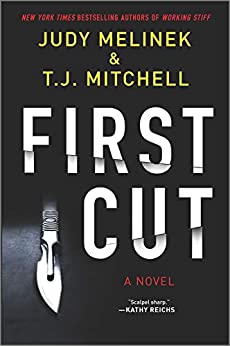
First Cut

A young rookie medical examiner. A suspicious case. An underworld plot only she saw coming.

From the New York Times bestselling authors of Working Stiff

For San Francisco’s newest medical examiner, Dr. Jessie Teska, it was supposed to be a fresh start. A new job in a new city. A way to escape her own dark past.

Instead she faces a chilling discovery when an opioid-overdose case contains hints of something more sinister. Jessie’s superiors urge her to close the case, but as more bodies land on her autopsy table, she uncovers a constellation of deaths that point to an elaborate plot involving drug dealers and Bitcoin brokers.

Drawing on her real-life experiences as a forensics expert, Judy Melinek teams up with husband T.J. Mitchell to deliver the most exhilarating mystery of the year. Autopsy means “see for yourself,” and Jessie Teska won’t stop until she has seen it all—even if it means that the next corpse on the table could be her own.

https://www.amazon.com/First-Cut-M-D-Judy-Melinek-ebook/dp/B07P1B4CJL
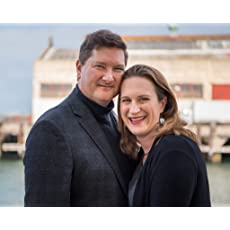
Bio: The Working Stiffs are the married writing team of forensic pathologist Dr. Judy Melinek and writer T.J. Mitchell. They are coauthors of the New York Times bestselling memoir Working Stiff: Two Years, 262 Bodies, and the Making of a Medical Examiner (Scribner, 2014), and the new novel First Cut, the debut in a forensic detective series from Hanover Square Press. Its sequel, Aftershock, is coming in February, 2021. You can follow the Working Stiffs on Twitter @drjudymelinek and @TJMitchellWS, and Facebook/DrWorkingStiff.
Guest Author June Trop

ANCIENT FORENSIC SCIENCE

My mysteries are set in Roman-occupied Alexandria during the first century of the Common Era. Why then? Well, one reason is I thought my protagonist, Miriam bat Isaac, wouldn’t have to deal with forensic technology. Little did I know that, although the Romans didn’t have a formal body of forensic knowledge, they used some methods similar to what we have today. One example is bloodstain pattern analysis.

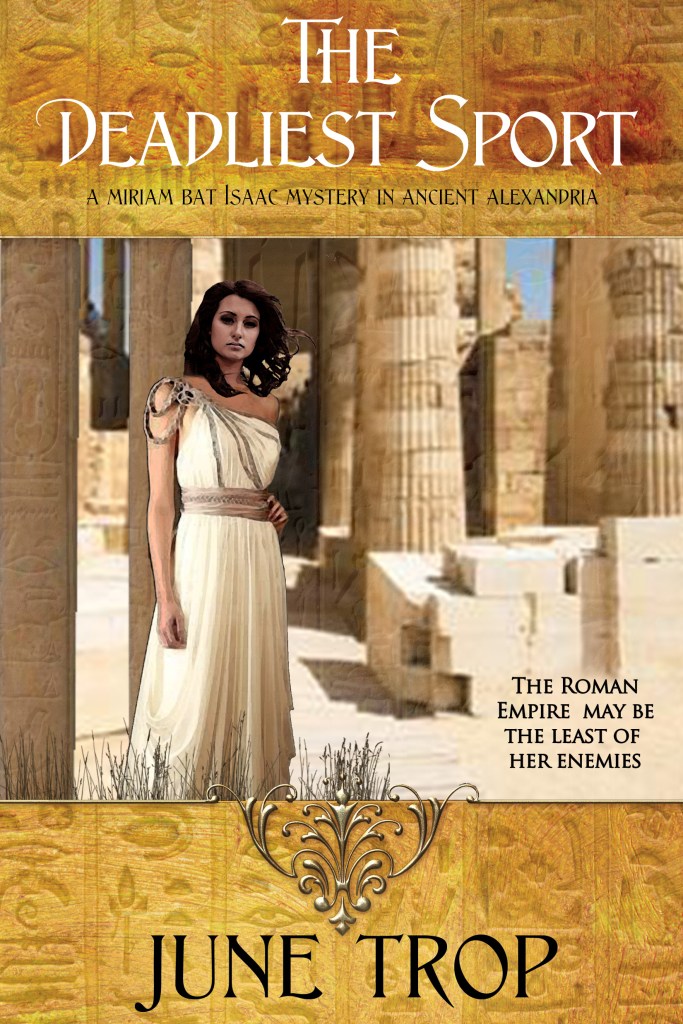
In The Deadliest Sport, Miriam examines the blood spatters in the room of a sleazy waterfront inn to solve a “locked-room mystery”, that is, a mystery about a crime, usually murder, that appears impossible to have been committed. The crime need not take place inside a locked room, as it does in The Deadliest Sport, but in any utterly inaccessible place.

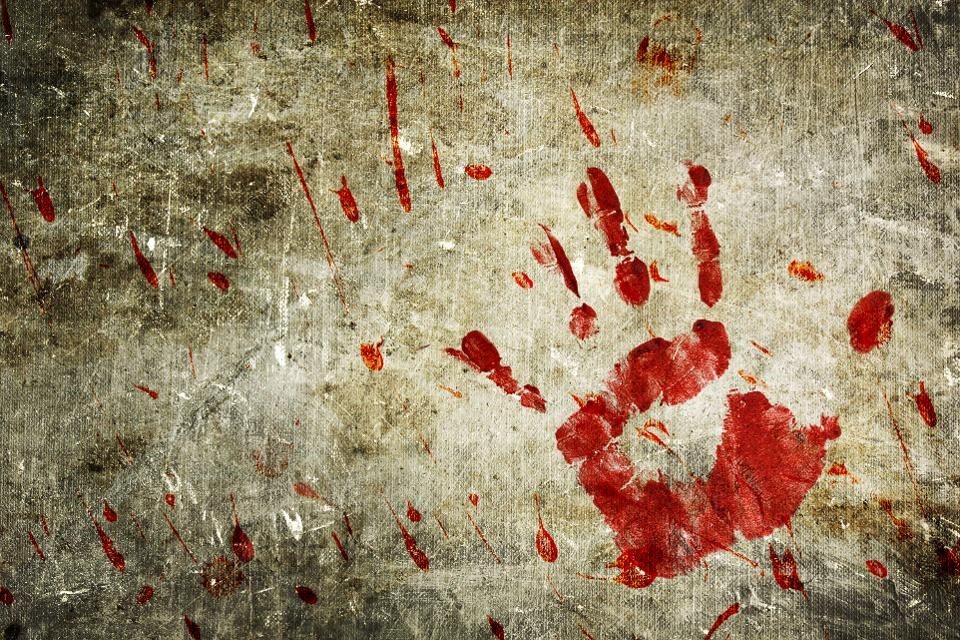
The most famous case of a Roman jurist analyzing a bloody handprint is titled “Paries Palmatus” or “The Wall of Handprints.” A blind son is accused of stabbing his father in his sleep to obtain his inheritance. Purportedly, the blind man took his sword from his room, walked across the house in the dead of night, and entered his father and stepmother’s bedroom. Then he stabbed his father once, killing him instantly without waking his stepmother, who found her husband dead in bed when she awoke. A trail of bloody handprints led from the parents’ room back to the blind son’s room, and his blood-covered sword was found as well.

The defense argued that the stepmother did it, upset because she would lose out on the father’s fortune to his blind son. So, she framed the blind man using his own father’s blood:

It was the stepmother, yes, the stepmother who set this up with her sure sight; it was she, with her right hand, who brought that poor blood there and made the imprint of [her] hand [on the wall] intermittently! The wall bears the imprints of one palm, has them at intervals, with a certain empty space in the middle, and everywhere the palm-print is intact; a blind man, on the other hand, would have dragged his hands [along the wall].

What other forensic techniques did the Romans use? Emperor Tiberius used footprints and drag marks to argue that his praetor, Silvanus, threw his wife out their bedroom window rather than, as the husband asserted, she chose to jump. Unfortunately for Silvanus, the marks of her struggle and his forcible ejection convinced the Senate of his guilt.

The point for me was that I learned every setting, especially a historical setting, is going to have its challenges, even its surprises. So, set your story in a time and place you’ll enjoy researching and then take your readers there. 

FOR THE DEADLIES SPORT by June Trop

Miriam bat Isaac, a budding alchemist in first-century CE Alexandria, welcomes her twin brother Binyamin home to fight his last gladiatorial bout in Alexandria. But when he demands his share of the family money so he can build a school for gladiators in Alexandria, Miriam explains that he forsook his share when he took the gladiatorial oath. When she refuses to loan him the money for what she feels is a shady, and dangerous, enterprise, Binyamin becomes furious. Soon after, the will of Amram, Miriam’s elderly charge, turns up missing, Amram becomes seriously ill, and the clerk of the public records house is murdered. Could Binyamin really be behind this monstrous scheme? If not he, who could be responsible? And is Miriam slated to be the next victim?

Buy links: https://www.amazon.com/Deadliest-Sport-June-Trop/dp/1626947554

https://www.barnesandnoble.com/w/the-deadliest-sport-june-trop/1127167995

As an award-winning middle school science teacher, June used storytelling to capture her students’ imagination and interest in scientific concepts. Years later as a professor of teacher education, she focused her research on the practical knowledge teachers construct and communicate through storytelling.

Her books have been cited for excellence at the New York Book Festival, by Wiki Ezvid, the Historical Novel Society, and as a 5-star Readers’ Favorite.

An active member of the Mystery Writers of America, June lives with her husband Paul Zuckerman in New Paltz, NY where she is breathlessly recording her plucky heroine’s next life-or-death exploit.

Connect with June on her website www.JuneTrop.com or her Facebook page: June Trop Author.

Expanding my Horizons by Paty Jager

“You can’t make everyone happy.” One of my least favorite sayings but so true.

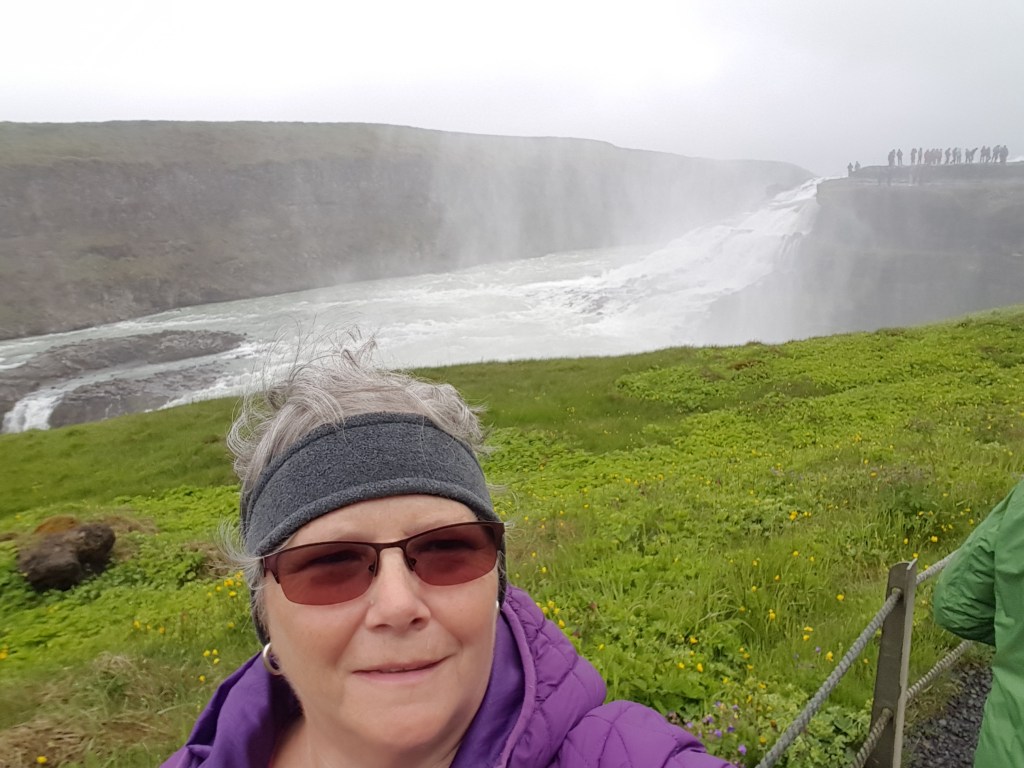
I took two trips last year that were experiences I’d never had before. I finally saw a tropical island for myself and I traveled to another country by myself – Iceland. I loved the trips and wanted to use what I experienced to write books with my characters enjoying the same places.

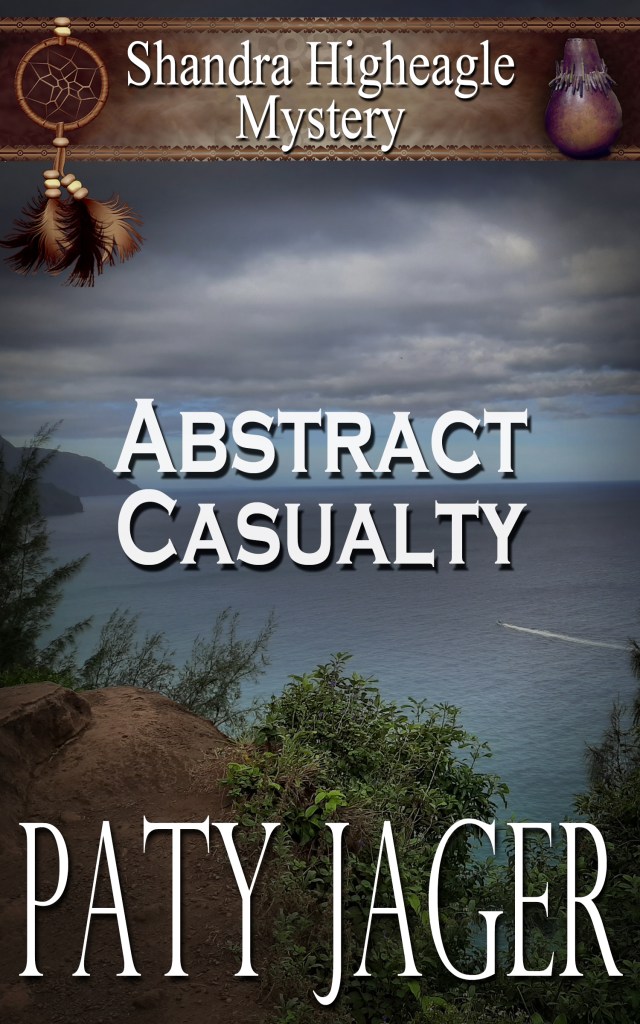
I set Abstract Casualty in the Shandra Higheagle series in Kaua’i Hawaii. I had a great time reliving my time there while writing the book. And the fun I had finding a way to get my character to the island in a realistic manner. Some readers loved it and the new experience, others wrote to me and wanted Shandra back in her fictional county in Idaho. They missed the secondary characters they’d come to know.

For those readers who love going back to the same place, Capricious Demise is set back in Weippe County, my fictional county in Idaho. I finished the first draft and will be releasing it in July.

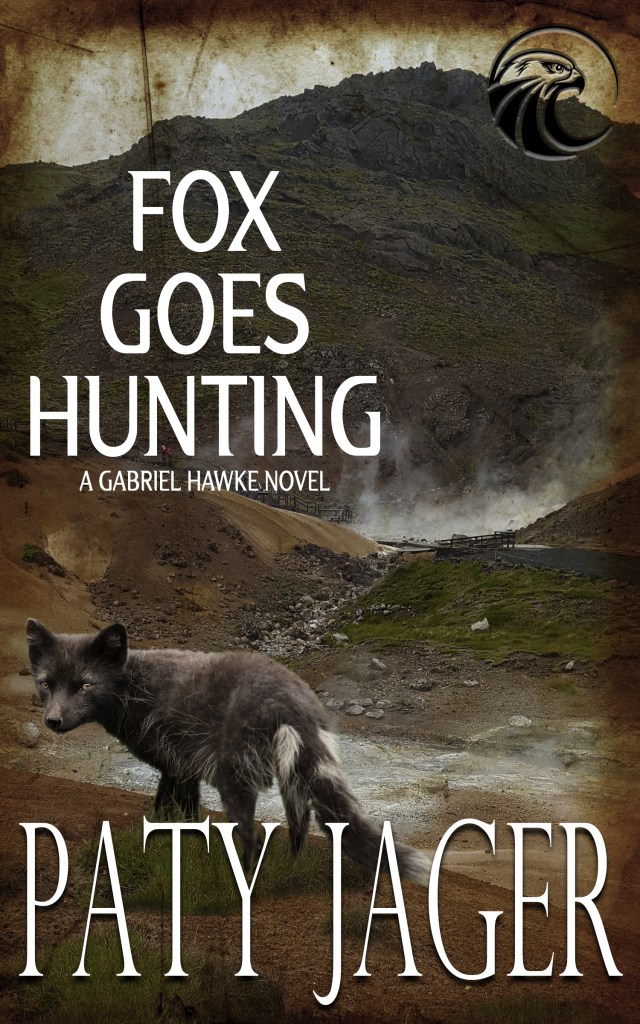
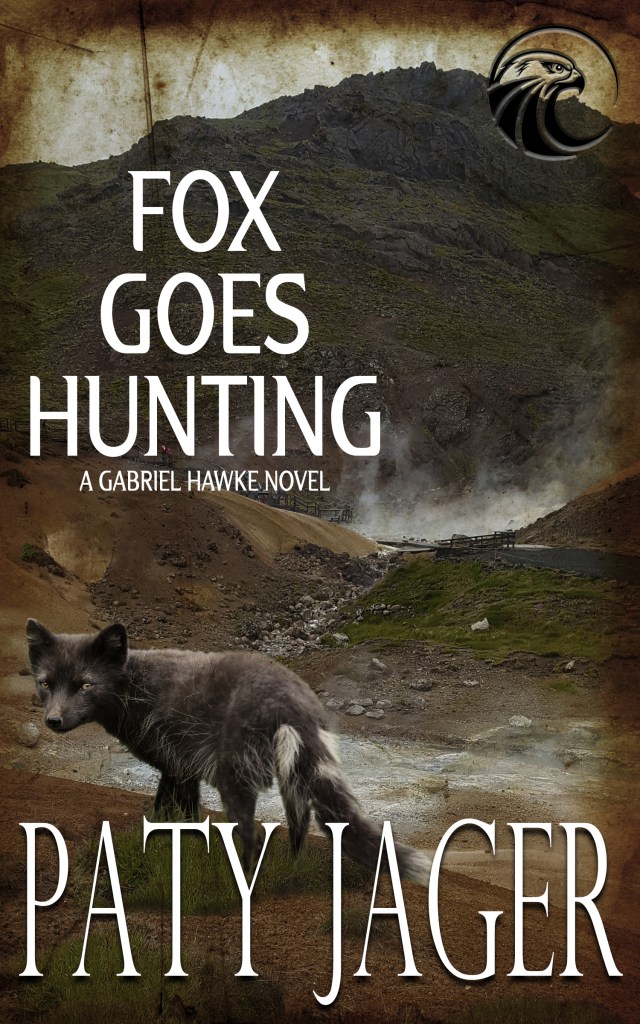
This month, June 1st, the 5th Gabriel Hawke Novel, Fox Goes Hunting, released. My critique partners, beta-readers, and proof reader, loved it! I already received one 2 star review. The reader didn’t like that Hawke wasn’t tracking as much and they couldn’t pronounce the names of the characters. This book is set in Iceland.

I loved bringing things into the book that I saw and learned while in Iceland. I hope to capture a broader range of reader by going “International”. Yes, there are typical Icelandic names for characters from there. It is also set during an international Search and Rescue conference so I had secondary characters from around the world.

Yes, both books set in real places took twice as long to write. I had to make sure distances, towns, places were correct. I wanted to make sure I gave a clear picture of where they went and what they saw.

When I write the Shandra books set in a fictional place, I can make things up as I go, though I did make a map of the county when I started writing the series, so I do keep things in the same place every book. But if I want to add a business, I find a block that I didn’t put a business in already and add it.

The Hawke books are set in a real place, but I made up fake towns in place of the real ones to keep anyone I might have grown up with in that county to think I am talking about them. 😉

While I know there are some readers who don’t like the unexpected, I believe writing outside of my comfort zone and incorporating other places and cultures into my writing helps me grow as an individual and hopefully gives my readers a glimpse at a culture they might not get a chance to experience first hand.

Revisiting a Vacation by Paty Jager

I went on a trip of a lifetime, for me, last summer. When I received an email about a literary trip set in Iceland and saw the itinerary and how well we’d be taken care of, I told my hubby it was my birthday gift and I signed up.

Now, almost a year later, I am getting ready to publish a book I set in Iceland. I loved the country- the people, the scenery, the history. I felt at home there. Hmmm… I wonder if I have more Norse in me than I thought? I’m ready to go back whenever my hubby would agree to it and the pandemic lifts.

The trip was put together by The Author’s Guild. It was a mix of half usual tourist sights and half literary sights. We had a meeting with Yrsa Sigurdardottir, a crime fiction author in Iceland whose books I had read and enjoyed. We went to a museum which had ancient Icelandic manuscripts. They were made of sheep skin and wood covers. And we visited the home of the 1955 Nobel Prize winning author, Halldor Laxness.

But I would have to say the highlight of my trip was getting the other writers, who mostly wrote non-fiction books excited about helping me find a good place to have a murder. Each place we stopped someone would say, what about this or that? And then as a group they would come up with how and why someone would be murdered in that spot. It was a lot of fun.

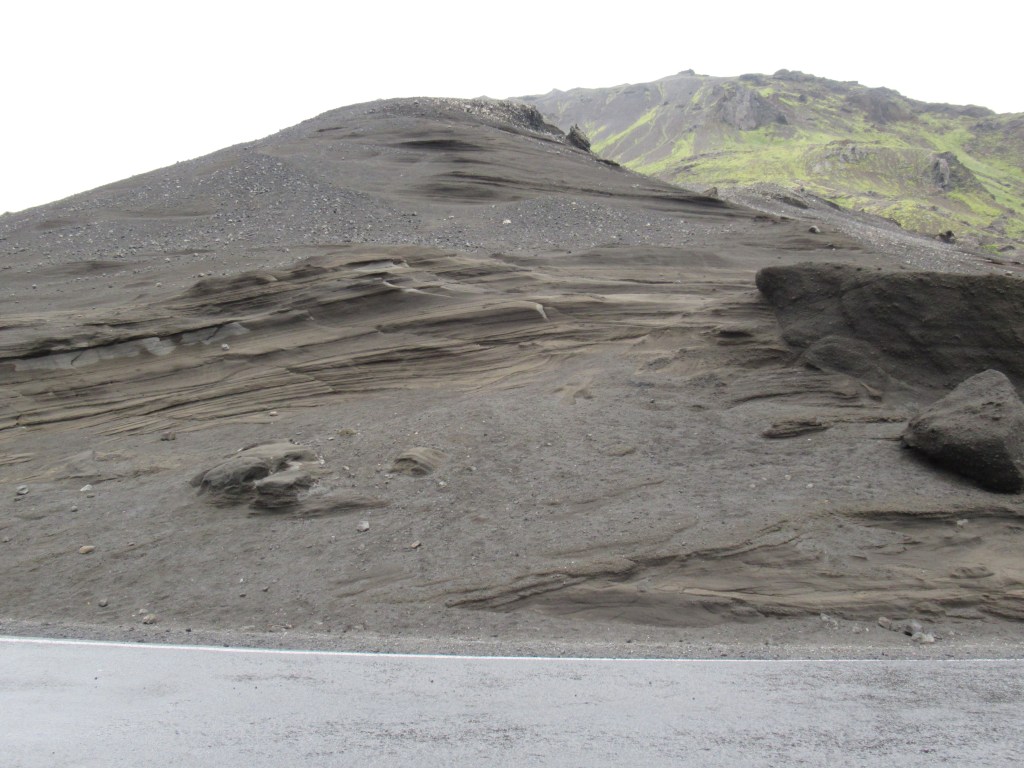
landscape at Kleifarvatn Lake

On the last day, which happened to be my birthday, all ten of us loaded up in the small bus we’d been travelling in all week, and headed to Lake Kleifarvatn. The landscape at this lake has been likened to a moonscape. It is sparse, barren, rocky surroundings. I took quite a few photos, thinking this would make tracking someone near impossible and would make a great place for a tracking specialist to be needed.

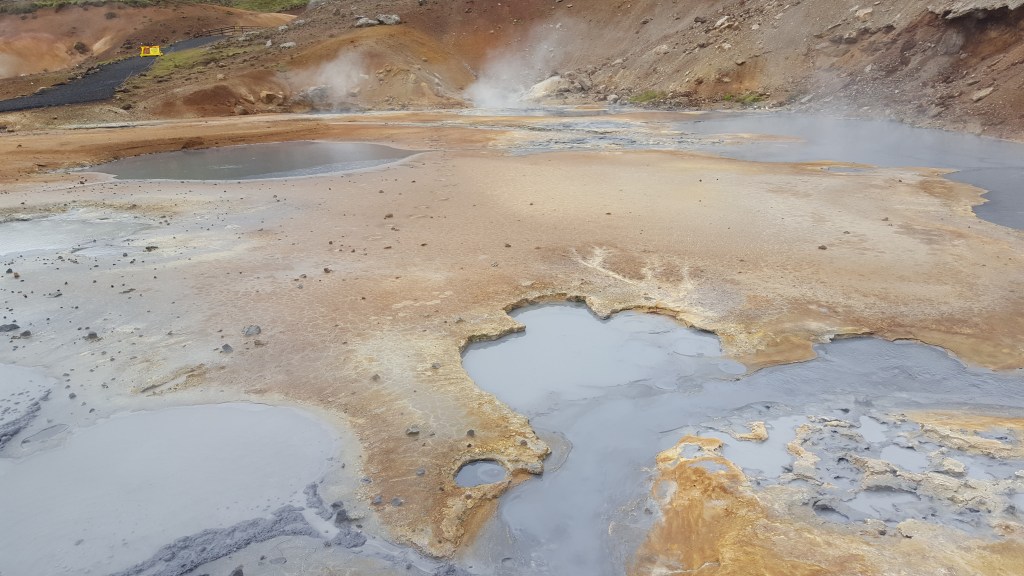
Boiling mud pools at Krysuvik

However, we continued on and as soon as I saw the steam and the bubbling mud I knew I’d found my means of murder! At Krysuvik, a tourist attraction of sulfurous steam escaping boiling mud pools, I could see a body half in and half out of one of the mud pools. The more I walked around the area taking photos, I solidified this was where the the murder would take place.

I asked our guide, Ragnar, lots of questions and scribbled in my little book. I asked him about Search and Rescue. He said they had a large SAR program. When I came home, I looked it up. I was so excited! They had a world reknown SAR conference every two years. I could send Hawke to Iceland to teach at the conference. And the best part, the conference was this year, well, we’ll see if it is still held with all the closures of conferences this year, but it would be held in the Harpa. The Harpa is a fairly new concert hall and conference center that is beautiful! It was a building across the street from our hotel and I had been in it for dinner one night and a play another. It was a building I knew.

This is Harpa. It has beveled colored glass panels all over it and is gorgeous when the light hits it just right.

Everything just seemed to fit together for my book! And I’m pleased to say, Fox Goes Hunting, book 5 in my Gabriel Hawke Novels is available in pre-orde and will release on June 1st. What a fun way to celebrate the anniversary of my trip- with a book set in Iceland.

Writing the book I was able to revisit several of the places I’d been, reconnected with our guide for some help with things I hadn’t seen or didn’t know about the country, and enjoyed putting my taciturn Native American Game Warden in an environment different than he knew.

Blurb for Fox Goes Hunting

While teaching a tracking class at a Search and Rescue conference in Iceland, Oregon State Trooper Gabriel Hawke discovers a body in a boiling mud pool. The body is the young man Hawke’s class is tracking.

Unable to walk away from the young man’s death without helping to find the killer, Hawke follows the clues and discovers the young man had few enemies, and all of them have alibis. The killer is cunning like the fox, but Hawke is determined to solve the homicide before the conference attendees head home in five days. 

Pre-order at all ebook vendors:

https://books2read.com/u/3yEjKv

On Being a Writer by Heather Haven

Heather cartoon-smallest copyThere are a lot of bonuses to being a writer. Take today. Without leaving my office, I got to go on an early morning car chase on Highway 92, a scenic route over the coastal mountains of California. Highway 92 leads to a lot of nifty places, such as the Pacific Ocean and a darling little town called Half Moon Bay. True, the car chase may have only been in my mind, but it was pretty exciting. And a total relief, especially with what’s going on in the world now.

Following my protagonist and her hubby, I wound up at a Christmas tree farm. There I got to watch among other things, these two charmers sabotage the getaway helicopter of the villains. They were outnumbered and it was a close call, of course, but things were set right in the end.  As I tagged along with them, the sun came up on a glorious day in a glorious part of the world. I said to myself, I said, “Self, this is the joy of writing a cozy. You know what’s going to happen, when it’s going to happen, and there’s going to be a happy ending, because it’s all up to you.” Self was happy.

On top of that, I got to do research. I love doing research. I learned things, such as different fuels for a helicopter (there are two kinds, depending on the engine), if the windshield can be penetrated by a bullet (yes), and how the rotating blades taking the copter up, up, and away actually do it (too detailed to go into). Today my life was in the building, maintenance, and aerodynamics of a helicopter on a Christmas tree farm near Half Moon Bay and little else.

Of course, I would have to come back to reality now and then to feed the cat, hubby, make the bed, disinfect anything that came into the house, go for a brief walk, and make dinner. But still, parts of my day were absolutely marvelous. I may be a crazy writer, but I LOVE what I do for a living. Even when I don’t make much of a living at it. Money comes and goes. Sometimes I sail along, sometimes I’m dashed to the rocks.

But then, I never became a writer because of the moola. It’s the lure of things like car chases over Highway 92, foiling the bad guy, and winning the day at a Christmas tree farm. You just can’t get jobs like that every day, no matter what the pay.