One & Done: Writing Stars Sometimes Do Align

When you first put eyes on the man you knew who’d be your husband. The opening notes of a song that strums your soul, still gives you chills when you’re reunited years later. How a perfect canvas sky at sunrise or sunset leaves you spellbound. The awe you hold in a composer, a painter, or any other artist getting a project right on the first go, the first shot, the first time out.

I’ll let you on a little secret. Don’t tell anybody.

It. Does. Happen.

Let me explain.

Sometimes when you draft a scene, a character sketch, a chapter or chapters, whichever your writing project is under your fingertips, you can–and do!–get it right on the first try. I’m here to exclaim, take back, and boldly proclaim: IT HAPPENS!!! The magic pixie dust found you that day, took a liking to you, and left you some of its glittery jet wash in its fumes.

Here’s a few instances–

“We Are The World,” co-written by Lionel Ritchie and Michael Jackson, both completed the song’s lyrics and melody in 2.5 hours, and recorded the song in a single session.

Sir Paul McCartney, in writing the 007 Live and Let Die theme, had movie execs wait five days for the work–when he’d written the music in a scant 45 minutes. According to the anecdote relayed in Casey Kasem’s American Top 40 countdown, “I didn’t want the movie brasses to think this was easy, but it was.”

Alanis Morrisette wrote her 1990s hit “Ironic” in an hour.

The blind guy who hit a hole-in-one on his only try.

Chapter 18 of JERSEY DOGS called “A Little Rusk Nikk’ed Us.”

Woodstock, 1969.

Any MLB team’s first try for, or breaking a century-long drought, at a World Series win.

And countless times when people played the lottery on a sole instance, and hit the number big.

So don’t tell me when you bang out a first draft of anything it’s impossible to get it right ON the first go, in the first go. Granted, this is a diff’rent post from calling that first one-and-done draft novel perfect; it ain’t. The book’s likely purple prose-y, your story’s taking forever to get to the point, it’s adverb- or passive voice-heavy, etc. You know who youse are :).

BUT . . . some chapters, or sentence phrasing(s), scenes, or certain word choices ARE perfect in the middle of that first draft crapstorm you can pluck free that which resonated most, and build around this in the coming revisions.

An article in the September 2019 issue of The Writer, “Stop Trash-Talking Your First Draft” puts it brilliantly: “You wouldn’t call your firstborn a sh*tty first draft, would you? Of course not! Even if the baby may have correctable health problems or non, that child is imperfectly perfect, period. Anyone saying to you that child is a crappy first draft, you’d say they’re abominable human beings. The first breaths of life in that early writing draft isn’t any different.” (paraphrasing mine.)

Whether you’re a veteran author or a brand-new writer ten minutes ago, the first draft is part of the writing process. But if the end result isn’t called the horrific names the first draft gets, why should the first draft be treated like a bastard at a family reunion? This reference is a great piece I can’t encourage to be read enough. Feel empowered when you come away from it–I’ll betcha you do, as you should. I did–and if anyone knows how much a hardass I am, I was a wet and snotty cottonball after the piece. (Forget you read that “wet and snotty cottonball” part–I’m a hardass, rememeber?)

So write the first draft with abandon! Come to its defense, warts and all; who else will if not you? The article also questioned when did it become sacred to trash the first shoots of life in a brand-new piece to begin with. It ruminates Anne Lamott’s Bird by Bird had much to do with the first draft getting the hot pile of bat guano label, but maybe, the article’s author muses, it might be time to put this line of thought in the trash. I could not agree more. Also paraphrasing mine: Just because Bird rode high on the writers’ reference bookshelves and bestsellers lists, doesn’t mean its apologia is airtight–or shouldn’t be questioned, revised, or even abandoned altogether if its information isn’t applicable or merited anymore.

First-run tries do periodically knock it out the park. Is this a fluke? An oddity? Chance? Absolutely. But trashing the first drafts have gotten the sacred cow status in the writing world–and perhaps your writing lives–long enough. The initial piece may be in rough shape, but you got the damn thing OUT in the first place. The potential the work holds is enough to NOT tag it as crappy, even if it isn’t in a no-need-to-edit perfect place on the first doggoned try.

I’ll let you in on another inside baseball secret: Every word above this paragraph virtually poured out of me for this month’s post on the first go, easy to align my thoughts on the article’s topic, only an edit or two for clarity, continuity, and relevance. But, as that damn bitch called The Muse mule does, when Bessie’s out of steam, she’s not moving for anyone until she’s good and ready. Then it hit me. Rather, Bessie, my mule of a Muse, kicked me (is this her helping me plow another 40 acres of a blog post? You decide. **smirk**) to bookend this aspect of my writing life in a way I didn’t think plausible. The second reason this post couldn’t be more timely: this article vindicates me to my now disbanded online critique group my first Casebook got ripped to hell for. I told that group at the time I knew I was instinctively right to defend the book’s parts that fit when the self-righteous–and traditionally published in the group–mob tried to justify their words in tearing it down. But that’s another blog post for another time.

Create? Yes. Re-Create? Sh*t, No!

Let’s revisit and unpack our “We Are the World” by USA For Africa example–can that magic be re-created? No, unfortunately. Or when you first read Harry Potter, saw the movies, had your first child, or found your car unicorn. Can you re-create that exact perfect first draft moment with all its magical elements falling into place where they should, as they should? Nope. This is why you don’t see Lionel Ritchie, Quincy Jones, J.K. Rowling, et al trying to re-do what sheer dumb luck, fantastic timing, and a lot of Tinkerbell’s dust helped that magic come together, and hold together, in the first place. Imagine trying to re-create Ferris Bueller’s Day Off. The Back to the Future, Toy Story, or the Indiana Jones flicks. If anything, somebody should’ve told Michael Wang this 1 Corinthians 10:23 lesson before taking the thought of creating Woodstock 50 in mind: Just because you can do something, dun mean you should do it.

“When it’s perfect, be it from the onset or after many rounds of revisions, then let it go. If you keep tweaking, you’ll tweak the perfect out of it.” —Julia Cameron, The Artist’s Way, 25th Anniversary Edition (paraphrasing mine)

If Cameron’s second-to-none resource is helping you to be okay with finally silencing your mother’s words, the inner editor and outer critics, naysayers, and downright haters of first drafts for being in that pole position, then be okay with it. Don’t even let Anne Lamott tell you diff’rent. Think about it: How much pressure is on her to defend her position?

The defense rests.

I attended a NYC 2011 workshop where Reed Farrell Coleman spoke on a similar topic. He knew a would-be author a few years prior revising his book’s opening chapter–both hands on the wheel, please, or swallow your hot beverage before reading on–27 times.

You read correctly. Twenty. Seven. Times.

But this was made more bittersweet because, Coleman said, this author had been one of the first detectives on scene hours after the Twin Towers were still hot ash, hot rubble, and chaos. He’d been diagnosed with Stage IV lung cancer as he drafted the novel, so Coleman point-blank told him, “Dude, you don’t have time to revise this much. Take the best of the suggestions and move on; the opening’s gonna be what it’s gonna be!”

The author took Coleman’s advice and moved on. But he died before ever completing his book. How much time he’d lost on something that didn’t need that much fussing about to begin with, and sadly, the world will never know what would have been.

This is what Cameron means about tweaking the perfect out of the imperfect, and this includes first time tries being right . . . the first time out. You, Dear Author, need not diss the WIPs in the zygotic stage of life. Let it go. Be proud you get to watch it fly–or cradle it to the next world with dignity and grace in one hell of a send off.

As always, you got this.

~ Missye

* * *

You’re still here?

Um . . .why?

The piece is over. I mean, I know you want more of me–or wished the Toy Story franchise ended at TS3 like I do, or more Pottermore following Harry and the wizarding gang all growed up–but sorry, ain’t got that for ya. I’ll be back next month, Lord willing, with another scintillating, firestarting post. Go feed your cat or clean his box, since he’s giving you that stink-eye felines perfected waiting on their humans to tend them.

No?

Sigh.

I didn’t want to do this, but . . . this goes dark in 3 . . . 2 . . . 1 . . .
Guest Blogger – Lorrie Holmgren

When I start to plan an Emily Swift Travel Mystery, I go where my amateur sleuth will go and jot down descriptions, observations, and plot ideas in my journal.  Because Emily is a travel writer, I want to capture her enthusiasm for new places and describe them as well as I can. Useful as my journal is, however, I often turn to the Internet to develop my ideas in more detail when I’m actually writing. I find the combination of real-life observation and research works for me.

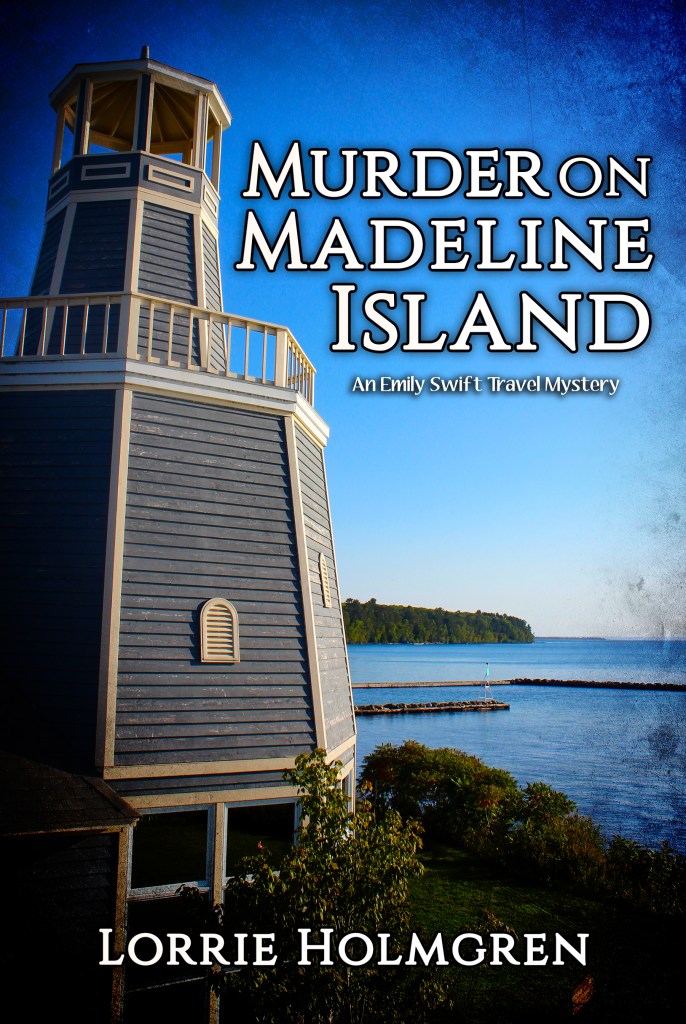
Sometimes I have an idea for a scene that means I must head off to a place I’ve never been.   In Murder on Madeline Island, the first book in the Emily Swift Travel Mystery series, Emily is helping an elderly woman search for her long-lost Ojibwa brother.   I thought her search might lead her to a Powwow.  So, I drove to Bayfield, Wisconsin to see a powwow firsthand. As I always do, I jotted down detailed descriptions in my journal.  But when I started to write the scene, I realized I needed more.  I went on UTube to watch the Shawl Dance and Grass Dance and found out their significance.  Then it was easy to imagine the scene.  In the final version a snippy young girl who has been resisting Emily’s entreaties to meet with the old woman, dances beautifully, transforming herself from a girl into a crow.  The character’s love of tradition gave her greater depth and made her more likeable.  That was my intention anyway. If you read it, let me know if you agree.

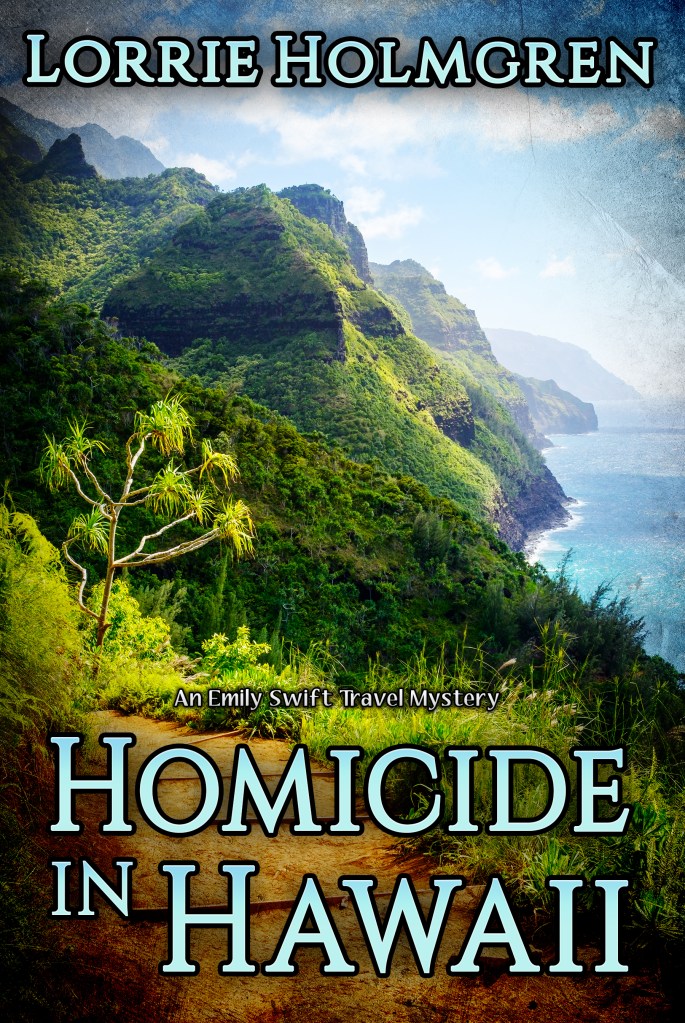
Sometimes I see something on a trip that gives me a plot idea and then I go online to find out more.  While I was in Hawaii, my husband and I visited a mountain top that had been the site of an ancient temple. Fresh fruits and flowers were placed there as if at a shrine or gravesite.  It seemed to me this would be the perfect place for a body to be discovered.  So, in Homicide in Hawaii, that’s where the victim’s body is found.  I went online to do research and discovered there had been a resurgence of interest in the old Hawaiian religion and worship of the god Lono.  Here was another lead to help me develop the story.  One character – a young girl who has been adopted and is now seeking information about her Polynesian heritage becomes fascinated by the old religion.

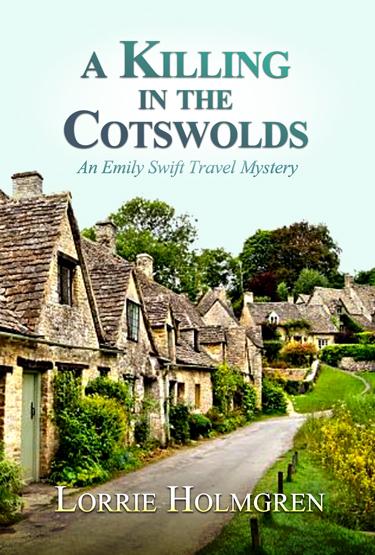
Now, when we are all kept inside by the Pandemic, it was a particular joy to relive my last trip to England where I did the research for A Killing in the Cotswolds, the third book in the series, which has just been published by Cozy Cat Press.  In the novel, Emily is writing articles about daytrips not far from London when she is drawn into a murder investigation.  Like Emily, I travelled from London to charming Cotswold villages to Stratford upon Avon and Avebury and enjoyed delicious teas and visits to historic sites.  But it was Internet research that gave me the idea for the long-buried secret that led to murder. I didn’t use the actual event, but it spurred my imagination.

For now, I highly recommend armchair travel.  Emily Swift Travel mysteries are available in print and Kindle on Amazon.

A Killing in the Cotswolds, An Emily Swift Travel Mystery

It’s springtime in England and travel writer Emily Swift is writing about charming Cotswold villages. But when a politician is found dead in a country inn, she and her boyfriend Jack are drawn into a murder investigation. Who killed him? An actor with a talent for deception?  A schoolmaster fired after a mysterious death? A tour guide at Warwick Castle bent on revenge?  Over tea and crumpets, Emily’s childhood friend begs her to find out and save an innocent woman from being charged with murder. Emily can’t say no. Clues lead through the British countryside and danger lurks where Emily least expects it.

The books are available in print and Kindle on Amazon

Lorrie Holmgren is the author of three Emily Swift Travel Mysteries: Murder on Madeline Island, Homicide in Hawaii and A Killing in the Cotswolds. She lives in Minneapolis, Minnesota, with her husband, busily penning mysteries and hoping it will soon be safe to travel.  She enjoys Zumba, Salsa, Bachata, aqua aerobics, gardening, knitting, and book group discussions.

Website www.lorrieholmgren.com

Facebook

Pinterest

Twitter

I Love Research!

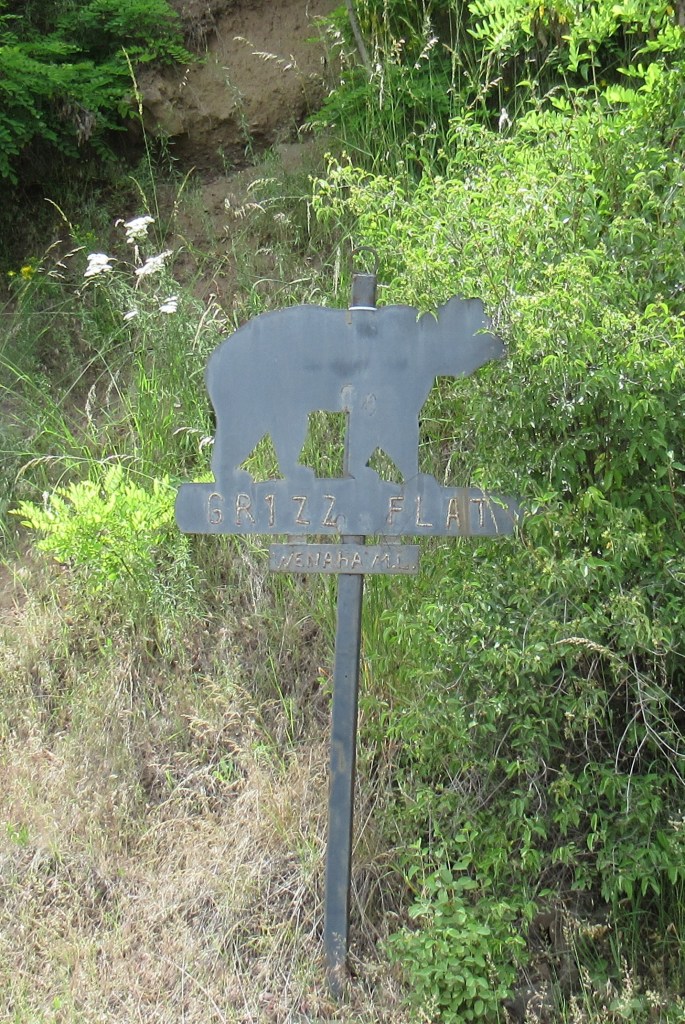
Photo I took of Grizz Flat

No matter what genre I write, there is always research. Did I say I love research? LOL The current work in progress is the 6th Gabriel Hawke novel. You would think setting the book in the county where I grew up and having had a ride-along with the State Trooper of the Fish and Wildlife Division I’d have everything I need to write the book.

I don’t and I’m having fun learning about muzzleloading rifles, rendezvouses, shooting competitions, and the general lifestyle of the people who travel to muzzleloader events.

Did you know that they not only have shooting competitions with the muzzleloading rifles, but they also have knife throwing and long bow competitions? And they all use an alias while at the events.

I contacted the person in charge of the Facebook page for the local (to Wallowa County) Muzzleloading Club to learn about the club, the rendezvous they hold every year, and all I could that would help me enhance my story. They have vendors who sell articles and clothing of the early 1800s the time period they represent while at the events.

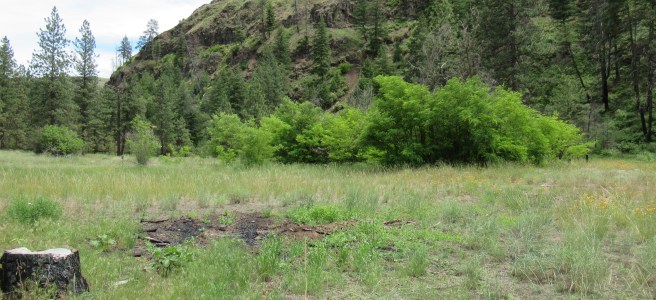
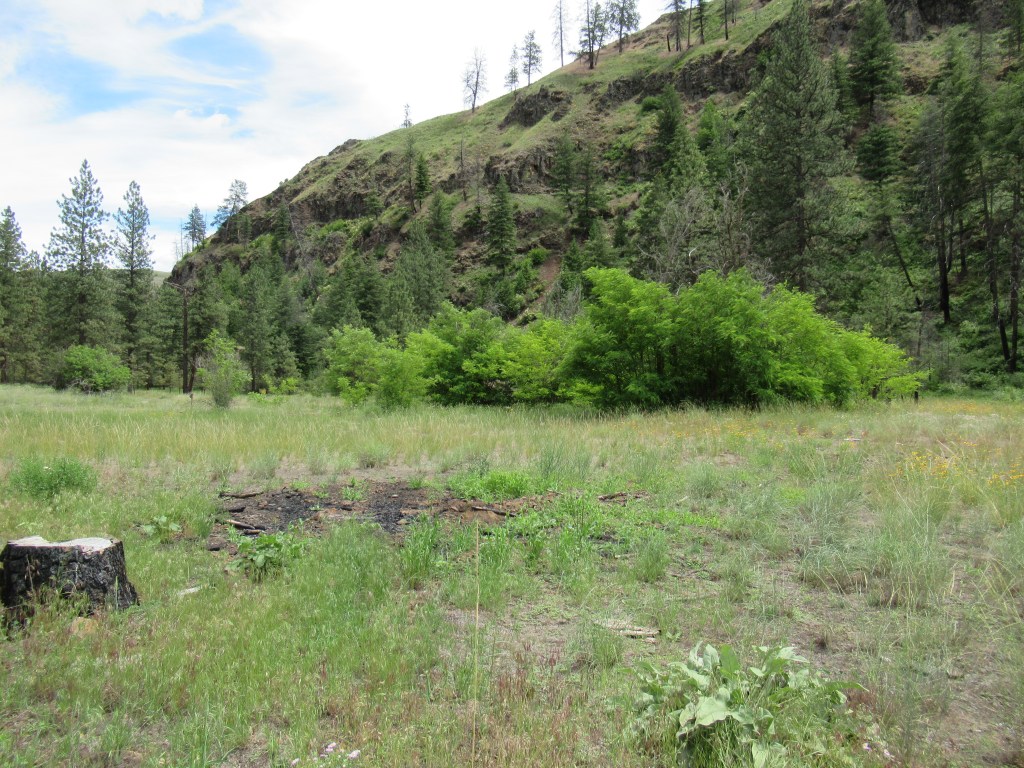
I even drove to Grizz Flat where they hold the Rendezvous to get photos, see the area, and figure out how to set up the story.

The premise of the murder happens to be something the State Trooper told me about when I did my ride-along. He stopped on a road, across the river from Grizz Flat and pointed to the camping area. “See that campfire to the left?” I nodded. “A vehicle rolled over the campfire and caught on fire. A man died. They say he was drunk, passed out, and must have bumped the gear shirt. But after investigating, we discovered he’d had an argument with his wife.”

I said, “It couldn’t have rolled, the ground is too flat. And how coincidental would it be for the vehicle, if he’d put it in gear, to stall over the campfire. I say it was homicide.”

The trooper said, “That was what all the investigators said, but the D.A. said it was an accident.”

That is the story I am writing for this Hawke book. The vehicle is found burning over a campfire and the victim is in the vehicle. This time, Hawke will push to make sure the killer is caught and the D.A. prosecutes.

Have I mentioned the theme of my books is justice? 😉

Guest Bloggers- Dr. Judy Melinek & T.J. Mitchell

The Working Stiffs: How We Get Our Ideas

by Dr. Judy Melinek and T.J. Mitchell

Judy: I do autopsies in a big city medical examiner morgue. The murder mystery ideas come strolling through the door most every day!

T.J.: Take the plot of First Cut, our debut novel. The seed for the story came from an actual homicide, where Judy got called out to the death scene. The decedent was a petty thief. He jacked a laptop off a man sitting in a café—and the robbery victim pulled out a gun. He shot the thief a bunch of times, in front of witnesses and under security cameras, took the computer out of his dead hands, and walked away.

Judy: I was there to answer questions from the homicide detectives about the gunshot wound trajectories, but all I kept thinking was, “what was so important on that laptop that someone would kill over it?” The book’s story took off from that mystery.

T.J.: You see a lot of overdoses, too. Those came in handy for First Cut.

Judy: Fatal drug overdoses are fascinating to me, because they can be any of several manners of death. When a poison is self-ingested, it could be a suicide or an accident. If it is administered by another person, it could be a homicide. It’s the same cause of death—a poisoning—but the actions people take behind that poisoning might be accidental, intentional, or nefarious. It’s my job to make that call. The police only get involved when we are certain the case is a homicide.

T.J: And even then you can’t always convince them. The tension between the determination of the medical examiner and the findings the police can make for some juicy conflict.

Judy: Just like the tension between the district attorney trying a case and the medical examiner who gets called as a witness. Trial lawyers have to build their cases based on what the witnesses are claiming, but if those witnesses are lying—or just mistaken—their testimony might not comport with the ME’s physical findings from the autopsy.

T.J.: So that’s how we work. Judy brings these stories home and we toss them around until we’ve come up with the case-based outlines for a murder plot. She gives me the story and I work to fashion it into the narrative structure of the American noir detective novel—our corner of the genre-fiction world. When I get stuck, we talk out additional scenarios from her long experience in forensic investigation, and the plot gains a new twist. She never lets me cut corners with the science, though!

Judy: It can be really satisfying—because, unlike in real life, we get to determine the outcome of the cases and the fates of the characters. We take poetic license in the narrative, but we always write our mysteries with scientific rigor, too. It’s a lot of fun!

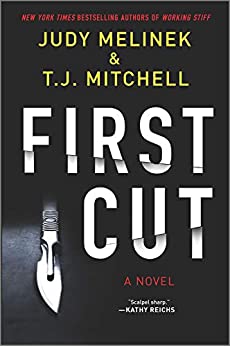
First Cut

A young rookie medical examiner. A suspicious case. An underworld plot only she saw coming.

From the New York Times bestselling authors of Working Stiff

For San Francisco’s newest medical examiner, Dr. Jessie Teska, it was supposed to be a fresh start. A new job in a new city. A way to escape her own dark past.

Instead she faces a chilling discovery when an opioid-overdose case contains hints of something more sinister. Jessie’s superiors urge her to close the case, but as more bodies land on her autopsy table, she uncovers a constellation of deaths that point to an elaborate plot involving drug dealers and Bitcoin brokers.

Drawing on her real-life experiences as a forensics expert, Judy Melinek teams up with husband T.J. Mitchell to deliver the most exhilarating mystery of the year. Autopsy means “see for yourself,” and Jessie Teska won’t stop until she has seen it all—even if it means that the next corpse on the table could be her own.

https://www.amazon.com/First-Cut-M-D-Judy-Melinek-ebook/dp/B07P1B4CJL

Bio: The Working Stiffs are the married writing team of forensic pathologist Dr. Judy Melinek and writer T.J. Mitchell. They are coauthors of the New York Times bestselling memoir Working Stiff: Two Years, 262 Bodies, and the Making of a Medical Examiner (Scribner, 2014), and the new novel First Cut, the debut in a forensic detective series from Hanover Square Press. Its sequel, Aftershock, is coming in February, 2021. You can follow the Working Stiffs on Twitter @drjudymelinek and @TJMitchellWS, and Facebook/DrWorkingStiff.

Guest Author June Trop

ANCIENT FORENSIC SCIENCE

My mysteries are set in Roman-occupied Alexandria during the first century of the Common Era. Why then? Well, one reason is I thought my protagonist, Miriam bat Isaac, wouldn’t have to deal with forensic technology. Little did I know that, although the Romans didn’t have a formal body of forensic knowledge, they used some methods similar to what we have today. One example is bloodstain pattern analysis.

In The Deadliest Sport, Miriam examines the blood spatters in the room of a sleazy waterfront inn to solve a “locked-room mystery”, that is, a mystery about a crime, usually murder, that appears impossible to have been committed. The crime need not take place inside a locked room, as it does in The Deadliest Sport, but in any utterly inaccessible place.

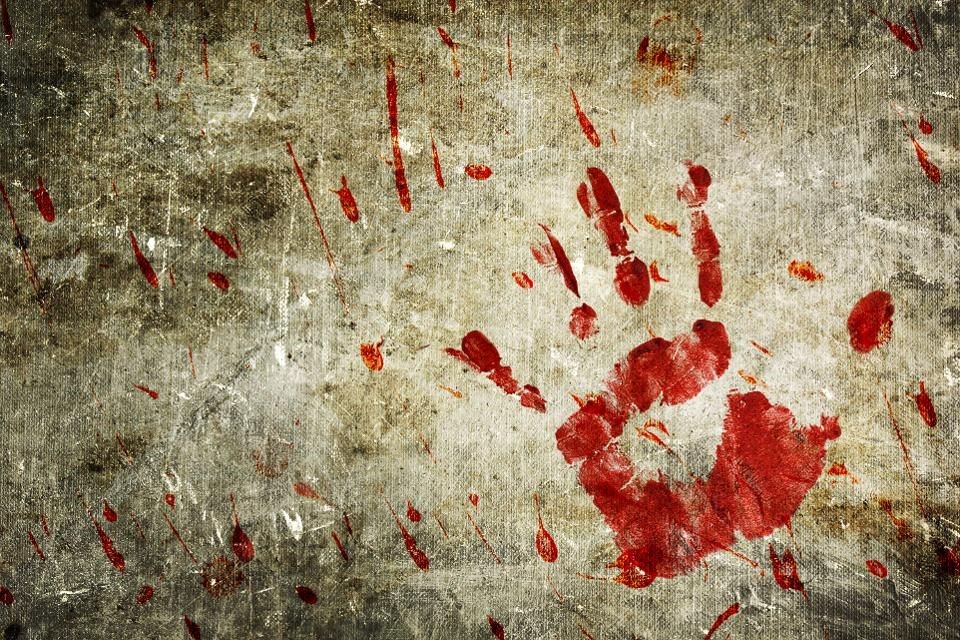
The most famous case of a Roman jurist analyzing a bloody handprint is titled “Paries Palmatus” or “The Wall of Handprints.” A blind son is accused of stabbing his father in his sleep to obtain his inheritance. Purportedly, the blind man took his sword from his room, walked across the house in the dead of night, and entered his father and stepmother’s bedroom. Then he stabbed his father once, killing him instantly without waking his stepmother, who found her husband dead in bed when she awoke. A trail of bloody handprints led from the parents’ room back to the blind son’s room, and his blood-covered sword was found as well.

The defense argued that the stepmother did it, upset because she would lose out on the father’s fortune to his blind son. So, she framed the blind man using his own father’s blood:

It was the stepmother, yes, the stepmother who set this up with her sure sight; it was she, with her right hand, who brought that poor blood there and made the imprint of [her] hand [on the wall] intermittently! The wall bears the imprints of one palm, has them at intervals, with a certain empty space in the middle, and everywhere the palm-print is intact; a blind man, on the other hand, would have dragged his hands [along the wall].

What other forensic techniques did the Romans use? Emperor Tiberius used footprints and drag marks to argue that his praetor, Silvanus, threw his wife out their bedroom window rather than, as the husband asserted, she chose to jump. Unfortunately for Silvanus, the marks of her struggle and his forcible ejection convinced the Senate of his guilt.

The point for me was that I learned every setting, especially a historical setting, is going to have its challenges, even its surprises. So, set your story in a time and place you’ll enjoy researching and then take your readers there. 

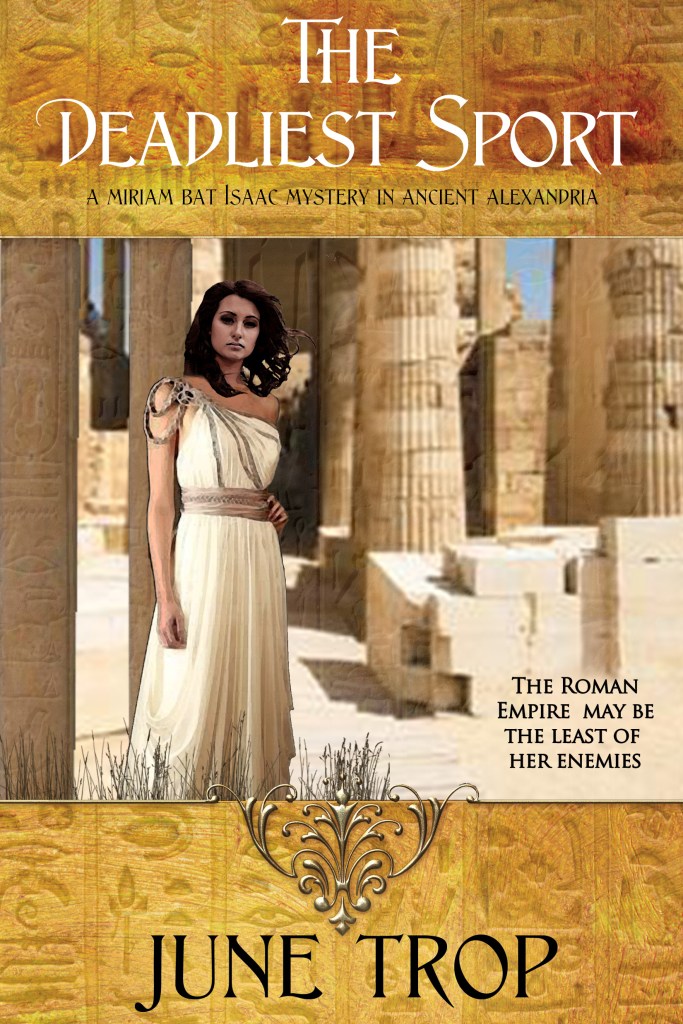
FOR THE DEADLIES SPORT by June Trop

Miriam bat Isaac, a budding alchemist in first-century CE Alexandria, welcomes her twin brother Binyamin home to fight his last gladiatorial bout in Alexandria. But when he demands his share of the family money so he can build a school for gladiators in Alexandria, Miriam explains that he forsook his share when he took the gladiatorial oath. When she refuses to loan him the money for what she feels is a shady, and dangerous, enterprise, Binyamin becomes furious. Soon after, the will of Amram, Miriam’s elderly charge, turns up missing, Amram becomes seriously ill, and the clerk of the public records house is murdered. Could Binyamin really be behind this monstrous scheme? If not he, who could be responsible? And is Miriam slated to be the next victim?

Buy links: https://www.amazon.com/Deadliest-Sport-June-Trop/dp/1626947554

https://www.barnesandnoble.com/w/the-deadliest-sport-june-trop/1127167995

As an award-winning middle school science teacher, June used storytelling to capture her students’ imagination and interest in scientific concepts. Years later as a professor of teacher education, she focused her research on the practical knowledge teachers construct and communicate through storytelling.

Her books have been cited for excellence at the New York Book Festival, by Wiki Ezvid, the Historical Novel Society, and as a 5-star Readers’ Favorite.

An active member of the Mystery Writers of America, June lives with her husband Paul Zuckerman in New Paltz, NY where she is breathlessly recording her plucky heroine’s next life-or-death exploit.

Connect with June on her website www.JuneTrop.com or her Facebook page: June Trop Author.