Down to One Last Charge

Eight days! Stuck behind a mountain of snow. Our prize oak tree split and embedded in our car, stranding us. We were down to one charge on one power pack for one phone (our only lifeline) when power was restored.

Imagine no power for eight days. In the mountains that means no heat, water, lights, or flushing toilets. Oh, we had enough food. I went shopping two days before the storm as did everyone else in the area. I was standing, resting my elbow on my shopping cart’s handle, when a woman in another endless checkout line yelled, “It better snow!” 
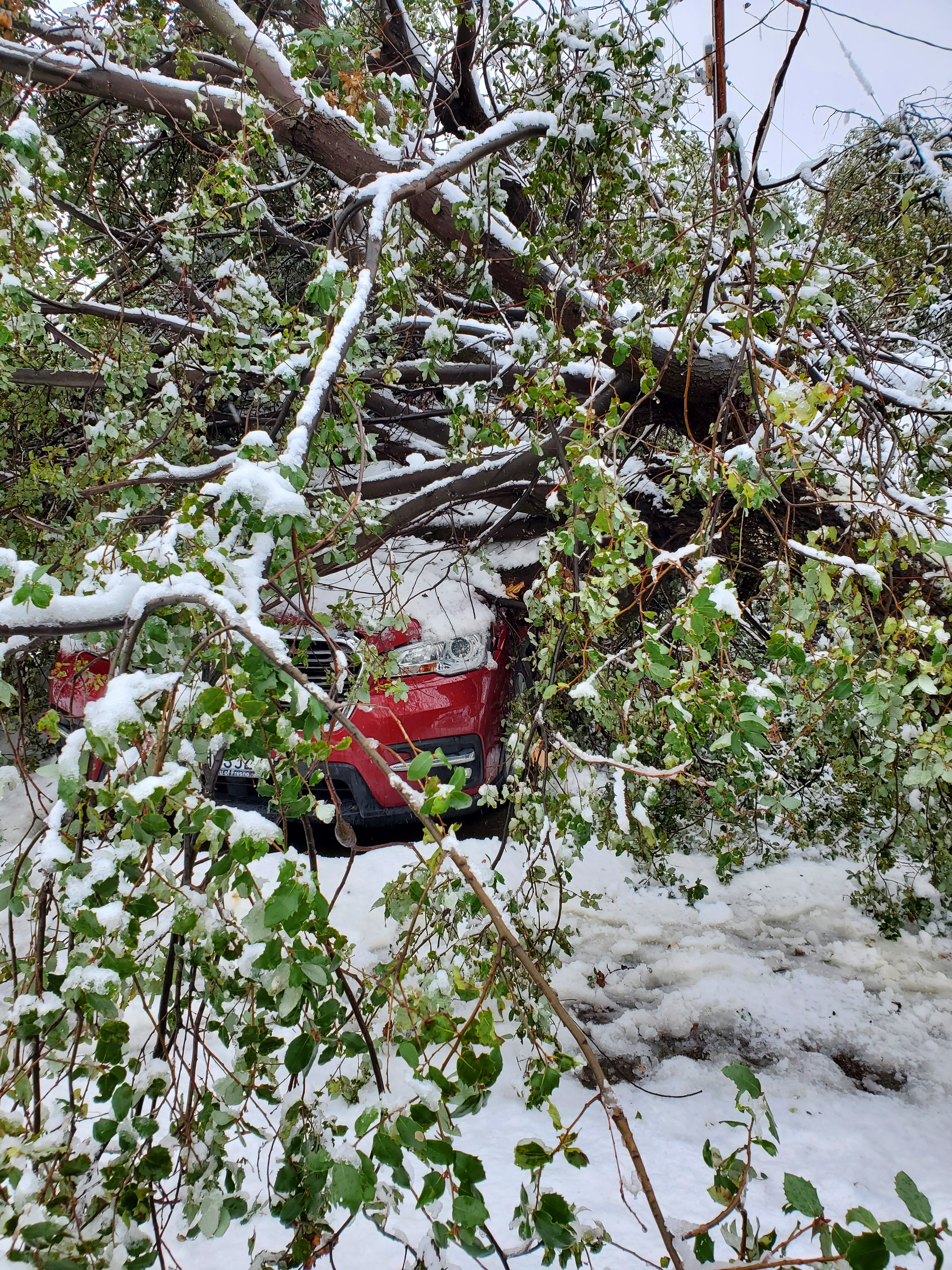
It did. Feet of it. It was enjoyable, big fluffy flakes softly piling up on our deck, until a tree demolished our car, and the power went out. After that, we had no way out, nor did our neighbors. We have an excellent wood-burning iron stove and dry wood. We could light our gas stove with matches, but not the oven. We had headlamps, and lanterns of all sorts. Batteries for the ages. Puzzles. And a massive goose-down comforter in the unheated bedroom. We believe the ambient temperature of sheetrock to be forty-four degrees.

Now, if you’ve been paying attention, you know my most recent book Unbecoming a Lady takes place in 1876. That’s where we lived for those eight days. It’s tough. But what I learned is this, it can be done. It takes some reorientation, for sure. On the first day, you figure out what is essential, and how to operate all while praying that the power comes back on. You overuse your phone because it is your only point of contact with the outside world. And, in our case, the only way to file the insurance claim on our destroyed car. Oh, for a horse and sleigh like those used in Cora’s little prairie town of Wanee.

Then you get the endless emails from PG&E telling you they are on site and the power will be up Monday … no Wednesday … no Friday.

As time went on, we ate the food from the freezer in the order it thawed. We ate pretty darn good. One night we dined on coconut shrimp and dim sum. Way better than Cora’s winter mainstays of storage vegetables and salted meat.

We lived Cora Countryman’s life for over a week minus the three-story house to clean and the boarders to feed that define her days. Hard, all-consuming work. All your attention turns to staying warm, clean, and fed. You get up in the morning and light the fire, boil water to make pour-over coffee, scramble eggs, and fry bacon. Forget the toast. Then you gather fresh snow for your coolers and dump water in the toilet tanks until they flush. You melt snow and boil it to wash yourself and the dishes. Put fresh batteries in where needed. Shovel a path through the snow to the wood pile. Then shovel it again. Pull out the old laundry drying rack and set it by the fireplace, so everything is dry for the next day’s shoveling. You get the idea. And when it gets dark huddle around the fire with your puzzle. Then repeat.

My husband and I finished the puzzle, headlamps on our heads. It is striking how well we adapted to life without television, streaming, phones, lights, toilets, running water, and a microwave. Perhaps because games were played outside when we were kids, the telephone was tethered to the wall, and the television was a small square box with three channels. This isn’t to say that we didn’t delight when the microwave went diddle-diddle-dee, happily letting us know the power was back on.

Now, like Cora, I wonder how her mother found time to play Whist three days a week. And I have a deeper understanding of her day-to-day life. Now to write a wintertime mystery!


The Characters Keep Expanding by Karen Shughart

It’s fascinating to me how, with each successive book in my Edmund DeCleryk mystery series, the number of characters keeps expanding. With the first book there were a handful as I introduced the investigators and their families and friends, but the number grew as I included  the murder victim, witnesses and those involved as suspects or  who helped with the investigation.  While each book can be read as a standalone, because this is a series there are not only recurring characters- the support cast, so to speak- but new ones added as part of each new plot.  

For the first three books I was able to keep track of those characters without having to write their names on a chart, although occasionally I browsed through previous manuscripts when I couldn’t remember a minor character’s name. Now I’m in the process of writing book four, Murder at Chimney Bluffs, and keeping track of all the names has become much more challenging. So, to make things easier, I’ve created a list that includes old and new that I keep by the side of my computer to refer to when necessary. The list is so long that I now have two columns, divided into main and supportive characters, their friends and family, those involved in the historical backstory, or who are suspects or otherwise related to the crime or the killer.

Photo by Helena Lopes on Pexels.com

I’m asked if I construct an outline for my books and stick to a plot I create at the outset, but I don’t.  Instead I typically go where the story takes me. Like a train picking up cargo along the way, I add characters, or discard those who appeared in previous books if they’re not relevant to the current one. If appropriate, I’ll bring them back as the series continues.

 A former board member of the historical society and museum who retired and moved to Canada; his son; Annie’s predecessor who moved to England with her husband; a CIA agent who worked with Ed when both were Navy SEALS;  Ed’s close group of male friends from childhood ; Annie’s chums who comprise her support group; most have had at least cameo roles in all the books.

A new and influential member of Annie’s board of directors will appear for the first time in book four, and I expect he will also be a recurring character. Astonishing how the number has grown from book one to book four. At last count, I’m close to 50, some major and many minor.  As I think about it, what’s happened is that I’ve been building a community, and in the end, that’s what cozies do.

Karen Shughart is the author of the Edmund DeCleryk cozy mystery series, published by Cozy Cat Press. Her books are available in multiple formats at retail outlets and online. Read a recent interview about her writing with AllAuthor: https://allauthor.com/interview/karenshughart/

Just Do It! The Journeys of Writing and Traveling

I am a nature gal, and so the mysteries I write often take place in the great outdoors, where I spend as much time as I can. But getting started is often difficult for me.

Often, before I go hiking, snowshoeing, kayaking, or scuba diving, I ask myself whether the activity will be worth the effort of preparing. The weather might be windy, snowing or raining. I might need to get started on my journey before dawn. I try to be careful and plan for the unexpected, taking a first aid kit, all the appropriate gear for the environment, food and water, a light. And duct tape, an essential for every outdoor expedition. Every year the preparation seems more difficult than the last. Despite all this, I always find that the effort expended is worth it.

Nature has an indescribable majesty and beauty. Even the same place can be experienced differently at different times: a hike might take me through a flower meadow one time and a frosty autumn scene the next, the creeks might be rushing streams or mere trickles. The snow might be mush that will soak my clothes or sparkling icy crystals that will scour my skin if I slide over it.

Watching the sun rise or set over water or mountain peaks, seeing a mountain goat or a weasel or an octopus in its natural habitat is always a deeply moving experience. Underwater, I often meet creatures I can only identify later from a reference book or website.

In the North Cascades, I’ve witnessed avalanches that I used in my most recent novel, Cascade. The slot canyons and natural bridges and rocky trails I explored in Utah became the setting for Endangered. At Mount Rainier, I nearly collided with a bear cub on an overgrown trail. That ended up in my novel, Bear Bait. The underwater antics of sea lions in the Galapagos were featured in several scenes in Undercurrents. Physical challenges and encountering unexpected difficulties, well, those are character development, for both myself and my characters. All good stories have conflict. Ultimately, nature brings us closer to ourselves in ways we sometimes don’t expect it to. So when I’m thinking it might be nice to just stay home and drink my coffee and pet my cats, I tell myself “Get a grip, Pam. Start packing, load that kayak, find all your scuba gear. You don’t know what might happen.”

I have similar feelings about writing the next book. It too will be a journey. So, just as I prepare for my outdoor adventures, I do the research, I prepare, and then I sit down at my computer and expect the unexpected. In both instances, I tell myself, “Just do it; you’ll be glad you did.”

And so far, I’ve always been proud that I made the effort.

Why I Love Writing Mysteries

I’m feeling pretty good right now. I had set goals to publish four books this year. Granted the one that was published in February was mostly written last year, but I have another one coming out April 5th. 

It feels good after several years of always feeling behind to be ahead of schedule this year. The Squeeze, book 4 in the Spotted Pony Casino Mystery series was easy to write because I had been thinking about it for a while. I think that is what made it easier for me to finish the book so quickly. 

When I have time to think about a story or premise for a while before I actually write the story, my mind has already figured out the intricate details of the story. All I have to do is add in the red herrings and misdirections. 

That and this series has an ongoing subplot that started in the first book with my main character and her best friend/boyfriend having something in their past in common. His past, finding out who and where his father lived, has been dealt with. Now my main character is dealing with: is her father really dead as her mother said and was he really Cisco Alvaro? 

This subplot has added more emotion, backstory, and interesting curves to this series. I’m not sure how long I’ll keep this mystery going but I like that it gives me a little more filler in the books between their searching for the murder victim.

I also like that it gives more depth and shows why my character, Dela, is unwilling to take the next step in her relationship with her boyfriend. He is ready to marry and settle down. She can’t until she knows who her father really was and why he was a secret. Add to that she just found out her mom has been seeing a man since Dela went into the Army and now they are planning to get married. She always thought her father ruined her mom for any other man. And why had she never met her mom’s fiancé before if they had been seeing one another for that long?

Soooo many mysteries besides the murder. Oh, I love writing this genre! I wish I had found the courage to continue with it back when I wrote my first mystery, instead of being sidelined from it for twenty years. But I’m writing it now and loving every gruesome, gut-wrenching, and inspiring word I write.

Ready to pre-order, releasing on April 5th. My hubby’s birthday!

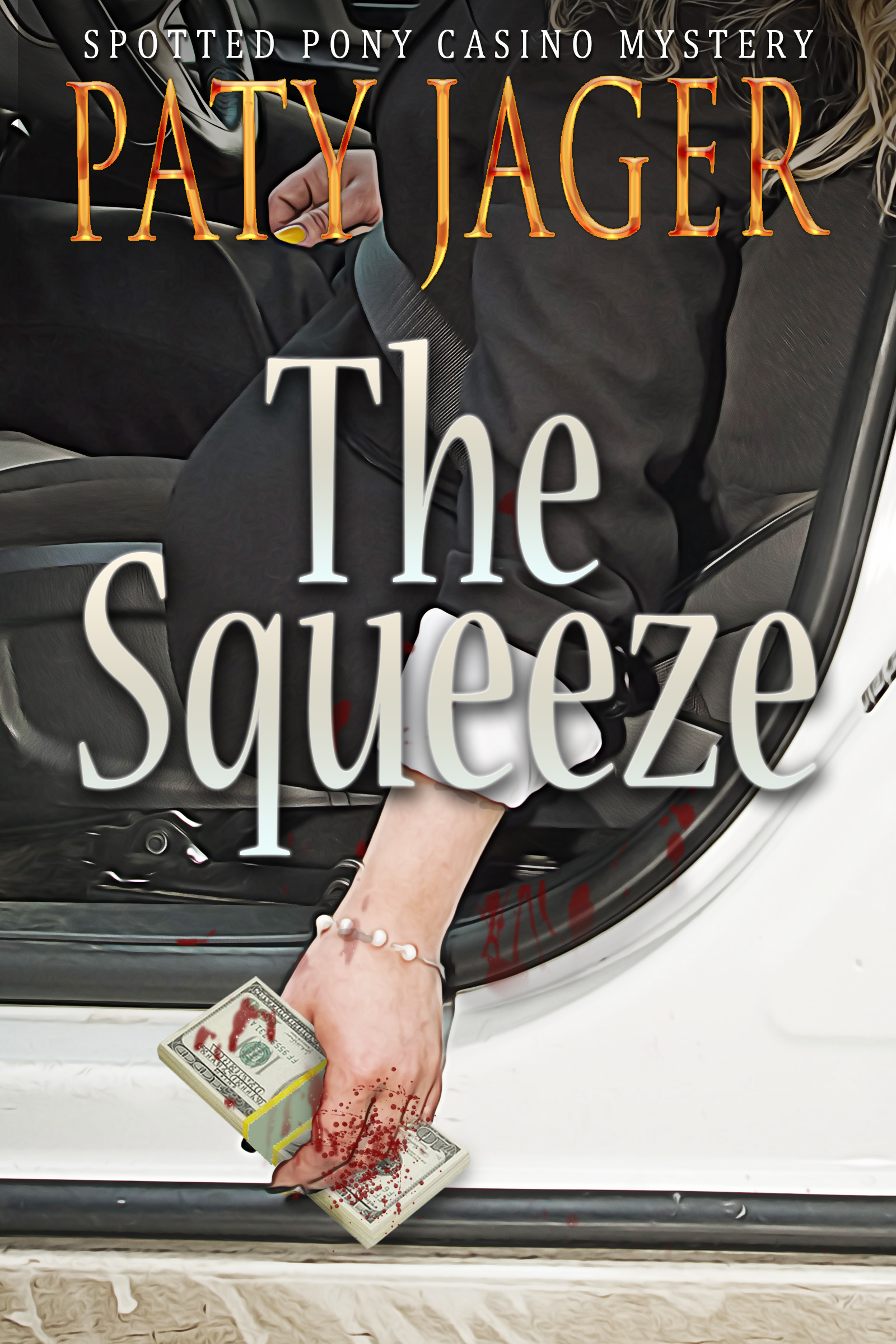
The Squeeze

Book 4 in the Spotted Pony Casino Mystery series

Lies, deceit, blackmail.

Murder ends it all.

Or does it?

When an employee at the Spotted Pony Casino is caught leaving early, Dela Alvaro, head of security confronts the woman. The lies the woman tells only piques Dela’s curiosity. After witnessing the employee threatening a man, she is found murdered in her car parked in the driveway of her home.

Upon learning the woman used her job at the casino to blackmail men, Dela feels compelled to solve the woman’s murder and teams up with Tribal Officer Heath Seaver. Not only does the duo have a death to solve, but there is also a mystery behind Dela’s dead father. Not to mention, her mom just announced she’s marrying a man Dela has never met.

UBL: https://books2read.com/u/4X0WY9

The Subdivided Writer – A Different Look at Self-Publishing

by Janis Patterson

There is an old saw which says, Money should always flow to the writer, not away from the writer. This is largely true and was created long ago in an attempt to protect innocent and gullible little newbies from paying large sums of money to at best dicey companies who promise them fame and fortune by ‘publishing’ their books. (Unfortunately, even in this information-saturated day such ‘publishing companies’ still proliferate and flourish, which is an irrefutable indictment against starry-eyed suckers.) Sadly, this advice was coined long before the advent of self-publishing and has confused any number of people, newbies and seasoned authors alike.

One of the draws of self-publishing is the control it gives the writer, and to be honest, this is like pure catnip to a control-freak like me. What is not stressed enough is that with complete control comes complete responsibility, and that is not always easy.

The first thing is that the writer must become two opposing people – the author (WriterYou) who has created a thing of lasting beauty which is perfect in every way and should live because of its artistic merit, and the publisher (PublisherYou) who must see everything through a purely business-like lens of dollars and cents. If one isn’t very careful it could be a recipe for madness.

WriterYou is responsible for creating the best book possible – a work of fiction (I suppose, though the same criteria hold true for non-fiction, just in different forms) that is as good as he can possibly make it.

PublisherYou is responsible for everything business-oriented – and paying for it as needed, just as a true traditional publisher would be. This includes professional editor(s) as needed, formatters, covers, uploading, publicity (which sadly many traditional publishers now push off 99% of onto the author) and just about everything else.

Warning : the two of you will not always agree in spite of the fact they’re in the same body (yours), and sometimes your disagreements can become epic. This is where self-publishing has the risk of becoming a quagmire, especially when it concerns the content of the book itself. When a professional editor (and I stress the professional part, someone who does this for a living, not your mother or your Aunt Edna who think you are the cleverest thing for having written a book of any kind) says you need to do something, that is something you really need to consider doing, especially the newer you are as a writer. The older you are as a writer, the more credits you have under your belt, the more credibility you have in questioning an editor. A rank newbie should listen! Wasn’t it Maugham – some famous writer, anyway – who said about editing “Kill your darlings…”? No matter how experienced you are as a writer, somehow there is always some part of our story that we just fall in love with, even if it’s not very good, even if it doesn’t forward the story, even if… whatever. That part needs to go, no matter how much it makes you resonate. It’s hard, but if it will make the book stronger, better, more saleable, it has to be done. It is the unenviable job of PublisherYou to insure that WriterYou goes along and does the edits.

Even now, after all my years of self-publishing, when my talented and beloved professional editor says something I really don’t want to hear or do, I think back to a hard-nosed and even harder-hearted editor I had in my New York trad-pubbed days. When I protested something she would listen very politely, then tell me to go ahead and make the changes. And in every instance but I believe two (out of many books) she was exactly right. Make your PublisherYou that strong… and listen to him!

And make no mistake, I don’t care where you are in your writing career, YOU NEED A PROFESSIONAL EDITOR. Although WriterYou should edit the manuscript to the best of his ability before turning loose of it, only a fool will try to do the final edit himself. Also be ready to accept that even after you have several professional passes on a manuscript some – usually tiny – mistakes will slip through. The only perfection comes from God, and I’m quite willing to accept that He is too busy for me to expect Him to proofread a novel.

True self-publishing, with all the responsibility ultimately resting on the writer’s shoulders, is just one way of getting published. The traditional “New York” or “Big 5” (or “Big 4” or how many of them there are this week) is pretty familiar; it’s been around more or less for centuries and is notorious both for taking all of the control and most of the money. And I do mean most of the money! Even though PublisherYou has to pay for everything, contrast the 6-10% of cover price that the author receives in traditional publishing versus the 60-80% the self-publisher earns.

On the other hand there is most definitely a cachet about being published by a major publisher which some authors find so attractive they refuse to consider anything else. And that is their right. Some are very successful; some aren’t, but that’s true everywhere in the industry.

If you decide to go the traditional route and are offered a contract, you need to be very careful and examine everything – and I mean everything! – before accepting it. Nowadays it is not only common but almost necessary to have any proferred contract vetted by an entertainment law attorney before acceptance.

Always remember, publishing houses are not in business for your good; to them you are just a tool to increase their bottom line and most of them will get away with whatever they can get away with, which means everything they can get you to accept. Remember back when they tried to demean authors by relegating them to the category of ‘content providers’? Authors who are not part of the fabled few superstars pretty much earn the least of the publishing world’s hierarchy even though without them there would not be a publishing business at all. And no, that is not fair!

Then there’s also the fabled and sometimes justly reviled Vanity Press, and the newer and occasionally trustworthy hybrid ‘Assisted Publishing Organizations,’ both of which I’ll talk about next month.

Just remember that if you self-publish, you must split into WriterYou and PublisherYou and be diligent in both sides. Otherwise you have probably spent a lot of money and time without much hope of success.