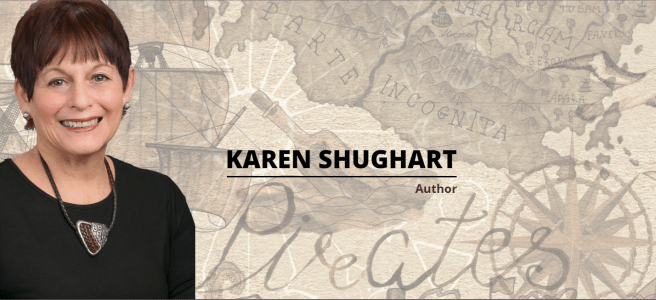
Is April the Cruelest Month? by Karen Shughart

In the poem, The Wasteland, T.S. Eliot writes, “April is the cruelest month….”

The month of April is a time of birth and renewal, and a time of hope. April may bring showers, but we have a reasonable expectation that it will also bring spring flowers. For Eliot, at least when he wrote the poem, nothing was crueler than hope because for him it often led to disappointment. It was safer to hold on tightly to cynicism and pessimism, because then he wouldn’t get hurt.

For most of us, though, April is not cruel at all.  If you live where I do, in the north, April is a time of anticipation, a time when we believe that, as Alexander Pope wrote in An Essay on Man, “hope springs eternal in the human breast.” Hopefulness, despite our challenges and disappointments, continues to renew itself.  Even the holidays observed by various cultures and religions this time of year celebrate the themes of birth, renewal, and hope.

We rejoice when tiny buds start to swell on the trees, when we wake up to birdsong, and daylight lasts longer. We delight in the first sight of bright yellow daffodils and brilliant-colored tulips  as they stretch towards the sun.  And the sun, weak and pale in the winter, shines brightly now, warming our bodies and souls and expanding our hearts to ever so many possibilities.
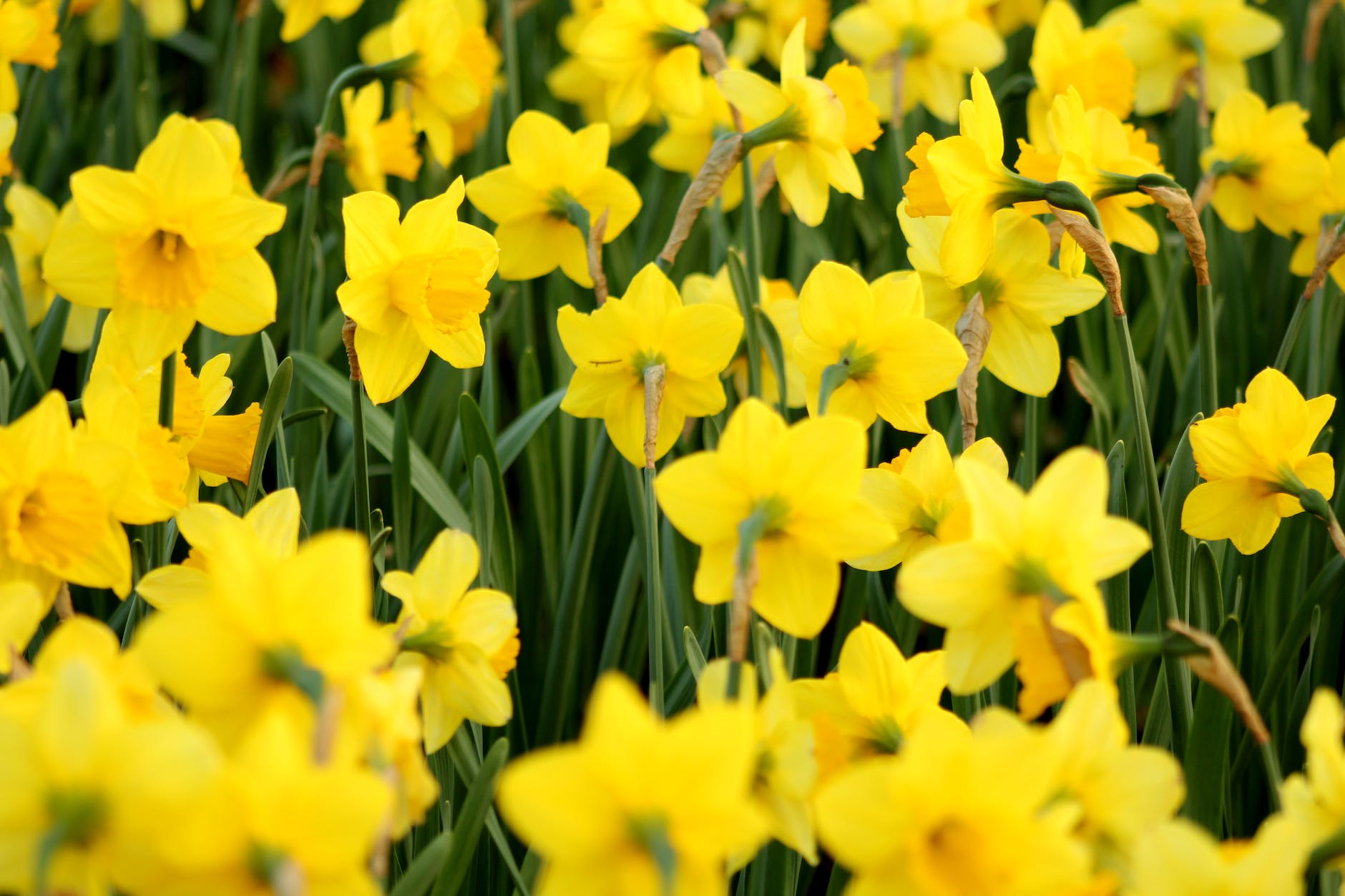
Photo by Jacek Mleczek on Pexels.com

We know that when the daffodils and tulips finally end their run for the year, we have a reasonable expectation that they’ll be back next year, and other flowers will follow. When we plant our gardens, at some point we will harvest what we sow. Soon, we’ll be seeing baby birds peeping out of nests; ducklings, cygnets and goslings swimming with determination behind their attentive parents; and tiny, newborn animals scurrying about. April, the spring, symbolizes youth, but even those of us who are in the autumn and winter of our lives can feel happy, young, and energized.

In northern climates the weather in April is fickle. It rains, sometimes it snows, and at times it seems as though winter won’t quite lose its icy grip; then there are those intermittent grey, cloudy days. Regardless of what Mother Nature throws our way, I am compelled to put away the heaviest of winter clothes, clean out the closets, and plan menus around seasonal foods with lighter ingredients.  I start to make a list of things I want to do to get ready for summer. I always know the rain will stop, the snow will melt, and the grey, cloudy days will be followed by brilliant sun. If April isn’t quite what I expected, there’s always next year.

Cruel? I think not. After April comes May with more abundance,  even warmer days, and the anticipation of summer.

Karen Shughart is the author of the Edmund DeCleryk cozy mystery series, published by Cozy Cat Press
Even More Adventures in Self-Publishing


by Janis Patterson

As promised (threatened?) last month, today I’m going to talk about the traditional Vanity Press and the less well-known and more ambiguous hybrid ‘Assisted Publishing Organizations’, both denizens of the swamp known as publishing and which writers – especially newbies – need to know.


We all know – or we should! – about the traditional vanity press – they have been advertising in writers’ magazines for what seems like forever with lead lines like ‘Manuscripts Wanted – Let Us Publish Your Book’ or some such nonsense. Remember, it seems everyone wants to have written a book and is determined to get it published, swamping legitimate publishers in their attempts. No legitimate or reputable publisher has to advertise for submissions! Most of them don’t even accept unsolicited/unagented books. Many of them are using literary agents as an unpaid first reader, which makes it harder to get a decent agent.


So does that make the traditional vanity press useless? Not if you want it for the right purpose. The traditional vanity press is usually very upfront about what they offer – for a certain amount of money (usually quite a bit) they will produce a decent (most of them, at least) product. They will edit, design the interior, create a cover and print a pre-approved agreed upon number of copies, which they will deliver to your house. The books are your responsibility from there on.


That is, if you are dealing with a decent vanity press – and there are some – but there are many more who are not. As you go down the dependability scale books aren’t given any quality edits – or any edits at all! The design and formatting are strictly word-processing basic. Covers are either totally plain or… well, I don’t use that kind of language.
So why would anyone use a vanity press? Actually there are some appropriate uses for vanity press – a GOOD vanity press. You want to print out your mother’s recipes as a gift for your family and friends. Or your Great-Uncle Fred’s family history that he has spent years writing. Or a collection of poems written by the congregation for a church fundraiser – that sort of thing – intimate, personal and with a limited and basically non-commercial distribution. In the vast majority of – if not all – cases, fiction and most of non-fiction do not belong with a vanity press.


The secret to selling a book (and not having a couple of hundred permanently stacked in your garage) is distribution. In these days distribution of ebooks can be easy – just upload for customers to download and publicize. Paperbacks done through distributors (and this is truly so very easy) like Amazon and Draft2Digital can be done electronically. If you’re willing to learn the basics and do a little work you really don’t need a vanity press at all. See last month’s post on WriterYou and PublisherYou.


One of the newer and more invidious wrinkles on this vanity scheme is the monthly contract. I heard of a poor woman who, so anxious to get her (probably unpublishable) book into the hands of readers, signed a contract with a ‘publishing company’ (and no, I don’t know its name or I would publish it as a public service) where they would deliver X number of books (either 25 or 50, I think) to her every month – at a somewhat discounted price. However, the cover price was horrendously high, which the poor writer was told was quite flattering, as people will happily pay for first quality. (Poor writer? Stupid writer!)


The first month or two she sold a few, but then she ran out of friends and relatives and the books kept coming… along with the bill. Every month. Her garage filled up with books. Her house filled up with books. Her bank accounts all emptied. The only advice she could be given was to consult a lawyer, as she had been told if she didn’t accept and pay for the books the company would sue her for a huge amount for being in breach of contract. I don’t see how any of them could sleep at night – the ‘publishing company’ for being so dishonest and dishonorable and the writer for being so stupidly gullible and not doing her due diligence. What is worst of all is that unfortunately this is not a singular example.


‘Assisted Publishing Organizations’ are at heart the same as a vanity press, though some do offer publicity services. Apparently for those writers who do not value control they provide a partnership arrangement where the writer pays them to do what a traditional publisher would, albeit apparently on an a-la-carte basis.
I am hesitant to talk much about Assisted Publishing Organizations because I am not interested in one and therefore have done no research in depth. I can only beg anyone who is considering using one of these services to do your due diligence and then some. Know exactly what you are getting yourself in to.


Some APOs are honest and deliver what they say they will; some are not. Some are little more than smoke and mirrors. And just because they bear the name or are an offshoot of a well-known big-name publishing house is no guarantee of their honesty or their ability. I heard of one APO which promised the writer a best-seller for a mere $50,000! My personal belief is that anyone stupid enough to spend $50,000 to basically self-publish a book deserves to be taken. First of all, no one, no organization, no company can guarantee a best-seller, unless they control the list and that would make the list meaningless.


So if there is a lesson to be learned from this somewhat bad-tempered little screed of mine, it is to be careful. Investigate everything, then do it again more deeply. Talk to other writers. Join a writing group, preferably one with a long-standing respectable and professional track record like RWA, MWA, Authors Guild, and ask there; the Upper Indian Creek Poetry and Prose Literary Society probably won’t be able to cut it. Every writer needs a little bit of PublisherYou in their make-up, even if they never self-publish a word.


Remember : Money should always flow to the writer, not away from the writer but if you are willing to pay to be sure your book is published you do deserve the best service you can get for your money, and your duty is to make sure the company you choose can deliver it to you.

Writing, Housework and Cat Hair

I hate doing laundry. It ranks high on my list of onerous household tasks. But needs must, as the Brits will say.

When household tasks loom, I think of a quote from French philosopher Simone de Beauvoir:

“Few tasks are more like the torture of Sisyphus than housework, with its endless repetition: the clean becomes soiled, the soiled is made clean, over and over, day after day. The housewife wears herself out marking time: she makes nothing, simply perpetuates the present … Eating, sleeping, cleaning – the years no longer rise up towards heaven, they lie spread out ahead, grey and identical. The battle against dust and dirt is never won.”

At my house, the battle against clutter and cat hair is never won. One pass with the vacuum cleaner and I have enough cat hair to build a new cat.

What, you ask, does this have to do with writing? To me, writing is a bit like housework. It never ends. I wrote a blog post last month and here it is, time for another one. Same with the newsletter. I spent two years writing The Things We Keep, the Jeri Howard book that was published in March. Now I’m back to work, on a new book.

It’s starting all over again, that perpetual cycle for the writer. Having released my polished progeny into the wild, to be purchased by avid mystery readers, I am once again struggling to whack the next novel out of the brush, wielding brain and keyboard instead of a machete. The book is tangled with plot threads that must be woven together, somehow. And full of characters that I envision inhabiting the book. Plus some that I didn’t imagine—who showed up anyway.

The next months will be spent wrestling with the new book, making the idea come together, persuading the people in my head to behave the way I want them too. Or in some cases, going along with them in the direction they lead me.

And doing research. This is a historical novel and it’s easy to jump down the rabbit hole, wondering what my protagonist wears, how she travels from place to place, and what she fixes for dinner. The novel is also based on actual historical events and features real people in supporting roles. So the timeline of my plot must account for that. In other words, I don’t want my protagonist talking to a historical figure when that person was out of town that week.

No wonder I’m talking to myself, and my characters.

Ah, well, I finish the novel, then I start a new one, and the process goes on and on. While the battle with dust, dirt and cat hair is never really won, at least when I’m finished writing a book, the end result is out there, available to readers.

Guest Blogger ~ Barbara Pronin

SPINNING TALES BY CONNECTING THE DOTS

            I confess I have an odd history of collecting miscellaneous bits and pieces – a compelling smile, a story in the news, a flowering meadow under sunlit skies that almost defies description. For the most part, I have no clue how or if these snapshots will come together in a novel. But I am not surprised when that compelling smile one day lights the face of a character, or when that flowering meadow becomes the very place where the lovers in chapter three come together.

            Let me see if I can help you understand how the magic and mystery happen.

            In 2019, we checked in for a weekend at a seaside hotel in California – a boutique hotel, the brochure called it, which I interpreted as small, over-priced, a little bit quirky, and not necessarily solvent. The pretty young desk clerk who checked us in seemed to be a bit frazzled – all the more so when a colleague tapped her on the shoulder.

 “I’ll take over,” she whispered. “Your daughter’s on the phone. She says it’s urgent.”

The desk clerk heaved a sigh, managed a wan smile, and ran for the nearest phone.

            Months later, we went to South Dakota to see Mt. Rushmore. The colossal sculpture, breathtaking in the shadow of the brooding Black Hills, is truly a sight to behold. We toured the national park to watch the buffalo roam, stopped for a night in Rapid City, and moved on to the storied town of Deadwood.

            Deadwood, as popularized by the TV series, was the dusty little gaming mecca where Wild Bill Hickok met his Maker. It still supports itself as a gaming mecca, but its neighbor, Lead, is home to the Homestake Mine – at one time the nation’s largest, deepest, and most productive gold mine in the nation. The mine closed in 2002, but it’s still open for tours – so in we went.

            I felt a chill as I took a step into the dark, dank interior of the mine, its concrete walls damp with decades of moisture and crosshatched with the remnants of rutted trails embedded by trams and miners bringing up the precious ore.

            I leaned forward, peering over the rails into the darkened mineshaft. All around me I heard the quiet buzz of tourists. But in my writer’s mind, I heard the anguished cry of someone falling into the depths.

Who was it? Had they fallen or been pushed? And if they had been pushed, why?

Out of nowhere, the frazzled desk clerk walked into my head and began to tell me a story. By the time I got home, I could hardly wait to get it down on paper.

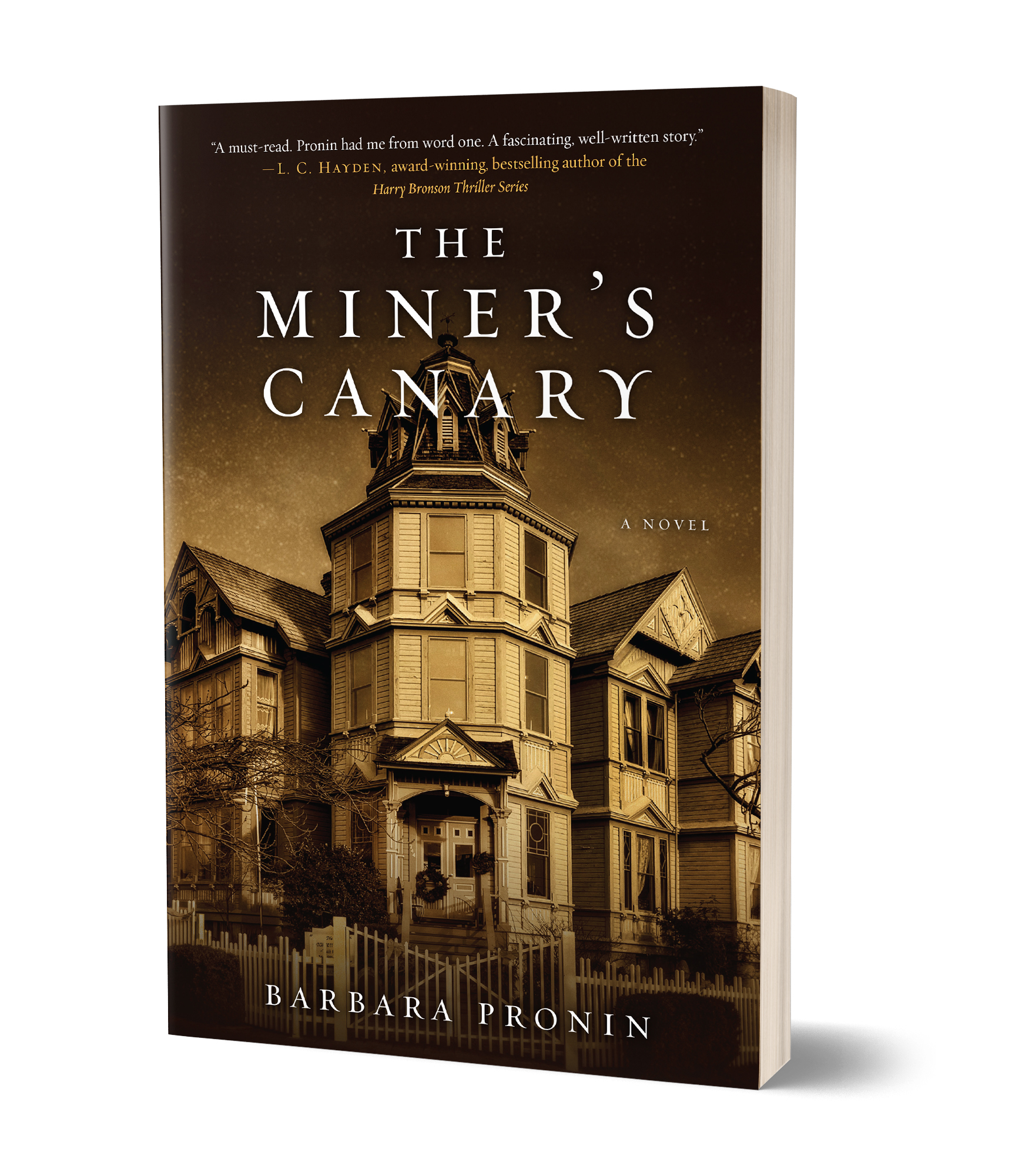
If you’re curious to know how a California desk clerk wound up in a mine shaft in South Dakota, please read “The Miner’s Canary.”

As for me, I’m busy connecting bits and pieces for my World War II historical, “Winter’s End,” due out this coming October.

Thanks for caring –

Barbara

THE MINER’S CANARY

They say you can’t go home again… For single mom Julie Goldman, who long ago left the ghosts of her troubled youth behind her, inheriting her aunt’s old Victorian in the Black Hills mining town of Deadwood, South Dakota, is as much a test as a blessing. Her aunt was not the person she thought she knew, and a diary left by her long-dead cousin Kate sets Julie on a path to find her killer. But with two new murders in town, and a series of vague threats, Julie must overcome her personal demons to protect her daughter and stop the killer who has them clearly in his sights.

Amazon.com : the miner’s canary barbara pronin

The Miner’s Canary: a novel by Barbara Pronin, Paperback | Barnes & Noble® (barnesandnoble.com) 

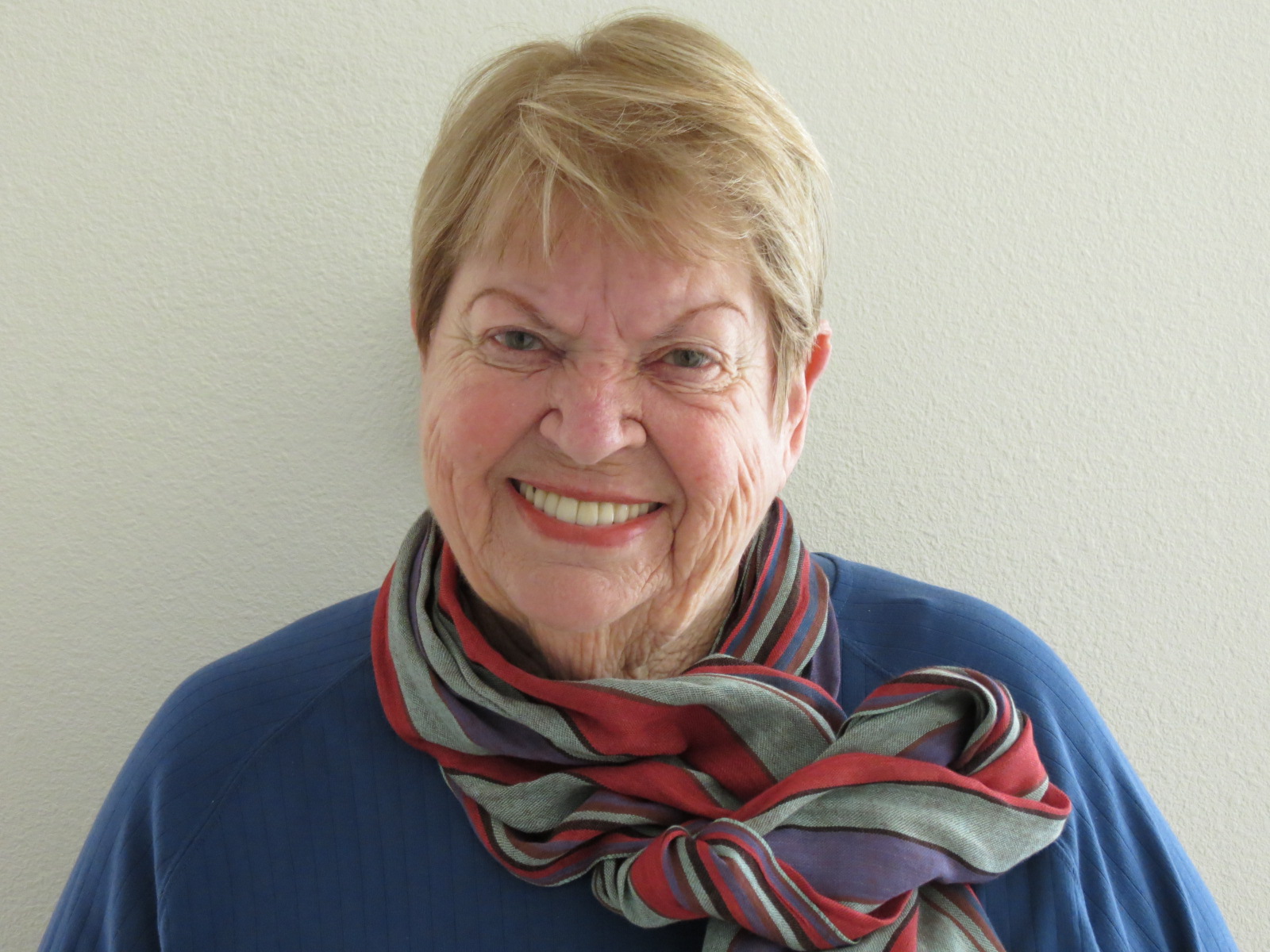
Barbara Pronin saw her first byline in a community newsletter at age eight and was forever hooked on writing. She has worked over the years as an actress, a probation officer, a news editor, and a substitute teacher, the last of which inspired her first book, a non-fiction guide to effective subbing still in print more than 30 years later.

Her earlier mysteries, including three as Barbara Nickolae, earned kudos from such best-selling writers as Mary Higgins Clark and Tony Hillerman, and have recently been republished. Her latest mystery, “The Miner’s Canary,” was published last October. Her newest work, a World War II historical titled, “Winter’s End” is set for publication in October 2023.

A lover of dark chocolate, Greek sunsets, and Dodgers baseball, Barbara lives and works in Orange County, Calif., where she writes on real estate for RISMedia and is eagerly waiting for the next cast of characters to take up residence in her head and demand that she tell their story.

Email:
Bpronin@att.net

Website:
https://www.BarbaraPronin.com

Writers and Their . . . Warnings?

Several articles over the last few weeks have circled around the issue of “trigger warnings.” I’m used to seeing them before certain television shows, but I haven’t seen them on books yet.

Jamie Beck’s essay in Writer Unboxed explored the perplexing and even confounding question of trigger warnings for novelists. Her publisher “engaged a sensitivity reader to evaluate the portrayal of a neurodiverse character in my summer 2023 release (The Beauty of Rain). I eagerly anticipated the reader’s feedback, whose notes on that aspect of the manuscript were ultimately helpful and unsurprising. Conversely, her recommendation that I add trigger warnings about suicidal ideation and prescription drug abuse did momentarily throw me.” In the end, after extensive discussion, she decided to add a warning in the author’s note, as an expression of her commitment to building “a trusting relationship” with her readers.

The essay is reviewed in Victoria Weisfeld’s blog, where she considers other books, including one that seemed hardly to need a trigger warning of any sort. On Fabian Nicieza’s highly comic mystery, Suburban Dicks, she comments, “A reader would have to be extremely thin-skinned indeed to take his jibes seriously, but then we do seem to be in such an era.”

The idea of trigger warnings may have grown out of academia. In 1991, when I attended Bread Loaf Writers’ Conference, a young MFA student admitted in a workshop that her fellow students were paralyzed in their classes for fear of writing something that would lead the teacher to accuse them of . . . of what wasn’t clear. But in general, they feared writing something considered politically incorrect, and as a result couldn’t write anything. 

At MIT students are sometimes afraid to speak for fear of consequences, which suggests we haven’t made much progress since 1991. According to an article in the Boston Globe, “A recent FIRE survey of 45,000 students at over 200 US colleges found that 60 percent were uncomfortable publicly disagreeing with a professor about a controversial topic; at MIT, it’s 68 percent. In the national survey, 63 percent of students worried about damaging their reputations because someone misinterpreted their words or actions. At MIT, 68 percent worried about this.” It should be understandable that my brain jumped to the news of Ron DeSantis, governor of Florida, shutting down the AP course on African American History. 

For me the issue isn’t whether or not what I write will offend someone, a reader I’ve never met and probably never will. I write a traditional mystery, and avoid violence in any form. But the question upends my longstanding view of the reader, as someone who comes to my work with an open mind and an optimistic attitude. 

Whenever I’m looking for something to read in the library, I pull several titles off the shelves until I find one that appeals to me. I check the genre (thriller, sci-fi, traditional, cozy, etc.), read the blurbs and jacket copy, and consider the author. Once I make my choice I go home wanting to like the book, and I give it my full attention as a reader, a form of respect for another writer’s best effort to date. Do I look for trigger warnings? No. Have I ever missed one and wished it had been included? No. Have I read into books that I wished I hadn’t? Yes. 

I don’t think I could read a novel and notice every instance that might cause distress in a reader. Would a deadly car crash qualify? Or back story about a child taken from the home because of physical abuse? How about the story of a bully who made high school miserable for a group of students? This is the kind of information I’d expect to find in the jacket copy—a clear indication of the parameters of the story. But I also wouldn’t want the jacket copy to give away important features. 

There’s no easy answer to the question of using or not using trigger warnings, but the discussions have caught my attention and made me think. I don’t want a reader to be distressed by one of my books (very unlikely, considering what I write), but I also don’t want to find myself unable to write freely out of fear or concern about a reader’s reaction. The decision will be different for each writer, and may vary with the book. I look forward to more discussion, and learning more about how this plays out for writers.

https://writerunboxed.com/2023/01/24/to-warn-or-not-to-warn

https://www.bostonglobe.com/2023/01/24/business/mit-students-faculty-afraid-speak-their-minds-sensitive-issues-report-says/

https://www.bostonglobe.com/2023/01/24/opinion/ron-desantiss-fear-american-history/

https://www.apmresearchlab.org/motn/what-americans-think-about-liberty-rights-freedom-may-2022