Guest Blogger ~ Eileen Curley Hammond

I was in the middle of writing the seventh book in my Merry March cozy mystery series, and to be honest, I was struggling. Then, editor Cass Kim sent a Twitter request for the annual charity short story anthology, Autumn Nights: Nine Stories to Nibble at your Nape.

Even though I love writing daily micro-stories on Twitter, my total experience with slightly longer shorts was holiday ones for our local Sisters in Crime chapter (Buckeye Crime Writers). Luckily, Cass had been following my writing, so I was accepted into the Anthology.

The required elements were to include a bat(s), autumn themes, and be spooky. I’m a pantser and cozy mystery writer, so it should come as no shock that what emerged on the page was a cozy mystery that happens to have a bat as one of the main characters.

You would think that short stories would be easier to write. After all, the word count for the project was less than 8,000, and cozy mystery novels are usually 60,000 plus. But remember, you still need a beginning, a middle, and an end that make sense. Plus, it’s confusing to the reader to have too many characters in a short space, so your potential for red herrings is limited.

I love a challenge, and this was a fun one. It was also good to know that profits from this book will benefit The Trevor Project, which is dedicated to providing crisis support and safe spaces for young LBTQ+ individuals.

The Autumn Nights Anthology is available as both an e-book and paperback. Here is a teaser about my story in the Anthology:
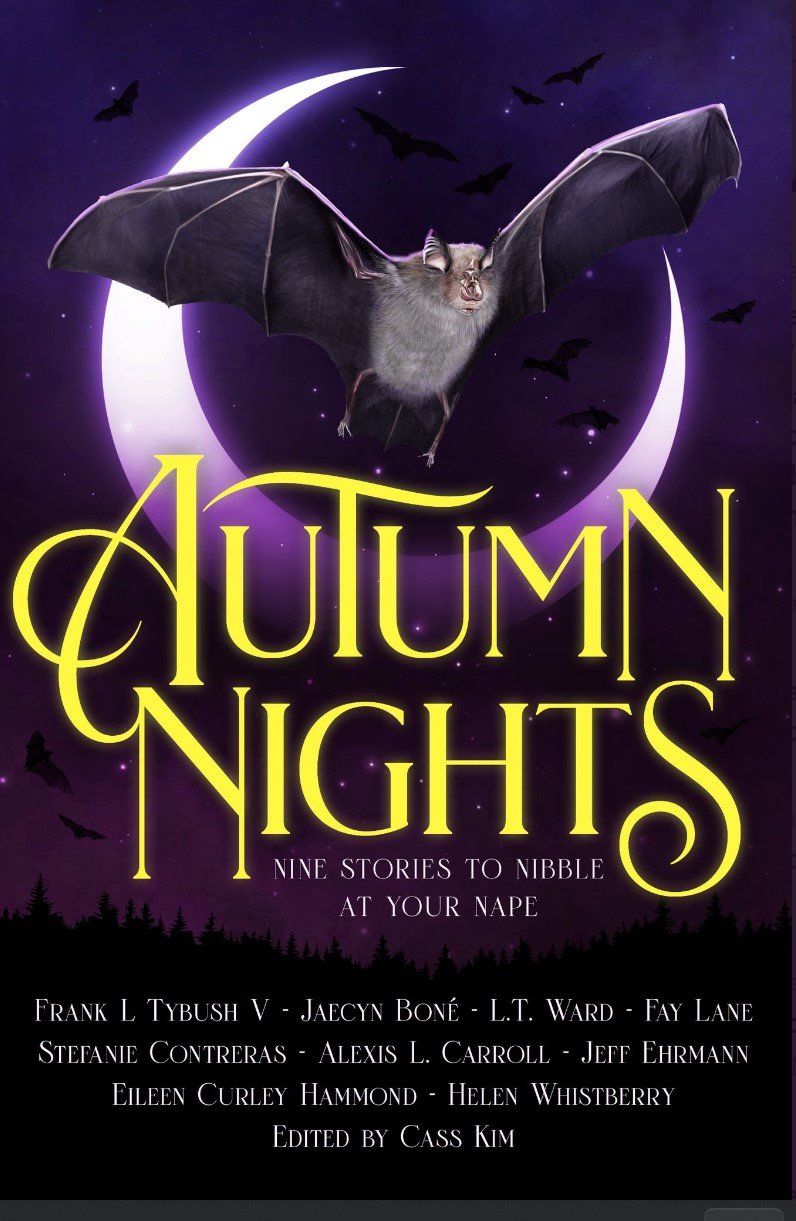
An Unexpected Talent: Miranda had a bad day that she thought couldn’t get a lot worse. And that was before she stumbled over the dead body. Now she’s in the middle of a Halloween murderer hunt, and failing to uncover the perpetrator will mean the end of the world.

I’m pleased with where the story ended up and was very happy with the beta readers and editor, who made it even sharper. Writing the short story also allowed me to experiment more with humor, which I’m actively trying to incorporate into my novels as a break in the suspense. And the even better news is that a hiatus reenergized me, and I am now close to finishing my seventh book, which should be released in November. You can find all of my Merry March cozy mysteries here.
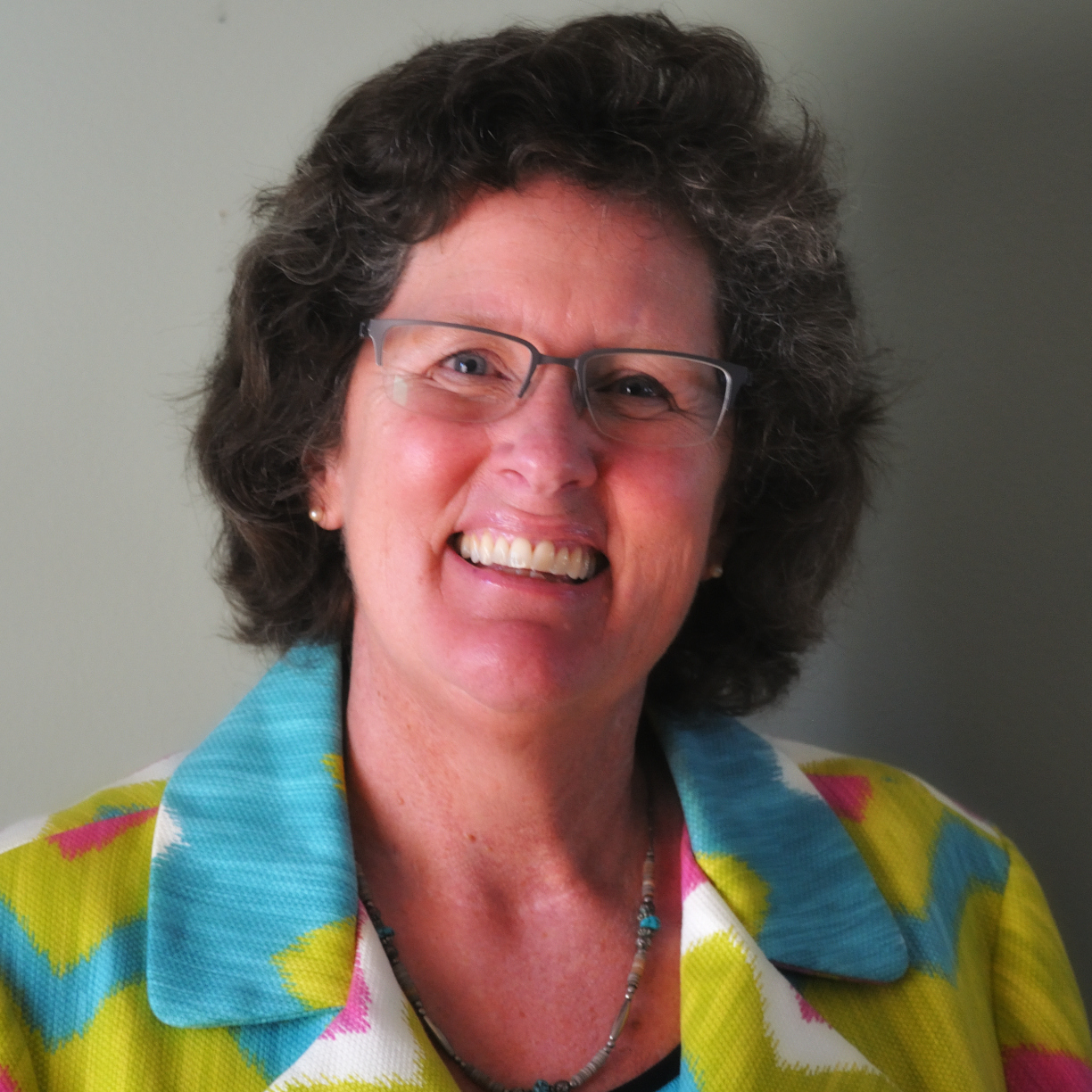
Eileen Curley Hammond retired from a successful marketing career in the insurance industry and now writes the Merry March cozy mystery series. When not pondering all that bats contribute to this world, she is hard at work on book seven of the series. To learn more about her and to sign up for her newsletter, check out her website:
www.eileencurleyhammond.com

Taking The Reader For A Ride by Heather Haven

Like most writers, I am against it. But there are a few out there who give the rest of us a bad name. Their plan is to get as much money as they can out of a reader, even if they have to bamboozle them to do it. One out and out scam that, hopefully, has bitten the dust, was the few thousand word story being hawked as a novel. Amazon caught on to this pretty quickly and now the author has to state up-front what the word count is. The author can still charge whatever they think the traffic will bear, but at least the savvy reader knows how long the book is going to be.

The latest that seems to be going around, at least in the light romance circles, is the not-quite-the-end-of-the-story scenario. This is often discovered by the reader at the last chapter of the book. Giving the reader an unfinished story so they have to buy the next book and the next and the next to find out how things end may be de rigueur in some circles. But if the reader is led to believe they are reading a book with a beginning, middle, and an end and that’s not the case, it’s just plain tacky business.

If I ever write a story that is so long it needs to be in three, four, or more books, I feel it is incumbent upon me to tell the reader. And probably several times. I’m not against long stories. Hawaii, by James Michener, has a word count of 234,250 words. Of course, he managed to get it all in one book. I spent one summer reading it and have the biceps to prove it. The book weighed in at over a pound. Sure, it’s 937 pages and I needed a wheelbarrow to get the hard copy home, but I knew what I was getting into from the start.

I have a friend who is an avid reader. Avid. For years she has been reading my manuscripts in their working stages. She is tremendously helpful in catching errors or finding parts of the storyline that don’t quite make sense. During the pandemic, she found herself reading six or more hours a day. She has yet to buck the habit. She goes through thirty, forty books a month. A perfect person to enroll in the $10 a month Amazon all-you-can-read-until-your-eyes-fall-out program better known as Kindle Unlimited. So she did.

She found herself reading a book that was — with no announcement this was the case — a cliffhanger. She got the first book for free, but the 2nd was going to cost her an additional $4.99 to find out the conclusion of the story. She bought the second book but the story still didn’t end. She would have to pay another $4.99. My friend stopped reading the ‘series’ whose style seem to be similar to the Perils of Pauline, a 1914 American melodrama film serial, shown in bi-weekly installments. If a writer wants to do that, fine. But you have to let the reader know in no uncertain terms that the book is not a stand-alone, but an ongoing story. My friend doesn’t know what happened to the hero and heroine and no longer cares. She is no longer invested. Because she feels like the author’s patsy.

The most recent thing that happened to her was a series announced as being ‘free’ actually costing her thirty-one dollars and change. She found that out when she checked her monthly Amazon bill. I told her the books could be returned, especially as she was unclear on the concept. This might even be true if she had finished reading them. My friend had no idea as to how to return Kindle ebooks but is making it her business to find out. That’s often what people who feel snookered do.

Yes, she reads a whole lot of books, and misunderstandings are bound to happen. I can’t speak for other authors, but I feel one of my jobs is to keep my readers happy. Even on the rare occasion when a reader misreads the date of one of my ebooks being free and sends me an email with ‘what-the-hey’, I will usually gift them the book then and there. It costs me a little bit of money, but I do get royalties, it does increase my numbers, and the goodwill from doing this is immeasurable.

Whether a book is offered for free or not is another story for another time. That decision is up to each writer. Some believe in it, some don’t. But whatever I write and offer up to the reader, I try to make crystal clear. The reader is above all, the main purpose of my work. This is a marriage, of sorts. And I don’t want anybody divorcing me because they feel I’ve taken advantage of them.

On another note, I am proud to say almost every writer I hang out with (present company included) feels pretty much the same way. We write. We don’t bamboozle.

.


Foreshadowing

I read a lot about craft issues—writing the perfect opening sentence, creating a cliff-hanger ending to a chapter, character description that reveals something more than height and taste in clothes, and the like. One area I’m working on now is foreshadowing. 

When I begin a story I rarely know exactly where the characters are going, but I follow them faithfully through the mine fields of their lives until I reach what seems to be the end. It isn’t until I’m working on the third or fourth draft that I realize instead of foreshadowing an approaching development I’ve anticipated it in a truncated scene. 

There’s a big difference between foreshadowing and getting ahead of myself, revealing too much too soon. In foreshadowing properly done, the reader doesn’t know what’s going to happen, only that something will. A character joking about her horoscope on the train into work is a hint that the unexpected is on the horizon, but her report of what the horoscope promised would be getting ahead of the story.

Foreshadowing is a device for increasing or maintaining tension, directing the reader’s attention to a particular issue or relationship, for example, hinting at where danger lies. Anticipating too much too soon or too clearly does the opposite of creating tension; it undermines the climax or twist to come. It takes the air out of the balloon.

This would seem to be an easy technique to master but in my first drafts I often slide right past what I’ve done. It’s not until a much later draft that I notice that I’ve told the reader almost exactly what’s coming, and to make the narrative work effectively I have to cut that part and rewrite. The danger, of course, is that I’ll miss it and be shocked when a Beta reader finds it. (Love my beta readers.)

Someone who has published ten mysteries with three publishers and a few self-published also could be assumed to know all the basic techniques of crafting a novel, but that would be naive. I always find something more to learn. Right now I’m focused on foreshadowing, but next month I could be focusing on dialogue. In some stories the characters emerge clearly in dialogue and I don’t doubt what I’ve written. In others I can’t seem to get them to say a single line that isn’t forced or awkward. But that’s another problem for another post. 

Five More Things

It never fails. The draft is finished, time to read it, fill in a few blanks, do a little editing, in hopes you have written an exciting, interesting, charming, slam-bang mystery or thriller. Then —

The same %$%&* word … or the word of the day.

It is amazing how one word that fits a sentence and conveys the perfect image can take up residence in your brain then appear in your text time after time. A breeze can blush, blow, whoosh, loft, so why is it always soughing. The only known cure is a Thesaurus and patiently finding just the right word to replace the word of the day.

.

Saying what the paragraph is about, then describing it. It is a habit of mine in early drafts (a bad one) to begin a paragraph with a sentence that tells me what comes next, especially at the end of a writing day. All too often that reminder sentence is still in the final draft.

As in: Cora stepped off the boardwalk and noticed the change in her hometown, followed by —

Men in homespun shirts, pants, vests, and floppy flat caps descended the boardwalk stairs two at a time, scurrying across the street mid-block. They stood in groups chattering away, leaving little room for women to pass. Admiring those women who were young and prettily dressed. *

.

What size is it? Big, small, large, medium … far, near. The park was large. Well, in truth it is a 1/2 mile by 1/4 mile wide, with a five-acre pond in the middle. It is so easy to drop big, small, short, tall in as you write, when you could create a picture for readers —

Kanady brushed Cora aside, looming over Mrs. Gibson, his intent to dwarf her clear this time, he asked, “An’, ma’am, what name do you claim fo’ yourself? You who would swindle a whol’ town at $10.00 a barrel.”  *

Enough or too much description, especially clothes and the contents of rooms

In the late 1800s, women’s wear defined class, age, marital status, while men, as men do, wore the same darn thing every day. The variants being whether or not they had their coat on, their vest off, or didn’t bother with a shirt, opting to walk around with the top of their union shirt showing, vested or unvested.

Cora fanned herself with a folded sheet from the day’s newspaper, her bare feet resting on a chair in the kitchen. Her plain gray muslin smock and hair were thick with flour from baking the loaves of bread needed for the reception and the week. *

Clothes define character and set a scene, but when do they interfere with the read? If I start skimming a book, I assume I’ve gone overboard and begin trimming. But I worry that my tolerance is high having made a modest living designing dresses for a very short time. I guess that’s what beta readers are for.

Now and just …

When an author uses now as in now, he turned, it jars me out of the past-tense narrative, as though this particular action is happening right now and the next has occurred. But because it bothers me, I avoid doing it. As a word now is easy to overuse and can be a lazy habit in both narrative and dialogue. Not that now doesn’t have its place, as in:

He is now interested in flies, seeking to discover what local flies come and when on bodies left out in the weather.

“Just now, I was on my way to The Courier when I saw Cora run into the fray. What was I to do, let the horsemen and their horses trample her?”

The same for just and I’m as guilty as can be of overusing it. I work hard to get it out of my text. Like now, it has a place, just not all over the place

The collarless dress with no ruffles or lace had a slight bustle in the back, just clean straight Methodist Sunday-go-to-the-meeting-house lines. *

And that’s five

Another five things may crop up, but until they do, this ends my current gripes with my writing.

* All quotes are from, A Convergence of Enemies, the second book in my Wanee series, currently in search of an ending that makes the author happy.

Suggestion: If you are in the mood to dive into a Vietnam Era based family saga, try the Cooper Vietnam Era Quartet: Dead Legend, Head First, Pay Back, and Don’t Tell, available on Amazon. If you are a fan of wartime stories and sweeping family sagas, this wide-ranging epic delivers a heady mix of intrigue and history that will keep you on the edge of your seat.

WHEN AGING IS A CRIME? by J.L. Greger

The sale of anti-aging products in the U.S. is estimated to about $12 billion annually. The worldwide market may be four times at large. Not surprisingly, mislabeling and false claims for these products are rampant.

Although there is no doubt that injections of BOTOX and other botulinum products are effective in reducing the signs of aging (i.e. reducing crow’s feet around the eyes, laugh lines, and wrinkles on the brow), many doubt the wisdom of—but not the profits from—BOTOX parties. At these events, women receive injections of botulinum toxin at multiple sites in a party environment in someone’s home with plenty of food and alcohol. Nevada has now banned these at-home parties. Many states require that injections at these parties be made by a physician or nurse. However, basic safety requirements are more difficult to maintain at these parties than in a clinic.

In the U.S., the FDA is the chief agency monitoring the safety of cosmetic products and assessing the veracity of the claims. Many Americans don’t realize FDA can not only fine but also incarcerate manufacturers and spa/store owners that knowingly produce, advertise and sell dangerous or mislabeled items.

I like to describe the situation in the cosmetic industry this way: those who try to make the public believe it is a crime to look old are sometimes committing crimes. That’s a basic premise in my new mystery.

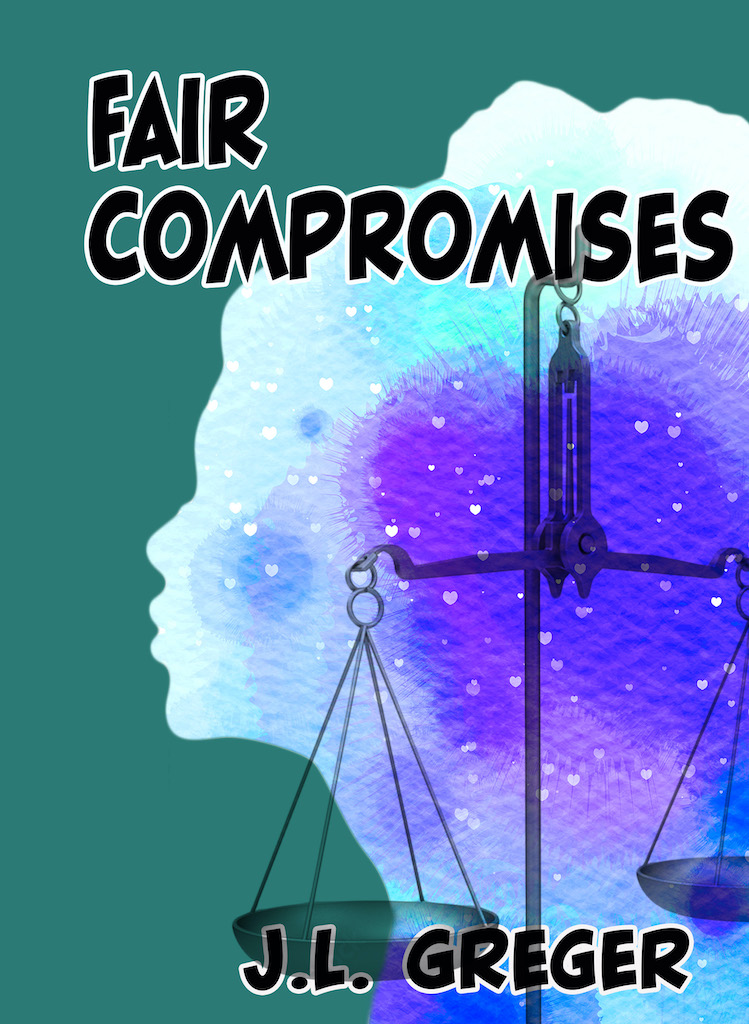
In FAIR COMPROMISES, twenty residents in New Mexico come into clinics and doctors’ offices complaining of double or blurred vision, sagging eyelids, and headaches the day after a political rally. Public health workers quickly hypothesize the cause was botulism toxin in improperly home canned food served at the rally. Unfortunately, one individual’s symptoms are much more severe. If her muscle paralysis continues unchecked, she will die. New Mexico health officials contact the FBI because that patient is a candidate for the U.S. Senate and they fear she may have been targeted.

The mystery turns from being the analysis of a severe food safety breach to the investigation of a diabolical murder attempt using “cosmetic” botulism toxin when scientist Sara Almquist with the help of a talented FBI lab crew discover a more sinister source of the toxin at a health and beauty spa in Santa Fe. FDA officials then help the FBI solve this case and seek justice for the victims.

FAIR COMPROMISES has message: It’s not a crime to show your age and the relentless search for youthful beauty can be dangerous.

Now you’re ready for some fun. Read FAIR COMPROMISES and see what happens to a politician who tried too hard to look young.

Fair Compromises

In FAIR COMPROMISES, Sara Almquist and her FBI colleagues rush to find who endangered the lives of a hundreds at a political rally by poisoning the food with botulism toxin. The poisoners’ target was a woman candidate for the U.S. Senate; the rest were just collateral damage. As these agents track clues from a veterans’ hall in Clovis to health spas of Santa Fe, they must make a multitude of personal and professional (perhaps too many) compromises.

https://www.amazon.com/Fair-Compromises-Science-Traveler-Greger/dp/1735421421

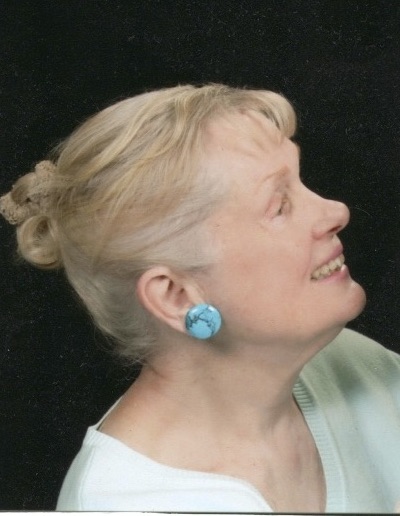
J.L. Greger is a scientist turned novelist. She includes science and international travel in her award-winning mysteries and thrillers: The Flu Is Coming, Games for Couples; Dirty Holy Water, Fair Compromises, and seven others. https://www.jlgreger.com