What Comes Next?

I’m nearing completion (I hope!) of my 14th Jeri Howard novel, The Things We Keep. Fellow Ladies of Mystery author, D. Z. Church read the latest draft and pointed out words I’d left out and words I’d repeated. She pruned instances of words I habitually overuse – “so,” “then,” and “now.” She also took out many of the commas that I love to sprinkle all over my work. More importantly, she indicated several rough spots requiring attention. Yes, we all need that second pair of eyes. I’m now in the process of revising the draft.

I’ve been working on this book for nearly two years and hoped to finish it by the end of 2021, but as we know, life intervenes.

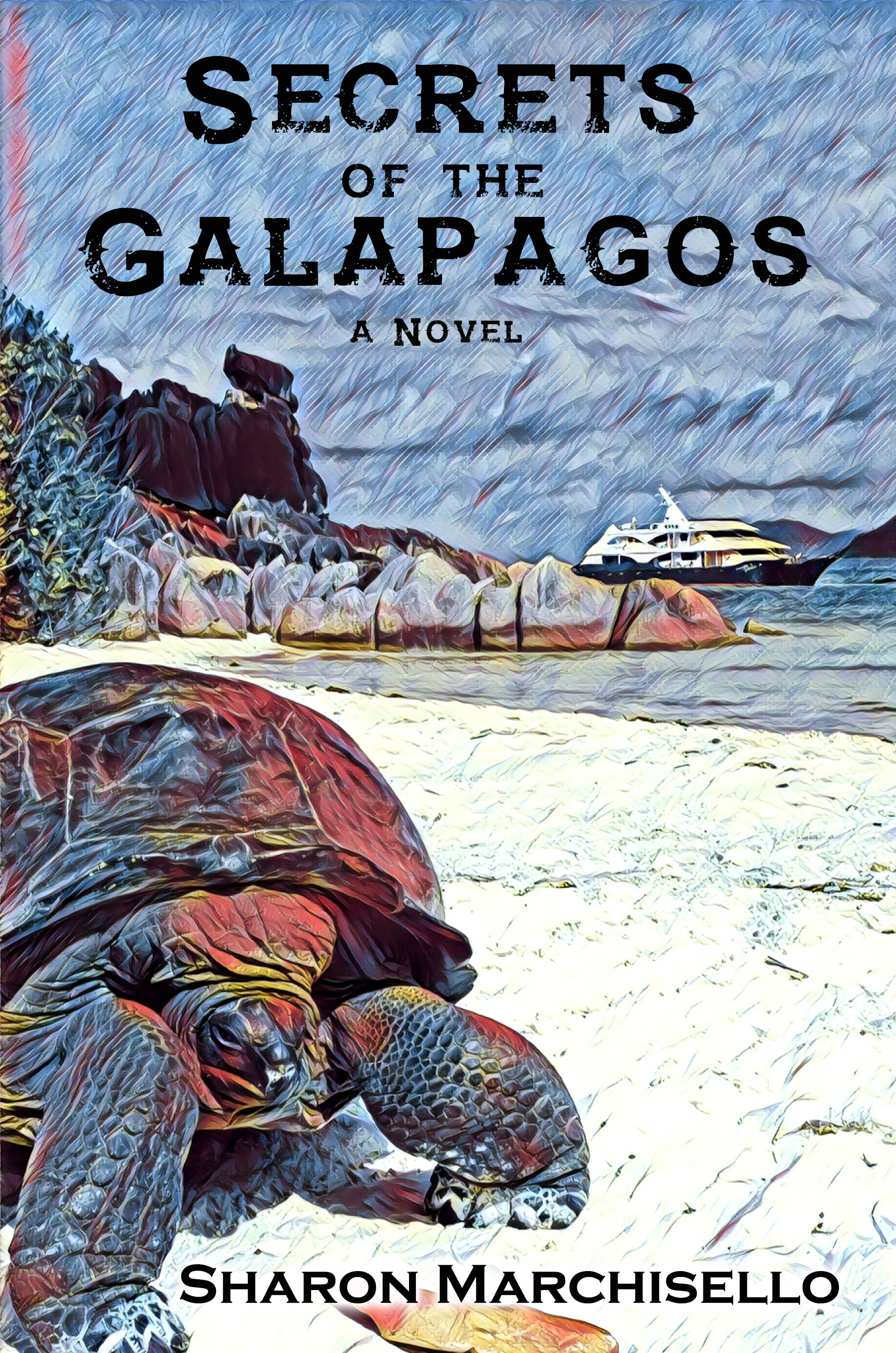
Once the book is finished, there’s the whole prepublication drill. Already have a cover – here’s a first look! I’ll create the front and back matter, format the book and write snappy descriptions that will make readers want to buy the latest Jeri. Publication date, copyright – a lot to do.

After that, what next? That’s a question recently posed by several people. A good question, since at any one time I am juggling six or seven plots in my head, always looking ahead to the next project.

I get emails asking if I’m going to write another book featuring Jill McLeod, my sleuthing Zephyrette, who solves crimes in the early 1950s while working on the streamliner train known as the California Zephyr. The short answer: yes, I have a plot in mind. That answer also serves for Kay Dexter, the geriatric care manager protagonist of my book The Sacrificial Daughter. Then there’s Maggie Constable, the retired San Francisco Chronicle reporter from my novella, But Not Forgotten. I like Maggie a lot and she needs a book of her own. In the meantime, she puts in an appearance in The Things We Keep.

Other characters clamor for attention. One of them is Mrs. Grace Tidsdale, the redoubtable Tidsy, who appears in several Jill McLeod novels. She’s a woman of strong opinions and actions, with an interesting past. That’s a trait she shares with Rose Laurent, the former stuntwoman, actress and director who appears with Jill and Tidsy in Death Above the Line. Both women have backstories I want to explore.

Characters and plots roam through my head, the characters with their hands up, waving, and shouting, “Me next!”

I have ideas for several standalone novels and pages of plot notes and character sketches to go with them. The Mendocino book, which takes place in that remote village on California’s north coast. The Guam book, which harks back to my days in the Navy on that Western Pacific island. The dysfunctional family book simmering on the back burner for years.

Well, you get the idea.

What comes next? I suspect it will be the historical novel I started two years ago. I was already several chapters into it when I got the idea for The Things We Keep, which appeared in my head and jumped the queue.

Once I return to that book, I’ll be steeping myself in New Mexico history in the late 1870s and early 1880s, doing research from a whole pile of books I’ve collected over the years. That will be quite a change from Jeri Howard in the 21st century.

Guest Blogger ~ Sharon Marchisello

Setting a Mystery in the Galapagos

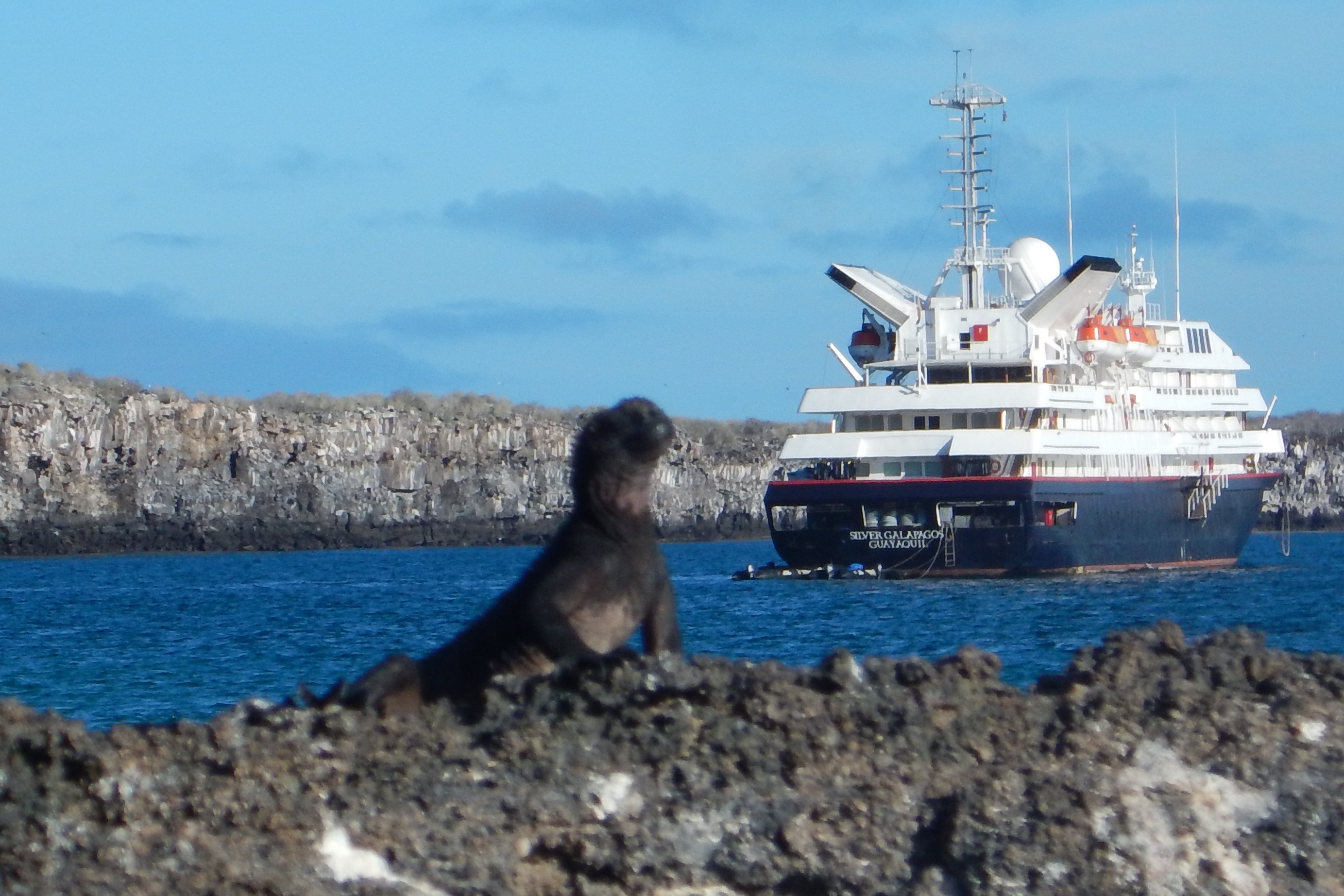
When my husband and I took our bucket-list vacation to the Galapagos in 2014, I had no idea I’d set a book there; otherwise, I’d have written off the trip on my taxes. (If you’re looking for the Galapagos on the map, it’s a group of  islands straddling the equator, approximately 600 miles off the Pacific Coast of Ecuador.) But I didn’t get the idea until six months later, when something triggered an experience from our cruise that I thought would make a great opening scene for a mystery.

Normally, the guides were conscientious about counting heads and watching over all the passengers in their charge whenever we were away from the ship. In an archipelago comprising 97% national park containing flora and fauna found nowhere else on earth, tourists must be carefully supervised. But one day, my husband and I left another activity to join a snorkeling excursion already in progress, so neither of the guides assumed responsibility for us.

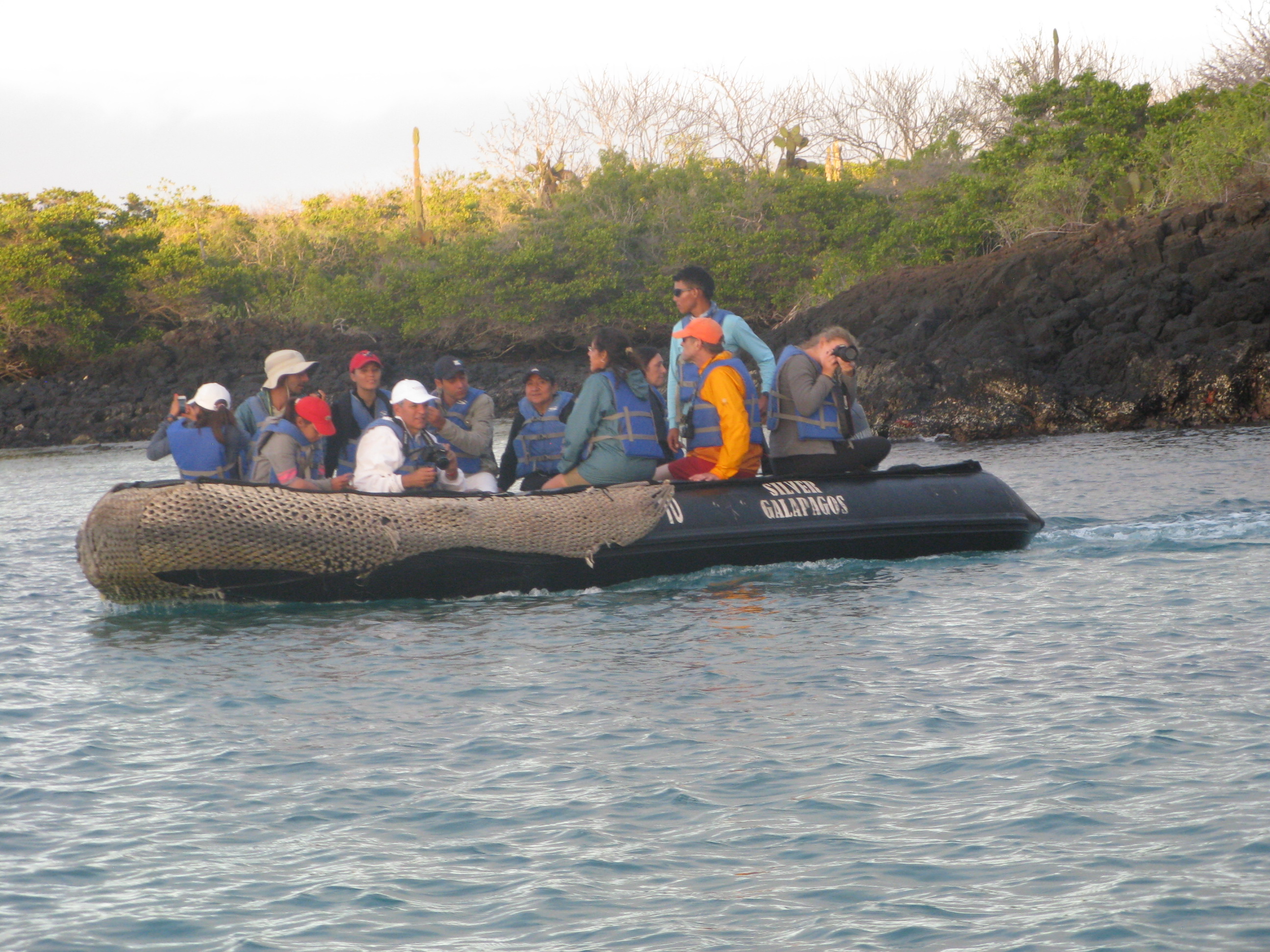
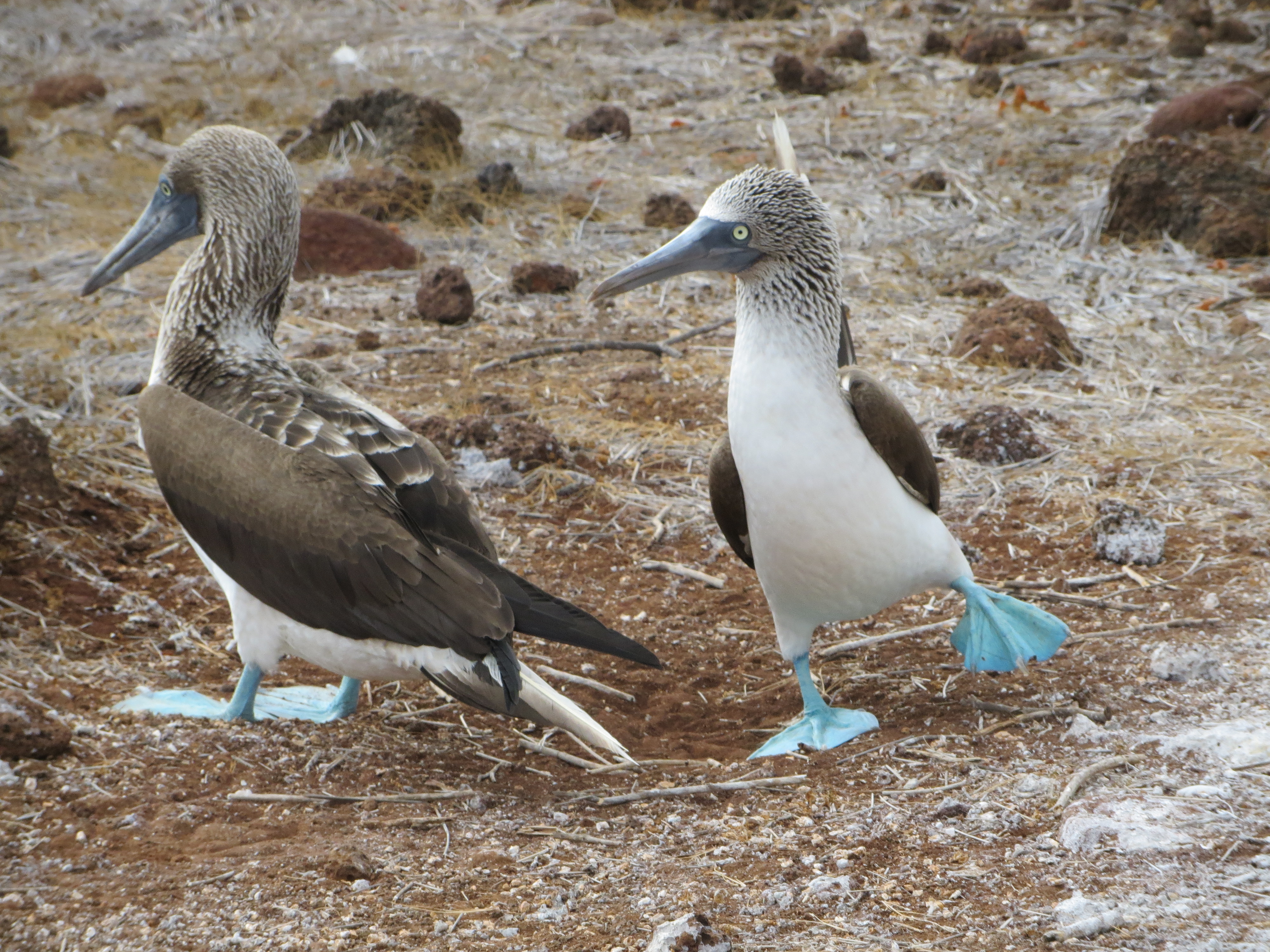
We were swimming along, marveling at the vast array of colorful underwater life, when I surfaced to see both Zodiac boats motoring back to the ship—without us! I can still feel the panic of being left alone in the middle of the ocean, treading water off the shore of an island populated only by sea lions and blue-footed boobies.

I waved and screamed, popping up and down like a cork, and fortunately, someone spotted me. One of the boats turned around and came back to pick me up. I didn’t see my husband right away but told the guide he was still out there. In a moment, he’d swum up and climbed aboard. All was well.

But what if…. What if my protagonist’s companion didn’t get picked up? And what if the person was left behind on purpose?

When Secrets of the Galapagos begins, my heroine, Giovanna Rogers, is snorkeling with her new friend, tortoise researcher Laurel Pardo. The two get separated from the group, and Laurel disappears. And then no one on the ship will acknowledge that Laurel didn’t make it back.

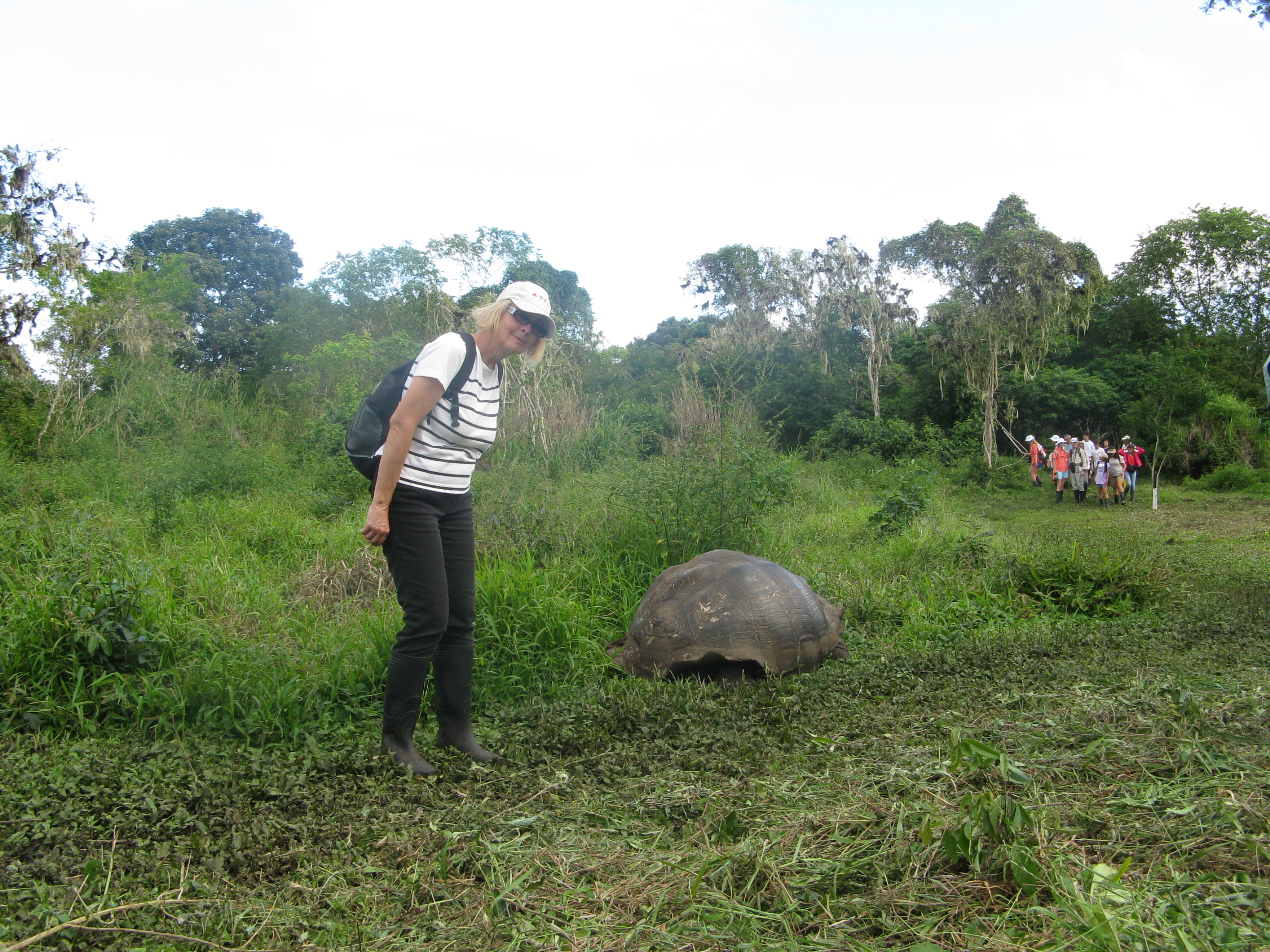
Trying to determine a motive, I recalled a conversation I’d had with one of our guides during a visit to the Charles Darwin Research Station in Puerto Ayora, the largest town on Santa Cruz (one of only four inhabited islands in the chain). “I know a secret about Lonesome George,” he said. “But if I tell you, I’ll have to kill you.” Lonesome George was a Galapagos giant tortoise made famous for being the sole survivor of the Pinta Island species. Unfortunately, efforts to breed George were unsuccessful, and the ancient tortoise passed away in 2012 without an heir.

But what if someone discovered another giant tortoise from a different subspecies also thought to be extinct? And then a tortoise researcher unearthed some information about the animal that certain individuals in the tourist industry didn’t want released?

You’ll have to read Secrets of the Galapagos to find out what happens next.

Shattered by a broken engagement and a business venture derailed by Jerome Haddad, her unscrupulous partner, Giovanna Rogers goes on a luxury Galapagos cruise with her grandmother to decompress. At least that’s what her grandmother thinks. Giovanna is determined to make Jerome pay for what he’s done, and she has a tip he’s headed for the Galapagos.

While snorkeling in Gardner Bay off the coast of Española Island, Giovanna and another cruise passenger, tortoise researcher Laurel Pardo, become separated from the group, and Laurel is left behind. No one on the ship will acknowledge Laurel is missing, and Giovanna suspects a cover-up.

When the police come on board to investigate a death, Giovanna assumes the victim is Laurel. She’s anxious to give her testimony to the attractive local detective assigned to the case. Instead, she learns someone else is dead, and she’s a person of interest.

Resolved to keep searching for Laurel and make sense of her disappearance, Giovanna learns several people on board the ship have reasons to want Laurel gone. One is a scam involving Tio Armando, the famous Galapagos giant tortoise and a major tourist attraction in the archipelago. And Jerome Haddad has a hand in it. Thinking she’s the cat in this game, Giovanna gets too involved and becomes the mouse, putting her life in jeopardy. But if she doesn’t stop him, Jerome will go on to ruin others.

Buy links:

https://www.amazon.com/Sharon-Marchisello/e/B00NH6N4WK

https://www.sunburypress.com/collections/sharon-marchisello

Sharon Marchisello is the author of two mysteries published by Sunbury Press—Going Home (2014) and Secrets of the Galapagos (2019). She has written short stories, nonfiction, training manuals, screenplays, a blog, and book reviews. She earned a Master’s in Professional Writing from the University of Southern California and has been an active member of Sisters in Crime since 1995, currently serving as treasurer of the Atlanta chapter. Retired from a 27-year career with Delta Air Lines, she now lives in Peachtree City, Georgia, and volunteers for the Fayette Humane Society.

Website: sharonmarchisello.com (https://smarchisello.wordpress.com/)

Social Media Links:

https://www.facebook.com/SLMarchisello

https://twitter.com/slmarchisello

https://www.goodreads.com/author/show/4297807.Sharon_Marchisello

https://www.linkedin.com/in/sharonmarchisello

https://www.instagram.com/slmarchisello/

https://www.bookbub.com/profile/sharon-marchisello

Photos source: Sharon Marchisello

WHY KEEP WRITING?

Reasons for me not to write any more:

  1. Reached retirement age long ago.
  2. I’ve never been a best-seller.
  3. If I didn’t write I’d have more time to enjoy life, family and friends.

Despite the three reasons I listed, I still have  a need to write the last Deputy Tempe Crabtree mystery. She’s retired now and I want to send her off into a happy future and tie up a few loose ends for her and her husband. I’ve been hanging out with them both for so long, it is hard to say, “goodbye.”

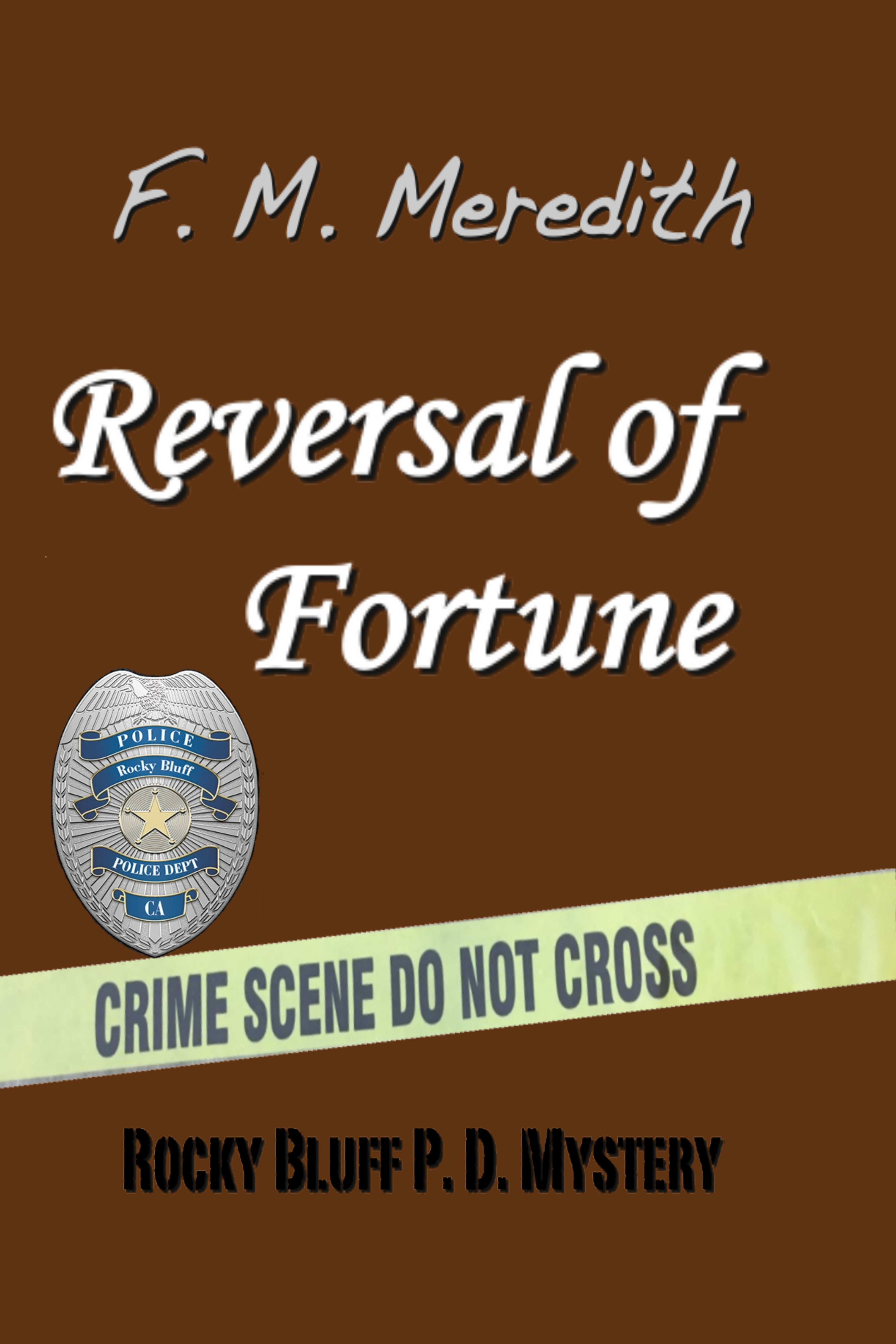
I did manage to end my Rocky Bluff P.D. series (written under the name of F. M. Meredith) with Reversal of Fortune.

In case you might wonder if I have plans for another series, the answer is probably not.

I do want to write another mystery, a young adult set in Los Angeles during World War II. Why, you might ask. Because that’s where and when I grew up. It was a different time in so many ways and I have some great memories of what went on: Air raid drills at home and at school, Block warden meetings where the kids had a great time playing in the dark while the grown up learned to roll bandages and other tasks, victory gardens, food and gas rationing, being free to go wherever I wanted all day as long as I was home in time for dinner, and telling my friends wild stories like what I said was the truth.

Not sure if it will interest anyone, but I plan to write it anyway.

Marilyn

Discoveries in the Back Yard

When my husband and I first moved to our current home, over forty years ago, we threw ourselves into the suburban backyard life. We planted flowers, veggies, added a terrace and three stone walls, and planted shrubs in lieu of a fence. Over the years we’ve moved the veggies, added shrubs, and coped with various pests. I pick up ideas from the summer garden tours and I’ve used poisonous plants as murder weapons in some of my stories. 

Some gardens are chaotic in color and placement of plants, and others are neatly arranged beds of one or two colors. Some include chickens, decorative pieces, and unusual shrubs. But most are neat and tidy. I admire neat and tidy because that’s a struggle for me.

This neat arrangement didn’t last long.

Over the years we neglected our gardens because of other demands–work, lack of energy, health. For a long time the uncontrolled mess out back bothered me enough to consider hiring a landscaper, but I never went very far with the idea. Then a few random comments from our neighbors changed my perspective. All around me are flat well-kept lawns leading up to a few shrubs by a foundation, and the occasional flowering tree. All very tidy. Our yard offers something different.

My neighbors look out upon trees, our trees, lots and lots of green, thick enough to block out most of the neighbors behind us and to entice deer and other animals. When I look out back I look into the edge of a forest, where a small path seems to lead deep into the dark recesses, the sunlight blocked by a thick canopy. The trees are ordinary but mature, the quiet is soothing, and animals scurry past me. My neighbors and I have seen a coterie of the usual and the not so usual—squirrels, rabbits, toads, mice, raccoons, skunks, voles, opossum, deer, coyote, and possibly a fox.

It took me a while to realize this is now a wildlife habitat. My unruly neglected yard has become something useful for the animal world. The National Wildlife Federation offers a sign declaring an area like ours a Certified Wildlife Habitat, if it meets certain requirements for wildlife: food, water, cover, places to raise young, and sustainable practices. The certification process is more complicated than this simple list may make it appear, with more specific examples of each criterion. The Federation website includes a certification checklist for those interested in applying.

The certification sign is really a fundraising tool, but an effective one. As I look out over my yard, where the drought has turned the grass to something akin to straw, weeds proliferate along the edges of the shrubbery, and the ground itself has turned lumpy, I imagine the area growing up naturally, with birds bringing in seeds and animals shaping the ground, with native plants, or weeds, emerging in unexpected places. All this happens slowly, but I can sit on my terrace and enjoy the view, and enjoy the visitors scurrying through my mini forest. And not feel guilty for letting the back yard return to a more natural state.

Writing vs Knitting, Different or the Same?

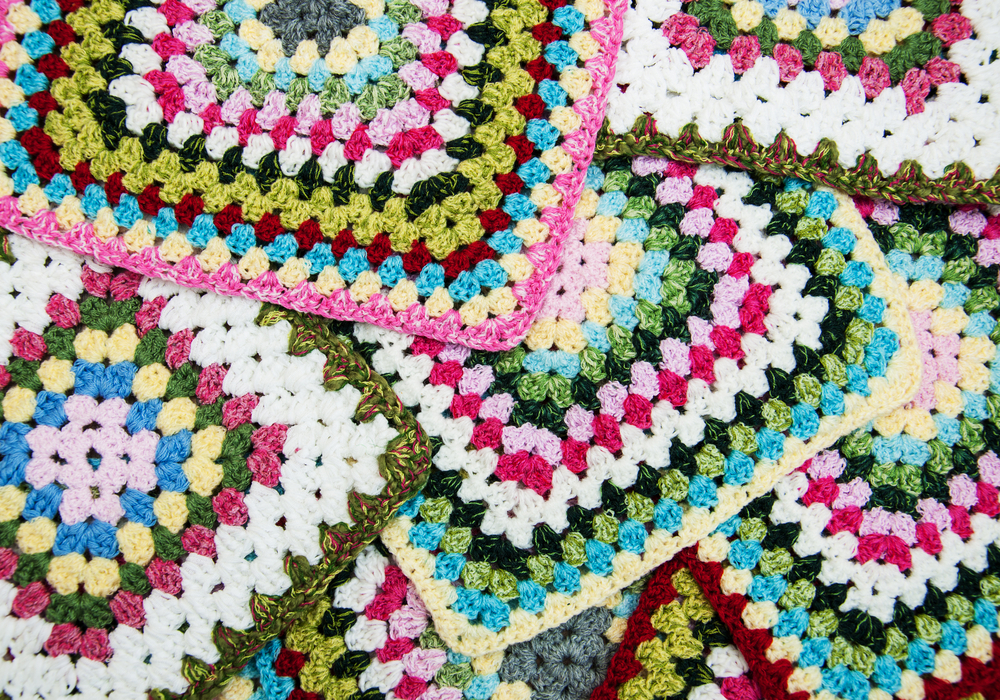
Have you ever found the bag of yarn for an afghan you planned to knit/crochet during the winter months but not the instructions? That’s what it’s like to write a book. Every time you open the bag, it is full of tangled skeins of possibilities, different yarns, weights of yarn, and colors waiting to be knitted into a cohesive whole that matches a picture you’ve concocted in your head.

Add to the various yarns and colors, different sized knitting needles and crochet hooks, the use of which results in different size stitches, different thicknesses of fabric, and different lengths and widths of the finished product that enrich and add depth to the design.

So, you pull out the yarn, decide on the main colors (characters), secondary colors (second bananas), and pattern (plot). You’re knitting this one in twenty squares. You test the gauge of each yarn against the ruler, so you know how many stitches per square, ensuring they will fit together.

Your design set, you wait a day, look at it again and realize square five needs to precede square four, and what the heck were you thinking on square eleven. You move things around a bit, then start. Square one measures the right size, it follows the theme and color scheme, so you move on to square two. About square five, you unravel square two because the pattern doesn’t add to the flow. As you knit, you revise the design, unraveling on occasion, recasting, and reknitting.

When you have all your squares done, you sew them together. And though you took the utmost care with the colors, size, and pattern of each, it turns out you need a new square sixteen to fill a hole in the pattern that foreshadow the red in the last four squares. Now, you have one too many squares. And square six needs more blue, seven more green, and ten through thirteen more white, then you notice that square nine muddles the whole pattern (what the heck is all that purple). You do the fixes, add square sixteen, remove square nine, and voila, you have a gorgeous afghan.

You take it to your knitting club for review. The first reviewer asks why there is so much red, and the next why there is so much green. They shake their heads at your explanation. Steaming, you take your afghan home, hang it on the wall, and stare at it for a few days. In the end, you unravel some red, leave the green, pull out square fifteen, add a new square with a tinge of purple, and try again. Your reviewers love the changes.

You take a photo, write an ad, attach a price, and place it on Amazon. The first Amazon review reads it could have used some red in the square you removed it from at your reviewer’s request, and what about that dropped stitch you missed? You snarl. Then start square four of your newest creation, purling instead of knitting.

You unravel and start over.