A lot of times the story itself comes fairly easily to me, but the title often doesn’t. What to call my novel? How do I catch the reader’s eye and have them want to buy my book, just by reading that stellar title? How, how, how? Hmmmm.
And to make things worse, book titles seem to go through fads or phases. For instance, the word “girl” has been used in just about every best-selling book’s title in the last few years. While using that word may not have catapulted them to becoming a best-seller, the following books were best sellers: Girl Gone; The Girl on a Train; Girl, Interrupted; Girl with the Pearl Earring; The Other Boleyn Girl; and of course, Stieg Larsson’s trilogy, The Girl with the Dragon Tattoo; The Girl Who Played with Fire; and The Girl Who Kicked the Hornet’s Nest.
Hence, I decided to use the word “girl” in the title of a book and see what happens. I came up with Girl, Girl, Girl (see book cover). Amazingly, it didn’t sell. Maybe my heart wasn’t in it? Besides, I don’t think of human females as girls unless they’re under the age of 17. I’m not sure why that’s my cut-off age, but it is. I think once you’ve graduated from high school, you’re a young woman. Girl-kid, Woman-adult.
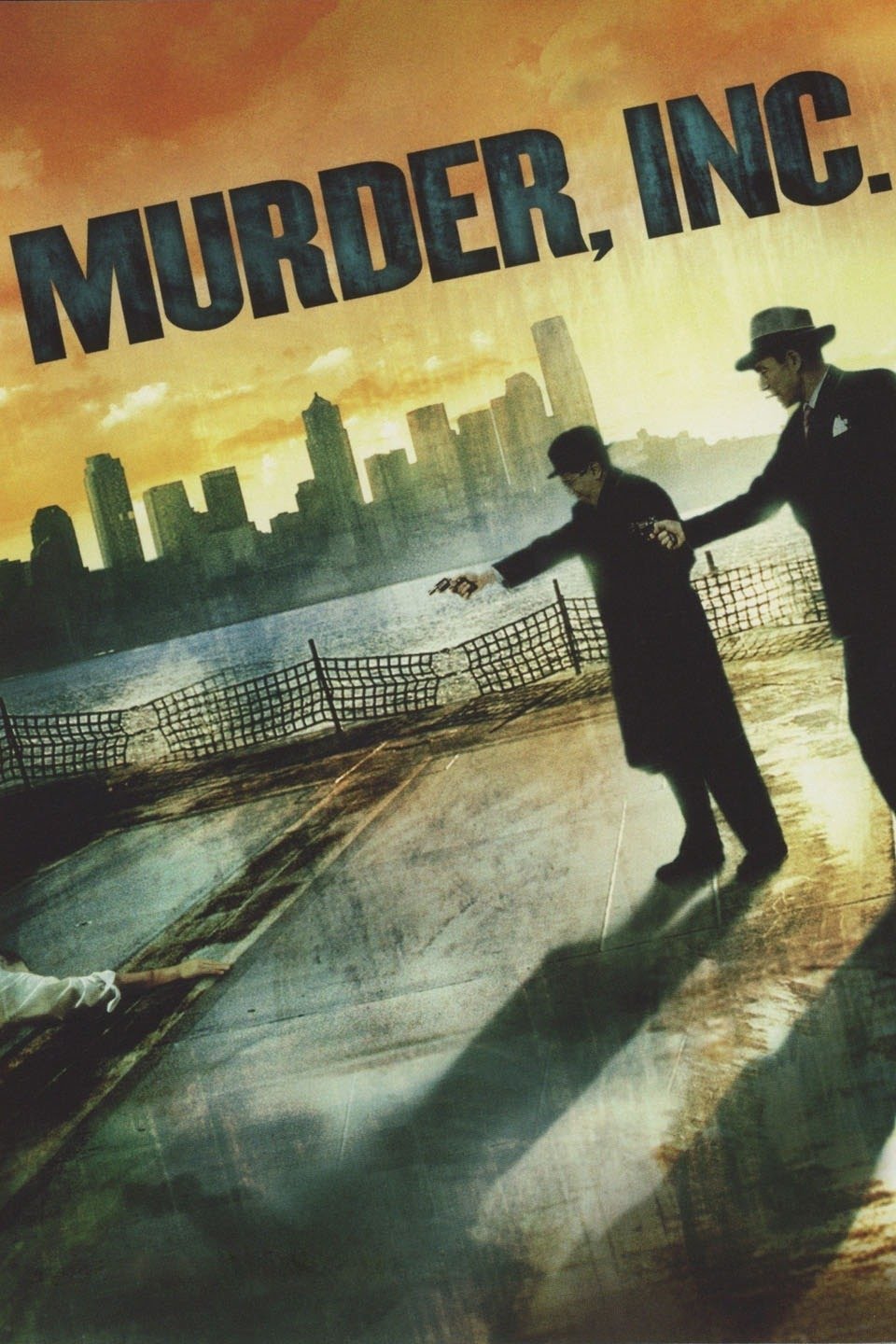
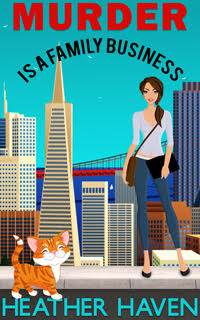
Often the title lets the reader know what kind of book they will be reading. I hope I’ve done that with my books. Whoops. The exception to this was the title of the very first book of the Alvarez Family Murder Mysteries, Murder is a Family Business. Looking back on it, I believe the title conveys a weightier book than mine. I had forgotten a famous crime syndicate called, Murder, Inc. was still in a lot of people’s minds. Guilt by association was my problem. Some readers, especially men, bought my book thinking it was going to be yet another exposé of the mob. Or possibly a written spin-off of the movie Murder, Inc, the film that launched Peter Falk’s career in his first major role as a contract killer.
Yikes. None of the above is anything like my book, a light-hearted romp through California’s Bay Area where not only is the murderer brought to justice but the shoes and handbags match. If I could, I would change the title, but the book has been hanging around for a certain amount of time, has had some small measure of success, and, besides, I can’t think of anything better. So, Murder is a Family Business it remains.
But since that goof with the first title, I tried to be careful in naming the rest. My latest book, a work in progress, has the working title, Bewitched, Bothered, and Beheaded. Hopefully, it conveys magic and murder. And if someone thinks of a guillotine, so much the better.
In closing, I should probably mention the title of an Elvis Presley movie, Girls, Girls, Girls. It has nothing to do with any of this, but I am a huge Elvis fan.
I have a jury duty summons for July. In California, I’ll check my county’s website a few days before that date to find out if I must report in person at the Alameda County Courthouse in downtown Oakland. In the past, I’ve reported several times, only to be told later that morning to go home. A few times I’ve made it into the jury pool, which means a trip to the courtroom to find out more. In a couple of instances, it’s been a civil matter.
I always figured if I was going to be on a jury, at least make it something interesting. More than a decade ago, it was.
On that morning, the jury pool was large, with people crowding the first-floor jury reporting room. To me, that said this was a serious case. We were summoned to the courtroom in groups and informed that this was a murder trial, with two defendants.
Back in the jury room, we filled out long questionnaires. Those who felt they had a good reason for not serving on the jury were told they would have the opportunity that afternoon to discuss their situations with the Superior Court judge presiding over the trial. The jury pool of 150 people, we were told, would be cut down to 75 people. Then a series of interviews to be held the following week would winnow down the pool, leaving twelve jurors and three alternates.
I have no objection to serving on a jury. It’s my duty as a citizen. At that time, I’d never had the opportunity before. But I thought my status as a writer of crime fiction would disqualify me. In fact, a few years later, when I was summoned to the courtroom for another murder trial, the defense attorney in that case dismissed me from the pool in record time.
But this earlier case was different. I made the first cut and was called back the following week for jury interviews.
The judge informed us that this was not a case where the jury would determine who killed the victim. One defendant had already confessed. The jury’s job was to determine whether this killing was murder in the first or second degree, or whether it was manslaughter, voluntary or involuntary. The jury would also determine whether the second defendant was an accessory. There were various other charges as well.
The jury interviews were revealing. Some people felt that anyone charged with murder must surely be guilty and that was that. Others revealed prejudices and biases that led to their disqualification. Many felt that they could be open and unbiased, making their decision based on the evidence presented during the trial, despite the fact that many of the witnesses, as we were warned, had various misdemeanor and felony convictions.
During my interview, the judge remarked on my status as a mystery writer. He asked questions about my ability to sift fact from fiction and used this as a springboard for comments about how this wasn’t an episode of a TV show. The defense attorney asked if this case would wind up in one of my books. My answer was frank and truthful. I told the court that everything that occurs in my life is grist for the mill, and I might very well use my juror experiences in fiction.
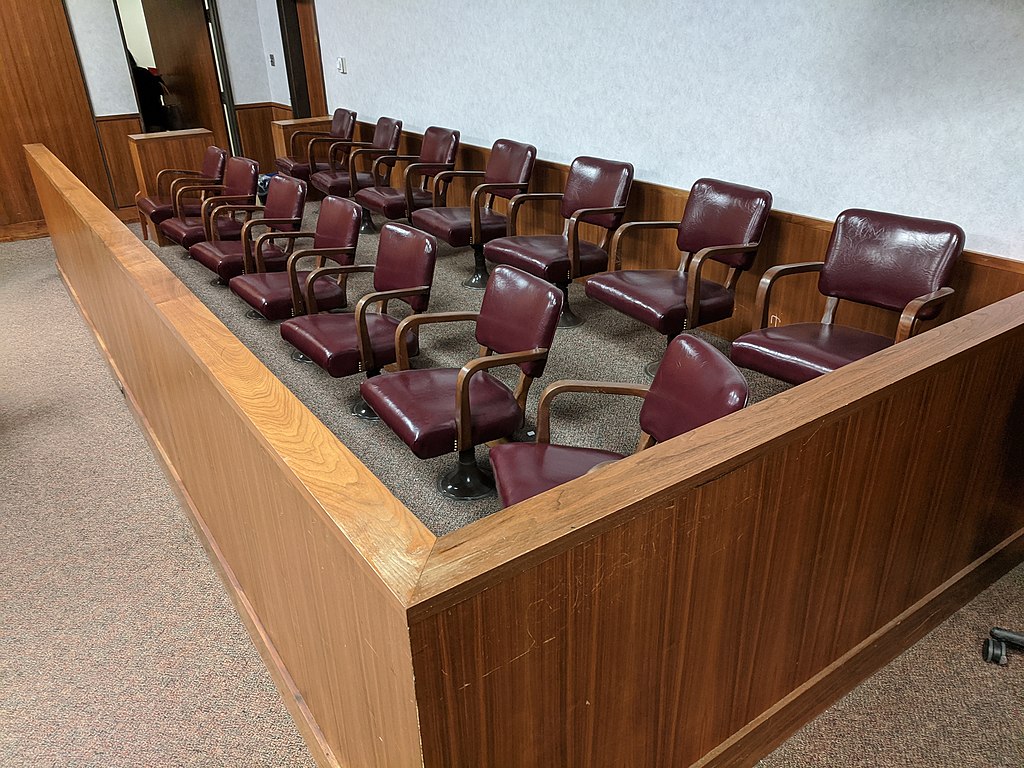
At that point, I was sure I’d wind up on the jury. I was right. For five weeks, I was in that courtroom, listening to witnesses, or in the jury room upstairs with my fellow jurors, where we were under strict orders not to discuss the case.
The experience made a lasting impression. At the start, I thought the case was going to be straightforward, another senseless killing in a rough neighborhood. But it wasn’t that simple.
I listened to the testimony of witnesses who contradicted each other, making an effort to determine who was telling the truth. I got a sobering picture of the aimless lives of many of the people involved in this case.
Then there were the crime scene photos. Those images will stay with me. They showed the damage done to a human body by a semi-automatic weapon fired a close range.
We the jury – we took our job very seriously. We were aware that we held in our hands the fate of these two defendants.
We spent days deliberating and discussing the evidence. The jury instructions given to us by the judge became our Bible. All the information we needed was there, if only we could parse it out. None of this was easy, or cut-and-dried.
The verdicts? In the case of the first defendant, guilty of voluntary manslaughter and several other charges. Later that year, he was sentenced to thirty years in prison. The second defendant: not guilty of the accessory to murder charge, guilty of several other charges.
After two sweet, holiday romances, I decided to dip a toe into the world of cozy mysteries. As a long-time fan of the genre, I’ve enjoyed the thread of sweet romance that is often woven throughout the stories. For me, the genre is the best of both worlds. Readers’ heartstrings are tugged as they are swept along a twisting tale riddled with suspects, clues, and red herrings. They can expect suspense without graphic violence and a nice, tidy ending. Predictable? Maybe. But many genres follow a structure that appeals to a specific audience.
Similar to sweet romance, most cozy mysteries are set in small, close-knit towns. However, I find that I have more freedom to invoke a bit more humor and fun into the story. No character should ever be perfect. Flaws are much easier to relate to. But it often seems that most of the leading ladies in romance novels are gorgeous. My heroine/sleuth, Maeve Cleary, is never described as a great beauty. Much to her mother’s dismay, she’s in desperate need of a trip to the salon to touch up her highlights and lives in worn-to-death shorts and T-shirts. But she came home to mend a broken heart, not to enter The Miss Hampton Beach beauty pageant.
Maeve introduced herself right away. She’s a woman who speaks her mind and acts on instinct. Moving in with her polished and successful mother had all the makings of a critique-laden stay. I enjoy dissecting the dynamic of mother-daughter relationships and hope readers find their back-and-forth barbs entertaining.
A Sour Note also sent me hopping from fictional towns into the real setting of Hampton Beach, NH in July. One might think building a setting from the ground up with only your imagination to depend on would prove far easier than writing about a place you know well. However, when an author creates a story world, no one can dispute what is missing or inaccurate. Writing about a popular vacation destination is filled with pressure I didn’t anticipate. In the end, I chose to invoke a creative license when writing about restaurants and other locations within the town. Readers who know the area might enjoy guessing at which places inspired a few hot spots.
My family makes several trips to Hampton every summer. When the idea for A Sour Note took shape, I couldn’t imagine choosing another setting. The sights, food, entertainment, and people watching along one of the most popular boardwalks in the nation provide everything needed for an endless stream of writing ideas. The next book in the series will require a fair amount of research because it will occur during the off-season. I look forward to a few trips north for more insight into what the town looks like when tourist numbers dwindle and am confident an empty beach has quite a bit to offer to the cozy mystery genre.
A Sour Note (A Music Box Mystery)
When murder provides a welcome distraction…
On the heels of a public, broken engagement, Maeve Cleary returns to her childhood home in Hampton Beach, NH. When a dead body turns up behind her mother’s music school, three old friends land on the suspect list. Licking her wounds soon takes a back seat to outrunning the paparazzi who spin into a frenzy, casting her in a cloud of suspicion. Maeve juggles her high school sweetheart, a cousin with a touch of clairvoyance, a no-nonsense detective, and an apologetic, two-timing ex-fiancé. Will the negative publicity impact business at the Music Box— the very place she’d hoped to make a fresh start?
If anyone else had enough nerve to presume she owed them an explanation, she would respond with a solid mind your own business. Instead, the seventeen-year-old still inside her refused to tell him to get lost. “He was hiding money in his office.” This was one of those times when learning how to wait a few beats before blurting out inflammatory information would come in handy. Each second of passing silence decreased her ability to breathe in the confined space. She turned the ignition and switched on the air conditioner.
“How do you know?” His volume just above a whisper, each dragged-out word hung in the air.
“I found it.”
“When were you in his office?” He swiped at a bead of sweat trickling down the side of his face, then positioned a vent toward him.
“Last night.” When would she learn to bite her tongue? Finn’s switch from rapid-fire scolding to slow, deliberate questioning left her unable to swallow over the sandpaper lump in her throat.
“Where was Vic?”
She stared at the back of the building, wishing she’d kept her mouth shut. “He’d left for the night.” If she averted her gaze, she could pretend his eyeballs weren’t bugging out of his head, and his jaw didn’t need a crane to haul it off his chest.
“You were at the town hall after hours? Did anyone see you?”
“A custodian opened his door for me.” She snuck a glance. Sure enough, features contorted in shock and horror replaced his boy-next-door good looks.
Jill Piscitello is a teacher, author, and an avid fan of multiple literary genres. Although she divides her reading hours among several books at a time, a lighthearted story offering an escape from the real world can always be found on her nightstand.
A native of New England, Jill lives with her family and three well-loved cats. When not planning lessons or reading and writing, she can be found spending time with her family, trying out new restaurants, traveling, and going on light hikes.
Hello, I am Kimila Kay and am so honored to be included in this wonderful group. Thanks, Paty Jager for inviting me!
A little bit about me … I’m turning sixty-six in July and very excited to begin collecting my Social Security benefits in January 2024 before they morph into an elusive unicorn. When I turned sixty-five, I discovered regardless of whether you draw SS benefits you’re required to sign up for Medicare. Something I was reluctant to do because, well, the name for me symbolizes “Old Age”, which is hard to wrap my younger thinking brain around.
Of course, there are perks that come with age, primarily life experiences which help form storylines and character development. A reader recently complimented me, saying, “When I read your books, I always see a little bit of you in your characters.” A lovely kudos considering my characters are much younger than me, but what I focused on was she can “see” my characters.
Creating interesting characters is important to me and I tend to bring a fictional someone to life, by using attributes of my family and friends. My husband’s love for me. My oldest son’s handsome smile. My youngest son’s height. A friends laugh or gesture or favorite saying. As for my villains … what I haven’t experienced, my dark mind has no trouble creating.
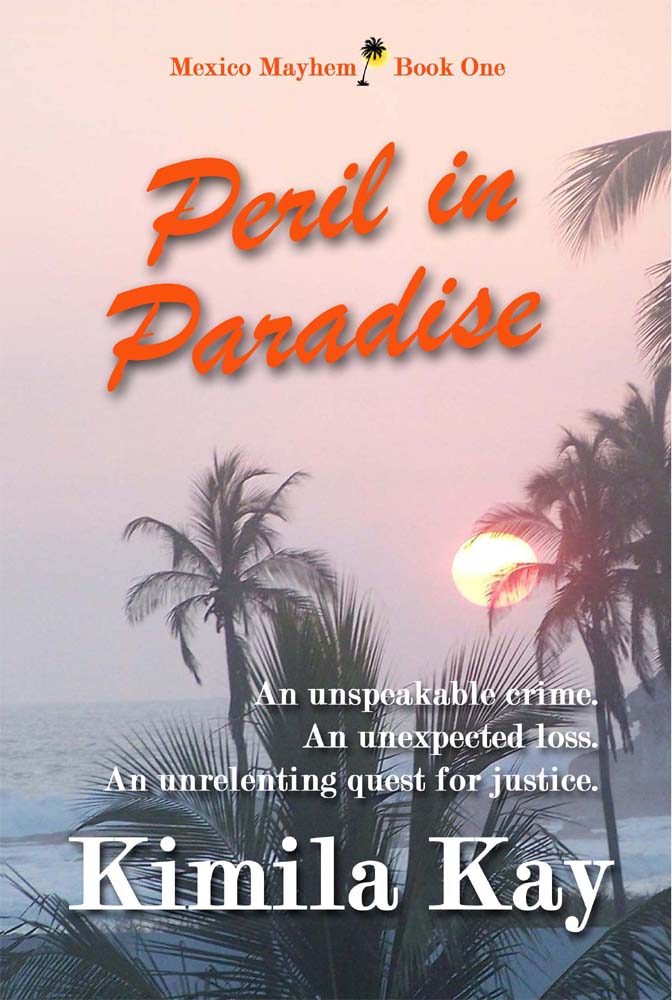
I began writing in 2004 and was fortunate enough to have three short stories published in the “Cup of Comfort” anthology series. And while I wish I’d followed through sooner with my first novel, “Peril in Paradise”, am thankful for those life experiences along the way which I feel improved “Peril in Paradise’s” storyline and also made me a better writer.
My Mexico Mayhem Series is more suspense/thriller, than mystery, but I recently began writing a mystery series set in Oregon. “Redneck Ranch”, the first novel in the Stoneybrook Mystery Series, takes place in a fictional town and features an autistic deputy sheriff named Derrick Stone. One of life’s tragic experiences took my autistic son, Derrick, at the age of thirty-six when he suffered a heart attack in 2017. Derrick and I spent a lot of time together and I found myself lost without our lunches, shopping days, and movie outings. Then, to be slightly overdramatic, my writing rose like a Phoenix in my mind giving me somewhere to go when my broken heart needed soothing.
As you all know, life goes on, and for me every day now includes writing. My husband Randy and I are also planning for the future, one hopefully, that finds us living somewhere in a quaint costal town in Mexico. But for now, I enjoy our small home in Donald, Oregon, our fishing cabin on the Siletz River, Randy’s feisty, black cat, Halle, and as many adventures as we can experience before life causes us to slow down.
Happy writing, Ladies of Mystery!!!
Amazon.com: Peril in Paradise (Mexico Mayhem): 9781794052451
In one of the longest-running writing groups I participated in, our discussions often wandered into related areas but never very far afield. They were always informative, at least to me. One discussion in particular has remained with me.
The de facto leader of the group asked apropos of nothing if we ever wrote anything other than fiction. Aside from the occasional memo for work, everyone said no, except for me. As both a free-lance writer/editor and later an employee in a social services agency, I wrote all the time. When I was freelancing, I wrote chapters for textbooks, articles short and long, lots of book reviews, and edited dozens of books. As an employee I wrote countless fundraising letters, newsletters for our donors, and a never-ending list of grant applications and reports. For me the job search meant finding an opportunity to write.
I wrote a novel (incredibly bad) in college along with short stories (mostly so-so), and in my first job afterwards, as a social worker, I wrote long detailed reports of my visits to children’s homes, foster homes, family court sessions, and other agencies. My long-winded exercises in leaving nothing out sat alongside the terser reports of my colleagues, who managed to say much the same thing in a tenth of the space.
This observation came to me recently when in the process of cleaning out old files and boxes I came across my original notes from an early job. All that writing, all those words, as though I just had to use as many as possible whenever possible. It reminded me of my answer to a question asked in high school. What do you want to do, a friend asked. I want to write, I replied. And so I have.
Note that I didn’t say, I want to be a writer. I don’t think I’ve ever said that, or thought it. I’m not sure what it even means. I wanted to write. I wanted to get my ideas down on paper, explore them and develop them, see those sinuous strings of letters spreading across the page, coalescing into images I didn’t know I had in my head until I saw them in blue ink on white paper. Writing was like putting seeds into the ground so they’d grow into something bigger, something unanticipated but welcomed even if at first it made no sense to me.
When I look at the various mystery series I’ve written, I can see the stories I’ve used to interpret the experience of living along the New England coast, or in India during the tumult of the 1970s with Indira Gandhi, or on a farm in an isolated rural community. Some of the things I’ve said now surprise me. Did I really think that? How interesting! Each writer has different goals for any work in progress. My goals are always to discover something, see something emerge that I didn’t expect. For me, writing is like breathing. Necessary but something more.












 Ladies of Mystery
You must be logged in to post a comment.