First, Third, How do I choose?

I spent way too much time trying to decide if this new series should be written in first or third person. A lot of the cozy mysteries I’ve read are in first person. They stay in the main character’s point of view (POV) throughout the book.

In my other mystery books, I stay in third person for all the series. But the main character’s POV all the time in the Spotted Pony Casino books. Sometimes I add another POV character in my Gabriel Hawke books because the story needs that added POV. In my Shandra Higheagle Mysteries, I use Shandra and Ryan’s POV’s both.

This new series, I went back and forth between first person and third. So far the book has stayed in my main character’s POV. And I think I’ll keep it that way. It’s how most cozy mysteries are. But as I write, I find myself typing “I” and writing some sentences in first person. This makes me wonder if I need to go back to the beginning and start over, writing from the first-person POV.

Which do you feel is stronger?

Third Person

Andi Clark parked her van in front of the Auburn City Park where the first Christmas event of the year would kick off in an hour. People bustled around putting the finishing touches on craft and food booths. It was the Saturday after Thanksgiving and the whole county was excited to move from the doldrums of a rainy fall into preparations for Christmas.

She never arrived more than an hour before an event. Any earlier her crew of cuddles became bored and got into trouble. The committee had asked her to set up a small petting zoo where people would enter the event. She’d parked as close as she could get with the inflatable decorations and roped-off areas making the attendees follow a specific path through all the booths and over to where Santa would listen to children’s Christmas wishes.

“Come on, Cocoa, I can use your help carrying things.” Andi unbuckled her brown and white border collie from the seatbelt harness and listened to Lulu whine. Andi scratched the Chiweenie’s dapple head and black, long furry ears. “You’re too small to help me right now. You keep Athena company.” She patted the Golden Retriever/Pyrenees cross dog’s blonde head and followed Cocoa to the trailer behind the van.

 Lucky for her all her animals were small except for Athena. The large breed cross was larger than her mini donkey and pygmy goat. Andi pointed to the bucket full of the pins that held the panels together. Cocoa grabbed the handle in her mouth. Andi gathered the top two panels and carried them to the area with a sign, Cuddle Farm Animals.

First Person

Parking my van in front of the Auburn City Park, I watched people bustling around getting food and craft booths ready for the first Christmas event of the year to kick off in an hour. It was the Saturday after Thanksgiving and the whole county was excited to move from the doldrums of a rainy fall into preparations for Christmas and the possibility of snow.

I never arrive more than an hour before an event. Any earlier my crew of cuddles become bored and get into trouble. The committee asked me to set up a small petting zoo at the entrance to the event. I made my way by the inflatable decorations and roped-off areas funneling attendees down a specific path through all the booths and over to where Santa would listen to children’s Christmas wishes.

“Come on, Cocoa, I can use your help carrying things.” I unbuckled my brown and white border collie from the seatbelt harness and listened to Lulu whine. Scratching the dapple head and soft, black, long furry ears of my Chiweenie, I said, “You’re too small to help me right now. You keep Athena company.” I patted Athena, my Golden Retriever/Pyrenees’, blonde head and followed Cocoa to the trailer behind the van.

 Lucky for me, all my animals are small, except for Athena, and fairly easy to handle. Athena was larger than both my mini donkey and pygmy goat. At the trailer loaded with panels to set up a small pen, I pointed to the bucket full of pins that held the panels together. Cocoa grabbed the handle in her mouth and I gathered the top two panels and carried them to the area with a sign, Cuddle Farm Animals.
Which version makes you want to continue reading?

When I wrote my first mystery 30 years ago, it was in first person. then an agent I sent it to, told me that no one bought mystery books in first person. Which floored me because I had just read the first three Sue Grafton books that were in first person. Anyway, I moved from first person to third and on to a different genre. Now that I’m back writing mysteries, I wonder if I also need to switch to first person for this series. I encourage all thoughts and responses to this dilemma.

A fun new adventure for me, besides trying to decide which tense to use in this new series, is having my books available to readers and listeners from my website. Yes! You can now purchase my ebooks, audiobooks, and print books from my website.

The ebooks are the same price as at other vendors but if you are a subscriber to my newsletter you will be able to purchase my new releases in ebook format from my website for a $1 less and get it before it publishes to other vendors. So if you want to get my new releases at a reduced price and before they release anywhere else, you need to subscribe to my newsletter. https://bit.ly/2IhmWcm

Also available from my website are my audiobooks, which ARE priced lower than at other audiobook vendors. Because I don’t have to pay a middleman to get my audiobooks to you, you get the reward of a lower cost. Also watch my newsletter and website for audiobook deals. As part of the IAD- Independent Authors Direct- group, I will have specials on my audiobooks every two weeks.

My print books have been for sale on my website for a year now. If you purchase a print book directly from me, you get it autographed, some swag, and free shipping. You can’t beat that!

Happy New Year everyone!
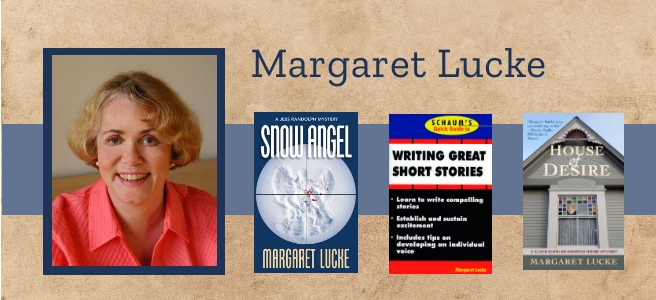
Don’t Look Back – Look Forward

By Margaret Lucke

Happy New Year! I hope 2025 is getting off to a great start for you—that you haven’t yet broken your resolutions and that you’re making progress on your newly set goals.

In the spirit of season, I’d like to pass along some words of wisdom that were presented to me quite some time ago. In the years since, I have found it helpful to reflect upon them from time to time.

Since context can be helpful, I’ll tell you the story of how I came to receive this sound advice.

One day when I was sixteen and the proud possessor of a freshly minted driver’s license, I was cruising along the main street of my hometown. I happened to glance at the rearview mirror and there, directly behind me, was a police car.

Instant panic. Omigosh, omigosh, am I going to get a ticket?

Never mind that there were no flashing lights or wailing sirens, no bullhorn demanding that I pull over. I was new at driving – I must have done something wrong without realizing it. I didn’t think I’d been speeding, but could I have crept over the limit unawares? Had I neglected to use a turn signal when I should have? Was a brake light out?

I was so intently focused on watching the cop in the mirror, trying to figure out what he was going to do, that I was three-quarters of the way through an intersection before I noticed that the traffic light was red.

Whatever the cop’s intentions had been before, now he had good reason to stop me. The lights blinked on, red and blue. The siren blared. My hands shaking on the wheel, I moved to the curb. He stopped behind me and got out. Standing by my driver’s door, he demanded to see my license.

I’m sure the fact that I was a teenage girl, prettier and blonder than I am now, made no difference. He probably wasn’t swayed by the way my lips quivered and my eyes filled with tears as I explained why I had happened to run the light. But whatever the reason, luckily for me my town’s finest decided not to give me a ticket.

“I understand how you might have been distracted,” he said. “But, you know, when you’re driving it’s always a good idea to pay more attention to what’s in front of you than to what you see in the rearview mirror.”

I promised him I would take his words to heart. Since then, I’ve realized he gave me good advice — not just for driving but for life. Be aware of where you’re going, keep your eye on the road ahead — and now and then, glance at the rearview mirror, just in case something important is back there.

So that’s what I plan to do in 2025. If the suggestion suits you, it’s yours to use as you will.

Have a great year!

* * *

Curious about indie publishing? Next Saturday, January 18 at 2 pm Pacific time, I will be moderating a panel on that very subject for the Northern California chapter of Mystery Writers of America – “Indie Authors: Things I Did Right and Things I Did Wrong.” The panelists are Rachele Baker, M.K. Dean, Ellen Kirschman, Lexa Mack, and Ladies of Mystery’s own Janet Dawson. It’s on Zoom so you can attend from anywhere. Details are here: https://mwanorcal.org/events/. Hope to see you there!

Prime the Pump and Take a Long Voyage

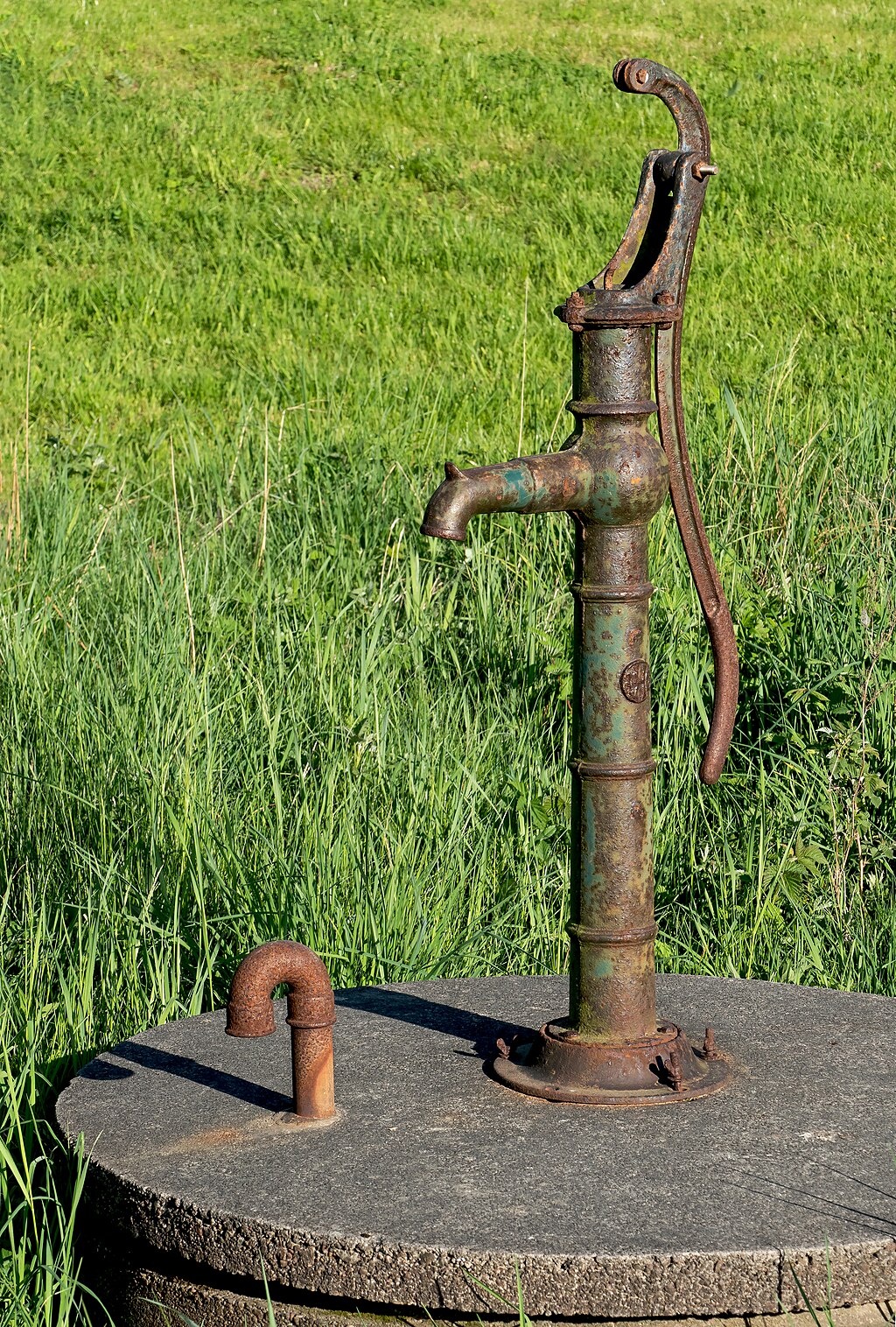
It’s an old phrase: priming the pump. Back in the 19th century, it meant pouring liquid into a pump to expel the air and make it work. Even now, an internet search will tell us that before any centrifugal pump can be operated, it must be primed. Priming is the process of replacing air in the intake lines and portions of the pump with water.

But our subject is books and writing. Priming the pump also means encouraging the growth or action of something. In this case, my work-in-progress.

It’s a historical novel. I have a large pile of words that will eventually become a coherent first draft. Where the hell I’m going? How am I going to get there? Will it make any sense? It probably will, to me. Will anyone else want to read it?

Thus I prime the pump. I’ve been seeking inspiration in one of my research books, taking lots of notes. I’m paying attention to the timeline of actual events, in order to integrate my fictional characters into the crowded parade of real people who were doing things in my setting in 1878 and 1879. As I do this, I write notes to myself, usually set apart in brackets, outlining things I want my protagonist to do. Or learn.

There’s a lot going on, but it’s impossible—and improbable—for me to place her physically at all the significant events, much as I would like her to be an eyewitness. I must pick and choose the most dramatic scenes and figure out a logical reason for her to be there. The rest, she’ll have to learn from others. Besides, the book already looks like it will be long. Some events need to be mentioned in passing rather than detail.

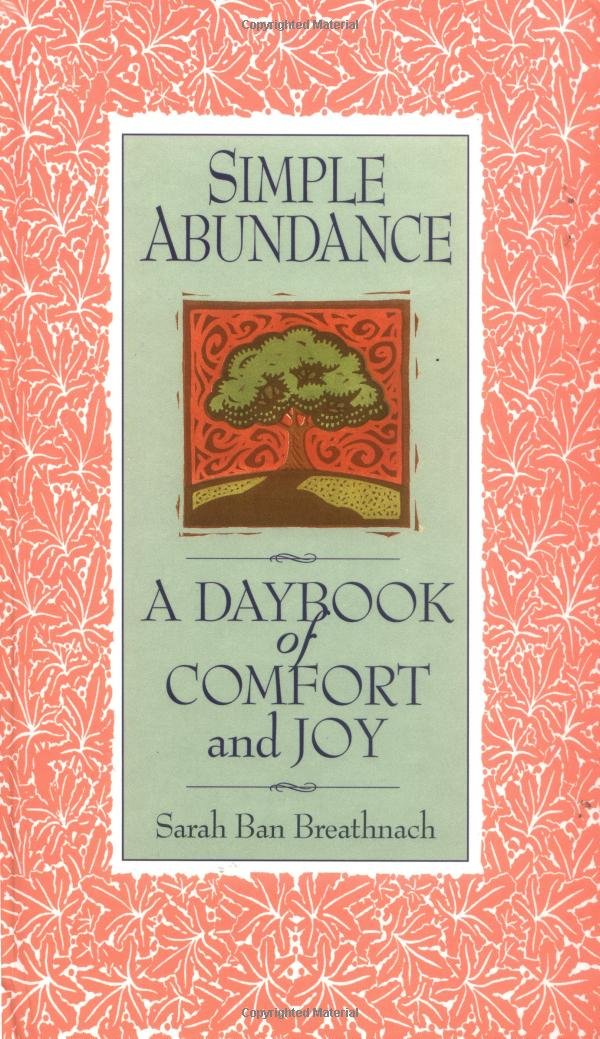
So, reading a book, in this case, a research book. Or another book. Like this one. Years ago, I was going through a bad patch that soured me on life and left me feeling perpetually grim, grumpy, and depressed. A friend tossed me a lifeline, a book. It’s Simple Abundance: A Daybook of Comfort and Joy, by Sarah Ban Breathnach.

I’m not one for touchy-feely, self-help books. Over the years, I’ve bought a few, gotten little from them, and quickly donated them, passing them on to other readers. But Simple Abundance spoke to me at a time when I needed it. It’s a collection of essays, one for each day of the year, looking at things like joy, gratitude, beauty, and so forth. I read one essay every morning. I’m always surprised and gratified when the essay for a particular day speaks to something that’s going on in my life. Such as the day my father died. That essay was exactly what I needed at the time.

One of the best takeaways is the gratitude journal. Each evening, I jot down three or more things that I’m grateful for—even if it just clean sheets on my bed, a quiet day at home, and especially a productive day of writing. I find that keeping the gratitude journal has changed the way I look at life. That helps immeasurably with my writing.

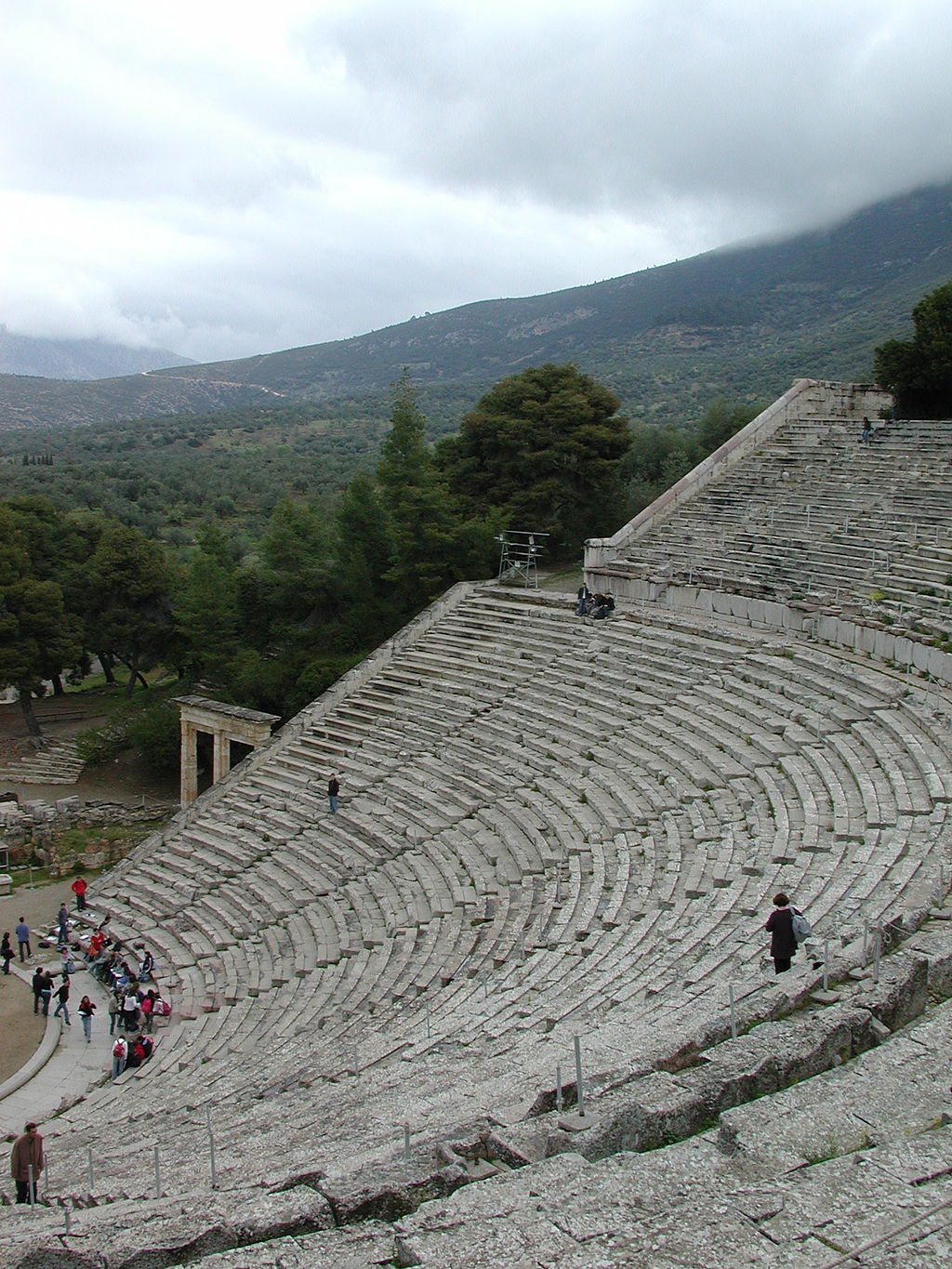
Simple Abundance also introduced me to the Greek poet Constantine Cavafy. On a date at the end of the year, the author quotes Cavafy’s poem Ithaka. During my trip to Greece in October 2023, my group visited the ancient theatre of Epidaurus, constructed in the late fourth century BCE. It’s considered the most perfect ancient Greet theatre with regard to acoustics and aesthetics. It is still used for the performances of ancient plays.

Our tour guide demonstrated the acoustics at Epidaurus by standing in the middle and reading a poem—Cavafy’s Ithaka. As we enter the new year, I leave you a few lines from the poem [translation by Edmund Keeley and Philip Sherrard, C. P. Cavafy/Collected Poems, Princeton University Press, 1992.]

As you set out for Ithaka

hope the voyage is a long one,

full of adventure, full of discovery.

. . . .

Keep Ithaka always in your mind.

Arriving there is what you are destined for.

But do not hurry the journey at all.

Better if it lasts for years . . .

May your voyage this year be long, full of adventure and discovery. And productive!

Writing is a Business … isn’t it? By Heather Haven

From the very beginning, I was taught that writing should be a business. Good in theory, not so much in reality. If I think about my salad days, I made about 5¢ an hour. When I got a real job writing humorous ad copy for No Soap Radio, I made $125 a week. Even in New York City’s late 1970s that wasn’t enough to pay your bills, so I worked backstage doing costumes on Broadway to supplement my income. I was in my early 20s then and doing two jobs I loved was no hardship at all, especially if one was in the theatre. I love the theatre. Lots of talented people inhabit the theatre. I am proud to say I’ve met friends I’ve kept throughout the years. Certainly worth more than 5¢ on the dollar.

As for writing ad copy for No Soap Radio, every morning in a round table sort of setting – literally – is where I learned it was my job to produce something, whether I felt like it or not. For decades after that’s how it went. Recently, however, I took on the luxury of writing when I felt like it. It’s only been for the past 4 months and hard though it is to admit, now writing feels more like a hobby than a job. It comes, it goes, and so what? This hobby approach to things is not my style. I’m a workhorse type of person. I need to feel useful and committed. And as John Adams said, one of our founding fathers and presidents, “There are only two creatures of value on the face of the earth: those with the commitment, and those who require the commitment of others.” I knew I liked the man.

I’ve discovered — or rediscovered — it’s not the money that spurs me on. It’s the commitment. True, this has been an important break after 40 years of daily writing no matter what was otherwise going on in my life. It’s been a test of what writing means to me. But this new thing, writing whenever the mood strikes me, just isn’t working. I need to get back to work, scheduled and at the forefront. I need to get up every morning and feel driven. I need to rekindle the fire in the belly. In short, pass me the matches.

I write because I love it. I write because I have to. I write because it’s me. So I greet 2025 most welcomingly. A new year and back to being me — a crazy, driven, committed writer — who puts her work above everything else except for maybe the occasional glazed donut. Well, come on. Let’s get real.

Happy New Year to all the other crazy, driven, committed writers in my life. 2025 is going to be great.

Endings

Beginnings and endings are the hardest part of writing for me. (That’s today. On other days it’s the muddled middle.) Some writers have arresting, captivating openings that grab the reader and carry her along into a ninety-thousand-word novel. I’m not one of those, but I can eventually get a few words on the page to get the story moving. For me the greater challenge is endings.

Some years ago I listened to Andre Dubus III talk about his new book, House of Sand and Fog, which led him to talk about how he’d grown as a writer. He didn’t like his first book, Bluesman, because he considered it sentimental. His disdain for this failure in craft was obvious, and when I met him at a writers’ event years later, the subject came up again. As I listened to him touch on the challenges in his work, I understood that for him an ending that is sentimental is also in some ways dishonest, an inability to reach deeper for something that was true. I had just purchased TheGarden of Last Days, and read it with that in mind. There is nothing sentimental in that book, least of all in the ending.

Several critics have explored the link between the traditional and cozy mystery and comedy; noir crime fiction has been linked to tragedy. At the end of the cozy mystery, the world is set right again; the villain has been identified and brought to justice of some sort; the lesser crimes of other characters are brought to light and justice is visited on them in various ways, perhaps public censure or shame or remorse; and the minor romance barely acknowledged sometimes comes to light and there is a new beginning for a young couple. All is right with the world. From Restoration Comedy to Agatha Christie and writers today, it is hard for a reader of cozies or traditional mysteries to be satisfied with less. An unrequited love or an unchallenged con artist will annoy some readers as much as a dangling participle will menace the peace of mind of a copy editor. And I understand this. There is something deeply satisfying about the comedic ending, a moment that reassures us that the world aslant can be righted, that our inchoate ideals can be realized.

So how does a writer of traditional crime fiction compose an ending that is both true to the story being told and unsentimental? Sometimes I think this question is just one more obstacle to writing a satisfactory ending, and all I’m doing is complicating matters, making life harder for myself. I’m not unsatisfied with the ending of Family Album, the third in the Mellingham series, but I acknowledge that it is a tad sentimental (maybe more than a tad). But readers loved it because it fulfilled one of the hints at the beginning of the story, and a promise fulfilled, particularly about a possible romance, always brings a frisson of delight. But it was sentimental. At least it wasn’t mawkish.

I don’t remember most of the endings in my books and stories but some stand out, for me at least. The ending of When Krishna Calls in the Anita Ray series required research, rethinking, and stepping back. A woman sentenced to prison looks out on her new world, listening to another prisoner, and is satisfied with the choices she has made. She won’t forget why she is where she is, and she won’t regret it. The ending of Friends and Enemies in the Mellingham series required several versions before I finally landed on the one that worked and fit with the rest of the story. An editor who read the ms and considered acquiring it mentioned how much she liked it (but not enough to take the book). Another ending that satisfied me is that in “Coda for a Love Affair,” in Devil’s Snare: Best New England Crime Stories 2024. The ending is simple, clear as cut glass and sharp.

Endings are hard because the easy ones come fast, are easy to write, and sit well on the page. And that’s the problem. They tempt us to take them, give a sigh of relief, and pat ourselves on the back for coming up with (rather than running carelessly into what looks like) the perfect line or paragraph to close out three hundred pages. Depending on how tired we are of the story and working on it, that ending will appear reasonable, acceptable, or a gift from the writing gods. So this is where I step back and wonder what Andre might think. I don’t have to get far into that mental exercise to admit that the first or even the thirtieth ending is not what I want. 

If nothing else, writing keeps us humble. In our heads we hear perfect dialogue, snatches of prose so brilliant we’ll never need the sun again, but on the page, our pen does not cooperate (or the computer keyboard), and we end up with the mundane, the ordinary, the usual. I keep working on endings but I know I fall short most of the time. As do we all. It’s encouraging to know that greater writers have the same struggles, the same challenges, the same doubts. With one eye on writers whom I admire, I keep at my own work, striving to meet my standards even if that means sometimes disappointing some readers. If I want better endings, I just have to keep at it until I get there.