BEGINNINGS

DSC_0196What makes you, as a reader, want to read a particular book? Sometimes, for me, it’s because it’s been recommended by another reader. Or I’ve read a review of it. Or my book club is reading it. But suppose you are in a bookstore or library with no reading commitments on your mind. What would make you select one book over another? What would the first paragraph or the first few sentences tell you about the book and give you enough information to want to go on?

There has been a lot written about “the first two pages” of a book: how important they are, how that’s where you capture the reader’s interest and get her to select this book above others. If the reader finds herself in a bookstore, though, she’s not going to read the first two pages. She’s probably only going to read the first paragraph. How much information do you, the writer, give to the reader in that first paragraph or two?

It’s an important question for writers because with so many books to choose from, how can you get a reader to select your book as the one to read? I looked at the first paragraphs of three mystery novels, checking out what information the first few sentences gave me, and trying to determine whether I was interested in finding out more.

I started with a book by Tom Kakonis called TREASURE COAST.

“Like most men closing in on the benchmark forty, Jim Merriman made far more promises—to others mainly, a dwindling few yet to himself—than he knew, heart of hearts, he ever intended to keep. It was a habit by now so deeply entrenched, so much a part of him, that he wore it like a second skin: Generate an earnest pledge today; effortlessly shuck it off tomorrow. Mostly it was harmless, this habitual shortfall between oath and execution, deed and good intention.”

What did those first few sentences tell me about Jim? I learned his gender and age, that forty was important to him, and that his promises, to himself and to others, were mostly empty.  I surmise he’s not a hero and guess that some promise or another is going to get him in trouble.  I don’t know where the story is based, and I don’t know anything more about Jim except that he’s relatively honest about his failings.

How about Louise Penny’s Chief Inspector Gamache novel, THE CRUELEST MONTH?

“Kneeling in the fragrant moist grass of the village green Clara Morrow carefully hid the Easter egg and thought about raising the dead, which she planned to do right after supper. Wiping a strand of hair from her face, she smeared bits of grass, mud and some other brown stuff that might not be mud into her tangled hair. All around, villagers wandered with their baskets of brightly colored eggs, looking for the perfect hiding place.”

This is a charming portrait of a village preparing for an Easter egg hunt, centering on one woman, Clara Morrow, about whom we know only that she doesn’t pay a lot of attention to her appearance. But what’s this: “Clara Morrow [. . .] thought about raising the dead, which she planned to do right after supper”.  What’s that got to do with hiding eggs for the Easter egg hunt? Penny has thrown a scary mystery element into the midst of a bucolic village festival.  Do I want to continue? You bet I do. I want to find out about raising the dead.

In Julia Spencer-Fleming’s I SHALL NOT WANT, the author begins in the middle of events.

“When she saw the glint of the revolver barrel through the broken glass in the window, Hadley Knox thought, I’m going to die for sixteen bucks an hour. Sixteen bucks an hour, medical, and dental. She dove behind her squad car as the thing went off, a monstrous thunderclap that rolled on and on across green-gold fields of hay. The bullet smacked into the maple tree she had parked under with a meaty thud, showering her in wet, raw splinters.”

Spencer-Fleming has told us quite a lot about Hadley Knox. She’s a cop and doesn’t make much money, although she has benefits. Right now she’s terrified because someone is trying to kill her, and she’s not sure the money is worth the danger. The setting is a country farm in late spring or summer.  We’re in the middle of the story.  Events have already occurred that have brought Hadley Knox to this position. Am I interested in finding out what happened before and what will happen in the future? Probably.

My own first paragraph in my current WIP goes like this:

“The day Captain Bradley disappeared was ordinary—at least it seemed like that to Andi Battaglia when she arrived at the station just before eight that morning. Halloween had come and gone with all its craziness, crazy at least as far as police were concerned. Christmas decorations had arrived in the Burgess Beach stores in mid-October, even earlier than the year before, and with the temperature hovering in the low nineties, Andi was in no mood for holiday cheer.”

What does the reader learn from this? Andi Battaglia is a cop. Someone disappears, and we assume he is Andi’s boss. Andi is feeling a bit grouchy about holidays. It’s November, but because the weather is in the nineties, we know the setting is tropical.  Not nearly as attention getting as Penny’s or Spencer-Fleming’s beginnings. Something to work on, so that hypothetical reader will choose Carole Sojka’s book when browsing.

This was an interesting exercise for me. Have you tried it with your own WIP?

The Devil in the Details

thumb_IMG_1225_1024

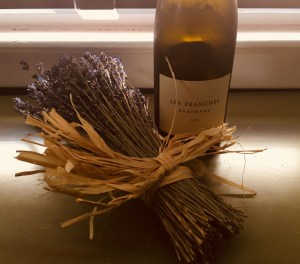
What are the differences in symptoms between cyanide poisoning by inhalation or by ingestion? What is the best way to store evidence? What work happens on a lavender farm in early October? How are French wine labels governed by the state?

lavender
I like research that requires learning about wine and visiting lavender farms

The topics a mystery writer may find herself researching are never boring! We rely on resources including — but by no means limited to—manuals, interviews with experts, visits to unusual places, even Google searches. 

When a murder is committed in our books, even if it takes place off the page, we need to know exactly how it was done and what clues might be left behind. When a victim is found in a particular location, we need to know why he or she was there to begin with. When a suspect produces an alibi that doesn’t hold water, we need to know the detailed explanation of why not — even when we don’t share all those details with the reader.

The question of how many details to share is a big one. For a book to pass muster as a realistic story, a certain level of explanation and accuracy is necessary. But include too many details, and suddenly your reader finds herself reading a how-to manual instead of an engrossing story. 

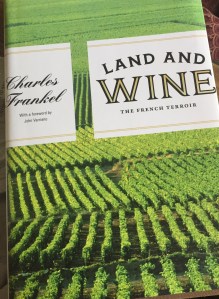
IMG_3781
My kind of how-to manual!

Of course, different readers look for different types of details. How we as writers present our stories is a big part of what makes up a writer’s “voice.” Some writers are known for their intricate explanations, whether of crimes or locations or corpses. Readers who loves those writers thrive on those details — to them, it brings the story to life. Other readers look for a book that skims over the detail. They’re less worried about how accurate the description of police activity is and more interested in the emotional arc of the characters involved. And some readers want it all!

Some of these differences are determined by the subgenres within the mystery genre — some books are thrillers, others suspense or cozies. Each type has its own expectations. No one who picks up a cozy is looking for a graphic description of the corpse, but leave out the details of the chocolate cake recipe and you’re asking for trouble!

The writer must know her readers’ expectations and not disappoint. My books are traditional mysteries, which means they follow the line of providing succinct and accurate descriptions of crimes and how they are committed, but keep the focus on the plot and characters. When I’m looking for a fun read at bedtime, however, I usually grab a cozy mystery, something I can cuddle up with along with a cup of hot chocolate and enjoy. Hey, who said we could only read one subgenre?

So how much detail should a writer include? Not too much, but just enough. 

How much detail do you look for in the books you read?

And if you’re wondering, the first two questions above I had to answer for my book A Pale Reflection, coming out later this year. The second two are for the book in the series after that (yes, while one book is with the editor, I get to work on the next one).

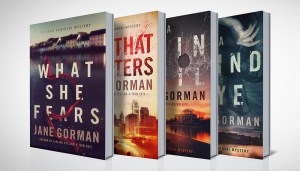
Learn more about Jane Gorman and the Adam Kaminski Mystery Series at janegorman.com or follow her on Facebook or Instagram.

Adam-Kaminski-Mystery-Series

Left Coast Crime Replay by Paty Jager

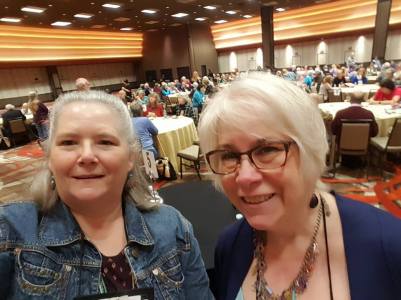
Last month, March 22-24, I attended the 2018 Left Coast Crime conference in Reno, NV. It was a five and a half hour drive from my home.  A friend and I left Wednesday morning and took our time driving through rain, snow, and sleet to get there.

speed dating
Laurie and I at Speed Dating

Thursday morning started with a speed dating event where two authors were teamed up and we moved from table to table talking about our books to readers who remained at the tables.  There were 20 tables of 6-8 people per tables. It was a lot of fun. My “dating” partner was Lauri Rockenbeck.  She had her first book out, and I was pitching my Shandra Higheagle Series.

I attended a couple of the panels that day and hung out with my friend.

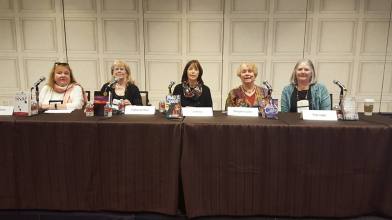
Friday morning I was on the panel “I Still Miss Someone: Ghosts, Hauntings, & Horror” with Michele Drier, Margaret Lucke, Catherine Paul, and Jo Perry.  We talked about the supernatural elements in our books. Michele was the narrator and did an excellent job with great questions and keeping things moving.

Panel 2018
My Panel

After my panel I popped in on a couple others where friends were speaking. Then I had lunch with an up and coming writer, who had contacted me before the conference to see if I would take the time from the conference and talk to her about writing and the business side of things. It was fun to meet Heather and share knowledge.

Friday evening, I attended the interview with William Kent Krueger. He was, as always, entertaining.  He told how he took his 10 year-old grandson with them on a trip to Arizona to learn about about human trafficking and the border wars.  He said while no one would open up to him,when his grandson asked questions, they would respond to him.  And that was how Kent found the information he needed for his book Sulphur Springs which won the Lefty Award on Saturday night.

Saturday morning, I read the first chapter of Artful Murder at a “You Had Me At…” where authors could read for ten minutes and talk about their books or do a demonstration.  After I read, a talk was given by Nancy Tingley on “Art Historians as Detectives”. I found it fascinating and made sure I watched a few more of these types of presentations by authors.

Sundae Social
Sundae Social

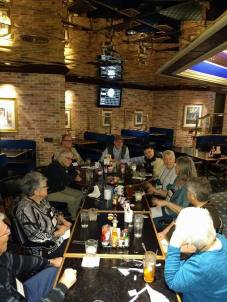
Saturday afternoon, I hosted my Sundae Social at Rosie’s Cafe in the casino.  Thirteen readers signed up and twelve showed up. I was excited to have so many come. I purchased vanilla ice cream in dishes for them, and I’d brought along toppings for them to make their own sundaes, while I visited and talked about my books. They all went away saying it was the best event they’d been to during the conference, because they had one on one time with an author and enjoyed ice cream!  I enjoyed each person who came.

I didn’t go to the banquet on Saturday night as a romance author friend who lives in Reno was meeting me for dinner. We had a great time catching up and talking writing.

While standing in line to pay and pick up the silent auction item I won, I started up a conversation with the author behind me (can’t remember his name), and he suggested my Shandra Higheagle books sounded like the the new category Cozy Noir that he’d heard about while at the conference.  Anyone else heard of this?

Sunday morning my friend and I rose, packed up, and headed home.  For this introvert writer, it was an exhausting weekend just having to stay in a open, welcoming mode for the readers and the authors I connected with.

As a reader and/or author are you a person who thrives on the energy of a conference or do you find it exhausting?

SH Mug Art (2)

Pomados for the …win?

Well, hi there.

If you’re a regular reader of this blog, then you’ll know I’m a newbie, in which case, “hi, I’m Jordaina. It’s lovely to meet you”. If you’re new to this blog then “Snap, bro! Me too!”. And, obviously, it’s lovely to meet you as well.

Under the guise of getting to know each other, here are three things you should know about me:

  1. My name is pronounced Jaw-dane-a (this is always the first thing I explain because everyone gets it wrong and then people mumble it or stumble over it and it gets awkward—one guy even tried to spell it with an “f” one time. Like, what?)
  2. Kinda obvious, but I write cosy mysteries with a paranormal twist.
  3. I’ve recently given up my day job/got made redundant/was released into the wild and now I write full-time.

That’s me in a three-fact-nutshell. Sort of. Anyway, probably like every writer I’d always dreamed of fact three. Of being able to give up my job and writing full-time while sitting in a field in a sundress/looking arty in a coffee shop but I have to tell you, the reality is a lot different to the dream.

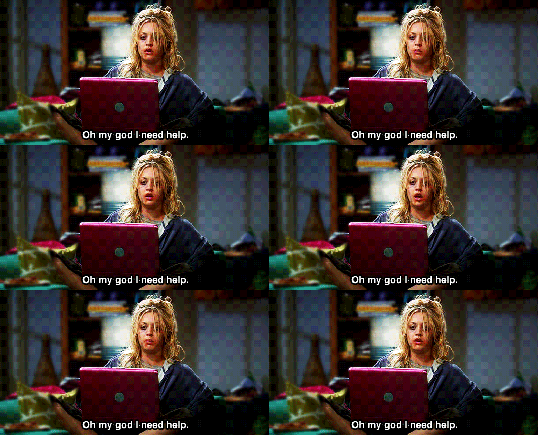
My job ended at the end of January this year and then I got mega sick for about a month. And then March just came and went and now it’s April. Two whole months have passed since I left my job … and I’ve hardly achieved anything. I had goals and deadlines, but I just can’t seem to get into a rhythm. When I had a full-time job, I’d cram my writing into whatever free time I had and get loads done. But now, I get up, have breakfast and then some weird time warp thing happens and it’s lunchtime. Like, how?

tumblr_mzffbglwoa1tne7pgo1_500

So, after a few weeks of getting nothing done, I started investigating time management techniques.


First I started with the Pomado technique. (It’s actually the Pomodoro technique, but I like calling it “Pomado” because it sounds like “tornado” … small things!) I don’t know if you’ve heard of it, but it means you set a timer for twenty-five minutes and accomplish what you can in that time. Any tasks you have you’re meant to estimate how many Pomados it will take to achieve before you start. It’s great if you have lots of different tasks but what if you spend your whole day writing? If you spend eight hours writing that’s sixteen Pomados. That’s sixteen times your writing flow is interrupted. That’s sixteen times you freak out at the loud, random buzzing. Not exactly conducive to the creative flow.

So, that didn’t work for me. Then I read in some time management book (yes, I am reading self-help books!) that an adult can’t focus for longer than forty minutes at one time and they suggested working in ninety minute blocks with a five minute break in between. Can you see the problem? Forty plus five plus forty does not equal ninety. How much faith can you have in a time management system that can’t even get their maths right? Not to mention my office is in the attic so by the time I’d made it down both flights of stairs, made a cup of tea, had a biscuit and climbed back up to my office I’d be well over that five-minute break.

Since I wasn’t vibing with that idea, I looked for other options and found some research that said you should turn off all distractions (obvious!) because, after an interruption or distraction, it can take up to twenty-three minutes to focus your attention back on that one task. Twenty-three minutes! So every time you start a new task, it takes your brain twenty-three long minutes to drag itself off the previous task and settle on the new one. So that blows the Pomado technique out of the water because that means I’d only have two minutes properly focused on that task. Although, I do like this idea … but I think that’s probably only because I could say I was “Pomado-ing”!

The craziest thing is that I LOVE writing. I LOVE it. So you think I’d find it easy to just sit down and do it but … *shakes head* I just can’t find a way to manage my time effectively enough.

Do you have any time management tips to help me? Because, at this rate, I’m going to get to the end of the year and my editor is going to ask me for those eight manuscripts that are due and … well, that’s not going to be a fun conversation! If you have some tips for me, or anything that works for you, then please let me know about it in the comments.

Until next time,

Jordaina 🙂

PS. If you’re reading this and thinking “This girl is a writer? Man, she can’t spell for toffee” then, and I probably should’ve told you this—I’m English. Yep. We spell lots of things different. (I also sometimes use this excuse to cover my bad spelling!)

Let’s talk about the weather


By Sally Carpenter

Many writers swear by Elmore Leonard’s list of “10 rules for good writing” as definitive guidelines that must be followed at all times. Rule one is “Never open a book with weather.”

Ooops, I broke that rule in my WIP.

I don’t begin with a weather report per se, but the climate does have an impact on the story. Chapter one opens with an actress, the protagonist, performing in an outdoor theater in the rain. The guests watching can’t enjoy the show because they’re cold and wet. The actors on stage must overcome their own personal discomfort to do their best, as “the show must go on.”

The reader feels empathy for the protag working in such miserable conditions while admiring her professionalism and dedication in putting on a good play despite the obstacles.

 Throughout the book we have rain and drizzle off and on as well as a few dry days. Chapter one ends in a thunderstorm in which a dying stranger shows up at the heroine’s front door. OK, using a storm during a scene of high conflict is a bit of a cliché, but in this case it seems to works.

 One of the classic conflicts in literature is “humans vs. nature.” Starting a story with bad weather can be a good thing. A tornado triggers the action in one of the most beloved stories and movies of all times, “The Wizard of Oz.” Having lived most of my life in the Midwest, just the threat of a tornado was enough to get me quaking.

 My guess is what Leonard was really trying to say was not to start a story with lengthy descriptions of the environment, or waxing lyrical with passages that fail to engage the reader’s interest, such as “With rays of brilliant light, the sun was heating the soft ground, recently moisted with a light rain, while fluffy clouds skipped along through the azure blue sky.”

 Of course there’s the favorite opening gambit of “It was a dark and stormy night.”

 Good weather, though, can be used as a way to surprise the reader. “As the lovers were merrily strolling through the field, with a gentle wind kissing their cheeks and the sunshine warming their bare arms, they stumbled over a rotting corpse.”

 Using weather in a story helps to make it authentic. Many TV shows and movies seem to take place in a biosphere where the weather is always 72 degrees, rain and snow never fall and natural disasters never occur. Can anyone remember the Brady Bunch dressing for inclement weather?

 However, an episode of “WKRP in Cincinnati” did have a tornado blow out a window in the studio and injure one of the characters (those tornadoes are everywhere!).

 Likewise, many cozies are set in a “perfect” world with fantastic mild weather year round. Even Southern California gets rain and chilly temperatures! Granted, the entire grounding of a cozy is a fantasy—an amateur sleuth solving a crime that the police cannot break—yet the lack of any deviation in the weather makes the suspension of disbelief even harder.

 Some cozies set in Minnesota do have snow, although I wonder how many include the unpleasant aftermath of slush: partially melted snow that’s dirty and sticky. And how many of these characters try to drive cars sliding around on icy roads or put out their backs while shoveling out their driveways?

 Some New England cozies are set in the cooler days of autumn with the colorful foliage, but do the protagonists take time away from their sleuthing to rake leaves or clean debris out the gutters?

 Writing a cozy doesn’t require the services of a meteorologist, but the author can add some flavor and realism to the story with a touch of weather.

 Please share if you know of any mysteries in which bad weather plays a role in the story.