Dashiell Hammett and Me by Heather Haven

“The cheaper the crook the gaudier the patter.” This line was uttered by Humphrey Bogart, when he played Sam Spade in the movie Maltese Falcon. This classic was written by my hero, Dashiell Hammett. Even at seventeen years old, when I read that particular line in the book of the same title, I knew Hammett was a brilliant writer. It’s hard to miss something like that.

Mr. Hammett was a big influence on me becoming a crime writer, albeit not quite as hard-boiled. I’m more like a two-minute egg. But I recently learned that if there isn’t a dead body, I’m not interested in reading someone else’s book or writing one of my own.

My latest novel, Christmas Trifle, which came out a few days ago, started out as pure romance. Good golly, Miss Molly. What was I thinking? Ultimately, I found what the story needed was a good, old-fashioned murder, not more kisses. More foreboding, not more hugs. So it was only natural I turned Christmas Trifle into a romantic suspense novel.

And why not? Dashiell Hammett created the iconic Nick and Nora Charles. He put these two lovebirds in a novel called The Thin Man. Also made into a film, it was followed by a succession of sequels, all written by him. Not only were these murder mysteries wildly popular, they were wildly romantic. He may have even invented the modern day romantic suspense. So I felt him egging me on, no pun intended, to do what I do best.

Consequently, Christmas Trifle now contains a corpse or two. Actually, three. The story still has the same charming, but recently divorced chefs, but these two find their way back to each other over a dead body rather than a dead soufflé.

My kinda story.

Dashiell Hammett once wrote, “If you have a story that seems worth telling, and you think you can tell it worthily, then the thing for you to do is to tell it, regardless of whether it has to do with sex, sailors or mounted policemen.”

My kinda guy.

Using social media to learn about authors and books

I love social media. So much, in fact, I’ve built a career around it managing social media for a university and coaching authors on using it. One of the things I love most about social media is using it to learn about things, like new (to me) books and authors.

Social media helps people find others who share the same interest. As I’ve mentioned in previous posts, I love cozy mysteries. I’ve joined some Facebook groups for cozy readers, like Cozy Mystery Corner and Save Our Cozies. These groups are a great place to share book recommendations, hear from authors about their upcoming releases and ask for book suggestions if you’re in the mood for something specific. Are you in any reader Facebook groups? Share a link in the comments!

Another perk of social media is the social proof factor and the authentic reviews/recommendations. How many times have you seen a friend recommend a book they just read and you stopped to consider getting it for yourself? For many, myself included, peer reviews hold more weight than ads. If I see an ad for something on Amazon, you bet your britches I’m going to go read the reviews before I consider buying it. The same goes for books. If a friend, whose opinion I’ve agreed with in the past on books, suggests something, I’m far more likely to check that book out. I’ve snagged so many books for my TBR pile that way.

Hashtags are also a great way to learn about books and authors, especially on Twitter and Instagram. I just did a search of the #cozymystery hashtag on Twitter and saw mention of several new books that I may not have otherwise learned about. Are there any hashtags you look on to find new books/authors? Or, for those of you who are authors, what hashtags do you use to promote your books to readers?

I’d love to know how you use social media to find new books and authors!

Between a Rock and a Hard Place or…

I could have written standing at a crossroad. “So what is the problem”, you ask?

I’ve sent my next Rocky Bluff P.D. mystery off to the publisher, hoping for a before Halloween release. (I had it edited professionally.) Publisher sounded willing, but haven’t heard any more from him. I would like to set up some promotion, including a blog tour, but I really need more reassurance about when (and if) there actually will be a book.

Anyone who knows my history as a published writer, knows that I’ve had to climb over many stumbling blocks over the years. (I’m having fun with all these cliches.)

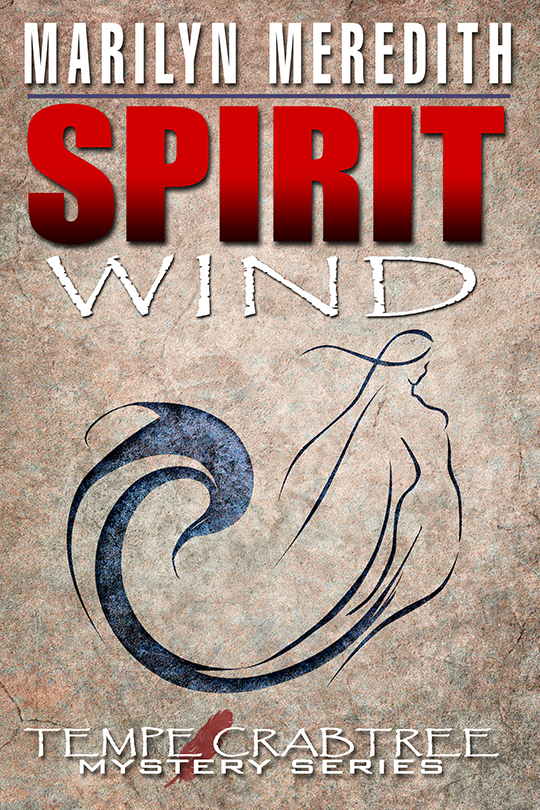
To understand why I said the title of this post could be standing at a crossroad is that I also need to be writing my next Deputy Tempe Crabtree mystery. I have a title, the main setting, some of the new characters, and some great ideas about how this one should go.

The problem with this is for some reason, I can’t seem to get moving on it. I’ve jotted some notes, even written the first paragraph. However, I already want to change it.

My advice to self is open up the document and get started.  And yes, that’s what I should do but life keeps getting in the way. Because hubby and I are getting older, there are doc appointments. Shopping for food seems to be a biggie too. And I guess the real problem is I don’t have the energy and drive I once had.

Before you think I’m complaining too much, believe me, I know how blessed I am to still have my husband and my health. I’m also thankful that I still like to cook. And most of all, I’m grateful that I still have the ability to write.

Okay, that’s it. I’m going to get with it and see what Tempe is up to now.

Marilyn

spirit-wind-cover


Writing the Whole Person by Susan Oleksiw

Writers agonize over developing a character that will be considered well rounded and fully realized. We take workshops, read how-to books by some of our favorite crime writers, and write out short or lengthy bios of our protagonists, including a backstory that will elicit sympathy and the reader’s allegiance. I’ve done all of these things, but if this is all I’ve done, the character will fall flat in my view. Only recently have I figured out why this is so.

In writing a series with a recurring protagonist and back-up characters, I had the luxury of a story arc that covered several books, giving me as well as the reader several experiences in which to get to know my lead. Since these were traditional mysteries, I had ample opportunity to explore how she or he lived outside of a particular murder investigation. She had a job and other responsibilities, or a family or close friend or lover. The reader followed her into various corners of her life that promised a little bit of personal history as well as clues to the murder and its perpetrator. Without even thinking about it, I was giving the reader the one crucial element that was missing from the courses I took and the books I read.

This has become more and more clear to me since I’ve started writing a stand-alone mystery. In certain ways, this is a very different writing challenge from the series mystery, and I saw at once as I read more in that genre what was missing. In a traditional mystery the reader gets to know the protagonist in her chosen setting among friends and neighbors, and this device requires the heroine to reveal more of her ordinary self. How does she get along with her friends? What makes her laugh? How does she feel about various aspects of life deep down? In most stand-alones, we meet the main characters one or two pages away from a crisis, and never get to know them in moments of lightheartedness, the way we are when we’re not facing a threat to our lives or those we love.

In his book on screenwriting, Save the Cat, Blake Snyder points out that a character can get away with any vile behavior if at the outset he does something the audience will cheer–he saves a cat or a dog or a child. You get the idea. And the idea works. But I’m talking about something more.

In any novel I want to discover the whole person, who she is when she’s happy as well as when she’s frightened and confused and feeing overwhelmed. The challenge is balancing all facets of a single personality in a story of suspense and murder, but in the end I want to come away with a feeling of having lived with a real person, enjoyed her sense of humor, felt the darkness she struggled against, understood her choices, and sympathized with her frailties.

Perhaps I’m especially sensitive to this absence in most suspense characters because I have a wry sense of humor that tends to show up all the time, whatever the circumstances. I admire men and women who can step back from danger and ease the fear and pain with a joke or flash of kindness, some sense of keeping a larger perspective. I seek the same level of character development in the stories I read and write, and I admire any writer who gets it on the page for me to enjoy.


Keeping Track of Details by Karen Shughart

Well, I’m almost there. I’ve been slogging away at writing book two of the Edmund DeCleryk mystery series, Murder in the Cemetery, for upwards of a year and now I’m in the editing, polishing and cut-and-paste phase of the book. There are more details in this one than Murder in the Museum, so way more things to keep track of:

For example, in an earlier chapter, Annie DeCleryk, wife of sleuth Edmund DeCleryk, invites a friend of hers to speak at an evening event sponsored by the Historical Society where Annie works. Low and behold, a later chapter indicated that it was a luncheon event. Boy, was I glad I discovered that one!

At another point I write about an unidentified set of tire tracks at the murder scene, that’s early on in the story, but as I reached the end of the first draft I realized I’d never come back to it and explained why they were there.

There are a set of historical letters written into the plot, they take place in the 1800s. I have them interspersed throughout the book in chronological order. At least now I do. When I scrolled through the manuscript, I discovered that in a couple places they were in the wrong order.

white painted papers

Then there are chapters. As I write and revise, I sometimes remove chapters or move them to another location. Sometimes I divide one chapter into two. I spent one afternoon making sure the chapters were in order and correctly numbered. In a few cases they weren’t.

I also try and eliminate redundancy. Ed and Annie take a trip to England, you’ll learn why when you read the book, and they discover there’s a connection with something that happens on that trip and the murder in Lighthouse Cove. I explain it fully in that chapter and yep, I had Ed explaining the same scenario, multiple times, to other characters who were helping solve the crime. You, the reader, probably don’t want to revisit the entire story more than once, so in subsequent explanations I went back and had Ed summarize.

Photo by Pixabay on Pexels.com

I was a journalist once and as a result, my fiction writing, at least those early drafts, is typically very succinct. So, then I go back and expand the plot. Once done, I usually realize I’ve written more than I need, so then I cut.  What that means is that sometimes I get rid of a chapter I’m emotionally attached to, because as much as I like it, it really doesn’t enhance the plot.

Writing a novel takes a lot of work, not just making sure the plot makes sense, but also keeping track of all the details that make a book flow the way it’s supposed to. I do that on handwritten notes, charts, notes in my computer and, also, in my head. Phew! But I’m gratified when the finished product finally goes to print.