Guest Blogger ~ Ben Wiener

“A well-designed thriller that I didnt want to put down! “ — Nicolas Colin, author of Hedge

This is a real book! You wrote this?” – My daughter

Here’s a very short mystery for you: How does a male venture capitalist find himself penning a guest post for a blog named “Ladies of Mystery?”

Murder at First Principles, my debut novel, is a Silicon Valley murder mystery told from the first-person point of view of a young woman, Addie Morita. Addie is a frustrated junior staffer at the Northern California Computer Crime Task Force, questioning her decision to enter public service rather than the lavish startup industry that has swept up her friends and former classmates from a prestigious local college, when her life takes a sudden turn. One by one, former classmates show up in body bags, and soon Addie receives anonymous, taunting messages with hints about the crimes. Addie must match wits with both the mysterious killer, potential suspects and a stubborn, famed Special Agent, Hope Pearson, as she pursues her “big break” and tries to break the case.

Female readers have been the biggest fans of Murder at First Principles so far. While my stated purpose in writing the novel was to enlighten and entertain, with startup business strategies woven into the plot, the story is engaging and electrifying for any mystery lover.

I decided to make the two main characters female to break the stereotypical “detective drama” format and make the two characters’ contrasts and tensions poignant and dramatic. Like most people in the real world, Addie, Hope and the rest of the diverse cast of characters have things to hide, cloudy motivations and challenges to overcome.

Ironically, as a male writer, writing from the POV of a woman drove me to greater clarity. I have found in other contexts, as I write male characters, that I am prone to take certain traits, motivations or thought processes for granted. Writing Addie’s story forced me to get to know her first. The process of figuring her out, as opposed to starting to write assuming I was, or knew, the main character myself, made the writing a joyful and enriching experience, and produced a superior product.

Murder at First Principles is not just about women, it benefits women. Proceeds from my books support FemForward, a nonprofit with which I’m affiliated that promotes young women in tech.

Seth Godin says “Art is generosity.” Murder at First Principles is my mischievous, rollicking, topsy-turvy gift to mystery lovers. It will keep you turning pages and guessing, up to the very end.

Murder at First Principles

Addie Morita, a frustrated young crime researcher, finally gets her big career break when a serial killer targets her successful former classmates from an elite San Francisco Bay Area college. Addie must match wits with both the taunting killer and the intimidating Special Agent assigned to the case, racing to decipher key clues buried in a famous startup strategy book — before it’s too late.

Murder at First Principles is the debut Startup Fiction novel by successful venture capitalist Ben Wiener. Written as a murder mystery, the plot is designed to enlighten and entertain, introducing readers to Hamilton Helmer’s iconic work, 7 Powers, and its seven market-proven strategies for sustained competitive advantage. Every suspect in this story is hiding something — strap yourself in and try to uncover their secrets while discovering the secret “powers” innovative businesses harness to create persistent differential returns.

PURCHASE LINKS

https://amzn.to/3wWbJ6Q

https://www.barnesandnoble.com/w/murder-at-first-principles-ben-wiener/1139629514

https://www.kobo.com/ww/en/ebook/murder-at-first-principles

https://books.apple.com/us/book/id1570694765

https://www.scribd.com/audiobook/511143258/Murder-at-First-Principles
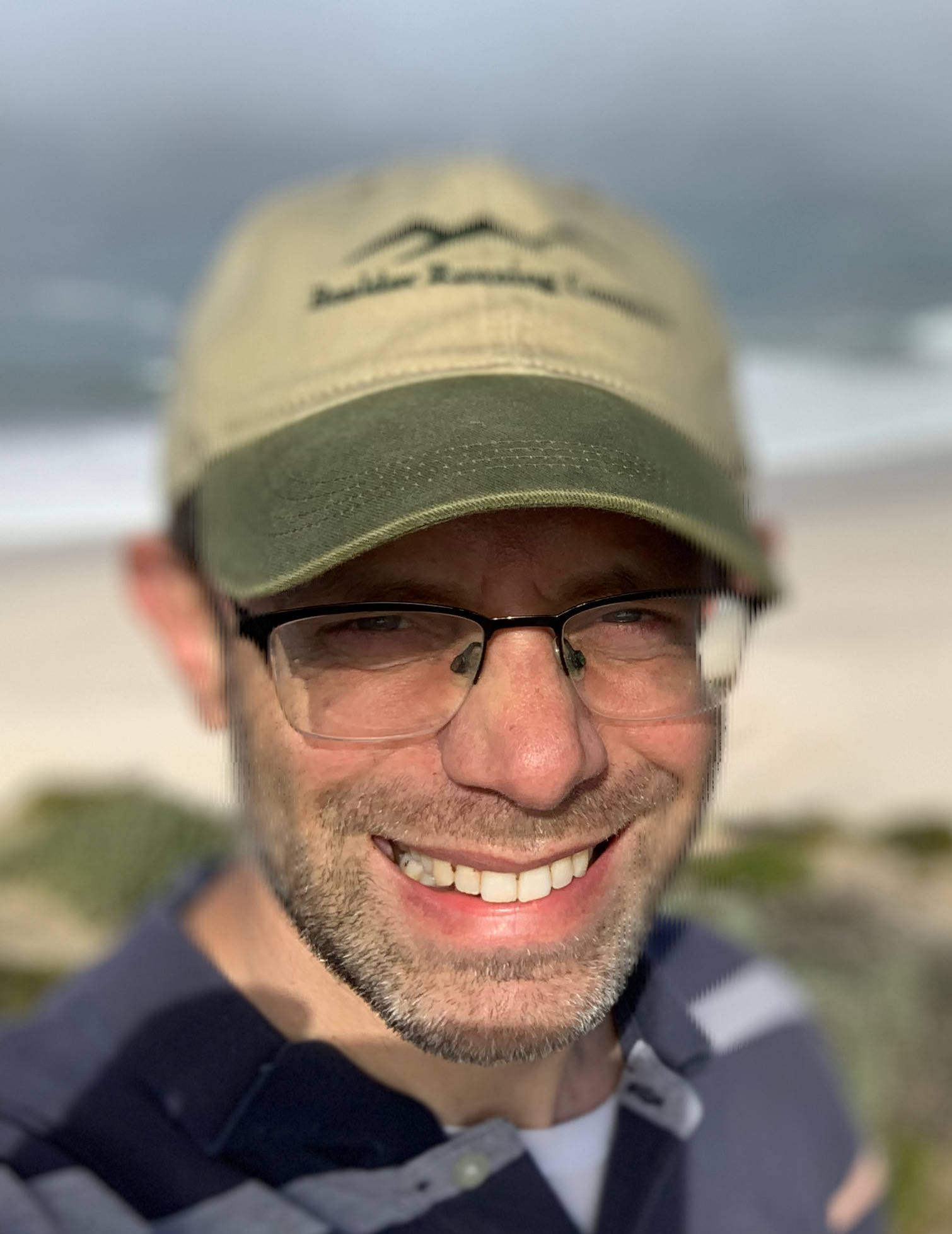
Ben Wiener is a venture capitalist and author. He founded and manages Jumpspeed Ventures, an early-stage venture capital fund, and he has authored two full-length novels, Murder at First Principles and the forthcoming Fever Pitch. His motivation for writing is to “enlighten and entertain.” In addition to his novels he has published a number of short stories and humor essays.

Ben grew up in Allentown, PA and graduated (with honors) from Columbia Law School. He clerked on Israel’s Supreme Court and practiced corporate law in New York City and Tel Aviv. He moved permanently to Israel with his young family and co-founded his first software startup in 1999. Ben worked for a variety of startups and larger companies before founding Jumpspeed Ventures in 2014.

SOCIAL LINKS

www.benwiener.net

https://www.linkedin.com/in/benwiener/

Twitter: @beninJLM

Getting The Drop-Dead Temple of Doom Off and Running by Heather Haven

For about fifteen minutes after I finished the 8th book of the Alvarez Family Murder Mysteries, I breathed a sigh of relief and took a break. Then I got back to work. First, I sent off the manuscript to my content editor, a master at letting a writer know what should be expanded, condensed, moved, clarified, or eliminated. That done, I conferred with the cover artist on the new cover. Then I conferred or rather listened to my publicists on marketing strategies i.e., the blurb, keywords, categories, stuff like that. Then began to implement them.

Once the cover and strategies were decided upon, and waiting for the return of the manuscript from the content editor, I went to Amazon Direct Publishing. I filled in the necessary information and uploaded what I could in order to get a URL for the new book. Once I had a URL, I set up the preorder and posted news of the new book wherever I could. Then I created and sent out my newsletter to my readers with all the information. I went online to Bowkers Identifier Services for new ISBN numbers. I registered the book with US Copywrite service. That took half a day, at least, but you gotta do all the legal stuff.

Within two weeks I received the manuscript back from the content editor and made 99% of the changes she suggested because, as I said, she is a master. When it was clean enough for jazz, I sent the manuscript out to my trusted, tried, and true Beta readers. They are just the best. They are terrific at telling me like it is, finding all kinds of typos, and making suggestions. After they gave me feedback, I sent the cleaner, corrected version –– a combo of content editor and Beta readers suggestions –– to the line editor. Meanwhile, I tweeted, blogged, and Facebooked. I had two months to let the world know (okay, not the world, just some of the people who know me in my small world) that The Drop-Dead Temple of Doom was coming out September 15th

I received the manuscript back from the line editor after about three weeks. She, too, is marvelous. Among the other things she found, did I know howler monkeys (and do not capitalize the name, she said) grow to be quite big? A grown howler monkey cannot sit on a man’s shoulder, as it does in my book, and have the man live to tell about it. Uh-oh! I neglected to put in it was an orphaned baby howler monkey. I set out to make the corrections she caught in the story, plus all the other things, like grammar, punctuation, and inaccuracies. I also collaborated with the woman who was writing the Afterword for the book. Once done with all that, the manuscript went off to the proofreader. He is married to and works with the line editor. They are quite a pair. He hasn’t sent the final version back yet, but I know when he gets done with it, it will be cleaner than I ever thought possible. And possibly as done as I’m ever going to get it.

The time came to set up a blog tour with Your Great Escapes Blog Tour. It goes from September 6th through the 19th. This means, of course, I will have to write character guest posts, Heather guest posts, answer interview questions, and convert the manuscript to MOBI, epub, and PDF files for bloggers and reviewers to read. Meanwhile, I continue to push the preorder button to as many reader as I can as often as I can without becoming totally obnoxious about it. And sometimes I walk a thin line.

I also created the print book cover, based on the cover the CA made for the eBook. Making the spine, back cover, not to mention (but I will) writing a shorter, more curt blurb for the back cover took me several days but it saved me 300 plus dollars. Doing a lot of these things myself saves money, but still getting the book out on the shelf, whether it’s a real shelf or an online one, usually costs a couple of thousand dollars. But when you are competing with the big boys, you gotta have a product that does just that.

September 15th is right around the corner and I’m not done yet. Busy, busy, busy. But right now you’ll have to excuse me. I need to take a nap.

Pandemic Dilemma

Last year about this time I began work on a new novel, making random notes on the main character, the obstacles thrown in her path, snatches of dialogue that came to me while I was out walking, and minor characters who might be interesting. This stage of the process is fun and always interesting. But there was one aspect that I couldn’t decide about. 

We were in the middle of the pandemic. Should I include that fact as part of contemporary life, or write as though there was no pandemic, no masking, no social distancing, no crowding in hospitals, and no arguments over masks. I couldn’t make a decision. If I mentioned the pandemic and all that it entails, would the restrictions of the pandemic play a role in the mystery, or could it remain in the background? (A ludicrous idea, all things considered.) If I didn’t mention it, I’d have to be clear the novel wasn’t set in 2020 or 2021—or even 2022. I waffled for weeks. At last, I went on FB and posed the question there. Should I or shouldn’t I mention the virus? The responses ranged along with the passions of the commentator.

Some writers suggested mentioning some aspects that wouldn’t interfere with the plot. This is honest and pragmatic, but as I watched the pandemic evolve, I wondered how long it would be possible to curate features of the pandemic. Others made a case for maintaining realism, depicting life and circumstances as they are and how they affect individuals in crisis, which is an honest take on a difficult problem, and probably harder to execute in practice than express in theory. And then there were the writers who were adamantly opposed to any mention of Covid-19, mainly because it would date the story and limit its appeal. I’m not sure if I agree with this or not. When I pick up a mystery, I generally know when it was published, and if not I check the date. Unless the writer is clear about the time period being different from the present, I assume the story is contemporaneous with the writer. So, yes, mentioning the pandemic would definitely date the story to a specific period, which we think is going to be a limited period. 

Every story is dated in some way. Cell phones, automobiles, DVDs, 45s stacked on a record player, or Polo coats, pedal pushers (not cropped pants), and jeans with the hems rolled up tell us where we are in time. 

In the end I still had to make a choice. We writers face choices every day even though we may not think of our work that way. We can’t get from one sentence to the next without choosing a series of words to carry a particular idea, which could change in the middle of the predicate. Still, my new novel was taking shape, and I had to decide if that shape would include masks and talk about Covid-19. Would I use the details of this disease and its spread, the restrictions on gatherings and the dangers of the illness, to move the mystery along, or would it stay in the background? Could it remain in the background? That became the key question. 

The issue boiled down to what I wanted to write about. If I included the pandemic and all its attendant issues, I had to make significant changes to the mystery, and in the end I didn’t want to do that. I decided to omit any mention of the pandemic, and I did so believing that this health crisis would pass and life would return to normal. I’m not sure I believe that anymore, but the decision was made and the novel written. It’s now in the hands of my agent. 

But now I’m starting another one, and the question is once again before me. And I still don’t know the answer. But once again, I’m probably not going to include any mention of the pandemic. If you have decided differently, I’d like to hear about your experience.

The Oxen are Slow, but the Earth is Patient*

As I read about the surrender of the Afghani troops, the rush to Kabul, and the evacuation, I can’t help but compare it to the Fall of Saigon in 1975, the subject of Pay Back, the third book in The Cooper Quartet. The parallels between the two events are too keen. The U.S. pulling out of a lost war, one fought for 18 years the other 20, money spent on arming our allies, training their pilots, and building an air force, only to see both crumble in days. In Pay Back, the Cooper family is entangled in the Fall of Saigon, each driven by the need to make recompense for their pasts. Their story begins in 1967 in Dead Legend, as the Vietnam War tears the U.S. apart; the second book, Head First, unfolds in 1972 during the Christmas bombings as the U.S. prepares to pull out our troops. The eBook of Head First will be available for $.99 on Amazon, September 9 – 12.

After the pullout in 1972, the U.S. Embassy remained open and protected by Marines. The U.S. continued to support the South Vietnamese Army and Air Force, with both advisors and weapons. In addition to the Embassy Staff and Marine units, the usual alphabet soup remained in-country (the CIA, et cetera, et cetera), plus U.S. contractors, their families, and reporters. As did the Vietnamese scouts who spent the war embedded in various units of the U.S. military, the Vietnamese who worked for the U.S. forces, and the Amerasian children of U.S. soldiers. All but the children were promised a quick exit should the North Vietnamese take the South.

When the South Vietnamese Army folded at Pleiku in late April 1975, the rush to get out was on, refugees poured into Saigon, clotting the airport at Tan San Nhut and the city. They weren’t alone. The armed troops from the South Vietnamese army rushed in with them. Masses waited outside the U.S. Embassy, at the airbase in Tan San Nhut, or floated the Saigon River on a rumor that merchant ships were waiting in the coastal city of Vung Tau. The Cooper family is caught in this mêlée, whether in the U.S. watching it on television, in Saigon, or with the Seventh Fleet. I hope I did the tumult justice.

On April 29, with 15 North Vietnamese divisions ringing Saigon, the U.S. Ambassador ordered the evacuation. The U.S. Navy’s Seventh Fleet pumped chopper after chopper into Saigon from the South China Sea. By the last flight out April 30, over 6,000 people had been evacuated, overpopulating the waiting aircraft carriers and destroyers. A few flights got off from Tan San Nhut before it was shelled. And though, Vung Tau was attacked, and fuel depots burned, some people made it down river and out by ship or fishing boat. By any standards, the exit was messy, and many were left behind.

In my research for Pay Back, international reporters in Saigon wrote of an abiding insouciance among the population which had survived the French, the Japanese, the French, and the U.S. – an enduring patience that someday the country would be theirs. It’s been nearly fifty years since the Fall. The Domino Theory’s dire predictions proved false. Perhaps because of Vietnam’s long history of colonialism, invasion, reunification, a country emerged, not easily, not without bloodshed, but not our way, or the French’s, or anyone else’s. And perhaps Afghanistan will as well, given the similar history of the two countries. One thing is certain, there will be repercussions and blame enough to go around.

Don’t Tell, the final book of The Cooper Quartet, deals with the aftermath and repercussions of the Fall of Saigon for the Cooper family. It will be published on November 11th; the date seems apropos.  

*I stole the title for this blog from a line in the movie High Road to China.

My New Book and What Erle Stanley Gardner Has to Do With It

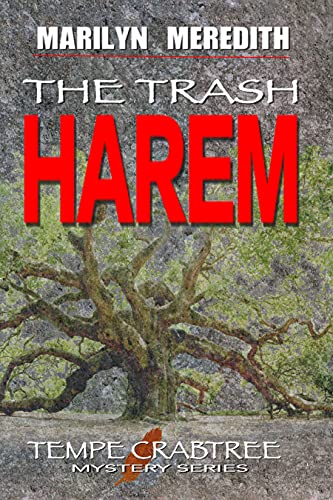
Though I thought I was done with my Deputy Tempe Crabtree series, but after a visit to my daughter’s home in a gated community for seniors, another idea popped into my head and I wrote The Trash Harem.

It wasn’t easy. The fact that I couldn’t meet with my critique group due to the pandemic really hurt. Receiving their feed-back chapter by chapter has always helped so much and I’m considered them my first editor.

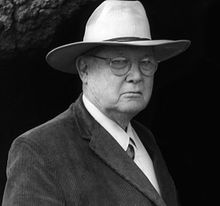
Erle Stanley Gardner

However, the ideas kept flowing, and because the story is set in Temecula, a place I’ve visited often, a thought popped into my head about a most famous writer, Erle Stanley Gardner. He lived and wrote most of his books while living in Temecula. I knew a lot about Gardner, not only from reading some of his Perry Mason books, but visiting the Temecula Valley Museum where the whole second floor is dedicated to the writer.

Not only is his writing desk available to be viewed, items from his office and other artifacts but also a multitude of photos of his ranch. Gardner’s ranch had twenty seven buildings including separate cabins for his full time secretaries. He loved camping in Baja California; he took his secretaries because he wrote even while on vacation, his doctor, and many others with him in a caravan of different kinds and types of camping vehicles. After his death, the ranch was sold, and resold to the Pechanga Indians.

I had the privilege of meeting three of his four secretaries who appeared at the Temecula museum for a celebration of Gardner. As they told those of us who had gathered, Gardner worked on four books at a time, he spoke them into a Dictaphone and were transcribed by his secretaries. When I met the secretaries who were in their eighties, they were all still lovely, bright women.

And yes, I did figure out a way for Erle Stanley Gardner to be an important part of The Trash Harem.

Marilyn

Official Blurb:

Deputy Tempe Crabtree has retired from her job in Bear Creek when friends, who once lived in Bear Creek and attended Pastor Hutch’s church, ask her to visit them in Temecula. The husband, Jonathan, is a suspect in what might be a murder case. The retirement community includes many interesting characters, any of whom might have had a better motive than Jonathan. There is also a connection to Earle Stanley Gardner as well as the Pechanga Old Oak. What is a trash harem? You’ll have to read the book to find out.

To purchase The Trash Harem https://www.amazon.com/Trash-Harem-Tempe-Crabtree-Mysteries-ebook/dp/B096KZDPH8/

Marilyn Meredith’s Bio:

She is the author of over 40 published books including the Deputy Tempe Crabtree mystery series, and writing as F. M. Meredith, the Rocky Bluff P.D. series. She’s a member of two chapters of Sisters in Crime and the Public Safety Writers Association.

Webpage: http://fictionforyou.com/

Blog: https://marilynmeredith.blogspot.com

Facebook: https://www.facebook.com/marilyn.meredith