Just Checking – Grammar Checkers

I am a famous comma masher. Once I’m in the groove, I tend to put commas where my head stops and let my gerunds run wild like mustangs on the plains, resulting in images like one my mother once blurted out: I saw an eagle driving down the road. I teased her mercilessly for years, not anymore. My challenge is ensuring commas are where they need to be and not where they’re not. So, I use Microsoft Editor and/or Grammarly to keep me on the straight and narrow (or arrow, as a friend believed, an image unto itself).

For fun, I ran two draft paragraphs through Grammarly and Microsoft Editor. One thing is clear; they rely on different stylebooks with commas and semi-colons coming and going between them.

ME vs. GRAMMAR CHECKERS – The apps’ suggestions are in parenthesis after my text; Grammarly (G), Editor(E),both(GE).

“You,” Cora called, “Despite the signs set out earlier, our water is for the boarders (borders GE) here. It is not public. And we have sick in this house (, G) so I cannot attest to the water’s cleanliness.”

One man backed; the others stood their ground. “Can’t be both, (; G) either its good water for your boarders (borders G) or it’s bad,” one of the two said.

And another . . .

A skinny body in faded tweed pants ran up the street (, G) calling her name. Cora waited until Tommy Newsom reached her, flushed from his run, his plain face sweating under a ragged straw hat, dust (, E) and dirt billowing behind him.

“Miss Countryman, please,” he pulled on the sleeve of her dress. “Please, I just come from the undertaker’s, ma’am. Two men brung (brought GE) Mr. Kanady in there, (; G) now he’s layin’ all white like the rest of them (the GE) dead bodies. He don’t (doesn’t GE) belong in (delete in, G) there, not with them. He’d rise if he could. No matter if’n he was dead or not.”

COMMENTS and OBSERVATIONS

My observation is that in its drive to be the go-to grammar app for business, Grammarly has become a swampy bog for storytellers. I miss the early versions of Grammarly when you could check grammar, spelling, or punctuation one at a time. Not anymore, now it gloms onto your file and drills through your text relentlessly totaling up the error count while reconstructing sentences, seeking improvements such as the house’s door instead of the door to the house. There is, in my head, a place for both. But then, it is my head, which may or may not be a safe or sane place.

It used to be easy to add a word to Grammarly’s dictionary. It isn’t now or I just can’t figure it out.. So, Grammarly endlessly corrects perfectly correct words (boarders) and colloquialisms every blooming time they appear. Unlike Microsoft Editor which learns boarders is a word after the first correction, much appreciated since one of my main characters runs a boarding house with boarders.

And, charmingly, Grammarly offers irrelevant word options such as president, chairperson, or head as an alternative for a chair (he sat on the president) to freshen up your text. Or, as it did two paragraphs above, suggests the text read: the house’s door instead of the entrance to the house. Microsoft Editor does no such thing. But is Editor as good as Grammarly at catching what needs caught? Know this — Editor is not as intrusive or overwhelming. Grammarly will happily inform you that you have 2,400 errors in 80,000-words when most are repetitive or irrelevant, as above. My immediate response is the desire to slit my wrists followed by the resolve to drill down through the text — days— to find the nuggets which, in all fairness, are there.

GRAMMARLY or EDITOR

I leave it up to you to decide which is best or whether you even want to bother with either. As for me, I reckon until the next best thing comes along, a quick run through Editor or a slog through Grammarly is better than ending up with an eagle driving down the road.


Switching Horses Mid-Stream by Karen Shughart

The process of writing a novel takes a long time. First, there’s coming up with the idea for the plot, but from creation to completion there are lots of other steps along the way. Some authors set strict parameters, develop an outline, keep a set of note cards and pretty much stick to the plan. When I write, my mind never shuts off while I envision multiple possibilities. At times it drives me and my loved ones crazy, but as a result, I am able to shape what I hope will be a better story.  

I thought I’d be finished by now with writing book three in the Edmund DeCleryk Cozy mysteries series, Murder at Freedom Hill. It’s taking longer than expected because I’ve switched horses mid-stream. There’s a murder, for sure, but I’ve added a subplot that’s loosely related to that crime.

Photo by Karen Shughart

As with the other two books in the series, I created a backstory based on the history in the village where I live. For book one it was post-Revolutionary War; book two, The War of 1812; and for book three, it’s the abolitionist movement and Underground Railroad. Thus, the reason for the title of this blog – the phrase was conceived by Abraham Lincoln in a speech he gave in 1864 to members of the National Union League.  It fit.

But I digress. As the result of adding a subplot, I made other changes, too. In book one, a manuscript dated 1745 provides clues to why the victim was killed, in book two it was a series of letters written between 1814 and 1817 by the wife of a soldier. In this book I had first planned to insert newspaper clippings from the mid-1850s that were discovered at the local library. Just this past week I turned those into excerpts from a research project the victim was working on. As I thought about it, it just made more sense to do it that way because I changed the secondary plot from one that was probably a bit too political for a Cozy mystery to one that’s not.

Politics in Cozies, while permitted, aren’t necessarily encouraged, and I understand why.  When people read the genre, they want to be entertained, and they want to escape. Characters in Cozies are part of a tightly knit community, and the evil that lurks is usually not something you’d read about in the news today.  We get enough of that  every time we turn on our TVs, computers and our phones, and read newspapers and magazines.

For weeks I was losing sleep over this book trying to figure out what it was about it caused discomfort. Once I figured it out, I started rewriting, and I’m sleeping better now.  Yes, the process of writing takes a long time, but to paraphrase another sentence from a speech Abe Lincoln gave, this time on July 4, 1861, “Let us renew our trust… and go forward without fear.” Just so you know, July 4 is also part of the plot.

Unplanned Adventures

Most of my favorite experiences in life have been unplanned adventures. There’s nothing I appreciate more than a good surprise, and they make great fodder for writing, too. Here’s one of my favorite unplanned adventures that I will never forget.

When I was a teenager in Oklahoma, I had a horse, and so did many of my friends. I’d worked hard and saved all my money for years and carefully planned on how I would buy and board my horse in a nearby pasture, and as a teenager, I finally accomplished my dream to have a horse. My mother always thought riding was a reckless activity, and she told me that if I hurt myself, I couldn’t complain to her.

One day I was a guest at another girl’s horse farm, and we decided to go on a trail ride. I was given a big white gelding to ride, and we set off, with me in third place behind my two friends. Near the beginning of the trail, our horses needed to jump a log that lay across the path. It wasn’t more than a foot thick, so no problem. But after my horse leapt over it, he started acting wild, wanting to get off the trail, and as I held him back, he reared. “Hey,” I yelped at the owner, “What’s wrong with this horse?”

When she glanced back, she said in a casual tone, “Oh. I forgot. That’s the beginning of the jump course, and he’s trained to finish every time he starts. So please, just let him go and ride him around the course.”

This is definitely NOT me

Uh. Two problems with that. 1) I’d never ridden a jumper, and 2) I was riding in a western saddle, which is definitely not designed for leaning forward against the horse’s neck, which is needed on jumps, especially high ones. But I figured, what the heck, this horse clearly knows what to do.

And he definitely did. He cantered into an arena that was close by, and we soared over the first few relatively small jumps. I was only hanging on; the horse was the expert. Then we approached the final pole jump, which was about five feet tall, my own height. Yikes. I will always remember thinking that it would be a miracle if I ended up in the saddle on the other side. The horse rose up beneath me, launching himself in a nearly vertical position, and I did my best to lean forward over the saddle horn. Then he came down on the other side in just as vertical a position, but forelegs first, of course, and I tried to sit back.

When we first touched down, I whacked my little finger on the saddle horn, and I’m pretty sure I broke it. But I remained in my saddle, and the pain was nothing compared to the thrill of riding that horse. After the ride, the owner showed me a whole gallery of photos of that horse in action; he was a champion jumper. I splinted my little finger at home and said nothing to my mom. But I smiled for days.

Now, when the weather is damp, my little finger is often very stiff, but that reminds me of the day I accidentally rode a champion jumping horse.

Gumshoeing

Last month, I wrote about the tools of the trade that I use to create my fiction. That got me thinking. What tools do my fictional characters use?

When I was writing Kindred Crimes, the first in my series featuring Oakland private eye Jeri Howard, I wasn’t using a cell phone, and neither was Jeri. I was using a computer, a clunky dual disk drive model, and I thought it was a major step up from the electric typewriter.

Jeri and I have made our way into the 21st century. She uses her cell phone for everything from directions to looking up information, and for talking with people, of course. As for computers, like many real-life private investigators, she uses them for research. In addition to news archives, there are many paid databases that one can access by purchasing a subscription. Jeri also uses government records that are available online.

For example, in the book I’m writing now, The Things We Keep, Jeri goes onto the California Department of Justice website to check the missing persons database. I did this myself, so I could describe it accurately. And it certainly gives flavor to the narrative.

But it isn’t all Jeri at the keyboard, looking at the screen, or Jeri on the phone, interviewing someone. That would be boring for the reader and the writer. At one point in Water Signs, Jeri says:

I could just as easily interview Rachel Leverson over the phone, but whenever possible, I prefer to do so in person. That allows me to gauge reactions, facial expressions and body language. It also gets me out of the office.

Interviewing people face-to-face gives Jeri more information than pixels on a screen. In the world of my fictional private eye, there’s no substitute for shoe leather. But it really does help that Jeri can make a call without looking for a phone booth.

Kay Dexter is the protagonist of my novel The Sacrificial Daughter. She is a geriatric care manager and has access to all the tools that software and the Internet can provide. Her clients are mostly elderly people and their families.

Once again, there is no substitute for face-to-face contact. A client might be minimizing problems or feelings and Kay might not pick up on that over the phone, but she can usually read people when she’s with them. As for those online tools, there’s a scene in the book when Kay is doing research in the library at the local historical museum. She’s looking at files and photocopies, because not all the information the museum has is digitized. Those online records frequently go back only so far.

Kay uses her powers of observation as well. Some valuable items have gone missing from a client’s home. While doing an errand for another client, she visits a local antique mall:

I turned and glanced at the glass display case on the booth’s back wall. What was that? I moved closer to the case. On the top shelf, I saw a sterling silver sugar and creamer. They looked exactly like the ones I’d seen in the china cabinet at Betty’s house, right down to the floral detail on the handles.

I also write a series of historical mysteries set in the early 1950s, featuring Zephyrette Jill McLeod. Computers? Not happening there. For Jill to solve mysteries onboard the train, and off, it’s strictly person-to-person sleuthing. Jill’s job, when she’s aboard the California Zephyr, is to observe the passengers and help with their needs. Jill notices things and she files them away in her mind, ready to access the information. Along with her ability to talk with people and tease out information, these are her biggest assets as a detective.

And that’s gumshoeing, on the ever-changing streets of the Bay Area where Jeri sleuths, to the fictional mountain town where Kay oversees clients, to Jill’s shiny train as it streaks across the west.

So You Wanna Write Funny? by Heather Haven

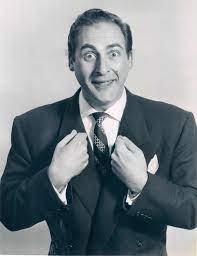
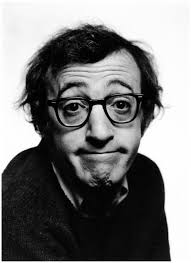
In my far-off youth and for as long as I can remember, lurked inside me the heart of a comedy writer. I wanted nothing more than to be writing funny quips for people, like Woody Allen did for Sid Caesar on Your Show of Shows, back in the fifties. I wasn’t around then, but I’ve seen most of the kinescopes interviews with Allen and Caesar and was mesmerized. Just to make it clear, I wasn’t nearly as impressed by Allen’s foré into his own comedy shows, record albums, movies and even less impressed with his romantic encounters. What got me where I lived was him writing words for performers that made an audience laugh. I couldn’t imagine a greater existence.

One of my very first jobs as a writer in New York City was for No Soap Radio. As the name implies, we wrote funny ads and commercials for radio, had a ball and got paid a weekly salary! Does it get any better than that? Of course, the weekly stipend was so little I often had to decide if I would pay my rent or the phone bill, but by golly, I was a comedy writer. It was a short-lived chapter of my life, maybe a little more than a year, but the things I learned from that group of comedy writers have held fast for the rest of my writing life.

The art of comedy is serious business and you’d better know your business. You’d better know timing, delivery, and what the funny words are. By funny words – and most people don’t think about this – these are words that automatically cause people to smile or chortle. For instance:

Orange? Not so funny. Kumquat. Funny.

Move? Not so funny. Jiggle. Funnier.

Glasses? Not so funny. Spectacles. Funny. Or maybe more funny. Testicles? Whoa. Never mind. But in comedy, expect the unexpected. It often gets a laugh.

But back to words, if you don’t have the words in the right order, with the right rhythm and cadence, it’s probably not going to work. I’ve known comics to work on a one-line joke for weeks until they get it right.

Speaking of comics, have you noticed they often talk in violent or military terms? “I slaughtered ‘em last night” “Man, that audience was murder” “Go out and kill ‘em, pal,” phrases like that. There’s a reason for it. If you don’t get that laugh, you might as well be dead. Comics are very serious about their laughs.

Same with authors who write a funny mystery series. That corpse better be laughing when he hits the ground. Otherwise, I don’t sleep so good at night.