This has been something I’ve done all my life. When I start something, I have to finish, whether it’s a chore, a volunteer job, writing a book, or anything that comes up in life.
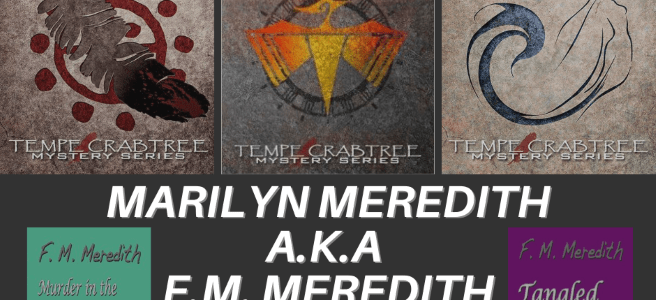
Yes, I’m old, so there has been a lot to finish along the way. Right now I have 20 books in the Deputy Tempe Crabtree mystery series in print and available for Kindle, 16 books in the Rocky Bluff P.D. series in print and on Kindle, 8 stand-alones, 2 short stories and one cookbook (which is always my best seller).
I’m working on a new as yet-unnamed Rocky Bluff P.D. and have had a lot of other things I’ve had to do, so it’s slow going.
However, my biggest accomplishment, one that isn’t finished yet, is the fact that my husband and I reached 70 years of marriage on October 24th. Believe me, it hasn’t been easy. We didn’t really know each other well, were just kids (18-21), came from two different coasts and very different families and cultures. Because hubby was a career Seabee, he was gone a lot during the time we had young children (five in all), not ideal. When he retired, life became better for all of us. Both of us worked various jobs. I went to college to get my AA Degree in Child Development.
When the kids were all grown and all on their own, but one, we moved from our near the beach home to the foothills of the Sierra and became the owners and operators of a residential care facility for six women with developmental disabilities. This was a great time for both of us, though lots of work, we loved it.
And yes, I wrote, published and promoted during this time. I also wrote articles for the local newspaper for several years. I did many other jobs related to the residential care business, teaching classes, publishing a newsletter for other providers, and putting together an organization for providers.
We also enjoyed many mystery conferences all over the country, saw interesting sites, made many wonderful writer and reader friends. We did other fun things, gave lots of parties, went on cruises, and traveled to meet with writing groups.
All that is behind us now, but they were good years.
We have a big family we love and enjoy and those who are close by give us much pleasure, and needed support in what is called our “golden years.”
And yes, if I start a project or job of any kind, you can be sure I’ll stick to it until I’m finished.
I’ve been thinking about how I and other writers use the natural world in my stories. It’s a cliche to use a storm to reflect the turmoil within, sunny weather to underscore the openheartedness of a certain character, a snowstorm to emphasize the challenges that someone faces. To give readers a sense of the season, I might talk about the unexpected rain that thwarts a character’s effort to sneak into a home without leaving a trace, or the noisy dry leaves underfoot that give her away as she tries to sneak up to an open window. I’ve been thinking recently about how the literary use of fiction differs from the natural world as I encounter it daily.
My experience of the natural world consists of squirrels eating the pumpkins decoratively arranged on my front porch. And then there are the half-eaten early apples left by the rabbits. The raccoons have moved out of the garage because there’s a hole in the roof that lets in too much light. The skunks moved out ages ago because of the neighbor’s dog always barking at them. The mice have learned to stay out of the kitchen because we have a dog is too interested in them. That said, I have nothing against mice.
In this area, residents who live along the water, in lovely homes with terraces facing the sea, time their evening dog walks to avoid the coyote who has moved in recently. I spotted him trotting down the middle of the street when I was driving home late one night from an event. The wild turkeys seem to have moved on, which is fine with me. During the spring mating season the toms are aggressive. During the summer the birds stop traffic, attack any car that honks at them, and befoul yards and damage feeders. The toads in the garden are welcome but the aphids are not. The worms are also welcome, but I haven’t seen a garter snake in years. I’m very fond of bees, but they’re scarce now, as are the monarch butterflies.
As writers we get to pick and choose the details we want to work with. If a man is trying to elude a car following him, he might speed up and then skid on wet leaves, which are as dangerous as snow and ice in some parts of the country. An old woman with dementia wants to hide her wealth from a designing nephew and buries it in the garden. We can see the plot twist coming–she never tells anyone and forgets where it is. But what about the squirrels that will dig up and eat anything? Now the squirrel is relevant.
The features of nature that are so prominent in ordinary life have no value if they don’t advance the story. Describing the mice that sneak around the kitchen at night might make the story feel grounded in real life but unless at least one mouse does something to help the story along, he’s clutter. The art of fiction is in transforming the mundane into something that matters, the string of a tea bag twisted around the bag and spoon to squeeze out every drop by a woman who resents her co-workers. The coyote no one has seen except one neighbor, who insists it’s out there, roaming the neighborhood after midnight. I want to know more about these two, that woman and that man.
The ordinary matters only when I as a writer make it matter. As I scratch out sentences and then tap them into the computer, I use what I see or recall to set the stage for a new story, and then I try to twist it into a compelling, haunting moment. Nature is neutral until it takes sides, helping one character or hurting another. One of my goals this year is to use more of the natural world that I experience and avoid cliches.
It’s nearly Halloween. My neighbors have pumpkins and ghosts and emerging skeleton hands in their front yards. And the minds of most authors turn to all things creepy. As usual, I’m busy killing off imaginary victims in my new manuscript, and feeling a bit conflicted about that. But I have found that real life can be even more creepy than the scenarios that plague my imagination. I am updating this old post to describe the events that still haunt me.
Yesterday as I was doing the weekly shopping for my cats at their favorite pet food store, I couldn’t help noticing the older man perched on a bench outside the door. His hand was clutched around a paper coffee cup and he rocked back and forth, muttering, “The witching hour is coming…the witching hour is coming!”
I examined him out of the corner of my eye, like we all do with many of the homeless. He didn’t look like he lived on the streets. His clothes were clean and appropriate for the cool, wet weather; his hair and beard were neatly trimmed. I wondered if he was inspired by the idea of Halloween approaching, or if he felt he needed to sound the warning about the witching hour on a daily basis. The idea clearly haunted him.
I think most adults are haunted by something. That something might very well be the ghost of a deceased or missing person, but it can also be an old grievance, a regret, or even a horrible event that happened to perfect strangers. And I believe writers are the most haunted of all. Some of us write to exorcise those demons; others write in an attempt to silence them.
Real-life tragedies caused by malevolent people haunt me the most. I’ve written about kidnapped children, public furor gone awry due to media coverage, racist militia groups, and the ways in which innocent animals are trapped by human schemes. Most of these things I’ve learned about from media coverage, and although they happened to people I never met, they still haunt me.
Many people use the word “inspiration” to mean motivation that comes from a positive influence, but much of the inspiration that writers use comes from negative sources.
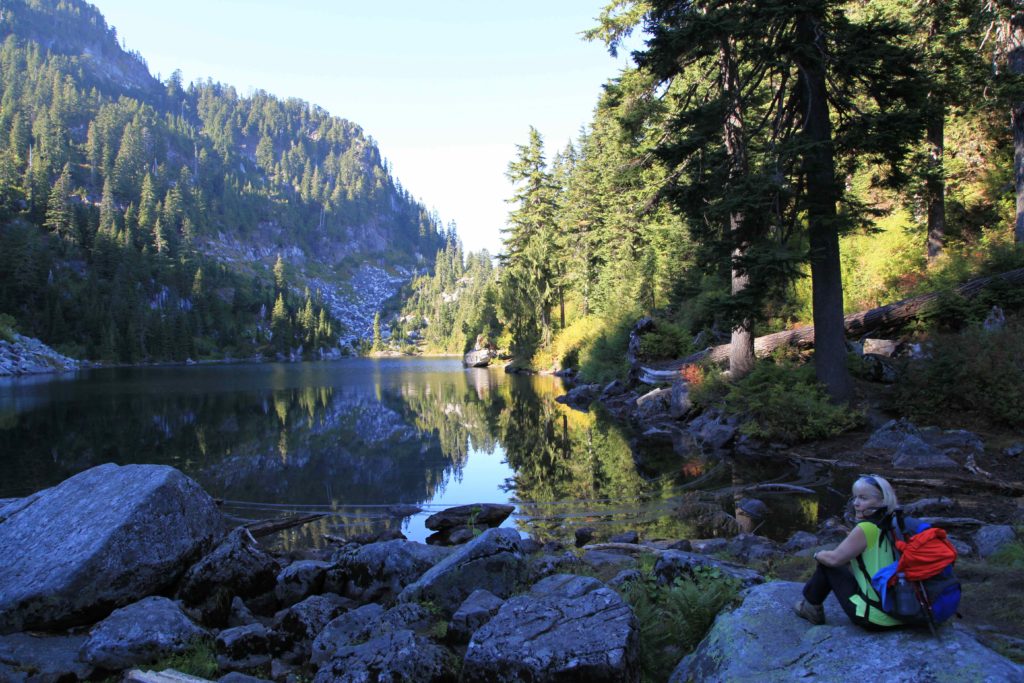
My friends know that I am an avid hiker. I spend a lot of time on the trails in the mountains and forests of the North Cascades. These are normally the places where I am most happy. So it was especially haunting to me to learn about the murders of nature lovers Susanna Stodden and her mother Mary Cooper in 2006 on a hiking trail, and then, two years later, the killing of another hiker, Pamela Almli, by a negligent 14-year-old hunter.
Author Pamela Beason at Pinnacle Lake, where Susanna Stodden and Mary Cooper were murdered
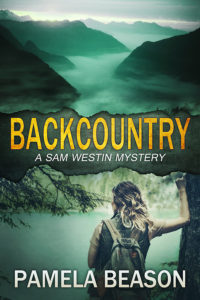
Many years have passed, but I think about all three of these women whenever I am hiking my beloved trails. Years ago, I wrote a novel that includes a combination of these two horrific events, in addition to another subject that is close to my heart, taking teens into the wilderness to teach them how to live without electronic devices. I fictionalized all this, of course, to produce my fourth Summer “Sam” Westin mystery, Backcountry, in which Sam steps in as a replacement for her murdered friend to lead a group of troubled teens in a wilderness therapy program.
Writing and publishing Backcountry did not truly exorcise the demons that haunt me, because nothing has changed since these two cases occurred. The killer of Susanna and Mary is still unidentified, and it’s still legal in Washington State for 14-year-olds to hunt with only other teens for companions.
But I like to think that Susanna and Mary and Pamela would be pleased that I’m trying to tell their stories and keep their memories alive. And if their ghosts come to visit me at “the witching hour” on Halloween, I’ll be happy to spend time with them, because I know we are all kindred spirits.
If you drive around our area in October, you will notice the leaves on the trees have begun to turn, colorful red, orange, and yellow instead of multiple shades of green. The air smells of sweet decay, new mown grass, and when the waves crash against the beach, a clean, verdant aroma wafts through the air, a bit like the ocean but without the brine.
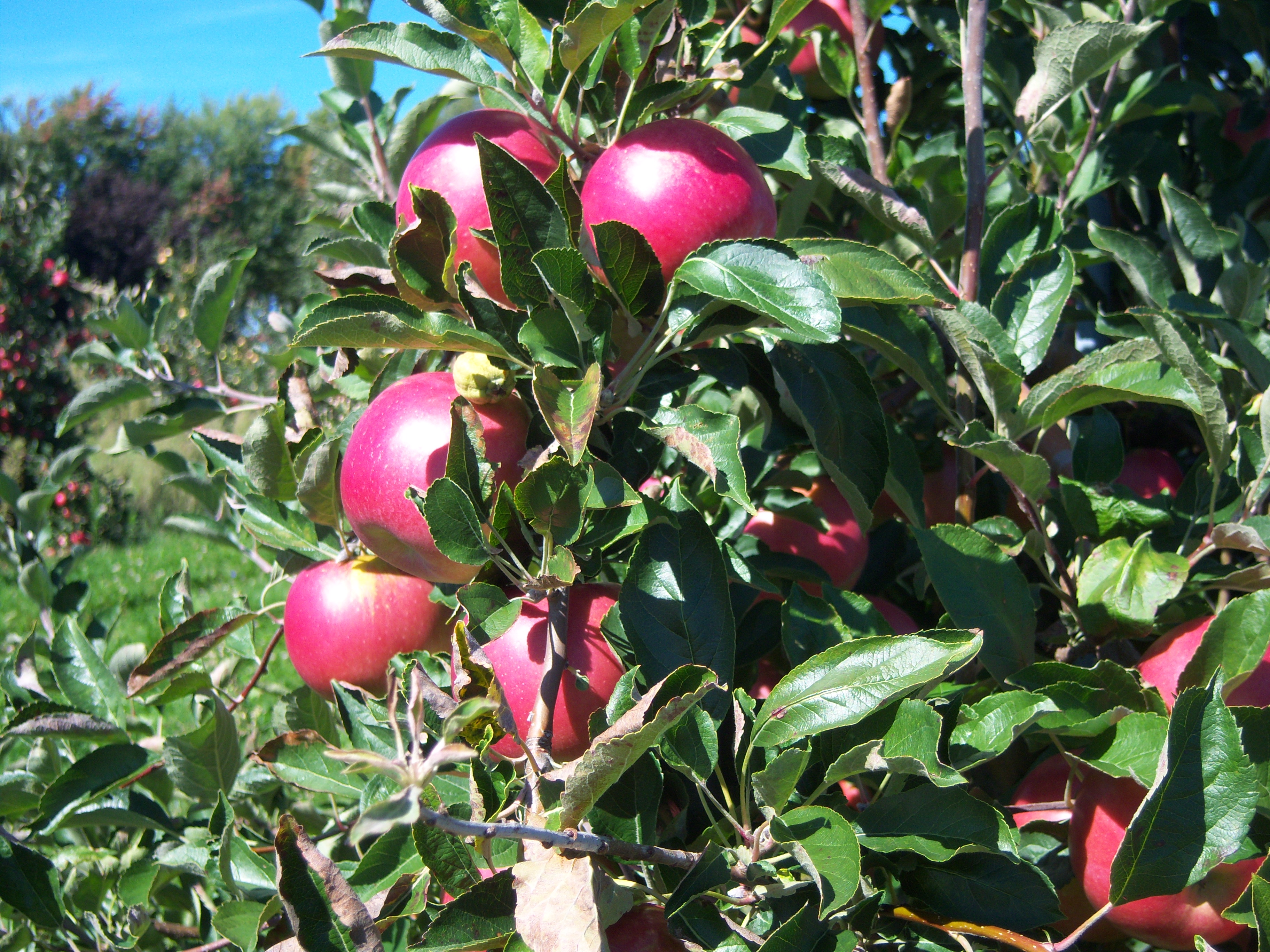
You’ll notice farm markets, large pots of colorful mums clustered together at the edges of the parking lots, filled with a bounty of vegetables: squashes, pumpkins, eggplant, green beans, and apples, lots of apples.
New York is one of the largest apple-growing regions in the country, second only to Washington state. On the south shore of Lake Ontario, where we live, you’ll see acre upon acre of lush orchards, laden with the heavy, ripe fruit. What might surprise you, if you don’t know much about apples, is that not only do they come in different sizes and colors, but there are also hundreds of varieties, old favorites and those recently developed. Each year brings more choices; there’s an almost infinite selection.
Photo by Karen Shughart
Apple harvest here, in the north, is a reason to celebrate. One of our friends spent his earlier years as an MD but has become an apple farmer in retirement (the story of his journey to this point is a long and interesting one), with 100 acres of the sweet and savory fruit. Now he can be seen-cowboy hat, jeans, and boots, shirt sleeves rolled up to the elbows-cheerfully working alongside his seasonal employees to pick the crop before the frost creeps in.
We love going to his farm, when on a late afternoon, with a variety of cardboard boxes and tote bags in hand, we stroll through the stands of trees, lined up in rows in military precision. We carefully choose apples that will last in cold storage in our garage throughout the winter: baked into breads, pies, and cakes, eaten with sharp cheese, or sliced into a salad.
After, we’re likely to cluster around a large island in his farmhouse kitchen, drinking glasses of wine and eating charcuterie boards piled high with cheeses, sausages, artisanal breads, and apples, yes, apples. When the skies are clear and the air is cool, he’ll host an evening barbecue for friends in his meadow at the edge of the orchard; a huge bonfire burning with apple wood. Then, we gather, to laugh, share stories and eat a meal of locally sourced food. One year a white bedsheet affixed to the side of his barn served as a screen for an outdoor movie while we munched on apple fritters and popcorn cooked over that fire.
I love October for many reasons: the cool nights and bright warm days; the quiet and calmness now that summer residents and visitors are gone; the bright colors, and the earthy pungency of burning leaves that fills the air. But mostly because it’s apple harvest time, a time for convening with friends and sharing the bounty of the season.
In my mind, it’s never too early to break out the holly and tune up the carols. I’m a Christmas junkie. I cry when I pack away the decorations each year and count down the days when I can put them up again. I’ve toyed with the idea of leaving them up year-round. That would save me the bother of hauling them out of storage each year and unpacking.
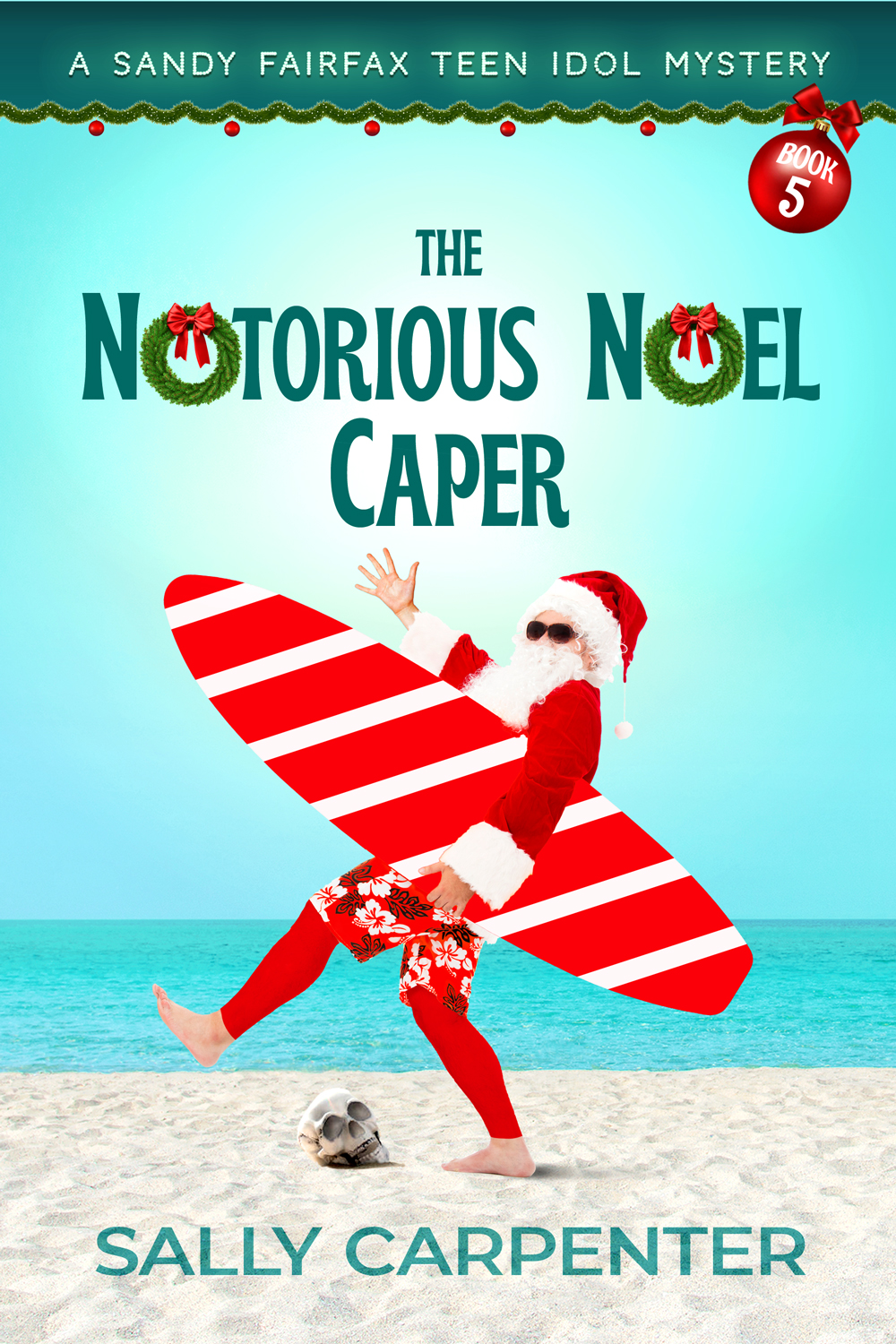
Readers of cozy mysteries love Christmas. I’m not sure why, but there’s something about the holiday season that brings out the larceny. Maybe it’s the juxtaposing of a cheery time of goodwill against murder, or the thought of strangling that annoying neighbor with a strand of colored lights. Most cozy series have at least one Christmas-themed mystery. I finally wrote my contribution to the genre: The Notorious Noel Caper.
As you can tell by the title, it’s part of my Sandy Fairfax Teen Idol series—book five, in fact. I’m astounded that I’ve made it this far in my writing. I have two cozies in my other series—the Psychedelic Spy—for a total of seven books. Many authors have a greater backlist, but I’ll celebrate my output. My first novel was published ten years ago (2011), so that’s almost one book a year. Not bad for a part-time author holding down a day job. Also, many writers stop after one or two books, so I’m thrilled with my longevity.
My Christmas mystery has a twist—it’s set in Southern California, where snow is something you won’t see unless you watch a Hallmark movie or drive (with chains on the tires) up the mountains to the ski resorts. In SoCal, Christmas means sand at the beach, and “cold” weather is 55 degrees. You wouldn’t believe the number of people who have commented about the thick, quilted coat I brought with me when I moved from the Midwest. A “winter coat” here is really a hoodie zipped up.
My book is the only Christmas cozy ever written with surfing Santas. When I was writing the third draft, I saw a newspaper article about the real surfing Santas. That sounded so cool I added them in the story. Every year some surfers dress up in red-and-white wetsuits, put on fake beards and Santa hats, and surf off the coast. No agenda except to put a smile on faces as people watch them shoot the waves. My book cover has a surfing Santa. In chapter 15, Sandy is involved in a surfing Santa event and, like everything Sandy does, ends in near disaster.
The story is set at the Santa’s Magic theme park, based off a poplar (and fictious) movie franchise. SoCal is home to a number of theme parks. Santa’s Magic was inspired by the real-life Santa Claus Land (now called Holiday World), which opened in Santa Claus, Indiana, in 1946, making it the world’s oldest theme park (Disneyland debuted in 1955). My Psychedelic Spy series also has a Christmas theme park, but I made sure the two parks had different rides and attractions.
Sandy is the emcee of the Miss North Pole pageant, inspired by the fact that teen idol Donny Osmond has been involved with both the Miss Universe and Miss USA events. But things get sticky when Sandy’s girlfriend, Cinnamon, is jealous of him spending time around the beautiful contestants. Sandy and Cinnamon are sorting out their relationship that’s been growing over four books.
And the mystery? Well, this time I have three bodies. I had asked members of a cozy readers Facebook group how they felt about multiple murders in a book. Their answers scared me. One said, “The more the merrier!” Since cozy murders take place off the page, three bodies are not as ruthless as it sounds. All of the bodies turn up at the Santa’s Magic park, substituting ho-ho-homicide for holiday cheer.
Christmas cozies remind us of the darkness that lurks in human hearts. In scripture, after the joyful nativity the Holy Family fled into another country to escape an evil ruler who then killed hundreds of babies. Christmas Day may mean sorrow to families who can’t afford gifts or those who face empty dinner table chairs that once held loved ones who have passed away. For some, Christmas may be just another day of living in a sidewalk tent. But cozies also bring us a happy ending: the crook is caught and community order is restored. And what will happened between Sandy and Cinnamon? That too may be a happy ending as well.
It’s Christmastime in Tinsel Town, and there’s plenty of ho-ho-homicide at the soon-to-open Santa’s Magic theme park, where bodies are dropping like snowflakes. Former pop star Sandy Fairfax has a killer job—he’s the emcee for the televised Miss North Pole beauty contest–er, scholarship pageant. But will the beautiful contestants make his girlfriend jealous? Or will she join him in his sleuthing? The deadly Christmas season begins at a celebrity bowling tournament when a pinsetter plops down a body instead of the pins. Throw in surfing Santas, a seductive executive’s wife, a sleazy tabloid editor, an egotistical movie rival and a gift-wrapped death trap, and it’s the most wonderful time of the year.
As my Christmas gift to readers, I’m giving away a free story to those who sign up for my mailing list. Sandy Fairfax starred in a hit 1970s TV show, Buddy Brave Boy Sleuth. You can get a free Buddy Brave adventure, “The Medieval Malice Caper,” at http://sandyfairfaxauthor.com; scroll to the bottom of the page for the button.
Sally Carpenter is a native Hoosier who now lives in Southern California. Besides writing seven cozies, all published by Cozy Cat Press, she has stories in three anthologies and penned chapter three of the group mystery Chasing the Codex. She works at a community newspaper where she also writes the Roots of Faith column. This year she welcomed a new rescue cat into her home.




 Ladies of Mystery
You must be logged in to post a comment.