What Being a Writer Means to Me

I started writing stories when I was a youngster. I wrote my own versions of the books I read. My first original was a story about fairies which I illustrated. My mother sent it to a publisher, who sent back a nice note telling me to keep writing, and I did for a long time.

My first efforts as an adult were rejected and I’m sure because I had no idea what I was doing. I didn’t get serious about writing until I had grandkids. My sister did our family genealogy and I decided to write an historical family saga based on both.  I had to do lots of research about places and times my ancestors lived and believe me it took a long, long time.

The second one I wrote was published by a major publishing company. I had no clue about marketing or promotion and did one book signing. When the 2nd was published, I knew a bit more.

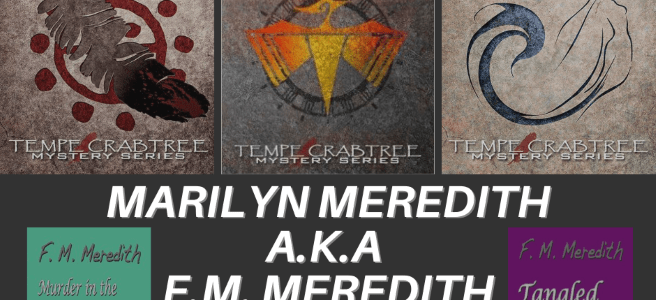
Next came my first mystery, and another.  I’ve been at this a long time, and now have 50 published books all available on Amazon. Along the way I’ve learned so much about writing and promotion.

Besides the fun of writing and creating characters who seem as real as the people I know, I’ve had a great time over the years traveling all over the county attending writers workshops and mystery cons—Bouchercon and Left Coast Crime, plus many of the smaller ones  that have disappeared like Mayhem in the Midlands and Crimefest.

I was able to meet some of my favorite authors like Mary Higgins Clark, William Kent Krueger, Craig Johnson, Naomi Hirahara, and so many, many more. Plus, I made friends with so many other writers and more importantly readers.

When I read about how much writers and readers enjoyed this most recent Left Coast Crime, I was a tad envious, but then realized I had so many great memories of conferences past and all the interesting people I’ve met over the years.

I’m now in the process of my two favorite writer pursuits: 1. Planning for and promoting my latest book, the last in the Rocky Bluff P.D. series, Reversal of Fortune and 2. Putting together ideas for my next Deputy Tempe Crabtree mystery.

Being a writer is a wonderful and rewarding part of my life in so many ways.

Reversal of Fortune is about the death of a fortune teller. It’s available in paper and for Kindle on Amazon: (I wrote this series as F. M. Meredith)


Writers’ Groups

Twice a month I moderate a writers’ group for men and women writing in diverse genres. This isn’t the first group I’ve worked in, and probably won’t be the last. 

Two people make a group, which means the novel I wrote in college was the topic of a group consisting of me and the typist and sometimes me and my boyfriend. But the first group whose intent was to bring its members’ work to publication was one I joined in 1989, and attended regularly for several years.

I’ve been thinking about groups and their purposes lately because even though I’ve been moderating the current group for several years, I rarely contribute. This one began as a walk-in opportunity for library patrons, but with the advent of the pandemic, we switched to zoom, and over the last several months, using a private (not library) zoom account, we have decided to become a private group, freezing the membership to its present number.

We are here for different reasons. Most groups are organized around a single goal that every participant agrees to. The group focuses on a certain genre, for example. A writer I knew back in the 1990s wanted to start a group for those working on crime fiction set in foreign lands. Since I wasn’t yet writing the Anita Ray series, I was out. The group fizzled. Another group was for established writers, those who had published at least one book in any category and now wanted to work on mysteries. That was fine until the woman who assumed the role of moderator invited writers she met and liked, which changed the dynamic. The unwritten rule that the group decided on whether or not to send an invitation to join after meeting the writer was buried and forgotten. The group of professionals helping others develop their work morphed into an entirely different series of sessions.

Other groups popped up over the years. I enjoyed one that included four people, including a moderator who gave lots of advice and then checked up on us to see if we followed it. I didn’t last long. In another we got assigned pages to read and comment on, which felt like work in addition to what I was writing.

I have enjoyed and learned from every one of these groups, but probably not what the group organizers were expecting. First, the more diverse the genres the better. A poet among mystery writers will teach about language and the rhythm of language. Writers of fantasy among literary fiction writers will challenge others’ imagination. Writers of nonfiction in a group of novelists will challenge us to describe reality, settings, physical details with greater precision. 

But mostly, groups of any kind of diversity will teach us about human nature. I still look back on some of the earlier groups to pluck out humorous or unexpected quirks for a fictional character. There’s nothing like watching writers grapple with different points of view on something intensely personal to them to see an emotional range in human behavior. The more diverse the group, also, the wider and more free-flowing the discussion, something I always enjoy.

Every writers’ group I’ve ever been in has been a terrific learning experience for which I’m grateful—the good will, the insight, the language skills, the thoughtfulness, the overall support. Writers are generous people, always ready to help their colleagues. I may not get (or ask for) help with a specific piece, but I gain every time I listen and learn.

Back to Real Life?

Like so many, especially those of us who live alone, to me life has felt in suspension for the last two years. So it’s fantastic to get back to doing all those things I did in pre-lockdown days, although I know that the pandemic is not quite over and this newfound freedom may be temporary.

Happy Mystery Authors at Left Coast Crime Conference 2022 Banquet

Last week I attended the Left Coast Crime Conference, in person, in Albuquerque, New Mexico. There were challenges. The hotel had recently changed hands and the staff seemed surprised to have a conference on their hands, although the contract had been in place (with the old owners) for two years. The hotel bar closed at 9pm, which, if you’ve ever hung out with authors, you’d know is a crisis, and the surrounding areas in Albuquerque seemed to be occupied now mostly by the homeless and drug-addicted. The only food venue in the hotel was understaffed and under-supplied. But the Left Coast Crime organizers had intelligently required all attendees to be fully vaccinated, so we felt reasonably safe and oh, so happy to see and talk to all our fellow mystery authors and mystery lovers. Left Coast Crime is not a writers conference but a fan conference, so many attendees are not writers, but readers and leaders of reading clubs, which makes this conference all the more special. And of course, we are all mystery fans.

It’s impossible to take a good photo at Carlsbad Caverns without professional gear, but here’s a hint of the scenery.

After the conference, I went on a little exploration of southern New Mexico. First, to Carlsbad Caverns, which turned out to be much more spectacular than I anticipated. Rather than taking an elevator, I walked down the spiraling path into the caverns (1.25 miles and a descent of around 750 feet) to get to the Big Room, which has a 1.5 mile path that encircles the cathedral-like structure. The experience was magnificent, and I loved the cool, quiet, uncrowded walk down so much that I walked back up the same way.

I also went hiking at Dripping Springs Recreation Area near Las Cruces, where I visited ruins of an old ranch, asylum, and mountain lodge wedged back among the rock formations. The park volunteer told me there is an oryx (!) in the park, and I kept a sharp eye out for that African antelope, but he stayed hidden. I felt so sorry for the poor oryx, an exotic import from a previous landowner who favored shooting rare species. What does an African antelope think about being stranded in a foreign country with only free-range cattle for company?

Lodge Ruins in Dripping Springs Recreation Area, New Mexico

I explored the area as a solo adventurer this trip, happy just to be outdoors and seeing new sights. And it was marvelous to be in the company of all the creative authors and appreciative readers at Left Coast Crime.

Is this real life again? I’m cautious, and I’m fully vaccinated, and oh, I so hope we can all share in many good times to come!

It Never Rains in Southern California by Karen Shughart

We just returned from a visit with our son and daughter-in-law, who live in southern California. There was a song in the 1970s entitled It Never Rains in Southern California, and although the lyrics did not particularly inspire joy, the title is apt, it truly hardly ever rains in southern California. As my son reminded me when I mentioned how nice it was to not have to deal with the inconsistent weather events like blizzards and blinding rainstorms like we do here in the northeast, he reminded me that California has plenty of their own climate issues: mudslides, fires, earthquakes, and damaging winds. Good point.

During our visit we sat under a pergola in their backyard and snacked on tangerines picked from a nearby tree. One night for dinner we ate freshly-caught Pacific salmon with lemon slices we plucked from another. Avocados, plentiful in that part of the world, hang heavy on branches drooping over fences A bottle brush tree with vivid red flowers and clusters of bright yellow daylilies attract a multitude of hummingbirds and Monarch butterflies. The air is redolent with sun-ripened foliage and the salty brine that drifts inland from the broad, blue Pacific Ocean.

Photo by Gary Barnes on Pexels.com

We arrived back in New York to a gray, cloudy day with a drizzle of fine rain and yet, when we pulled into our driveway, our daffodils and forsythia were beginning to bloom, the hyacinths were emerging from the earth, and nestled in among our own burgeoning daylilies were bright, purple violets, signs that spring is surely on the way. While the weather is fickle, each day here brings a surprise; now some days are warm and bright, on others, winter doesn’t want to lose its frosty grip.

I thought about how climate and weather affect writing. My Cozies are set in a small village along the south shore of Lake Ontario, much like the village where we live.  Four defined seasons provide the setting to the mysteries:  a dark, stormy, windblown night is a metaphor for what’s to come, as is the juxtaposition of bright summer days and a murder that’s occurred in a lush garden setting.

If we lived in California, I would still be writing Cozies, but they would different. Mine have a backstory based on the history of our state: the Revolutionary War, the War of 1812, the Underground Railroad, to name a few. If we lived in California, I’d choose Spanish Missions, the Mexican American War, or the Gold Rush.   The setting, too, would change. A California beach town and one on Lake Ontario have few characteristics in common, our beaches are rocky and not as wide, we don’t have sidewalks and parking lots along the water, and the distance across the lake to Canada is a mere 80 miles, compared to more than 6,000 to China. We do, surprisingly, have pelicans, but we’ve never seen a whale. Still, it’s fun to contemplate what I’d do differently if my mysteries were set in a part of our country where it never snows, hardly ever rains, and the sun shines almost every day.

On A Writer’s Responsibility…


by Janis Patterson


The other night The Husband and I were out to dinner with some of his friends whom I knew very slightly. The wives were nattering on about something so totally mind-numbing that I was half-way listening to the men. They are all sport rocketry enthusiasts – something I know very little about and personally find watching paint dry much more interesting – and were taking about the various propellants used in rocket engines.


One of them laughed about a particular one and said if they weren’t careful they could make a pretty nifty bomb using XYZ. Perhaps unwisely, I said yes, they could, but it would be foolish, as XYZ was disproportionate in explosive value versus weight/size besides being so basically unstable that it was very dangerous to use in the quantity needed to do any significant damage. Plus, it would need a special detonator that would be very easy for the police to trace.


Startled, they all looked at me as if I had lifted my sweater to reveal a suicide vest. The Husband was quick to enlighten them, saying that I was a novelist and that he had helped me research explosives for a work in progress. Obviously intrigued, they peppered me with questions about various fuels and propellants and their non-rocket related destructive capabilities, then became rather petulant when I refused to answer them as completely as they wished.


I probably could have answered all their questions sufficiently to give them a great deal of destructive knowledge, but even though these were all decent and law-abiding men, I didn’t. Why take the risk if I were wrong? Besides, I never tell everything I know, either in print or in person.
Why? Because I write novels, which should be momentary escapes for ordinary people – not technical manuals. I long ago decided that I should never put anything in a story that someone can use to hurt someone else. The idea, yes, or I wouldn’t have a story. Enough facts to have a feeling of verisimilitude, yes. A blueprint, no. There’s no way I can stop people bent on destruction from seeking out all the information they need about any kind of killing tool – and it is out there if they’re determined – but I don’t have to help them.


For example, years ago at an NRA convention I met a salesman who, on finding I was a mystery novelist, delighted in telling me how to get a ballistically clean and therefore untraceable bullet – i.e., how to kill someone with a bullet that had no rifling, no striations, no markings at all. He seemed so proud of himself and then asked me when I put that in a novel would I mention his name. Horrified, I told him NO most definitely, then begged him not to tell anyone else.


I write about crime. I want to entertain, and entertain only. I don’t want to teach or make it easy for some demented person to eliminate another without leaving clues. Sadly, that made the third way I have found to have a ballistically clean bullet. Those who want to can find the information if they search assiduously enough, but I don’t have to help them.


I believe it is the writer’s responsibility to entertain, and perhaps maybe even teach some (hopefully benign) facts. It is not our responsibility to become an instructor – and therefore, in spirit at least, an accessory.


So – I imitate my betters by using selective censorship and obfuscation. Some of my characters do horrible things, but while readers are given enough facts to know what is happening, none are able to recreate the crime. At least, not from what I write. Not everyone out there – especially on the internet – is so responsible. And that is sad.