The Year of Uncertainty by Karen Shughart

For many of us this has been a year of uncertainty, a difficult year, and a year we could never have imagined, one that took us completely by surprise and rocked our universe. For my husband and me it has meant almost no in-person contact with our children. Our son and daughter-in-law live on the West Coast, my husband and I live north of the Finger Lakes on Lake Ontario,  and although we spent time over the summer with our daughter who lives in New Jersey, she’s started back teaching. We have no idea when we’ll be able to visit with any of them again.

Zoom meetings have become part of our lives. Truth be told, it’s not a great way to mourn the death of a beloved sibling, celebrate several new births, or the milestone of a cousin’s 70th birthday.  We do it; we have no choice, but it’s been much harder than giving up dining out at restaurants or attending live cultural performances.

On the professional end, book talks and signings, and a conference for readers of mysteries where I was to be a panelist, were all canceled because of Covid-19, shortly after my second mystery was launched. Appointments for yearly check-ups and screenings have also been canceled and rescheduled, more than once.

But despite the uncertainty and sadness, there have been bright spots: The babies and birthday mentioned above, the support of friends when we were mourning the death of my sibling; the outdoor, safe distancing gatherings of a small group of us who are bonded not by blood but by heart; a cooking video on YouTube with me preparing a recipe from one of my books. And we do get to speak with and see our children on FaceTime and at family Zoom gatherings.

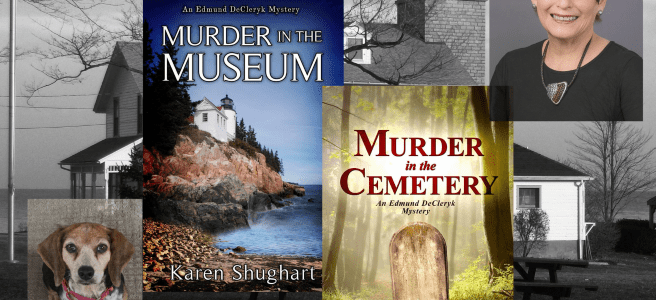
In early April we adopted Nova, a tiny Blue Tick Beagle, who captured our hearts from the moment we saw her photo at the shelter. A gentle, easy going and loving dog, she also is spunky and stubborn, qualities that have stood her in good stead, given the horrible neglect and abuse she suffered before becoming part of our family. Five months have passed, and Nova is a happy, healthy, increasingly confident and secure dog, just as we had hoped. It was the virus that brought us together.

To deal with the anxiety I feel because of these surreal times, I’ve been listening to guided meditation CDs, about 20 minutes daily; it’s helped. As has writing in a journal, giving voice to thoughts and feelings about all the chaos in our world. But I also write down ten things each day for which I’m grateful. Poetry and classical music, always part of my life, have assumed a greater role, calming and centering me.

Most of us have heard the old saw, “this too shall pass,” but sometimes it’s not all that easy to believe. I think it will happen, eventually, but our world, both big and small, will be changed forever.  Hopefully, when it does, we’ll find strength to pick up the pieces and move on.

Guest Blogger – Daniella Bernett

How Do I Kill Thee?

Murder is a shocking and terrifying taboo. The very word sends an icy frisson slithering down one’s spine. And yet, it is an occupational hazard for a crime writer. On a cerebral level, the taking of a human life is fascinating. It is a serious business, requiring cunning and sangfroid mingled with passion, anger or fear. A certain degree of luck is necessary to pull off a murder without getting caught. The faint of heart would be riddled with remorse and horror at this deadly transgression.  

Setting aside the moral considerations, I find it deliciously thrilling to plot a murder. The omnipotent power to kill is a dizzying prospect. Murder is an art form, if one thinks about it. The killer must be creative. But how does an author choose from the plethora of methods available? Your character is the key to unlocking this mystery. Therefore, an author must first delve into the murderer’s psyche to thoroughly understand why he or she came to make the fatal decision. Is he or she an assassin, a spurned lover, a business partner who has been swindled, or an average individual pushed to the brink in an extraordinary situation? Once the author has sketched this character profile, the pieces will fall into place and the story will begin to flow. The author must have absolute trust in the murderer. He or she will guide you down the evil path and determine if the victim expires quickly or suffers a slow, lingering death.

In most cases, murder stems from a rupture in an intimate relationship. This personal animus is likely fueled by emotion and an overwhelming thirst for revenge. Consequently, this means inflicting pain. The thrust of a knife into the heart, stomach or between the ribs would do the job nicely. With stabbing, the murderer and victim must be at close range. Generally, stabbing ensures that the killer’s face is the last thing the victim sees in this world, satisfying a desire to mete out punishment. For this reason, the murderer in one of the books in my series featuring journalist Emmeline Kirby and jewel thief/insurance investigator Gregory Longdon slashed the throat of an unscrupulous man, who had derived malicious glee from ruining other people’s lives.

Meanwhile, shooting also would induce pain. With this method, the author has the option of killing someone instantly, forcing the culprit to hastily cover his or her tracks. This provides an opportunity to sprinkle red herrings through the story. Conversely, the dark deed can rattle the murderer to the point that he or she is no longer thinking clearly and makes mistakes. Another possibility is that the gunshot does not kill the victim outright. It may cause a grave wound, presenting the murderer with a chance to finish off the victim another way. Let’s say by poison, for example.

Ah, poison. To me, it’s so sinister and tantalizing. I believe I share this view with my hero Agatha Christie, who masterfully eliminated dozens with a soupçon of poison. Some poisons are tasteless and odorless. Then there is cyanide, which smells like bitter almonds, while arsenic, when heated, gives off an odor resembling garlic. Depending on what your story dictates, poison can work instantaneously or the victim can waste away little by little. Russian spies, and Putin in particular as a former head of the KGB, have a penchant for using poison to dispatch enemies, defectors and anyone who dares to oppose them. As a result, poison was my weapon of choice in another novel. The story dealt with a defector who recklessly pitted Putin against Russian mafia boss Igor Bronowski. At the same time, both had unsavory entanglements with a ruthless British entrepreneur. All were obsessed with a flawless blue diamond. I will confess that two victims succumbed to poison in the book. However, poison is not the exclusive domain of the assassin. An author can wield it perfectly well among those who have a personal score to settle. On this point of the professional versus the amateur (for want of a better word) killer, an assassin can employ stabbing or shooting in a pinch for expediency’s sake.

A lethal arsenal would not be complete without strangulation, drowning and smothering. But all three may prove troublesome because they require a degree of strength and the victim will most certainly put up a struggle. A murderer wants death to come swiftly with a minimum of fuss to have time to disappear before the body is discovered. On the same token, bludgeoning someone to death with a heavy object could prove messy, since several blows would likely be needed thus causing a good deal of blood to be shed. Of course, an author may want to employ bludgeoning for precisely this reason to set the stage for the murderer’s ultimate undoing. For in the haste to flee, he or she may miss a trace of blood.

Allow these diabolical musings to steep in your mind. After a while, you’ll come to realize that it’s criminally good fun to acquire a literary taste for murder.

OLD SINS NEVER DIE

Never look back…Treason is deadly

While in the Lake District, journalist Emmeline Kirby and jewel thief/insurance investigator Gregory Longdon overhear a man attempting to hire international assassin Hugh Carstairs, a MI5 agent who went rogue. They race back to London to warn Philip Acheson of the Foreign Office and Superintendent Oliver Burnell. But it’s a devil of problem to prevent a vicious killing, if the target is a mystery.

More trouble brews as Emmeline pursues a story about shipping magnate Noel Rallis, who is on trial for murder. Rallis is desperate to keep the negative publicity from exposing his illicit schemes, especially something sinister called Poseidon. Lord Desmond Starrett, whose dark past made him easy prey for blackmail, is getting cold feet about their dubious partnership. Hovering in the shadows of this ugly secret world is a Russian mole buried inside MI5. Scorned prima ballerina Anastasia Tarasova makes the fatal mistake of threatening to reveal all she knows. The hunt for the answers takes Emmeline and Gregory up to Scotland, where they learn that the truth has lethal consequences.

Buy Links:

Amazon: https://www.amazon.com/Old-Sins-Never-Die-Emmeline/dp/1644372762

Barnes & Noble: https://www.barnesandnoble.com/s/old+sins+never+die+daniella+bernett/

Daniella Bernett is a member of the Mystery Writers of America NY Chapter and the International Thriller Writers. She graduated summa cum laude with a B.S. in Journalism from St. John’s University. Lead Me Into Danger, Deadly Legacy, From Beyond The Grave, A Checkered Past and When Blood Runs Cold are the books in the Emmeline Kirby-Gregory Longdon mystery series. She also is the author of two poetry collections, Timeless Allure and Silken Reflections. In her professional life, she is the research manager for a nationally prominent engineering, architectural and construction management firm. Daniella is currently working on Emmeline and Gregory’s next adventure. Visit www.daniellabernett.com or follow her on Facebook at https://www.facebook.com/profile.php?id=100008802318282 or on Goodreads https://www.goodreads.com/user/show/40690254-daniella-bernett. Old Sins Never Die, the sixth book in her series, was released today.

Social Media:

Facebook: https://www.facebook.com/profile.php?id=100008802318282

Goodreads: https://www.goodreads.com/user/show/40690254-daniella-bernett

BookBub: https://www.bookbub.com/profile/daniella-bernett

My Own Version of Justice by Paty Jager

This year, I’ve been banging the keyboard and getting projects done…until last month. It seemed like every time I got in a good day, or two, of writing, something came up and I went days without getting a word down on my WIP (work in progress).

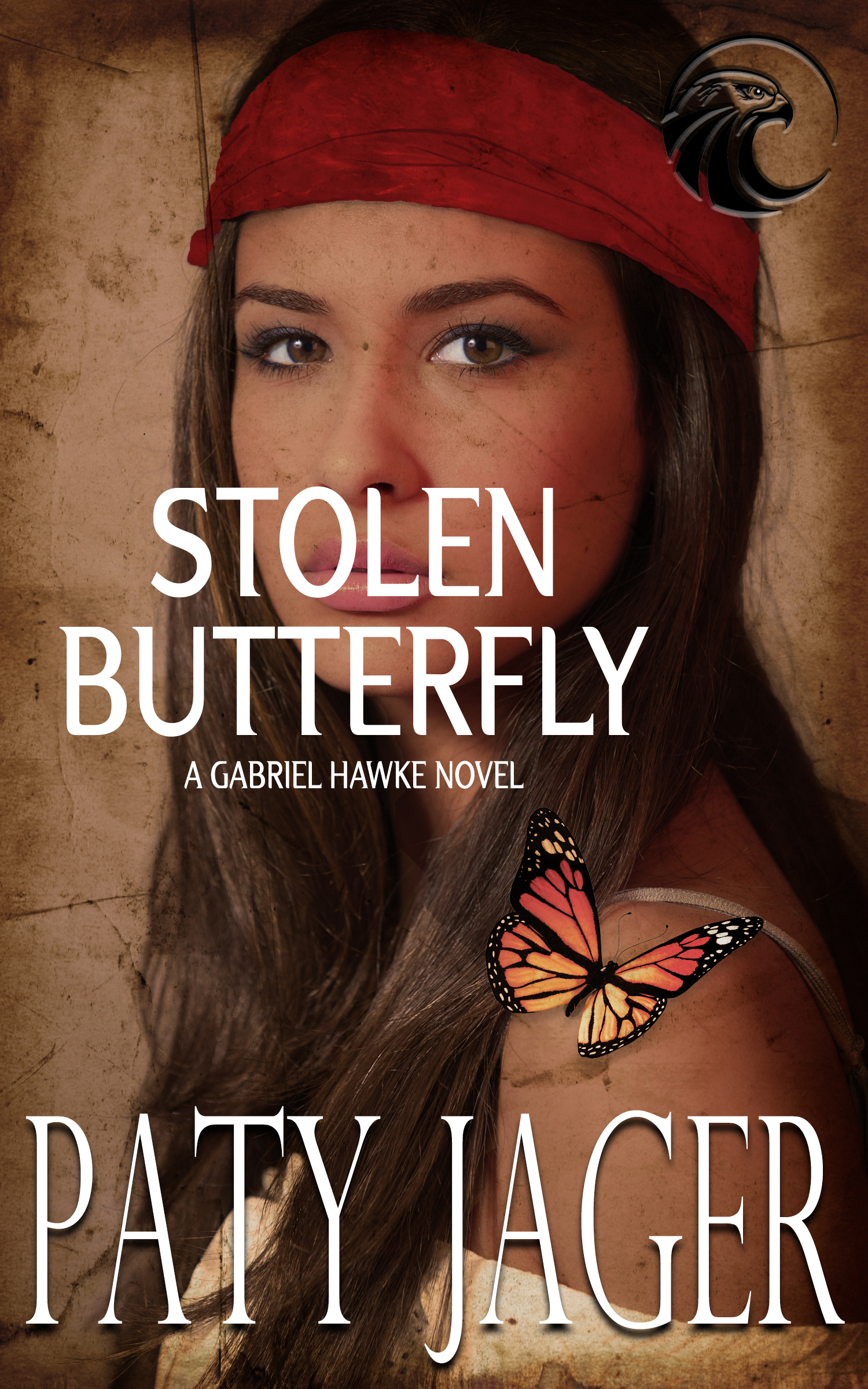
This month, I’m determined to get the 6th Gabriel Hawke book written and out to my CPs (Critique Partners) I’ve had this story idea in my head since I did my ride-along with a State Trooper before I started this series.

It’s something that happened in real life but I’m putting a different spin on it. On the ride-along, the trooper pointed out a campsite and said, “See that burnt spot?”

I did. It was a campfire ring of charred rocks and grass three feet around the ring.

“A vehicle rolled over the fire with a man in it. It was written up as an accident.” The trooper looked over at me. “What do you think?”

“There is no way it was an accident,” were my words. The area was flat. A vehicle even if knocked out of gear wouldn’t have rolled the distance the vehicle was parked away from the fire.

“The victim was drunk. His wife kicked him out of the tent and he went to sleep in his vehicle. They say, he must have bumped the gearshift and it rolled.” He glanced at me again.

I shook my head. “Why was it pronounced an accident? I don’t see how it could have been.”

“All the investigators wanted to call it a homicide but the District Attorney said we didn’t have enough evidence and didn’t want us digging into it any further.”

I could hear the dismay in his voice. He clearly felt someone had gotten away with murder. And that is why my book, Turkey’s Fiery Roost, is about Hawke tracking down the killer.

Writers, do you like to use real life murders/criminal activity to spur ideas?

Readers, do you like knowing that writer’s try to write their own form of justice when putting together a murder mystery?

Guest Author- Leslie Wheeler

An Unexpected Encounter with Wildlife Becomes a Magical Moment in Fiction

By Leslie Wheeler

One of the pleasures of having a house in rural Western Massachusetts is the opportunity to see wildlife at close range. I’ve observed deer, bear, bobcats, foxes, beavers and otters on my property, and every time this happens, I feel like I’ve been given a gift. But there is one species of wildlife I didn’t think I’d ever see–a moose.

Then one Friday in September, a few years ago, I went to my house in the Berkshires, and discovered that a cow moose, about a year old, had taken up residence, drawn by the pond on the property, the old apple trees laden with fruit, and also perhaps by the hope of finding a mate. She followed a track that took her out of the woods, onto the back field, across it, around the pond, and down the front field to the driveway, which she crossed to return to the woods and begin another circuit.

Around dusk on Saturday, I’d gone into my fenced-in vegetable garden when I looked up and saw her standing a few yards away, watching me. She was so quiet I hadn’t heard her approach. I froze, fearful that a sudden movement or sound would frighten her away. After a few moments, I slipped carefully from the garden, and stood stock still, returning her curious and unafraid gaze. Although not a bull moose with antlers or a cow with a calf to protect, she was still a very large animal. Finally, breaking eye contact, she continued on her leisurely circuit around the property.

Sunday morning, I watched from indoors as she made yet another circuit. She even ventured onto the patio, the closest she’d come to the house. And there I was without my camera, knowing full well that this might be my last chance to get a shot of her before I returned to town. Then, as I began to pack up, she made a second circuit, and armed with my camera I followed her along the patio to the front of house, where she stopped and regarded me with the same unafraid eyes. I took two pictures before she finally hoofed it away.

I returned to Boston, never to see that moose again, but the experience inspired me to write a scene in my new mystery, Shuntoll Road.  In it, the main character, Kathryn Stinson, wakes up at dawn the day after a fire has raged in the woods around the house she’s renting. She goes outside to see if it’s still burning and spots a big animal on the far side of the pond. It’s not a moose, but a white stag, a legendary creature, which does exist in real life. To her surprise, the stag approaches her, stopping a few yards short of the patio, where she’s standing. Then it turns around and bounds back to the pond, where it stops and looks back at her. The white stag does, this enough times for her to think it wants her to follow it—into the burnt woods where she makes an important discovery. Later when Kathryn expresses her wonder at why the white stag appeared to her of all people, her boyfriend says, “It’s a mystery. And a gift.”

Readers: Have you have had encounters with wildlife that you’ve used in your fiction?

Shuntoll Road

Boston library curator Kathryn Stinson returns to the Berkshires, hoping to rebuild her romance with Earl Barker, but ends up battling a New York developer, determined to turn the property she’s been renting into an upscale development. The fight pits her against Earl, who has been offered the job of clearing the land. When a fire breaks out in the woods, the burned body of another opponent is discovered. Did he die attempting to escape a fire he set, or was the fire set to cover up his murder? Kathryn’s search for answers leads her to other questions about the developer’s connection to a friend of hers who fled New York years ago for mysterious reasons. The information she uncovers puts her in grave danger.

Paperback

Amazon – Note they do not show this as a pre-sale, but if people order from Amazon it will still get to them at a reasonable time not what they show on their site.

https://www.amazon.com/Shuntoll-Road-Leslie-Wheeler/dp/1645990346

Barnes and Noble

https://www.barnesandnoble.com/w/shuntoll-road-leslie-wheeler/1136500170?ean=9781645990345

E-books

Amazon

https://www.amazon.com/dp/B08DCZYR3M

Apple

https://books.apple.com/us/book/id1524348304

Kobo

https://www.kobo.com/us/en/ebook/shuntoll-road

Barnes & Noble

https://www.barnesandnoble.com/w/shuntoll-road-leslie-wheeler/1136500170

An award-winning author of nonfiction, Leslie Wheeler writes the Miranda Lewis Living History Mysteries which began with Murder at Plimoth Plantation, recently re-released for the first time as a trade paperback, and the Berkshire Hilltown Mysteries which began with Rattlesnake Hill and continue with Shuntoll Road.

Check out my books at my website: http://www.lesliewheeler.com

Find me on Facebook

Follow me on Bookbub

Narration Fears by Paty Jager

Due to the covid and so many conferences and events I’d planned to attend being cancelled, I am now putting those dollars into getting more books narrated. Which is a good thing, except…. I’ve caught up to the last book written in the Gabriel Hawke series, Fox Goes Hunting.

It’s nice to have the audio book ready close behind the release of the ebook and print, but… this book is set in Iceland. My poor narrator is having to learn how to pronounce a lot of words in Icelandic.

Ragnar, our guide, explaining the living situations of the Viking settlers at pingvellir.

The guide I met on my trip to Iceland has been a HUGE help with my book. He answered questions when I was on my trip and later via email. He also read the book to make sure the way the Icelanders in my books expressed themselves was correct and that I conveyed the spirit and feel of his homeland.

And I have once again reached out to him as this book is beginning to be narrated. I asked if he could give me a pronunciation guide for the Icelandic words. He came through, but said if the narrator needed more detail in the saying, he could do an IPA system but it would take him much longer to do.

Thankfully, my narrator has already reached out to some other narrators for help in the pronunciation of the words. I feel for him. He was excited to do this book, but he will have a lot more work than he usually puts into the Hawke books.

If you would like to listen to one of the first five Gabriel Hawke audio books for free, I have some Author Direct codes you can use to listen to the books.

Here’s to hoping my narrator can channel his inner Icelander.