What I Like and Dislike About Writing

Writing is something I’m compelled to do. I’ve written in one form or another since I was around four. The first of my telling stories was in a series of pictures about the soap opera my mother listened to on the radio every morning—My Gal Sunday. While mom worked in the kitchen with the radio tuned in, I sat at a little table with a tablet and crayons, depicting what I heard.

During my grammar school days I wrote lots of stories, some were my versions of “Little House on the Prairie,” and an old series of books of my mother’s about the life of Elsie Dinsmore. I also wrote and illustrated a fairy tale my mother sent off to a publisher. She must’ve thought it was good—the publisher sent back a nice rejection letter.

My junior high years I wrote plays for the neighborhood kids to star in and a magazine which I sold to my friends for a nickel. I wrote essays, stories and poems during my high school years. I married young and was kept busy running my household and raising five children. My writing turned to newsletters for PTA and plays for my Camp Fire Girls to perform. I did write two novels during that period of my life and have no idea what happened to them.

My sister labored on our family’s genealogy and when she was done, I used it as a guide for writing two historical family sagas—a huge undertaking requiring lots of research. Both books, after a lot of criticism and work, were published. And I was hooked.

I love the writing process. Because I love to read mysteries, I started writing them. Being inside another place, seeing exciting events through the eyes of imaginary characters became my obsession. Planning the mystery, where it would take place, who would be the detective, deciding who should be a victim and who might want to see that person dead, how the person was killed, all became part of the enjoyment of writing.

I do like the editing part—though I confess to missing mistakes and I’m grateful to my editor for finding plot holes and typos.

Even after all the editing, I don’t like it when a reader lets me know about a mistake she’s found. Oh, I’m glad she pointed it out because it can be fixed, but I’m unhappy because the mistake was missed during the editing process.

Researching is often fun: talking to people in law enforcement, going on ride-alongs, attending mystery and writing conferences, meeting other writers and readers.

What I dislike about the whole business of writing is planning promotional events: making the phone call or going in-person to ask to hold a book signing in a particular place. Though I do enjoy talking to readers, I’m not happy with trying to convince someone to buy a book. If they aren’t interested after I’ve told them about it, I’m not going to push.

I like being on panels at writing or mystery cons, but what I don’t like is when one author tries to hog the whole time period for him/herself.

Though I do like some ways of promotion, I’m not fond of any that takes a lot of time away from writing and costs a lot of money. Anything effective seems to do both.

No matter, when I’m finished with one book, an idea for another is usually rolling around in my brain.

Okay, I’ve had my say. I’d like to hear from my author friends, what do you like best about writing? And what don’t you like about the process?

Marilyn

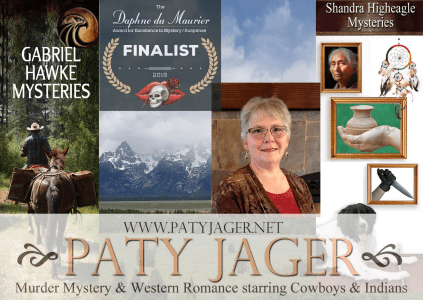
Reaching out by Paty Jager

Whenever I start a project with a topic I know only enough about to want to write about it, I reach out to others who have experience.

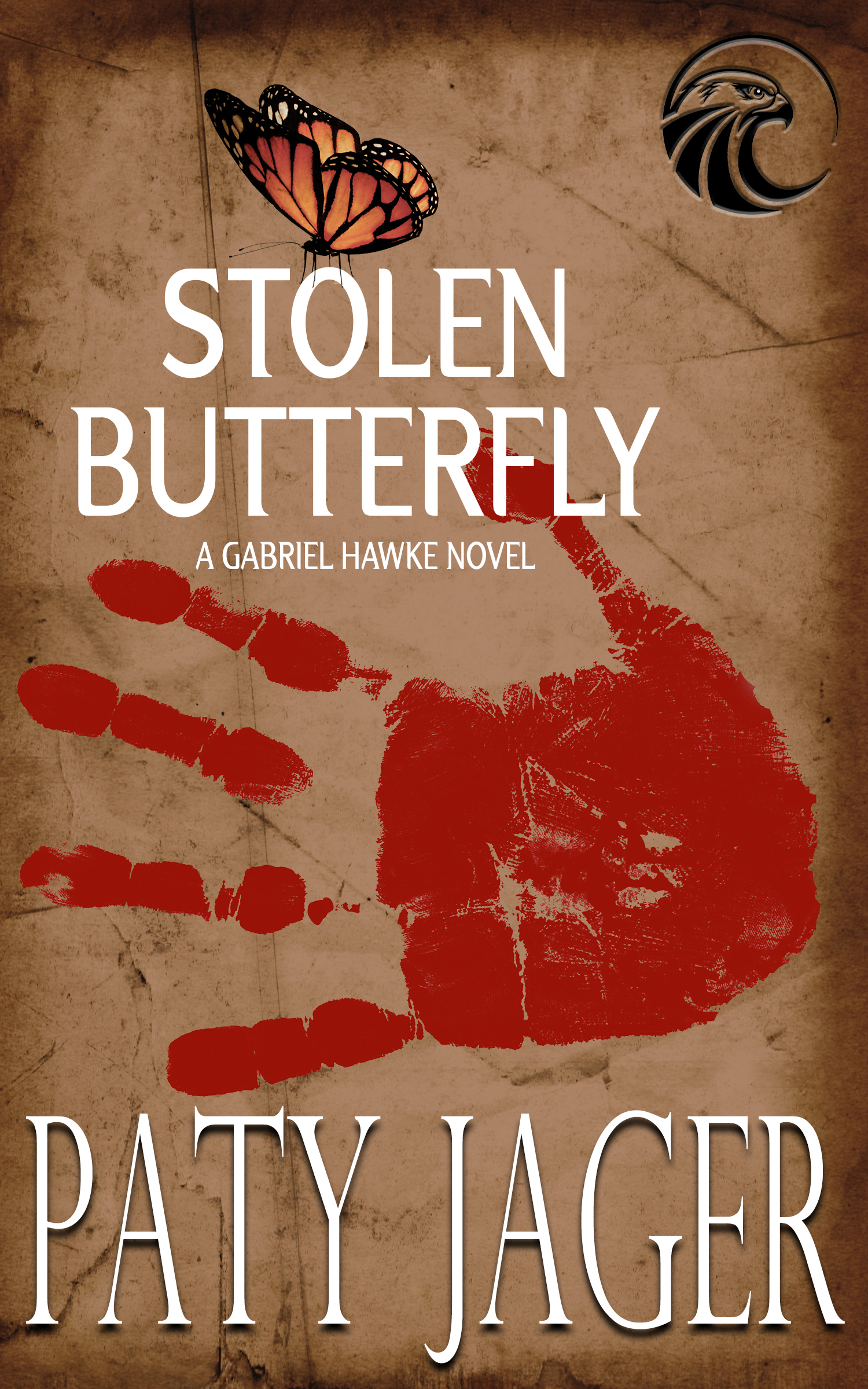
That’s what I did for my latest Gabriel Hawke book, Stolen Butterfly. For years, I’ve heard of the injustice towards the Native American people. The women and children who were murdered and missing. While the cause, MMIW, now also titled MMIP, because it isn’t just women but children and even some men who are murdered or missing, has been growing slowly, the last few years it has started rolling with fury.

While the Indigenous population is only 2% of the all the people in the U.S., they are the group with the largest percent of missing and murdered people. The reason is law enforcement up until lately hasn’t cared. It has taken the MMIW movement to bring this to light.

Because I had decided back when writing book 1, Murder of Ravens to have Gabriel Hawke tackle this injustice, I reached out to social workers in and around the Confederated Tribes of the Umatilla Reservation to find help in telling my current release, Stolen Butterfly, accurately. The social worker I contacted, put me in contact with a woman who has lost four family members and is an advocate of the MMIW/MMIP cause. When she told me the stories of the people she’d lost and photos she took to commemorate them, I was choked up. That’s when I knew this was the book I was born to write.

Not only was the woman, Kola Shippentower-Thompson, an advocate for MMIP, she also is the co-founder of Enough Iz Enough a non-profit that teaches women and children how to defend themselves and be aware of danger. She was the prefect fit for the research I needed. She also had worked in security at the Wildhorse Casino on the reservation and her husband works with the Tribal Police in the Fish and Wildlife division. She could answer all of my questions and give me the emotional side I needed as well.

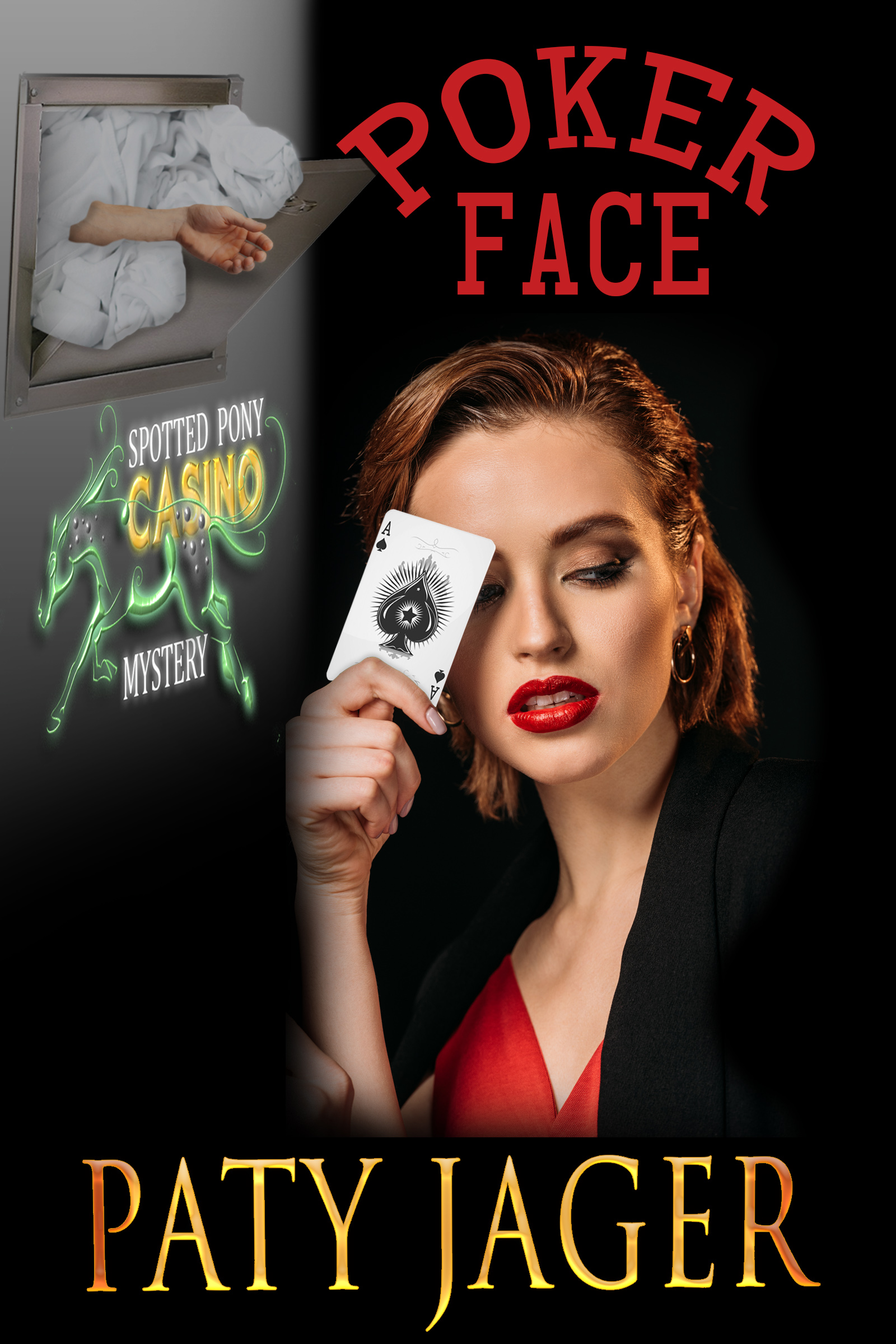
One of the secondary characters in the book is my new main character in my upcoming Spotted Pony Casino Mysteries. Kola has graciously said she would answer any questions along the way as I write that series which will be set on the Umatilla Reservation.

By reaching out and asking for help to make sure my book captures the way the people come together when a person is missing and showing their emotions, as well as the treatment they receive from entities that should be helping, I hope my book will build a little more compassion toward the Indigenous People. This is a book that I hope will make more people aware of the fear that is faced every day by a people who have lived through diseases that nearly wiped them out, being banished to reservations, and then treated as if they weren’t human. They are strong and resilient and deserve to be heard when their people are being taken from them.

Here is the review Kola gave my book after reading it: “The story was captivating, I couldn’t put it down. So many memories were brought to surface, so many emotions, like this has been lived before, because it has, this is a glimpse into our reality in the Reservation. Thank you for seeing us & helping tell part of the story.” 

The proceeds from the sale of this book will go to the non-profit Enough Iz Enough. This is a community outreach organization that advocates for MMIW on the Confederated Tribes of the Umatilla Reservation.  

Stolen Butterfly

Gabriel Hawke Novel #7

Missing or Murdered

When the local authorities tell State Trooper Gabriel Hawke’s mother to wait 72 hours before reporting a missing Umatilla woman, she calls her son and rallies members of the community to search.

Hawke arrives at the Confederated Tribes of the Umatilla Reservation and learns the single mother of a boy his mom watches would never leave her son. Angered over how the local officials respond to his investigating, Hawke teams up with a security guard at the Indian casino and an FBI agent. Following the leads, they discover the woman was targeted by a human trafficking ring at the Spotted Pony Casino.

Hawke, Dela Alvaro, and FBI Special Agent Quinn Pierce join forces to bring the woman home and close down the trafficking operation before someone else goes missing.

Universal buy link: https://books2read.com/u/baZEPq

Return to the Murder House

by Janis Patterson

I want to thank everyone for their lovely comments both personal and public on my last Ladies of Mystery blog The Murder House. It did surprise me, though, that so many of you said you would take care to stay away from me and would never eat at my house. (Not eating at my house might be a good idea, however, not because I’m particularly murderous, but because I’m a lousy cook!) I do assure you, though, that I am the kindest and most charming of people… as long as I get everything I want, that is!

Unfortunately the last blog only scraped the very top of the dangers awaiting the unwary in an ordinary house. For a creative mystery writer there are all kinds of murderous methods, though some have taken steps to put a stop to some of the dangers.

For example – antifreeze. Yes, the ordinary antifreeze you put in your car. It used to be that all varieties were toxic and, as an added help for the domestic murderer, it tasted sweet! Mixed in a tall, cooling drink it would be almost undetectable. However, there were too many ‘accidents’ over the years, so the manufacturers started replacing the deadly ingredient with one harmless to anything but ice. I’m not sure if all manufacturers complied (but probably – too much risk of lawsuits) but one could always check. Or, if your murderer is very fortunate, they can find a forgotten half-used jug of the old type in someone’s garage. Or perhaps in anticipation of future need, they could have put back a couple of gallons of the ‘good stuff.’

Unfortunately, most murderers are not so forward-looking. All too often murder is a spur-of-the-moment decision – perhaps spur-of-the-week might be a better term, as spur-of-the-moment crimes are usually of the handy blunt instrument or bladed weapon type.

In this case, knowledge is your murderer’s best bet. A walk through a regular medicine chest can be a cornucopia of termination mechanisms. Many people take many medications, and although they are individually benign when taken as directed, when combined or overdosed can be deadly. That you will have to do your own research on – just be sure when you write you don’t put the entire formula or instructions down. We’re entertainers, not teachers… nor should we be accessories!

Two of the medicine chest items come to mind. First is the common diuretic; powdered (obtained either by opening the gelatin capsule or crushing the tablets) it can be given to the victim hidden in food, which will – over time – reduce the potassium in the body to fatal levels. This does take time, however, and requires patience. Second is synthetic epinephrine, perhaps not so common a drug but not at all uncommon; given in large quantities it can and probably will induce a massive heart attack. For the thoughtful murderer, assuming he can get hold of this chemical, it is an almost perfect murder weapon as it metabolizes so quickly it is undetectable almost immediately. Just delay the discovery of the body and what is a murder is regarded as a natural heart attack with no proof to the contrary, except perhaps an injection site, and we’re all clever enough to be able to hide that, aren’t we?

If your victim takes vitamins overdosing or cross-blending of certain of these generally benign substances can be fatal; however, while some supplements can be lethal when combined with others, they are not as strong as regular medicines and can necessitate repeated dosing. Patience – and a lot of dosing – is required, however.

If you want to go out into the garden, even more methods await you. As the wonderful novelist Marilyn Meredith said in her comments about the first Murder House, castor beans grow wild over most of the country and are deadly poison. If one is chemically (and perhaps suicidally) inclined, one can make the deadly poison ricin out of castor beans, but that is an unnecessary step. Just the plain old beans themselves are enough. Chop and use as a garnish, or cook in with tonight’s dinner beans – just be sure that no one else eats any, unless you are intent on creating a massacre. Cover them with chocolate as a candy. A single bean ingested can kill a child, so these are sure-fire killers if used properly.

Another deadly plant is the beautiful oleander, which not only grows wild in the southern part of the country but is used as a decorative yard planting or even a potted plant. Every part of this dark-green, glossy leaved beauty is poisonous, even the large and fabulous flowers – though I believe you’d have to use a lot of the blooms to get the desired fatal result, and just how many flower-laced edibles can you expect a victim to consume? Better to take the leaves, cut them into small bits and candy them to use as decorations on sweets or even some savory dishes. This might require several applications, though. My favorite story of oleander death is how a clever murderer chose fairly long, straight sticks from the plant, skewered hot dogs on them and used them to roast over a campfire during a camping trip. Enough poison leached into the hot dogs to be quickly fatal.

If you remember your ancient history, Socrates was executed by drinking a poison made from hemlock. Hemlock and its equally deadly brother water hemlock grow wild in many parts of the country. It would take no skill at all to pick and make a deadly drink from it. (Not quite within the purview of the Murder House, but close enough to be available to the ordinary murderer.)

Don’t have a green thumb? Don’t worry – there is an entire arsenal under the kitchen sink of almost every house in America. Mix bleach and ammonia and you’ll have chloramine gas, which is both toxic and corrosive. Plus, since both are fairly anonymous looking liquids, they can be placed into other, more innocent containers to make it easier for the victim to mix. Just be sure to get rid of them afterwards so the mixing looks like a stupid accident. However – one has to mix a fairly large amount to be effective unless the mixing is done in a fairly confined space. A small bathroom or shower stall would be ideal…

Nor does the chemical connection have to end there. If you’re interested in more detailed information about how ordinary household chemicals can be to create murder and mayhem, may I suggest you seek out the books THE POOR MAN’S JAMES BOND and THE ANARCHIST’S COOKBOOK. Both are heavy on chemistry and somewhat hard to find, but excellent information.

If you’re willing to cause some destruction, I have heard that burning wool or silk gives off cyanide gas, though how much fabric or how confined a space is required I don’t know. If you’re interested in this, you must do some research.

A thin – like size Zero – knitting needle or a long, old-fashioned hat pin can make a delightful murder weapon. Slip the instrument into the heart, avoiding the rib cage and sternum of course, and leave there for a while. (How you accomplish this is up to you…) The puncture to the heart will not kill the victim immediately, but leave it there a couple of minutes and with each beat the heart will tear the puncture hole a little bit more until there is a large enough breech to make the heart bleed out. Or shove your improvised stiletto up through the base of the skull, hopefully piercing the brainstem and entering the brain; then wiggle it back and forth, causing the semi-gelatinous brain to ‘scramble.’ The only two drawbacks to this method are even a number Zero knitting needle and a hat pin leave an external trace, but it is possible that the hat pin to the brain can be overlooked. If your murderer is lucky – or carefully foresighted – the death occurs in a county with an incompetent or careless ME or, even better, an untrained Coroner.

How to keep your victim still during such a lengthy and invasive procedure, though, is a test of your creativity.

Now go walk through your house and look at everything as if you had never seen them before and visualize how each could be used as a murder weapon. It is astounding and not a little unnerving. Forget exotic poisons and complicated mechanisms. Some of the most efficient and generally untraceable killing tools are right at your fingers. Please – just remember that we are not writing textbooks or instruction manuals. Always leave something out, so the momentarily angry reader won’t be able to duplicate your method. If they’re really going to kill someone they can figure out how, but we don’t have to hand it to them on a plate. Again, I cannot emphasize enough that we are entertainers… we should not be accessories!

My Voice by Paty Jager

From the first writer’s meeting I attended decades ago I heard people talking about voice. My first thought, being a newbie writer, was, “What is voice?”

No matter how many people explained it in various ways, I couldn’t grasp what they were talking about. But writer’s voice is the writer’s influences into the story. The writer’s feelings and emotions that are shown through the characters in the book. How the syntax and phrases flow in the story.

It has taken me over a decade to see my voice in stories. Where readers think I did a good job describing setting, I think it might have been sparse but it was as I saw it in my mind. My writing has always been, what I’d call sparse. When I first started writing, historical romance books had to be 90-100,000 words. I struggled to get to 90,000. I’ve always been a minimalist with it comes to words, in writing and when talking. 😉 However, I do try to make the few words I use have an impact. Whether it is setting, a character, or dialog.

When I come up with new main characters, I don’t just sit down and start filling out a chart or character sheet on them. They live in my head for several months or a year, living a life outside of their books. When I sit down and write their books, I’ve been thinking about the book, the title, what they will encounter and how they will react before the book starts.

With my mystery main characters, who are Native American, I read all I can by and about their tribes. I want to try to see and feel things as they would, not as a not quite senior citizen white woman would see it. I’ve always been interested in other cultures and felt anger over how so many races have been mistreated. I use this as my catalyst to feel and hopefully show the correct emotions when I write.

My latest project has been something I knew I would write the second I’d decided to write the Gabriel Hawke novels. I have heard and seen so much about the Missing and Murdered Indigenous Women cause that I had a desire to tell the story and hope that it would open more eyes to the problem.

Where does this come in with my voice? My voice in my books, is not only concise working and phrases, it is the need to show justice can be found and a need to show where there is an injustice. My beta readers, line editor, and final proof reader all say this is my best Gabriel Hawke book.

The woman, Kola Shippentower-Thompson who worked with me to make me see how things worked on the reservation when a tribal member is missing gave me this review: “The story was captivating, I couldn’t put it down. So many memories were brought to surface, so many emotions, like this has been lived before, because it has, this is a glimpse into our reality in the Reservation. Thank you for seeing us & helping tell part of the story.” She is the Co-founder & Director of Enough Iz Enough, a non-profit organization that works to teach women and children how to be vigilant and safe and who support the MMIW cause. Proceeds from the sale of this book will be donated to the Enough Iz Enough organization to benefit the MMIW movement.

When Kola was reading the book, she told me she had to stop at one point because it brought back so many sad memories. She has lost multiple family members and has never received any answers about what happened to them.

My hope is that this book will enlighten more people to the plague of violence they Indigenous women, children, and even men have been enduring. The ebook is available for pre-order publishing on May 18th. The print books should be available by the end of the month.

Stolen Butterfly

Gabriel Hawke Novel #7

Missing or Murdered

When the local authorities tell State Trooper Gabriel Hawke’s mother to wait 72 hours before reporting a missing Umatilla woman, she calls her son and rallies members of the community to search.

Hawke arrives at the Confederated Tribes of the Umatilla Reservation and learns the single mother of a boy his mom watches would never leave her son. Angered over how the local officials respond to his investigating, Hawke teams up with a security guard at the Indian casino and an FBI agent. Following the leads, they discover the woman was targeted by a human trafficking ring at the Spotted Pony Casino.

Hawke, Dela Alvaro, and FBI Special Agent Quinn Pierce join forces to bring the woman home and close down the trafficking operation before someone else goes missing.

Pre-order purchase link: https://books2read.com/u/baZEPq

This also happens to be my 50th published book! I’m having a 50 Book Bash event at Facebook and this week I am featuring my Mystery Books. So come on by, learn about my mystery books, leave comments and get in the running fore the daily prizes. Here is the URL: https://www.facebook.com/events/299774331600785

Adding my voice to my books wasn’t a matter of me finding my voice. It was a matter of me realizing what my voice was. Can you tell an author’s voice when you read a book? Or do you just enjoy the characters, the narrative, and the dialog and afterword, just smile, knowing it was a good read?

The First Draft by Karen Shughart

I started writing the first draft of the third mystery in the Edmund DeCleryk series several months ago. It’s entitled Murder at Freedom Hill, and as with the first two books, the murder is linked to an historical event, this time the Abolition Movement and Underground Railroad. Both are part of the history of the village where I live in upstate New York, as are the historical backstories with the previous books, portrayed with a bit of poetic license.

When I start writing a draft, I know the setting (it’s always the fictional village of Lighthouse Cove, NY), have chosen the victim and other characters.  There will be a trip or two to Canada, it’s right across Lake Ontario from Lighthouse Cove; the communities bordering it on both sides are intricately linked by related historical events.

Photo by cottonbro on Pexels.com

I’ve contacted my technical experts with questions on investigative procedures and sentencing guidelines. I have the basic trajectory of the story in my head, and usually have identified the murderer. And I plan for the recipes that will appear at the end of the book, courtesy of Annie, Ed’s wife.

After that it’s a bit of a free-for-all. Structured chaos. The road not taken. Once the first draft is finished, I start to think about changes I want to make in the plot. Sometimes that means getting up in the middle of the night and writing down idea so that by morning they haven’t been erased by a dream or two I may have had in the interim.

I’ve been asked if I create an outline or use index cards when I’m writing a book. I don’t, although I know many authors who do. For me, it’s too confining. I’d rather go where the story leads me instead of being boxed in by my own rigid expectations. Case in point: since starting the first draft of Murder at Freedom Hill, I’ve changed the murderer three times, added a few twists and turns, and lengthened the time it takes to solve the case. It’s a true, excuse the cliché,  work in progress.

The first draft is messy and meandering, and it’s now that the hard work begins. I know I’ll need to clean it up, cut and paste, do a significant amount of wordsmithing, expand the investigation, eliminate overused words, and insert the historical backstory chronologically and strategically. I’ll also need to decide which recipes to include.

The first drafts of Murder in the Museum and Murder in the Cemetery ran about 40,000 words. My background is journalism, so I learned to write sparingly. I think I’m finally getting the hang of it, this draft ended at 55,000 words, a lot closer to my goal of 70,000+.

Writing the first draft is lots of fun, I go with the flow and see where the story takes me.  But now, the real work begins.