I’m currently working on the next (#10) Gabriel Hawke Novel. It will be set up in the style of book #2. I have a person who saw a murder in the wilderness and my character Hawke will find them. Just like book #2, I’ll be starting it with a prologue where the character witnesses the killing and then runs in fear for their life.
To me it makes sense to start the book, with a prologue, showing the person watching the act happen and then fleeing, so that will need to be in their point of view. Then as the story progresses, there will be things Hawke (my main character) won’t know or see, but the reader needs to know through the fleeing person’s point of view so I will have the two points of view in the book.
Most of my Gabriel Hawke books are in my main character’s point of view unless there are scenes that the reader needs to see what my character can’t see. That’s when I use a second point of view.
This book, I’m still working on the title, has been brewing and stewing in my head for nearly 6 months. It came to me as I was writing book #9 that released the end of June. That’s how my brain works. While I am working on a current book in a series, my mind is already moving to the next book. It may be the villain creeping around in my brain, or a setting, or a premise. But as I typed the words to the work in progress, the other story is working in the background.
Back to prologues. There has been a book or two I’ve read where the prologue was flat or didn’t feel like it had anything to do with the story that followed. But there have also been books where the prologue drew me into the story, and I couldn’t wait to read more.
As with all writing, it is the execution of the timing, the words, the characters that makes a reader continue or stop. That and a good, as in a mystery book, whodunit. Something to keep the reader turning the pages and reading well past the time they should turn out the lights and sleep.
Unless you can pull them in at the beginning, with a good prologue, first sentence, first paragraph, first page, first chapter, you could possibly lose the reader. And that’s why I ponder the question: To prologue or not to prologue.
What do those of you reading this post think?
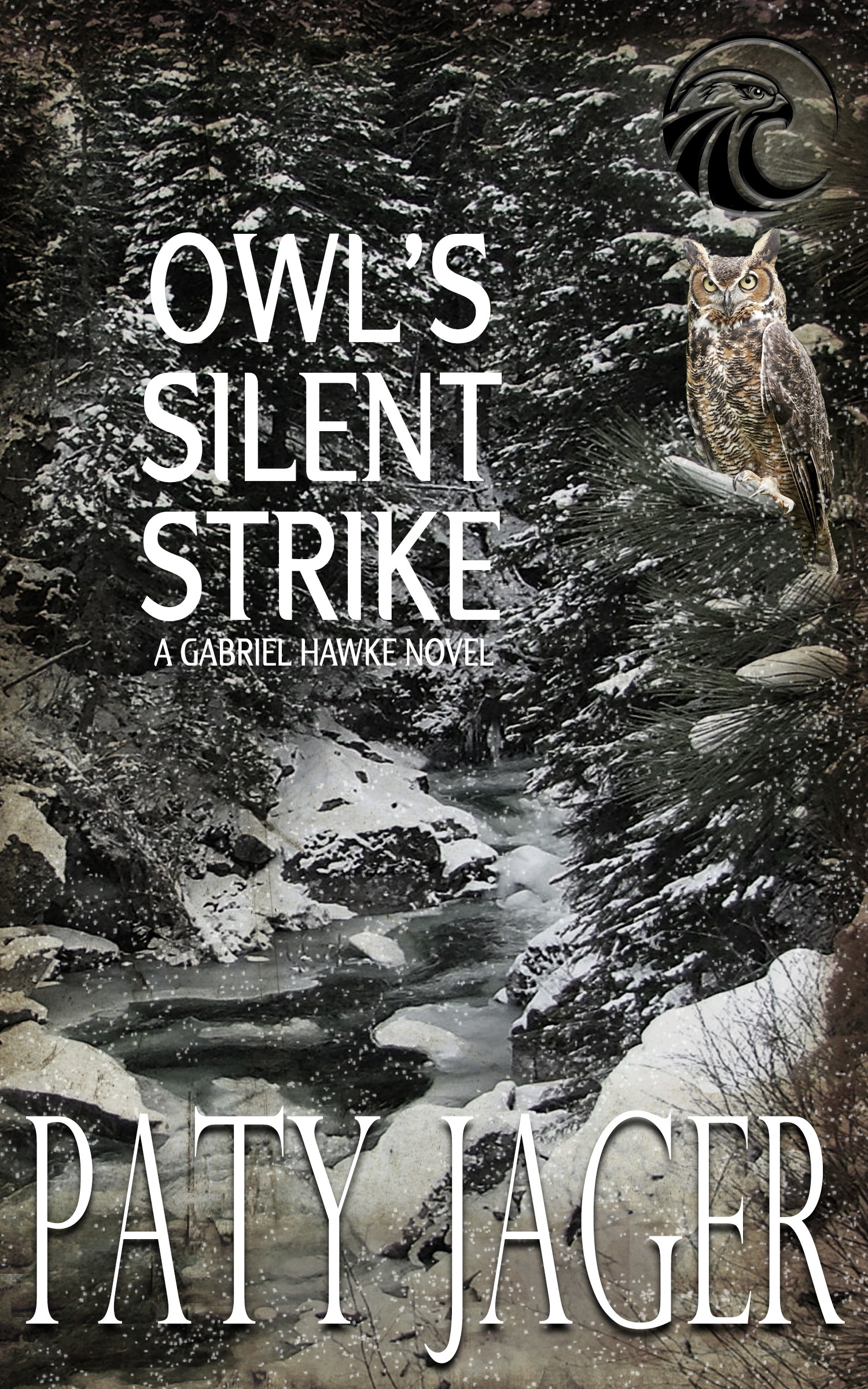
Here is info about my newest release: Owl’s Silent Strike
Book 9 in the Gabriel Hawke Novels
Unexpected snowstorm…
Unfortunate accident…
And a body…
What started out as a favor and a leisurely trip into the mountains, soon turns State Trooper Gabriel Hawke’s life upside down. The snowstorm they were trying to beat comes early, a horse accident breaks Dani Singer’s leg, and Hawke finds a body in the barn at Charlie’s Lodge.
Hawke sets Dani’s leg, then follows the bloody trail of a suspect trying to flee the snow-drifted mountains. Hawke is torn between getting the woman he loves medical care and knowing he can’t leave a possible killer on the mountain.
Before the killer is brought to justice, Dani and Hawke will put their relationship to the test and his job on the line.
Some of us are in critique groups, some would like to find one, and still others vow never to come near one. Maybe these resistant writers have a trusted editor at a big-name publisher or maybe they think they’re wonderful without feedback. I’m not that good, so when I moved to the Rogue Valley, Oregon, and gave up academic writing for fiction writing I was grateful to be introduced to my Monday Mayhem group.
I still remember my first meetings with the group. They praised my writing style but told me that I couldn’t wait a hundred pages before I introduced the murder. Although I reject such “rules,” they were right about Tour de Trace. The discovery of the murder in that novel now happens on page twenty.
I’ve now published seven novels with two more scheduled before the end of 2023. I couldn’t have achieved this without Monday Mayhem. The group works because it forces us to submit writing every two weeks. Not that we can’t take a pass now and again or that we can’t stray from writing mysteries that were the original impetus for the group. This isn’t a class where our grades depend on following an assignment and handing it in on time.
There are other reasons besides discipline that makes our group work. We stay on task, drinking water, not wine, and except for an occasional cookie being fed only the manuscripts we’re cooking up, even the cookies on hiatus when Covid drove us to Zoom. A two hour time period also keeps us focused on writing, not small talk. We’re not a stiff group, though. Sometimes we learn things about each other’s lives that surprise us. Who would have thought that one of the women drove race cars or that one of the men was admitted to his college’s Hall of Fame because of his acting career.
When I first joined this group, we were three men and two women. We welcomed a third woman, but when Tim, the group’s founder died, we returned to five members instead of six. Tim was the member who was most insistent about not delaying the murder in Tour de Trace. His criticism was never gentle so when I found a publisher for my short story “24/7” (The Fictional Café), I smiled to remember his rare praise for that story, “Don’t change a word.”
We’ve remained at five members because this seems to be an optimal number for giving full attention to what can amount to a hundred pages that we collectively submit on the Thursday before our Monday meeting. We all bring a different focus, a different strength, and, yes, a different weakness to our writing.
Carole’s work could be classified as regional fiction. All her novels are set in Oregon, often in the horse barns of ranches, and her sleuths are never professionals. I challenge her to omit extraneous detail and she challenges me to bring more emotional depth to my characters.
Clive’s region is as different from Carole’s as congested Los Angeles is to the range land of Oregon. His protagonist is a sometimes private investigator, sometimes actor. His novels are rich in Hollywood detail. I challenge him to eliminate his tendency to use passive voice, and he helps me get out of a clunky paragraph by suggesting that I use dialogue.
Jenn’s region is also Southern California and she writes with a strong comic voice. Michael’s setting in his thrillers is mostly international. He draws on his knowledge of politics honed from his years of teaching. Jenn inspires me to add a witticism or two to my writing and I challenge her to push on through her manuscript before she goes back to revise for consistency. Michael helps me whenever I get tangled in inaccurate technology and I remind him that even thrillers need to take a break now and again from an escape or a chase or a fight.
As helpful as critique groups can be, they also come with the hazard of someone going rogue. What do you do if a member consistently submits more than the allotted page count or spends valuable time resisting a suggestion? What if someone loses the big picture in favor of arguing about a comma or regularly crushes others with insults rather than constructive suggestions.
Monday Mayhem’s strength comes from our differences. Although our genres and writing styles differ, we have compatible writing skills. We aren’t teaching writing, we’re helping with revising. Neither too bad nor too good might be a mantra for a successful critique group. We can’t help someone with a tin ear any more than we can help a Beethoven.
Discipline, compatibility, variety. Three ingredients for a successful critique group. If you’re looking for one, watch for these qualities. If you are in one, ask yourself why it works or what it needs to work better.
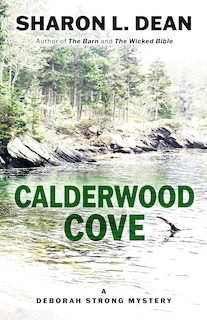
When Deborah Strong accepts an invitation for a reunion with high school friends who will all be turning fifty, she anticipates a lovely Fourth of July weekend in Maine. But soon a murder disturbs the quiet of the summer homes that dot the isolated cove. Deborah’s suspicions follow her like the Maine landscape–plenty of sunshine, plenty of fog, and plenty of evening mosquitoes that arrive like the sparks of fireworks. Where is Brenda’s husband? Where have her caretaker and cook gone? Who is the anorectic young man who keeps appearing? Is one of them a murderer? Or is it the old woman who lives across the street, her son who runs an oyster farm in the face of global warming, her poet-tenant who lives in her apartment? Deborah even suspects each of the friends she grew up with. By the time she finds the answer, she is ready to leave Calderwood Cove where an idyllic summer retreat turned as deadly as contaminated shellfish.
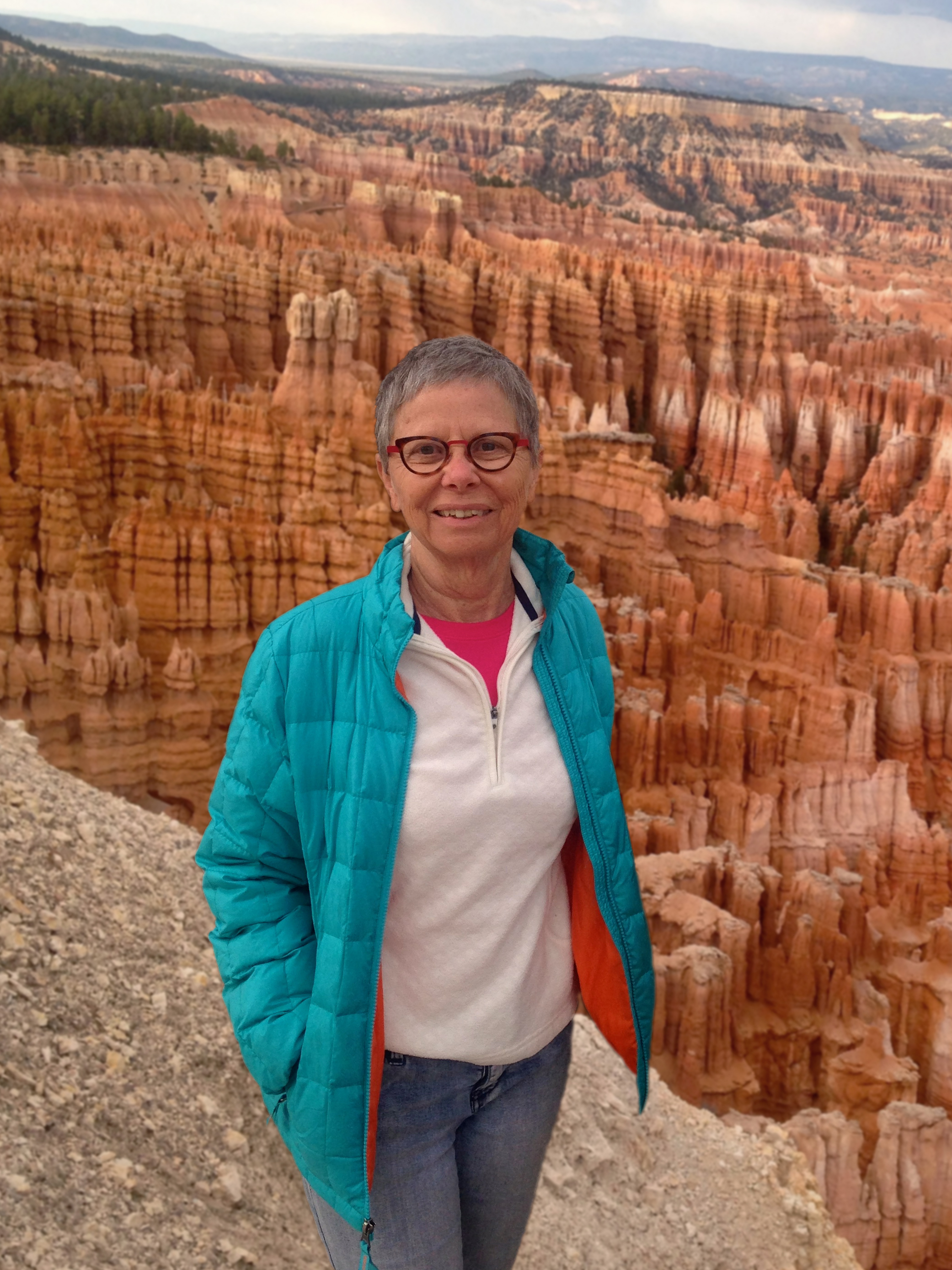
Sharon L. Dean grew up in Massachusetts where she was immersed in the literature of New England. She earned undergraduate and graduate degrees at the University of New Hampshire, a state she lived and taught in before moving to Oregon. Although she has given up writing scholarly books that require footnotes, she incorporates much of her academic research as background in her mysteries. She is the author of three Susan Warner mysteries and of a literary novel titled Leaving Freedom. Her Deborah Strong mysteries include The Barn, The Wicked Bible, and Calderwood Cove. Dean continues to write about New England while she is discovering the beauty of the West.
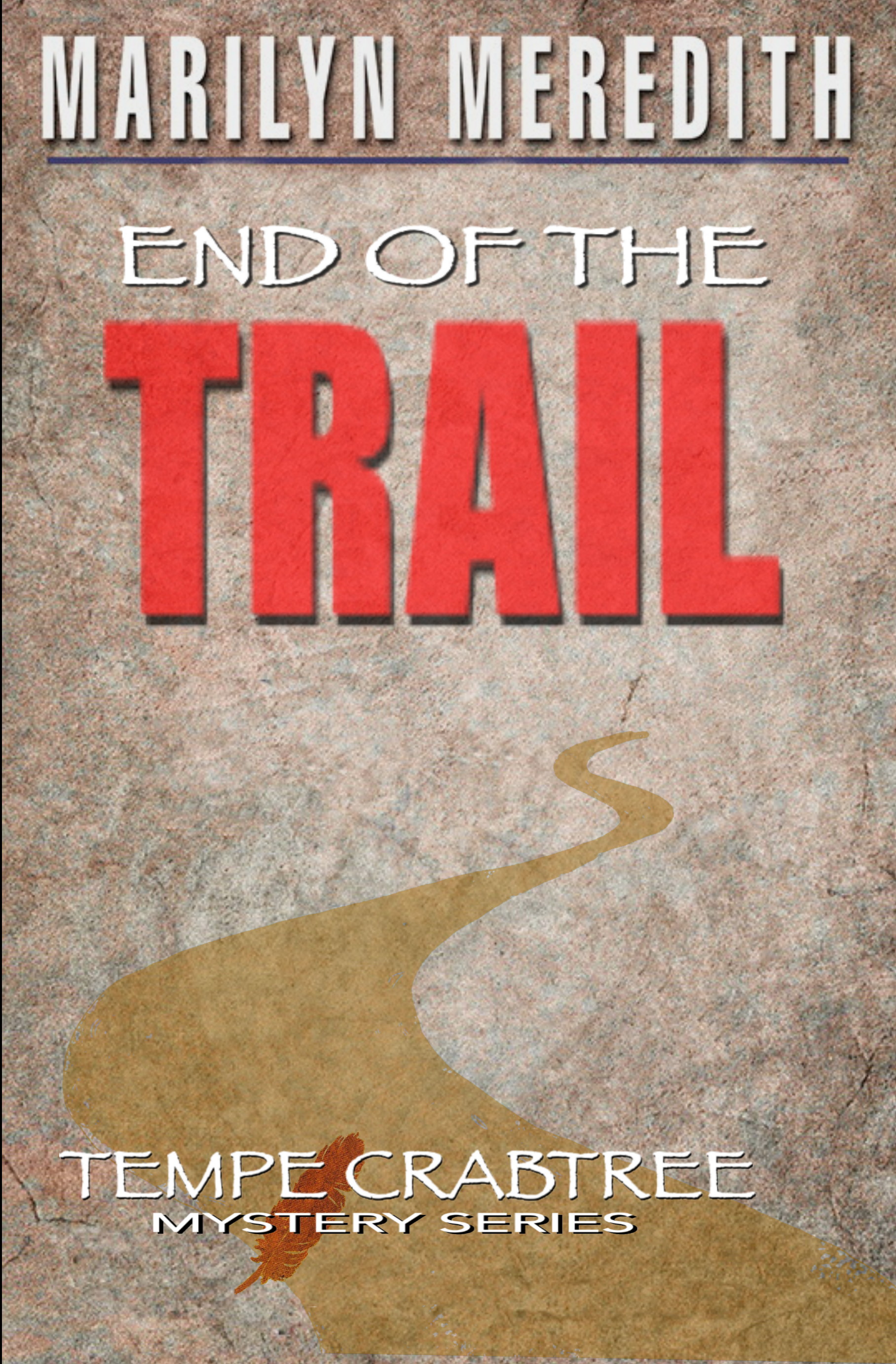
It’s time for me to write a new Deputy Tempe Crabtree mystery, or at least I think it is. I thought I’d finished the series when I wrote End of the Trail, but then I got the bright idea for The Trash Harem. I was pleased to see a photo of a Facebook friend reading it while on the beach in Hawaii. The caption said she always took my latest Tempe book with her on vacation. Well, if I don’t write one, she won’t have one next year.
I enjoy being with Tempe, but I haven’t any ideas for a great story for her. I was desperate enough to explain this dilemma on my Facebook page. Many of my friends gave me ideas—some pretty good—but nothing that really made me want to get busy jotting down notes.
In mid-July I’m headed to the Public Safety Writers Association’s annual conference. I’m hoping listening to the speakers and the panelists will give me some ideas. Most of the participants are great story tellers.
Truly, I’ve never had this problem before. And no, it’s not writers’ block because I’ve been doing plenty of writing, just not the fiction kind. Maybe all that extra brain and computer time has taken away my incentive for spinning a tale around my now retired deputy, Tempe Crabtree. I hope that’s all it is, and when my life calms down a bit, my imagination will be ready to give Tempe a grand adventure.
Anyone else have their imagination go dry? If so, what did you do to pump the well?
As you are reading this, I’m off on a research trip for the next Gabriel Hawke novel. This one is set in Montana. I have an place in the middle of the two areas I need to research.
This story started about 5 years ago, before I had even started writing the Gabriel Hawke series. My husband and I were driving from the south to the north of Montana headed to visit my cousin in near Flathead Lake. As we followed this lake, I looked out and spotted a resort on an island in the lake. My first thought was “what a great place to have a writers retreat!”
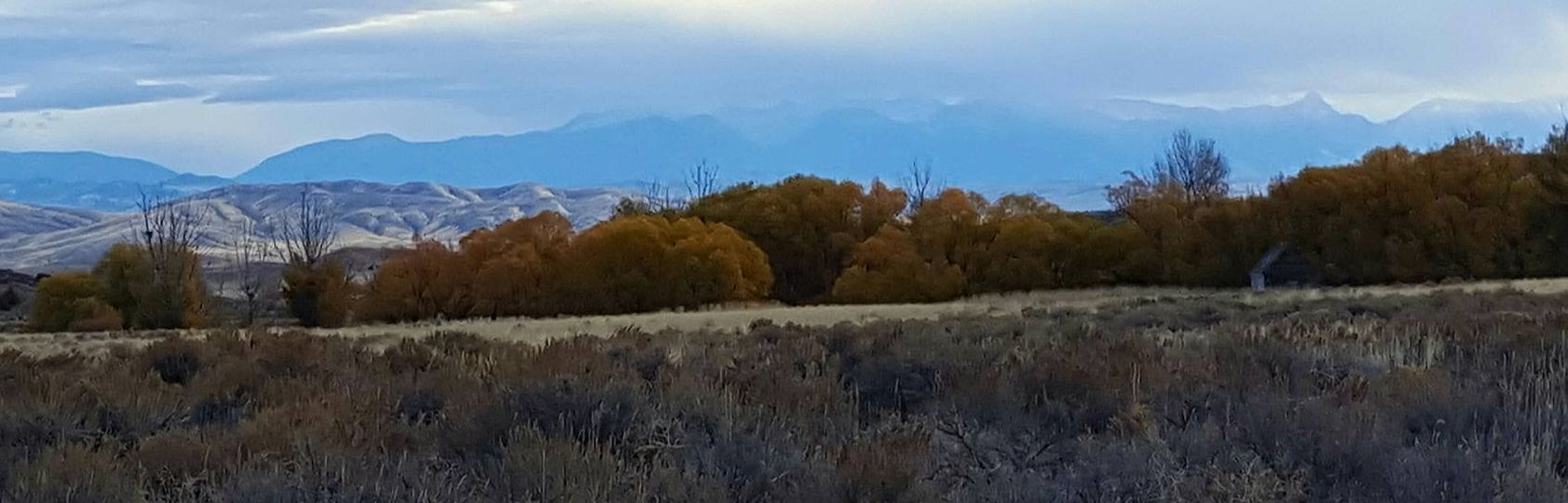
A photo from when I was in Montana before. This is south of the lake.
That island and building kept coming back to me and when I decided on the premise of book 10 in the series, I knew that resort would be in the story.
I didn’t know the name of it and hubby and I were of a different opinion of which road we’d been on. One of my oldest daughter’s friends lives and works in Helena, MT. I contacted her and asked if she’d seen the place on her weekend drives. She knew the place and sent me a link to their website. I had been right! It was off the road I had said we’d driven up to my cousin, not the road, hubby had thought. Score one for me! That doesn’t happen often when it comes to driving and roads since hubby was a truck driver for 30 years.
With the website I looked up the island and the resort. I had hoped to stay there one night and get a feel for the place. Not at $2000 a night! So then I emailed and asked if I could just come hang out for a couple of hours (you have to get there by boats that are run by the resort). I explained I was a writer and wanted to use the resort for a couple of scenes in my book.
The person who wrote back to me asked if I was the author who had requested the same a while back. I said no. When I told her when I’d be in the area, she said there would be guest at the resort and no one else was allowed. But she would be happy to answer my questions and send me any photos I might need. You can bet after I go scope it out from the side of the lake, I’ll have more questions for her. Luckily it is only being used as the place where Hawke’s sister is attending a corporate retreat and it is more of a starting point for the story than a main setting.
The other place I’ll be visiting is the Flathead Indian Reservation. I’m debating on where the sister will run to, the reservation or the wilderness. That will depend on what I find out on my trip.
Right now, I’m pleased to say that book 9, Owl’s Silent Strike, is now available in ebook and print. My narrator is working on the audiobook.
Unexpected snowstorm…
Unfortunate accident…
And a body…
What started out as a favor and a leisurely trip into the mountains, soon turns State Trooper Gabriel Hawke’s life upside down. The snowstorm they were trying to beat comes early, a horse accident breaks Dani Singer’s leg, and Hawke finds a body in the barn at Charlie’s Lodge.
Hawke sets Dani’s leg, then follows the bloody trail of a suspect trying to flee the snow drifted mountains. Hawke is torn between getting the woman he loves medical care and knowing he can’t leave a possible killer on the mountain.
Before the killer is brought to justice, Dani and Hawke will put their relationship to the test and his job on the line.
The big mystery cons are ready and waiting for writers and fans to enjoy mingling, meeting authors and readers, and enjoying being together.
I have wonderful memories of the Bouchercons and Left Coast Crimes I attended over the years. Sometimes going to one of these events was like attending a family reunion. Often I was greeted with a big hug by someone I’d met the year before, and we’d have a wonderful time chatting.
There were also several smaller mystery conferences I attended that are no longer happening. My favorite was Mayhem in the Midlands, which happened in Omaha. I met so many wonderful people there, fans and authors. It’s where I first met Wm. Kent Krueger and his wife. And it’s where my husband and Kent vied for the best actor at the mystery dinner and play. Sometimes Kent won, and other times it was my hubby.
Once Kent’s wife and my husband were on a panel with Jan Burke’s husband and another spouse I don’t recall right now. The moderator asked great questions, and it was a hilarious panel.
My husband and I had a wonderful time hanging out with the most interesting people, and also traveling to many places in the U.S. we’d have never visited if it had been for these mystery events.
Now, hubby and I no longer fly, and I am only planning on attending one writing conference, the one put on by the Public Safety Writers Association in Las Vegas. (My daughter will drive me there.) This conference is small, attended by many still active and retired persons in all different types of law enforcement and other fields of public safety who are writing or aspiring to write, and mystery writers. The speakers and panels are a mixture of writing and publishing, and law enforcement information. Four publishers are expected to attend. https://policewriter.com/
What was once my normal, attending many mystery cons during the year, is no longer possible for several reasons, but I encourage those of you who can. And my advice to those of you who attend one or more event, don’t merely hang out with those you know, reach out and talk to everyone. Yes, I always did and shared some wonderful conversations and meals with interesting people for all parts of the country. You might become friends with a reader who will become one of your biggest fans.
Marilyn who also writes as F. M. Meredith
The latest and last book in the Rocky Bluff P.D. mystery series if Reversal of Fortune. And I’ve received lots of help for this series from folks I’ve met through the Public Safety Writers of America.





 Ladies of Mystery
You must be logged in to post a comment.