The Art of Getting it Right

Last month I participated in a month-long online workshop/class about law enforcement. It was taught by a veteran policeman who had worked in several places and organizations and enjoys helping writers get it right.

He started the class with an actual case report of a murdered woman. We read it and then asked questions, which he answered very thoroughly. He told us what the police had to do by law at the scene and what they could and coudn’t do while talking to people trying to gather information to help them catch the perpetrator.

We went through processing a crime scene and saw actual photos of the scene. I had a barebones idea of what took place but had left out a few steps when my characters have come across a body. However, I was happy to hear that when a homicide happens the detectives or whoever is working on the case can and do work non-stop the first 48-72 hours. They take short naps and go home to change clothes, but they stay on the evidence because there is that small door of opportunity to gather all the information that could help them apprehend someone. I have had Gabriel Hawke work nonstop on murder cases. I had made it his need to find the truth, but it appears is what a good detective does.

The evidence in the case of the homicide we were “working” pointed to one of the victim’s sons. But several of us, me included, felt it was too easy. Yes, our red herring minds were trying to find ways to make it stick to someone else. Even when all the evidence clearly pointed to the person that was eventually arrested. He even confessed in his own way.

The instructor said that few murder investigations and homicides are as convoluted as writers of TV shows, movies, and books make them out to be. The need to make motives and means hard to figure out are the writer’s way of entertaining the reader. In real life, if the evidence is pointing to one person, it is usually that person. It’s just a matter of the detectives gathering enough to make a solid case and the icing on the case is getting that person to confess.

Something I have had happen to me several times while on jury duty. Once the evidence is all lined out against the accused, they will plea out, sometimes at the last minute, (as when we were waiting for a trial to start and were dismissed because the person plea bargained). The instructor said, that happens the most when the accused has confessed during an interview. The interviews are taped and once a jury sees the person confessing, they are going to be found guilty.

I enjoyed that the instructor was so willing to answer questions for our books and help us with law enforcement questions. I have asked this person questions before on the crime scene email loop I’m on. If you would like to join to ask questions of retired and practicing LEOs, lawyers, forensic pathologists, FBI, DEA there is a person on the loop from just about any entity you might want to ask questions to get your scene or scenario accurate. Crimescenewriter2@groups.io

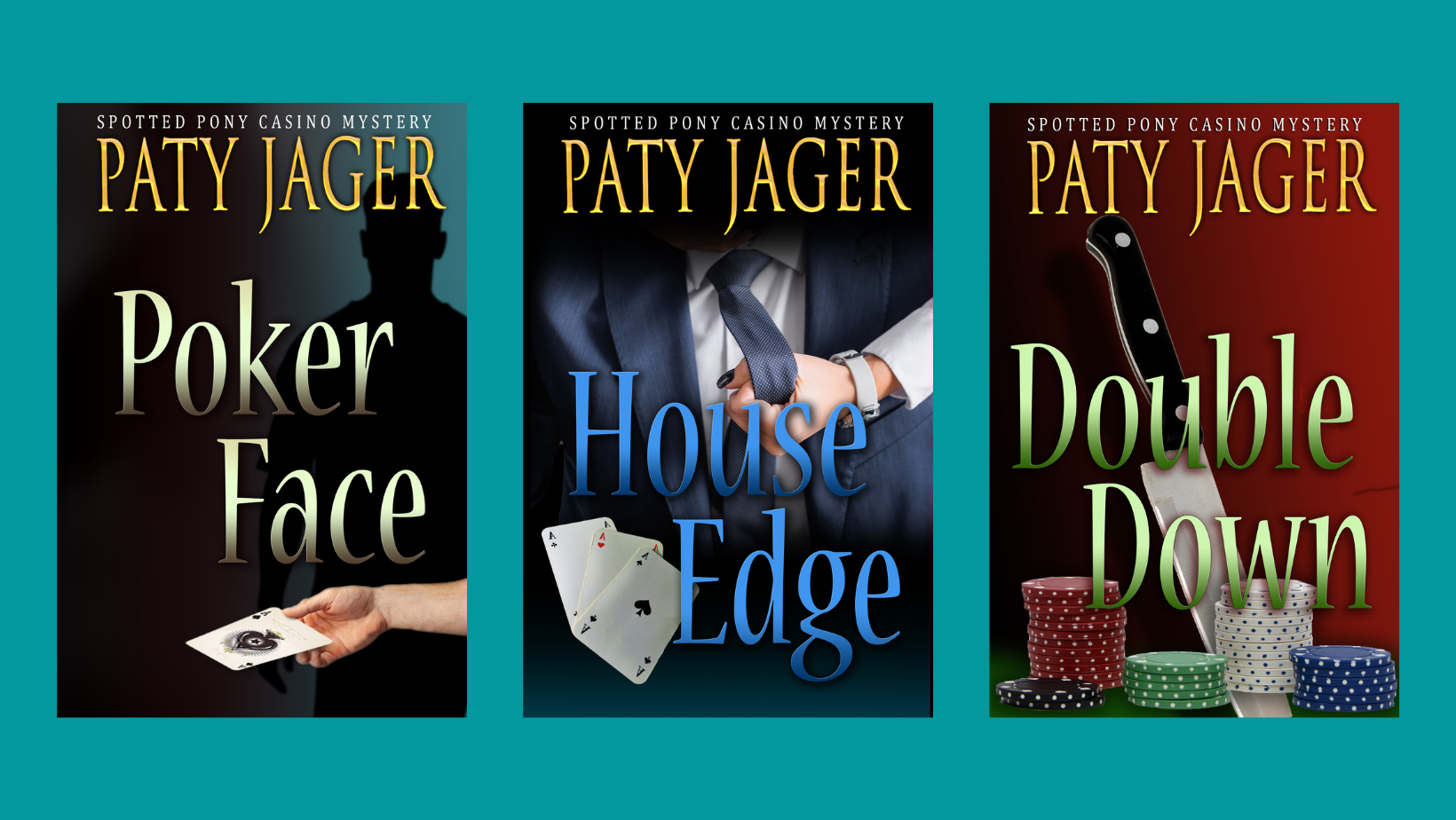
Besides knowing what I need to about the legal side of things for my mysteries, I also like to go to the area where the story I’m working on is set. I recently watched security guards at an Indian run casino and did a walk around the tribal police station in my Spotted Pony Casino Mystery series. In June I’ll be traveling to Montana to walk through a resort that will be the jumping off spot for the next Gabriel Hawke book and I will be taking a couple trips into a wilderness area near the resort to discover what it is like to better write that story.

What can I say, I like to make sure I not only entertain but I enlighten as well.

Guest Blogger ~ Darlene Dziomba

I have always had a love of animals. My parents would good-naturedly complain that wherever we went, I had to pet every dog I saw. Half a century later, things have not altered. My volunteer work at the Animal Welfare Association has me close to numerous dogs and cats. As I scrub one kennel, I chat with the animals in neighboring kennels.

The idea for Clues From The Canines came from the experiences I had and the staff I met during my volunteer shifts. I thought that by creating characters whose days centered around working to find homes for animals in shelters, I could raise awareness of the efforts made on animals’ behalf.

When I crafted the protagonist, Lily Dreyfus, the piece of me embedded in her personality is an introvert who loves animals. There are numerous scenes in the book where one finds Lily talking to either the animals at work or her two dogs at home. Her friends criticize her for spending more time with animals than she spends with humans.

The time Lily spends with animals leads her to a new love interest. She even considers that she has found her soul mate. Lily met Pete when he came to the Forever Friends Animal Shelter to adopt a dog to aid him in coping with the PTSD he suffered from post-military deployment and the despondency he feels after losing both parents in a tragic auto accident.

Pete uses outings with his dog to get to know Lily. They have an accidental meeting in a park, and Pete asks Lily to join him on a walk with his dog. He suggests a stop for ice cream after the walk. Eventually, he summons the courage to ask her to dinner.

Their different family experiences draw them even closer together. Pete is an only child with a small extended family; and Lily is the oldest of four children. Her parents were active volunteers in the children’s school, and they made friends with other parents. She relays stories of multi-family trips to parks and beaches. Pete realizes that a lasting relationship with Lily will provide the sibling experience he did not have as a child.

The hope and promise of the relationship are brought to a screeching halt. Pete is found dead. Lily’s world is shattered. Her friends and her dogs help her pick up the pieces and sniff out a killer.

Clues From The Canines

Set in a small town in New Jersey, Clues From the Canines combines witty dialogue with tension and intrigue.  Lily, the Adoption Coordinator at the Forever Friends Animal Shelter, is stunned by the news that her physically fit, former Marine boyfriend is dead. When the police rule the death a homicide, Lily, spurred on by grief, resolves to sniff out the killer. She gathers her pack, both human and canine, to point police to the perpetrator.

The canine pack competes for the alpha position, their owner’s attention, and extra treats, while the human pack doggedly seeks out justice.

Darlene Dziomba debuted the Lily Dreyfus Mystery Series with the release of Clues From the Canines in March 2022. The book is currently being read on four continents.  Darlene volunteers at the Animal Welfare Association, a New Jersey animal shelter, where she chats with the dogs while completing her assignments. She has a 30-year career in Finance at the University of Pennsylvania and is an avid reader, gardener, and traveler.  Darlene is a member of Sisters in Crime and lives in New Jersey with her four-legged best friend, Billie.

www.ReadDarlene.com

@ReadDarlene1

facebook.com/read.darlene.7

ReadDarlene@hotmail.com

What Being a Writer Means to Me

I started writing stories when I was a youngster. I wrote my own versions of the books I read. My first original was a story about fairies which I illustrated. My mother sent it to a publisher, who sent back a nice note telling me to keep writing, and I did for a long time.

My first efforts as an adult were rejected and I’m sure because I had no idea what I was doing. I didn’t get serious about writing until I had grandkids. My sister did our family genealogy and I decided to write an historical family saga based on both.  I had to do lots of research about places and times my ancestors lived and believe me it took a long, long time.

The second one I wrote was published by a major publishing company. I had no clue about marketing or promotion and did one book signing. When the 2nd was published, I knew a bit more.

Next came my first mystery, and another.  I’ve been at this a long time, and now have 50 published books all available on Amazon. Along the way I’ve learned so much about writing and promotion.

Besides the fun of writing and creating characters who seem as real as the people I know, I’ve had a great time over the years traveling all over the county attending writers workshops and mystery cons—Bouchercon and Left Coast Crime, plus many of the smaller ones  that have disappeared like Mayhem in the Midlands and Crimefest.

I was able to meet some of my favorite authors like Mary Higgins Clark, William Kent Krueger, Craig Johnson, Naomi Hirahara, and so many, many more. Plus, I made friends with so many other writers and more importantly readers.

When I read about how much writers and readers enjoyed this most recent Left Coast Crime, I was a tad envious, but then realized I had so many great memories of conferences past and all the interesting people I’ve met over the years.

I’m now in the process of my two favorite writer pursuits: 1. Planning for and promoting my latest book, the last in the Rocky Bluff P.D. series, Reversal of Fortune and 2. Putting together ideas for my next Deputy Tempe Crabtree mystery.

Being a writer is a wonderful and rewarding part of my life in so many ways.

Reversal of Fortune is about the death of a fortune teller. It’s available in paper and for Kindle on Amazon: (I wrote this series as F. M. Meredith)

It Never Rains in Southern California by Karen Shughart

We just returned from a visit with our son and daughter-in-law, who live in southern California. There was a song in the 1970s entitled It Never Rains in Southern California, and although the lyrics did not particularly inspire joy, the title is apt, it truly hardly ever rains in southern California. As my son reminded me when I mentioned how nice it was to not have to deal with the inconsistent weather events like blizzards and blinding rainstorms like we do here in the northeast, he reminded me that California has plenty of their own climate issues: mudslides, fires, earthquakes, and damaging winds. Good point.

During our visit we sat under a pergola in their backyard and snacked on tangerines picked from a nearby tree. One night for dinner we ate freshly-caught Pacific salmon with lemon slices we plucked from another. Avocados, plentiful in that part of the world, hang heavy on branches drooping over fences A bottle brush tree with vivid red flowers and clusters of bright yellow daylilies attract a multitude of hummingbirds and Monarch butterflies. The air is redolent with sun-ripened foliage and the salty brine that drifts inland from the broad, blue Pacific Ocean.

Photo by Gary Barnes on Pexels.com

We arrived back in New York to a gray, cloudy day with a drizzle of fine rain and yet, when we pulled into our driveway, our daffodils and forsythia were beginning to bloom, the hyacinths were emerging from the earth, and nestled in among our own burgeoning daylilies were bright, purple violets, signs that spring is surely on the way. While the weather is fickle, each day here brings a surprise; now some days are warm and bright, on others, winter doesn’t want to lose its frosty grip.

I thought about how climate and weather affect writing. My Cozies are set in a small village along the south shore of Lake Ontario, much like the village where we live.  Four defined seasons provide the setting to the mysteries:  a dark, stormy, windblown night is a metaphor for what’s to come, as is the juxtaposition of bright summer days and a murder that’s occurred in a lush garden setting.

If we lived in California, I would still be writing Cozies, but they would different. Mine have a backstory based on the history of our state: the Revolutionary War, the War of 1812, the Underground Railroad, to name a few. If we lived in California, I’d choose Spanish Missions, the Mexican American War, or the Gold Rush.   The setting, too, would change. A California beach town and one on Lake Ontario have few characteristics in common, our beaches are rocky and not as wide, we don’t have sidewalks and parking lots along the water, and the distance across the lake to Canada is a mere 80 miles, compared to more than 6,000 to China. We do, surprisingly, have pelicans, but we’ve never seen a whale. Still, it’s fun to contemplate what I’d do differently if my mysteries were set in a part of our country where it never snows, hardly ever rains, and the sun shines almost every day.

Never Too Old

I think back to my childhood every time I find myself digging for more information. I loved school and learning. While math wasn’t a favorite and I struggled to be proficient in it, I understood it was necessary to learn the basics. In the fourth grade every evening while my mom and I washed and dried dishes, she would quiz me on the multiplication table. And today, I can pretty much spout out the correct answer with a few minutes to pull numbers out of my filled brain. 😉

Writing books has been my way of continuing to learn and fulfill my love of research and discovering new things. From the occupations my characters have:

Vase by Olaf

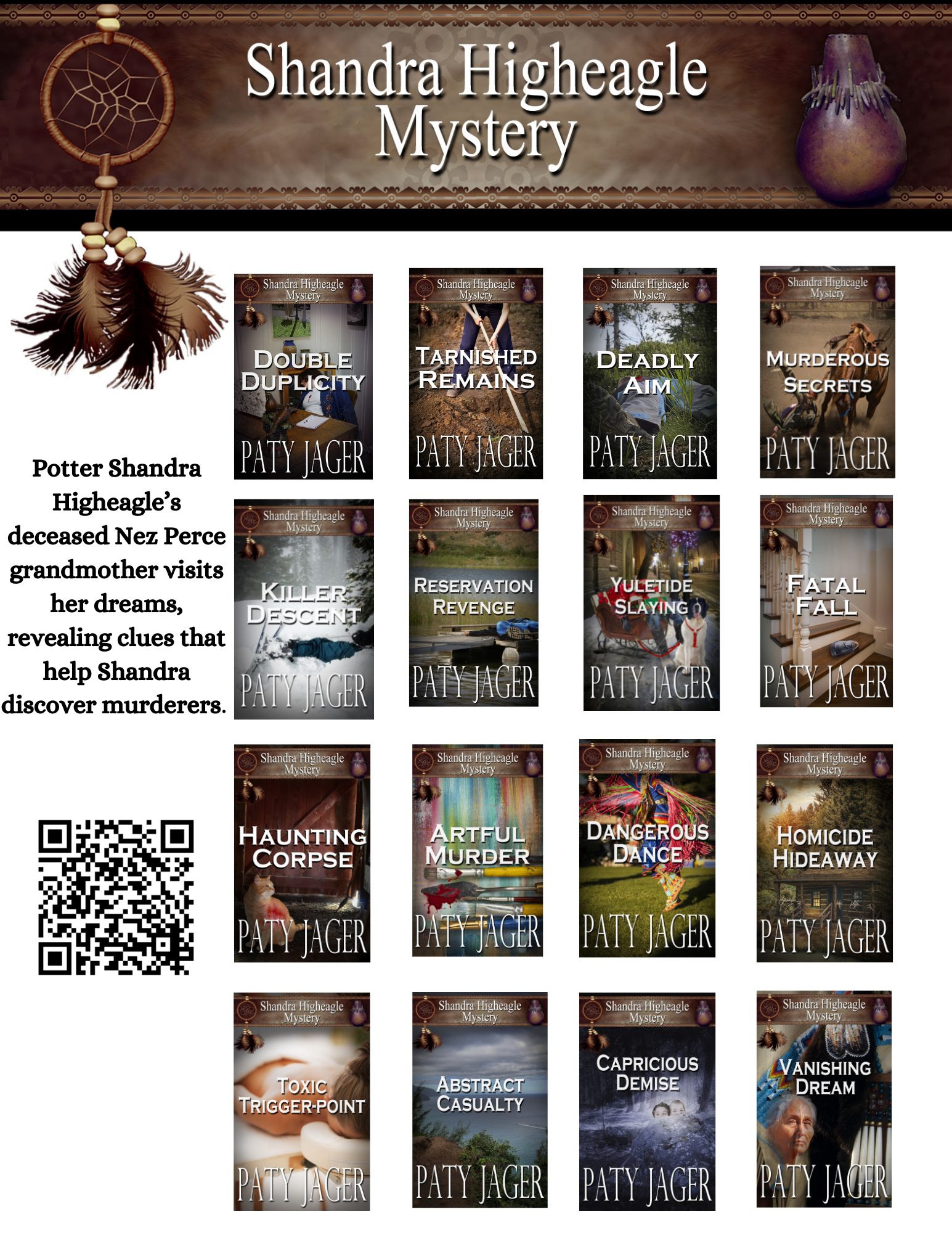
Shandra Higheagle, my Native American potter character, gave me the opportunity to spend time with ceramicist Ted Juve, or Olaf, the name he signs to his work. He taught me the process of extracting pure clay from clay soil that he uses for some of his pieces and the method my character uses for her art pieces.

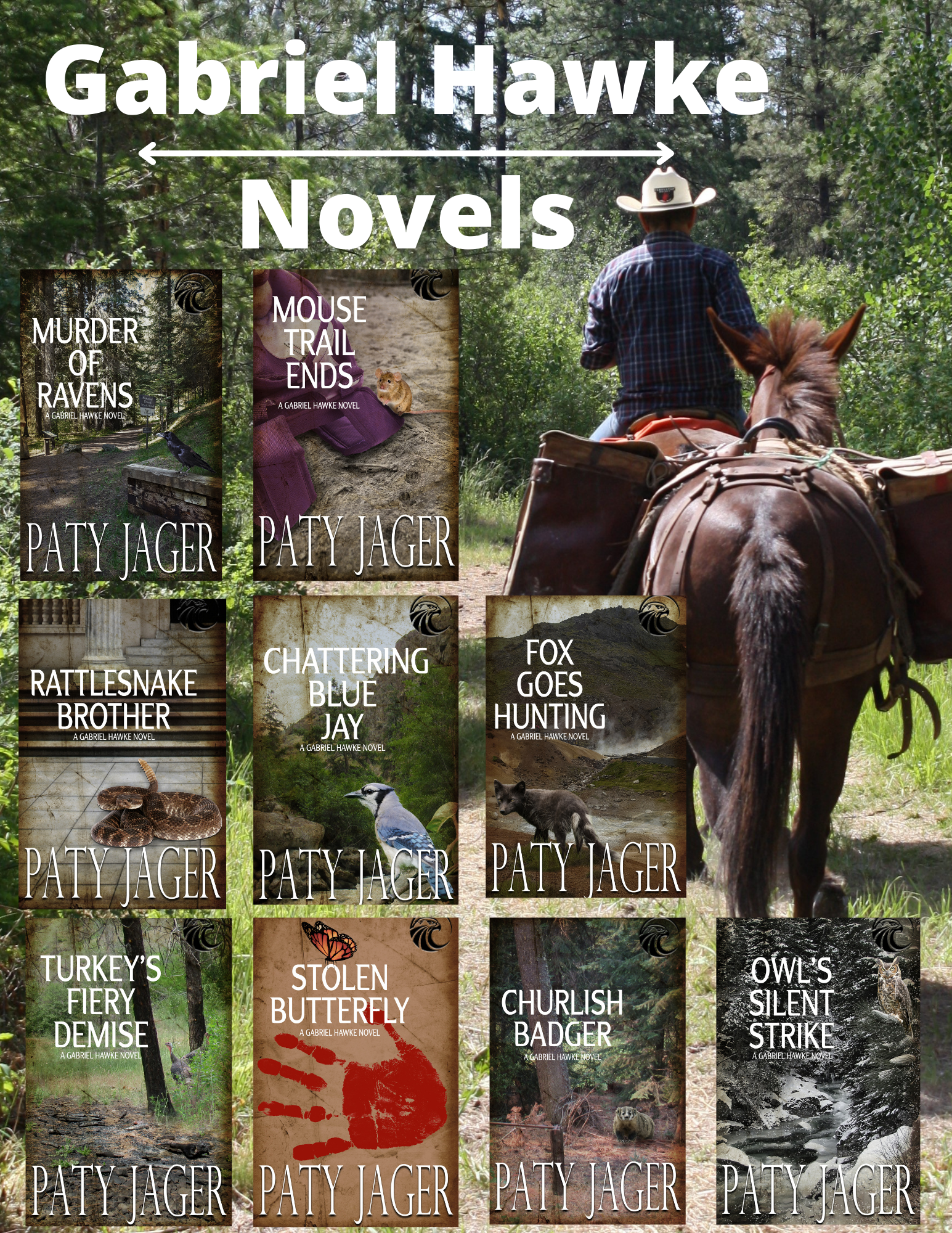
My character Gabriel Hawke allowed me to spend a day with an Oregon State Trooper with the Fish and Wildlife Division in the county where I have my stories set. That was an eye-opening day with lots of notes taken as we drove around the county. He gave me insights into the job and some incidents that he had been a part of.

My newest character, Dela Alvaro, is taking me into the world of Tribal run casinos and the life of a lower limb amputee. Both new things to me and I’m soaking in all I can learn from many different sources.

This month I am also taking an online workshop from a retired law enforcement officer. He has over forty years law enforcement and what I appreciate the most is he has worked with lots of different law agencies and knows a lot about how different states handle things. And if he doesn’t know, he knows someone who can give us the correct answers.

The workshop started out with him attendees some law enforcement information and then he gave us the first responders view of a murder scene. We are now not only learning the whole business of processing the area and starting the investigation but also being asked along the way who we think might have killed the victim and why. He not only has us using our minds to learn, but to be creative in what we think might have happened or how it would have happened if we wrote this in a book. I like learning two things at once!

This workshop came at a good time for me. I sent out my most recent finished WIP (work in progress) to my retired LEO beta reader. He found fault with three different scenes. Two, I will learn about from this workshop. The third…is harder. It goes to the core of being a policeman for decades. I was being too soft. My character isn’t soft, so I can’t have him acting like I would act. He is tough and knows when his life is in danger he must react as he’s been trained. Another lesson learned. Did I say I like learning new things?

The reasoning my beta reader gave me made sense. It just didn’t work for the scene to come later, so I had to rewrite the scene to keep my character from killing someone they needed to question. I had my LEO wounding the man. But with an AR rifle aimed at him, my character would have “tapped” the suspect three times. (tapped=three quick shots to the torso) Which would end up with a dead, or close to dead, suspect they needed to question. I changed the scenario to the suspect realizing he was shooting at police and surrendering. He wasn’t the bad guy they were after, which the police discover after questioning him. Whew! That scene was rewritten three times before my beta reader gave it a thumbs up.

But he also questioned my character never giving the people he brings in for questioning Miranda Rights. That is why I am taking this workshop. To learn more about that process and how I can incorporate it into the books at the correct time.

There is always a need to learn something. And I love drinking it all up and using it in books.

As a reader do you like to learn while you are entertained?

As a writer do you feel the need to learn and get things right in your books?