I recently received an email from someone who has read all the cozies I’ve written. She said that while she enjoyed each of the books in my Edmund DeCleryk series, she thought the most recent one, Murder at Freedom Hill, was the best; with each book my writing skills have evolved, with layers added to each story. I appreciated her candor, and she probably was correct. My writing has in many ways been like a train, metaphorically picking up steam, and adding railroad cars as necessary to accommodate a growing number of passengers seeking to get to their destination.
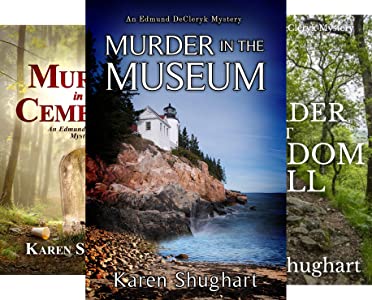
With the first book in the Edmund DeCleryk cozy mystery series, Murder in the Museum, I wrote a prologue that introduced a historical backstory that provided clues to why the present-day murder occurred. As the mystery unfolded, the backstory, spanning the late 1700s to the mid-1800s, continued with artifacts found in the basement of the museum and discovery of a memoir written by a man who, in his youth, had made terrible mistakes but who redeemed himself in adulthood. It was a short story within the book.
I continued with the historical backstory concept in my second book, Murder in the Cemetery, after deciding it would always be part of my cozies. But this time after the prologue, I conveyed it with the discovery of an artifact at the cemetery where the victim was killed, and a series of letters a lonely wife wrote to her sister while on a quest to find her husband, who had been transported to England as a prisoner of war during the War of 1812. Instead of one prologue I wrote two, the first introducing the backstory, and the second giving the reader the seasonal setting for the present day murder.
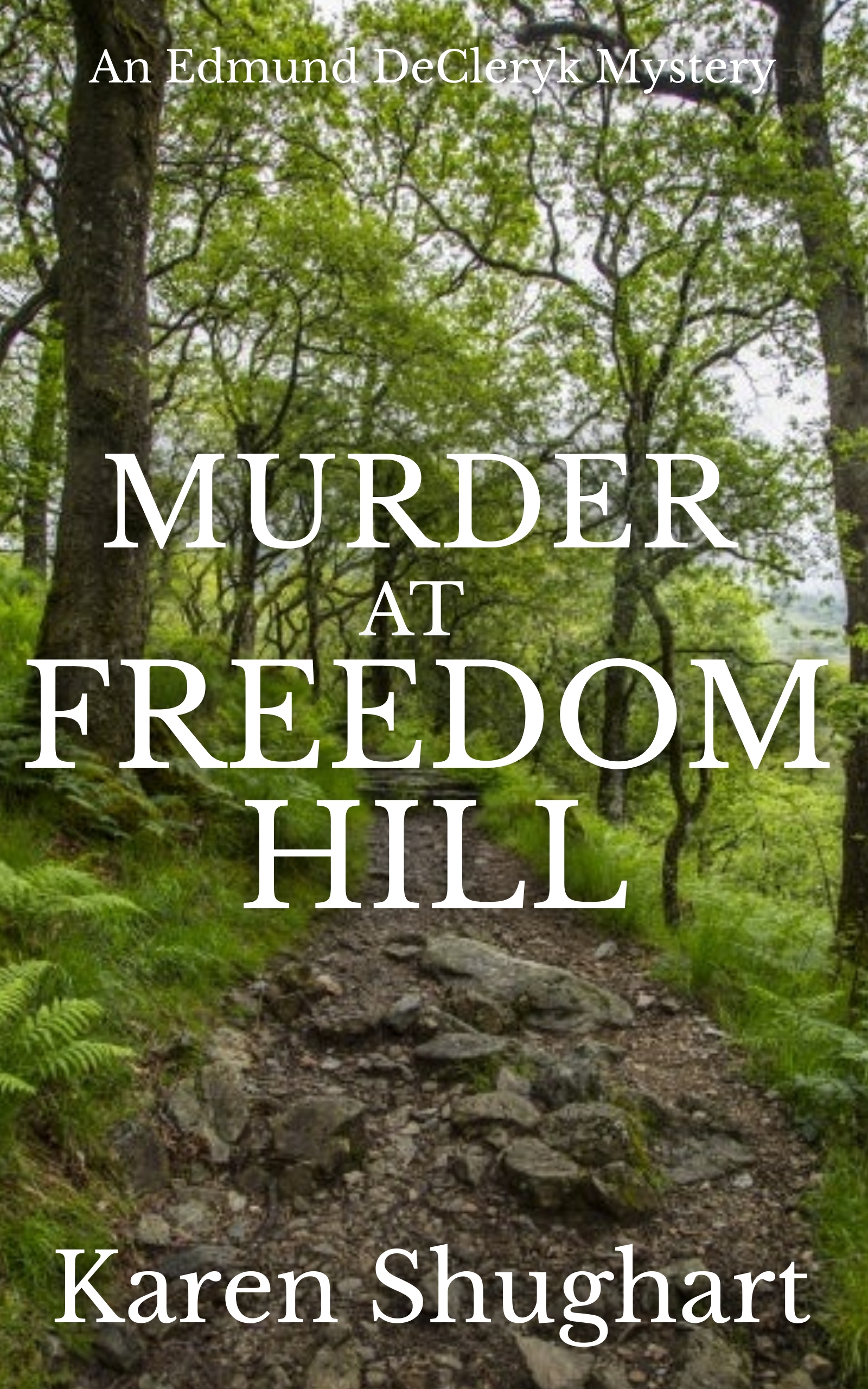
In the third book, Murder at Freedom Hill, I continued with the two prologues and the backstory-a narration for an exhibit at the historical society about the victim’s ancestors, both Black and White-who were involved in the Underground Railroad and Abolitionist Movement. Then I added a subplot that was separate from, but intricately woven into, the main story.
Now I’m working on book four, Murder at Chimney Bluffs. In this one, I continue with techniques I used before: the two prologues, the historical backstory -now rumrunning and the Prohibition era -but the backstory will also be the subplot. And I’ve added a second mystery, a cold case from decades ago that may lead the investigators to the killer.
I’m happy with the progression of these books, it keeps me interested and stretches my brain, but I confess that the writing is taking me a bit longer with each one. Now I’m compiling more notes and have added a timeline and a list of characters, many of whom are recurring; some new. As I continue to write the series I, too, am picking up steam, which will, hopefully, make each book better than the one before.
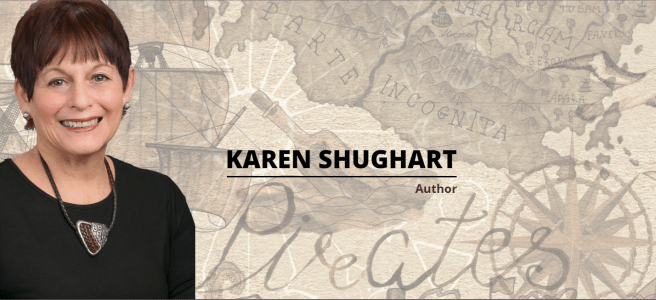
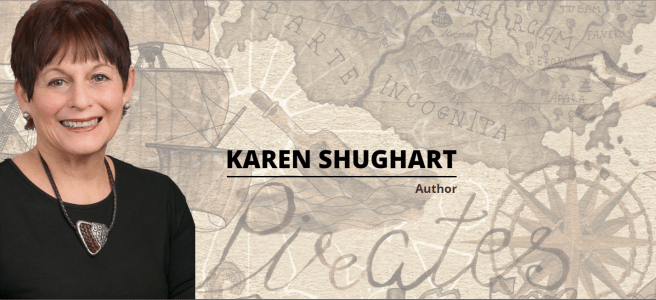
Karen Shughart is the author of the award-winning Edmund DeCleryk cozy mystery series, published by Cozy Cat Press. She has also co-written two additional mysteries with Cozy Cat authors, and two non-fiction books. A member of CWA, North America Chapter, and F.L.A.R.E., she lives with her husband, Lyle, on the south shore of Lake Ontario in New York state.
The timeline for the composition of Of Ashes and Dust dates to when I was teaching college courses to the US military on Diego Garcia, an atoll in the Indian Ocean; a beautiful spot if there ever was one. That was a halcyon interlude in my life; there was plenty of time to linger on the beach every morning, since I taught evening classes, pondering the story arc, which appeared seamlessly out of nowhere in my mind. Perhaps it was the charming and calming atmosphere of the place that so easily birthed in my mind’s eye this novel’s initial events. Everything just fell into place; it wasn’t until later, when I left the island after about five months, that difficulties arose in the narrative flow and at almost every juncture in it. Episodes of doubt and stagnation occurred almost consistently, the bane of any writer. The following are appetizers, some profound, others perhaps not that deep, for readers to nibble ….
Envisioning the plot came easier to me than the development of the three main characters. I knew I wanted to write an alternate-history apocalyptic doomsday thriller set in rural New England around the time of the Millennium. Something about the rounded-off number 2000 buried itself in my head. I wasn’t the only one. Older readers may recall the expression “Y2K” for Year 2000, a neologism that soon fell into disuse and ultimately oblivion when civilization didn’t collapse after all. To be sure, just before the Millennium there were calls from hotheads to bring the world as we knew it down. “Let’s get it on now!” and “Why wait!” went the refrain. There was even an exchange of high-ranking officers between the Pentagon and the Kremlin; each had their man in the bowels of the other’s secret war room to disable any accidental computerized nuclear launch. (It was feared that computer systems, even sophisticated nuclear-weaponized ones, could go haywire after midnight of the last day of the Millennium for not having been programmed to function after the 20th century; that planes might fall out of the sky in mid-flight, etc.). The worst thing to happen was that a guy in Ohio, or so I believe it was, got an astronomical fine for a public library book believed overdue by a century. Yet even he survived. In Of Ashes and Dust, except for the protagonist, tortured Vietnam War veteran Professor Will Watson and his Japanese-born paramour Kimiko Tanimoto, along with another local couple, nobody else is initially that lucky. Nobody.
Speaking of Watson and Tanimoto, their names and character development came easily. Watson was a compilation of several military vets I’ve come to know; Tanimoto was the compilation of several, if not many, Oriental women I’ve come to know equally well. (Use of the term “Oriental,” which some may consider outdated, is deliberate. No time for elaboration here). “Tanimoto” was the name of a soldier in my own Army unit; it stuck to me long after my discharge from the way it rolled off the tongue. Mine, at least. Also, the name of the third major character, Watson’s friend, confidant and fellow Vietnam War vet Mark Mercotti, was named after a college football player I used to work out with in the local YMCA. Development of his character, however, was more diffuse, having been derived from many guys I’ve gotten to know down the years.
As for the origins of the rest of the story and its explosive ending, buy and read the text. No explanation forthcoming here, dear reader. So, shake a leg, get the book, and bear witness to the kaleidoscopic patterns of unholy madness in Of Ashes and Dust. It’s the ultimate “alternate truth.”*
Of Ashes and Dust
At the turn of the Millennium, a trio of tormented souls grapple with their existence in a humble town in New Hampshire while the world spirals into anarchy. Unbeknownst to one another, they hold dark secrets that would eventially ignite a conflict.
Their tale traces back to two covert operations from the Vietnam War era–a revelation about UFOs from the U.S. Air Force and the clandestine Project Sixty-Seven.
At the heart of the story is Professor Will Watson–a war-ravaged Vietnam veteran, a fervent activist of the New Hampshire Liberty Militia, and a man haunted by specters of his past. As the world edges toward Armageddon, he seeks solace in the arms of his Japanese graduate student assistant, Kimiko Tanimoto. Amidst escalating pursuit by the State Police and FBI, Watson is confronted with the harsh realities of his traumatic past and the imminent downfall of a world crumbling around him.
Associate Professor of English, ESL, and Humanities Ron Roman taught with the University of Maryland Global Campus (UMGC- Asia) since 1996. He retired from full-time employ and later as adjunct during the COVID-19 crisis (2020). His hobbies include jogging, hiking, camping, weightlifting, roller-coasters–and his beloved 1968 Rambler American antique auto for which he received Third Prize in the Hemmings (Motor News) National Antique Auto Show in Bennington, Vermont shortly before returning overseas. (The Rambler has undergone a complete restoration.)
He has written extensive travel, academic, and political articles for regional, national, and international publications. He studied writing (both fiction and creative) for his third graduate degree (Humanities) from Wesleyan University/Connecticut. Currently he resides in South Korea with his wife where he works on US military installations assisting US military retirees and dependents. He continues to write and has acted in numerous Korean TV dramas and motion pictures like Operation Chromite portraying Admiral Forrest Sherman opposite Liam Neeson as General Douglas MacArthur. His alternate-history apocalyptic doomsday thriller Of Ashes and Dust was a 22 November 2022 release by Histria Books.
I began my writing career after retiring at the age of 70. At the end of my first novel, protagonists Jack and Sara McCabe are thrilled to learn they’re going to have a baby. Fast forward four years later to my seventh novel. That child has grown to be twenty-year-old Amos, who has just graduated from college with a degree in anthropology and archeology.
Amos survived and even thrived in the sixth book, Missing Memories. So I wanted to explore an opportunity for him to spread his wings in another thrilling adventure.
During research for book seven, I learned that archeologists actually found the bones of nine Neanderthals in a cave south of Rome, Italy. They also uncovered the remains of prehistoric predators, including the giant hyenas. Scientists decided the hyenas killed the Neanderthals and brought them to the cave for a feast.
Having lived in the area for a year, I decided this would be a fascinating opportunity for young McCabe. In the story, he’s invited to be part of the cave dig site.
Needing to find out as much as I could about the Neanderthals, I spent days poring over research about their lives 50,000 years ago. They faced a variety of challenges from nature, including freezing temperatures and volcanic eruptions. And from fierce beasts and humans. While humans interbred with Neanderthals, they also took them for their slaves.
The Neanderthals were skilled as hunters, both on land and in the sea, and were adept at making fire, carving wood and stone, making jewelry and weapons. But they were no match for the humans.
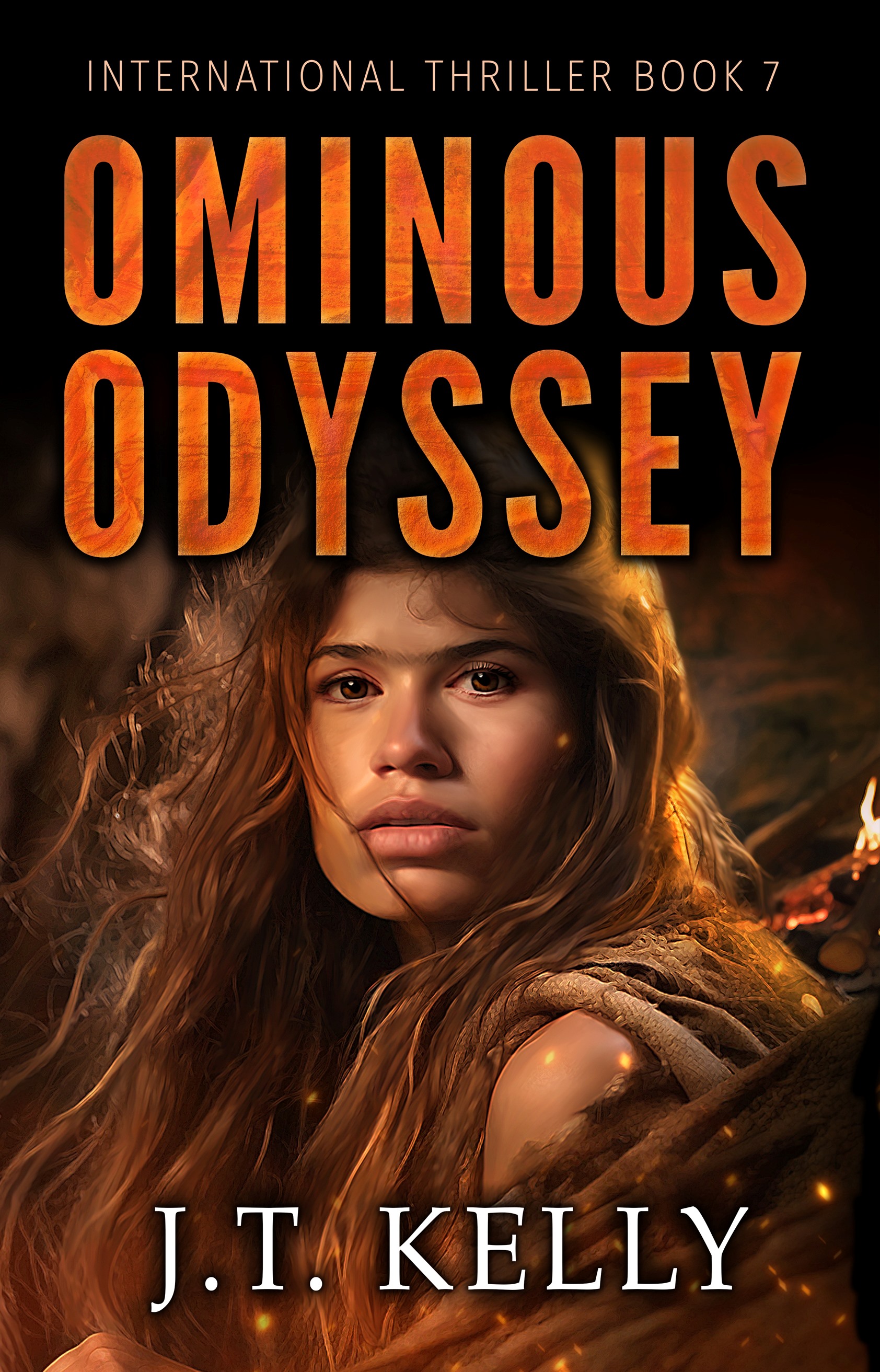
What would it be like for a modern day human to inexplicably enter the bizarre world of the Neanderthals? What could he teach them to help them improve their lives? Or would the experience be too threatening to even survive? That’s why I decided to write Ominous Odyssey. The story evolved during the writing process. It was an emotional experience for me but I was thrilled with the result.
Here’s part of a recap on the back cover of the novel:
Ominous Odyssey is a thriller and a love story. It takes place four years after teenager Amos McCabe escaped from kidnappers. Now, with a degree in archeology and anthropology, he receives an invitation to work at a dig site in Italy south of Rome. Archeologists discovered the bones of nine Neanderthals. The young man can’t wait to learn more of the secrets of these prehistoric people.
The lead archeologist informs Amos there are tunnels they hadn’t yet explored. His curiosity gets the better of him. The adventurer brings his headlamp and investigates before anyone arrives for work. When the young man reaches the end of a tunnel, something terrifying happens.
He discovers he’s been transported to an alternate universe of 50,000 years ago. The explorer soon realizes there’s no way to escape. What will become of McCabe? Has his exuberance gotten the better of him? Join Amos for an adventure of a lifetime.
I was thrilled to see this book review in Amazon Italy: “What’s unique about this international thriller is its ability to explore the unknown. The story is intense and full of suspense, with an ending that is incredible. Ominous Odyssey is not just an adventure novel, it’s an intriguing journey that provokes reflection on what it means to be human, and how we can influence the world around us.”
My works include Fair Ways and Foul Plays, Deadly Defiance, Suite Suspicion, Formula for a Felony, Diamond Destiny, Missing Memories, and Ominous Odyssey. Prior to my writing efforts, I honed my creative skills as an advertising and communications professional.
Readers find that I reference Lake Maxinkuckee near Culver, Indiana, liberally in my novels. It was a summer vacation place that holds many fond memories from as far back as I can remember. The action or crime begins in this small community and explodes in a variety of European locales.
An avid reader, I’ve enjoyed numerous authors in the mystery, thriller, and suspense categories. As a result, I hope you’ll experience the degree of fast-paced excitement that rivals many of the most popular in these genres.
To learn more about me and to send a message, visit my website at www.kellyfairways.us. There are reviews and recaps of each book along with links to purchase them on Amazon and to provide 5-star reviews. The website also provides links to social media pages.
I’ve been a contributing blogger for Ladies of Mystery for roughly five years, and initially, at the beginning of each year, I made a list of the topics I wanted to write about for each month. But a year or two ago I decided to be a bit more flexible and instead of sticking to the script, so to speak, to write about what motivated me at the time.
When I began to think about what to write for this month’s blog, at first I came up with a blank–some months are easier than others–and after that I considered writing something about Valentine’s Day or Presidents’ Day. Somehow neither felt right, and I couldn’t think of anything original to say about the topics. Then I decided that because February is also Black History Month I’d write about the third book in my Edmund DeCleryk cozy mystery series, Murder at Freedom Hill, which is about the murder of the beloved, biracial mayor of the fictional village of Lighthouse Cove, NY, whose body is found on the path leading to the beach at a historical site called Freedom Hill on the south shore of Lake Ontario
Freedom Hill is a real historic site a short drive from our house where before and during the Civil War, through an intricate, dynamic and well-developed Underground Railroad system, escaping slaves fled down a path to boats that would transport them across the lake to freedom in Canada. At that same time Maxwell Settlement, upon which the fictional Macyville in the book is loosely based, was a thriving community of freed people of color who worked along side abolitionists to help those slaves escape.
In the book, when criminal consultant, Ed, is hired to investigate the mayor’s murder he wonders if the crime might be racially motivated and related to an exhibit the mayor had been working on with Ed’s wife, Annie, head of the local historical society and museum. The exhibit’s focus is on Macyville and the mayor’s ancestors, both Black and White, who lived there, but a critical piece of information the mayor had promised to provide is missing.
The historical society, with help from the mayor, has also obtained a grant from the National Trust for Historic Preservation to restore Macyville, which had fallen into disrepair after its residents left for better opportunities after the Civil War, and a fire destroyed it in the 1920s (the real settlement remains in ruins, but there’s a historic marker designating the site). Annie is working with contractors to assure the project will be completed in time for July 4th weekend festivities, but she suspects that someone is trying to stop it from moving forward. Is the mayor’s death related, or is something else afoot?
I enjoyed doing the research for this book and merging fact with fiction- as I do with all the books in my series- but for some reason this particular period of history has always fascinated me. It was gratifying to learn how so many of our residents played a critical role in helping to shelter fleeing slaves from capture before transporting them to freedom.
Karen Shughart is the author of the Edmund DeCleryk cozy mystery series, published by Cozy Cat Press, including the award-winning book three, Murder at Freedom Hill. All books are available in Kindle, Kindle Unlimited, paperback, and Audible. She is a member of CWA ( Crime Writers Association of the UK-North America Chapter) and F.L.A.R.E ( Finger Lakes Authors and Readers Experience).
Late night–no, was already morning. I read through an email when my gaze snagged on a name. I stared at it, incredulous. After forty years, I had found Zenia.
Zenia is not her real name. I’ve changed it to protect her privacy. When I was fifteen, I met her on her first day at school. A year older than me, she was a tall, statuesque teen with a well-developed figure and, as I discovered, a wild imagination. She was a “boarder”—a residential student; I was a day-student whose mother was also a teacher.
From almost the first minute, we became close friends. She was lovely, with long wavy hair. Plump and vivacious, she had travelled, and boy, could she talk. Her tales of dangerous train journeys enthralled me. Then, gradually details emerged. Some were shared in long, private conversations—I usually stayed after school to chat, and often rushed home an hour or two late.
As a teen, Zenia was full of imaginative stories. She dreamed. And she narrated those dreams in long, vivid tales of descriptions that would today be called ‘drone shots’. In turn I made up ghost stories to entertain her. We had our in-jokes too; we once disagreed about how to pronounce the word ‘obviously.’ She skipped the B entirely, while I stressed it! So, when one of us made a pronouncement, the other replied, “OVIOUSLY!” whereupon we dissolved into giggles.
She said her father had worked at Tata’s (a huge, respectable conglomerate) but that he had been unfairly accused of embezzlement. My father also worked in a subsidiary of the Tata Corporation. He said that Zenia’s father had been fired from his position. There was a protracted lawsuit, the outcome of which I never did learn.
Sighing, he also said that Zenia’s mother had committed suicide.
Separately Zenia revealed that she walked in on her parents one day while their legal issues were at their height. She must have been eight or nine years old. She said, “A bottle of pills was on the table between them. They were holding hands. They looked at me when I came in, and my mother said, ‘That’s why you have to stay.’” That phrase haunted Zenia. She repeated it over and over.
On our school’s parents’ day, I met Zenia’s father, a handsome, charming man with a boisterous manner. And I met Connie, an old, trusted friend who loved Zenia dearly. Connie had been close to Zenia’s parents for decades. A year later, she married Zenia’s father.
Then, in tenth grade (a crucial exam year in India), we broke up. I’d brought home a poor grade, and my mother was astonished. It hadn’t happened before. That night, she came to my room, sat by me on my bed, and asked me to stop spending so much time with Zenia.
I did; my grades skyrocketed. When Zenia asked why I didn’t stay late anymore, I begged off with excuses of homework. She got the message. I was sorry, but no harsh words were spoken and we both dived into exam prep.
Years after I’d migrated to the States, my mother mentioned that Zenia’s father had passed away. She must have had some common friend or acquaintance to know this.
Decades later I looked for Zenia on Facebook and Instagram. She would have enjoyed these forums, full of color and variety. But I couldn’t find her. I checked LinkedIn; no sign of her there either. I assumed she had changed her name after marriage.
Now I know why she wasn’t on social media. That email said she had stage-2 respiratory failure. And Rheumatoid Arthritis, morbid obesity and a slew of other conditions. It was a community appeal to help with Zenia’s medical bills. She’d never married. Her stepmother Connie was caring for her.
That notice brought back a waterfall of memories. I wept for the girl with the big imagination, the gorgeous singing voice, who’d played a funny, eccentric Petruccio to my Katherina in our wacky adaptation of Taming of the Shrew. That girl had such big dreams, wanted an erudite, playful husband, and had plans to work in theatre. In the decade after school, I completed a master’s degree in economics, travelled to the States on a scholarship, married and had children. After my corporate career, I began to write novels about the wide spaces and colorful people of India, crime stories based on immigrants, and history.
Forty years ago, we were both at the starting point of our journeys. Then Zenia fell sick. Meanwhile, I was flying without the terrible weight she carried, the tragedies that had already shaped her at seventeen.
She was longwinded because she had no one else to talk with. She was loud, argumentative, because she imagined that other students were whispering behind her back. Now I wonder whether she was lonely because of a self-imposed exile from the other boarders.
And I wonder if they were cruel to her because she was so unlike them. Most boarders came from orthodox families in small villages and had rarely traveled beyond their own towns. Zenia had been abroad, read widely, loved Shakespeare and Mills and Boon novels. We shared so many interests, not least a penchant for short stories and poetry. What a writer she would have made!
These splinters of memory come alive as I write my novels. Faces from long ago return, embedding themselves into my chapters. Perhaps I’m trying to hold on to them, understand them, preserve the essence of who they were. In Murder in Old Bombay I built the Framji family based on people I’d known, and lost. Each book that follows contains fragments of me too.
Now regret escapes my eyelids, dropping wetly on my keyboard. Regret that I did not reconnect with Zenia when we were younger. Why didn’t I try to find her phone number? It didn’t occur to me. Youth can be stunningly self-absorbed. In the quiet past midnight, I mourn the friend I left behind.
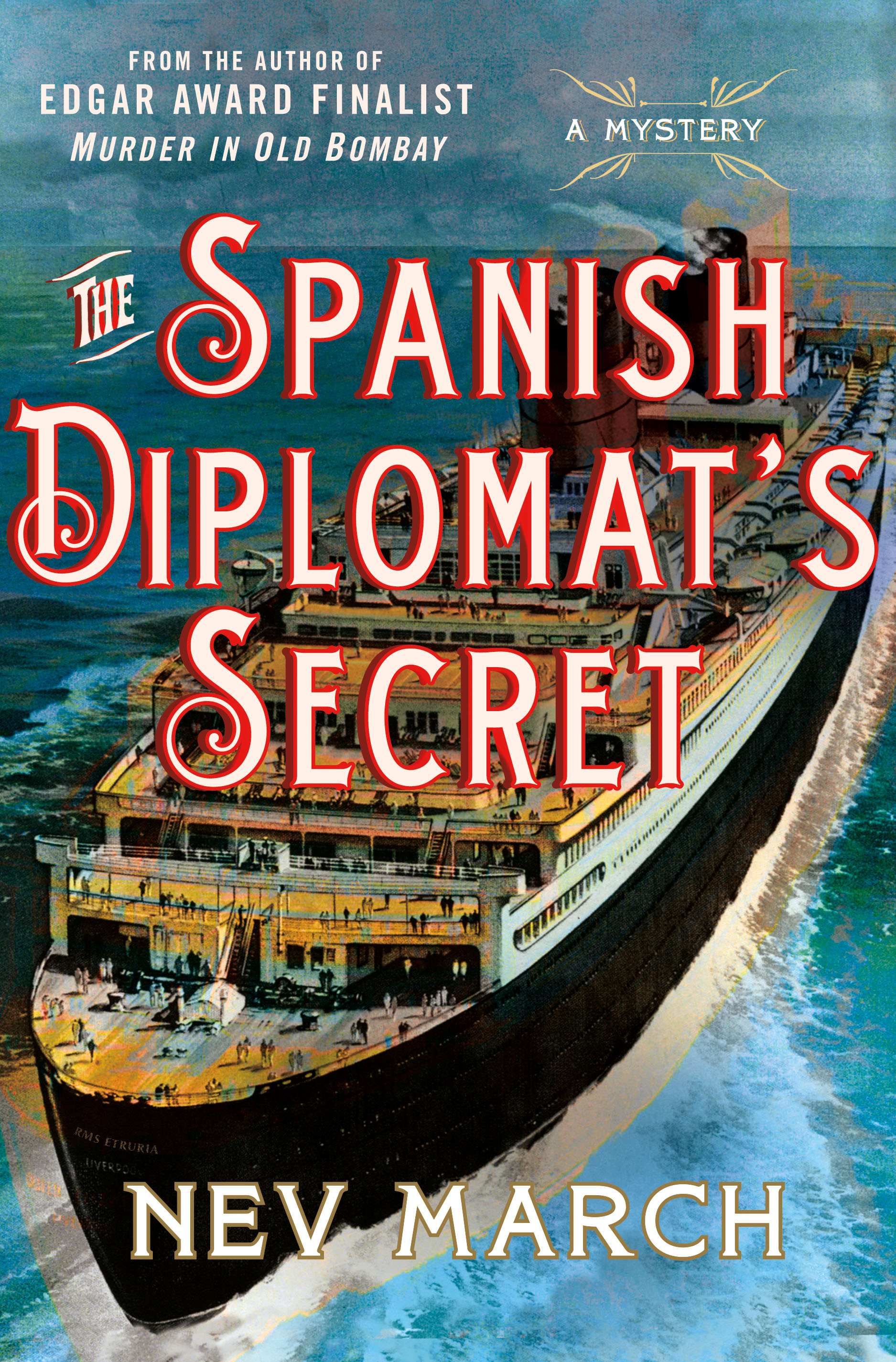
The Spanish Diplomat’s Secret
In The Spanish Diplomat’s Secret, award-winning author Nev March explores the vivid nineteenth-century world of the transatlantic voyage, one passenger’s secret at a time.
Captain Jim Agnihotri and his wife Lady Diana Framji are embarking to England in the summer of 1894. Jim is hopeful the cruise will help Diana open up to him. Something is troubling her, and Jim is concerned.
On their first evening, Jim meets an intriguing Spaniard, a fellow soldier with whom he finds an instant kinship. But within twenty-four hours, Don Juan Nepomuceno is murdered, his body discovered shortly after he asks rather urgently to see Jim.
When the captain discovers that Jim is an investigator, he pleads with Jim to find the killer before they dock in Liverpool in six days, or there could be international consequences. Aboard the beleaguered luxury liner are a thousand suspects, but no witnesses to the locked-cabin crime. Jim would prefer to keep Diana safely out of his investigation, but he’s doubled over, seasick. Plus, Jim knows Diana can navigate the high society world of the ship’s first-class passengers in ways he cannot.
Together, using the tricks gleaned from their favorite fictional sleuth, Sherlock Holmes, Jim and Diana must learn why one man’s life came to a murderous end.
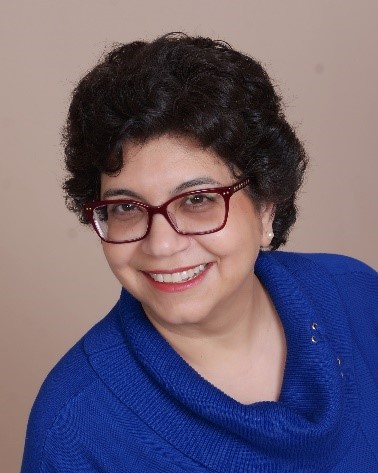
The Spanish Diplomat’s Secret she explores revenge for a real-world unresolved crime in the years before the Spanish American war over Cuba. Nev is presently working on book 4 of her Captain Jim and Lady Diana series. Her books deal with issues of identity, race and moral boundaries.




 Ladies of Mystery
You must be logged in to post a comment.