Guest Blogger – Nev March

The Friend I Left Behind
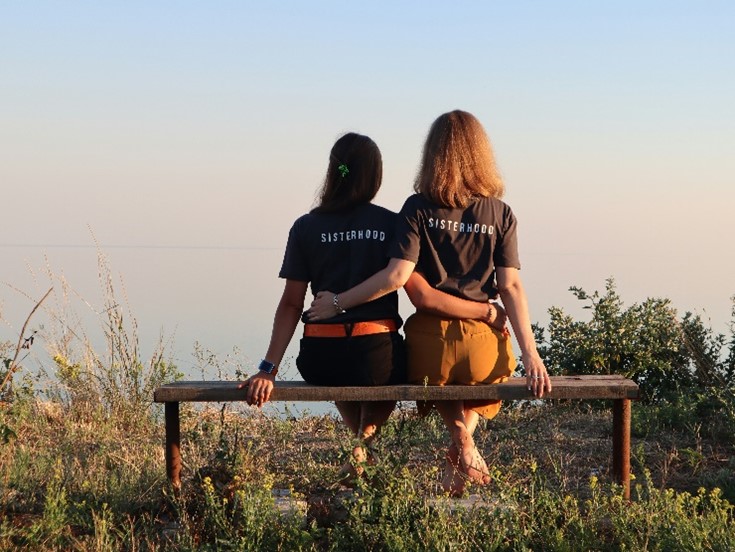
Late night–no, was already morning. I read through an email when my gaze snagged on a name. I stared at it, incredulous. After forty years, I had found Zenia.

Zenia is not her real name. I’ve changed it to protect her privacy. When I was fifteen, I met her on her first day at school. A year older than me, she was a tall, statuesque teen with a well-developed figure and, as I discovered, a wild imagination. She was a “boarder”—a residential student; I was a day-student whose mother was also a teacher.

From almost the first minute, we became close friends. She was lovely, with long wavy hair. Plump and vivacious, she had travelled, and boy, could she talk. Her tales of dangerous train journeys enthralled me. Then, gradually details emerged. Some were shared in long, private conversations—I usually stayed after school to chat, and often rushed home an hour or two late.

As a teen, Zenia was full of imaginative stories. She dreamed. And she narrated those dreams in long, vivid tales of descriptions that would today be called ‘drone shots’. In turn I made up ghost stories to entertain her. We had our in-jokes too; we once disagreed about how to pronounce the word ‘obviously.’  She skipped the B entirely, while I stressed it! So, when one of us made a pronouncement, the other replied, “OVIOUSLY!” whereupon we dissolved into giggles.

She said her father had worked at Tata’s (a huge, respectable conglomerate) but that he had been unfairly accused of embezzlement. My father also worked in a subsidiary of the Tata Corporation. He said that Zenia’s father had been fired from his position. There was a protracted lawsuit, the outcome of which I never did learn.

Sighing, he also said that Zenia’s mother had committed suicide.

Separately Zenia revealed that she walked in on her parents one day while their legal issues were at their height. She must have been eight or nine years old. She said, “A bottle of pills was on the table between them. They were holding hands. They looked at me when I came in, and my mother said, ‘That’s why you have to stay.’” That phrase haunted Zenia. She repeated it over and over.

On our school’s parents’ day, I met Zenia’s father, a handsome, charming man with a boisterous manner. And I met Connie, an old, trusted friend who loved Zenia dearly. Connie had been close to Zenia’s parents for decades. A year later, she married Zenia’s father.

Then, in tenth grade (a crucial exam year in India), we broke up. I’d brought home a poor grade, and my mother was astonished. It hadn’t happened before. That night, she came to my room, sat by me on my bed, and asked me to stop spending so much time with Zenia.

I did; my grades skyrocketed. When Zenia asked why I didn’t stay late anymore, I begged off with excuses of homework. She got the message. I was sorry, but no harsh words were spoken and we both dived into exam prep.

Years after I’d migrated to the States, my mother mentioned that Zenia’s father had passed away. She must have had some common friend or acquaintance to know this. 

Decades later I looked for Zenia on Facebook and Instagram. She would have enjoyed these forums, full of color and variety. But I couldn’t find her. I checked LinkedIn; no sign of her there either. I assumed she had changed her name after marriage.

Now I know why she wasn’t on social media. That email said she had stage-2 respiratory failure. And Rheumatoid Arthritis, morbid obesity and a slew of other conditions. It was a community appeal to help with Zenia’s medical bills. She’d never married. Her stepmother Connie was caring for her.

That notice brought back a waterfall of memories. I wept for the girl with the big imagination, the gorgeous singing voice, who’d played a funny, eccentric Petruccio to my Katherina in our wacky adaptation of Taming of the Shrew. That girl had such big dreams, wanted an erudite, playful husband, and had plans to work in theatre. In the decade after school, I completed a master’s degree in economics, travelled to the States on a scholarship, married and had children. After my corporate career, I began to write novels about the wide spaces and colorful people of India, crime stories based on immigrants, and history.

Forty years ago, we were both at the starting point of our journeys. Then Zenia fell sick. Meanwhile, I was flying without the terrible weight she carried, the tragedies that had already shaped her at seventeen.

She was longwinded because she had no one else to talk with. She was loud, argumentative, because she imagined that other students were whispering behind her back. Now I wonder whether she was lonely because of a self-imposed exile from the other boarders.

And I wonder if they were cruel to her because she was so unlike them. Most boarders came from orthodox families in small villages and had rarely traveled beyond their own towns. Zenia had been abroad, read widely, loved Shakespeare and Mills and Boon novels. We shared so many interests, not least a penchant for short stories and poetry. What a writer she would have made!

These splinters of memory come alive as I write my novels. Faces from long ago return, embedding themselves into my chapters. Perhaps I’m trying to hold on to them, understand them, preserve the essence of who they were. In Murder in Old Bombay I built the Framji family based on people I’d known, and lost. Each book that follows contains fragments of me too.

Now regret escapes my eyelids, dropping wetly on my keyboard. Regret that I did not reconnect with Zenia when we were younger. Why didn’t I try to find her phone number? It didn’t occur to me. Youth can be stunningly self-absorbed. In the quiet past midnight, I mourn the friend I left behind.

The Spanish Diplomat’s Secret

In The Spanish Diplomat’s Secret, award-winning author Nev March explores the vivid nineteenth-century world of the transatlantic voyage, one passenger’s secret at a time.

Captain Jim Agnihotri and his wife Lady Diana Framji are embarking to England in the summer of 1894. Jim is hopeful the cruise will help Diana open up to him. Something is troubling her, and Jim is concerned.

On their first evening, Jim meets an intriguing Spaniard, a fellow soldier with whom he finds an instant kinship. But within twenty-four hours, Don Juan Nepomuceno is murdered, his body discovered shortly after he asks rather urgently to see Jim.

When the captain discovers that Jim is an investigator, he pleads with Jim to find the killer before they dock in Liverpool in six days, or there could be international consequences. Aboard the beleaguered luxury liner are a thousand suspects, but no witnesses to the locked-cabin crime. Jim would prefer to keep Diana safely out of his investigation, but he’s doubled over, seasick. Plus, Jim knows Diana can navigate the high society world of the ship’s first-class passengers in ways he cannot.

Together, using the tricks gleaned from their favorite fictional sleuth, Sherlock Holmes, Jim and Diana must learn why one man’s life came to a murderous end.

Buy links:

https://a.co/d/2R21eMg

The Spanish Diplomat’s Secret

Nev March is the first Indian-born author to receive the Minotaur Books/Mystery Writers of America Award in 2019. She is president of the NY chapter chair of MWA. Her debut novel, Murder in Old Bombay won an Audiofile award and was an Edgar and Anthony finalist. Her sequel Peril at the Exposition describes the gilded age which planted the seeds of today’s red-blue divide.

The Spanish Diplomat’s Secret she explores revenge for a real-world unresolved crime in the years before the Spanish American war over Cuba. Nev is presently working on book 4 of her Captain Jim and Lady Diana series. Her books deal with issues of identity, race and moral boundaries.

http://www.nevmarch.com

Join my newsletter 

The Peace That Follows Chaos by Karen Shughart

December is chaotic here on the south shore of Lake Ontario in New York state, but in a good way. It’s busy and a lot of fun, but by New Year’s Day we’re exhausted and ready for some quiet time. The season starts the weekend after Thanksgiving, but then the entire month is filled with parties, shopping flings, festivals, gift exchanges, impromptu gatherings, and food – lots, and lots of food – both the cooking and eating of it.

Decorating is big up here, and although we don’t do much of that, just a little festive touch or two both in-and-outside our house, many friends and neighbors go full bore, hoping to win or place in a contest sponsored by our Neighborhood Association for the best outdoor decorating. And many of them do.  Frankly, it’s quite impressive, and more than a little magical.

Now it’s January. The decorations have been stored away for another year, the snowbirds who flew north for the holiday have migrated south again to spend the rest of the winter in warmer, sunnier climes. The days are a bit longer, and while that’s certainly good news, they’re a bit grayer, too, and there’s more chance of snow. While we loved the hustle and bustle of the previous month, we breathe a sigh of relief.

We greet our like-minded neighbors when we walk each morning, but other than the roar of the waves crashing on the beach or the sound of the wind, it’s quiet. A couple restaurants and almost all the shops have closed until spring, and there’s not much traffic, hardly a vehicle to be seen traversing through our streets.

Now our gatherings are small ones: intimate dinners with friends at the restaurants that remain open; a pot of soup or chili with a small group at our house on a Sunday evening; a ladies’ night out; or for my husband, the regathering of his summer golf group for lunch and playtime at a virtual, indoor facility.  I happily resume my yoga classes. We venture to the city to take advantage of the cultural offerings there: a symphony; a Broadway show presented by a traveling touring company; or special exhibits at museums and galleries.

I’d been making good progress with the fourth book of my cozy series, but during December that project was mostly put on hold. This is the month when I commit to moving forward with my writing, and have been spending at least part of each day expanding the story as I continue with the first draft. Then, later in the afternoon, I read, fire burning in the fireplace, a cup of tea in hand.

Some friends and family who don’t live where we do wonder how we manage during this time of quiet and isolation, with weather that’s fickle and can change in a minute or two. For us it’s a time of centering and peacefulness, and it’s very beautiful with white caps on the water, grey skies intermittently clearing for brilliant blue and bright sun, starry nights, and a landscape dotted with wheat, rust, faded green and brown. Because many of the trees are barren of leaves, I can see the lake and bay and the tops of the two lighthouses that flank each end of our village beach from several rooms in our house.

By March, we’ll be ready for a change and begin to search for signs of spring: daffodils peaking above the thawing ground; buds starting to swell on trees and bushes; a greening of the grass. But for now, we’re enjoying the peace that follows chaos.

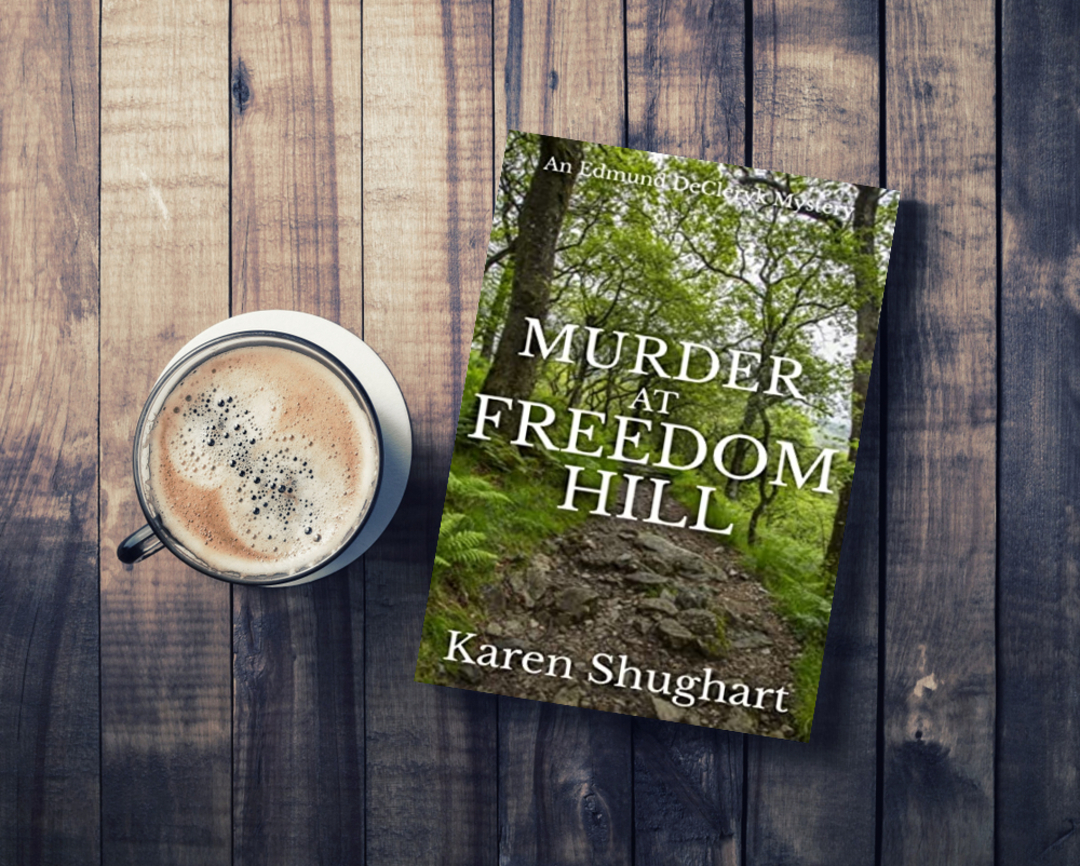
A member of Crime Writers’ Association of the UK ( CWA), North America chapter, Karen Shughart is the author of the Edmund DeCleryk cozy mystery series, published by Cozy Cat Press, including the award-winning Murder at Freedom Hill.  All books have historical backstories that provide clues to why the crime was committed, and recipes at the end. They are available in Kindle, Kindle Unlimited, paperback, and Audible.

Setting the Scene by Karen Shughart

All the books in my Edmund DeCleryk cozy mystery series are set in Lighthouse Cove, NY, a fictional village on the south shore of Lake Ontario, with the crimes occurring in the present but are related to something that happened in the past. In book one, Murder in the Museum, a map dated 1785 discovered in the historical society museum – led by sleuth Ed’s wife, Annie – and a journal dated 1845 found at an archaeological dig in Toronto, Canada, provide clues to why the victim was killed.

In book two, Murder in the Cemetery, a relic at the cemetery where casualties of the War of 1812 are buried; long-lost letters written by the wife of a patriot transported to England as a prisoner of war during that time;  a missing artifact at an exhibit at the Victoria and Albert Museum in London, England; and a diary discovered at an abandoned farmhouse help Ed and Annie solve the case.

In book three, Murder at Freedom Hill, the crime is thought to be related to the victim’s ancestry, his forebears lived in a settlement where free people of color lived harmoniously with abolitionists who helped transport escaping slaves to Canada across the lake before the Civil War. Another heinous deed, related to that settlement, is revealed during the investigation of the murder.

But what the books also have in common is that I weave into the plot the seasonal setting.  After book one, instead of just one prologue I decided to write two, the first with the historical backstory and the second describing the season.

I continue descriptions of the weather throughout each book, it helps to construct the mood. For example, Murder at Freedom Hill begins in November, before Thanksgiving. In one of the early chapters, Ed discovers that the village mayor has been murdered. A beloved member of the community, the mayor also served on Annie’s board of directors and the two had become close friends. After conferring with Detective Brad Washington at the crime scene, Ed gets into his SUV and drives to the museum to tell Annie about his death. Lots of sunshine and a clear sky start the day, but then the weather changes:

“The brilliant sky at sunrise had made way for clouds the color of brushed pewter that hovered over the roiling silver lake. The day looked like an antique photograph: sepia; gunmetal grey; milky white and black; faded like withered grass. The direction of the wind had changed, picking up speed from the northwest, with fallen leaves swirling around the museum parking lot as Ed pulled into a spot. The temperature had plummeted- winter silently creeping in like a cat about to pounce upon its prey.”

What I enjoy about writing cozy mysteries is the ability to expand description if it fits into the plot, and the weather can either give readers a sense of doom and gloom or provide an interesting juxtaposition to an odious deed.

Karen Shughart’s cozy mysteries are published by Cozy Cat Press. She’s currently working on book four of the series, Murder at Chimney Bluffs.

Let It Go by Karen Shughart

There’s a certain amount of pressure for all authors, regardless of how they’re published, that’s self-imposed. We set out to write a book and determine the time frame for finishing it, and therefore must adhere to some sort of schedule. And for those of us who are with traditional publishers, there’s the added pressure of submitting our book at an agreed upon deadline,

When I started writing my Edmund DeCleryk cozy mystery series, I wrote every day. I didn’t set a specific number of hours but instead spent time at the computer until I was either so exhausted that I literally couldn’t see straight or was happy with the advancement of the plot. In the past this has worked well for me, but this summer it didn’t.

Let me explain.  We live in a resort village that is a bustling hive of activity during summer months. Our beautiful scenery, gorgeous waterways, pristine beaches, and a multitude of activities centered around what we call Summerfest results in visits from family and friends, picnics, cookouts, concerts, festivals, outdoor movies, yoga classes, boating excursions and, on cool nights, time spent with friends drinking wine around a blazing fire pit watching the stars.

This year in particular, I was also happily bombarded with invitations to do book talks and signings, sometimes more than one a week. In addition, we took three short trips: to visit family; for a couple’s getaway; and when I participated as a panelist at a  mystery lovers’ conference in another state.

I must admit, at first I felt anxious about my inability to carve out time to continue writing my fourth novel, Murder at Chimney Bluffs, after making good headway last winter and spring.  Then I took a deep breath and thought. ‘It will be done, and isn’t a big part of life enjoying experiences that could help make my writing be even better? Let it go.’

And I did. When my publisher emailed me to get a sense of when she could expect my next book, I responded that I thought I could submit it to her a year from this coming November or maybe even December, but not before. She thanked me and said no problem. When I gave talks and attended signings, which I really do enjoy, I wasn’t the least bit anxious about not writing.

At the entrance to a town a little west of us there’s a huge sign that announces “Where Life is Worth Living”.   And that’s certainly true about this place we call home.  I finally conceded to the pressure to write and allowed myself to enjoy every minute of every day and relax about not keeping to a schedule. I’ll get it done, I know. There’s something to be said for letting go.

Karen Shughart is the author of the Edmund DeCleryk cozy mystery series published by Cozy Cat Press. She lives on the south shore of Lake Ontario in a village in New York state that’s the prototype for Lighthouse Cove, the s fictional setting for her books.

Guest Blogger ~ Kathleen Kaska

Another Hotel, Another Murder, Another Sydney Lockhart Mystery

My idea for my Sydney Lockhart mystery settings came from historic hotels my husband and I have frequented. These old hotels are usually in the town center and are often community gathering places. Having cocktails in the lounges allowed us to meet the locals who would often share the most entertaining, unique, and unusual places to visit, which was excellent fodder for additional scenes in the books.

The series is set in the early 1950s. Sydney is a sassy, determined young woman trying to make it as a private detective in a man’s world. Her journey begins when she checks into the Arlington Hotel in Hot Springs, Arkansas, only to find a dead man in her bathroom. The man had been murdered, and she is the main suspect. I chose the Arlington as the first location because it is like my second home. Adding up all the nights we’ve stayed at the Arlington equals about four months. I’m familiar with all the nooks, crannies, and hidden places the average hotel guest is unaware of. Many local business I mentioned in the book have been in operation since the 1930s and are still open today. And with Hot Springs’ notorious history of gangsters running the city, it was easy to create a feasible plot. In fact, Al Capone once lived in the Arlington Hotel.

Since then, I’ve used the Luther Hotel in Palacios, Texas, the Galvez Hotel in Galveston, Texas, the Driskill Hotel in Austin, and the Menger Hotel in San Antonio. They all possess a unique history, which I weave into the stories.

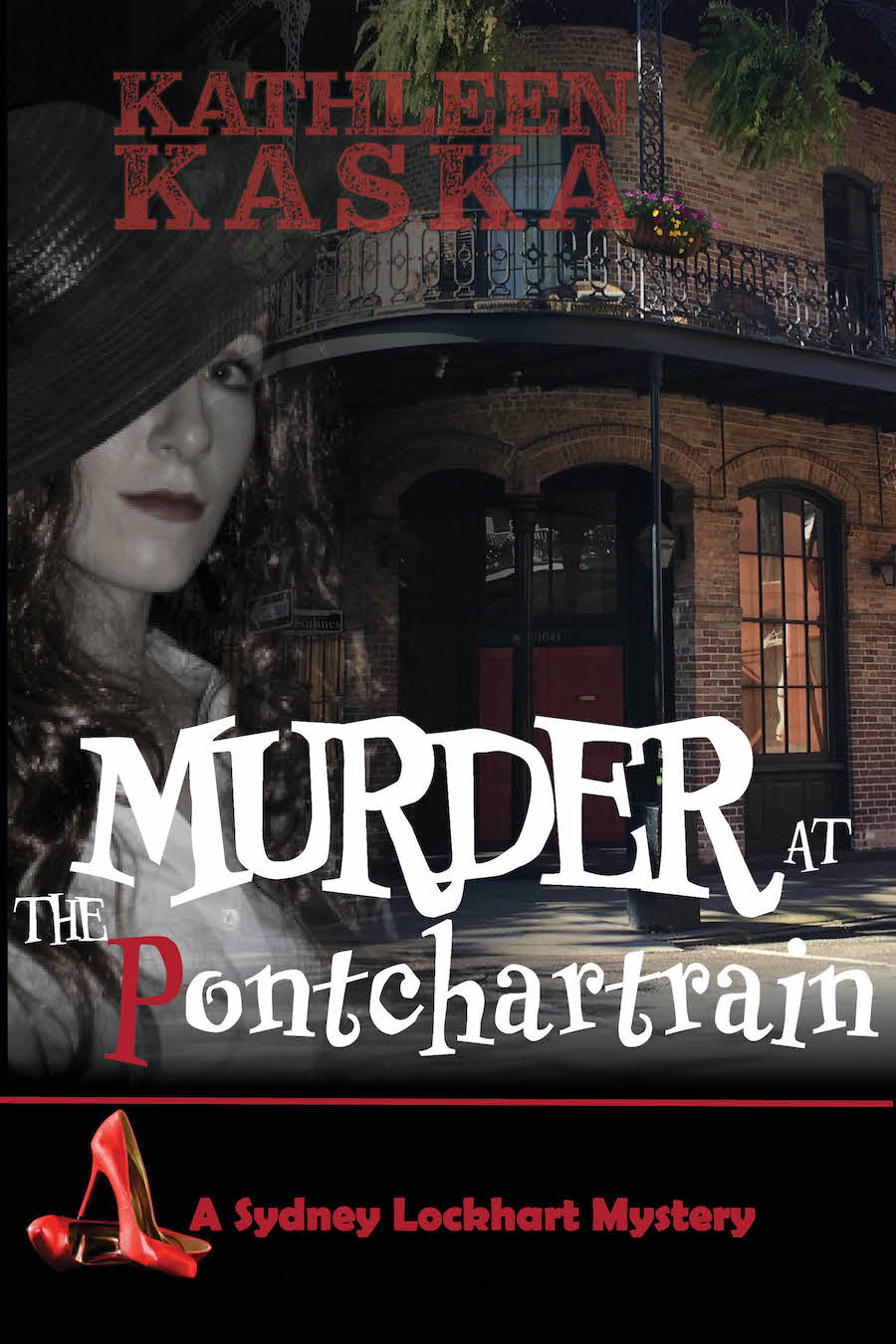
My latest mystery, Murder at the Pontchartrain, which was release on June 28, occurs in one of my favorite cities, New Orleans. The Pontchartrain, located in the Garden District, was opened in 1927 as a luxury apartment building. In the early 1940s, it was turned into a hotel. This is where Tennessee Williams wrote his classic play, Streetcar Named Desire. This vibrant, exotic city begs to have a mystery set there. Just ask Anne Rice.

I brought Sydney to New Orleans because she and her fiancé/partner in crime, Ralph Dixon, had some unfinished business to attend to. But in less than twenty-four hours, someone is murdered in their hotel room, and Dixon is arrested. Sydney is in a race to solve the murder and free Dixon before she ends up in a cell next to him. When word back home in Austin gets out, Ruth, Sydney’s bubble-headed blonde cousin, and Sydney’s twelve-year-old charge, Lydia LaBeau, arrive to give Sydney a hand. Ruth is assigned to snoop around the hotel. At the same time, Lydia appoints herself as the investigator of the French Quarter, where she ends up helping out at the Voodoo Shop and making friends with Pat O’Brien’s head bartender. Yes, I know the girl is only twelve, but age has never influenced what Lydia does.

While wandering the streets in New Orleans, I envisioned Sydney darting down the back alleys of the French Quarter, tracking a suspect near Audubon Park, and almost meeting her demise in the Lower Ninth Ward.

If readers know of great hotels for my future setting, I love to hear about them. The requirement is that the hotel was in operation in the early 1950s and is still in business today.

I’m Sydney Lockhart. I solve murders, most of which I’m the primary suspect. My fiancée, Ralph Dixon, and I came to New Orleans to get married. Instead, he’s been arrested for a double murder, and I’m hunting for the real killer. Assisting me are a twelve-year-old voodoo queen, a ghost detective, and my crazy cousin Ruth. Wish me luck. I’ll need it.

https://www.amazon.com/Murder-Pontchartrain-Sydney-Lockhart-Mystery/dp/1941237940

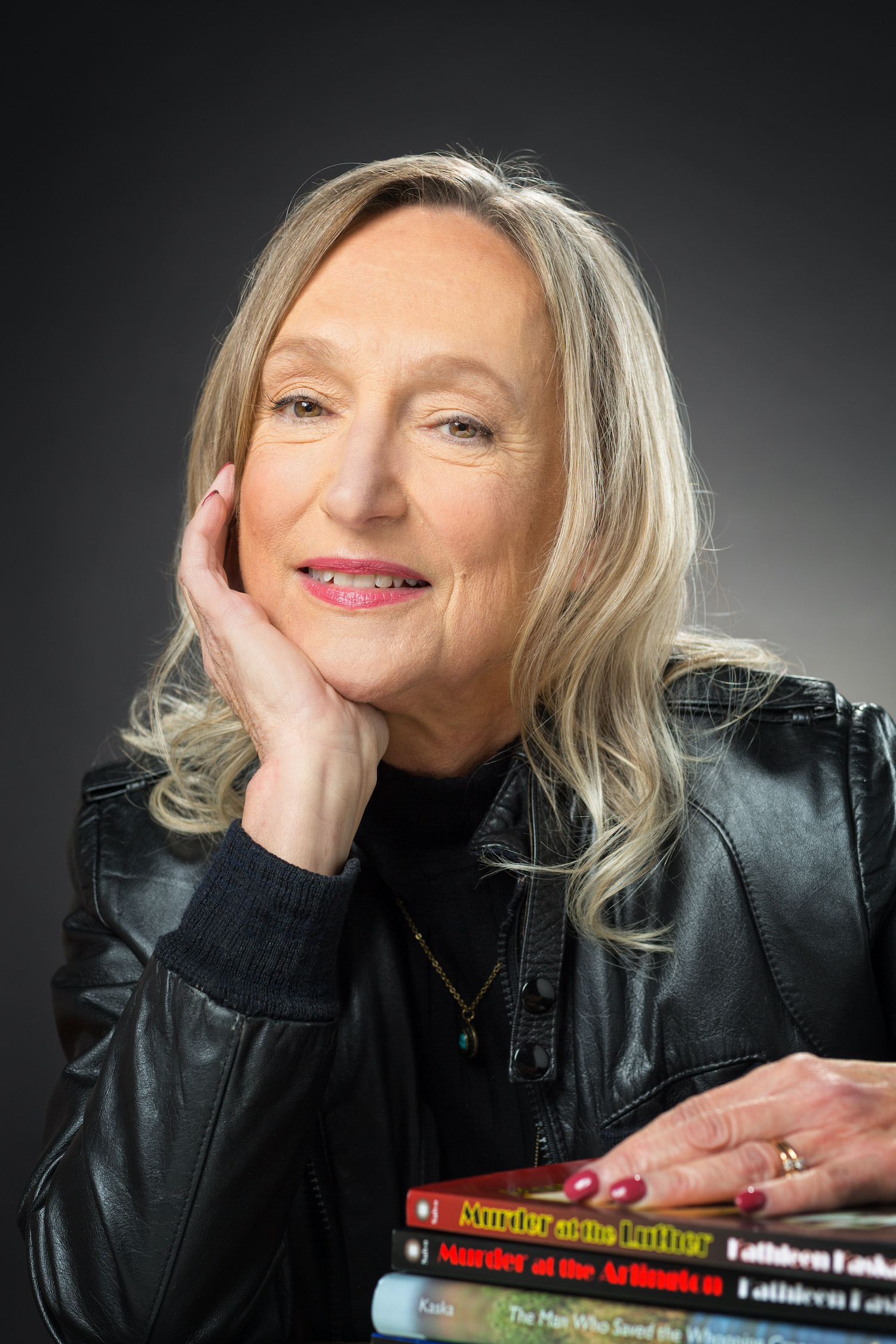
Kathleen Kaska is the author of the awarding-winning mystery series: the Sydney Lockhart Mystery Series set in the 1950s and the Kate Caraway Animal-Rights Mystery Series. She also writes mystery trivia. The Sherlock Holmes Quiz Book was published by Rowman & Littlefield. Her Holmes short story, “The Adventure at Old Basingstoke,” appears in Sherlock Holmes of Baking Street, a Belanger Books anthology. She is the founder of The Dogs in the Nighttime, the Sherlock Holmes Society of Anacortes, Washington, a scion of The Baker Street Irregulars.

Social Media Links:

http://www.kathleenkaska.com

Bookstore

https://twitter.com/KKaskaAuthor

http://www.facebook.com/kathleenkaska

https://www.instagram.com/kathleenkaska/

https://www.bookbub.com/search/authors?search=Kathleen%20Kaska

https://www.amazon.com/author/www.kathleenkaska.com