Guest Blogger ~ Max Burger

I was intimately affected by the bombing in Dublin in 1974. As depicted in the excerpt from the book (see my website: http://maxburgerauthor.ag-sites.net/ I was a student assisting in the surgery of a victim. The description of the procedure was real. Our uncertainty of both the outcome and the identity of the victim was real as well. Never having experienced the chaos of a trauma case when minutes could mean life or death, and the unpredictability of the outcome, made me acutely aware of the tension in the room. As primarily an observer, my mind raced over the possibility of what might happen and the sad anonymity of a John Doe. The nature of the injury and the markings on the body only added to my questions. This man may have gotten his wounds in any number of ways; the speed that was needed to repair them did not allow for careful review and analysis with a plan for the outcome as it might in an elective surgery. The black rose tattoo added to the questions — a symbol of the Irish resistance to British rule. Whether this person was a member of the IRA or just a proud Republican, I never found out, but the question prompted a momentary pause in the surgery and, for me, the idea of a story of identity. The idea of a pathologist who puts together the pieces came naturally since a dead person could tell a story even if it had to be translated by the skillful eyes and hands of a pathologist. I had seen enough autopsies as a student to know the process and practiced medicine long enough to know the diseases that inhabited the bodies of the dead.

The politics of the time overlaid all the facets of Irish life but were brought into sharp focus with the bombing. I, as most students, was more involved in my social life and studying than following the news which was most violent in Northern Ireland and along the border, as distant as the war in Vietnam was a series of terrible stories that I left at home. We were relatively safe in Dublin until the reality of the violence hit the peaceful city. We all were changed with the bombings, as was my protagonist, Harold Stokes, and his assistant, Samantha Monaghan. Actions needed to be taken.

This is now a work of history and memory, but the circumstances felt very real. I wrote the novel to work through the feelings I couldn’t forget.

EVEN IN DEATH

After the Dublin car bombings in 1974, Harold Stokes, ME, and his new assistant, Samantha Monaghan, begin the last autopsy of the casualties. This unidentified victim is not an Irishman, but an Israeli, killed by a bullet, not a bomb. Before they can finish their task, the body is stolen. Stokes and Monaghan hunt for the victim, but Stokes is also looking for the killers who caused his wife and daughter’s bombing deaths two years before. In their hunt, he and his impetuous young assistant are enmeshed in a web of IRA and Palestinian arms trades with a terrorist known as the Jackal, the Mossad, more factional killings, and the manipulations of an Irish ex-minister using his power to take advantage of the turmoil.

Available On Amazon Google Play Barnes & Noble  Kobo Apple Books

Max Burger is a retired Family Physician, His novel Even In Death, a mystery/thriller of a 1970s Dublin pathologist searching for a stolen body, was published by Rogue Phoenix Press in December 2023. He has completed another novel, My Father’s Father, a Holocaust Family Saga. The first chapter was published in October 2023 in Embark, a literary magazine, and another excerpt, “Lost and Found,” was published in jewishfiction.com in September 2024. He has published personal interest stories in Medical Economics, JAMA, and AMA News.

http://maxburgerauthor.ag-sites.net/

Guest Blogger ~ Jerry Aylward

The Victim’s, Victims.

   Being the second oldest in a family of seven children and growing up impecunious during the mid-50s in rural Middle America, where occupying one’s time for entertainment was left to their imagination. I often busied myself trying to solve problematic riddles and puzzles, starting with the most basic and subjective ones like what came first the chicken or the egg, or, did Humpty-Dumpty really have a great fall, or was it simply a Kings premeditated design for fresh egg salad?

      I was never enthused with those rainy-day picture puzzles that give away the reveal by displaying the completed puzzle’s image all shiny and pristine on the face of its cardboard container. No, I thoroughly enjoyed a deep dive into complex brainteasers, ones that would pique my curiosity, while challenging its solvability. Ones like: I speak without a mouth and hear without ears. I have no body, but I come alive with the wind. What am I? Or the immemorial murder mystery where a lifeless victim is discovered in a windowless room, and the only door is dead bolted from the inside.

   Fast forward a multitude of years, after turning twenty-one, I moved to the east coast, to New York. Where I joined the police department and honed my skills as a detective in the creative art of criminal investigations.

   It’s where I learned the meaning of a true mystery, where a mystery can be nothing more than an unanswered question, or where something is difficult or impossible to understand, or even to explain, or where something not understood or beyond understanding remains an enigma, until it’s solved.

   I also learned the difference between a mystery and a secret, which most often will be conjoined in a crime. A secret is usually just information that needs to be ferreted out before revealing the hidden mystery.

   While the mystery of any homicide is usually limited to who, what, where, when, how, and why, it rarely focuses its investigative depth on the murder victim’s family back story, or it may modestly skim its veneer. I’ve come to learn there is more often a burly and expansive personal history cloaked somewhere beyond the surface pedigree of the victim. By digging deeper into the victim’s background and uncovering hidden or forgotten secrets will often reveal a forewarning to their own impending crisis, of course that can only be exposed through an extensive investigation, and obvious hindsight. Though by unmasking hidden or untold historical family secrets will oftentimes reveal a clear and sharper image of the victim and their significant loved ones, it will frequently divulge the motive for the victim’s demise.

   I further learned most homicide victims leave behind palpable shards of their living lives, along with their unintentional victims, (collateral damage) unwittingly of course, but nevertheless, they leave behind living victims, such as loved ones, family members, and loyal friends. These unforeseen victims, who are mostly overlooked and quickly forgotten victims themselves, though portentously significant in the life of the murdered victim, possess a fundamental account of their own that needs to be shared.

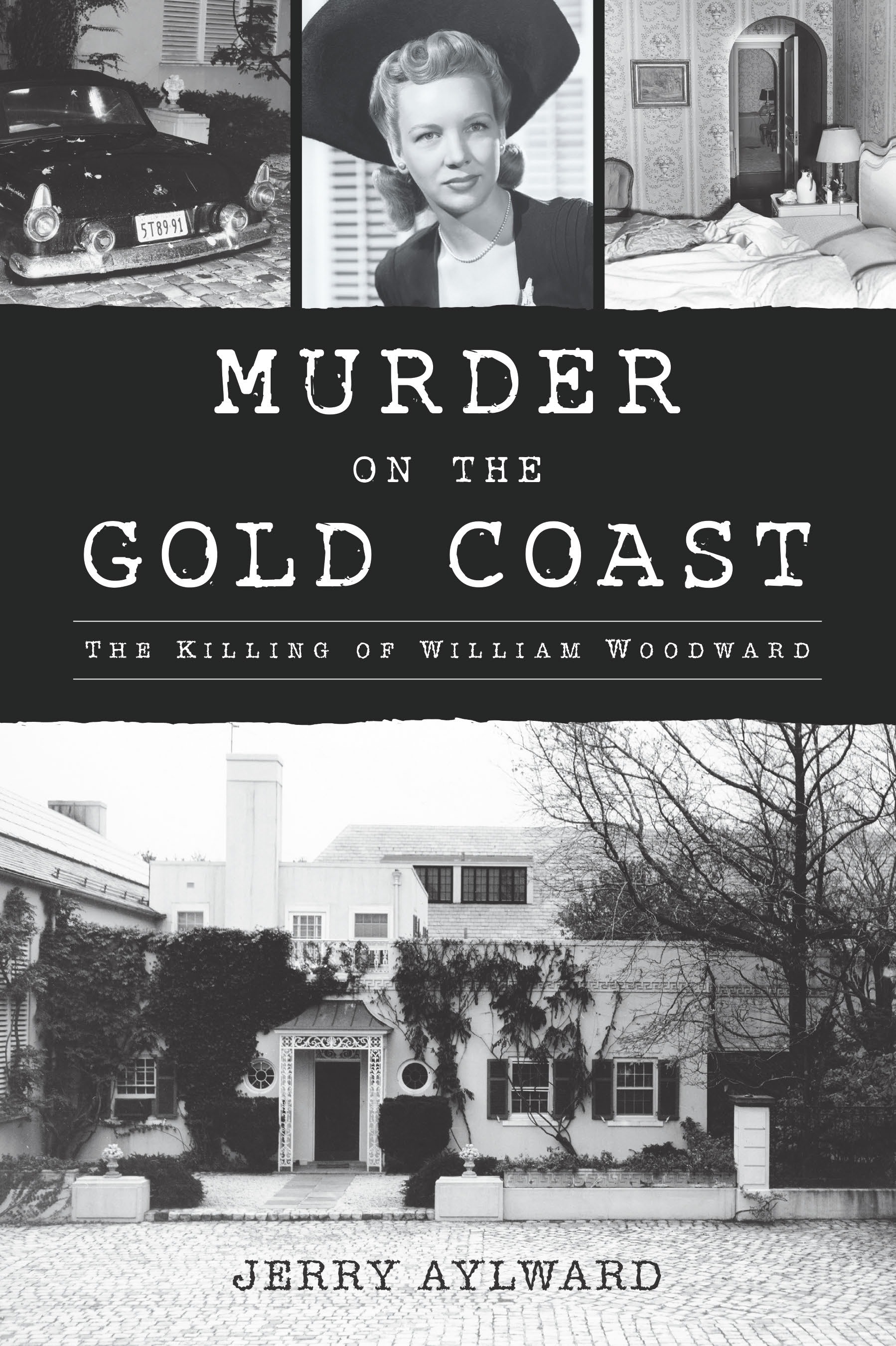
   I’ve written both fiction and nonfiction, though all could be considered mysteries, at some point in time. My nonfiction books are True Crime. My latest True Crime chronicle takes place in 1955, in an affluent community located on the north shore of Long Island, in Nassau County, New York, commonly referred to as the Gold Coast, with the murder of a thirty-five-year-old multimillionaire, hence the title of the book Murder on the Gold Coast, conjointly narrating details of the living victims.

   Consequently, I learned that conducting research into even a seventy-year-old controversial homicide case requires obtaining accurate and minute details of pertinent information that can only be attained by extreme digging into the crime itself, while not being stifled by intentional information barricades, despite some present-day law enforcement officials attempts at continuing to thwart the truth.

   Another interesting detail I discovered while conducting my research in this aged homicide case was the compelling theory of the six degrees of separation. A persuasive philosophy that anyone on Earth can be connected to anyone through a chain of acquaintances with no more than five intermediaries. This means that on average, everyone on this planet is only six introductions away from each other.

   I found in my current true crime commentary I was only three degrees-of-separation away from the victim himself, and only two degrees away from some of the essential witnesses, without ever knowing.

   I also believed that just because some of the facts and physical evidence in this 1955 homicide investigation had been passed over or not addressed, it didn’t necessarily mean the investigators were merely incompetent.

   It should also be noted that exposing any aged criminal mystery to the prism of a new day will always require accurate documentation and absolute certainty based on official police reports, court records, historical witness testimony, common logic, and above all, perceptual principle. 

 MURDER ON THE GOLD COAST

In the early hours on a rainy autumn night in 1955, on a lavish country estate in Oyster Bay Cove, esteemed New York socialite Ann Woodward fired both barrels of her custom-made shotgun into the head of her husband, multimillionaire William J. “Billy” Woodward Jr., killing him. She mistook him for a notorious prowler who preyed on the privileged class. At least that was what the official reports stated. The police focused on catching the prowler, as they cast an impenetrable dragnet around the “Playhouse” for the elusive intruder. However, as with many other aspects of Billy and Ann’s social circle, things were not always as they appeared. Local author and retired detective Jerry Aylward uncovers the uncomfortable truths behind one of the Gold Coast’s most notorious murders.

Murder on The Gold Coast… pre-order is now available at the following online sites.

Amazon: https://www.amazon.com/Murder-Gold-Coast-Killing-Woodward

Barnes and Noble: https://www.barnesandnoble.com/w/murder-on-the-gold-coast-jerry-aylward/1147090484?ean=9781467157490

Walmart: https://www.walmart.com/ip/True-Crime-Murder-on-the-Gold-Coast-The-Killing-of-William-Woodward-Paperback-9781467157490/15485624051

Target: https://www.target.com/p/murder-on-the-gold-coast-true-crime-by-jerry-aylward-paperback/-/A-1004984063

The History Press/Arcadia Publishing:  https://www.arcadiapublishing.com

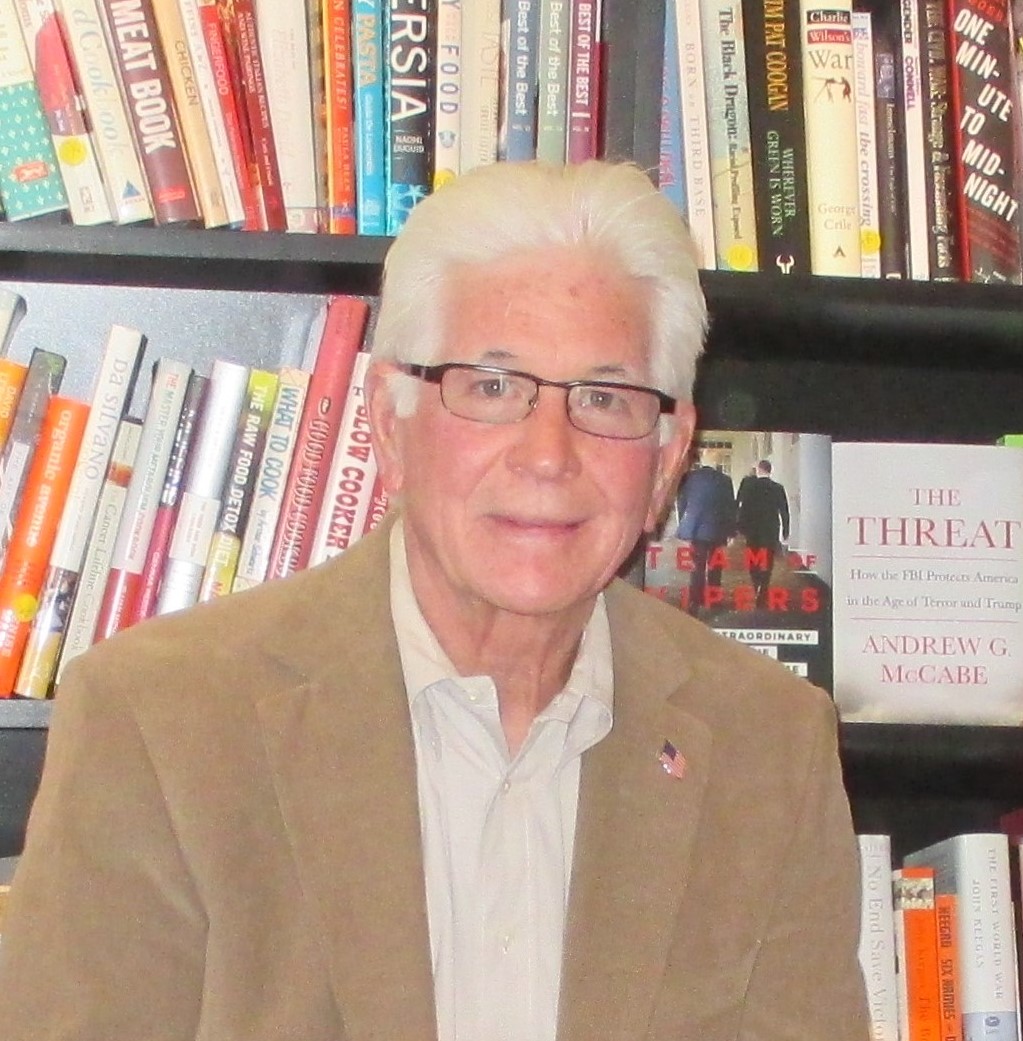
Jerry Aylward is a retired detective with thirty-two years of service with the Nassau County (NY) Police Department. He served another ten years in federal law enforcement with the United States Department of Homeland Security as a criminal investigator with the OCSO (Office of the Chief Security Officer) at a high-level, secret, government research facility. Jerry has a bachelor’s degree in behavioral science from NYIT and is a New York State–licensed private investigator. Jerry has also authored nonfiction: Francis “Two Gun” Crowley’s Killings in New York City & Long Island. And a pictorial history of the Nassau County Police (NY) Department. Jerry’s first mystery novel was “The Scarlet Oak” was released in July of 2022.
Jerry’s genre has been mainly local history and true crime. With The Scarlet Oak, he throws a twist of murder, spies, and spirits into an American Revolution time travel mystery that takes place in historic Oyster Bay, New York.

Website: www.jerryaylward.com

Email:    jerryaylwardauthor@yahoo.com

Guest Blogger ~ M.E. Proctor

Bop City Swing, or When Writers Click

By M.E. Proctor

We should write something together, I’ve heard these words many times. The suggestion is always vague and about as binding as the clichéd ‘let’s do lunch one of these days’. Many years ago, a friend and I planned to write a book. He was a big science fiction fan, so that’s what we decided to do. I delivered the first chapter. My friend never produced chapter 2, and I ended up doing the entire thing. It turned into a four-book dystopian series, The Savage Crown.

So, when fellow crime writer Russell Thayer typed in a social media chat that “Tom should go after Gunselle someday. Imagine the interrogation scene!” I agreed that bringing our two recurrent short story characters together was a cool idea, but I doubted it would go anywhere.

I was wrong. We’re a year later and Bop City Swing is on the bookshelves. Even better, Russell and I are working on another mystery featuring the same two leads.

Russ’s creation is Vivian Davis, aka Gunselle, a contract killer. He has written more than twenty short stories spanning the late 1930s-early 1950s with her in the starring role. My guy (he’s in a dozen stories so far) is Tom Keegan, a homicide detective in 1950 San Francisco. A professional killer and a cop, in the same place at the same time … sounds like a match made in Noir heaven.

Early last year, Russ and I both happened to have pieces published at the same time in two different magazines. A mash-up—in the vein of CSI meets Law & Order—was top of mind again and we started brainstorming ideas for a short story. What if she’s hired to bump him off … What if they’re after the same killer… We eventually decided to build the story around a political assassination that would involve both characters, coming at it from their respective angles. The detective investigates the case, in straight procedural fashion, and the contract killer is embroiled in it sideways. She didn’t commit the crime.

We never discussed the mechanics of the collaboration. It felt natural to tell the story from a double point of view (POV), Russ writing the Vivian-Gunselle chapters, while I wrote Tom’s scenes. The differences in our styles fit the particular voice of our respective characters. If there were awkward disparities or rough edges, we figured we could polish them off after the first draft.

Russ sent me a snippet of Gunselle being hired for a job she dislikes—fixing somebody else’s mess, i.e. the assassination (that plot line was discarded later on)—and a few days later, I sent him Tom’s arrival at the crime scene, the ballroom of a luxury hotel. The suspect is a musician in the jazz band hired for the event.

Everybody knows that most of the research should be done before starting to write the story, it’s a lot more efficient, but we were both eager to get something going. Now, with two scenes drafted, we had to make sure we were historically correct on the when and the where.

The when would be 1951, an election year. That November, San Francisco re-elected the incumbent republican mayor, Elmer Robinson. The fictional who (the victim) would be Charles Forrester, the democratic challenger launching his campaign at a June fundraiser. Where would be the Palace Hotel, conveniently located downtown, with a good size ballroom—an internet deep dive delivered period-accurate floorplans.

We knew when, where, and who, but like our two lead actors, we were stumped by the motive. Why was Charles Forrester shot? We wouldn’t find out for a while.

Writing a story is like a treasure hunt. Every sentence, written on the fly, contains potential clues. Here’s an example. The decision to make the killer a jazz trumpeter gave the plot a definite slant. It also gave us the opportunity to dig into the rich Bay Area music scene of the early 50s, the various clubs, the talent on display, the racial tensions, the lure of the city at night, the early involvement of the Mob in the drug trade. Russ had touched on the music angle in some of his stories and brought all that background into the plot, with great secondary characters. One of them, Maggie, became central to nailing down the motive and the final resolution. Through Maggie, we also touched on the war, only six years in the past, and its aftermath, how deeply it scarred many characters in the story.

Very soon, the project was no longer a short story. Bop City Swing had turned into a book.

During the months it took to complete a solid first draft, we had a couple of mini-debates. One of them was about who would enter the scene first.

Homicide cops always get there after the fact, by definition. We decided to start with Gunselle and put her in the ballroom, at the very beginning, before the shots ring out. That gave us the story hook. She was hired for the hit and somebody beat her to it. She’s pocketed the down payment. For doing nothing. As a professional, it sticks in her craw.

Another discussion was about the key confrontation between our two characters. Up to that climactic moment, they’d both gone through their moves separately, with only a glancing accidental contact that showed mutual interest. Yes, this is where it gets sexy … Who would write that scene, in whose POV? We considered writing it twice, in a ‘he says, she says’ tango, but it proved clunky. I wrote the initial scene, from Tom’s voice, then Russ took it and turned it around. It worked a lot better that way, Gunselle initiates the event and is the more active character. It was also fun to write Tom’s reaction afterwards.

We initially wrote our respective scenes separately. After a few weeks, we built a master document that we carried all through to the end, highlighting changes, constantly adjusting things. Russ writes snappy action scenes and I tend to be atmospheric. In the master document, we started blending things. He added bite and I added background.

Mid-way through the process, we built a timeline. The characters were all in motion and the investigation picked up speed. A beat-by-beat sequence of events helped us figure out the ending. None of what happens in the last act was in the cards from the start.

The time we took to consider options, writing them and discarding parts of them, might appear to be a waste but was crucial in coming up with the best solution. The beginning of the story, in particular, was rewritten multiple times. Part of the fun in a collaboration is having your partner put something on the table that you would never have come up with on your own.

Writing is a solitary pursuit. Sometimes, it feels good to share. Russ and I had so much fun, we’re doing it again. There will be more Tom and Gunselle in the future. I’ll keep you posted!

—-

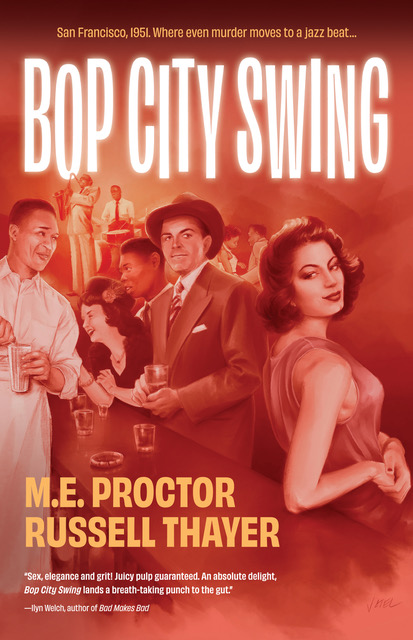
Bop City Swing

San Francisco. 1951.

Jazz is alive. On radios and turntables. In the electrifying Fillmore clubs, where hepcats bring their bebop brilliance to attentive audiences. In the posh downtown venues where big bands swing in the marble ballrooms of luxury hotels.

That’s where the story begins, with the assassination of a campaigning politician during a fundraiser.

Homicide detective, Tom Keegan, is first on the scene. He’s eager, impatient, hot on the heels of the gunman. Gunselle, killer for hire, is no longer there. She flew the coop, swept away in the rush of panicked guests.

They both want to crack the case. Tom, because he’s never seen a puzzle he didn’t want to solve, no matter what the rules say. Gunselle, because she was hired to take out the candidate and somebody beat her to it. It was a big paycheck. It hurts. In her professional pride and wallet.

The war has been over for six years, but the suffering and death, at home and abroad, linger as a horror behind the eyes of some men. And one young woman.

Bop City Swing is the brainchild of Russell Thayer, author of the Gunselle stories, and M.E. Proctor, who occasionally takes a break from Declan Shaw, her Houston PI, to don Tom Keegan’s gray fedora.

Buy Links:

Bop City Swing is available in eBook and paperback

On Amazon at https://www.amazon.com/Bop-City-Swing-Proctor-Thayer/dp/B0F4DSSQ9V/

From reviews:

“A wild ride down the neon-lit streets of post-WWII America, with bebop wailing in the nightclub on the corner, the white witch pumping through the veins of the junkie on the barstool, three slugs draining the life from the charismatic politician with a shady past, and enough snappy dialogue to light up the faces of Raymond Chandler and James M. Cain.”

M.E. Proctor (www.shawmystery.com) was born in Brussels and lives in Texas. The first book in her Declan Shaw PI series, Love You Till Tuesday (2024), came out from Shotgun Honey, with the follow up, Catch Me on a Blue Day, scheduled for 2025. She’s the author of a short story collection, Family and Other Ailments, and the co-author of a retro-noir novella, Bop City Swing. Her fiction has appeared in VautrinToughRock and a Hard PlaceBristol NoirMystery TribuneShotgun HoneyReckon Review, and Black Cat Weekly among others. She’s a Derringer nominee.

Social Links

Author Website: www.shawmystery.com

On Substack: https://meproctor.substack.com

Facebook: https://www.facebook.com/martine.proctor

Twitter: https://twitter.com/MEProctor3

BlueSky: https://bsky.app/profile/meproctor.bsky.social

Instagram: https://www.instagram.com/proctormartine/

Russell Thayer’s work has appeared in BrushfireTough, Roi Fainéant Press, Guilty Crime Story Magazine, Mystery Tribune, Close to the Bone, Bristol Noir, Apocalypse Confidential, Cowboy Jamboree Press, Hawaii Pacific Review, Shotgun Honey, A Thin Slice of Anxiety, Rock and a Hard Place Press, Revolution John, Punk Noir Magazine, Expat Press, Pulp Modern, The Yard Crime Blog, and Outcast Press. He received his BA in English from the University of Washington, worked for decades at large printing companies, and currently lives in Missoula, Montana. You can find him lurking on Twitter @RussellThayer10.

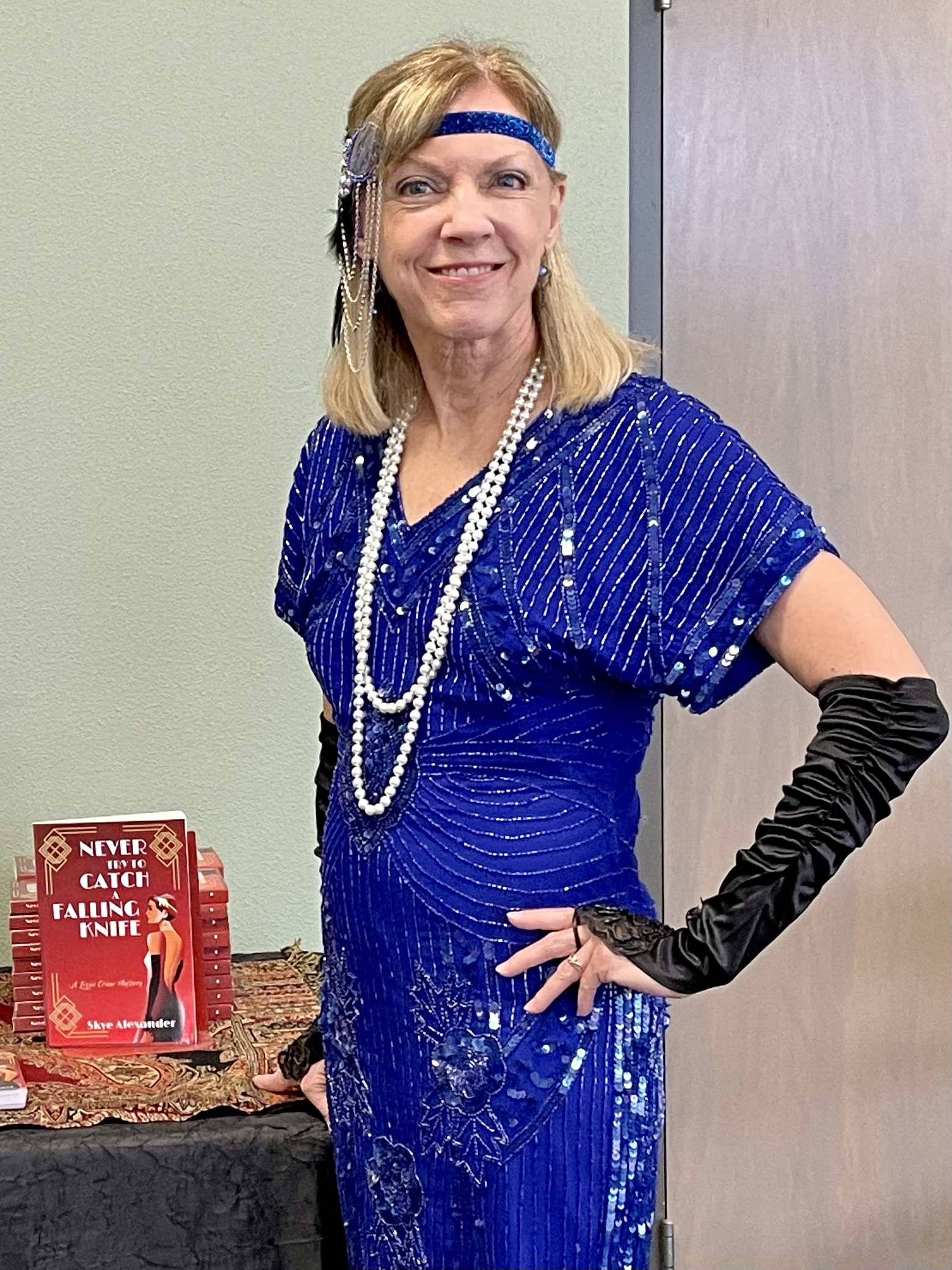
Guest Blogger ~ Skye Alexander

Clothes Make the Woman

The fashion world is ever-changing, and in the 1920s when my Lizzie Crane mystery series takes place the clothes a woman wore not only expressed her sense of style but also the changing ideas and mores of the Jazz Age. Modern ladies were shedding outdated social roles and restrictions as fast as they cast off their corsets. Hemlines rose to previously shocking lengths, baring ankles and calves. Some daring young women even painted images of their beaus on their knees––their short skirts revealed the pictures when they danced the Charleston. Glittery flapper dresses, resplendent with sequins and fringe, exposed plenty of skin. On the beaches, swimming costumes crept up high enough that policemen known as “beach censors” trod the sand, measuring ladies’ legs to make sure no more than six inches of flesh showed between hem and knees.

Wearing trousers, too, signaled not only a desire for comfort and convenience, but a shift toward equality between women and men as well. In most circles at that time, a lady dressed in pants raised eyebrows. Some towns in the Midwest and South even outlawed wearing trousers and fined brazen women for doing so. In the first novel in my Lizzie Crane mystery series, Never Try to Catch a Falling Knife, my jazz singer heroine from Greenwich Village gets off to a rocky start her first day on the job by wearing trousers when she meets her conservative Yankee employer. Sportswomen, however, were grudgingly allowed to don knickers on the golf course or men’s white trousers while playing tennis. Although off-the-rack pants for ladies weren’t available in the early Twenties, the 1927 Sears catalog offered tweed woolen knickers to golfing girls for $2.98. If you wanted something more in line with what Katherine Hepburn popularized a decade later, you had to have them custom-made or buy men’s and alter them yourself.

The Inside Scoop on Intimate Attire

As women’s outer garments changed, so did their underwear. No longer confined by tight corsets and multiple petticoats, liberated ladies shed the many layers their mothers wore in favor of slinky teddies, camisoles, and bloomers that slid comfortably beneath their slim-fitting dresses. Nylon, polyester, and other synthetic materials didn’t exist at that time, so wealthy women chose undies made of silk whereas ladies of lesser means garbed themselves in cotton, rayon, and wool. Instead of only boring white, lingerie now became available to style-conscious women in pink, peach, beige, light green, and naughty black. https://www.sewhistorically.com/dressing-the-1920s-woman-1920s-lingerie/

Prior to the Roaring Twenties, women wore thick stockings primarily for warmth. Now, with their legs on display in their new short skirts, modern ladies switched to sheer stockings that showcased their calves. Silk stockings were the preferred choice for those who could afford them at $1.48/pair in 1925 (the equivalent of about $25 in today’s money), in colors ranging from champagne to black. Rayon provided a cheaper alternative for cost-conscious women––and if they objected to the material’s sheen, they dusted their legs with powder to soften it.  

Women who still chose to wear girdles clipped their stockings to attached garters. Free-spirited fems rolled their stockings into place and fastened them just above the knee with elastic bands. The bands, sometimes called “jazz garters,” soon became a fashion statement in themselves, decorated with lace, ribbons, and rhinestones in sexy colors such as purple, red, and black. And if a woman wanted to keep a nip nearby in defiance of Prohibition, she could wear a garter flask that featured a pocket with a small silver container to hold her drink of choice.

Shopping for Clothes in the Roaring Twenties

Prior to the 1920s, most women made their own clothes. But as more entered the workforce during the Jazz Age––half of single women were employed outside the home in 1930––they had less time to devote to sewing. In response to this trend, department stores such as Macy’s and Bergdorf Goodman began selling off-the-rack garments. Now, busy ladies could purchase ready-made dresses, coats, and other clothing rather than engage in the time-consuming task of creating their own wardrobes or paying seamstresses to fabricate them.

For people who couldn’t afford to buy at upscale department stores, a shopping alternative arose during the 1920s: thrift shops. Prior to this time, peddlers hawking used clothing and other goods were common in America’s cities and towns––especially in less affluent neighborhoods. Many of these merchants were Jewish immigrants. But during the Twenties, Christian churches began establishing outlets to sell clothing and other products donated by parishioners with the goal of raising money for their churches. Goodwill trucks collected used clothing from more than a thousand households in the Twenties. Proceeds from thrift stores funded half the Salvation Army’s budget. Chanteuse Lizzie Crane, my style-savvy protagonist, realizes that wealthy ladies wouldn’t be caught dead wearing the same evening gown twice, and she buys most of her attire secondhand at church charity stores.

Hemlines and the Economy

Not only do the clothes a woman wears reveal her personal tastes, social class, and ideology, they may also be an indication of the economy. According to the “Hemline Index,” skirts rise during periods of prosperity and lengthen during leaner times. The short skirts of the Twenties celebrated a post-war boom as well as newfound freedoms for women. During World War II and the recession that followed, women’s hemlines dropped again. When times were good in the 1960s, the fashion world gave us the miniskirt and the bikini.

That’s not to say investors should take tips from haute couture––it’s likely that the fashion industry follows economic trends rather than predicting them. But perhaps something more than personal taste or vanity influences a woman’s choice of clothing. Risqué styles reflect a sense of playfulness, confidence, and freedom from limitations or worries, whereas more serious garb suggests a desire for protection, endurance, and the security of tradition. Whether or not these psychological connections have any merit, certainly the Roaring Twenties transformed the way women thought of themselves and their place in the world––and their clothes reflected that transformation.

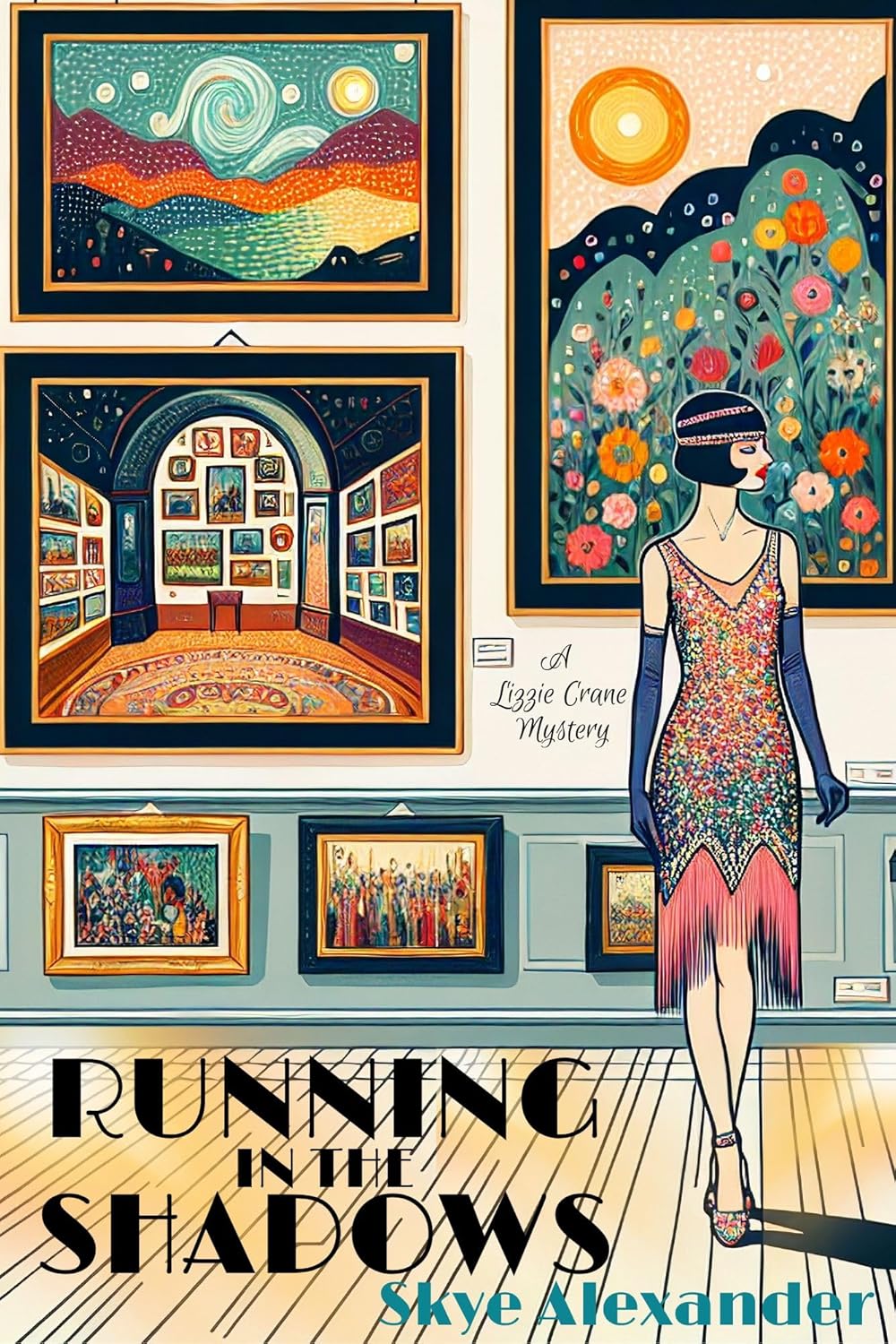
Running in the Shadows

March 1926: Salem, Massachusetts

A spring equinox party at the mansion of a rich, flamboyant, and controversial art collector promises New York jazz singer Lizzie Crane and her band a fat paycheck, lucrative connections, and plenty of fun. She’ll also have an opportunity to reconnect with a handsome Boston Brahmin she fancies.

But the excitement she hopes for doesn’t turn out the way she expected. On the night of the musicians’ first performance, a naked young woman trots into the ballroom on horseback, sweeps up a talented artist named Sebastian, and rides off with him into the night. The next morning, Lizzie discovers the artist’s body tied to a tree, shot full of arrows like the martyred Saint Sebastian in Botticelli’s painting.

            Soon Lizzie learns that her business partner, pianist Sidney Somerset, once had a close relationship with the dead man––and police suspect Sidney may have murdered him. As she tries to protect her friend and discover the killer, Lizzie gets swept up in the treacherous underworld of art theft and forgery, a world where fantastic sums of money change hands and where lives are cheap. 

Buy links :Amazon – https://www.amazon.com/Running-Shadows-Lizzie-Crane-Mystery/dp/1685127061/

Barnes & Noble – https://www.barnesandnoble.com/w/running-in-the-shadows-skye-alexander/1146168035?ean=9781685127060

Skye Alexander is the author of more than 50 fiction and nonfiction books. Her stories have appeared in anthologies internationally, and her work has been translated into fifteen languages. In 2003, she cofounded Level Best Books with fellow crime writers Kate Flora and Susan Oleksiw. So far her Lizzie Crane mystery series includes four traditional historical novels set in the Jazz Age: Never Try to Catch a Falling Knife, What the Walls Know, The Goddess of Shipwrecked Sailors, and Running in the Shadows. Her fifth, When the Blues Come Calling, is scheduled for release in September 2025. After living in Massachusetts for thirty-one years, Skye now makes her home in Texas.

Visit her at https://skyealexander.com

Research, or the Lure of the Rabbit Hole

by Janis Patterson

There’s nothing more frustrating than a novel which mangles history. Unless, of course, it is alternative history (at best a bastard genre) and clearly labeled as such. What raises my ire is when someone writes what is purported to be historical fiction but has such factual clangers in it as to stop the reader cold. My favorite example of this is from a contest I judged when a Regency hero – handsome, wealthy, arrogant as all of them are – pulls a fountain pen from his pocket to sign some important document.


Really? A fountain pen?


The bladder fountain pen that we all know wasn’t invented for at least fifty years after the Regency. Even the steel-tipped dip pen wasn’t invented until after the end of the Regency. Before that, writing was done with feather quills, usually goose.


Of course I dinged the writer severely for not doing proper research, and sent a rather kindly note of explanation of her low score, hoping to raise her consciousness about the necessity of research. Instead she attacked me viciously, not only in a private letter but on social media, ranting that it was an old-fashioned pen and who would know the difference anyway.


And there is the crux of the matter. Far too many people get their ideas of history from novels (and movies, and TV) and therefore as writers we owe them the honesty of real facts.


Such a high-minded ideal is not without its dangers to us, though. I was working on a fairly early Victorian Gothic where my librarian heroine had to make some ink. Now I knew she couldn’t just pop off to the allsorts shop in the village for a bottle, so I went online and looked up how to make ink.


Who knew there were so many ways to make ink? And there are so many people making it today? Well, it was a plethora of information and I started reading happily. Only thing was, I realized that some of the recipes used items to which my early-Victorian-working-in-remote-Scotland heroine would have no access. But I had to make sure of what was available, which took me to botanical sites and shopping sites and each of them led to other sites, most of which had little to nothing to do with Scotland, libraries or ink, and before I knew it hours later I was deep into the intricacies of making Scottish country cheese. Still don’t know quite how I got there, but it was fascinating.


Now I don’t know if I’ll ever need any minutiae about the making of country cheese in Victorian Scotland, but it did give me a deeper insight into the Scottish rural people of the time, their lives, their chores, their way of living. Besides, I believe that everything is useful in some way, some time, some how. Who knows when some snippet of rural Victorian Scottish life/mores/cheesemaking – or something influenced by them – will show up in a totally unrelated story? It’s one of the dangers and the magic of writing!


Doubtless by now you have figured out that I like research. And, having an inquiring (some say nosy) mind, I must admit I do. It’s one of the most fascinating things in the world. And one of the most dangerous. It can take hold of a story, turn it every way from up, then hand it back to you in a form totally different from the way you originally envisioned it. Or, if you are strongminded enough to corral your story to its original form, those little snippets of research are still there, adding depth and shading – and an occasional surprise – to your story.


A prime rule of good writing is Do Your Research. Another rule of good writing is Do Not Let Your Research Take Over. Usually I manage both, but it’s most definitely a delicate balancing act.