
by donalee Moulton
We’ve been talking about editing, an essential element in the writing process that writers relish. When you’re creating characters, polishing plot, and tossing red herrings around to mystify readers, it can be easy to lose sight of the book as a whole, to remember what happened in chapter four when you’re on chapter fourteen.
Writers also get close to their work, sometimes too close. We spend time, often at 4 a.m., thinking about the novel, the action, the actors, the unfolding of the story. It’s hard to see the whole when you’re immersed in the parts.
That’s where editing comes in. But we’ve been talking about editing as if it’s one thing. It isn’t. There are several kinds of editing, and they take place at different points in the writing process.
Substantive Editing.
This is where the high-level work begins, the 30,000-foot view before we delve into the weeds. It involves rethinking and rewriting. This may mean rewriting whole paragraphs or the entire document. It may involve restructuring or reorganizing parts of the text. It may include identifying where new information is required or existing information should be deleted.
Editors Canada has this to say about substantive editing, which is also called structural or developmental editing.
Structural Editing.
Assessing and shaping draft material to improve its organization and content. Changes may be suggested to or drafted for the writer. It may include:
– revising, reordering, cutting, or expanding material
– writing original material
– determining whether permissions are necessary for third-party material
– recasting material that would be better presented in another form
– revising material for a different medium (such as revising print copy for web copy)
– clarifying plot, characterization, or thematic elements
Substantive editing is major surgery. It is about ensuring the medical team is ready to operate. Blood work has been analyzed, the plan for the procedure reviewed, the instruments lined up neatly, everything and everyone sterilized. The goal: to ensure a successful outcome.
That’s what writers want for their readers. Substantive editing helps them do that. Editors Canada notes that this type of editing supports writers as they define their goals, identify their readers, and shape the manuscript in the best possible way. It enables writers to clarify the argument, fix the pacing, suggest improvements, and draw missing pieces from the author.
It makes the view from 30,000 feet truly spectacular.
Learn More.
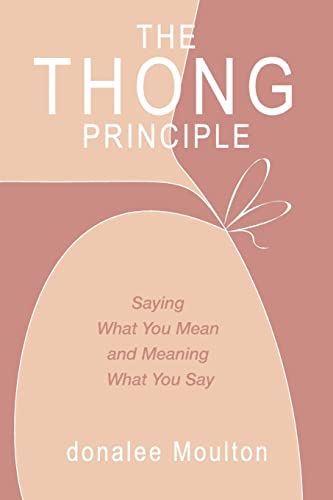
You can learn more about this in donalee’s book The Thong Principle: Saying What You Mean and Meaning What You Say.


I consider this the fun part of editing, so you can imagine how surprised I was when my copy editor discovered a major mistake in the next to the last chapter of “What Lucy Heard.” It required a hurried rewrite of two prior chapters early in the book. Sheesh, and I thought I would never make a mistake like that.
LikeLike
We get so close to the work. Other eyes are always appreciated. Glad you caught it before publication.
LikeLike
No matter your stage of writing, it is always good to have a tune-up on editing. Good post!
LikeLike
I like to return to the basics when I’m writing. And doing a downward dog.
LikeLike
Thanks Susan. I must admit it’s more fun to talk about editing than having to hunker down and do it.
LikeLike
A good overview of a significant part of getting that mystery on the page in a coherent form. Good post.
LikeLike