Five Writing Resolutions for 2026

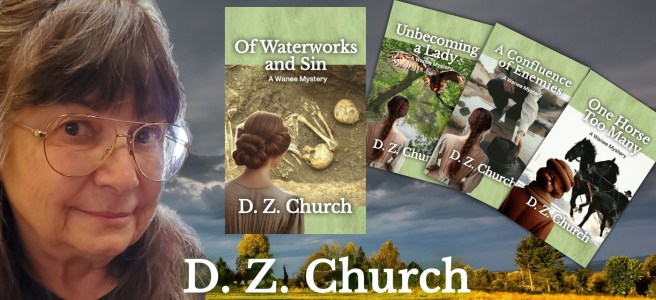
  • To not get wound around my own axles, via the love of research, enthusiasm for the plot, allowing the characters to do the writing, and fingers that won’t stop typing. In the end, all the above result in too much exposition (see #3) and side plots that appear out of nowhere, which need to be wrestled in or out depending on their value to the plot. As for those fingers that just keep typing, I need to keep them curbed, especially on dialogue. Too often, my dialogue requires pruning as though I were nibbling at centuries-old grapevines, hoping to produce an excellent vintage.

Or maybe I should get wound in my axles, maybe the ultimate quality of the story is a composite of all these attributes, and for me, guilty of all three, the editing process results in a more textured tale. Still, I would like to simplify my process. I am eternally jealous of all of you who can write multiple books per year across multiple series, while I untangle the string wound around my bike spokes.

  • To add more of the natural world. I always feel like I have too many trees, bushes, clouds, etc., roaming around in my books. But maybe it is not the number but the proclivity I have to write chestnut tree when I should be describing the hand-like leaves through which the sun dapples the ground? What color is the ground? Is it dusty, gravelly, filled with worn footfalls? How does fire dance other than leap, explode, cavort, or crawl? I feel that I need to make the visual world more experiential, especially with those pesky chestnut trees that succumbed to disease after my books take place. But then there is #3 below.
  • To watch for telling signs of telling. I worry that, since the Wanee books are told from Cora’s point of view, it is too easy to fall into telling. Should I add another point-of-view? Or is there another, more dynamic way to include action that happens off-stage, without having the observer relate it to the protagonist, and risk descending into telling? And what about setting the stage for a book when a few things need to be “told” to bring the reader up to date? What about that? It can be deucedly hard to avoid telling it. Though, in general, I think I do a pretty good job making it more observational than tell-y.
  • To plot more, rewrite less. As if. My brain tumbles out the story in a riot of words, leaving me to fix it all later. Because of this, my current process requires me to edit, edit again, edit some more, then more, possibly even more, then smooth, smooth, smooth. Then recheck every word that looks inappropriate for the period (See #5), even though I know I checked them before. Not to mention, checking and rechecking the dates historical items came into use, like telephones, arc lights, batteries for telegraphing and clothing – OMG. I suspect that if I took laborious notes, indexed them to their locations in the book, and added comments for each, I could save myself considerable editing. Or I can just write with abandon and make myself crazy. Is it too late for me to change? Probably, but I do have more plot notes for my upcoming book than usual. Does that count?
  • To figure out how best to use AI. From Grammarly to Autocrit, to well everywhere these days, AI is happy to judge and make suggestions about your plot, characters, and even evaluate your dialogue for appropriateness to the 1870s, as though you hadn’t done the research before using a word, phrase or cadence. Idioms can be weirdly tricky; Shakespeare’s can sound new and something like ‘it takes one to know one’ old, when the reverse is true. One AI critique noted that, on occasion, my characters’ phrasing is too modern. How does it know? Does it know every word and phrase used across the United States in the 1870s? I would say no since each word AI deemed anachronistic was used in the 1870s, but it missed a few that weren’t, which I caught on my gazillionth read. My favorite suggestion to date is an AI-generated list of overused words. So far, these oft-used words have been characters’ names and Mr. and Miss/Mrs. in a time when this was the proper form of address.

Can AI be helpful? Yes. It can, especially regarding grammar and finding pesky misspellings, though AI recently missed a homonym that had it not been caught by a human would have embarrassed me forever. Meaning, AI doesn’t replace edit, edit again, edit some more, then more, possibly even more, then smooth, smooth, smooth, but it does have a place.

Free resolution:

  • To write a new standalone thriller, because I miss the thrills. I love writing thrillers with a little romance (Saving Calypso, Booth Island, Perfidia). I do. So why haven’t I written one in over four years? Now isn’t that just a fine and dandy question?

For more about D. Z. Church and her books, check out https://dzchurch.com.

Meet the people in my newest pages

My new book Melt is a mystery. It’s also a story about friendship. And more. I thought I’d share with you 10 fun facts about the people who populate these pages.


1. There is power in numbers.

In my previous books, there was a main character. In this book, there are three. Someone asked me which of the triad was the most important. The answer: no one. Each woman—Charlene, Lexie, and Woo Woo—is equally significant and plays a key role. They also, as friends, become greater than the individual sum of their parts.


2. There is power in PPT.

When you write a book, characters develop personality quirks you hadn’t anticipated. One character has a penchant for PowerPoint. Hint: It’s the auditor.


3. There is power in professionalism.

I did not do a detailed backstory for the three protagonists when they were first introduced in Bind. Much of how the characters evolved was organic. They seemed to tell me who they were—and what they did for a living. Can you guess who is the auditor, the comedian, the reflexologist?


4. There is power in having a puppy.

This is my first cast of characters that features a pet. Madoff is the auditor’s dog, but he becomes everyone’s favorite ball of fur, and everyone is active in his life: walking him, rubbing his belly, giving him well-deserved treats, and tucking him in when he stays up past his bedtime.


5. There is power in pasta.

As with the first book, food plays a central role in Melt. It brings the women and their friends together for pleasure, and for less-pleasurable activities. The food that is dished up also serves as a way of introducing readers to some favorite restaurants, bakeries, and delis in Halifax.


6. There is power in the pub.

In the first book, the two detectives meet for beer, burgers, and business in a pub. Pubs are part of the fabric of life in Nova Scotia. They are places to unwind, eat good food at good prices, and sip something hoppy (or otherwise). In Melt, the detectives continue to gather at the Dry Dock. In some cases, they’re joined by the three women who have also become part of the fabric of their lives.


7. There is power in a punchline.

To my surprise, and perhaps my chagrin, Melt is funny. I should be neither surprised nor chagrined by this because my writing often has an edge to it. I just didn’t see it turning up here. The characters knew better.


8. There is power in place.

I grew up and live in Nova Scotia. It made sense to locate Charlene, Lexie, Woo Woo, and their friends here. What I didn’t realize was how knowing a place well would transfer to the page. Many readers have told me how much they enjoy seeing where they live come to life. Many people  who don’t live here have told me they feel like they have come to know Nova Scotia as locals know it.


9. There is power in poetry.

For the first time, poetry makes its way into one of my mystery books. It’s an inside joke admittedly, but it is also a reminder that poetry isn’t something we learn in high school and leave behind. If we’re lucky, it’s something we take with us as life unfolds.


10. There is power in a provocative first line.

The first line for Melt came to me quickly. It made me chuckle, and it set the scene for the opening chapter. I second guessed myself though wondering if the line was too much. In the end, I ended up where I started. Happily. Let me know what you think.


Guest Blogger ~ Kathy Sechrist

From Memoirs to Mystery: Crafting a New Narrative Through Healing
Writing has always been my sanctuary—a place where I can sift through the cacophony of life’s experiences and find meaning. After penning two deeply personal memoirs about my journey through domestic violence and the healing that followed, I never imagined that my next literary endeavor would take a sharp turn into the realm of mystery and murder. Yet, here I am, sharing with you the unexpected evolution of my writing journey.

The Healing Power of Words
Before I delve into the origins of my latest book’s premise, I must first acknowledge the role my memoirs played in my life. They were not merely books; they were lifelines. Writing them gave me the courage to confront my past, the compassion to forgive myself, and the empowerment to advocate for change. Each word was a step toward healing, an act of defiance against a world that often silences survivors.

As I shared my story, I realized how deeply connected I was with others who had walked similar paths. This connection fueled my desire to continue writing—not just for myself, but for those who needed their voices amplified and their stories told. But after two memoirs, I found myself at a crossroads. I wanted to explore new narratives and challenge myself creatively while continuing to honor the themes of courage and resilience.

The Birth of a Mystery
The idea for a mystery novel came to me unexpectedly, like a whisper in the quiet moments of reflection. It began with a question: What if the very skills I had honed while writing my memoirs could be used to craft a story that was both thrilling and meaningful? Could I weave a tale that captivated readers while subtly addressing themes of empowerment and justice?

The premise for the book took root in my mind while I was reflecting on the concept of duality. In life, as in writing, we often wear many hats and navigate different roles. I was intrigued by the idea of exploring the dual nature of people and circumstances—the light and the dark, the seen and the unseen. This duality became the cornerstone of my mystery novel.

Characters with Depth and Purpose
My transition from memoir to mystery was guided by the essence of character development. In my memoirs, authenticity was paramount. I had to be truthful, raw, and vulnerable. In crafting my mystery, I applied the same principles to my characters. They had to be real, flawed, and relatable.

At the heart of my story is a protagonist who embodies resilience and strength. This character is a survivor, much like myself, and her journey is one of empowerment. She navigates a world filled with secrets and shadows, using her intuition and determination to unravel the truth. Her past, marked by adversity, becomes her greatest asset as she faces new challenges.

A Plot Rooted in Reality
The plot of my mystery novel is woven with threads of real-world issues that resonate with me deeply. It’s not just a tale of whodunit, but a narrative that examines justice, moral ambiguity, and the power dynamics inherent in society. These themes emerged from my lived experiences and my advocacy work, reminding me that fiction can be a powerful vehicle for change.

The setting, too, is steeped in authenticity. Drawing on my life’s journey, I crafted environments that reflect both beauty and menace. The juxtaposition of a seemingly idyllic community with its hidden undercurrents of treachery underscores the novel’s central conflict. Just as survivors often navigate the complexities of their own environments, my characters must traverse a landscape where nothing is as it seems.

Empowerment Through Storytelling
Writing a mystery allowed me to explore empowerment in a new light. While my memoirs focused on personal empowerment, my novel broadens the scope to include communal and systemic empowerment. It challenges readers to question their assumptions and consider the broader implications of justice.
The process of writing this book was an empowering journey in itself. It required me to step beyond my comfort zone, to trust my instincts, and to embrace creativity as a tool for advocacy. Every twist and turn in the plot was an opportunity to highlight the resilience of the human spirit and the importance of standing up for what is right.

A Message of Hope and Courage
Ultimately, my mystery novel is a testament to the transformative power of storytelling. It is a reminder that we all have stories worth telling and that our voices matter. Through the lens of fiction, I hope to inspire readers to confront their own truths, to seek justice, and to find strength in vulnerability.
In writing this book, I discovered that the line between memoir and mystery is not as stark as it seems. Both genres require honesty, courage, and a willingness to explore the depths of human experience. Both offer the chance to connect, to heal, and to advocate for change.

As you turn the pages of my mystery novel, I invite you to embark on a journey of discovery—a journey that echoes the resilience of survivors everywhere. May it inspire you to embrace your own story, to seek the truth, and to find empowerment in unexpected places. Together, let us continue to write new chapters of hope and courage in the book of life.

Bodies Under the Bluebonnets (no cover)

Book 1 in the Secrets Never Sleep series.

Sara Matthews comes to China Grove searching for peace. After a lifetime shaped by control, fear, and survival, she buys a neglected house on the edge of a small Texas town, hoping distance and silence will finally offer her a fresh start.

But peace is hard to find when bodies begin turning up beneath the bluebonnets.

As the town reels, Sara becomes entangled in a murder investigation that exposes long-buried secrets, betrayals, lies and dangerous loyalties. Police Chieff Dean Williams believes the deaths are connected—and the closer he gets to the truth, the clearer it becomes that Sara’s past has sharpened instincts others ignore.

Having learned to read danger long before it shows its face, Sara recognizes the warning signs no one else wants to see. Yet each step toward the truth draws her deeper into a web of threats, where trust is fragile and survival is never guaranteed.

When the case finally closes, Sara learns one unsettling truth: China Grove has been hiding secrets for decades—and the land remembers all of them.

Bodies Under the Bluebonnets is the first novel in the Secrets Never Sleep Series, a gripping small-town Texas mystery in which buried crimes resurface, and a woman who survived one kind of violence must face another to reclaim her life.

Available Late Spring 2026.
Be the first to know when Bodies Under the Bluebonnets is released—follow kathysechrist.substack.com for launch updates, behind-the-scenes details, and early announcements.

Parris Blue Photo

Kathy Sechrist is a survivor of domestic violence and a dedicated advocate for those who have experienced similar trauma. Through her powerful and honest writing, she shares her journey of healing and resilience, offering hope and support to others. Kathy is passionate about raising awareness of the prevalence of abuse and breaking the cycle of silence that often surrounds it. Critics and readers praised her work for its raw vulnerability and its ability to connect with readers on a deep emotional level. Kathy resides in the Hill Country of Texas with her companion, Dean, and Toby the cat, Warlord of the house.

www.kathysechrist.com

Welcome 2026

I wouldn’t say I’m giddy, but I am excited about 2026. I’m not sure why. In March, I will be living in town, something I only did for about a year when I was 19. I finally talked my hubby into retiring from farming, and we knew the only way he would actually get away from work was to move to town.

What he didn’t tell me, he will be staying on in a house on the farm he’s been managing next to ours for this coming hay season to help the new man taking over and to help the person who bought our place. So I will only see him a couple weekends or for a week a month until September. Not a bad thing, but I had hoped we’d make more progress on the remodeling of the house in town.

Because he will only be coming to the new house once in a while, Nia, my chiweenie, and I won’t have to cook meals, I’ll be able to do day trips to Wallowa County to research for my Gabriel Hawke books and hang out at the Umatilla Reservation, where my Spotted Pony Casino mysteries take place. Not to mention some girls’ weekends with my friends.

Oh! and a fun thing that is happening, both Crapshoot, book 7 in the Spotted Pony Casino Mysteries and Wolverine Instincts in the Gabriel Hawke novels are semi-finalists in the CIBA Award. I’ll let you know if they become finalists. I’m not attending the conference but if one or both are finalists, I may attend the dinner and award ceremony.

But I’m also excited because I’m trying to figure out something to do to celebrate the fact that my first published book came out 20 years ago in May. I want to do something in May to celebrate. I can’t decide whether to offer 20% off all my books on my website or across all vendors. Or do a big social media campaign where I give away prizes for 20 days, or??? Does anyone here have some good suggestions?

I have also booked an event that I attended the first two years the event started. It’s called Wild Deadwood Reads and is in Deadwood, South Dakota. Those years, I hosted games on various trips the participants went on and we all went to the PBR Rodeo and sat in a section together as well as had short stories in an anthology that we sold at the event and gave proceeds to the Western Sports Foundation, an organization that helps injured rodeo athletes.

The event has been streamlined to a couple of learning days, a Saturday breakfast with authors and readers, and a full-day book signing. In the past, I took my niece and sister-in-law because it’s a two-day drive, and I didn’t want to do it alone. This year, I’m hoping a friend will go with me. On the way back, I’ll spend a night or two with a high school friend who lives about halfway between Oregon and South Dakota.

Right now, I am packing boxes for the move, about to publish the next Spotted Pony Casino Mystery, and starting the next Gabriel Hawke novel. There is always something book-related going on in my life, and that makes me happy. As my hubby noticed early in our marriage, I am happiest when I am writing.

Here is a peek at the soon-to-be-on-preorder book, Full House, book 8 in the Spotted Pony Casino Mysteries.

When the past knocks on their door, the future they planned begins to unravel.

On the brink of their wedding, Dela Alvaro and Heath Seaver’s plans shatter when a ten-year-old boy appears, claiming to be Heath’s son. The truth is even darker: the boy’s mother—the woman Heath thought died years ago at Pine Ridge—was an FBI informant hidden under a new identity, left to raise his child alone before dying of addiction.

As Heath wrestles with awe for the son he never knew and fury at the FBI’s deception, the past turns deadly. When the agent who lied to him is found murdered in Pendleton, the FBI shows up on Dela’s doorstep, bringing danger straight to their home.

With their future on the line, Dela and Heath must confront a web of secrets before it destroys the family they’re just beginning to build.

Here’s to looking forward to the future with gusto and exuberance.

Endings and Beginnings – Happy 2026

By Margaret Lucke

“The difference between reality and fiction? Fiction has to make sense.”

Variations of this quote have been attributed to numerous authors, from Mark Twain to Tom Clancy. All of them have had to deal with one of the big challenges of writing fiction—coming up with an ending that works.

How things end is one of the biggest ways in which fiction differs from reality. In a novel or a short story, the events of the tale are supposed to come to an orderly, or occasionally disorderly, resolution. The writer is supposed to tie the plot threads together, if not in a big bow then at least into a somewhat tidy knot. The ending doesn’t have to be a happy one, but it does have to make sense.

In real life endings are often messy. Whether it’s a romance, a marriage, a friendship, a job, a war, a civilization, the ending sometimes comes out of nowhere, a total surprise. Or it’s not so much an ending as simply a point where something stops or runs out of steam. Now and then we don’t even realize that an ending has occurred until much later.

But our human brains, aware that time marches steadily forward, like endings—and beginnings too. When we can bracket a set of events with a start point and an end point, that helps us impose a sort of logic on what’s going on in our lives and lets us achieve a measure of understanding.

Even better are the new beginnings that can follow an ending. This doesn’t happen so much with fiction unless the author is writing a series that chronicles the continuing adventures of a particular character. But in real life the closing of one door often provides us with a way to open another. New possibilities arise; we have new opportunities to reinvent ourselves.

That’s what drives our celebration of New Year’s Eve. The end of the year marks the start of a new one, a fresh page offering hope and the potential for better things to come. We make resolutions of a different kind than the ones we mean when we talk about the resolution of the plot in a work of fiction. We resolve to get organized, to lose weight, to become better people. We entertain the belief—though by now we realize that this may be another work of fiction—that the coming year will be better than the one that has just passed.

Right now we’re in that annual season of endings and beginnings. Last week, in celebration, we put on silly hats (well, not me, but some of us), we blew our noisemakers, we counted down as the ball on tower at Times Square descended, we lifted glasses of champagne in a toast (you could count me in for that one).

We said farewell to 2025, and some of us may not be sorry to see it go. We are ten days into a fresh new year, 2026, which at this point is full of hopes and dreams and positive potentials. May all they all turn out not to be fiction but become a positive reality.

I’ll close with my favorite New Year’s toast, my wish for all of you:

“May 2026 be better than any year that’s come before, and worse than every year that will follow it.”

Cheers, everyone! And Happy New Year!