
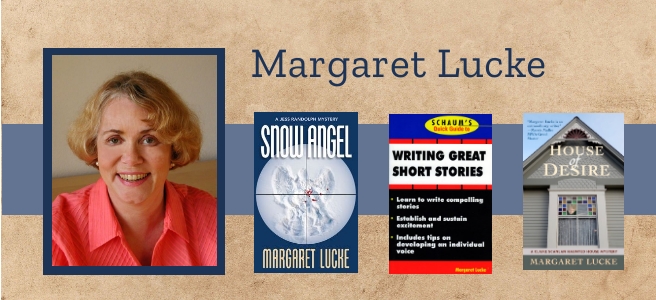
By Margaret Lucke
The literary world lost a bright light last week—the redoubtable Chelsea Quinn Yarbro. To me, she was a muse, mentor, and great friend. To her many readers and fans she was, in some of their own words, “a brilliant writer and an amazing person,” “a consummate professional,” and “a truly extraordinary human being.”
We met in 1978 when I went to my first meeting of the Northern California chapter of Mystery Writers of America. She was the chapter president at the time, and gave me a warm welcome that grew to one of my closest friendships.
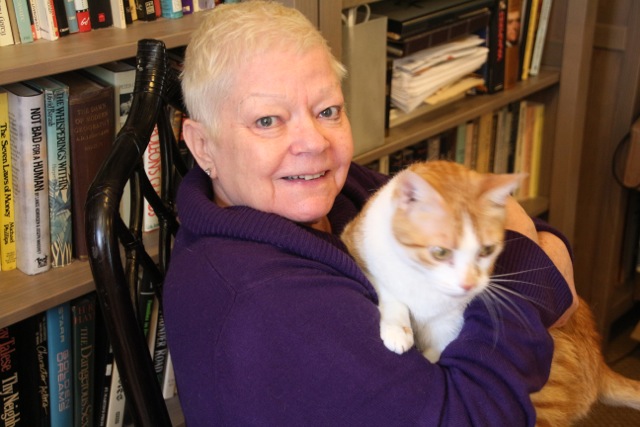
She defined what it means to be a prolific writer, having around 100 published books to her credit, along with numerous short stories and essays. Her work spanned just about every possible genre—science fiction, fantasy, Westerns, romance, crime fiction, and horror. She won a Bram Stoker Lifetime Achievement Award in 2009 and received a World Fantasy Award for life achievement in 2014.
Quinn was a Lady of Mystery in her own right, as the author of two mystery series, one starring the Native American attorney Charlie Spotted Moon and the other featuring a 1920s journalist Poppy Thornton who investigates crimes with the help of a ghost named Chesterton Holte. But what she is best known for is her groundbreaking novels that follow the vampire Count St. Germain across several continents and centuries. In a departure from the norm, her vampire was the good guy. “The horror in these books,” she said, “comes from what human beings do to each other.”
I shared with Quinn an appreciation of a good red wine, an affection for the cats with whom she shared a home, and two memorable trips to Italy. She shared with me a great deal of wisdom and encouragement when it came to writing.
She gathered some of that wisdom into a workbook called Fine-Tuning Fiction, which evolved out of a popular seminar she offered through the Writers Connection in Cupertino. She organized it five sections, or what she called The Five Ps, each covering an essential aspect of an fiction writer’s craft: People, Plot, Presence, Pacing, Poetics. A quick sampling:
PEOPLE – “All fiction begins with people, no matter how they are packaged, and the premise that people—which covers all species and forms of characters, human or otherwise—are interesting.”
PLOT – “When most people say plot they mean story-line, or the steps the characters take to get from one end of the narrative to the other. A plot is much more basic than that. It is the means by which the argument or conflict between two or more characters is resolved.”
PRESENCE – “The environment of a story is as much a character as the people in it. Presence is what pulls the reader in with your characters and convinces them that their experience is complete.”
PACING – “Pacing has to do with how quickly events occur in a story, and how much reaction time is allowed before another event occurs. Every story will reveal its own internal rhythm if you are willing to take the time to work the story through.”
POETICS – “[Words that seem mean the same thing] contain nuances that make them not quite synonyms, and therefore each has a slightly different meaning. These nuances are the province of poetics, or the esthetics of words. Just as presence and pacing each contribute to the impact of story-telling, so poetics give any piece of fiction its particular voice.”
You might be amused to know that the list of not-really synonyms she uses to introduces the Poetics discussion is: nude, naked, bare, unclothed, undraped, stripped, starkers, in your birthday suit, bare-assed, disrobed, in the altogether, exposed, in the buff, in a state of nature, unattire, unclad. I’m sure that list caught her readers’ attention. All of those terms mean “not wearing any clothes,” but the impression each of them conveys is different, sometimes strongly and sometimes subtly, from the impact made by any of others.
Ciao, Quinn. I’m going to miss you. Tonight I’ll raise a glass of your favorite red in your honor. Have a good time cavorting in the afterlife and telling everyone there great stories.


You were lucky to have such a wonderful friend and writing source in your life. ((Hugs))
LikeLike
Thank you, Paty! Yes, I was very lucky.
LikeLike
A fine testament to someone who was significant in your life in several ways.
LikeLike
Thank you, Susan. Yes, a very significant friend, and I’m grateful to have had her in my life.
LikeLike