Guest Blogger ~ Laury A. Egan

Our guest Laury A. Egan answered interview questions.

1. Why you write the genre you do?

Good question! Though my dominant genre is psychological suspense/crime fiction, I also have written and published literary titles, comedy, romance, and a few children’s stories. In other words, I write the book that comes to me rather than focus on specific genres. Psychological suspense is indeed a favorite, however, and was originally inspired by Patricia Highsmith’s books in which she usually features a sociopath and does so with gleeful enthusiasm. (It is my suspicion that she herself fell into this sociopathic category). I also find that “bad guys” make for fascinating studies and Fair Haven has its share and some “bad girls” as well.

2. How did you came up with the mystery/murder/premise in the book you are promoting?

Actually, this was my first novel, one I began when I bought my first computer in the mid-80s. I made some headway then, but life got in the way as it often does (actually a new romantic relationship and a house move), and I delayed work for a few years. When the relationship flamed out in spectacular fashion, I moved nearer my parents on the coast of New Jersey, and though still working full time as a book designer and photographer, I picked up Fair Haven and finished a first draft. But once again life intruded so the manuscript was shelved into the closet. Finally, I began another novel, Jenny Kidd, inspired by Highsmith and set in Venice, and thus began a series of new books until my new and delightful publisher, Andrew May of Spectrum Books in London, began accepting my manuscripts at a furious pace, publishing four books in thirteen months. Once he cleared my desk and closets, I looked around and saw Fair Haven, but oh, my, it was a mess! Plot errors, amateur formatting, and tons of mistakes. It took me forever to whip this complicated, yet intriguing, novel into shape…which hopefully I did!  

3. How you came up with the main character in your book or series?

The cast of Fair Haven is generously large, but probably the most significant character is the forensic photographer, Chris Clarke, a handsome woman who is involved with Kate, a primary suspect in the murder. Because of my own background as a professional photographer, it was an easy task to handle the details of Chris’ work. She also lives by the river in the neighboring town of Fair Haven, and owns a sailboat, which I also did in my younger days. Chris has an obstreperous beagle who rules the house—Cagney is modeled on my own dog. He often steals the show in the novel, so hound and dog lovers should enjoy his escapades.

4. Any interesting research you did for the book?

Originally, I thought the local police force would oversee the murder investigation, which was one of the huge errors I committed during the first stages of writing. In fact, though they do some coordination, interviews, etc., the Monmouth County’s Major Crimes Bureau and the prosecutor’s office are in charge of everything, including gathering forensic evidence. I interviewed a former Fair Haven policeman as well as a retired director of the county’s Economic Crime Unit, both of whom set me straight on a number of misconceptions. In addition, after a few glasses of wine, a friend, a financial analyst, grinned and answered my question about how a broker would commit fraud, cheerfully providing details about the Cayman Islands, offshore accounts, and the like.

5. A post on your process of writing a mystery book.

As mentioned above, this book took a long and arduous journey from its inception to its submission to my publisher. Quite honestly, I never thought the manuscript was good enough to publish, but there was something charming about the plot and its characters that kept drawing me in. I also loved the irony of a murder in the quiet, serene village of Fair Haven. After hundreds of hours of revision, I hope this murder mystery will be an enjoyable read, one that harkens to some British series such as Midsomer Murders in that the residents of small towns are the focus even more than the crime. Despite this, have fun figuring out “who done it!”
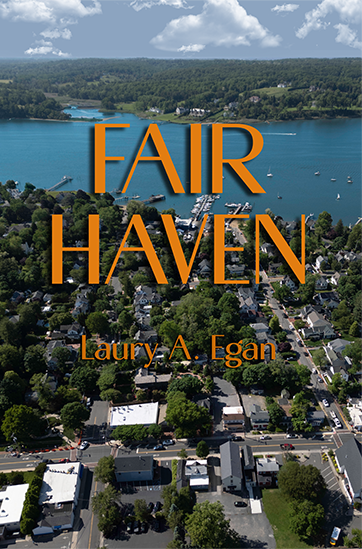
Fair Haven: A picturesque riverside town. A safe, friendly place. And then, one summer afternoon in 1994, Sally Ann Shaffer is electrocuted in her hot tub. Who did it? One of her many lovers? Her husband? A thief? A jealous colleague at her tennis club? The town is suddenly embroiled in suspicion, interpersonal conflict, blackmail, fraud, and murder. 

“When is a murder mystery more than a who-done-it? Answer: When it is written by Laury Egan. This wonderful mystery kept me en-tranced, as her characters drug me around the town of Fair Haven and through their inter-woven lives. In an ever more complex web of intrigue, jealousy, hatred and lust the plot was revealed. Though its difficult to write a review of a murder mystery without giving away too much, I couldn’t figure it out, even with some well-placed clues, until the end and then I was amazed by the reveal. You will be too.”

—CA Farlow, author of The Paris Contagion

Amazon: https://geni.us/fairhaven Published by Enigma Books, an imprint of Spectrum Books, London
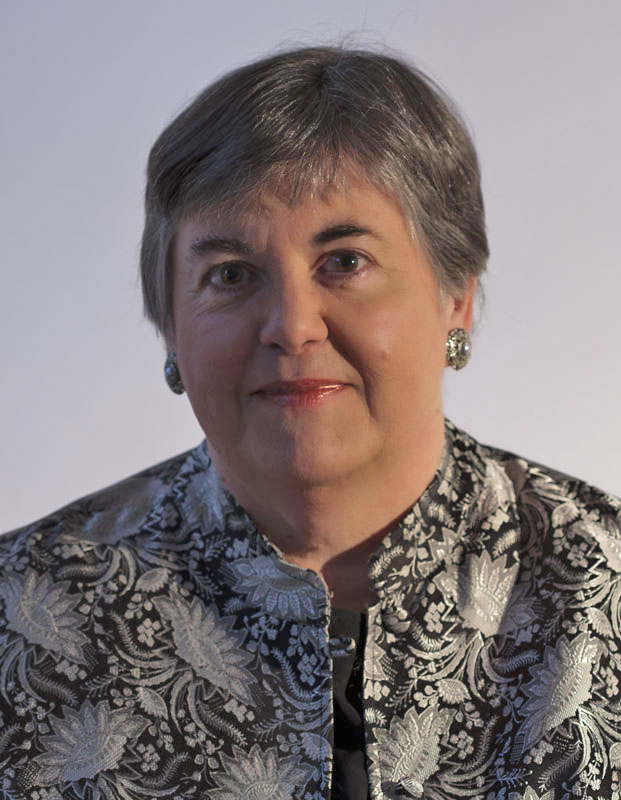
Laury A. Egan is the author of fifteen novels, a story collection (with a new collection, Contrary: Stories and a Play, due May 2025), and four volumes of poetry. Her psychological suspense/crime fiction novels are: Jack & I, The Psychologist’s Shadow, Doublecrossed, The Ungodly Hour, A Bittersweet Tale, and Jenny Kidd (a revised edition will be released October 18, 2025). Ninety of her stories and poems have appeared in literary journals and anthologies. She is a reviewer for The New York Journal of Books, a graduate of Carnegie Mellon University, and a 2024 recipient of a New Jersey State Council on the Arts Individual Artist Award in prose. Website: www.lauryaegan.com

LauryA.Egan@EganLaury

https://www.facebook.com/laury.egan/

https://www.instagram.com/laurya.egan/

https://bsky.app/profile/lauryaegan.bsky.social

https://www.amazon.com/s?k=Laury+A.+Egan

https://www.goodreads.com/author/show/4090464.Laury_A_Egan

https://www.linkedin.com/in/laury-a-egan-09096b3/ http://www.lauryaeganblog.wordpress.com/
Research: How Much is Too Much?

Recently, I picked up a book by a well-known author whose books I like. The book was one of a series and I was so excited to begin reading, but after a couple pages I realized I wasn’t enjoying the story. The author included so much information about the different agencies her characters were working for that it read like a textbook, not a novel, and I found myself getting bored and having trouble reading on in the book. And that wasn’t the first time I’d run into that. Another author whose books I love is doing the same thing. There are probably more, but these two stood out for me.

I know that a lot of people watch cop shows and true crime shows on TV. It has become very popular in the last few years. Is this the audience these authors are thinking of when they put everything they know about certain bullets, or forensic information in their novels?

 I can’t help but wonder, are we writing nonfiction or are we writing stories? I know it’s important to do the research and get things right, but what if our readers find the facts we throw in are too much?

For me, in the case of the authors I mentioned, I wanted them to get on with the story. I wanted to delve into the story and live with the characters, and the decisions they make, not be lost in the technical jargon.

I struggle with how much research to include in my own stories.  Where is the line between too much and not enough? It’s tempting when you are fascinated by what you discover in your research to add it all to the novel, but I was taught that you need to know a lot about the subject, but you don’t necessarily need to include all your knowledge in the book.

In my current mystery/thriller, Her Last Breath, which is coming out soon, I had to research old bones and what can be learned from them. I read a lot of information on forensic anthropology that was fascinating, but only one or two lines of my research was included in my book.

Could I have gone on and on about it and told the history of forensic anthropology? Sure, but would it have added anything to my story? I didn’t feel it was needed, and I didn’t want to get bogged down in the research so I didn’t, but it was fascinating, and I could understand why an author would enjoy the research so much they felt like they needed to share it with their readers.

Are there readers who would’ve been happy to read all my research? Maybe. But I’m sure there were those like me who would’ve wanted me to get on with the story. Therein lies my dilemma. I feel it’s important to put enough information in to make your book sound authentic, but not so much that your reader feels tired or bored while reading it.

How much of your research ends up in your books? Do you feel like some authors add too much? Or do you feel like the more the merrier as the old saying goes? Send me a message and let me know.

Finding Time to Write is Hard

The rest of this month, I am home 13 days! That means every one of those days I need to put my fanny in the chair and get the next Gabriel Hawke book written. Because August is going to be hit and miss to get writing done.

I swear, each summer gets busier and busier! I was able to get more writing done when I sat all day in a swather or tractor raking hay during hay season than I do now.

As our family grows so do the family commitments as well as I’m trying to get my books seen more by actual people. I’ve found that if someone meets a writer and sees their enthusiasm for their books, the reader is more likely to purchase the book. Then if the like that first purchase they come back for more.

I started this month with an in-person event that I’ve not attended before. It was a Renaissance Faire (loosely). I sold 26 books over two days. All but one of the sales were to new to me readers. I’m hoping they will enjoy what they purchased and come back for more next year, as my following has done for the Sumpter Flea Market each year.

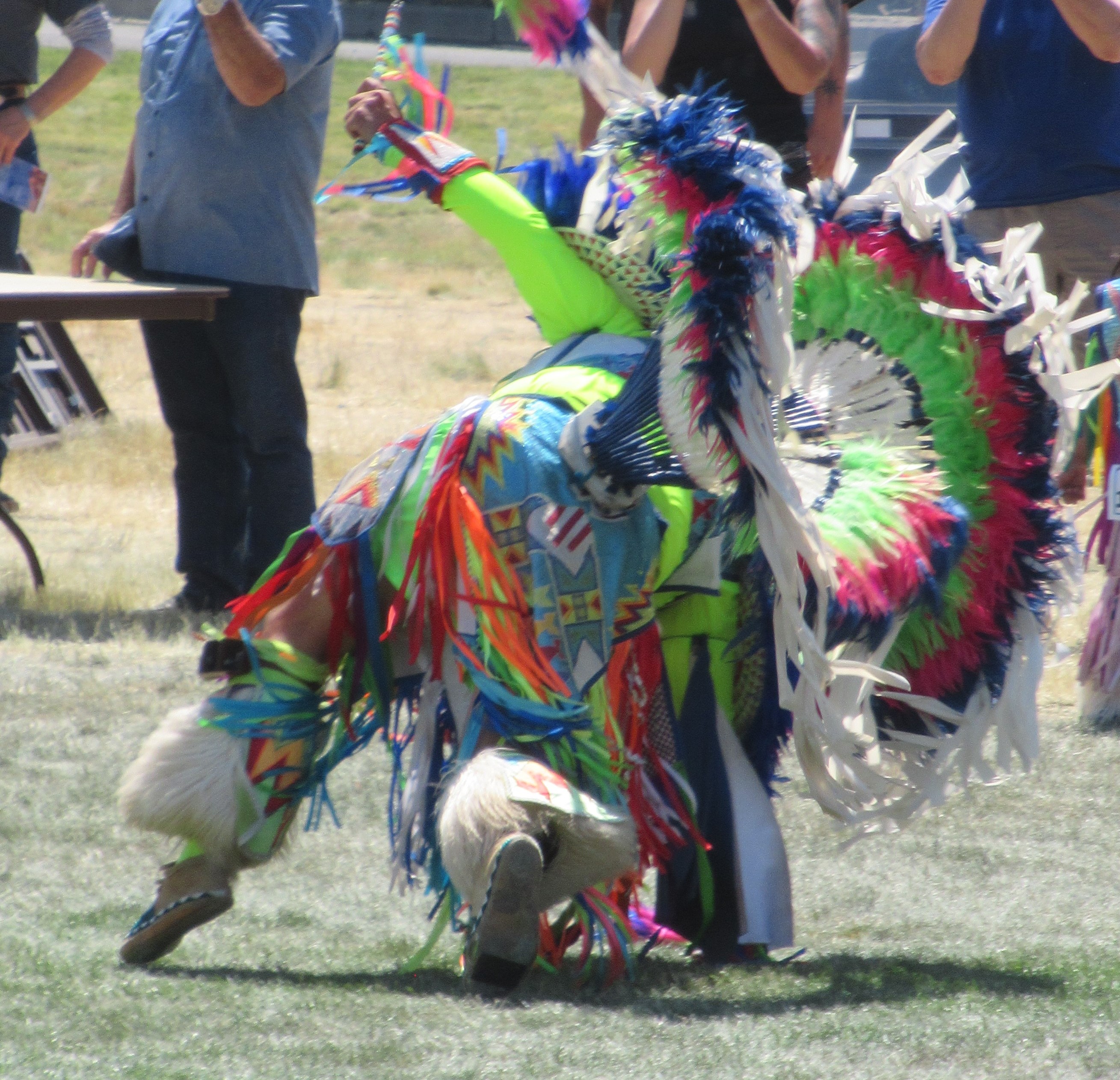
The rest of this month I will be attending Miner’s Jubilee in Baker City, OR, to see if it will be something to do next summer, and I’m attending the Tamkaliks Powwow in Wallowa, OR. I’ve been attending this for several years to help me better see my characters and because I find it healing. The last two Mondays of the month, I’ll be judging at county fairs. That’s what makes the summer get busy for me. But I love talking to the 4-Hers and discovering their love for their projects.

When I am home, I make myself write. I have to. My readers let me know they are impatiently waiting for the next book. I can’t let them down. I’m a people pleaser. My greatest flaw. It gets me more work than I can sometimes do, but there it is. It is who I am.

I’m also mentoring two mystery writers and a friend who has been writing the same book for too long. I’m her weekly reminder to sit down in the chair and move the story forward, don’t keep making it perfect. That comes after the story is all out and waiting to be prettied.

It is these mentorships that keep me from opening the internet first thing in the morning and getting words written before I look at an email or see who liked a meme on Facebook. While I coach other writers on finding time to write, finding ways to streamline their days and writing, I follow my own guidance by making sure I’m writing and moving my story forward.

My greatest strength is that when I set my mind to something, I do it. And right now my mind is set on getting this book written this month so I can “pretty it up” next month when I’m attending a family reunion, a grandson’s wedding, judging at another county fair and state fair, and then selling my books for two days at the State Fair. Because most of those trips are on the opposite side of the state from where I live, it requires a day’s travel to and a day’s travel back. Which eats up a lot of the days in August! Half of August I’ll be away from home- 15 days to travel and attend the events.

That is why my fanny is in my chair and I’m writing! I’m halfway through the book and should get it done in the next 13 days. Yipee!

Authors, are you on a deadline this month, or do you give yourself slack in the summertime? If you’re a reader, how impatient do you get for the next book in a series?

A Comma-dy of Errors

by Margaret Lucke

I don’t recall what the sentence said. I no longer know the subject of the report that contained it, although you’d think these details would have impressed themselves on my mind.

All I remember is the yelling.

I was working in my first editorial job, for a firm of international economics consultants. My role was to tidy up the grammar and punctuation in the proposals and reports that the economists produced.

The sentence in question was critical to the central point that the document was making. But it needed one small change. I inserted a comma. After making a few other tweaks, I sent the report back to the economist who’d written it.

When it came back to me for the next round of editing, my little fixes were intact. Except for that comma—the author had taken it out. So I put it back.

A few days later the report landed on my desk again. Time for the final proofreading.

Once more, the comma was missing.

Now, some commas are optional. Some are a matter of style. But the presence or absence of a comma can be crucial to the meaning of the sentence.

Take the title of author and editor Lynne Truss’s handbook on punctuation, Eats, Shoots & Leaves. It comes from an old joke about a panda that comes into a café, consumes a sandwich, and then fires a gun at the waiter. As the panda walks out, the manager yells, “Hey, what did you do that for?” The panda calls back, “I’m a panda! Look it up.” The manager finds a dictionary and checks the definition: “Panda: a black-and-white, bearlike mammal found in Asia. Eats shoots and leaves.” Simple and straightforward. But add that comma after eats . . .

Or consider this sentence from an Associated Press article I saw a while back: “Netanyahu has been an outspoken critic of the international efforts to negotiate a deal with Iran, which does not recognize the Jewish state, and supports anti-Israeli militants like Lebanon’s Hezbollah and Palestinian Hamas.” Having two commas makes a nonrestrictive clause of the words in between them (the ones I’ve italicized). This means that if you take out those words, the sentence should retain its meaning. But when you do that in this case, you’re left with “Netanyahu has been an outspoken critic and supports anti-Israeli militants …” Not what the author intended. You have to remove that second comma from the original sentence to make its meaning clear.

Of course other small changes in punctuation and, for that matter, spacing can alter meaning too. Consider the difference in response you’d get to these two ads:

Wanted: one nightstand.
Wanted: one-night stand.

And notice how changing periods to commas and changing their placement around gives you a different impression of an evening’s events (from KidsCanReadandWrite.com):

I ate. My mother washed the dishes. Then I went to bed.
I ate my mother, washed the dishes, then I went to bed.

A row of colorful commas

The comma in the economist’s report was like these examples—its presence or absence altered the meaning of the sentence. It needed to be there, yet the author kept taking it out. So I trekked down the hall to his office to explain why I’d added it and why keeping it was important.

He didn’t believe me. I was younger than he was, I was female, and I held only a lowly B.A. while he had Ph.D. He assumed that all of these factors were reasons to dismiss my arguments. In his opinion the comma was clutter, the sentence looked cleaner without it, and so it had to go.

I’m a calm and reasonable person by nature, not given to raising my voice. So I’m not quite sure how our discussion turned into a shouting match. But there we were, screaming at each other over a comma, while everyone else in the workplace gathered in the corridor outside his office to enjoy the entertainment

Finally the economist yelled, “Prove it! Show me the rule.”

“Okay, I will,” I snapped back, and I stomped away.

I spent the rest of the day scouring grammar guides and style manuals. Finally I found a statement about comma usage that was so clear and so close to the case of our particular little comma that I figured even he would get it. I ran back to his office and thrust the open book at him, jabbing my finger at the proof. “Here it is. See? See?”

I won. The comma stayed.

You Want to Know What???

by Janis Patterson

Am I weird? (Wait – don’t ask my husband that – we all know what he’ll say!) But regarding writing, I think I really am totally out of step.

Got an ad this morning from yet another one of those proliferating ‘publicity’ sites offering a new site/protocol/scheme for publicizing my books and ‘helping me to personally interact with my readers.’ I don’t get that. Yes, I know the lifeblood of a book is publicity, and I’m willing to pay for that, but interacting with my readers on a personal level? Really?

I don’t want to interact with my readers and turn them into friends. I have a lovely bunch of friends, some of many decades’ standing, and don’t need nor particularly want to make loads of new friends ‘with whom I can share things’ – especially not through the mechanical grist mill of the internet. I don’t see why my readers would want to talk about – or even be particularly interested in – my private life. My biography is on my website, and it covers everything, if not a little more, about me than any reader should want to know.

What difference is it to the readers how I take my coffee or what color my kitchen curtains are (or if I have curtains in my kitchen at all!) or what I name my pets? How does knowing that affect their enjoyment of my books? Or, more to the point, what business is it of theirs? They are buying my books, but should that also give them access to my private life?

One thing that these ‘I really want to know the real you’ type readers never seem to accept is that the time spent with them discussing pets, kitchen curtains, coffee or any other personal thing is time taken from my writing the next book. ‘Oh, but I’ll only take a little bit of time,’ they croon, ‘I don’t want to bother you…’ without realizing that if I spend ‘a little bit of time’ with everyone who wants a piece of my life all my writing time will be gone and there will be no more books, as I refuse to sacrifice a moment of my family/home time for anything on this earth.

Why is being privy to another’s life – another whom you will probably never meet in person or have a real relationship with – considered so important? Isn’t it my stories that caught their attention to begin with? Why can’t they be satisfied with them? It’s none of their business how I drink my coffee or decorate my house or anything else.

I write the books. They buy and read the books. That is the basic equation, and is all both writers and readers should need.

And although the holiday is over, my new anthology THE FOURTH OF JULY MURDERS is still available on Amazon… Four authors. Four murders. Four wars. It’s great fun!