Of Schedules and Alligators


by Janis Patterson

Back years ago when I still worked in the corporate world I had a little placard on my desk. It had a cute cartoon drawing and the legend, “When you are up to your *ss in alligators, it is hard to remember that you were sent to drain the swamp.”


I’ve never forgotten that saying, though – wish I still had the little placard, but some stinking low-life stole it. The premise has stayed with me all these years, though and as my writing career has progressed, however, has become even more true.


Now those of you who have read my many blogs over the years know how strong I come down on the side of professionalism. Published or unpublished, hobby writer or NYT bestseller, if you’re a writer you have to realize – and act – like a professional. That means consistency, dedication and good behavior, i.e., delivering a product contractually promised on time and in good condition, and working well with your editors et al. And for most of us, some hobby writers excepted, that means discipline. You have X number of words to produce and Y amount of time to do it, which means a fairly demanding schedule.


Now I’m going to be contradictory, because I will admit that schedules are fragile things subject to the alarums and buffeting winds of life. Everyone has their own idea of a schedule – some do 1,000 or 2,500 words per day without fail, some work for X amount of time per day – whatever works for them. At least, we try. Unfortunately Life has a mind of its own – which means we do not have to be a slave to an unbending timeline. (Those of us not on a hard deadline, that is.)
A dear friend of mine, an NYT bestseller, had a large multi-generational family and a demanding job. Far too many times her writing had to take a remote third-place in her life and she fell further and further behind in her work. Finally she said “Enough!” and determined that she would write 30 minutes per day without fail. She said no matter how busy life was, she could scrape together 30 minutes. And she did – without fail. I remember her sitting on a gurney in the ER after a leg injury, scribbling away in the notebook she always had with her. Even as well as I knew her I was astonished at her dedication.


The older I get the more I believe that Life is more important than a rigid schedule. What do you do when someone dear to you dies, or a child is ill, or there is a horrible incident requiring your attention – a house fire, an accident or some other trauma? It would take a stronger person than I to ignore it completely just to meet my schedule. That does not, of course, include bridge games or luncheons or other basically frivolous pastimes. Then there are children – or grandchildren. They are young for such a fleeting time – don’t shut them out. And for those of you fortunate enough to still have your parents they must be considered too. There is more to life than writing, no matter how dedicated a writer you are. You can always do your ‘thirty minutes a day’ or whatever after they are asleep.


See? I told you I was being contradictory. We need discipline if we are going to have a career in writing, but we also need to be human. Choose your distractions and exemptions wisely – if you have a choice. Just remember anything can be an alligator!

Born to be Wild

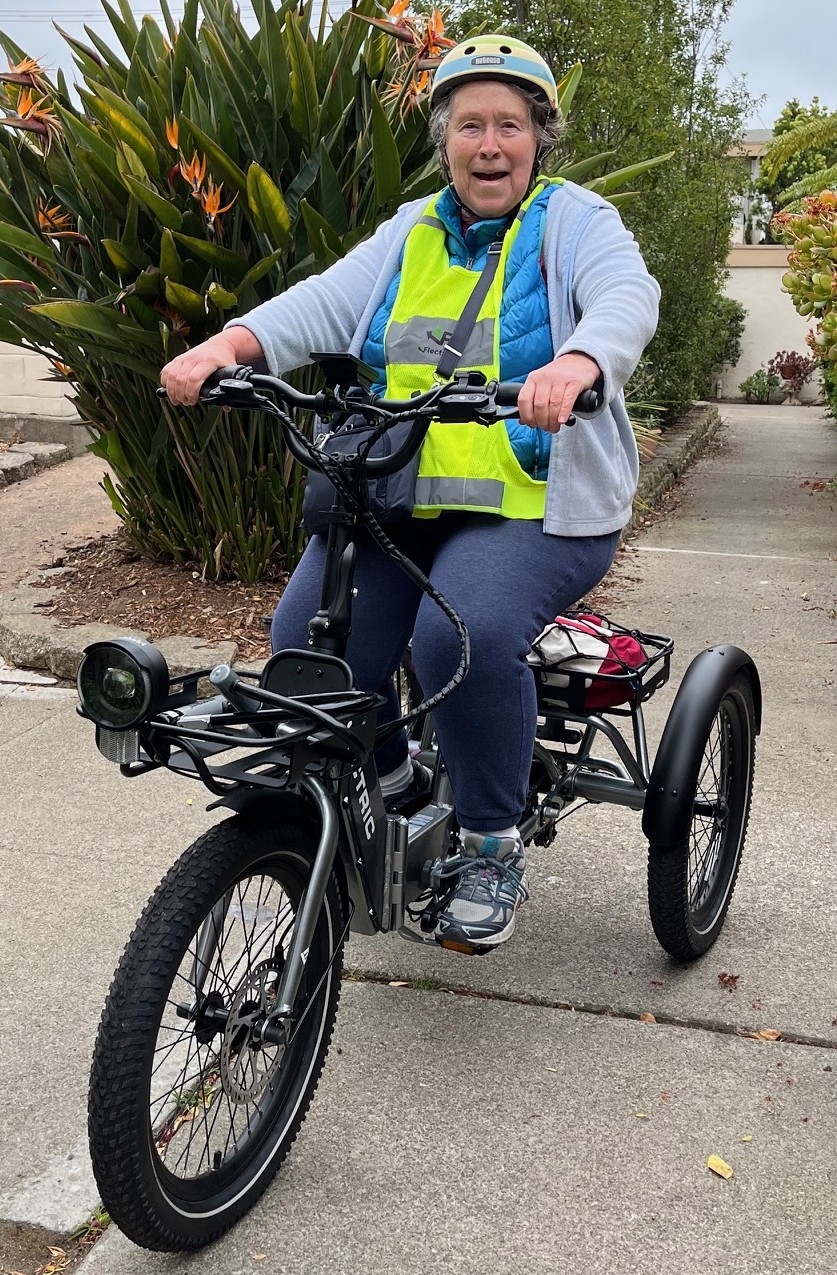
I bought myself an electric trike. I named it Trixie. Because, why not!

For over a decade, I had a perfectly good bike, which I enjoyed riding around town. But in the past few years I’ve had both knees replaced. They work better than they did, but—oh, well, I’m not getting any younger.

So, the aches, pains and twinges have increased. I no longer felt stable and secure on the two-wheeler. At my age, I told myself, all I need to do is fall off this damn bike. Then where would I be? In a cast? In rehab?

I figure three wheels are more stable than two. Trixie has pedal assist, which means if I’m laboring up a hill, I can kick up the oomph to better get where I’m going. And it has cruise control. Who knew? There are so many short trips that I can take without using my car—the library, the farmers’ market, my Italian language group at the senior center.

Once I got the e-trike all put together and all the doodads installed, I charged it up and took it out to my condo complex’s driveway for a test ride. News flash. Riding a trike feels different from riding a bike. There was a bit of a learning curve.

I’m out on the street now, in my striped helmet, pedaling along and enjoying the beautiful spring weather, coming home from the farmers’ market with lots of fresh produce in my trike basket.

And I’m singing “Born to the Wild.” If you are the same vintage as I am, surely you remember that rock song from 1968, with the band Steppenwolf, telling us to get our motors running and head out for the highway, in search of adventure. Yeah, you remember. It was in the movie Easy Rider.

What, you ask, does this have to do with writing? It could mean going off in a different direction when the situation warrants it. The bike wasn’t working for me, so I got the e-trike, and now I’m out there pedaling in the sunshine, getting exercise.

Sometimes things aren’t working for the work-in-progress. That means I need to change direction. That could mean taking a different approach with my plot, characters and/or setting.

There’s a quote that’s attributed to Raymond Chandler: “In writing a novel, when in doubt, have two guys come through the door with guns.” You can interpret that any way you want, but for me, it means, change it. Do something different. That may very well unblock your block or add nuance to a character.

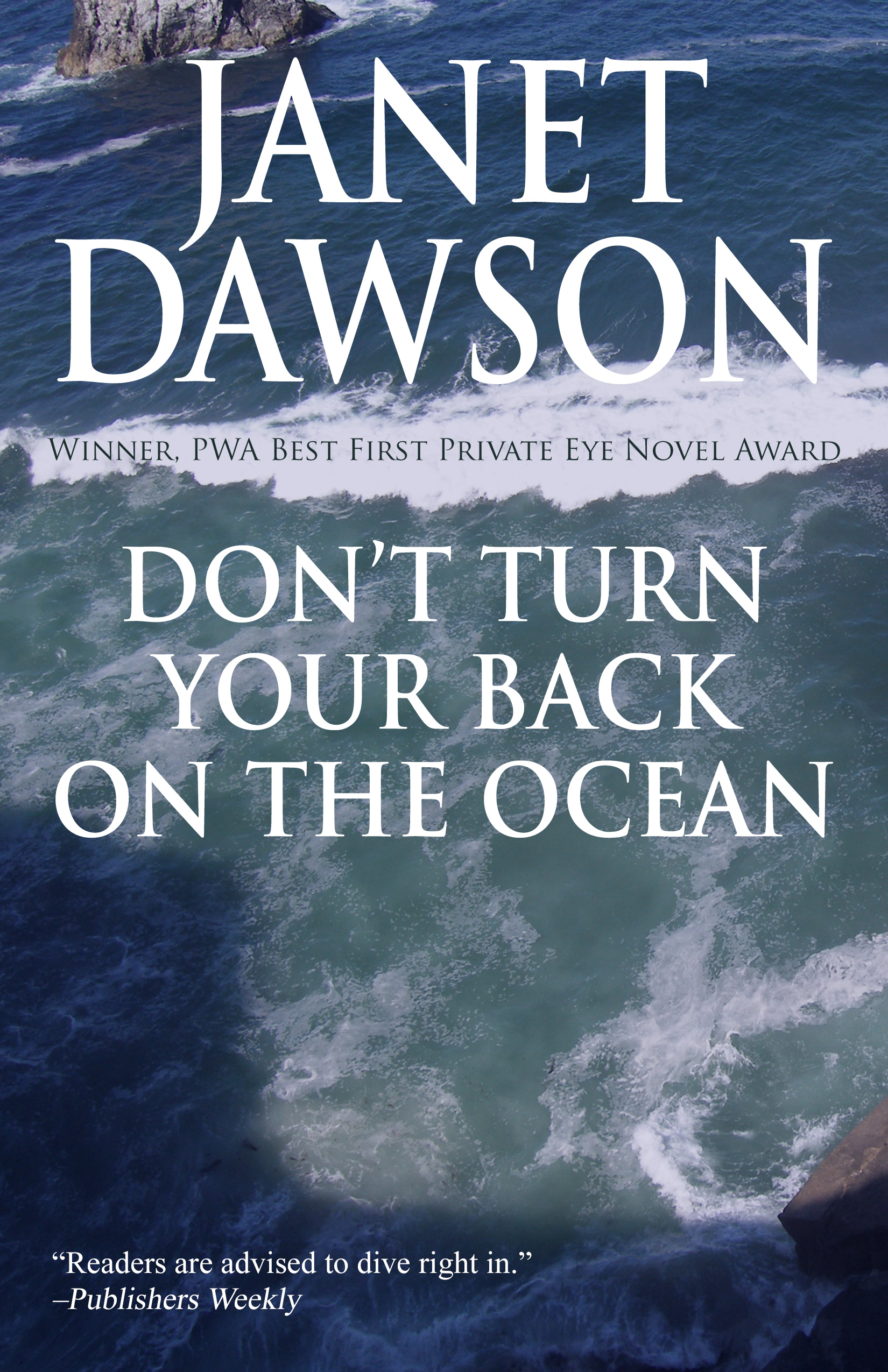
In Don’t Turn Your Back on the Ocean, my private eye Jeri Howard visits her mother and various relatives in Monterey. Her cousin Bobby’s girlfriend has vanished, and people think he had something to do with it. While I was writing the first draft, things got bogged down. My solution wasn’t two guys with guns. It was local law enforcement arresting Bobby on a murder charge. That certainly increased the tension, and the pressure on Jeri to investigate.

In Witness to Evil, Jeri is down in Bakersfield looking for a missing person. There’s been a murder, but are the two related? I reached a point where I wasn’t sure what happened next. All I knew was at some point Jeri followed a lead to Los Angeles. I changed things up by changing the setting, putting Jeri on the freeway to the City of Angels, where she poked around in various places and found out all sorts of information. I wrote seven chapters in six days.

Whether it’s two guys with guns or pedaling down the street on an e-trike, making those changes helps me up the ante in my writing—and in life.

I really need a flag that says “Triker Mama.”

Guest Blogger ~ Keith Yocum

The Iceberg Syndrome

It’s good to have a psychologist in the house.

Throughout my writing journey, my wife Denise has lurked in the background. Her input has been merciless, accurate, and vital.

That’s because she’s an avid reader in general and a licensed psychologist in particular.

Twenty-two years have passed since my first novel, “Daniel,” was published, and nine more have followed. The genres I write in are a mix of psychological mystery, espionage thriller and even magical realism.

Most of my novels involve strong female characters, including the Cape Cod Mystery series, in which the protagonist is Stacie Davis, a newspaper reporter. My background in journalism helped me create an authentic portrait of Stacie’s job as a reporter for a daily newspaper.

But Denise’s input to create the emotional authenticity for Stacie–and all my characters–is an important part of my writing process. “Would Stacie really do that?” Denise would ask. Or “That doesn’t sound like something Stacie would say.” When there are inciting incidents or dramatic twists that force Stacie to react, Denise is always looking over my shoulder to ensure the character’s actions are plausible.

Over the years, Denise and I have developed a work process that allows me to craft a story without her input. When I finish the complete manuscript, I drive to my local Staples and have them print a bound hard copy. Denise prefers working from a hard copy and jotting down questions. She folds down the corner of a page that has a comment.

In some of my novels, the protagonist sees a therapist dealing with an issue. Using therapy as a narrative tool can be useful for a writer. It helps fill in the character’s backstory and shows them struggling to understand their emotions and interpersonal struggles. Having Denise there to lend professional oversight to the rendered sessions is so important.

Psychological thrillers require the protagonist to struggle with both an external menace and internal uncertainties and confusion. But the reader only cares about what happens if they also care about the protagonist, and that’s where emotional authenticity is important.

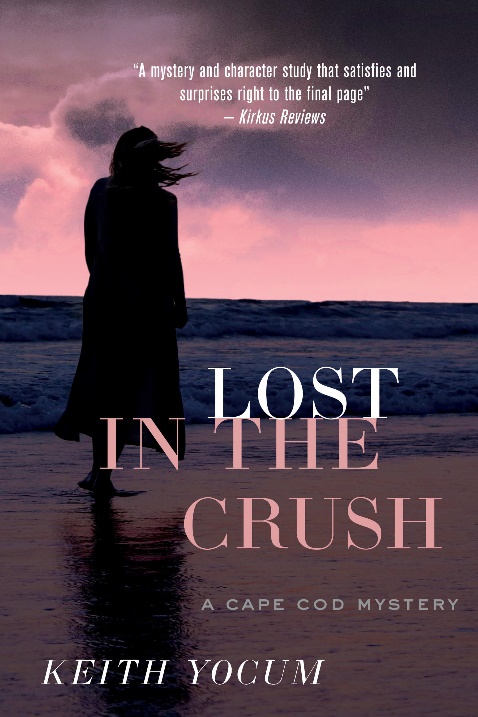
In the most recent Cape Cod Mystery, Lost in the Crush, Stacie suffers a devastating personal setback that sends her reeling into a complex set of circumstances that tests her sanity and her relationships. She’s a dogged journalist seen as brash and forceful. Her strength is sometimes her greatest weakness, and Stacie struggles to understand what happened to her and why. But that journey causes friction with her friends and family as she stalks the truth. Is she going too far? Why does Stacie persist? What about her family background makes her such a driven person?

Sigmund Freud said, “The mind is like an iceberg, it floats with one-seventh of its bulk above water.” With my wife Denise’s help, I strive to show my characters’ motives and struggles that sit right below the surface.  

Lost in the Crush

Stacie Davis is about to marry the man of her dreams, but on the night of the rehearsal dinner, a dark secret unravels everything she holds dear.

Get ready to be swept away by a tidal wave of deception in this gripping psychological thriller set on the shores of Cape Cod. With the stunning backdrop of the ocean, Stacie must confront the truth and face the consequences that come with it. Will she be able to survive the brewing storm?

Buy Links:

Amazon: https://www.amazon.com/dp/B0DQ88ZNYW

B&N: https://www.barnesandnoble.com/w/lost-in-the-crush-keith-yocum/1146747051?ean=2940184540061

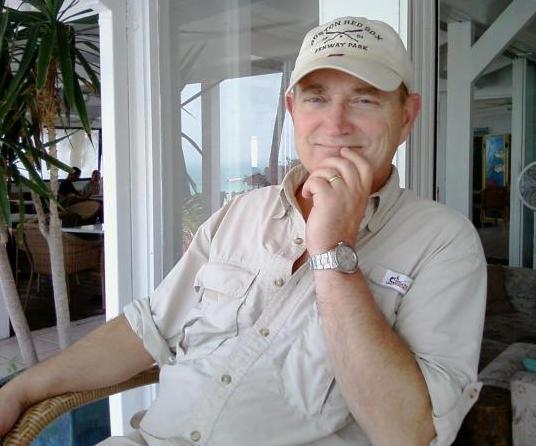
Keith Yocum is an author of ten novels and lives on Cape Cod, Massachusetts. He grew up overseas as an Army brat, including long stints in the Panama Canal Zone and Western Australia. He has an undergraduate degree in philosophy and a graduate degree in journalism. He has an extensive career in publishing. He was the founder of a group of weekly newspapers in the western suburbs of Boston. He has also worked for publications including The Boston Globe and The New England Journal of Medicine.

Social Media links:

www.keithyocum.com

https://www.linkedin.com/in/keithyocum/

https://www.facebook.com/yocum.keith

Write Drunk, Edit Sober by Heather Haven

A lot of people think Ernest Hemingway wrote that. He didn’t. It is often attributed to him, but this brilliant writer wouldn’t have done anything as self-destructive as being smashed out of his gourd when writing, at least not long-term. For Whom the Bell Tolls does not refer to last call at your local pub.

It isn’t that Hemingway didn’t imbibe. One of my favorite cocktails is named the Hemingway Daiquiri. And it’s quite nummy. Hemingway was a man who prided himself on being a man’s man. He drove an ambulance in the middle of a war.  He was a big game hunter. He got into brawls. He was a womanizer. He drank, yessiree Bob. Hemingway was a man of the 20th Century. But he also liked cats, so in my opinion, he had a few redeeming 21st-century qualities. I’m with Mark Twain on this thought: “If man could be crossed with the cat it would improve man, but it would deteriorate the cat.”

But back to writers boozing it up while on duty. I don’t think so, colorful as it sounds. When I’m writing, I’m trying to find words to form into sentences. It becomes very basic. Most of the time, they don’t even have to be pretty words. They just have to make sense. This is something I can barely do while slurping down my morning latte, much less a martini. I strain my brain to try to come up with the word for that latch thingy-hooky that’s at the top of a whatchamacallit to keep, you know, the lid on. Or the name of who’s-a-biddy, the assistant front desk manager in Chapter Six. You know, the one with the long, dark hair.

So if Hemingway didn’t say the quote, “write drunk, edit sober,” who did? They have no idea. One possibility is humorist Peter De Vries. He wrote a character named Gowan McGland. The character, McGland, gave an interview and said, “Sometimes I write drunk and revise sober, and sometimes I write sober and revise drunk. But you have to have both elements in creation — the Apollonian and the Dionysian, or spontaneity and restraint, emotion and discipline.”

Now doesn’t that sound exactly like what a sober writer would pen of a fictional character while trying to give him color?