Spring Cleaning

If it’s true that a messy desk is the sign of a creative mind, then I’m creative! My poor desk looks like a bomb went off. As I sit here looking at it, I see four big mugs full of pens, three bouquets of fake flowers, signs, stacks of birthday cards, stacks of printouts of the book I’m currently writing, notebooks, books…you get the idea!

I’ve gotten into the bad habit of leaving my laptop on the dining room table and writing there. That wouldn’t be so bad if I didn’t have a perfectly good office downstairs, but I do. It’s just that it’s messy.

Part of the problem is my office is a long slender room. Half is devoted to writing and half to sewing, when I sew, which isn’t often because I’d rather write. But I don’t want to give up my sewing space. And if you sew, or live with someone who does, you know that sewing machines and cutting boards and fabric and patterns and batting and more fabric and unfinished projects…take up a lot of room.

So, I write upstairs in the dining room, and everything gets thrown onto my desk downstairs until I find time to go through it, which isn’t as often as I should.

Not only do I have notebooks and pens and staplers and timers and more notebooks and…stuff on my desk, behind me are boxes of my books and all of the things I need to take with me when I do an author event. Boxes of pens, my tablecloth, my runner and large pictures of my book covers and five boxes of books…all things I need and have nowhere to store because whoever bult this house didn’t put in enough closets or storage space!

I know it’s time to reorganize my space. Every time I do, I hope that with the clutter cleaned up I will be more productive. Do I really need seven copies of each book in manuscript form? Plus, other manuscripts that have never and will never see the light of day?

Why do I hoard, yes, I know that’s a dirty word, but why do I hoard pens and notebooks? I love them and buy tons of them. I’m always on the search for the perfect pen and continually go back to my old standby, my blue Bic pen. Don’t judge! It makes my handwriting look better.

Years ago, when we used this office for our business, my son went through and got rid of a bunch of pens. I almost had a melt down! (He hasn’t offered to do that again!) I think it’s time to ask him to intervene though. NO ONE NEEDS THIS MANY PENS!

A few years ago, our basement flooded. We had to take everything out and I decided it was a good time to get rid of a few things. I donated a lot of books to the library and threw away a lot of notebooks and stuff that had accumulated, but I need to do it again. (Not flooding the office, that wasn’t fun. But I need to do a thorough purge of my space.)

In case you’re wondering, I do keep our living space neat. My office has become the dumping ground for all my stuff.

It’s spring. Every spring I feel the need to clean and purge. Just not today. I’m nearing the end of writing my current book. I don’t want to take time off and clean until it’s finished. I’ll just have to put the purge on hold until I finish the book. Maybe the thought of a clean office will spur me on, and I’ll finish the book faster. One can always hope.

What about you? Do you save things you don’t need? Do you like to work in a clean office, or like me, is your desk messy most of the time? Let me know in the comments below. I promise I won’t hate you if you’re a neat freak! I’ll just be envious and try to force myself to finish my WIP and then I’ll clean this office!


Chameleon

As an author, there are days I feel like a chameleon. I have to change my thoughts, my energy, and there are times it feels like my skin.

Because I’m a self-published or Indie author- I have many job descriptions.

  • Writing – The one I love and wish I could do and not worry about any of the others.
  • Editing – One that takes a different side of my brain but makes my work better.
  • Formatting – Making my story into formats for ebook and print books.
  • Producer – Getting the manuscript and pronunciations to my narrators and getting all of that set up to be produced. Then listening to the chapters to make sure the narrators didn’t miss words or used the right emotion.
  • Promoter – Finding the places that will best showcase my books and getting them out to these places as well as looking for authors who write the same type of story to try and do newsletter swaps, Oh and there’s the newsletter that needs to be written. Also making memes, (which I try to get a PA to do as much as possible.)
  • Marketing – Different bubble than promoting. Here I am figuring out what other books in my genre look like, looking for the best advertising for the book and the least amount of out-of-pocket.
  • Sending my stories to Beta Readers and Critique Partners to get feedback on the story and what I can tighten or make different to make it a better story.
  • Uploading – When the book is ready in ebook format, I upload to the various ebook vendors and aggregators. I also upload the print formats to Ingram Sparks. And I upload the audiobook to Findaway Voices/Spotify, Kobo, and Bookfunnel. I also upload the ebooks to Bookfunnel so I can add them to my website store.
  • Website store- While I enjoy having a place where readers can purchase my books directly from me with a bit of a discount to the other vendors, I made myself more work when each book comes out. But that’s okay. I want my readers to start purchasing direct. I like having the one-on-one interaction with them.

For each of these tasks there is a different mindset and there are days I can’t get up the energy to tackle some of them. I always have the energy and drive to write, but many of the other tasks, I drag my feet and reluctantly peel off my writing colors and daunt the dingy, grubby colors of making my brain work in a way, it isn’t accustom to do.

While my brain is constantly coming up with story ideas and working through the next scene or character encounter in my work in progress and the next book brewing in my head, it doesn’t like to switch over to the mundane side of being an author.

There are days I think I should just write for fun and not bother with selling it. But then I think of all the hours and years I’ve spent honing my craft, and know I need to make it a paying endeavor. Not to mention, I would have angry readers if I stopped putting out new books. I love that so many people let me know they enjoy my mysteries. They, the readers, are what keep me shedding my writing colors and doing the jobs necessary to get a book published.

Readers, you keep me writing and sharing! And makes my skin burst with bright, happy colors!

If you want to check out my books you can find them at https://www.patyjager.net

Farewell, Bulwer-Lytton

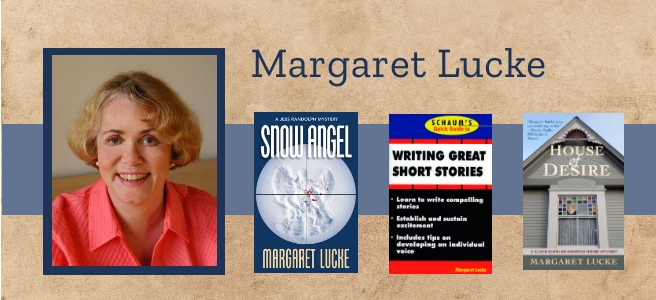
By Margaret Lucke

As April 15 rolls around, I’m saddened to report of the demise of one of that date’s most cherished annual events.

No, I’m not talking about the deadline for filing your federal income taxes. You still have to do that, and if you haven’t yet started dealing with all of those numbers and all of that paperwork, I recommend you stop reading this blog right now and get busy with that task.

What I’m referring to is the late, great Bulwer-Lytton Fiction Contest. It was announced not long ago that 2024 would be this beloved competition’s final year.

While entries were accepted any time, the official deadline was each year April 15 –which, as the contest’s organizer, Professor Scott Rice, noted, is “a date that Americans associate with painful submissions and making up bad stories.”

The English Department of San Jose State University began sponsoring this annual wordfest in 1982. Writers were urged to come up with the opening sentence to the worst of all possible novels.

It’s a challenge for any writer to come up with an opening line that will grab our readers and pull them into reading the rest of the book. With the Bulwer-Lytton winners, there was no rest of the book.  They were often complete single-sentence stories. Anything more would have been superfluous.

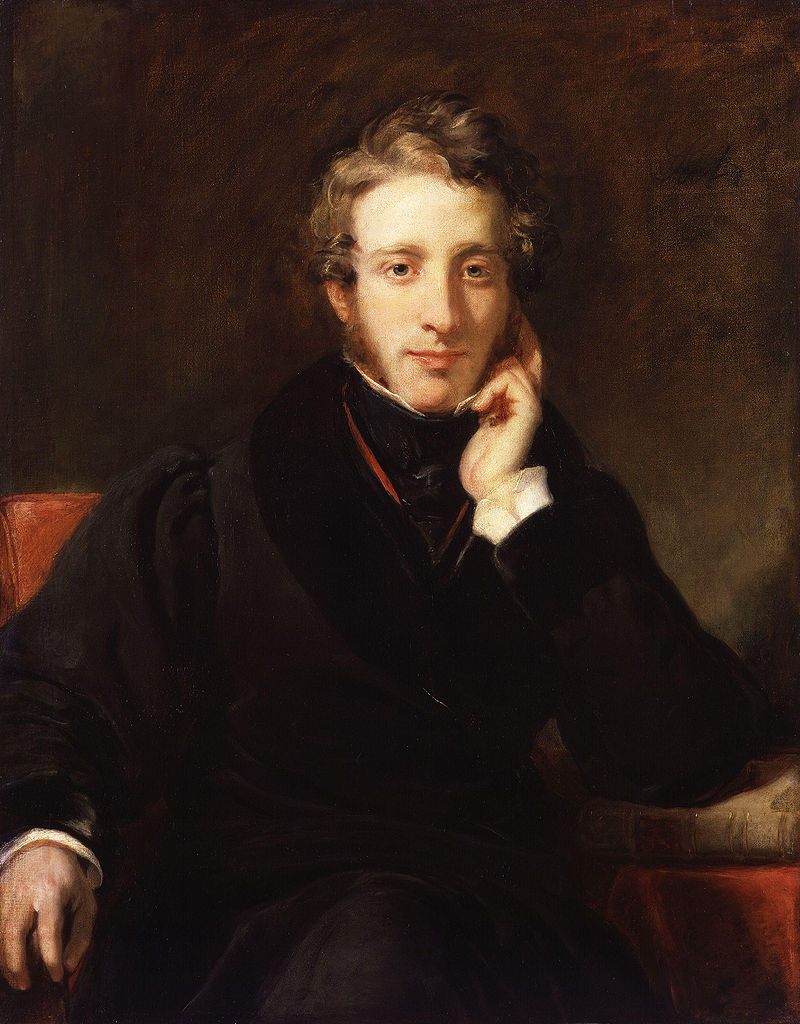
The contest was named for Edward George Earle Lytton Bulwer-Lytton, 1st Baron Lytton, a minor (perhaps deservedly so) but prolific British novelist of the Victorian era. His best-known title is probably The Last Days of Pompeii, and he originated the saying “The pen is mightier than the sword.” But he is most famous today for penning the immortal opening line: “It was a dark and stormy night … ” Thus begins the novel Paul Clifford, the story of an English gentleman man who moonlights as a criminal.

The complete sentence reads:

“It was a dark and stormy night; the rain fell in torrents–except at occasional intervals, when it was checked by a violent gust of wind which swept up the streets (for it is in London that our scene lies), rattling along the housetops, and fiercely agitating the scanty flame of the lamps that struggled against the darkness.”

Snoopy, famed beagle from the Peanuts comic strip, appropriated the first seven words for the title and first sentence of his own novel. Snoopy is not one to waste words. His entire novel is only 214 words, not all that much longer than Bulwer-Lytton’s single sentence. A born mystery writer, he jumps straight into a suspenseful plot with his second sentence: “Suddenly a shot rang out.” 

Back to the Bulwer-Lytton contest: In its first year it attracted three submissions. In its second year, thanks to a little publicity, the number grew to 10,000. Writers were invited to submit as many abysmal first sentences as they like. One year a hopeful author sent in more than 3,000. If he had strung them together he would have had an entire book, which surely would have qualified as a the worst of all possible novels.

I submitted my own masterpiece of a first line one year. Sadly it didn’t win, possibly because it exceeded the recommended length of not more than 50 of 60 words. I’m fond of it anyway, and I can’t resist including here:

“Until the night he set her house afire, burning down the only home she’d ever known, incinerating the manuscript of her nearly completed novel, turning her cherished photos of Daddy to ash, though thank goodness the cats escaped … until the hour when sparks soared across the heavens like shooting stars and the smoke from the conflagration carried away all her hopes and dreams … until the moment when a firefighter squelched her screams and drenched her nightgown with a well-aimed hose … until that very instant Isabelle believed her love affair with Rolf would last forever.”

Hmm, maybe I should think about writing the rest of that book.

If you’re interested in reading the sentences that the judges, in their wisdom, preferred to mine, you can find an archive of the winners and dishonorable mentions here: https://www.bulwer-lytton.com/winners

Souvenirs and Memories

by Janis Patterson

As most of you know, I just returned from several weeks in Egypt and Jordan. Fascinating… and exhausting, but I’m covering that in the Trip Diary that will be on my website. What I’m going to talk about now is souvenirs. Souvenirs are something to remind you of what you did/saw… or to take home to friends and family so they will know where you went and what you did.


The Husband and I quit the souvenir train a long time ago – mostly. He always buys a few postcards and I usually pick up something small, like a refrigerator magnet. (Though I did buy a spectacular gold-embroidered dress in Cairo – have no idea where I will wear it in the foreseeable future, but I do know I couldn’t have left without out it.)


Back to souvenirs. Whether for us or for others ‘small’ is the operative word. We always try to travel light, especially on a ‘rough’ trip like this one, so space is limited. Plus, one must consider the egregious baggage charges the airlines are extorting from us. No space, no extra charges = small. Very small.


But… as pleasant as little trinkets can be, they are not necessary to life. All they really do is stimulate our memories and feelings of pleasant or adventuresome times, and we can call forth those memories on our own, because what is really important is the memory – not the trinket purchased there, though the trinkets are nice to have.


To drag this post to the business of writing, in a not-too-unusual way a well-crafted story is a souvenir – a memory that you might have not had yet, but once the story is read it stays with you forever. How many of us have favorite scenes, favorite stories, that always evoke a reaction within us? Isn’t that like how a souvenir can in the blink of a memory bring back sights and sounds and actions previously experienced? Just because it is not brightly colored or even physical doesn’t mean that it isn’t a sort of souvenir… an encapsulated memory.


That means I can forget small. I live in a house with four libraries, each simply bulging with books, most of which I have read. I can pick up almost any one of them and suddenly there is a memory, a feeling inspired by something in that book. A souvenir of a life – an event – a something that I might or might not have experienced in the flesh, but which still arouses not only a memory but an emotion in me… just like when I pick up the embroidered shawl my husband bought for me in a small shop in Petra, or the tiny terra cotta Mayan figure I found in Mexico, or… I could go on and on. Like you and probably everyone else on the planet I have more souvenirs and more memories than I can handle.


So… when you are writing your books, remember that you are not only creating a story, you are creating a souvenir of a life the reader never lived.

Time Available, Plus

My cousin has a catchphrase about stuff. She opines that one’s stuff expands to fit the space available, plus two boxes.

My variation on that theme is this: The number of tasks demanding my attention expands to fit the time available, plus five or six more tasks, all with screaming deadlines, taking up line after line on my to-do list.

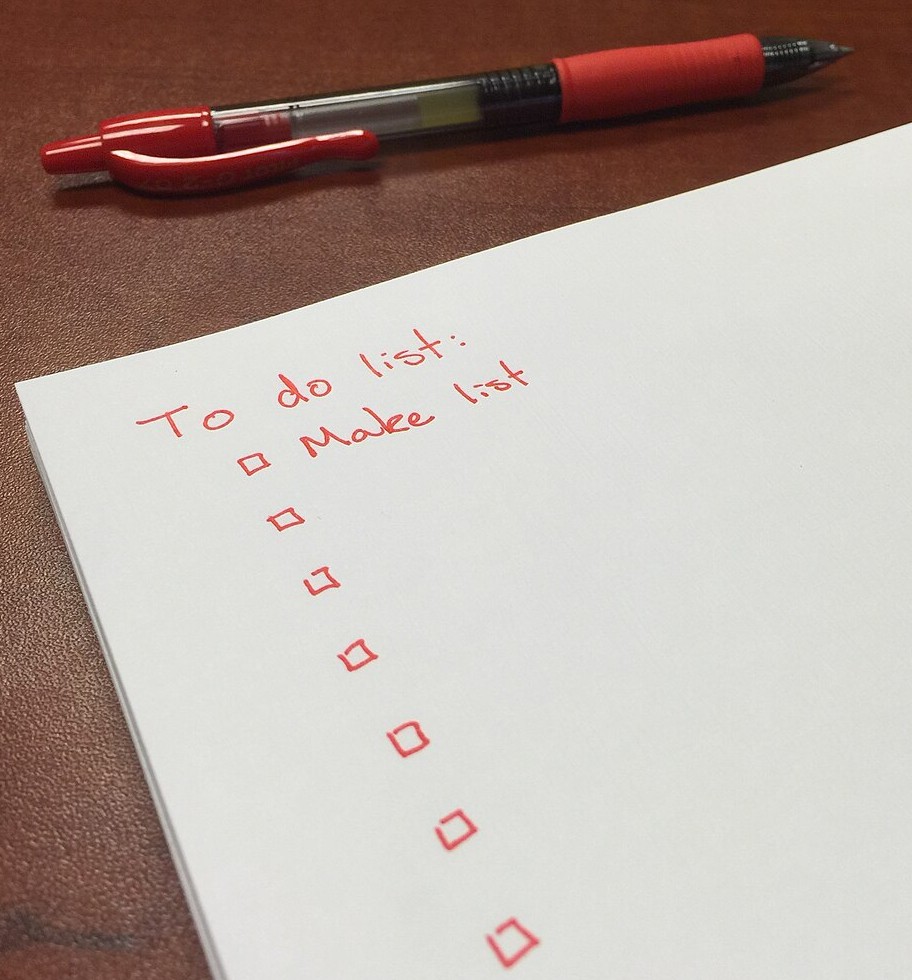
Yes, I keep a to-do list. It’s satisfying to check off those items. But I keep adding more, until the page is covered with scribbles, some of them in the margins, and hand-drawn stars indicating the urgency. Oh, the tasks that make their way onto that list—and get in the way of writing. There are so many.

I retired from my day job more than a decade ago. I figured I would have more time to write. Not unlimited, never that. But more. Hah! Like that worked.

“I don’t know how I got anything done before I retired.” When I was working full time, I used to hear people say that. After I retired, I was the one saying it. However, I do know how I got things done. I didn’t sleep—much. During those last few years, what with the day job and the commute, I got up at 4 AM so I could write before making that rush-hour drive to my office. Once I retired, sleeping in past 6 AM was pure joy. So is reading my morning newspaper in the morning, a mug of coffee beside me, instead of catching a few pages while eating lunch at my desk.

It’s amazing what crops up to fill the time. Tasks, some pleasant, some routine and necessary. I need to clean my home from time to time, because I like to walk through the rooms without tripping over the clutter. In the spring and summer, I look at the proliferation of weeds in my garden, thinking I’d better haul on the gloves and deal with them.

Exercise is a desirable routine. I have a weekly tai chi session that has been good for me. And walks. Because you never know, I might work my way through that thorny plot issue while walking along the beach near my home.

Errands, always errands. Grocery shopping for me. Stocking up on cat food for my four-pawed furballs. Library visits, to pick up or take back books. Visits to the doctor or dentist. And those trips that are good for the soul, such as meeting a good friend for lunch or coffee, always with plenty of conversation. Or an outing to a museum or the theatre.

I treasure those days when my dance card isn’t crowded, just my morning session with the newspaper, a walk (if the weather permits), and the rest of the day spent in front of the computer, writing and polishing my work in progress. That is so satisfying. But lately, things are getting in the way. I’m thinking of that daylight-savings-time mantra: “Spring forward, fall back.” The term “fall back” makes me think about falling behind. I have certainly felt that way over the past two years, when family and personal issues got in the way of writing.

The tasks are always expanding to fill up the to-do list. That’s always going to be the case, I suspect. One issue gets taken care of, and then another crops up to take its place. And always, things that get in the way of writing, if I let them.

So on to checking off one more thing on the to-do list: this month’s blog!