My Brain Is Taking a Break

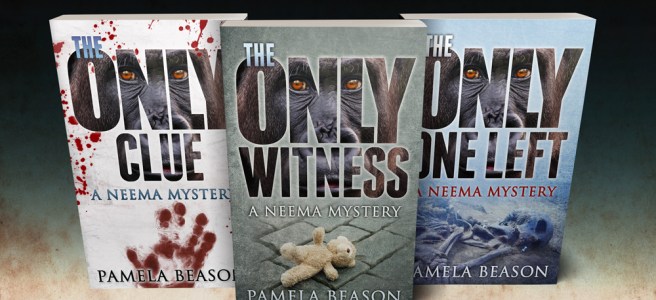
Ack! My post is scheduled for tomorrow, and my mind is blank. Not a single pithy idea is pinging around in my head. So, I’m just going to blather on about what’s going on while my creative brain is taking a vacation. I’ve finished the manuscript for my latest mystery, IF ONLY, which is a crossover novel between my Sam Westin Wilderness series and my Neema the Gorilla series, and trust me, it was not easy to mix those two very different settings and groups of characters, but I believe I pulled the blend off smoothly, although it took me a long time.
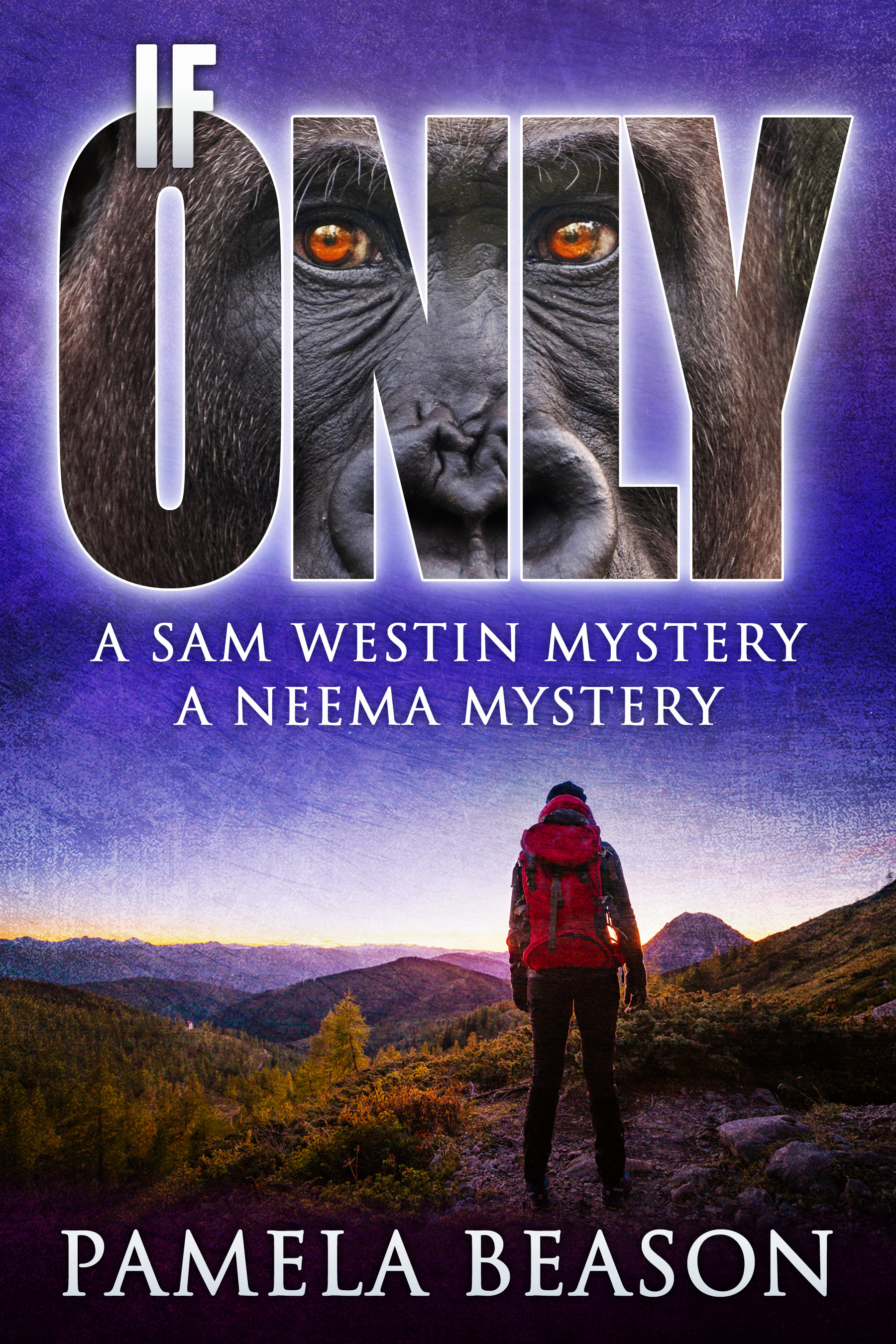
But then I ran into two snags. One, my editor is very busy and has been sick, so my manuscript has been held up in the final edit. Two, I planned for this book to be positioned in both the Sam Westin series and in the Neema series, cleverly eliminating the need to write another book for each series. But it turns out that Amazon will only allow me to place the book in one of my series, which then caused a need to make cover changes and dream up creative ways to make it clear that the book also fits in the other series.

I still have all the minutiae to complete after I make final manuscript changes: register ISBN numbers for both print and ebooks, make an ebook version for Amazon with links to my other books, make an ebook for Draft2Digital without those links, write the description for the book page, find appropriate keywords for the listing, etc., etc. Being a self-published author can be tedious, but at least I’m in control and making far more money than I did with a traditional publisher.

So, while I’m waiting for the final edit to arrive on my desk, I’ve been giving my brain a break with reading. I always read, and although I tend to prefer mysteries, I also read all sorts of other books, and I often read more than one at once. Right now, I’m reading two very different books, and they are both unusual picks for me. First, Jodi Taylor’s The Long and the Short of It, which is a collection of wacky humorous short stories. I rarely read short stories, and even more rarely read humorous stories, but these are much more entertaining to me than most, as the plots involve historians who travel back in time and accidentally muck up the details of historical events. Second, I’m reading Camp Zero, a post-apocalyptic story about groups of people who have been posted in the arctic for mysterious reasons having to do with discovering pristine air and livable places for humanity as the southern half of our planet devolves into climatic and political chaos. However, in Camp Zero, it’s clear that men, and not necessarily honorable men, are in charge of all these experiments, so it’s never clear what is going to happen next.

These make a great break from my normal reading. Lately I’ve been plowing through Sara Driscoll’s FBI K-9 series, which has great suspense and action as the protagonist works on life-and-death cases with her canine partner. I will definitely return to that series later. I adore stories that honor the abilities and intelligence of animals, although my cats often express the wish there were many more books that feature feline heroes.

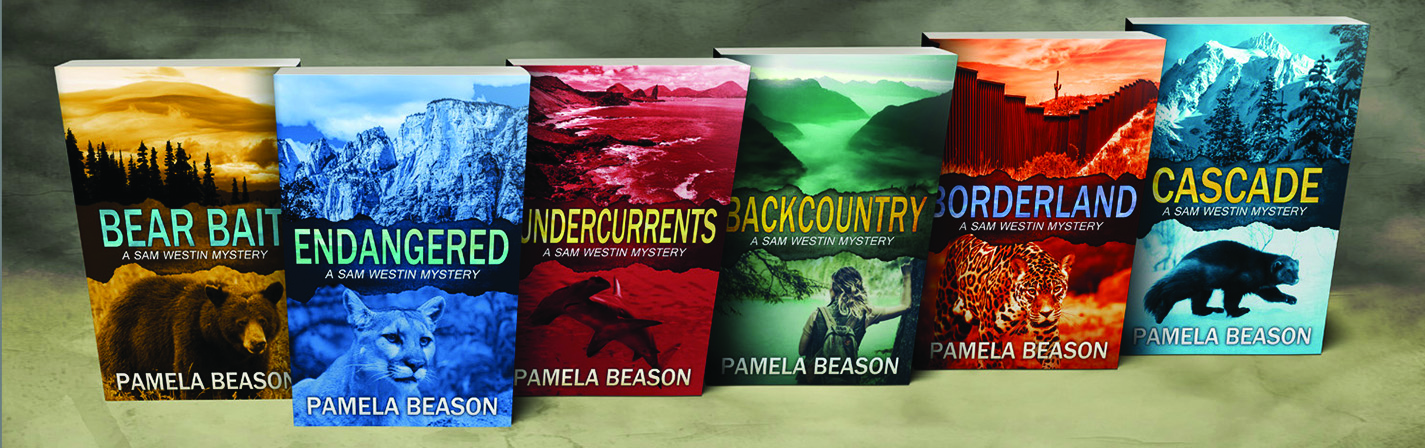
Soon IF ONLY will be out, and my attention will then be diverted to marketing, which I am generally terrible at. But for now, my mind is having a great time in the virtual worlds created by other writers.
My Writing List

Every writer has their mantra, motto, or theme for their writing. I have a list of items I try to hit with each book I write.

The list is:

  • Character endures longer than plot.
  • Action intrigues the reader more than passive language.
  • Scenes excite the reader more than narration.
  • Dialogue interests the reader more than exposition.
  • Nouns & Verbs trump adjectives and adverbs.

I’m not sure where I found this years ago, but the saying has hung either from my monitor or as now, on my whiteboard plotting calendar by my desk. These five things are what I strive for in each book or short story I write.

I want the readers to love my characters whether they are the main characters or the secondary characters. Because if I don’t care or like them why would a reader want to read about them? From the reactions of my readers when I ended the Shandra Higheagle Mystery series, I believe they fell in love with my characters. Which makes me happy and I try to do the same with all my other series characters.

As for action, I like stories that aren’t bogged down with descriptions. I want to know what the characters are doing and have their actions and reactions move the story forward. I like books that carry me along on the ride without distracting me with mundane things.  

Sometimes I wonder if I put too many breaks in some chapters, but they are usually ones where the characters are jumping from scene to scene as they move forward to question someone or look for a clue. All the scenes whether they are long or short keep the story moving.

I prefer to write dialogue that informs the reader either about the past, present, or to show the character’s character. I try not to use too much narrative to inform the reader. It can end up feeling like an info dump. As much as I can, I try to keep information in the dialog and not do any dumps.

There have been times after I’ve written and published a book, I think, “Man, I should have described this or that better.” Then I get a review with how well I showed or revealed an area or place and I think, “I guess I did okay.” I am not a wordy person in real life. I don’t care for small talk and I like to get to the point of things. I’ve found I’m the same way with my writing. I use words sparingly and make sure the words I do use inform without having to add three words for the one. I do use some adjectives but only if they are necessary to show what I want to show, not to flower up the pages. When I read a book with lots of description, I’ll jump over those paragraphs to get to the action.

The books I like to read are ones with strong likeable characters and action that moves the story forward. That shouldn’t come as a surprise after reading this post. If a character grabs me in the first chapter, I will finish the book unless the story is slogging. I came across a book recently that the premise intrigued me but I couldn’t finish the book because I didn’t like the main character and some of the things the character did seemed dumb. I put a book like this down and start another one. I have lots of books on my TBR pile and limited time to read.

So when I read for pleasure, I want the book to make me think about it even when I’m not reading. That is a good book.

What is a good book you’ve read lately?

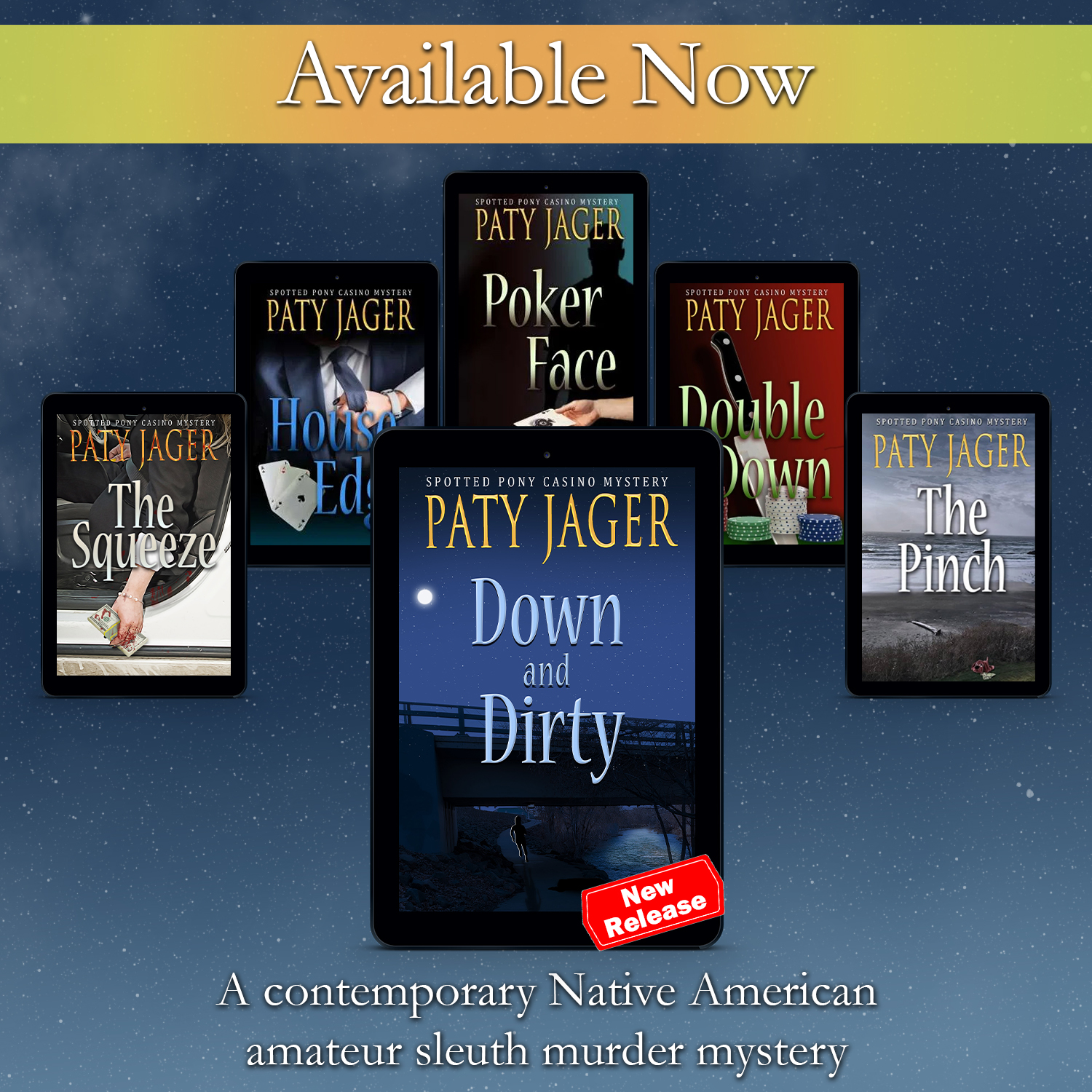
I’d be remiss if I didn’t tell you about my newest release.

Down and Dirty

Book 6 in the Spotted Pony Casino Mysteries

The Spotted Pony Casino’s head of security, Dela Alvaro, receives a late-night call that takes her to a deserted walkway along the river. After confronting a woman babbling about love and bodies being buried, Dela stumbles over a corpse and discovers her knife covered in the victim’s blood.

Dela and Tribal Detective Heath Seaver find themselves working with FBI Special Agent Quinn Pierce when the murder seems to be connected to a drug cartel. Dela nearly becomes the victim of a hit-and-run while someone is trying to frame her for the murder.

Proving her innocence has Dela interviewing past acquaintances and members of a drug cartel, all while trying to decide if the woman she met the night of the murder is truly crazy … or the killer.

Universal buy link: https://books2read.com/u/bagQ66

Muse vs. Editor: Writing a First Draft

By Margaret Lucke

“Whee! Look at these! So pretty. So wise.”

My Muse is flinging words and ideas at what a moment ago was a blank page, while I scramble to get them down. She’s as happy as a toddler in a mud puddle, and about as disciplined. I can’t wait to see what she’s going to come up with. I’m starting a new story, and I know my best course of action is to let myself simply follow her lead.

“Hey, you two. What’s going on here?” Uh-oh. My Editor has arrived and is peering over my shoulder at the screen. “You want to say that? Really? Are you sure?”

I reread the freshly written paragraph. A moment ago it seemed just right, but suddenly I’m having second thoughts. “I don’t know. It sounds pretty good to me.”

The Editor harrumphs and shakes her head, as if pitying me for having such faulty discernment.

“Go away,” the Muse demands. “You don’t belong here. I’m in charge of the first draft.” She splashes the Editor with muddy water. Drops land on the pristine page, making it look smeared and dirty. I frown. Maybe what I put down isn’t so wonderful after all.

The Editor leans in closer, jabbing her finger at the screen as she tries to confirm my misgivings. “Look. That word’s misspelled. And you left out a comma.”

“Little stuff,” the Muse sniffs. “Mere tweaks. Come back when we’re finished being brilliant and creative.”

“Just trying to help,” the Editor retorts. “While I’m at it, let me point out that there’s no way Lucy would sneak out of the house on the night of the murder. Totally out of character.”

The Muse claps her hands over my ears. “Don’t listen! Make her go away.”

I pull myself free. “Listen, you two. Play nice. The Muse is right, it’s her turn. The first draft is all about letting her run wild while we get to know the characters and figure out what the story is.”

“Ha! Told you.” The Muse gives the editor a raspberry.

“Not fair.” The Editor slinks into the corner to sulk. “No one gets how important I am. See if I ever come back.”

I sigh. This is like refereeing a fight between kindergartners.

“Of course you’ll come back,” I say in my most placating voice. It’s true that the Editor needs to leave now, but I don’t want to alienate her forever. “When it’s time for the second draft, you and the Muse will collaborate. I’ll need both her art and your craft.”

“Probably won’t be worth my effort,” she grumbles. “What you’ve got so far is garbage.”

The Muse rolls her eyes. “Of course it is. The first draft is supposed to be garbage.”

“You can fix it,” I promise the Editor. “In the second draft, maybe the third one, too. And the final one—that’s all yours. You can change words and fix punctuation to your heart’s content.”

I wonder what the Muse will say to that, but her attention has wandered. She’s capricious and whimsical, and it’s not easy to keep her focused. Right now she’s amusing herself by slapping bits of mud together into a castle.

There’s a long moment of silence as the Editor watches the construction project. Finally she says, “That’s the poorest excuse for a horse I’ve ever seen. I can tell that making sense out of this story is going to be a huge job. You have my number. Call me when you’re ready.”

She leaves my office, but I know she won’t wait for the call. She’ll be back tomorrow. She can’t resist trying to interfere in the first draft.

I turn back to my keyboard. “Okay, Muse, let’s get back to work. Where were we?”

My Muse stands up and wipes her muddy hands on my sleeve. “Oh, I’m done for today. Do we have any ice cream?”

Experience vs Research


by Janis Patterson

I’ll admit it – I’m a travel junkie. So is The Husband. We love to fill our bags, I grab my travel computer (an aged MacBookAir) and then we head off. I’ve gotten several books from my various trips and many more ideas than I can ever use. (Plus, to be honest, a lot of fun and a few downright scary moments…) Being older, we’re trying to squeeze in as much travel as we can afford before it becomes physically unfeasible. Travel is one of the greatest gifts life can offer. It is not a guaranteed gateway to a career.


I really did think everyone sort of thought the same way, but not long ago someone whom up until then I had thought intelligent gave me a rather unpleasant shock. Now you know because I have written again and again I believe there are ideas everywhere – you can get more workable ideas in a couple of days than a dozen writers could work up in a dozen lifetimes. I still believe that, which is why I was absolutely gobsmacked when this person said they really planned on becoming a novelist but they couldn’t start until they had more money to travel with.


This happened at a speaking venue where – among other things – I talked about the research value of travel. After my presentation was over there was a reception, and this person came to talk to me and dropped his bomb about not being able to write until he could afford to travel. Of course I questioned the idea that one had to travel to write novels. He became very defensive and said he didn’t want to be limited to writing only about what he knew, because all he knew was domestic and boring and in his opinion not worthy of his time, talent or effort. He didn’t think it was fair that established writers should have such a prejudicial leg up.


Sorry to burst anyone’s bubble, but I am not always sweet and well-mannered, especially when I am irritated and this person’s somewhat belligerently skewed vision definitely irritated me.


So, I asked, if you haven’t been to a place you can’t write about it? (Now I am not stupid; there are innumerable advantages to actually having been to a place – I just don’t believe it is an absolute requirement.)


He said yes.


I then asked how he thought people wrote historical novels, as time travel machines are pretty rare on the ground. Or sci-fi. Or high fantasy, since I hadn’t seen any dragons zipping around lately either.


Now he was getting angry, saying I was just clouding the issue and trying to discourage him and, he accused, like other multi-published professional writers keep the market for myself. He was an adventure writer, he declared, one who wrote about exotic places and cultures – not a ‘kitchen sink’ drone. He was special and he’d prove it once he could get started.


The rest of the conversation, I am somewhat sad to say, was too intense and impolite for recording here. However, it did make me think… and grieve for those who agree with him. I have always and will always say that research is essential; you have to write about what you know, and if you don’t know about it when you start you should know a great deal about it before you finish – whatever ‘it’ is. However, that does not mean you have to personally experience it! Sometimes that is indeed preferable, sometimes it is just pleasurable, sometimes it is impossible. (At least until they start tourist runs to 1860 or Alpha Centauri.)


If personal, on-the-spot research is impossible and there are no research facts are available, what’s a writer to do? My answer is logical extrapolation. If you’re writing about a space colony with a mixed alien population, you should think about physical makeup, reactions to varying gravitational pulls, breathing (oxygen or methane, for example), eating (fat/carbohydrate vs silicon/mineral sustenance) and the like. Now I know this is far from the world of terrestrial, ‘normal’ mysteries, about which there is thankfully an abundance of research available, but the principle is the same.


You have to know what you’re writing about whether you already know it, research it, create it, experience it or learn it. You are creating a world and in some worlds what you say goes – but once you have said it, it must stay the same for the length of time you are in that world. Even ‘playing God’ as writers do albeit on a limited basis, there are still rules.
In a nutshell, research is necessary; personal experience is not.


I don’t know what happened to that deluded young would-be writer; I do hope he absorbed and accepted what I told him – though I fear not, at least not now. Perhaps the writing-fairy lightning will strike him and he will have his beliefs validated – doubtful, but it does happen very very very rarely.


All I know is that we made a deposit on a great trip the other day and I’m already thinking about what to take and make sure my traveling computer is up to date and ready to go. Even though it’s early, I’ll start as soon as I finish the current project, which is set in ‘today’ and just down the street. No travel needed.

And… just in case you’re interested, all four volumes of my newest release – 50 BLOGS ON WRITING AND THE WRITING LIFE – are available at Amazon for just $.99 each!

Stay Caffeinated

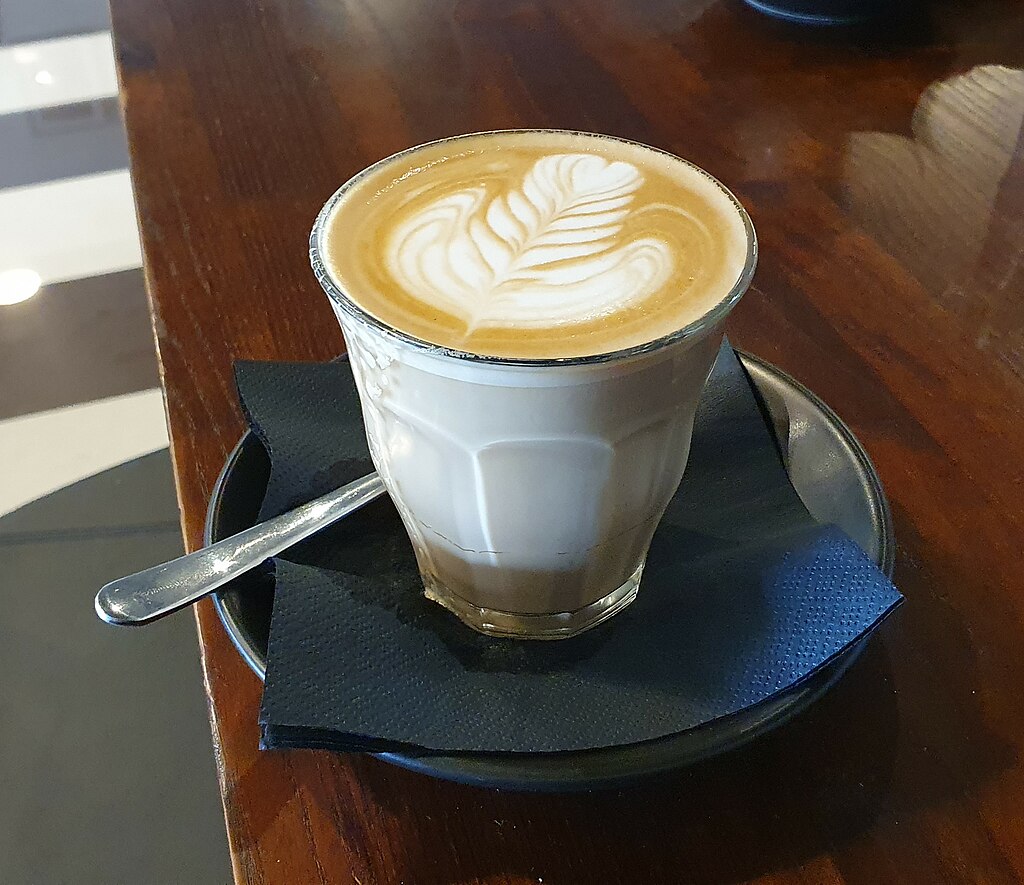
A reader once commented that Jeri Howard, the private investigator in my long-running series, drinks a lot of coffee. Indeed she does. More than I do. Her favorite drink, and mine, is a latte. And none of that pumpkin spice stuff for either of us.

From a writer’s standpoint, there are perfectly good reasons for Jeri’s coffee habit. Attribution for one. And adding flavor to the scene for another.

Let’s look at attribution. When one character is having a conversation with another character, you can get lost in a forest of “said.” He said this, she said that. As a reader, I like it when I can tell which character is talking, and I’ve read far too many books where I lose track of who is saying what. Having Jeri talk with a witness over a cup of java helps.

Here’s an example from The Things We Keep. Jeri leads into the conversation:

“What about you? How did you deal with it?”

He took another sip of his cappuccino and set the cup in the saucer. “Funny you should ask…”

As for adding flavor to the narrative, in the early stages of a book, I often write scenes with minimal details and lots of dialog. Then I’ll go back and add details to flesh out the scene and reveal things about the characters.

Another example, this one from Water Signs, where Jeri talks with a security guard who works on a site where there’s been a death.

Dupre got out, wearing his Manville Security uniform. He walked toward me, gesturing toward the door to the Peerless retail outlet. “Can I get a coffee first?”

I saluted him with my own cup. “Far be it from me to get between a man and his caffeine.”

Dupre laughed and went inside, coming out a moment later with the largest available cup. He took a sip and sighed. “Oh, yeah, I needed that.”

Coffee also gives Jeri camouflage in Cold Trail. Here, she’s trailed a potential suspect to a Starbucks, where he meets up with a defense attorney who hasn’t been returning Jeri’s phone calls.

The two men went inside the Starbucks. I followed. They queued up to order drinks, plain coffee for Scott, a cappuccino for Rhine, who paid for the drinks. When they got their coffees, I took my turn and ordered an iced latte. They found a table near the back. I got my latte and sat down at a nearby table, making sure Scott’s back was to me. . . . I got out my cell phone, pretending to take a call. I snapped a couple of photos of the two men, hoping the noise of the coffee shop would mask the sound of the shutter.

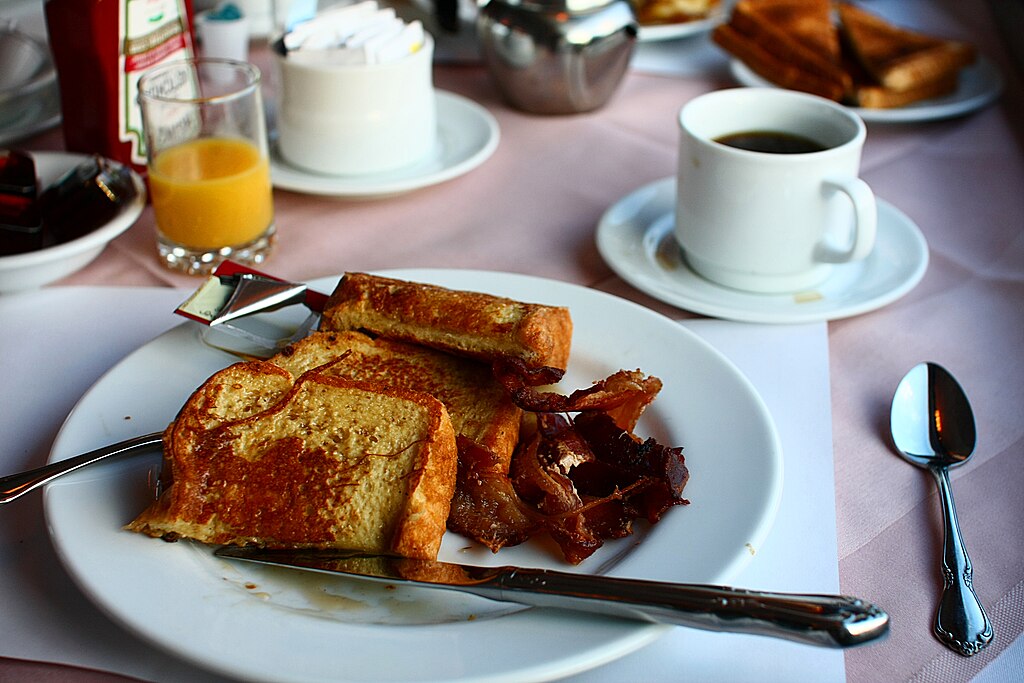
When it comes to food, well, lots of opportunities to flesh out characters. My sleuthing Zephyrette Jill McLeod rides the rails on the old California Zephyr, where her favorite dining car breakfast is French toast with crisp bacon, and coffee, of course. In the first book in the series, Death Rides the Zephyr, Jill has already had breakfast when she encounters two passengers heading into the dining car—Mrs. Tidsdale and Emily, the little girl she’s chaperoning on the trip to Denver.

Mrs. Tidsdale looked as though she wasn’t quite awake. . . . “God, I need coffee, and plenty of it,” she said, in response to Jill’s greeting.

We have really good French toast,” Jill told Emily. “You should try it.”

Mrs. Tidsdale blanched. “Can I get a Bloody Mary instead?”

“You’d have to go to the lounge for that.”

“Don’t worry, I will. As soon as we get some breakfast. Come to think of it, I could make the acquaintance of some ham and eggs.” Mrs. Tidsdale looked down at Emily. “Does that sound good, sweetie?”

Emily looked dubious. “I like French toast. With bacon.”

“Then French toast and bacon for you, ham and eggs for me,” Mrs. Tidsdale said.

Of course, there could be a downside to consuming all that coffee. One of my books features someone whose cup of java has been spiked with a deadly poison. No, I won’t tell you which book.

Good food and good coffee, great ways for this writer to flavor my fiction.