Dreams do come true: I am officially a Lady of Mystery!

Can you tell us about your journey into writing and journalism, and what inspired you to pursue this career path?
The one constant in my life has been writing – poetry, short stories, essays, articles, books. As I was poised to begin a PhD in sociology, I decided to explore job options that would let me do more writing and less research. That led me into public relations and eventually to start my own company, Quantum Communications. In university I wrote regularly for the school paper. That led me to freelancing. I discovered you could be paid for writing – one of my personal top-five favorite discoveries – and I have freelanced ever since. My background in communications, journalism, editing, and related endeavors led to requests for me to teach. I accepted those requests and discovered that I thoroughly enjoyed engaging with people to explore ideas and theories while building skills. I did not enjoy grading.

Your portfolio includes a diverse range of publications, from The National Post to Chatelaine. How do you adapt your writing style to suit different audiences and platforms?
As a journalist (and a communications professional), you quickly learn that you are writing for the reader, and readers change from one type of publication to another. Adapting your style to meet their needs, and the requirements of the publication, is essential. That said, there are writing foundations that remain constant: conciseness, flow, readability.
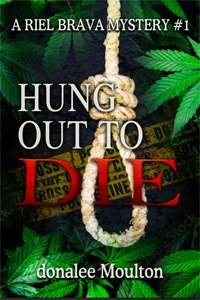
“Hung Out To Die” introduces us to Riel Brava, a unique protagonist. What inspired the creation of this character, and what do you hope readers take away from the story?
A bath inspired this story. I’m a big believer in bubbles, candles, scrubs, essential oils, and music with birds chirping in the background. Friends call this bathroom time my shrine. One night immersed in a lavender cloud I realized it was time to begin writing my mystery. Get off the pot kind of thing. That led me to a litany of possible characters and crimes. Through the mist Riel emerged. Not fully formed but outlined enough that I wrote down my ideas before I even moisturized.

Like 4-12% of all CEOs, Riel is a psychopath. Not the Dexter-Hannibal Lecter-Norman Bates kind of psychopath. The kind who live and work among us, mostly unnoticed, often successful, always on full alert their differences will be uncovered. Riel is personable, even charming. He’s keen to understand how the human mind works, so he’ll blend in.

It is my hope that people will close the last page on Hung Out to Die with a smile, maybe a tear, and a little bit more acceptance of all those around us.
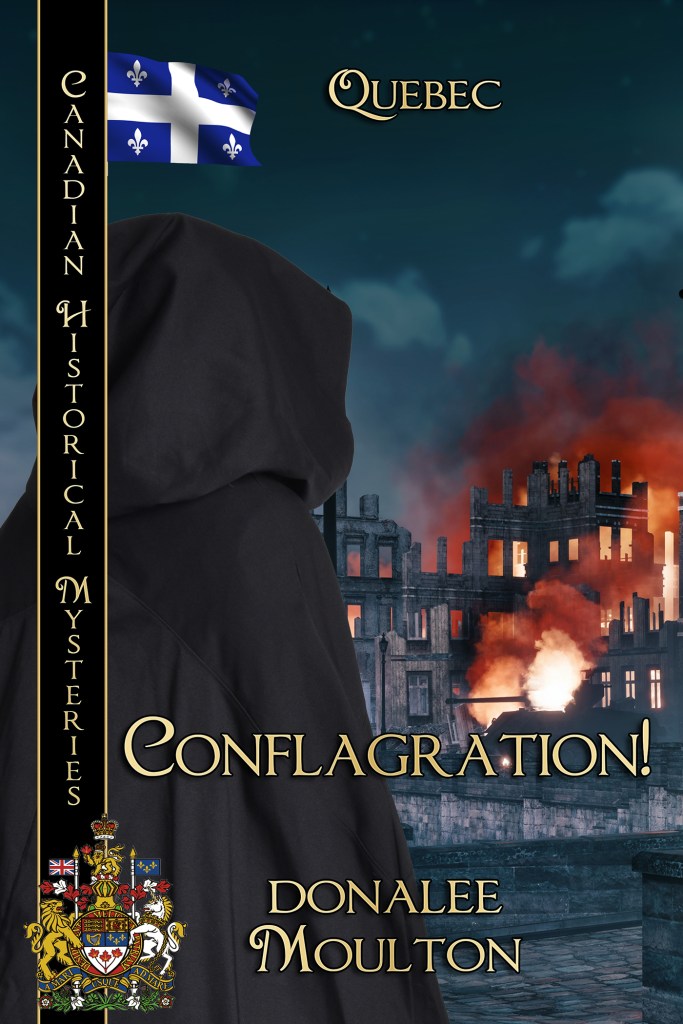
“Conflagration” delves into Canadian historical events, particularly focusing on the story of an enslaved Black woman. What drew you to this story, and what challenges did you face in bringing historical events to life in a fictional setting?
This book was a gift from my publisher, BWL Publishing, which has a series of historical mysteries set in each province and territory in Canada. My publisher unexpectedly lost her Quebec writer and asked if I could step in. I couldn’t wait.

Conflagration!, a historical mystery that follows the trial of an enslaved Black women accused of arson in Montreal in 1734, is founded in real-life events but wrapped in a mystery of my own making. The level of detail in court transcripts and the timelines set by the trial process meant I had a detailed blueprint for the book before I even began.
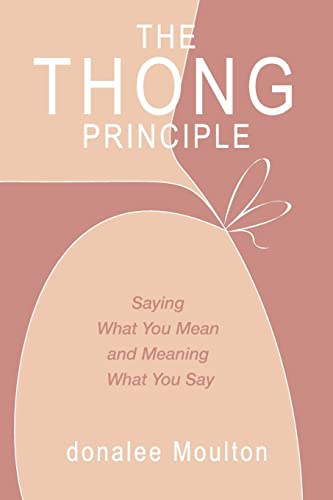
Your non-fiction book, “The Thong Principle: Saying What You Mean and Meaning What You Say,” explores effective communication. How do you apply the principles outlined in this book to your own writing process?
The Thong Principle is a way of communicating and a way of thinking. It’s about, as the subtitle indicates, a way to communicate that works on all levels. A way of communicating that works for the person sending the message and the person or people receiving the message. For writers and for readers.

As participants who’ve taken my courses know, I’ve been talking about the thong principle for decades. It’s a way to remember what matters most when we’re trying to convey a message or tell a story.  It’s a reminder that how we convey a message is as important as what we have to say.

I’ve taken that to heart.

Guest Blogger ~ Kitty Felde

I’ve fallen down the rabbit hole of research. Dangerous, I know, because researching is a great excuse for not writing. But often you find unexpected treasures that can sometimes become an essential part of your mystery.

I write two mystery series.

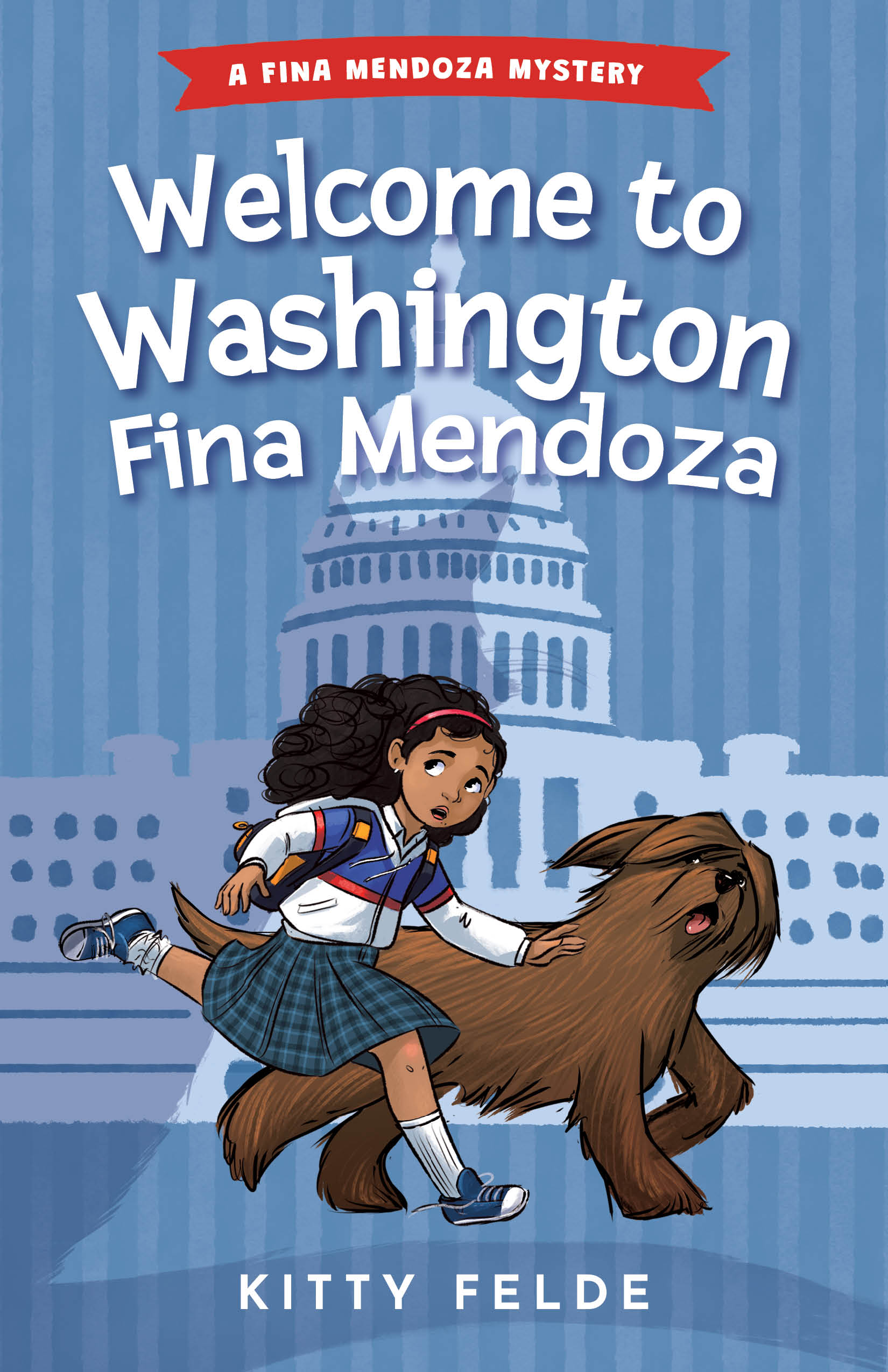
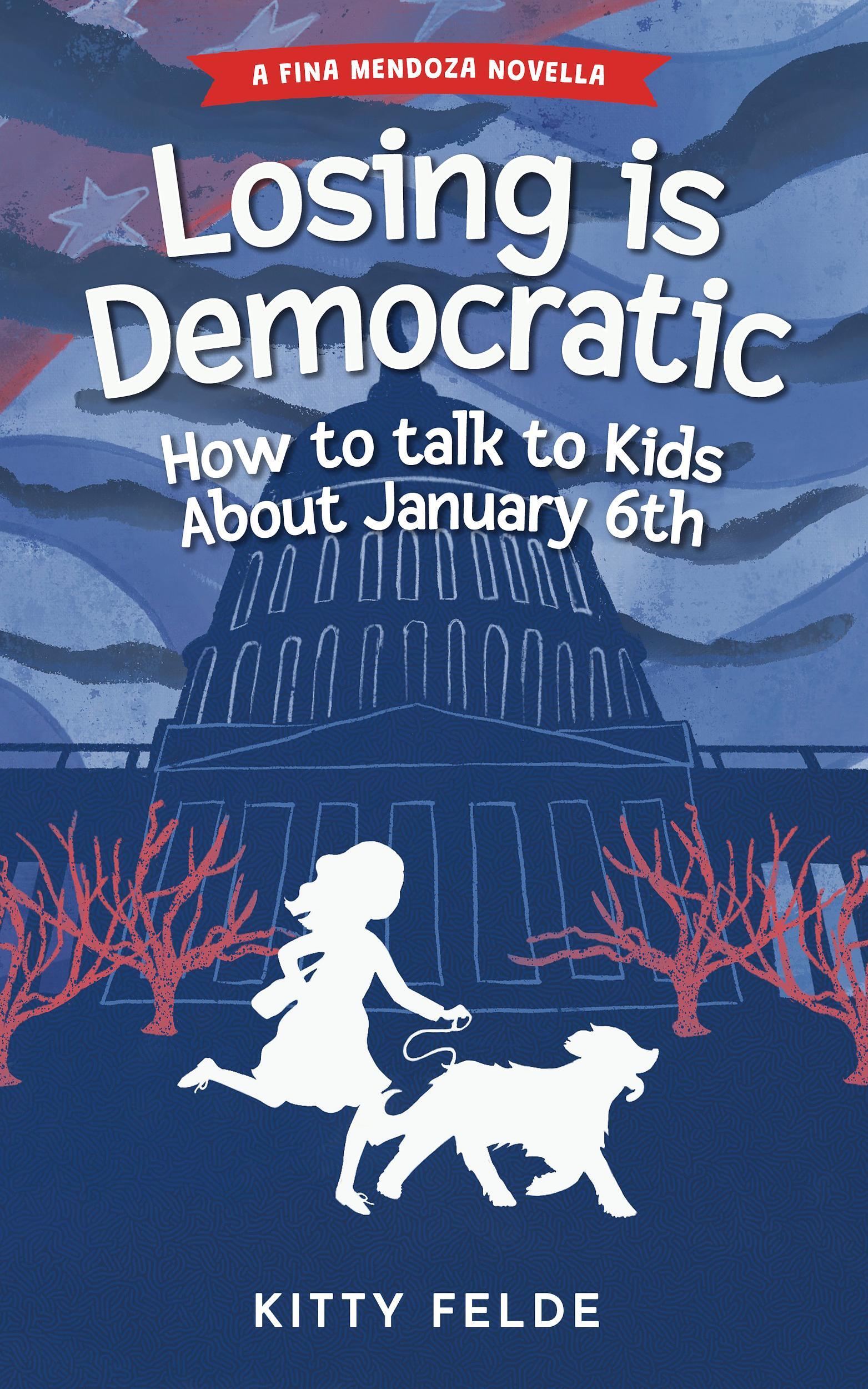
The Fina Mendoza Mysteries follow the adventures of the 10-year-old daughter of a congressman from California who looks for the Demon Cat of Capitol Hill and the bird that pooped on the president during the State of the Union address. They’re actually a civics lesson in disguise, with teacher’s guides and a “Facts Behind the Fiction” blog.

I also write a historical mystery series set in Theodore Roosevelt’s White House, featuring his outrageous daughter Alice as our amateur sleuth.

Both require research. A lot of it. In many ways, Fina is easier because I covered Congress for a decade and if I have questions, there are human beings on the Hill who I can tap for the answers.

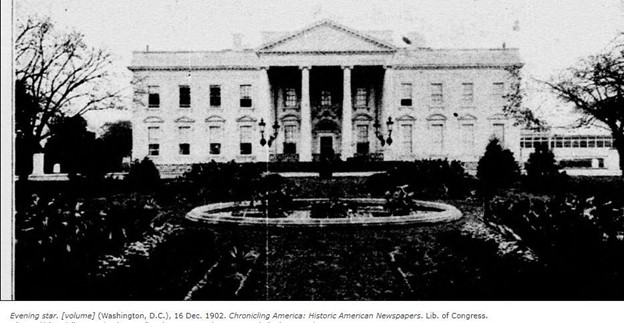
For Alice, I’ve been using the vast newspaper records available online at the Library of Congress. Chronicling America, a partnership between the Library of Congress and the National Endowment for the Humanities, is a free, searchable database of American newspapers from 1777 to 1963. If you’re writing about an era before or after that, the LOC has a secondary collection of newspapers from 1690 to today.

There’s a map where you can discover ethnic newspapers across the country. Who knew there was a German newspaper in San Diego and a Finnish one in Washington state? There were dozens of African-American newspapers from Butte, Montana to Miami, Florida.

I fumbled around at first, but found absolute gold in the digital pages of Chronicling America.

Because Murder on the Potomac: a Princess Alice Mystery was set in 1902, I had so many questions.

How did police get around town. Did they ride horses? Drive motor cars? Bicycles? Who were they? A profile of “Well Known Men of the Metropolitan Police Force” in the Washington Times helped me create my policemen characters – including one who was active in the temperance movement.

What happened at an inquest of the era? The Evening Star  had a full report of one particular proceeding. Though I admit I was distracted by the ad for furniture on the same page that featured a $22 “Polished Mahogany-Finished Toilet Table.” A what?

I needed a place for a body to be discovered. The Washington Times reported on a years-long battle to either fill in or fence the James Creek Canal. Little more than a sewer, neighbors labeled it a “death trap” where five bodies a month were pulled from the mud.

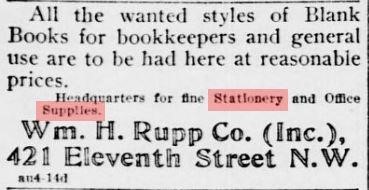
For one scene, I needed the name of a stationary store where my amateur detective could find a blank book to record her clues. I searched “stationary supplies” and found an advertisement at the top of the page in the Evening Star.

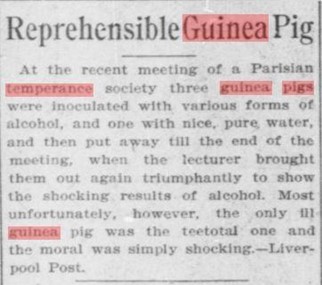
My favorite gem didn’t happen in Washington at all. TheWashington Times, like papers and TV news today, reprint sensational or odd stories from around the world. This one involved a pair of guinea pigs at a temperance meeting in Paris. The experiment was designed to demonstrate the destructive power of alcohol. One animal was given water, the other alcohol. Guess which one got sick.

There were challenges. I was overwhelmed. I wanted to read everything. (Anything to avoid staring at a blank screen and actually have to write. But my lousy eyesight made it difficult to see an entire page on a 13” laptop. I wasn’t sure how to find what I needed. And when I found a juicy tidbit, what was the best way to keep track of it? Was saving links the best way to capture the information?

I am no research genius, but let me save you the learning curve and share my tips:

  • SEARCHING:
    • Narrow down your search parameters. If your work is set in 1939, look for newspapers from that year. If it’s set in Pittsburgh, narrow your search to just papers from Pennsylvania.
    • Try various search terms. If you get too many hits with “police,” try “detective.”
    • You’ll soon discover which newspapers go with the sensational, which have the most advertisements. Ads are great to help you describe clothing of the era or which stores or restaurants were frequented by your characters.)
  • READING
    • If you’re using Microsoft Word, use the snipping tool. You can isolate the articles you want to keep, and save images for future reference or inspiration. And for those of us who are visually challenged, you can save it IN A LARGER SIZE. 
    • Images are also helpful while you’re writing. I often drop an image into the manuscript if there’s a quote I want to use or a detail that’s perfect for the scene. (And then I delete the image.)
  • ORGANIZATION
    • DO keep track of your links. It will save going back and searching all over again. Note the source and date of the article, just in case you do have to go back and search.
    • I’m sure your graduate school training will have given you a better way to organize your research. Me? I keep a simple Word or Google doc where I list topics I’ve researched. Sometimes I drop in a line or two, sometimes an image, but always a link. (At first, I kept a numbered “footnote” file at the bottom of the document, but since I’m not including my research in my notes, I gave up on that.)
  • PERMISSIONS
    • If you’re considering including images in your book, take note of the copyright and who owns it. You might want to start asking for permission now to use the material later, long before you’re done with the book. If the answer is “no,” that gives you time to find an alternate image.

Good luck! And happy reading.

Kitty

 WELCOME TO WASHINGTON FINA MENDOZA:

The West Wing meets Nancy Drew. Legends say if you see the Demon Cat of Capitol Hill, you’re cursed with bad luck. Ten-year-old Fina Mendoza just saw it. And the last thing her family needs right now is more bad luck. The only way for Fina to save her family from future “cat”astrophe is to solve the mystery of the Demon Cat of Capitol Hill.

 STATE OF THE UNION:

The 10-year-old daughter of a congressman solves mysteries in the U.S. Capitol with the help of a big orange dog named Senator Something. Her latest case: find the mysterious bird that pooped on the president’s head during the State of the Union address. Is it Chickcharney, the legendary bird from the Caribbean? Did it fly to Washington D.C. with a secret message for the president? Or Congress? Or is the message for Fina from her mom who passed away not so many months ago?

 LOSING IS DEMOCRATIC: HOW TO TALK TO KIDS ABOUT JANUARY 6TH:

A Latina protagonist of spunk and smarts worries about her congressman father on January 6, 2021. Fina Mendoza, our amateur detective, is in the middle of an investigation to find out who stole the 5th grade pizza. But all thoughts of detection go out the window as she watches on television as a mob breaks into the Capitol. Is Papa okay? Most of Fina’s classmates have parents who work inside that building as well. Their teacher calms their fears turns the event into a teaching opportunity and students discuss the importance of both winning and losing, whether it’s in a baseball game, a reading competition, or an election.

In addition to her Alice Roosevelt mysteries, Kitty Felde is the author of Welcome to Washington Fina MendozaState of the Union, and Losing is Democratic: how to talk to kids about January 6th – mysteries for children designed to introduce civics education. They are also available as an episodic podcast The Fina Mendoza Mysteries. Kitty is an award-winning public radio journalist. She is also Executive Producer of the Book Club for Kids podcast.

X – https://x.com/kittyfelde

Facebook: https://www.facebook.com/CreatorofFinaMendoza

LinkedIn: https://www.linkedin.com/search/results/people/?firstName=kitty&lastName=felde&origin=SEO_PSERP&sid=4zI

Instagram: https://www.instagram.com/kittyfelde/reels/

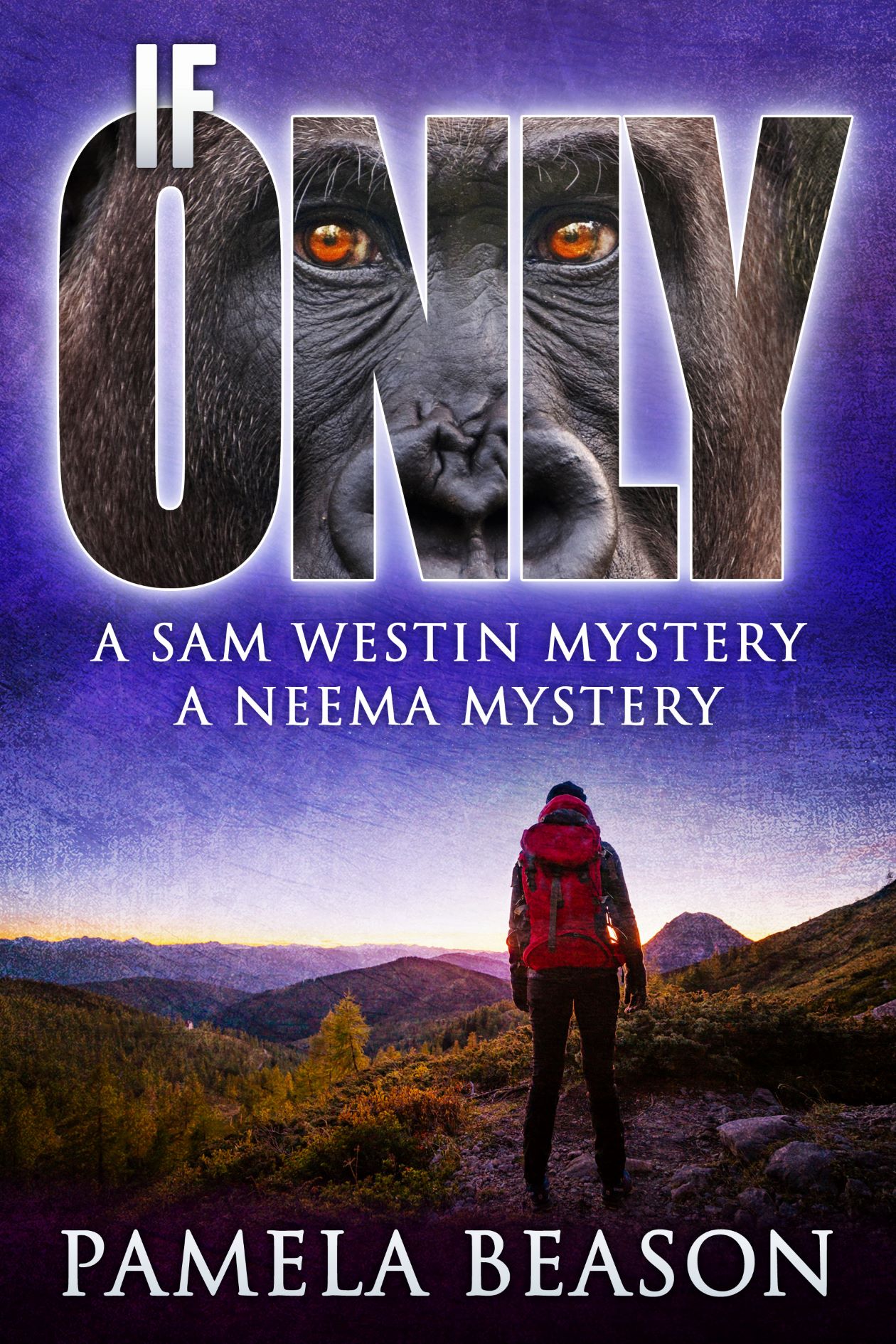
IF ONLY…

Whew! I finally finished the rough draft of my latest book, IF ONLY. This is a crossover novel with characters from both my Sam Westin Wilderness Mysteries and my Neema Mysteries. When readers kept asking when the next book in these series would be published, I got the wild idea to write one mystery that would fit into both series, thereby making my life easier.

I must have been drinking when that inspiration struck, because as it turned out, nothing could have been less easy.  Now, if you have different series but similar locations and goals, writing a crossover novel might be relatively simple. But the only way I could figure out how to make a wilderness adventure story (Sam Westin series) fit together with signing gorillas (Neema series) in two different locations was to write each story separately, and then stitch them together.

Well, I sort of forgot that I’d have to keep strict track of the passing time in each story so I could switch back and forth without making readers feel like they were on a time-travel merry-go-round. That was a bit of a nightmare, somewhat similar to when I cook and try to get all the dishes to be done at the same time. (You don’t want to watch me when this happens.)

And then there was the issue of figuring out a mystery that can be happening in one locale that will have something to do with the mystery in the other locale. If I wrote thrillers, I could have come up with scattered terrorist cells or something like that, but neither of these series include those kinds of books. A terrorist cell in the mountains of North Cascades National Park seems implausible, and terrorists having anything to do with captive signing gorillas even more so. The issue I finally came up with is illegal migrants seeking asylum in the United States.

I’m not going to give away how I wove the plots together, but I hope the resulting story will be satisfactory to readers of both series. I called the book IF ONLY, because it’s about having the bad luck of being born in a violent, poverty-stricken country instead of in a relatively safe, prosperous one like ours. And it’s also about the wonderful and horrific things that can happen when wilderness lovers choose to take the trail less traveled.

Some may conclude, especially since my novel Borderland included issues at the southern border, that I believe our borders should be open to all. That’s not true. But I do believe the United States should have a reasonable immigration program, and there are parts of our country that need more workers. I would personally like to see a program in which immigrants would be assigned to such areas and such work for five years, and in which communities and employers would agree to sponsor immigrants and ensure affordable housing and at least minimum wage salaries, and agree to periodic inspections and interviews so that abuses don’t take place on either side. But so far, nobody has let me run the country.

Many times while I was writing this novel, I thought to myself, if only I hadn’t planned to do a crossover novel, I could be out hiking right now. And there’s still a long way to go from rough draft to publication of this novel.

I See Characters

Every writer puts a bit of the people around them into their characters. We can’t help it. A friend has a quirk that we like and we give it to a character. A relative has a situation that would make for a great subplot, we use it. Even though we are writing fiction, bringing in the bits of real life that we see brings those fictional characters to life.

Last month while working at a NIWA (Northwest Independent Writers Association) booth selling my book and those of other authors in the organization, some unusual characters came by and talked to us. One of my strengths is being a good listener. Only there does come a point with some people when even I started getting antsy and wish the person would move on. Either physically or with their topic.

One person who has stopped by our booth the last two years that I’ve been there is a man who likes to discuss how the government is listening into everything that is going on and how he believes the aliens will soon return to save the planet. He gets very adamant about why he lives off-grid and how we are all being tracked. I’m thinking someone with his perspective on life will show up in one of my books.

Another young man, well, young to me, I believe he might have been late twenties or early thirties. He had a British accent, wore his hair in a shoulder-length bob, and had on a typical t-shirt a male his age would wear and then he had on a skirt that was tight enough across his hips that you could tell he was male if his voice hadn’t given him away. He had a dog on a leash. As he talked to us, he constantly pushed the hair away from his face, adjusted his glasses, and kept his dog from wrapping the leash around his legs. He was quiet, talked a little about the books and how he’d thought about writing, but he didn’t have a clear vision of what he wanted to write.

The third person who captured my attention and sent a chill up my back was a woman. She walked up to the booth dressed in a long flowy skirt, matching sweater, and a silk scarf around her neck. She looked like the wife of a businessman or a professional herself. Her smile was wide, her eyes lit up with the smile and she said, “Hello. I’m here to spread love. Elon Musk and I are building a world filled with love. Come join us and together we can make the world a better place.” I smiled and said, “That’s nice. The world could use more love.” She asked about a couple of the books, then reiterated that she and Elon needed help to spread the love. I nodded and smiled and then- the creepy part. Her eyelids started fluttering, her eyes kind of rolled up, and her smile disappeared. When she stared at me anger simmered in her eyes and she said, “I know where the bodies are buried. I do. I know where the bodies are buried.” I had no words for that response from her. Then as quickly as she’d changed, the smile was back and she said, “I have more love to spread, ” and walked away.

I was speechless for a few minutes. The other member of NIWA who was in the booth with me had been on the phone while I was talking to the woman. I sat down, grabbed a pen and a piece of paper, and wrote down everything she said and how she looked.

And that woman is a secondary character in my September release, Down and Dirty, book 6 in the Spotted Pony Casino mystery series.

It is encounters like this that give writers the fodder for their stories.

The Cocktail Party Question

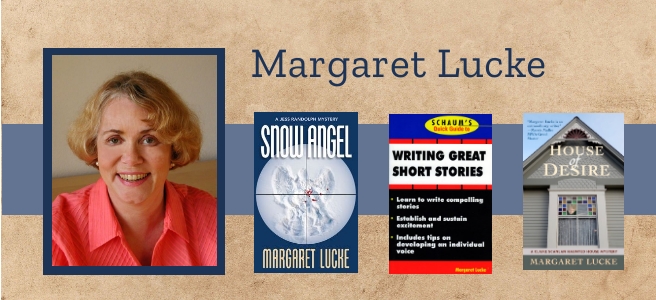
by Margaret Lucke

Here’s a scene you’ll probably recognize. You’re at a cocktail party or a reception or some other event that involves standing around with a glass in your hand and making small talk with strangers. You’re chatting with someone you’ve just now met, and one of you says, “So, what do you do?”

The other one replies, “I’m a (fill in the blank). How about you?” After a brief exchange, you each nod politely and start looking around for someone else to talk to.

Some years ago, mystery novelist Linda Grant told me how she gave this standard, stilted conversation a new twist. Instead of mumbling, “Oh, how interesting,” when the other person named a profession, she would follow up with this: “Tell me, in your line of work who might you want to murder, and why? And how would you go about doing it? What weapons would you have at hand?”

The first response would be shocked silence. She could see the thought flickering in her companion’s eyes: What kind of nutcase are you?So she would smile and add, “Hypothetically of course. I’m looking for ideas for my next book.”

Then would come the sly grin. “You know, there’s this guy in the sales department . . . “

Almost everyone could come up with a person who would make a good murder victim, so long as it was only on paper. A backstabbing colleague, an overbearing boss, a customer who refused to pay a legitimate bill, a coworker who made everyone’s life hell by shirking responsibility or constantly cracking his knuckles. The types of victims and the motives for killing them seemed fairly universal.

What varied were the weapons—and it turns out that most of us have some at our disposal while we’re on the job. The car mechanic can tamper with the victim’s brakes. The clerk in the clothing store can wrap the silk sash from a dress around a person’s neck. The chef can chop a death cap mushroom into an omelet. The carpenter and the gardener can choose from several tools with sharp blades. The writer can bash someone over the head with a computer printer—and don’t think we’re not sometimes tempted.

At the time when Linda told me about her Cocktail Party Question, my husband and I owned a small printing business. The next day when I went to work I spent a few minutes doing a quick inventory of available tools for murder. We had cans of chemicals that were toxic or flammable, equipment that could be rigged to malfunction in ways that would cause its operator great bodily harm, a large paper cutter appropriately known as the guillotine. I found myself fingering the edge of the X-Acto knife blade. Very sharp, but too small to do the job? Maybe if it were pushed at just the right angle into just the right soft and vulnerable place on the body . . .

When I’ve taught mystery writing classes I’ve used the Cocktail Party Question as an icebreaker on the first day, pairing up students and having them ask and answer it for each other. At first all they can talk about is how weird the teacher is, but then they get into it, stretching their imaginations and beginning to see new possibilities for plots and characters.

Now it’s your turn. Choose your weapon as I pose the question to you: In your line of work, who might you want to murder, and why? And what weapons does your profession provide that could help you accomplish that dire deed?

Who knows, you now just might have the seed of a good mystery novel.

* * *

Speaking of mystery writing classes, I’m going to be teaching one of those this fall for UC Berkeley Extension. Ten Wednesday evenings from September 11 to November 13. It’s on Zoom so you can join from anywhere. If you’d like inspiration and information on crafting crime fiction, from cozies to thrillers, or feedback on your work in progress, this class could be for you. Check it out here: https://tinyurl.com/mysterywriting2024