

I’ve fallen down the rabbit hole of research. Dangerous, I know, because researching is a great excuse for not writing. But often you find unexpected treasures that can sometimes become an essential part of your mystery.
I write two mystery series.
The Fina Mendoza Mysteries follow the adventures of the 10-year-old daughter of a congressman from California who looks for the Demon Cat of Capitol Hill and the bird that pooped on the president during the State of the Union address. They’re actually a civics lesson in disguise, with teacher’s guides and a “Facts Behind the Fiction” blog.
I also write a historical mystery series set in Theodore Roosevelt’s White House, featuring his outrageous daughter Alice as our amateur sleuth.
Both require research. A lot of it. In many ways, Fina is easier because I covered Congress for a decade and if I have questions, there are human beings on the Hill who I can tap for the answers.
For Alice, I’ve been using the vast newspaper records available online at the Library of Congress. Chronicling America, a partnership between the Library of Congress and the National Endowment for the Humanities, is a free, searchable database of American newspapers from 1777 to 1963. If you’re writing about an era before or after that, the LOC has a secondary collection of newspapers from 1690 to today.
There’s a map where you can discover ethnic newspapers across the country. Who knew there was a German newspaper in San Diego and a Finnish one in Washington state? There were dozens of African-American newspapers from Butte, Montana to Miami, Florida.
I fumbled around at first, but found absolute gold in the digital pages of Chronicling America.
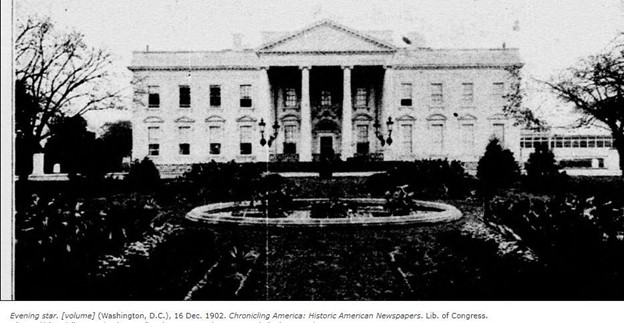
Because Murder on the Potomac: a Princess Alice Mystery was set in 1902, I had so many questions.
How did police get around town. Did they ride horses? Drive motor cars? Bicycles? Who were they? A profile of “Well Known Men of the Metropolitan Police Force” in the Washington Times helped me create my policemen characters – including one who was active in the temperance movement.
What happened at an inquest of the era? The Evening Star had a full report of one particular proceeding. Though I admit I was distracted by the ad for furniture on the same page that featured a $22 “Polished Mahogany-Finished Toilet Table.” A what?
I needed a place for a body to be discovered. The Washington Times reported on a years-long battle to either fill in or fence the James Creek Canal. Little more than a sewer, neighbors labeled it a “death trap” where five bodies a month were pulled from the mud.
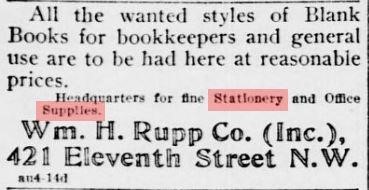
For one scene, I needed the name of a stationary store where my amateur detective could find a blank book to record her clues. I searched “stationary supplies” and found an advertisement at the top of the page in the Evening Star.
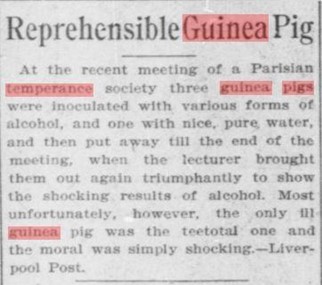
My favorite gem didn’t happen in Washington at all. TheWashington Times, like papers and TV news today, reprint sensational or odd stories from around the world. This one involved a pair of guinea pigs at a temperance meeting in Paris. The experiment was designed to demonstrate the destructive power of alcohol. One animal was given water, the other alcohol. Guess which one got sick.
There were challenges. I was overwhelmed. I wanted to read everything. (Anything to avoid staring at a blank screen and actually have to write. But my lousy eyesight made it difficult to see an entire page on a 13” laptop. I wasn’t sure how to find what I needed. And when I found a juicy tidbit, what was the best way to keep track of it? Was saving links the best way to capture the information?
I am no research genius, but let me save you the learning curve and share my tips:
- SEARCHING:
- Narrow down your search parameters. If your work is set in 1939, look for newspapers from that year. If it’s set in Pittsburgh, narrow your search to just papers from Pennsylvania.
- Try various search terms. If you get too many hits with “police,” try “detective.”
- You’ll soon discover which newspapers go with the sensational, which have the most advertisements. Ads are great to help you describe clothing of the era or which stores or restaurants were frequented by your characters.)
- READING
- If you’re using Microsoft Word, use the snipping tool. You can isolate the articles you want to keep, and save images for future reference or inspiration. And for those of us who are visually challenged, you can save it IN A LARGER SIZE.
- Images are also helpful while you’re writing. I often drop an image into the manuscript if there’s a quote I want to use or a detail that’s perfect for the scene. (And then I delete the image.)
- ORGANIZATION
- DO keep track of your links. It will save going back and searching all over again. Note the source and date of the article, just in case you do have to go back and search.
- I’m sure your graduate school training will have given you a better way to organize your research. Me? I keep a simple Word or Google doc where I list topics I’ve researched. Sometimes I drop in a line or two, sometimes an image, but always a link. (At first, I kept a numbered “footnote” file at the bottom of the document, but since I’m not including my research in my notes, I gave up on that.)
- PERMISSIONS
- If you’re considering including images in your book, take note of the copyright and who owns it. You might want to start asking for permission now to use the material later, long before you’re done with the book. If the answer is “no,” that gives you time to find an alternate image.
Good luck! And happy reading.
Kitty
WELCOME TO WASHINGTON FINA MENDOZA:
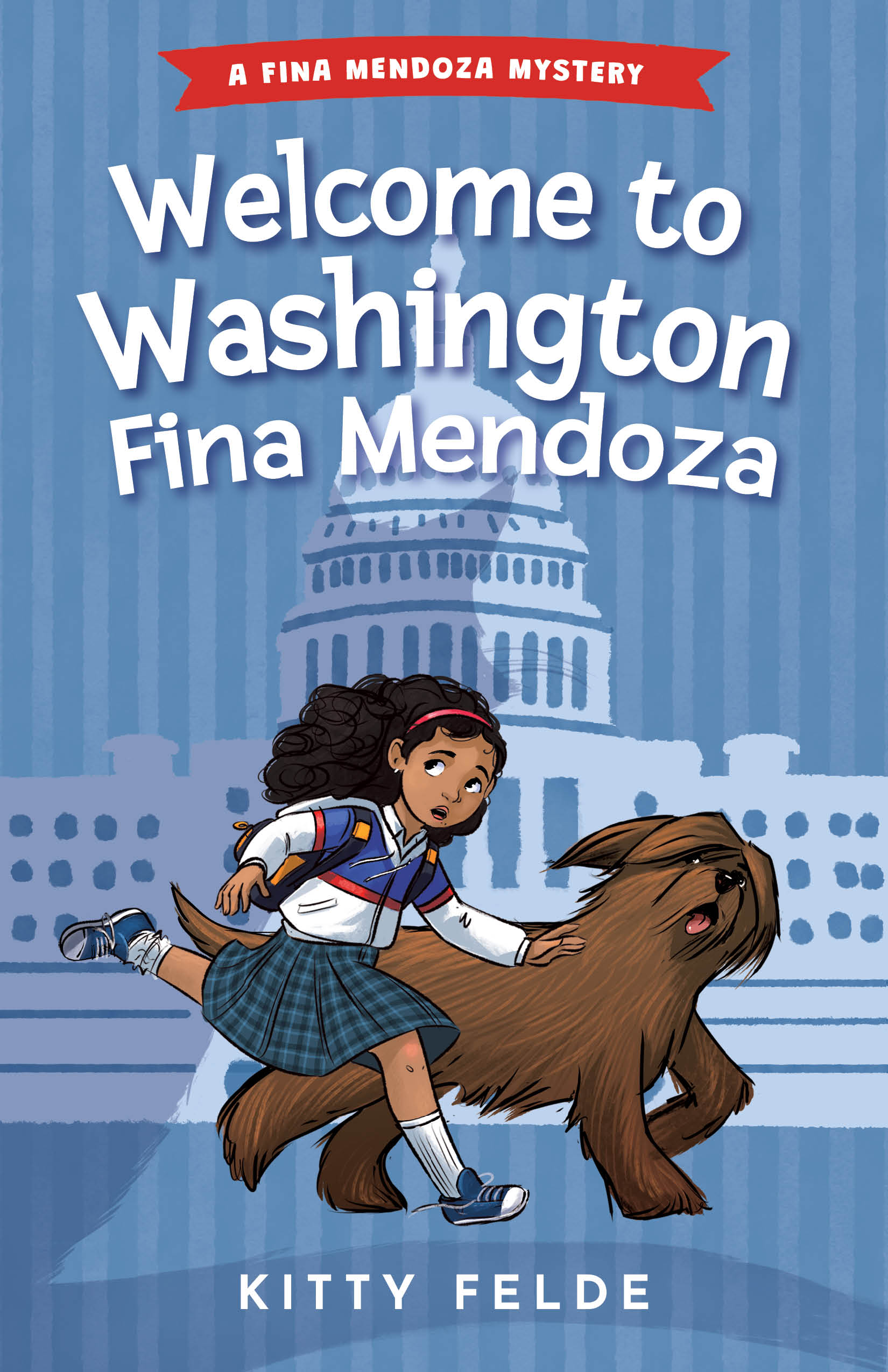
The West Wing meets Nancy Drew. Legends say if you see the Demon Cat of Capitol Hill, you’re cursed with bad luck. Ten-year-old Fina Mendoza just saw it. And the last thing her family needs right now is more bad luck. The only way for Fina to save her family from future “cat”astrophe is to solve the mystery of the Demon Cat of Capitol Hill.

The 10-year-old daughter of a congressman solves mysteries in the U.S. Capitol with the help of a big orange dog named Senator Something. Her latest case: find the mysterious bird that pooped on the president’s head during the State of the Union address. Is it Chickcharney, the legendary bird from the Caribbean? Did it fly to Washington D.C. with a secret message for the president? Or Congress? Or is the message for Fina from her mom who passed away not so many months ago?
LOSING IS DEMOCRATIC: HOW TO TALK TO KIDS ABOUT JANUARY 6TH:
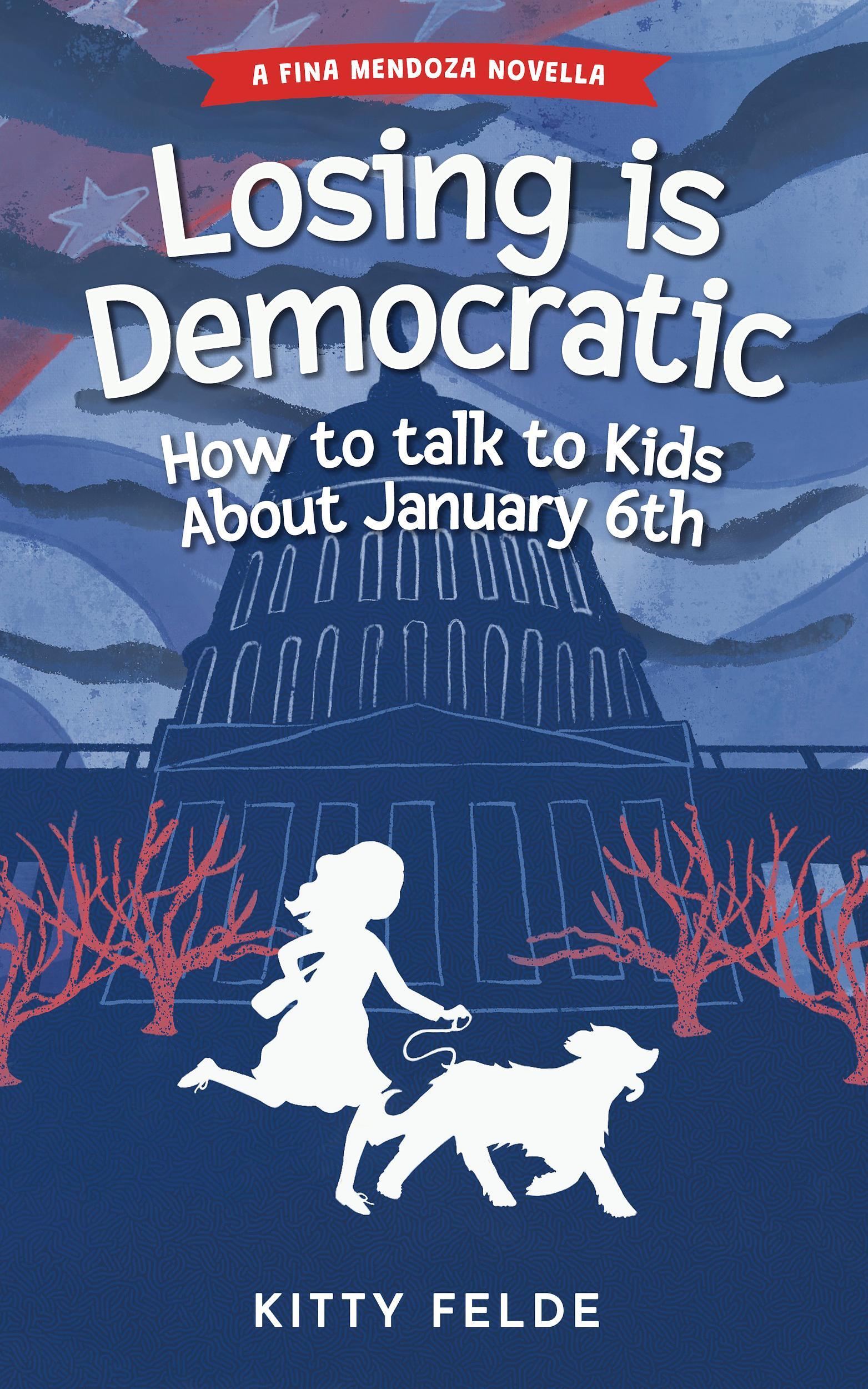
A Latina protagonist of spunk and smarts worries about her congressman father on January 6, 2021. Fina Mendoza, our amateur detective, is in the middle of an investigation to find out who stole the 5th grade pizza. But all thoughts of detection go out the window as she watches on television as a mob breaks into the Capitol. Is Papa okay? Most of Fina’s classmates have parents who work inside that building as well. Their teacher calms their fears turns the event into a teaching opportunity and students discuss the importance of both winning and losing, whether it’s in a baseball game, a reading competition, or an election.

In addition to her Alice Roosevelt mysteries, Kitty Felde is the author of Welcome to Washington Fina Mendoza, State of the Union, and Losing is Democratic: how to talk to kids about January 6th – mysteries for children designed to introduce civics education. They are also available as an episodic podcast The Fina Mendoza Mysteries. Kitty is an award-winning public radio journalist. She is also Executive Producer of the Book Club for Kids podcast.
Facebook: https://www.facebook.com/CreatorofFinaMendoza
Instagram: https://www.instagram.com/kittyfelde/reels/

 Ladies of Mystery
These are great research tips and both your series sound great! Wishing you lots of sales.
LikeLike