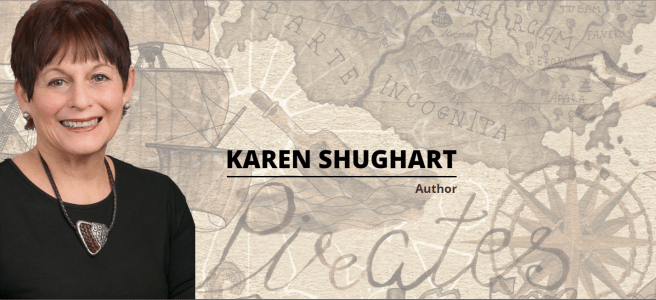
So long, farewell, auf wiedersehen… by Karen Shughart

The song from The Sound of Music kept popping up in my head as I struggled to choose a title for this blog, which will be my last for Ladies of Mystery.  I started writing these shortly after the first book in my Edmund DeCleryk mystery series, Murder in the Museum, was published in early spring, 2018, and other than missing one a while back, I’ve managed to write every month for the past six years.

You’ve read not only about my books, investigative procedures and writing processes, but also what it’s like to live in the northern Finger Lakes region of New York, our travel experiences and family gatherings, and even eulogies for those I’ve loved. I’ve enjoyed every minute of it and feel gratified by how many wonderful and positive comments I’ve received as a result, and friends I’ve made along the way.

The decision has not been easy, it’s taken me weeks to feel comfortable with it. As I’ve grown older (and by most standards I’m in the elderly category), simplifying my life and deciding what takes priority seems tantamount to residing in a world that’s become far too complex for me as of late. Family always takes precedence, we’ve committed to spending more time with our children and siblings; also with friends whom we hold dear to our hearts. Some live hours and sometimes a plane trip away.
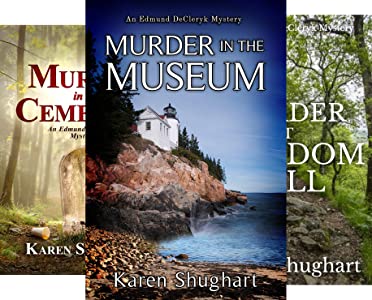
When I wrote the first book, my publisher asked for a series, and that’s what she got. I’m now working on book four, Murder at Chimney Bluffs, which, like the others, includes a historical backstory that provides clues to why the murder occurred, this time Prohibition and rumrunning. There was much activity between Canada and our side of Lake Ontario during that period of time, with contraband liquor unloaded onto a beach beneath Chimney Bluffs, drumlins that were created from icebergs millions of years ago.

Authoring books is a time-consuming process and one that I integrate into the other facets of my life, which include writing a monthly blog for Life in the Finger Lakes magazine, serving on the board of directors at our local library, and occasionally volunteering for other organizations here. An active social life and attendance at a multitude of cultural events are included in the colorful tapestry of our lives.

I truly appreciate that I, as a newly published author of mysteries, was given the opportunity to show off my writing skills here. Thanks so much, Paty Jager, for your unwavering support along the way and for understanding my decision at this juncture of my life, and to the rest of you who have steadfastly been with me throughout this journey.

 So, for now, so long, good-bye, auf wiedersehen, good night, and may peace and love follow you everywhere you go.

Karen Shughart is the author of the Edmund DeCleryk cozy mystery series, published by Cozy Cat Press and set in the Finger Lakes. She has also co-written two mysteries with Cozy Cat authors, two non-fiction books, and pens a monthly blog for Life in the Finger Lakes magazine https://www.lifeinthefingerlakes.com/.  A member of CWA, North America Chapter, and F.LARE (Finger Lakes Authors and Readers Experience), she lives with her husband, Lyle, in Sodus Point, NY.  Her books are available at local gift shops and bookstores and in multiple formats at  amazon.com
How’s the Weather?

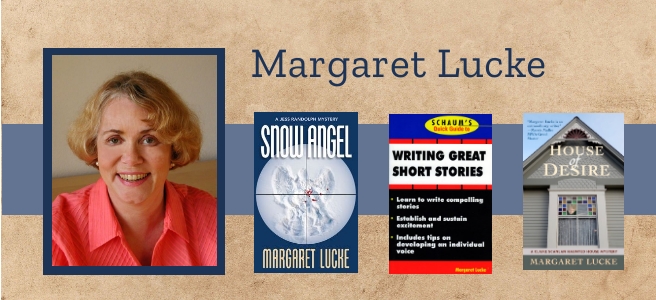
by Margaret Lucke

Is it hot enough for you? Here where I live in Northern California, we’re sitting under a long-lasting heat dome—heat meaning 100° and more. And we’re not alone. Most of the country has been enduring extreme weather this summer—ultra high temperatures, severe thunderstorms, tornados, the season’s first destructive hurricane.

But at least we don’t have to endure oobleck.

Have you ever encountered oobleck? It’s green, sticky, relentless. It gummed up an entire kingdom and brought all activity to a halt.

As a little kid, I loved the stuff.

I discovered the green goo in a book in my kindergarten classroom: Bartholomew and the Oobleck, by Dr. Seuss.

Bartholomew is a lowly page boy serving the royal court of the Kingdom of Didd. The king has become bored with endless cycle of sunshine, rain, snow, and fog, and he summons his royal magicians from their secret cave and asks them to make something new come down from the sky. Bartholomew protests that this is a bad idea, but the king insists. The magicians oblige him by creating oobleck, and what results is a disaster of epic proportions. It’s up to the humble Bartholomew to save the day.

By the time I reached first grade, I’d read that book 1,247 times (approximately). I’ve been a big fan of weather in literature ever since. (If not always a fan of what’s going on when I step outside my house.)

Dr. Seuss violated the first of Elmore Leonard’s famous rules for writers, which is: “Never open a book with weather.” This book doesn’t just start with weather; it has weather on every page. Without weather, there would be no story at all.

And that’s very much in keeping with the reason Leonard gives for his directive. A description of weather may set a mood, but that’s not enough pull readers into a story. Readers want to meet the characters and jump into the action. They don’t care that it’s a dark and stormy night–at least, not until they see how the characters react to the storm and find out how it impedes the hero’s ability to solve the problem or meet the challenge set forth by the plot.

I’ve often heard it said that the purpose of fiction is to provide the reader with an emotional experience. Weather is one experience that everyone shares, and anyone whose heart has felt lighter on a sunny day or who has gripped the steering wheel tighter while driving on an ice-choked road knows that weather can evoke emotion.

When an author uses it well, a bit of weather can transport readers into the world of the story and help them relate to what the characters are going through. As E.L. Doctorow said, “Good writing is supposed to evoke sensation in the reader–not the fact that it’s raining but the feeling of being rained upon.”

Or being ooblecked upon. What a horrible mess that is! Excuse me while I try to scrape this green, sticky, gooey glop off my boots.

And whatever the weather is right now in your part of the world: Stay cool. Keep dry. Be safe.

Anatomy of a Villain

by Janis Patterson

Everyone agrees that every genre story has to have a hero/protagonist, which means that it also needs a villain/antagonist. Both are needed to create conflict, which is what the story is about. One thing most people do not admit is that while the hero pretty much has to be human or at least act in a fashion that humans would find sympathetic, the villain/antagonist does not have to be human or sympathetic. It only has to be someone/something that prevents the protagonist from attaining his goal. Plus, just to make it easy for writers (not!), the villain has to have his own agenda and goal. And, need I add, not the cartoonish ‘evil for the sake of evil.’

No character – or person, for that matter – is ever all evil or all good. There are heroes who are selfish and cold on certain subjects. There are villainous people who, after killing or ruining several people, will put himself in danger to rescue a kitten. Also, as difficult as it might be to understand – and more so to write – the hero and the villain might be the same except in their goals. What is good and what is evil is decided by the character and the story.

All right, I see your looks of doubt. Try this – One character is an ecologist, who wants to maintain a certain field in a natural state where children can play, animals can graze and the plants hold on to the rainfall, preventing landslides. Another character wants to build an office building on that same piece of land, employ both builders and later employees in the nearby – and economically depressed – town, landscape the property to maximize its beauty and usefulness. Both men believe passionately in their vision and will do anything to see it come to fruition.

Which is the villain?

As with so many things, it depends. What is the thrust, the ethos of the story? Preserving pastoral paradise? Creating an economic bonanza for a dying town? That is your choice. Just make sure the villain – whichever he is – is passionate about his desires. Give him and the hero both something to want. And a hint – no matter how good their goals might be or whatever other good qualities they might have villains are usually less honorable and honest than heroes.

Of course, all that above doesn’t mean anything if the villain has no sense of honor or justice – if he is truly bad, if he deliberately destroys things or kills people to further his goals, whatever values he might have are totally overshadowed.

The trick is, he has to truly believe his actions in pursuit of his goals are not only necessary but righteous – no matter what he feels he has to do. It makes no difference if no one else can understand what he does (what kind of a man sacrifices turtles for a love spell or burns down an orphanage to save a rare plant?) the important thing is that it makes sense to him and to him it is not only necessary but right.

One of the pitfalls of writing a well-crafted villain is that they are often so much more interesting than the hero. I think that accounts for the popularity of the ‘bad-boy’ hero – the usually scruffy, usually somewhat tough and morally ambiguous man who turns up trumps at the end. I have never seen the attraction to an unshaven, grotesquely muscled semi-lout with little to no sophistication, but the trope is very popular. Unfortunately, the kind of character to which I resonate – urbane, in suit, shirt and tie, successful and sophisticated – is normally cast as a villain of the deepest dye. In so many books these days once you see a successful, sophisticated, well-dressed man you know immediately he will probably turn out to be some sort of bad guy… sad. Using success as an indicator of villainy makes no sense whatsoever.

A villain has to have a goal, an agenda in which he believes that will get him what he wants, otherwise he becomes little more than a cardboard marionette jumping to the writer’s whim, and no one wants that. A villain has to be a real person, perhaps with less moral fibre than a protagonist, but with some good qualities. No one is ever all one thing or another.

Remember, a well-crafted villain is always the hero of his own story who is just doing what he has to do in order to triumph.

The Slogging Beginning

I am doing something I haven’t done in some time. I am trying to write a 70k+ book in a month. I want this book off to my critique partners and beta readers by the first of August so I can have it polished and uploaded for release before I leave on a month long vacation the middle of September. Have I put a lot of pressure on myself? Yes! But it will be worth it to be between books while I’m enjoying my vacation.

Most writers know about the saggy middle. It’s where in the middle of the book, sometimes it feels like the pacing has slowed or the story doesn’t feel as fresh and vigorous as it started out. Many have had this happen in a book more than once. But with editing and rewriting it can be given a nice crisp revision.

I’m finding the beginning of this book, not the story, the story is moving along fine. It’s the having to stop and research something that takes time and then takes me off on, ‘What if I did this?’ that turns the story in a different direction. I have had that happen on this particular book four times since beginning the book. I’m a third of the way into the book and I’m finally getting into the rhythm of the story and not having to stop so much and look things up.

So my slogging beginning is the fact, 1) I was at an event and met a person that was so ingrained on my brain after our interaction that I had to put her into this book. Which then changed the direction I had started out on. 2) I decided to make a business I know nothing about as a primary setting to the story. 3) Due to the character I added, I needed to look up mental illnesses. 4) Trying to add information from a short story I put in an anthology required me to reread the short story and figure out how to make it all play into the main plot.

Slogging in this instance is not the writing or the story line, it is the fact I have to keep stopping to research information I hadn’t known would come up with I started the story. Slogging is the hours I’ve spent reading and researching when I wanted to be writing.

However, no matter what you write there is always a need for some research. When I wrote historical western romance I had to research history and how they dressed and lived. In mysteries it’s all about type of wounds, types of crimes, occupations, and yes mental illnesses. Not to mention locations and oh so many things that you would think I wouldn’t need to look up since these are contemporary mysteries. But because of the internet and everyone having access to information, you have to make sure you do even more research so no one can say you don’t know what you’re talking about.

I rarely have a saggy middle and this is the first time I’ve had a slogging beginning. But I can tell you, from here on out this book won’t be sloggy or saggy! I love when I hit the middle of the book and it is like wild downhill ride as I pull all the clues and red herrings together and carry the main character to the revelation of the killer.

Endings are always like a runaway truck!

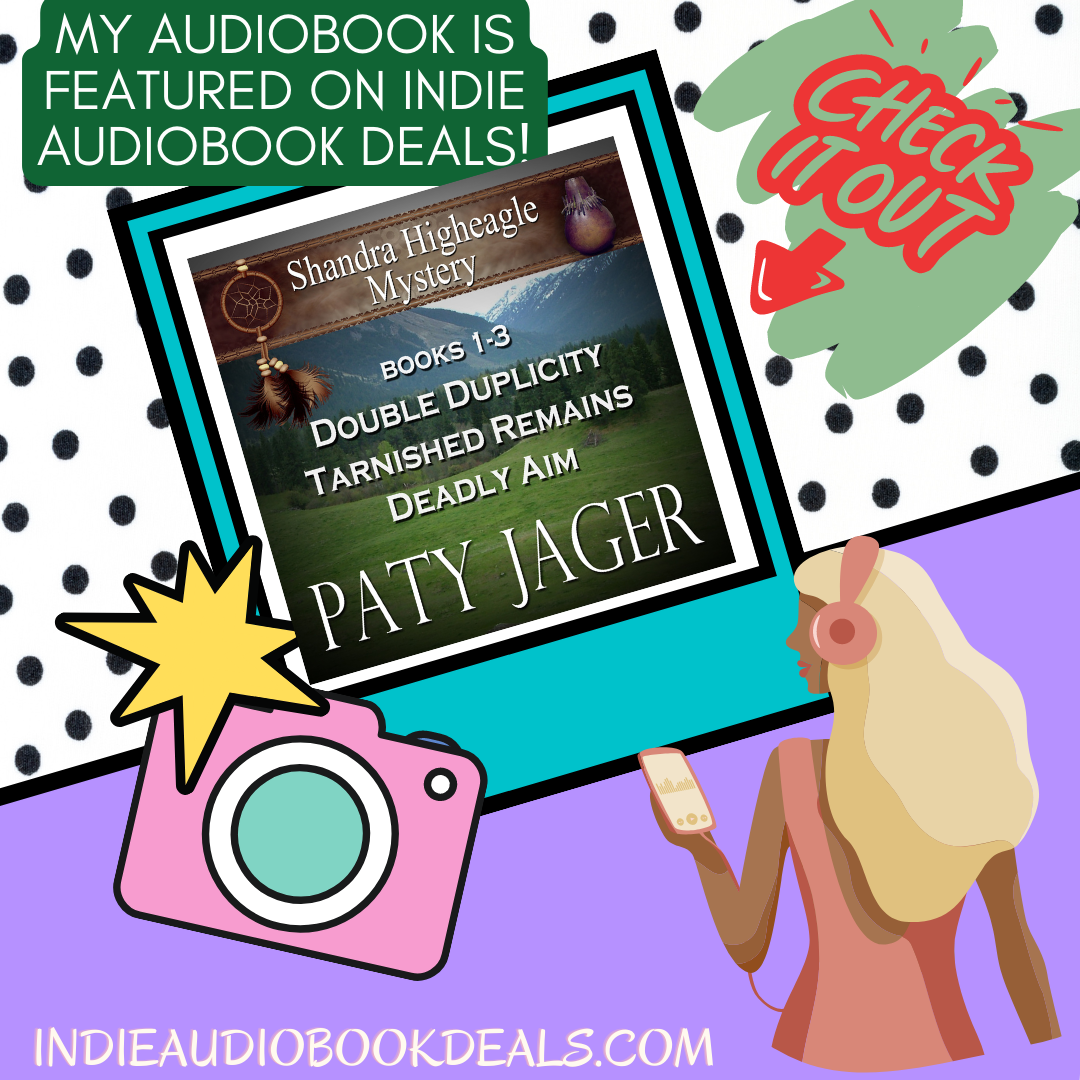
If you are looking for a good deal on an audiobook bundle, the first three books of my Shandra Higheagle mystery series is available for $0.99 at many audiobook vendors until the 10th as part of the Indie Audiobook Deals. https://indieaudiobookdeals.com/

Guest Blogger -Jennifer Giacalone

Working Backwards

When people find out that I write the occasional mystery novel, the most common question I get is “so do you write the ending first and then work backwards?”

So, for anyone who might be wondering if I did that with “Art of the Chase,” the answer is no. However, I didn’t quite write it from beginning to end either. You could say I did it sideways, from the middle out.

Where Is the Middle Anyway?

For me, a mystery turns less on the beginning or the ending and more on the little bit of information that’s so interesting and surprising that it allows you to see certain things about what comes before it and after it.

For example: I was watching a documentary on the works of Vermeer. They talked a bit about how it was unusual for the time period that he used so much blue in his paintings, because it made them very expensive. Blue paint could only be produced with lapis lazuli stone, which had to be hand-ground and then processed in a very unpleasant, potentially dangerous procedure. You didn’t find many painters of that period using it as wantonly as he did.

The advent of French ultramarine produced chemically, in the 1880s, made it much easier and cheaper to work in blue. And it was this seemingly random fact that ended up being what the story turned on.

Because I started to think: what if you had a detective who specialized in art thefts? Would they know about the rarity of blue in Renaissance and Baroque painting? How would that knowledge come into play if a particular piece was stolen? I was starting in the middle. The middle of a story, the middle of a question, the middle of a period of history in which blue paint was a precious commodity.

Research Is The Fun Part

The process of writing is, for me at least, an opportunity to learn. I learn about myself, always; my biases, my areas of weakness as a writer, my own fascinations. But I also just learn about… well, stuff.

Almost everything I choose to write about requires some amount of research. And it’s always about something of interest to me. There’s nothing I love more than learning a lot about a topic of interest, in this case, art. And in particular, the life and work of Artemisia Gentileschi, the various methods of producing paint colors used by the old masters, and the architectural landscape of Florence. What a delight!

I fell down a rabbit hole, and popped up somewhere late in the third act with bits of fascinating information in my little paws like some sort of literary groundhog. The threads that connect my little prizes are ultimately what hold the story together. Why does this painter matter to this detective? What sort of thief would want to steal a piece of hers? And what does the history of blue paint have to do with any of it?

There is a Connection Here, I Swear

I spread my treasures out and draw lines from one to the next. I figure out why these things matter to each other, and so the story reveals itself. My plotting efforts tend to look less like a traditional bulleted outline, and more like a murder board with photos tacked up alongside post-it notes, connected by a brightly colored thread that runs from the middle out.

And I’m the lunatic cop who can stand back and see how it might all connect; who do I need my thief to be, my heroine, my informant? How do I build them to make these treasures shine and tickle my readers as much as they tickled me?

Ah, there it is. I see it. There’s my story. There’s my heroine. This is how she gets from here, to here, to there. There’s my thief. That’s what he wants, and why.  It’s not a matter of working backwards or forwards. It’s a matter of allowing the story to emerge from the bits and pieces that delight me the most, and letting them surprise the reader as much as they surprised me.

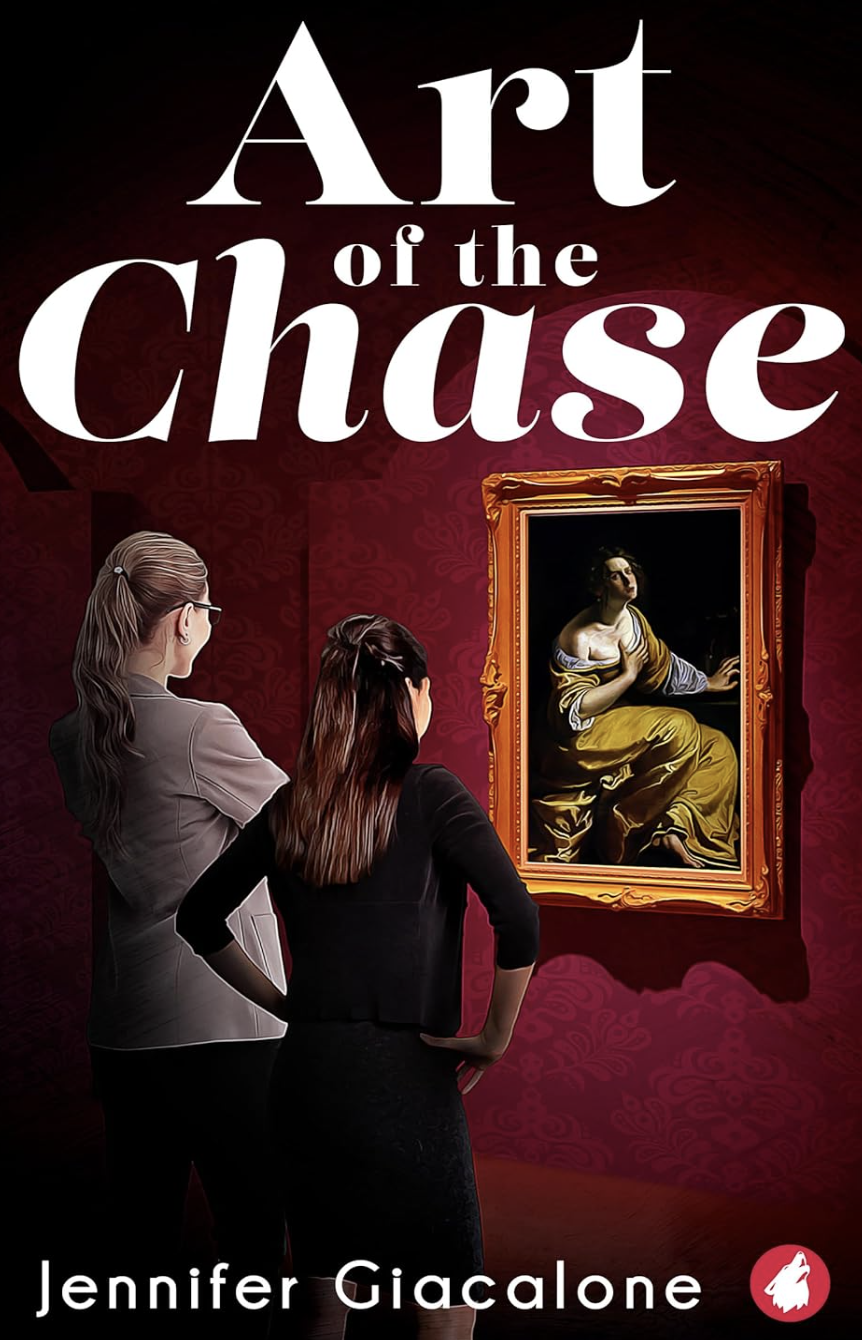
When a notorious art thief surfaces, warring detective exes reunite for the hunt. 

Six years ago, the “Fabulous Gustave” slipped the grasp of Agent Fleur van Beekhof, making off with a priceless artwork…and Fleur’s beautifully ordered life. Suddenly the cool, pragmatic Europol detective lost her detective partner and wife, her rising career, and her control, thanks to the addictive lure of cards.

When a new Italian art theft bears all the markings of Gustave’s flamboyant, taunting style, Fleur is put back in the field, because no one knows him better. She jumps at the chance to correct the mistake that ruined her life. The hitch? She has to work with her fiery ex-wife. 

Where Fleur is a detective who loves art, Renata is an art expert who loves being a detective. Where Fleur is by the book, Renata is reckless and leaps into danger. But they’ll need both of their skills to catch the slipperiest thief Europe has ever seen … even if it shatters what’s left of Fleur’s heart. 

Buy link: https://www.amazon.com/dp/3963248351

Jen Giacalone is a neurodivergent queer nerd who has lived many lives and brings with her a wealth of experience to tell high-octane drama, thriller, and mystery stories across books, film, and TV.

After spending her twenties as a rock and roll frontwoman, and her thirties as a graphic designer in boardrooms of Fortune 500 companies, she’s currently in what she likes to call her “final form” as a writer.

You can usually find her disappearing down rabbit holes of fascinating research on random subjects that will turn up in one of her books. And, of course, she sprinkles a little glitter on everything she touches.

https://www.instagram.com/jengiacalone/