Guest Blogger – Nev March

The Friend I Left Behind
Late night–no, was already morning. I read through an email when my gaze snagged on a name. I stared at it, incredulous. After forty years, I had found Zenia.

Zenia is not her real name. I’ve changed it to protect her privacy. When I was fifteen, I met her on her first day at school. A year older than me, she was a tall, statuesque teen with a well-developed figure and, as I discovered, a wild imagination. She was a “boarder”—a residential student; I was a day-student whose mother was also a teacher.

From almost the first minute, we became close friends. She was lovely, with long wavy hair. Plump and vivacious, she had travelled, and boy, could she talk. Her tales of dangerous train journeys enthralled me. Then, gradually details emerged. Some were shared in long, private conversations—I usually stayed after school to chat, and often rushed home an hour or two late.

As a teen, Zenia was full of imaginative stories. She dreamed. And she narrated those dreams in long, vivid tales of descriptions that would today be called ‘drone shots’. In turn I made up ghost stories to entertain her. We had our in-jokes too; we once disagreed about how to pronounce the word ‘obviously.’  She skipped the B entirely, while I stressed it! So, when one of us made a pronouncement, the other replied, “OVIOUSLY!” whereupon we dissolved into giggles.

She said her father had worked at Tata’s (a huge, respectable conglomerate) but that he had been unfairly accused of embezzlement. My father also worked in a subsidiary of the Tata Corporation. He said that Zenia’s father had been fired from his position. There was a protracted lawsuit, the outcome of which I never did learn.

Sighing, he also said that Zenia’s mother had committed suicide.

Separately Zenia revealed that she walked in on her parents one day while their legal issues were at their height. She must have been eight or nine years old. She said, “A bottle of pills was on the table between them. They were holding hands. They looked at me when I came in, and my mother said, ‘That’s why you have to stay.’” That phrase haunted Zenia. She repeated it over and over.

On our school’s parents’ day, I met Zenia’s father, a handsome, charming man with a boisterous manner. And I met Connie, an old, trusted friend who loved Zenia dearly. Connie had been close to Zenia’s parents for decades. A year later, she married Zenia’s father.

Then, in tenth grade (a crucial exam year in India), we broke up. I’d brought home a poor grade, and my mother was astonished. It hadn’t happened before. That night, she came to my room, sat by me on my bed, and asked me to stop spending so much time with Zenia.

I did; my grades skyrocketed. When Zenia asked why I didn’t stay late anymore, I begged off with excuses of homework. She got the message. I was sorry, but no harsh words were spoken and we both dived into exam prep.

Years after I’d migrated to the States, my mother mentioned that Zenia’s father had passed away. She must have had some common friend or acquaintance to know this. 

Decades later I looked for Zenia on Facebook and Instagram. She would have enjoyed these forums, full of color and variety. But I couldn’t find her. I checked LinkedIn; no sign of her there either. I assumed she had changed her name after marriage.

Now I know why she wasn’t on social media. That email said she had stage-2 respiratory failure. And Rheumatoid Arthritis, morbid obesity and a slew of other conditions. It was a community appeal to help with Zenia’s medical bills. She’d never married. Her stepmother Connie was caring for her.

That notice brought back a waterfall of memories. I wept for the girl with the big imagination, the gorgeous singing voice, who’d played a funny, eccentric Petruccio to my Katherina in our wacky adaptation of Taming of the Shrew. That girl had such big dreams, wanted an erudite, playful husband, and had plans to work in theatre. In the decade after school, I completed a master’s degree in economics, travelled to the States on a scholarship, married and had children. After my corporate career, I began to write novels about the wide spaces and colorful people of India, crime stories based on immigrants, and history.

Forty years ago, we were both at the starting point of our journeys. Then Zenia fell sick. Meanwhile, I was flying without the terrible weight she carried, the tragedies that had already shaped her at seventeen.

She was longwinded because she had no one else to talk with. She was loud, argumentative, because she imagined that other students were whispering behind her back. Now I wonder whether she was lonely because of a self-imposed exile from the other boarders.

And I wonder if they were cruel to her because she was so unlike them. Most boarders came from orthodox families in small villages and had rarely traveled beyond their own towns. Zenia had been abroad, read widely, loved Shakespeare and Mills and Boon novels. We shared so many interests, not least a penchant for short stories and poetry. What a writer she would have made!

These splinters of memory come alive as I write my novels. Faces from long ago return, embedding themselves into my chapters. Perhaps I’m trying to hold on to them, understand them, preserve the essence of who they were. In Murder in Old Bombay I built the Framji family based on people I’d known, and lost. Each book that follows contains fragments of me too.

Now regret escapes my eyelids, dropping wetly on my keyboard. Regret that I did not reconnect with Zenia when we were younger. Why didn’t I try to find her phone number? It didn’t occur to me. Youth can be stunningly self-absorbed. In the quiet past midnight, I mourn the friend I left behind.

The Spanish Diplomat’s Secret
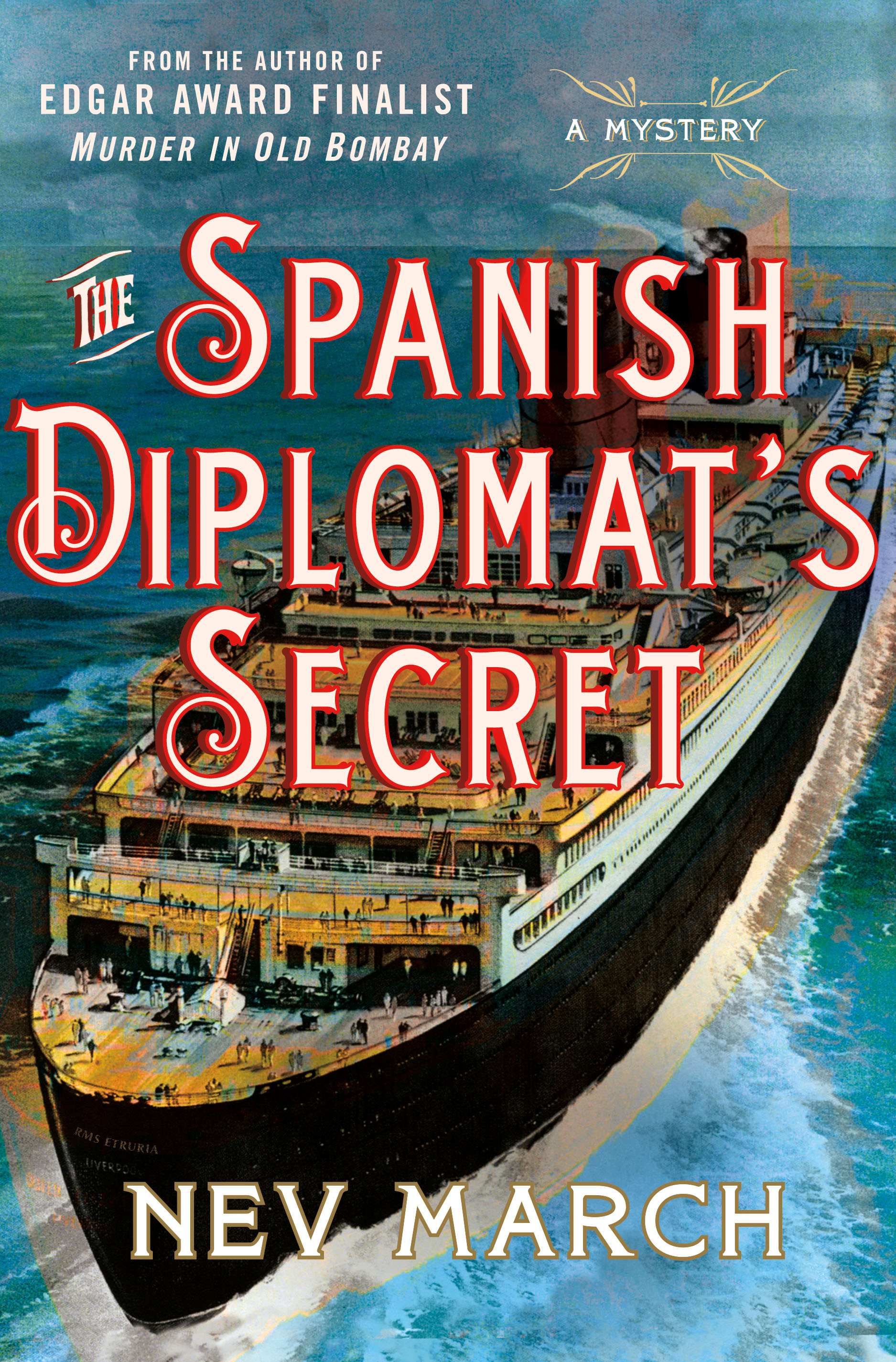
In The Spanish Diplomat’s Secret, award-winning author Nev March explores the vivid nineteenth-century world of the transatlantic voyage, one passenger’s secret at a time.

Captain Jim Agnihotri and his wife Lady Diana Framji are embarking to England in the summer of 1894. Jim is hopeful the cruise will help Diana open up to him. Something is troubling her, and Jim is concerned.

On their first evening, Jim meets an intriguing Spaniard, a fellow soldier with whom he finds an instant kinship. But within twenty-four hours, Don Juan Nepomuceno is murdered, his body discovered shortly after he asks rather urgently to see Jim.

When the captain discovers that Jim is an investigator, he pleads with Jim to find the killer before they dock in Liverpool in six days, or there could be international consequences. Aboard the beleaguered luxury liner are a thousand suspects, but no witnesses to the locked-cabin crime. Jim would prefer to keep Diana safely out of his investigation, but he’s doubled over, seasick. Plus, Jim knows Diana can navigate the high society world of the ship’s first-class passengers in ways he cannot.

Together, using the tricks gleaned from their favorite fictional sleuth, Sherlock Holmes, Jim and Diana must learn why one man’s life came to a murderous end.

Buy links:
https://a.co/d/2R21eMg

The Spanish Diplomat’s Secret

Nev March is the first Indian-born author to receive the Minotaur Books/Mystery Writers of America Award in 2019. She is president of the NY chapter chair of MWA. Her debut novel, Murder in Old Bombay won an Audiofile award and was an Edgar and Anthony finalist. Her sequel Peril at the Exposition describes the gilded age which planted the seeds of today’s red-blue divide.

The Spanish Diplomat’s Secret she explores revenge for a real-world unresolved crime in the years before the Spanish American war over Cuba. Nev is presently working on book 4 of her Captain Jim and Lady Diana series. Her books deal with issues of identity, race and moral boundaries.

http://www.nevmarch.com

Join my newsletter 

A Novel Writer’s Travels: Inspiration or Distraction?

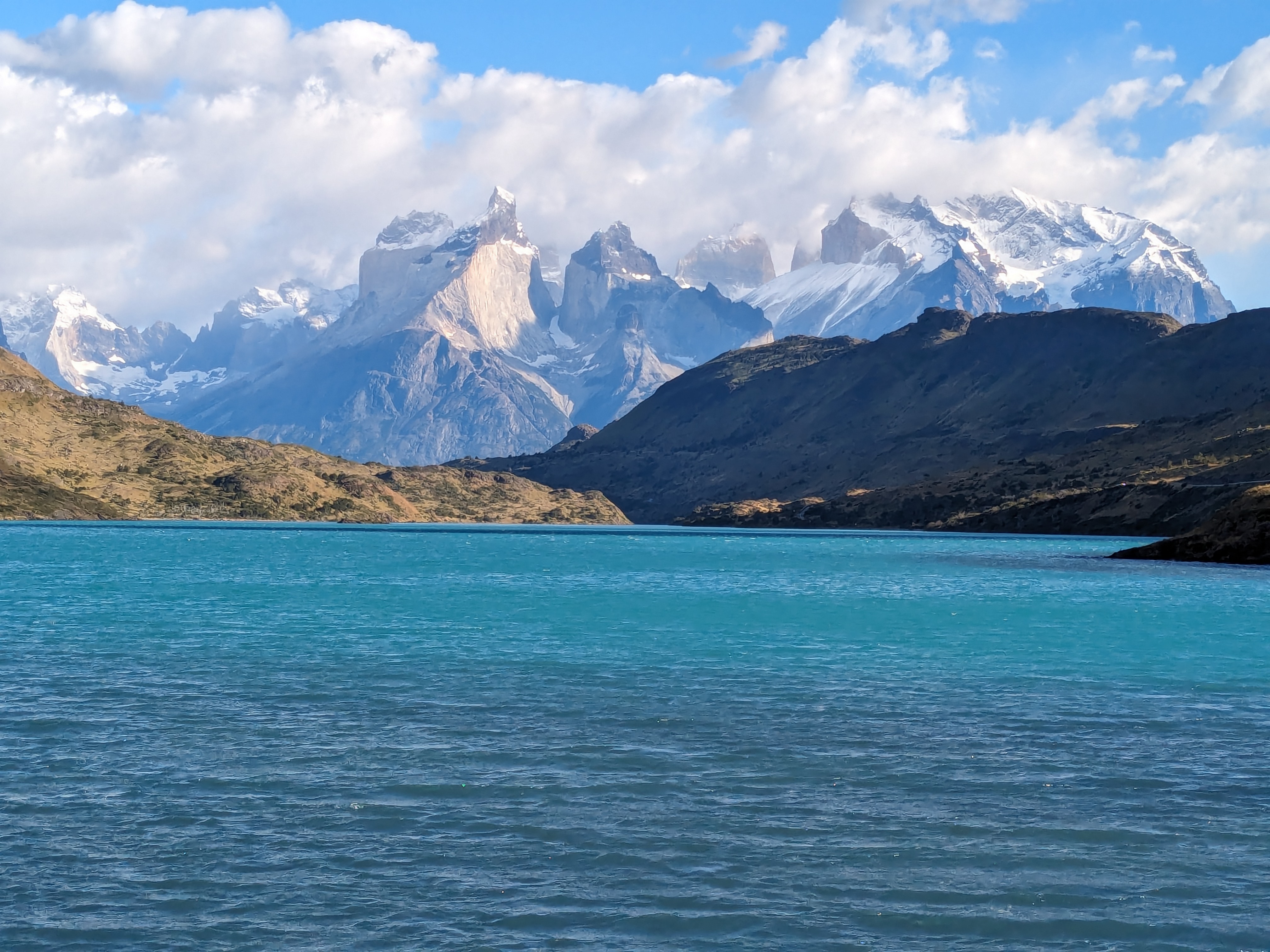
Torres del Paine National Park, Chile

I recently spent nearly three weeks in the Patagonian regions of Argentina and Chile, on a tour with 13 wonderful people who are now all friends. We enjoyed a wide range of activities from learning to tango in Buenos Aires to hiking in spectacular Torres del Paine National Park in Chile.

Because I had explained I was a mystery author when we introduced ourselves at the preliminary meeting, my fellow travelers often asked me about how the trip would influence my writing. The most common question was “Are you getting a lot of great ideas for your next book?”

I usually answered that I needed to finish the mystery I’m currently working on before I could think about anything else. But hearing the question multiple times made me think about the way I deal with the information I gather during my trips. I do typically need to finish the novel I’m working on, so I tend to regard a trip in the middle of my book-writing process as mostly a “break” from sitting at my desk every day and planning and editing and marketing. Also, I typically travel to foreign countries, and my mysteries are generally set in the USA, and often in public lands and small towns there. I don’t feel that visiting a country as a tourist really gives me enough insight to use that country as a setting for a story. So, for me, these trips are mostly vacations and distractions from my writer’s life in Washington State.

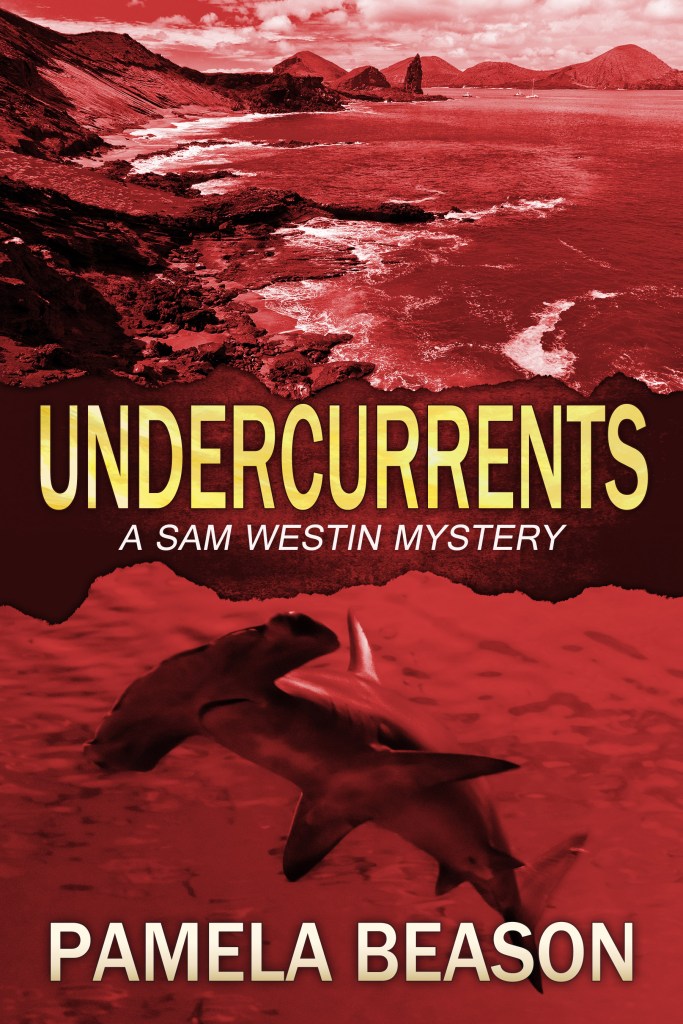
An exception to this was my mystery Undercurrents, which takes place largely in the Galápagos  Islands of Ecuador. I was inspired by a trip there to write a novel about a tourist who doesn’t speak the language and was clueless about the political undercurrents in the Ecuadorian society there. I, like my fellow travelers, was mostly ignorant about the history and controversy that surrounds the islands, but unlike the others on my small tour boat, I can speak and read Spanish, so when I picked up a local newspaper, I read “Fishermen’s Union Threatens to Blow Up Tourist Boat.”

Interesting, was my first thought, especially as I was traveling on such a boat at the time. My second thought: what the hell? What was the Fishermen’s Union and why would they want to blow up a tour boat? Thanks to the internet, I soon discovered that Ecuadorian newspapers were online, allowing me to keep up with news from the islands, and later I connected with an environmental activist working in the Galápagos, who gave me valuable insights and great details for my book.

As a typical American tourist and nature film lover, I had a romanticized view of Darwin’s enchanting islands. They are a World Heritage Site, and biologists around the world consider the place a special reserve for scientific study, both in the marine reserve and on all the islands. So why wouldn’t all nature lovers want to explore this incredible place, and why wouldn’t Ecuador be oh so proud to host visitors from all nations?

In my research, I discovered many reasons why foreigners were not always welcome in the islands. So, I made my Sam Westin protagonist take up scuba diving (I’m a scuba diver, too) and jump on the chance to go to the Galápagos to participate in a marine survey, assuming that all biologists would be enthusiastically supported in their investigations there. She soon discovers that her assumptions do not mesh with reality, and unlike me, she doesn’t know Spanish and couldn’t easily uncover the reasons for the deadly hostility she encounters.

No, I’m not going to reveal all the twists and turns and revelations here. Get the book! But my point for this post is: while my tour of the Galápagos was mostly a distraction at the time I was vacationing there, the experience piqued my curiosity, and a lot of the material ended up in a book years later.

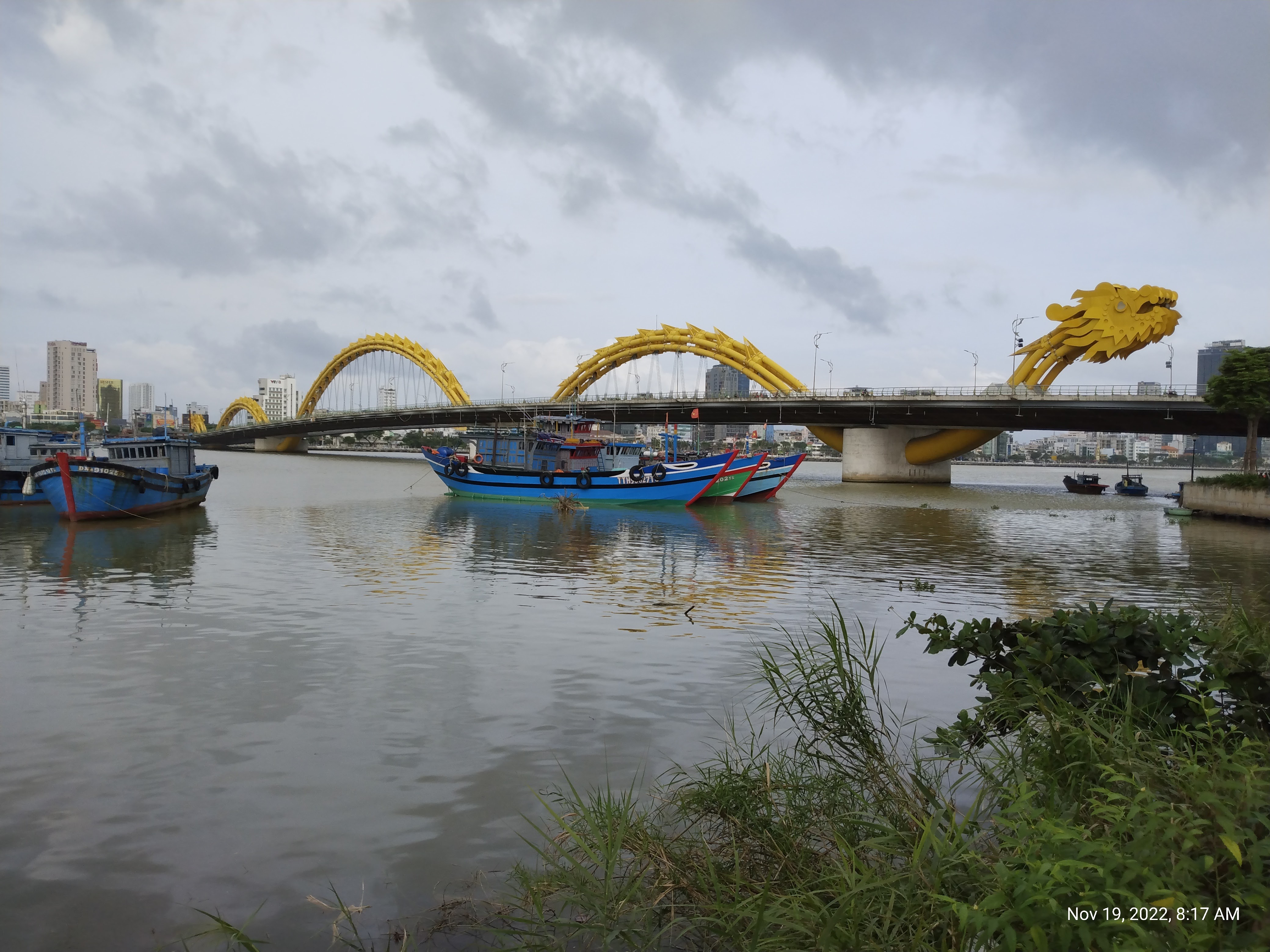
Dragon Bridge, Vietnam

And that’s probably how it’s likely to go with all my travels. I went to Vietnam in late 2022, and then, in 2023, to Central America (El Salvador, Honduras, Guatemala, and Belize) and Tanzania. In the future, I might use a lot of what I learned on those trips in a book or two. A tourist vanishing in crowded Hanoi or in a Central American steamy jungle or in endless grasslands of the Serengeti? Maybe.

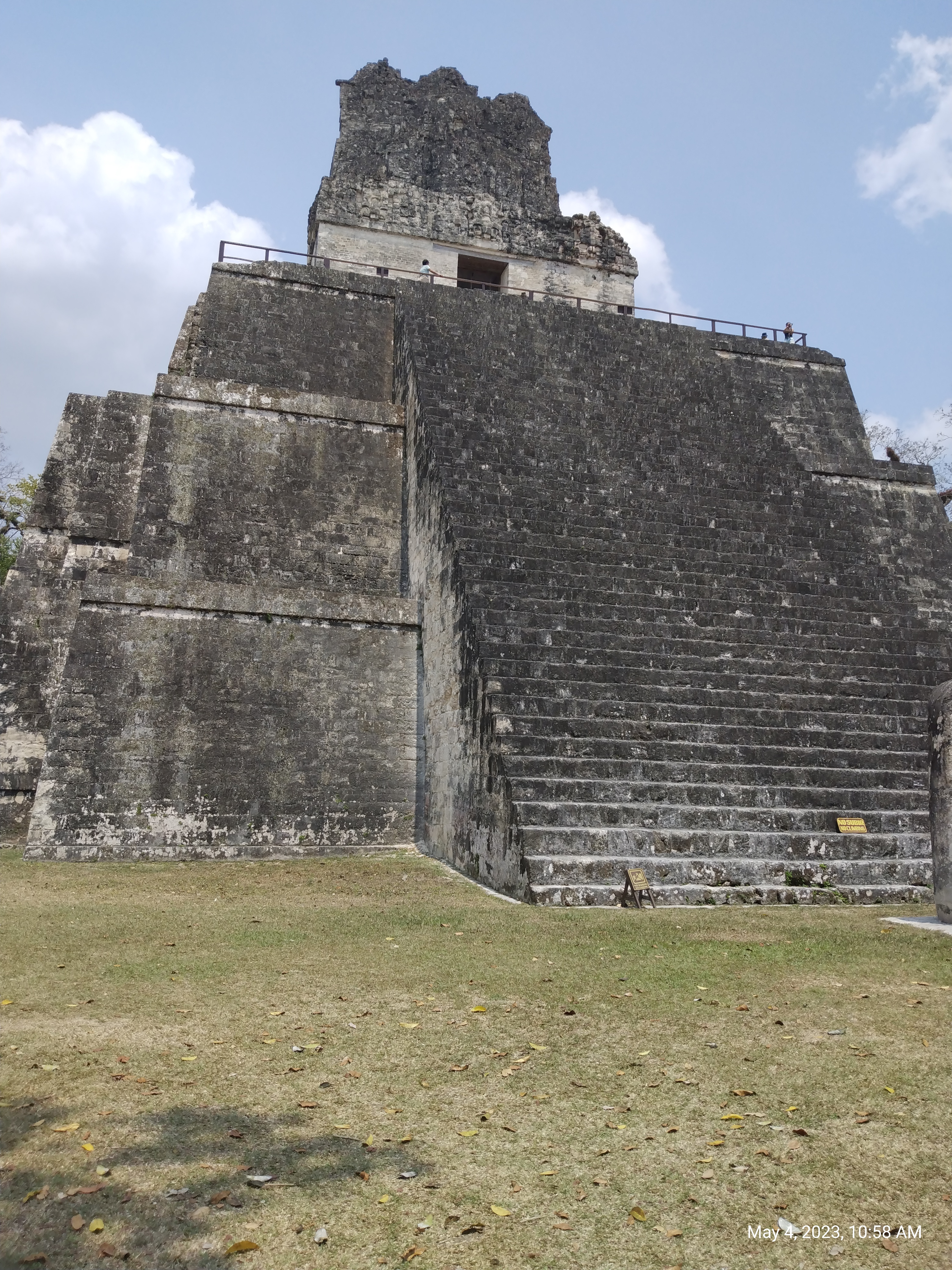
Mayan Temple, Guatemala

I have used bits of my experiences in my adventure novella Call of the Jaguar, about a 40-year-old woman who goes to the Central American to find the archaeologist lover she didn’t choose (she married a rich jerk instead), in my romantic suspense Shaken, which has a half-Guatemalan protagonist, and in Race for Justice, the third book in my Run for your Life trilogy, in which my young protagonist competes in a perilous cross-country race in Zimbabwe, the birth country of her murdered mother.

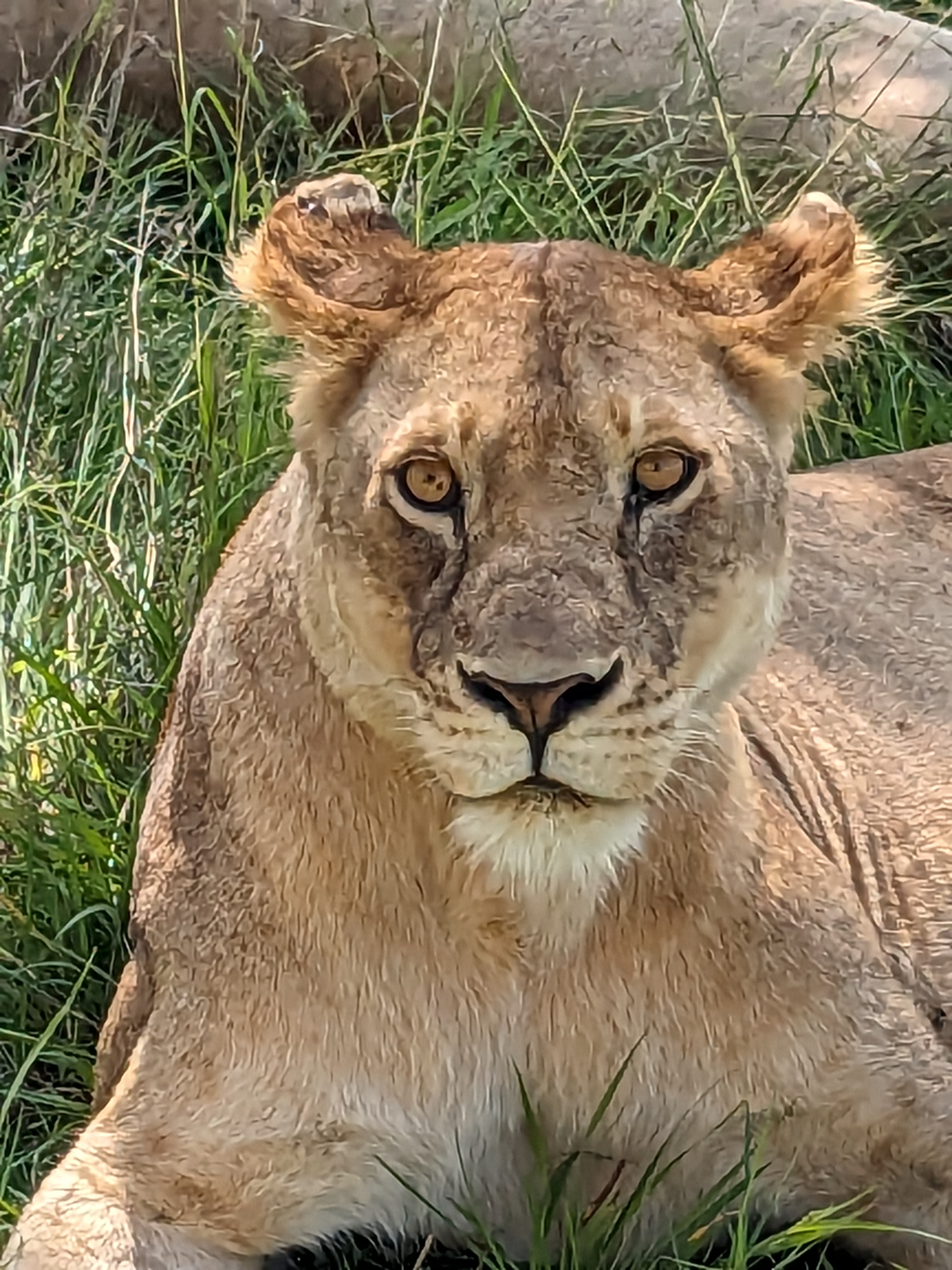
Lioness, Tanzania

This time, while in Patagonia, we learned about Nazi war criminals hiding among the many European immigrants to the area, and about the history of the native peoples in relation to all the incoming strangers. As in the US, Argentina and Chile have challenges with both legal and illegal migrants from other countries. This made my thoughts return to my current work in progress, which has a theme of immigrants coming to the United States. It seems the entire world is concerned with migrations of people from other nations right now, so I guess I’d better speed up and finish my novel, as the theme is currently a topic of interest in so many circles.

So, are my travels inspiring for or distracting from my writing efforts? I guess I have to say they are both. Every learning experience is valuable, and it’s all fodder for the imagination, isn’t it?


Pamela Beason is the author of the Sam Westin Wilderness Mysteries, the Neema the Signing Gorilla Mysteries, the Run for Your Life adventure trilogy, and several romantic suspense novels. She is currently working on If Only, a crossover novel that will include the characters of both the Sam Westin mysteries and the Neema mysteries. Even when she’s working at her desk in Bellingham, Washington, her imagination is off on a trip somewhere else.

My window into other worlds

I don’t know how many of you get giddy when you can visit or see the settings from books you’ve read. But as a reader, I have always enjoyed being taken to settings or worlds I haven’t been and may never be able to see. Books have always been my window into other worlds.

A few weeks ago, my hubby and I made a trip from SE Oregon to Killeen, TX to see his sister and her husband and deliver boxes of belongings to our oldest granddaughter now living in Arkansas. On the way over we drove through the four corners and the towns of Flagstaff, Tuba City, Windowrock, and Gallup. The settings of author Tony Hillerman’s novels.

My husband just shook his head as I said the names of places that I’d read about in those novels. I could envision Leaphorn, Chee, and Bernie Manuelito driving around on the dirt roads I saw from the freeway.  Seeing First Mesa on Hopi land and the hogans on the Navajo land… It stalled my breath to see places and things I’d envisioned as I read or listened to Mr. Hillerman’s books but had used my imagination at what it would look like.

In case you haven’t figured it out already, I have been a huge fan of Tony Hillerman’s books since reading the first one. While he has more Native American life, traditions, and legends in his stories than I have in mine, he was my inspiration to have a Native American character as the main protagonist in my three mystery series. 

He lived on or near the four corners area where the Hopi, Navajo, and Pueblo tribes live. He had many contacts among these tribes to help him show more of the culture than I’ve been able to cultivate living a distance from the reservations and tribes I write about in my Gabriel Hawke novels, Shandra Higheagle Mysteries, and Spotted Pony Casino Mysteries.

I aspire to write as intriguing and thrilling reads even though they aren’t as steeped in the culture and lives of the people.

The next Gabriel Hawke book, I’m having Hawke and Dani, his significant other, attend Tamkaliks. A powwow held every July in Wallowa, Oregon. I attended it this past year for the third time and am now feeling confident I can give my two Nez Perce characters the experience they would undergo having been away from their culture for decades due to their careers and trying to fit into a culture other than their own.

However, with the return of Hawke’s sister to his life, she is showing him how good their culture is for their wellbeing. That will be a subplot in the book to his investigation into a decades-old body he discovers while patrolling the Snake River in the Hells Canyon.

I‘m hoping my contact within the Nez Perce community and the Fish and Wildlife Trooper helping me with the patrol of the river will give my story more realism.

Speaking of realism, I took a trip to the Oregon Coast last Spring to research for my newest release, The Pinch, book 5 in the Spotted Pony Casino Mystery series. In this book Dela Alvaro, head of security for the Spotted Pony Casino is at a tribal-run casino on the Oregon Coast helping them beef up their security. While there a child is kidnapped and she runs into an old friend.

The Pinch

Dela Alvaro, head of security for the Spotted Pony Casino, is asked to do a security check of a casino on the Oregon Coast. She no sooner starts her rounds at the casino and a child of a dubious couple is kidnapped. Special Agent Quinn Pierce of the FBI has been out to get the father for some time.

One of Dela’s best friends from the Army is also at the casino and they catch up. The next morning, Dela finds her friend strangled. As Dela struggles with the violent death of yet another best friend, Tribal Officer Heath Seaver arrives and the two begin untangling the lies, kidnapping, and murder.

As Heath carries the kidnapped child to safety, Dela must face a cunning killer alone.

Pre-order now, releases on February 22nd. https://books2read.com/u/38Y787

I hope you enjoy this latest book and follow my books to learn more about the Nez Perce, Umatilla, and Cayuse tribes as my characters, Hawke and Dela begin to, in Hawke’s case become reacquainted with his roots and Dela is just beginning to learn she may have a Umatilla heritage.

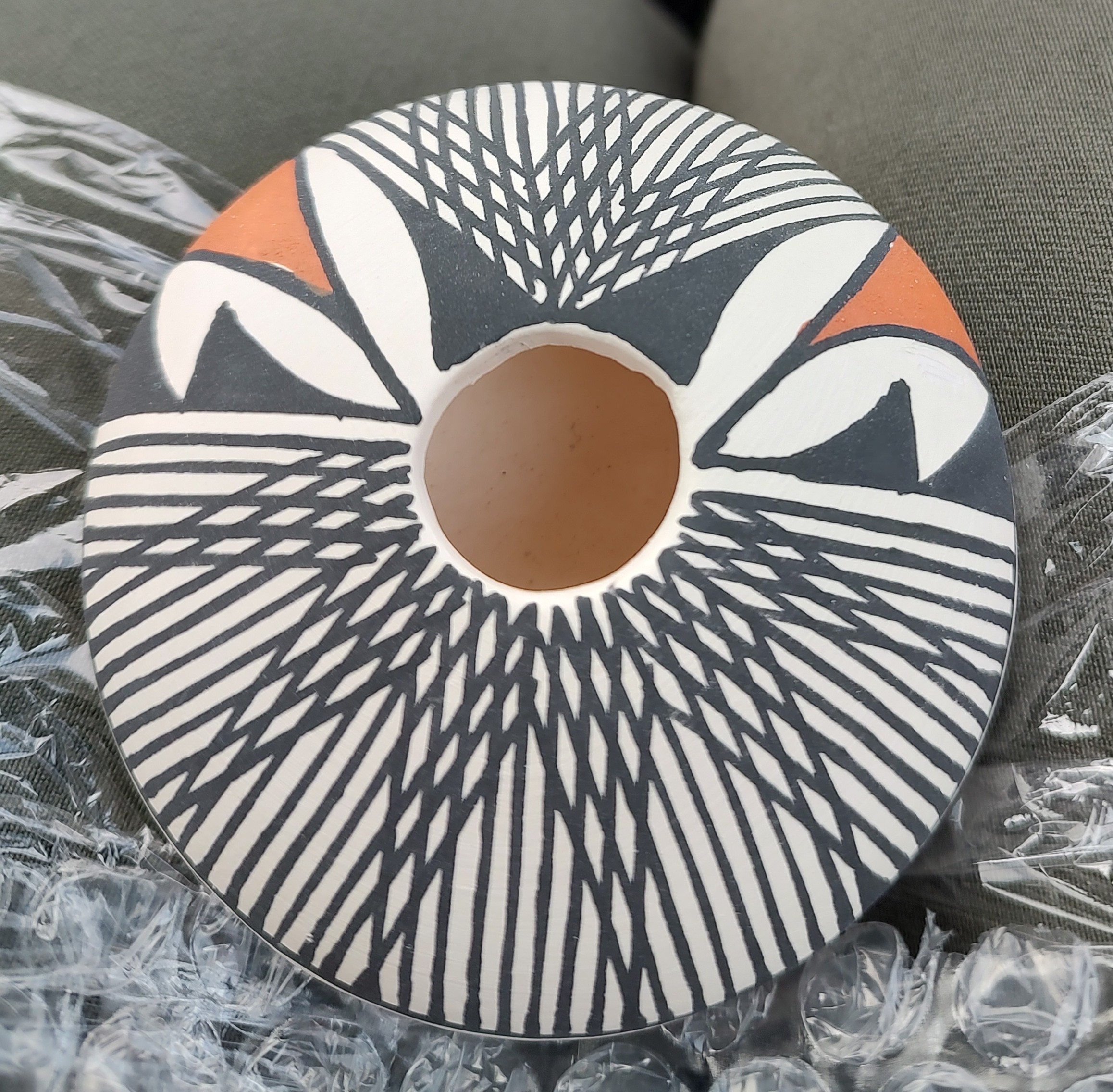
I purchased this seed holder pot from a Pueblo woman in front of a market on the reservation. She told me she was Acoma (Ah-kuh-muh) Pueblo with the Bear Clan. She showed me her name and a bear paw on the bottom of the pot. She then told me the solid black on the pot represents mountains and land, the orange sun, and the thin lines rain. I enjoyed my visit with her.

That is the thing I love most about reading, writing, and traveling. I learn new things and broaden my horizons.  

In Defense of Procrastination

By Margaret Lucke

“I used to just crastinate, but I got so good, I went pro.”
~ Seen on a T-shirt

My name is Margaret, and I am a procrastinator.

It’s 11:27 a.m. on Friday, and right now I am typing the first sentence of my post on time management for the Ladies of Mystery blog. The post is due to go live tonight at midnight. So I have twelve hours in which to get it written — and to accomplish all of the other items on my long to-do list for today.

It could be worse. If I had really perfected procrastination to a fine art, I’d be typing this at 11:27 p.m. on Friday instead of shortly before noon.

On the other hand, if I were any good at time management, I’d have written this post yesterday. Or last week. Or, hey, two months ago, like some of my fellow Ladies of Mystery, who are much more on top of their time than I am.

“Tomorrow is often the busiest day of the week.”
~ Spanish Proverb

Getting things done is simple, I’m told. You set priorities. You make lists. You break down a project into easily accomplished action steps. When I’ve tried doing that, I find it really works. As soon as I’ve finished my list, I make sure to take action on my next priority, which is to do a Sudoku puzzle, or take a walk in the fresh air, or make myself another cup of tea.  

“Never put off until tomorrow what you can do the day after tomorrow.”
~ Mark Twain

I used to feel bad about being a procrastinator. That’s because procrastination is usually talked about as if it’s a bad thing – a sure road to missed opportunities, a certain sign of laziness and sloth. Those annoying people who are on top of all of their tasks sneer at the rest of us with disdain and disgust. Their intent is to make us feel guilty and anxious, and too often they succeed.

But I think that when I’m confronted with an important project, it’s a good thing to take some time for mental preparation and to approach the work with judicious care. It saves me from slapdash results. And sometimes, if I procrastinate long enough, it saves me from having to do the work at all. The situation changes, and the need is no longer there.

Calvin:“You can’t just turn on creativity like a faucet. You have to be in the right mood.”
Hobbes:
“What mood is that?”
Calvin:
“Last-minute panic.”
~ Bill Watterson

I was gratified not long ago when I heard a radio interview with Berkeley psychologist Mary Lamia, about her book What Motivates Getting Things Done: Procrastination, Emotions, and Success. Lamia explains that there are two types of people: task-driven types who feel uneasy and anxious when pending work is going undone, and deadline-driven folks who are not motivated to act until they “feel the heart-pounding terror of an imminent deadline.” And she contends that both types are equally capable of doing quality work and achieving success.

So there.

“Procrastinate now. Don’t put it off.”
~ Ellen De Generes

Noise Levels and Other Considerations

by Janis Patterson

This is a noisy world. There are sirens and neighbors and families and appliances… and not even noise-cancelling headphones can guarantee total silence. At least, not at my home with a house reconstruction going on to the west and the neighbor to the east – though a wonderful man in many ways – owning every gasoline-powered piece of lawn equipment ever made. His lawn is beautiful, though.

Now all writers are different. Some like lots of noise, claiming it is a stimulant, while others like pure silence as they say it frees their creativity. Depending on the time and our mood of the moment I daresay most of us fall somewhere in between.

Some writers swear by writing in different places – cafes, car parks, just about any place you can think of. Now when we have to be someplace besides our office, a writer can work almost anywhere, especially a writer under deadline. Have to take your child to ballet practice? Need to get the car worked on? Have a lunch hour at work? You can take a laptop or one of those keyboards that feeds  into your phone (I keep meaning to get one of these, just as soon as I get a phone which can handle it), or even a humble pen and paper, then make use of the time to up your word count.

Other writers believe in total silence – or as total as one can achieve short of moving to an uninhabited mountaintop in some third world country. Noise-cancelling headphones help, as sometimes does a white noise machine, but nothing can truly drown out the noise of the modern world.

As I usually do, I stand firmly in both camps. There are times I write happily in front of the blaring television while listening to The Husband tell me about his day, and other times I have on my headphones, my office drapes drawn and a sign on the door threatening a dire fate to anyone who disturbs me.

So what is the best way to write? I can only speak for myself, but as always my practice varies. If I had to choose just one atmosphere, it would be classical music (either full orchestra or piano only – no screechy strings, please) playing softly in the background, preferably of an emotion and tempo appropriate to whatever I was working on at the moment. After that, as pure a silence as could be achieved. Of course, I would – and have – made do with whatever had to be undergone at the moment.

By contrast, I have a friend – an excellent writer – who is addicted to writing in cafés. Now I admit there are advantages to writing in a café, foremost of all being to command endless cappuccinos by the mere raising of a hand! On the other hand, there is a constant swirl of people and babble of conversation, to say nothing of being the object of curiosity by the customers (“They’re real writers? And they’re working on books?”) for all as if we were some sort of exhibit in a raree show. I am no shrinking violet when it comes to being in the public eye – far from it – but not while I’m trying to concentrate on work.

However – being a fair individual and willing to experiment, I have joined my friend on occasion, and yes, despite being interrupted by spectators telling me about how they have always wanted to write a book, or have a sure-fire idea for a best seller, both broadly implying that I should stop and either teach or co-write with them (grrr) I managed to get a fair amount of writing done. Unfortunately, it wasn’t really writing – just lots of typing that, on a cool-headed reading the next day, was barely one baby step away from garbage. I didn’t try to save any of it, but I did go put on some Chopin, close the drapes and the door and try to salvage the underlying idea.

By contrast, my friend actually wrote a short story that same afternoon, one when it was polished, she sold.

How boring life would be if we all worked exactly alike!