

The Mystery of Naming
I’m not original when it comes to naming characters. No Vermeulens or Siobhans or Kimmos. I try to make the names I choose popular at the time when a character was born. So the six old women in my novella with that title get Barb, Dottie, Jane, Lucy, Stella, and Thelma, all common names in the 1920s.
My novels are filled with generic names, Will and Peter, Anna and Cynthia. The problem with this is that I tend to repeat names without remembering that I used the same one in an earlier novel. This happened recently with the novel I’m working on now. I named a minister Roy Chambers after Roy Chamberlain, the minister of my former church. When I discovered I’d used the name in Cemetery Wine, I had three choices: keep the name despite the repetition, change the name, or find a connection between the old novel and the new one. I worked to find a connection. None made sense, so I changed just the last name from Chambers to Tibbetts, a nod to another minister I once knew.
I heard a famous writer say that if she met someone she didn’t like, she’d use that person’s name for an unlikeable character in her next novel. I don’t do that. But I do pay homage to people via the names I choose. A mortician gets the last name of the mortician in the town where I grew up, a doctor gets the name of my old doctor, and a college professor gets the name of my dissertation advisor. My cats, Nutzycoocoo and Charlie, get memorialized in my writing.
My novels Leaving Freedom and Finding Freedom borrow the protagonist’s name, Connie, from Constance Fenimore Woolson, a nineteenth-century writer whose work I researched in the days I was an academic. Woolson’s sister and niece were Clare and Clara. Connie, Clare, Clara, I couldn’t keep them straight even when I was researching Woolson. So I changed my Connie’s sister to Sarah (note the rhyme) and her niece to Lizzie, after Woolson’s friend. Her mother gets Woolson’s mother’s name, Hannah, and her uncle gets Woolson’s brother, Charlie.
The most fun I had with names came in Death of the Keynote Speaker. This is the second in my first mystery series featuring Susan Warner, the name of another nineteenth-century writer. I put into the novel a secret code even Nancy Drew couldn’t crack. Nancy Wheeler combines Nancy Drew and Honey Wheeler from the Trixie Belden books. Frank Belden combines Trixie’s last name with Frank Hardy. Joe Hardy of Hardy Boys series is Joe Keene after Carolyn Keene, the name given the author of the Nancy Drew series. And so it goes, all the way to the police officer named Stratemeyer after the syndicate that produced all those books.
The name of a character doesn’t need to be unique. Often these days, I wish there were a pronunciation glossary to accompany a novel. I can do Raskolnikov and Akhmad and Clytemnestra. I applaud the wider range of ethnicities in our contemporary fiction, but please tell me how to pronounce Ove. Ove with a long o? Ové with two syllables? Uve as in ooh or Uvé with two syllables? Maybe there’s a reason the American movie is named A Man Called Otto.
How do you choose names when you write? What kind of names do you prefer when you read?
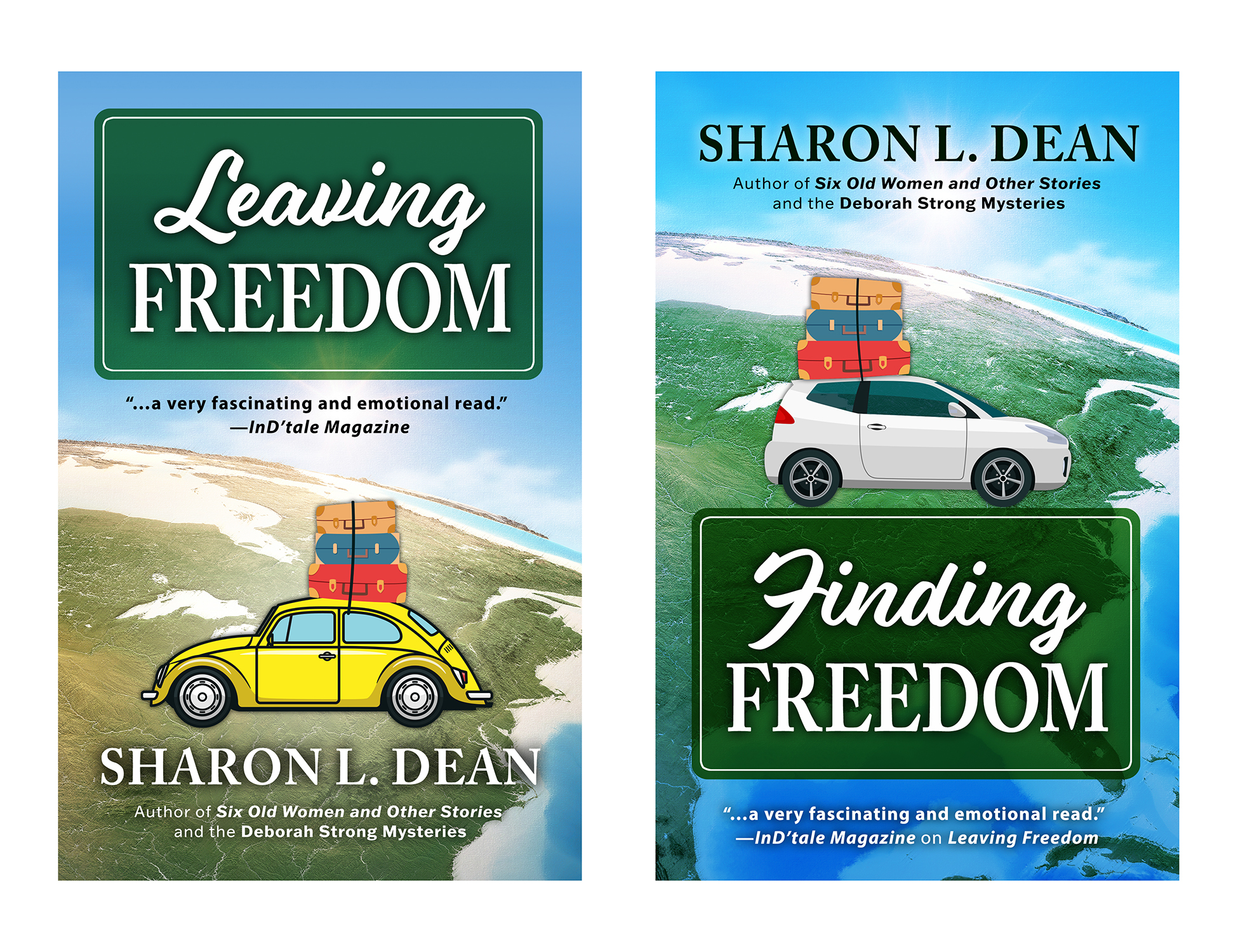
Leaving Freedom took Connie Lewis from her home in Freedom, Massachusetts, to Florida with her aging mother and then to Ashland, Oregon, where she found success as a writer and a place to call home. Now, in the sequel Finding Freedom, Connie is eighty years old and has exchanged the Volkswagen she called The Yellow Sub for a Honda Fit she’s nicknamed Last Chance. She’s ready for a last adventure and will use a drive across the United States to write a travel narrative she’ll call Travels with Connie. From gospel singers in the little town of Fossil, Oregon, to a famous painter in Glacier National Park, to turtle races in Perhem, Minnesota, to a twelve-year-old grandniece who teaches her about the lives of modern tweens, she finds more material for her book than she expected. Both going and coming back, she solved mysteries that help her to understand how the world changes even as it remains the same. Will she complete her journey in Massachusetts where she was born, the Oregon she has learned to call home, or somewhere she hasn’t expected?
https://www.amazon.com/Finding-Freedom-Sharon-L-Dean-ebook/dp/B0C5ZHK5N1
https://www.amazon.com/Leaving-Freedom-Sharon-L-Dean/dp/1645994651
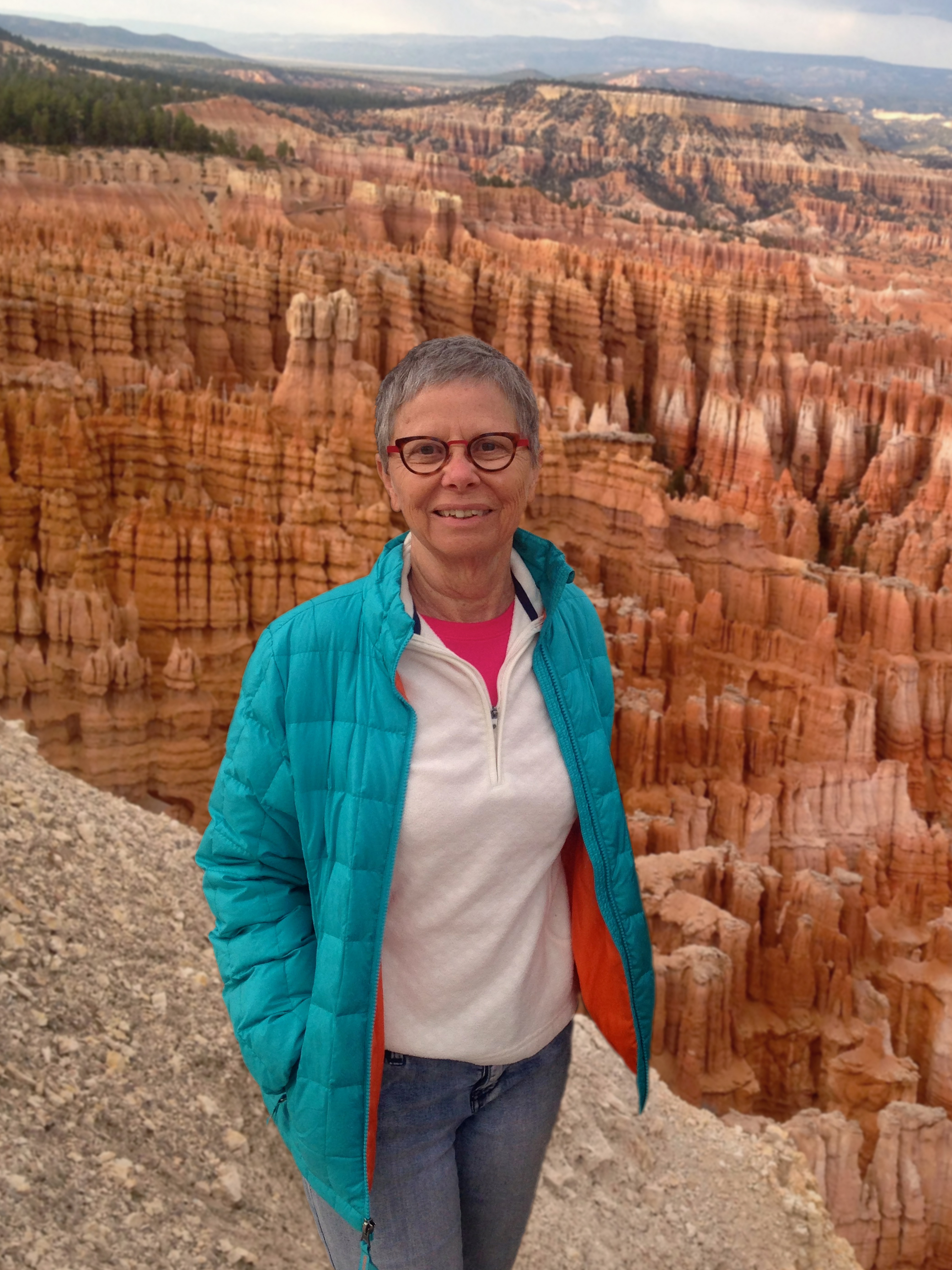
Sharon L. Dean grew up in Massachusetts where she was immersed in the literature of New England. She earned undergraduate and graduate degrees at the University of New Hampshire, a state she lived and taught in before moving to Oregon. Although she has given up writing scholarly books that require footnotes, she incorporates much of her academic research as background in her mysteries. She is the author of three Susan Warner mysteries , three Deborah Strong mysteries, and a collection of stories called Six Old Women and Other Stories, Her novel Leaving Freedom was reissued on June 14, 2023 along with a sequel Finding Freedom. Dean continues to write about New England while she is discovering the beauty of the West.
My website:
My publisher:

 Ladies of Mystery
Loved this post. Most of the character names in my books call to me or shout, but I usually try to keep them pronounceable. The exception to this is the Persephone Cole Vintage Mysteries. The nickname for Persephone is Percy. I wanted a name that could be taken as a man’s name, a running theme in the books. Then I came up with the idea that all the family have unusual, unpronounceable names. Another running theme. But we all choose our names with care because they resonate with us. Thanks for sharing!
LikeLike
It’s always interesting to hear how other authors piece their stories together, including the names. My main characters the name comes to me as I’m piecing together their backstory. Secondary character the names come as I’m typing their first appearance in the story. Though for my Gabriel Hawke series set in a an area where I grew up, I try really hard to not use any last names that of people who live there. I don’t want anyone to think I believe they are a killer!
LikeLike
I’m revising a novel right now where a character has a glass eye. He gets the name of a kid I knew growing up with just such an eye.
LikeLike
Cemetery Wine’s connection to wine is via the glasses of wine left next to a dead body on a tombstone. As to the Indian name? I’d look up names on the internet! Get moving on Dixon Boys!
LikeLike
Your naming process is fun and definitely a puzzle for readers to ponder, but I love the idea of the cross country drive, stopping in quirky places and solving mysteries. Best of luck with your series.
LikeLike
It was fun to research all those places where Connie stops. Or recall my stops to the places. Also fun to write about an octogenarian.
LikeLike
During childhood I often fancied myself writing a mystery book on lines of Hardy Boys and could not thinks beyond naming it Dixon Boys. Lol.
LikeLike
Very interesting. I’m curious about your book ‘Cemetry Wine’, is it on an eponymous theme of wine? Next good for thought – how would you select a name of an Indian character, if you ever create one?. Contd..
LikeLike