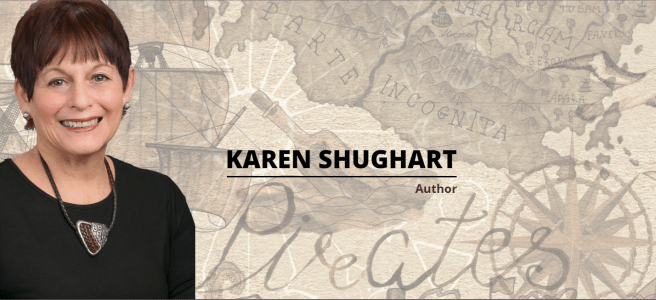
It Never Rains in Southern California by Karen Shughart

We just returned from a visit with our son and daughter-in-law, who live in southern California. There was a song in the 1970s entitled It Never Rains in Southern California, and although the lyrics did not particularly inspire joy, the title is apt, it truly hardly ever rains in southern California. As my son reminded me when I mentioned how nice it was to not have to deal with the inconsistent weather events like blizzards and blinding rainstorms like we do here in the northeast, he reminded me that California has plenty of their own climate issues: mudslides, fires, earthquakes, and damaging winds. Good point.

During our visit we sat under a pergola in their backyard and snacked on tangerines picked from a nearby tree. One night for dinner we ate freshly-caught Pacific salmon with lemon slices we plucked from another. Avocados, plentiful in that part of the world, hang heavy on branches drooping over fences A bottle brush tree with vivid red flowers and clusters of bright yellow daylilies attract a multitude of hummingbirds and Monarch butterflies. The air is redolent with sun-ripened foliage and the salty brine that drifts inland from the broad, blue Pacific Ocean.
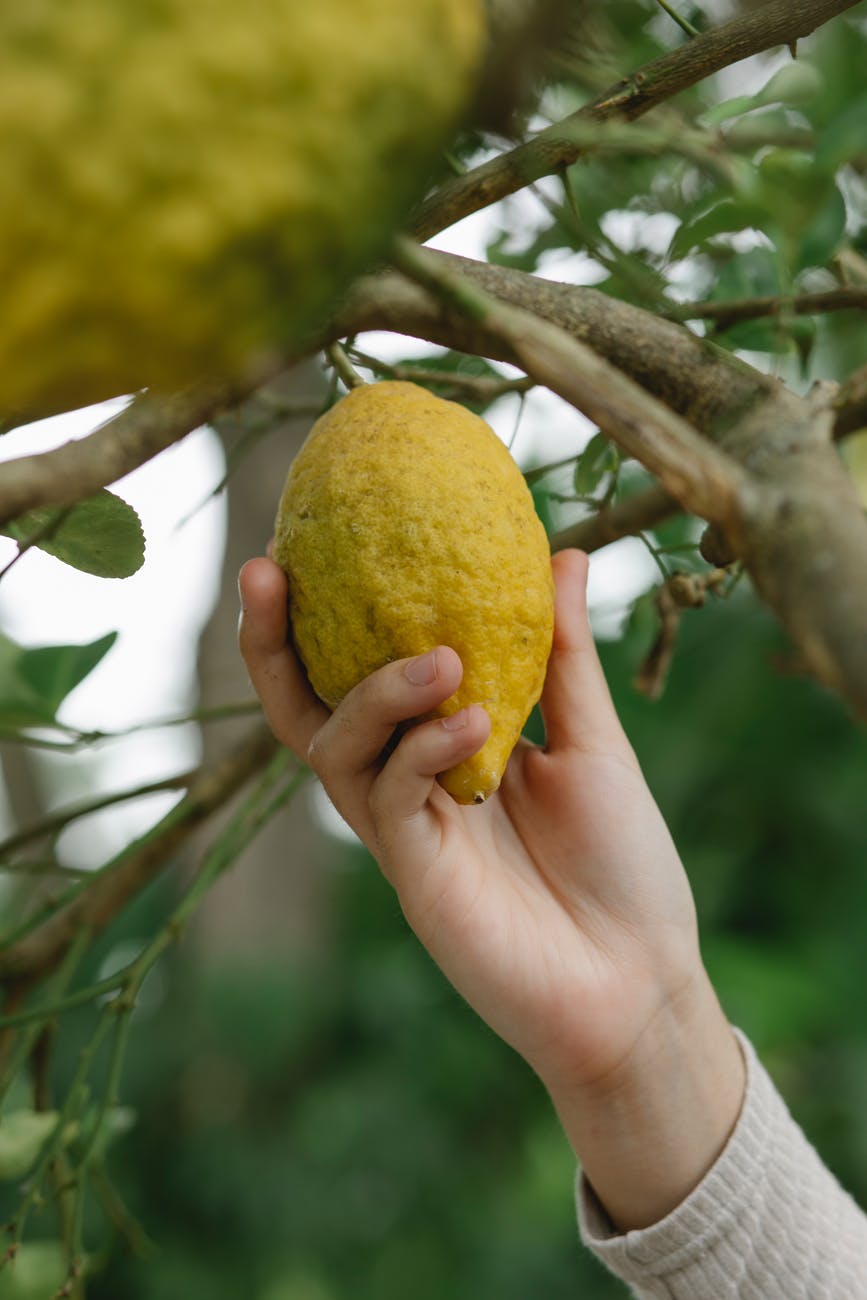
Photo by Gary Barnes on Pexels.com

We arrived back in New York to a gray, cloudy day with a drizzle of fine rain and yet, when we pulled into our driveway, our daffodils and forsythia were beginning to bloom, the hyacinths were emerging from the earth, and nestled in among our own burgeoning daylilies were bright, purple violets, signs that spring is surely on the way. While the weather is fickle, each day here brings a surprise; now some days are warm and bright, on others, winter doesn’t want to lose its frosty grip.

I thought about how climate and weather affect writing. My Cozies are set in a small village along the south shore of Lake Ontario, much like the village where we live.  Four defined seasons provide the setting to the mysteries:  a dark, stormy, windblown night is a metaphor for what’s to come, as is the juxtaposition of bright summer days and a murder that’s occurred in a lush garden setting.

If we lived in California, I would still be writing Cozies, but they would different. Mine have a backstory based on the history of our state: the Revolutionary War, the War of 1812, the Underground Railroad, to name a few. If we lived in California, I’d choose Spanish Missions, the Mexican American War, or the Gold Rush.   The setting, too, would change. A California beach town and one on Lake Ontario have few characteristics in common, our beaches are rocky and not as wide, we don’t have sidewalks and parking lots along the water, and the distance across the lake to Canada is a mere 80 miles, compared to more than 6,000 to China. We do, surprisingly, have pelicans, but we’ve never seen a whale. Still, it’s fun to contemplate what I’d do differently if my mysteries were set in a part of our country where it never snows, hardly ever rains, and the sun shines almost every day.

On A Writer’s Responsibility…


by Janis Patterson


The other night The Husband and I were out to dinner with some of his friends whom I knew very slightly. The wives were nattering on about something so totally mind-numbing that I was half-way listening to the men. They are all sport rocketry enthusiasts – something I know very little about and personally find watching paint dry much more interesting – and were taking about the various propellants used in rocket engines.


One of them laughed about a particular one and said if they weren’t careful they could make a pretty nifty bomb using XYZ. Perhaps unwisely, I said yes, they could, but it would be foolish, as XYZ was disproportionate in explosive value versus weight/size besides being so basically unstable that it was very dangerous to use in the quantity needed to do any significant damage. Plus, it would need a special detonator that would be very easy for the police to trace.


Startled, they all looked at me as if I had lifted my sweater to reveal a suicide vest. The Husband was quick to enlighten them, saying that I was a novelist and that he had helped me research explosives for a work in progress. Obviously intrigued, they peppered me with questions about various fuels and propellants and their non-rocket related destructive capabilities, then became rather petulant when I refused to answer them as completely as they wished.


I probably could have answered all their questions sufficiently to give them a great deal of destructive knowledge, but even though these were all decent and law-abiding men, I didn’t. Why take the risk if I were wrong? Besides, I never tell everything I know, either in print or in person.
Why? Because I write novels, which should be momentary escapes for ordinary people – not technical manuals. I long ago decided that I should never put anything in a story that someone can use to hurt someone else. The idea, yes, or I wouldn’t have a story. Enough facts to have a feeling of verisimilitude, yes. A blueprint, no. There’s no way I can stop people bent on destruction from seeking out all the information they need about any kind of killing tool – and it is out there if they’re determined – but I don’t have to help them.


For example, years ago at an NRA convention I met a salesman who, on finding I was a mystery novelist, delighted in telling me how to get a ballistically clean and therefore untraceable bullet – i.e., how to kill someone with a bullet that had no rifling, no striations, no markings at all. He seemed so proud of himself and then asked me when I put that in a novel would I mention his name. Horrified, I told him NO most definitely, then begged him not to tell anyone else.


I write about crime. I want to entertain, and entertain only. I don’t want to teach or make it easy for some demented person to eliminate another without leaving clues. Sadly, that made the third way I have found to have a ballistically clean bullet. Those who want to can find the information if they search assiduously enough, but I don’t have to help them.


I believe it is the writer’s responsibility to entertain, and perhaps maybe even teach some (hopefully benign) facts. It is not our responsibility to become an instructor – and therefore, in spirit at least, an accessory.


So – I imitate my betters by using selective censorship and obfuscation. Some of my characters do horrible things, but while readers are given enough facts to know what is happening, none are able to recreate the crime. At least, not from what I write. Not everyone out there – especially on the internet – is so responsible. And that is sad.

Never Too Old

I think back to my childhood every time I find myself digging for more information. I loved school and learning. While math wasn’t a favorite and I struggled to be proficient in it, I understood it was necessary to learn the basics. In the fourth grade every evening while my mom and I washed and dried dishes, she would quiz me on the multiplication table. And today, I can pretty much spout out the correct answer with a few minutes to pull numbers out of my filled brain. 😉

Writing books has been my way of continuing to learn and fulfill my love of research and discovering new things. From the occupations my characters have:

Vase by Olaf

Shandra Higheagle, my Native American potter character, gave me the opportunity to spend time with ceramicist Ted Juve, or Olaf, the name he signs to his work. He taught me the process of extracting pure clay from clay soil that he uses for some of his pieces and the method my character uses for her art pieces.

My character Gabriel Hawke allowed me to spend a day with an Oregon State Trooper with the Fish and Wildlife Division in the county where I have my stories set. That was an eye-opening day with lots of notes taken as we drove around the county. He gave me insights into the job and some incidents that he had been a part of.

My newest character, Dela Alvaro, is taking me into the world of Tribal run casinos and the life of a lower limb amputee. Both new things to me and I’m soaking in all I can learn from many different sources.

This month I am also taking an online workshop from a retired law enforcement officer. He has over forty years law enforcement and what I appreciate the most is he has worked with lots of different law agencies and knows a lot about how different states handle things. And if he doesn’t know, he knows someone who can give us the correct answers.

The workshop started out with him attendees some law enforcement information and then he gave us the first responders view of a murder scene. We are now not only learning the whole business of processing the area and starting the investigation but also being asked along the way who we think might have killed the victim and why. He not only has us using our minds to learn, but to be creative in what we think might have happened or how it would have happened if we wrote this in a book. I like learning two things at once!

This workshop came at a good time for me. I sent out my most recent finished WIP (work in progress) to my retired LEO beta reader. He found fault with three different scenes. Two, I will learn about from this workshop. The third…is harder. It goes to the core of being a policeman for decades. I was being too soft. My character isn’t soft, so I can’t have him acting like I would act. He is tough and knows when his life is in danger he must react as he’s been trained. Another lesson learned. Did I say I like learning new things?

The reasoning my beta reader gave me made sense. It just didn’t work for the scene to come later, so I had to rewrite the scene to keep my character from killing someone they needed to question. I had my LEO wounding the man. But with an AR rifle aimed at him, my character would have “tapped” the suspect three times. (tapped=three quick shots to the torso) Which would end up with a dead, or close to dead, suspect they needed to question. I changed the scenario to the suspect realizing he was shooting at police and surrendering. He wasn’t the bad guy they were after, which the police discover after questioning him. Whew! That scene was rewritten three times before my beta reader gave it a thumbs up.

But he also questioned my character never giving the people he brings in for questioning Miranda Rights. That is why I am taking this workshop. To learn more about that process and how I can incorporate it into the books at the correct time.

There is always a need to learn something. And I love drinking it all up and using it in books.

As a reader do you like to learn while you are entertained?

As a writer do you feel the need to learn and get things right in your books?

Creating a Protagonist by Heather Haven

When I was creating the protagonist for my Alvarez Family Murder Mystery Series, Lee Alvarez, I made some pretty radical decisions. Mainly, I knew what I didn’t want. I didn’t want to have someone who was snarky, who didn’t get along with anybody, especially her family, and only had one black skirt tucked away in the back of her closet. I wanted her to be a more outgoing, positive person. Also, I wanted a definite ethnicity. Lee’s mother, a Palo Alto blueblood, fell in love with and married a Mexican immigrant. Thus their children, Lee, and her brother, Richard, are Mexican-American. I am Italian-American. Many of us are a blend. It’s the great American way and I love it.

I particularly wanted to have a central character that was identifiable but different, off-kilter, and likable. Lee Alvarez isn’t your typical protagonist. Yes, she’s in her mid-thirties and once divorced. But she’s now remarried to a handsome, retired Navy SEAL, because I am from the school of thought that believes a woman CAN have it all. At least, in my books. Lee’s smart, talented, and loves dancing, handbags, and a good joke. She knows her own worth but has her moments of self-doubts. They seem to hit her when least expected, often like they hit the rest of us. Every day, as she chases down a suspect, she strives to be a B&BP (bigger and better person), knowing full-well nobody’s perfect. Except maybe her mother, Lila Hamilton-Alvarez, who’s never had a bad hair day in her life. And try living in that designer-clad woman’s shadow.

Lee reads Dashiell Hammett detective stories and watches old black and white movies on TV while searching the web. She loves peanuts and a good, classic martini i.e., gin, vermouth, orange bitters and 3 olives served icy cold, straight up, please. I’ve created a real, today kind of PI, California-honed, who’s educated but has her moments of stupidity. I can absolutely relate to her.

Much to her mother’s horror, Lee likes to shop at consignment stores and wear sweat clothes around the house. She also has a bit of a crush on the late Humphrey Bogart because you may be dead, but you can still be great in Lee’s book. Her character traits are unique, her relationships with her family quirky, but real and, I hope, well-crafted. After all, a murder mystery should be a well-written novel that just happens to have a dead body or two in it done in by an unknown assailant.

Developing the plot is different for me. I have no idea where that will come from. For instance, the second book of the Alvarez Family Murder Mysteries, A Wedding to Die For, came about after reading a story – so bazaar I could hardly believe it was true – in National Geographic. Sixty-plus members of an Egyptian Family were arrested for pilfering from a lesser known Egyptian king’s tomb and had been doing so for generations!

This extended family would take one article, sell it on the black market, and spread the wealth among themselves, leading to better education and opportunities. After several decades, many of them came into positions of importance, in museums and customs, thereby ensuring even greater success. They were caught after years of staying below the radar, when one of them got greedy and substituted a fake for a real antiquity in a museum at which he was the assistant curator. It blew the whole thing wide open. I was mesmerized by this story! I transferred this renegade family to Mexico, threw in a wedding gone awry, a falsely accused groom from the States, and was off and away! It was a lot of fun.

But at the heart of all the stories is my protagonist and her familial relationships. They are all in all. And thankfully, most of my readers like to see what’s going on between Lee and her kith and kin. They like the fact that nobody is deliberately mean, that they try to do right by one other, and they genuinely enjoy being in their own company. I like that, too. Let’s face it. Life’s too short for all this harboring of ill will. Even in fiction.

The Not-So-Distant Past

Left Coast Crime 2022 is coming up in Albuquerque, and I’m on a panel called “20th Century Historicals.”

A historical novel is defined as one that has “its setting in a period of history and that attempts to convey the spirit, manners, and social conditions of a past age with realistic detail and fidelity which is in some cases only apparent fidelity) to historical fact.”

Another definition, from the Historical Novel Society, says a historical novel is one set fifty or more years in the past. I moderated a similar panel at an earlier LCC, and one of my panelists had written a mystery set in 1967. That was sobering. I graduated from high school in 1967.

I write a series of historical mysteries featuring Jill McLeod, who is a Zephyrette, or train hostess, working onboard the California Zephyr, a historic train that ran during the 1949-1970 time period. The first book, Death Rides the Zephyr, takes place in December 1952, with subsequent books set in 1953.

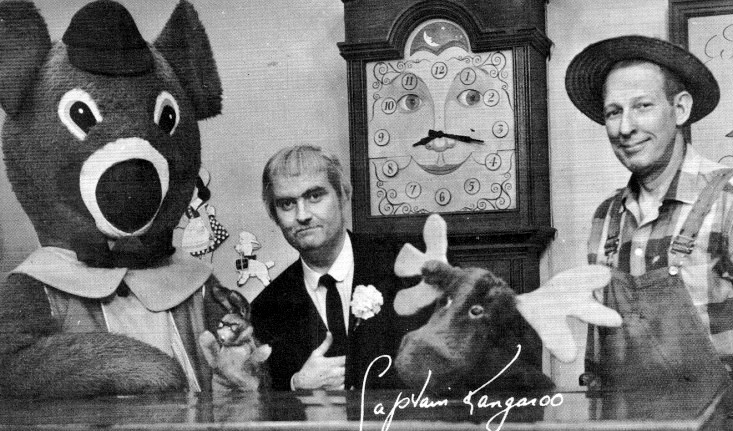
Since I’m old enough to have graduated from high school in the sixties, I was certainly alive in the early 1950s. But I was a kid. What I remember is a mixed bag—Captain Kangaroo and Miss Frances and the Ding Dong School on television. I figured out that the days were getting longer in the spring when I realized that it was still light outside when I tuned in to The Mickey Mouse Club.

Ike was president. I don’t remember much about the Red Scare, the McCarthy hearings, and the Rosenbergs. My school was segregated. So were the downtown department stores. I remember seeing signs for segregated rest rooms and water fountains.

In The Ghost in Roomette Four, there’s a scene where Jill and her sister are cleaning up the kitchen after a family dinner. Were they doing those dishes by hand? Or did the McLeod family have a dishwasher? When I was growing up, we did have a dishwasher. But that was later in the Fifties and my dad sold appliances.

That’s when I turn to the Internet. Off I went to my search engine, to find out when dishwasher hit the market. I was surprised to learn that the appliance was available in the Thirties.

An example of what happens when 21st century assumptions bump up against writing 20th century historicals? When I was researching Death Rides the Zephyr. I was fortunate to discover two retired Zephyrettes living near me. One evening, I bought them dinner and listened to them talk for over two hours. I asked what the onboard crew of the California Zephyr would have done if they’d found a dead body in a Pullman car, which is what happens to Jill, my Zephyrette protagonist. Would they radio ahead to the next station to contact the authorities?

The Zephyrette who had been riding the rails in the early Fifties shook her head. Back then they could radio from car to car, but not as far as a station or a town. No, the engineer would stop the train, the brakeman would climb a telegraph pole, and send a Morse code message to the next station.

That’s how it was done way back when. Of course, that went into the book. It made the telling more accurate and certainly added layers to the isolation of a train deep in a remote mountain canyon.

If you are attending Left Coast Crime in Albuquerque, check out my panel. It’s schedule on Thursday, April  7, at 1:15 PM on Thursday, April 7. The panel is moderated by Susan McDuffie, and fellow panelists are Michael Kurland and Rosemary Lord.