New Member

To fill in the fifth Monday of the month, I’ll introduce you to our new member.

We were sorry to see Sally Carpenter leave the Ladies of Mystery, but I’m excited to say I found some to take over her day.

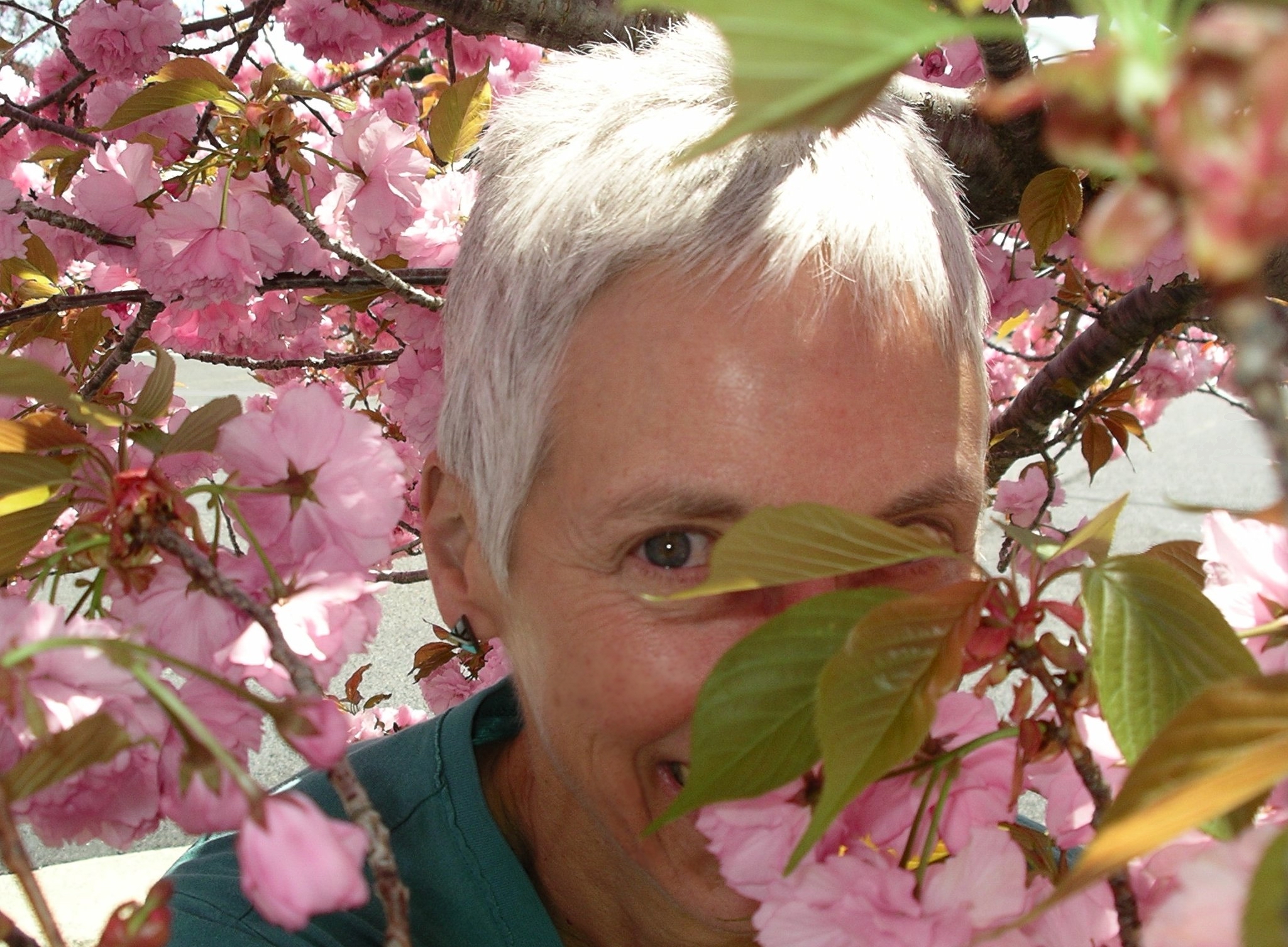
Lisa Leoni is a writer I’ve known for many years. I met her when we were both members of the Salem, Oregon chapter of Romance Writers of America. We roomed together at a conference and spent time together being officers of the chapter.

I moved on from RWA and began working on writing mysteries, not realizing Lisa was too. When I discovered she is writing mystery books, and then Sally said she’d like to step down from the blog, I immediately thought Lisa would make a good addition.

Lisa will have her first post on this blog next Monday, the first Monday of every month. I look forward to hearing what she’ll have to add to the blog.

Here is her bio: Lisa has found a way to combine her lifelong love for happily ever afters and her (un?)healthy fascination with crime by writing cozy mysteries. She writes cozies set in her own backyard of the Willamette Valley of Oregon and writes contemporary romances set in Scotland. When she’s not plotting ways to murder people, she’s being herded by her ginger cats and juggles a dozen craft projects.

Welcome, Lisa!

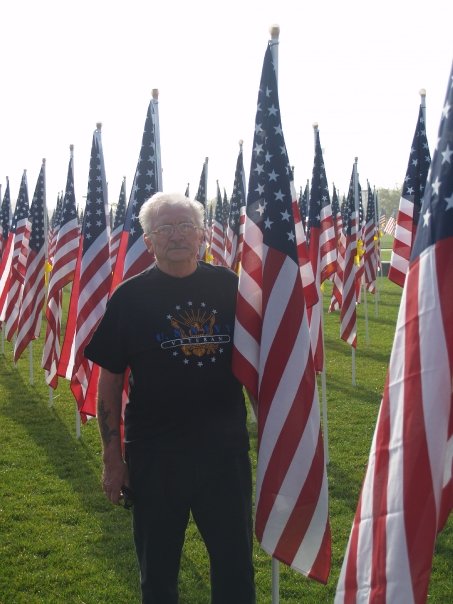
TODAY IS MEMORIAL DAY by Marilyn Meredith

Because it’s long holiday weekend, too many forget this is the day to remember all those who gave up their lives in wars for our freedom. My husband served 20 years in the Sea Bees, including 3 tours in Vietnam. We were fortunate as he came home to us, unlike so many other families who suffered great losses.

Though my husband loved his time serving his country, it wasn’t so pleasant for me. We had a big family—ultimately five children. Often, I was the only parent at home.

There was never enough money. I got my monthly allotment check and I had to buy food for the whole month and budget wisely. There were times I went to work to supplement our income. Usually I ended up splitting whatever I made with the babysitter.

The only reason I decided to share the above information, is that there are many military families still going through separation and not enough money. At this time, we have two family members who are married to service men and have children. I believe the pay is better than what it was during my time as a military wife—but I sincerely doubt that it’s enough. And for those who’ve lost their husbands (or in some cases, wives), I’m willing to bet besides the emotional struggle there are monetary ones too.

Yes, I know that is neither writing nor mystery related, just something I felt compelled to share.

At this time, I’ve been busily planning three book signings—one in my little mountain community at a local coffee/sandwich shop, one in the closest city in a wonderful chocolate store, and one at a museum in Tehachapi—the setting for Spirit Wind. This is the latest in the Deputy Tempe Crabtree series.

Fortunately, Spirit Windhas received some great reviews.

Marilyn

Available in trade paperback and on Kindle.

Pantsing the Revision

That wasn’t the plan. I was cutting subplots, cutting back to one point of view, and changing some aspects of the crime, and I thought it would all work out in a predicted direction. Then I introduced a certain secret earlier in the plot, and out of the blue, my protagonist, Mae Martin, made a decision that changed everything.

It was a well-timed decision on her part, plot-wise. I’m at the Act Two/Act Three transition point, where the protagonist has to pass through her second doorway of no return. This choice she made, seemingly without my input, will raise the stakes for her exponentially, increasing the risks to her relationships and her reputation. It’s something only she can do, and if she doesn’t do it, there are risks to other people’s well-being. It’s a choice between two “bads.” (Meanwhile, in her romantic life she’s struggling with the choice between “goods.”)

The amazing thing to me about this unexpected turn she took is that it’s going to tie up all the loose ends, when it’s resolved.

At least, I think so.

I keep chapter notes as I go, something like a hindsight outline, noting Mae’s goal for each chapter and scene (I’m writing third person but only in her POV), the disaster or hook at the end, the loose ends each chapter has created that will need to be tied up, and the progress in the main plot and subplots. I suppose I can consider some of those notes a plan, since a few are quick sketches of what I can see coming next, but I can’t see very far ahead. Some parts of the original version have found their way almost whole into this revision, and others still might. I wonder if the end will. I liked it the first time around, but it may no longer fit. One of the biggest mysteries in writing a mystery is how my creative mind works.

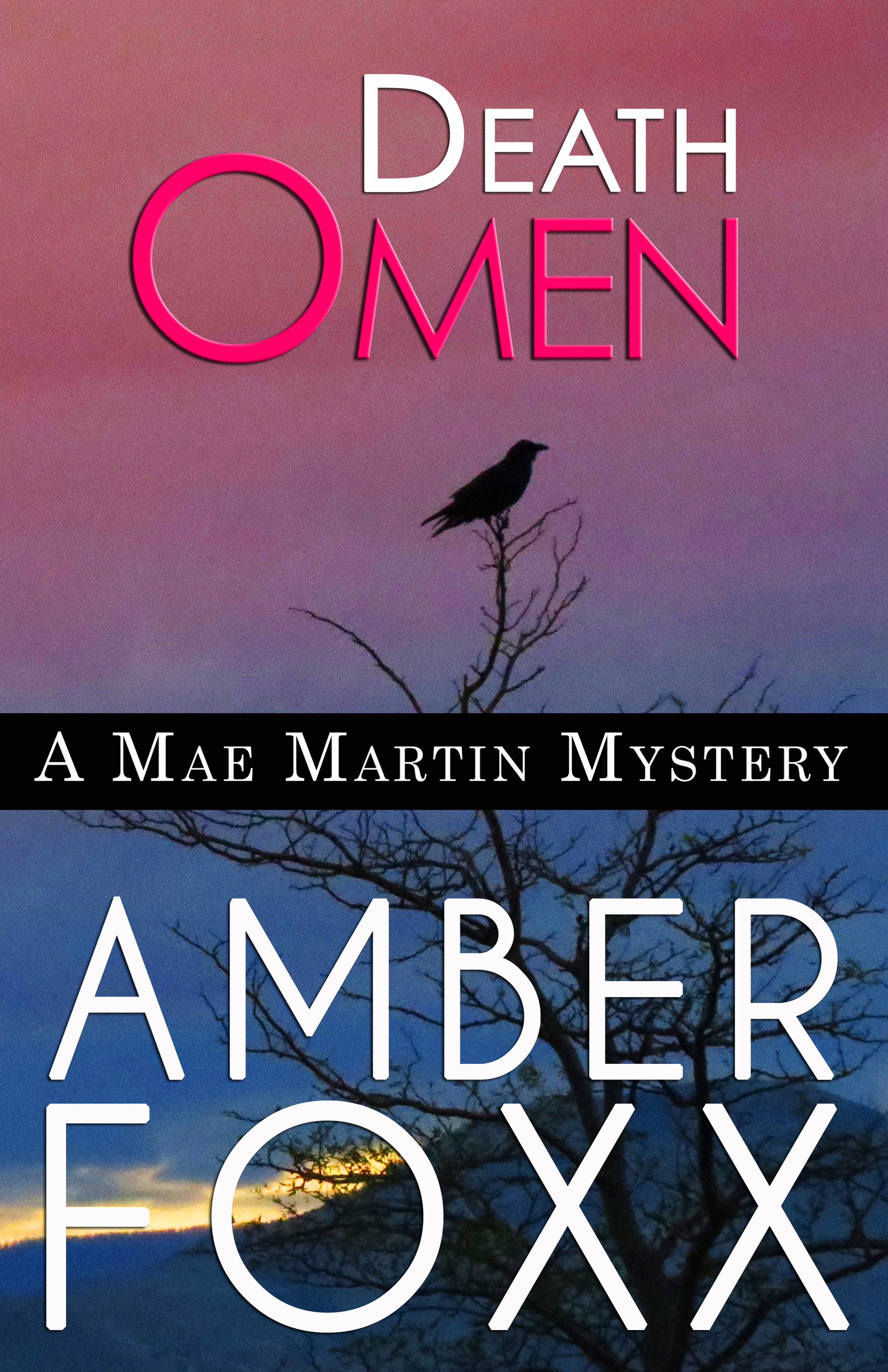
A character in the work in progress used a phrase I didn’t expect him to say, referring to certain people as his and Mae’s “shadow families.” In the middle of the night, I realized that could be the title. It fits the plot and also the pattern of my titles: two words with a mysterious ring to them, suited to psychic mysteries without murder. The Calling, Shaman’s Blues, Snake Face, Soul Loss, Ghost Sickness, Death Omen … Shadow Family?


Voice and Word Choice by Paty Jager

Voice is the author’s style, the quality that makes his or her writing unique, and which conveys the author’s attitude, personality, and character; or. Voice is the characteristic speech and thought patterns of the narrator of a work of fiction.”

This definition I pulled off the internet helps define Voice, but I’m going to dig a little deeper.

Each genre, historical or contemporary, western or mystery, I have to think about the “voice” I need to use for each one. I know the example of voice says it conveys the author’s attitude, personality, and character- true, but that has to also fit the time period and the place- historical or contemporary western. Jeans in a historical are called denims or overalls – in a contemporary they could be call Jeans, Wranglers or Levis.

This also goes along with word choice. The writer needs to know if a word was used in 1880 or if it didn’t become popular until the 1900s. When I type a word when writing an historical, and it feels modern, I use online etymology, a website where you can type in a word and it tells you when it was first used and the meaning of the word at that time and later.

Same goes with my mystery books. I use terms that are contemporary but try to include a bit of a western feel or voice to the books. I do this because they are set in rural areas and because my main characters are Native American, which also leads me to think about phraseology when writing from their points of view.

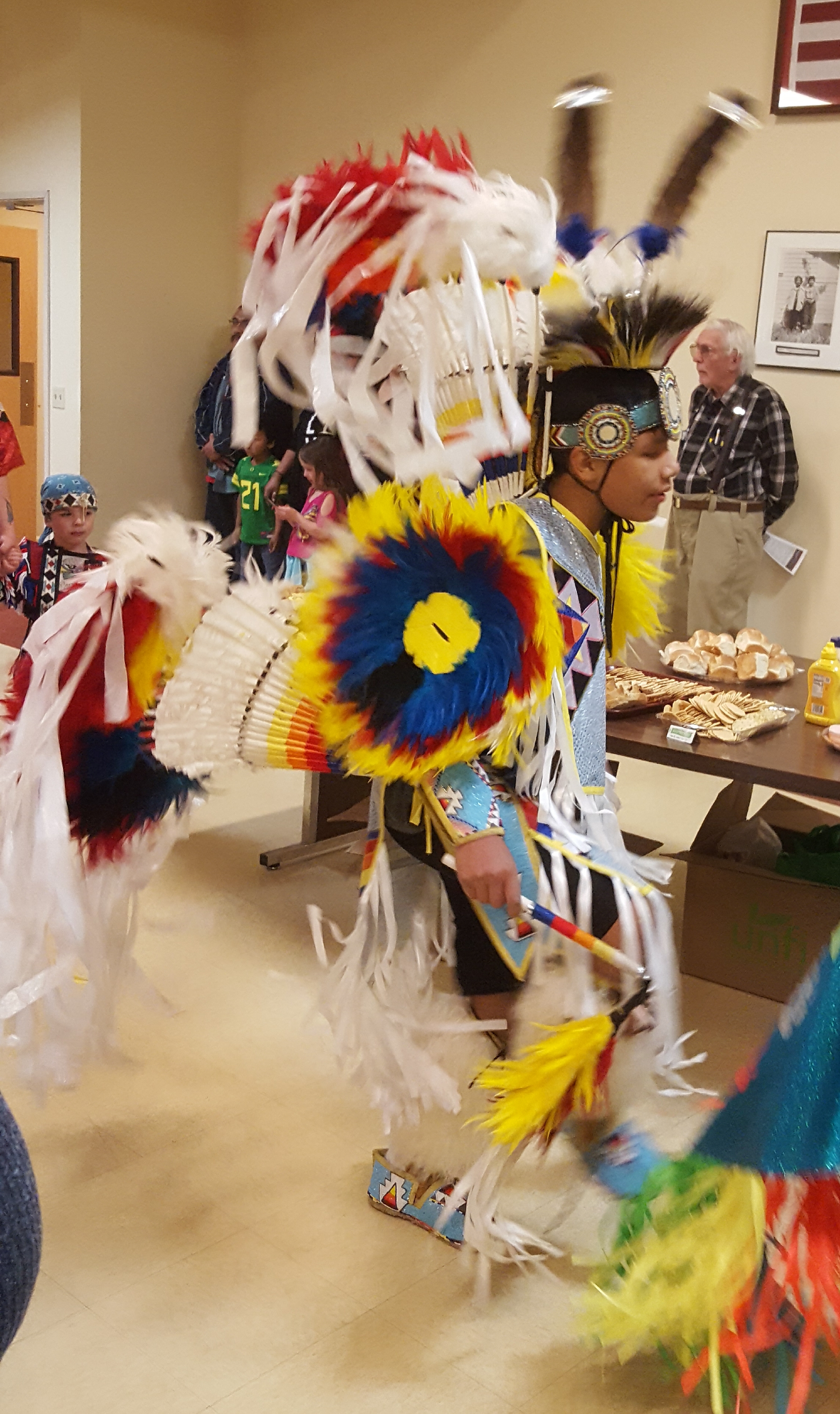
Paiute Fancy Dancer

Especially, my Gabriel Hawke character. He grew up surrounded by his culture, and therefore, has a deeper connection to the outdoors and the earth in general. While writing in his POV, I try to make sure his inner dialog as well as what he says to other characters captures that essence. 

Shandra Higheagle, while having the love of the outdoors and making pottery from clay she digs on the mountain where she lives, she grew up in a white world and is only now learning how deep her roots go in the earth. And because of this, she is easier for me to write because I can include my wonder of the Nez Perce and their culture to be reflected in her as she is coming to know more about her family.

When I sit down to write a book, depending on the genre, I have to mentally put myself in that time and place to make sure I give the best accounting of the events that are happening and told through my characters’ eyes and emotions. If you read a book from each of the genres I write, you will see there is a bit of difference in voice because I am trying to show the story through their eyes and not mine. But some of my emotions- such as my need to show injustice – will come through in every main character.

Word choice as I commented on earlier, has to do with making sure the word is true to the time and the occupation of a character or knowing what I am talking about. I don’t know how many western romance books- contemporary and historical – I stopped reading because a character grabbed a fetlock to swing up onto a horse’s back, or they grabbed the cantle as the horse started galloping. Or what really had me tossing a book…They put the halter on the horse and slid the bridle into its mouth. The writer needs to know what they are writing about. If they don’t know, they need to look it up. I spend a third of my writing time looking things up. Even if I think I know it, I still look it up to be sure. And while I’m looking it up, I might find a better word that makes the scene sound even more convincing.  

Words are what make up a book and they need to be thought about carefully. Just as carefully as the characters that are fabricated to show the story.

blog / websiteFacebook / Paty’s Posse / Goodreads / Twitter / Pinterest   / Bookbub

Don’t Call Me – I’ll Call You

by Janis Patterson

I have been accused – and pretty much rightly so – of being a Luddite. Technology for the sake of technology has never attracted me, especially when it interferes with my life. Now I love my computer, love the ease of word processing, love the ability to publish both ebooks and paperbacks with the tap of a finger. That’s practical and useful.

By contrast I do hate telephones. And every day I hate them more. Not really telephones, per se, but telemarketers and most especially robocalls. Just what makes these people believe they have the right to interrupt what I am doing at any given moment and use an instrument and a service for which I am paying to advertise their wares, which I neither need nor want? It’s also insulting for them to imply that if I do need/want something I am not smart enough to go find whatever it might be by myself, that I need them to bring it to me.

Robocalls are the worst. You can’t even get the satisfaction of reaming out the caller, and since they don’t give you a phone number (at least, I never stay on the line long enough to find out if they do) there’s no way to report them to the National Do Not Call list. Which is a joke – a bad joke – anyway. When it first came out I was religious about reporting every single unwanted call  – which might have made me feel righteous, but which did absolutely no good. As a taxpayer I am furious that my tax money (for which I work very hard) is being spent on something that does nothing. (Which, when expanded, becomes a whole other post, probably unacceptably political.)

I don’t respond to robocalls. As soon as I realize that it is a robocall I hang up, and I don’t care from whom it comes. It’s taken me a couple of years, but finally I have my doctor and my dentist trained that if they want to communicate with me, they don’t do it through a robocall. My dentist emails me, and my doctor has her office receptionist call directly, both of which are infinitely more civilized and human systems than a robocall. I don’t talk to robots.

Of course, I could just turn off the phones when I’m working, but aside from the fact there are elderly people in our family for whom I am responsible and need to be available to them, WHY should I have to? It is my telephone, my line… in order to get my work done why should I be forced to deprive myself of a convenience for which I am paying? If Congress really wanted to help the American people, they would make all sales, charity and political calls – in other words, all solicitation calls – illegal and back it up with gigantic penalties/sentences for offenders.

As a mystery writer with a definitely twisted mind, I cannot help but dream of ways to get my own back on those unwanted robocalls, especially when they yank me away from something important. So far the best (and least bloody) idea I’ve had is a disrupter. Remember back in the early days of answering machines when you carried around a plastic box about the size of a package of cigarettes? When you wanted to check your messages you’d call your phone and after the outgoing message began you’d hold the box next to the mouthpiece, press a button and your messages would play. I dream of a similar set-up, but with my idea when the robocall begins, you press your disrupter device and the robocall machine burns out, unfixable and never to be used again.

Of course, there would be dangers, like could the disrupter signal be traced back to the call it was making when the call machine imploded – i.e., to my phone number? However – I know we have the technology to make such a disrupter, so I can only hope that the technology also exists to protect the poor inundated recipient of such calls who has been driven to madness because of such unwanted interruptions. Sigh. Hopefully someday. Whoever invents such a device will make a fortune. And in my opinion, use of such a device would be guilt-free. I am on every no-call list that exists, and if the offender ignores the law to try and sell me something, why shouldn’t I be able to ignore a law to protect my privacy?

I repeat – I pay for my telephone service and instrument because I want a way to contact and be contacted by those with whom I wish to talk – not to provide a free venue for strangers to try and sell me something I neither need nor want. Surely there is at least one mystery plot somewhere in this muddle of obtrusive criminal (yes, criminal – they steal my time and use of my line and instrument) vs telephone owner. Perhaps if everyone wrote one the telemarketers/robocall bosses might get the idea we’re mad as h*ll and won’t take it any more!

On another note, I would like to say that my YouTube channel is up and running – and I would be most appreciative if you would drop by. It’s called Janis’ Tips and Tales, and a new episode is released on the fourth Thursday of every month. Thank you!