Holiday Recipes from the Ladies of Mystery

Since this is the 5th Monday of the month and we don’t have a person scheduled, we decided to make the 5th Monday or Thursday of a month a day when we gather and give you recipes, talk about our lives, or what is happening that you might be interested in as a group.

Today, because of the holidays approaching a few of us are giving you recipes. These are in the order in which they arrived in my inbox.

CANDIED SWEET POTATOES

Warning, I never measure.

As many sweet potatoes (the lighter yellow ones, not yams) as you think you’re family or guests will eat. Put this in pot and cover with water. Boil until easily pierced with a fork—but you don’t want them mushy. When cool enough, peel, and slice into half or quarters depending upon how large they are. Layer in a baking dish. On each layer put several pats of butter and sprinkle with brown sugar. Be generous. Bake in the oven at 350 degrees for about 30 minutes. If you prepare ahead of time and refrigerate, bake for 45 minutes.

My recipe is something I always fix for Thanksgiving. I like these way better than the canned yams with marshmallows so many serve. My aunt always made these for our Thanksgiving feasts all during my childhood and brought them when I became the host for the big dinner. She is no longer with us, but having them brings back memories of my aunt.

–Marilyn Meredith


From the recipe box of my character Shandra Higheagle

Shandra’s Sixty-minute Cinnamon Rolls

3 1/2 to 4 1/2 cups all-purpose flour

4 TBSP sugar

1 tsp salt

2 packages Active Dry yeast

1 cup milk

1/2 cup water

1/4 cup butter

Brown sugar to cover the dough

Cinnamon to cover the brown sugar

1/4 cup melted butter

In a large bowl thoroughly mix 11/2 cups flour, sugar, sale, and undissolved yeast.

Combine milk, water, and butter in a saucepan. Heat over low heat until liquids are very warm (120-130 degrees F) ( I use the microwave and a pyrex measuring cup) butter does not need to melt. Gradually add this to the dry ingredients and beat 2 minutes at medium speed of electric mixer, scraping bowl occasionally. Add 1/2 cup flour. Beat at high speed 2 minutes, scraping bowl occasionally.  Stir in enough additional flour to make a soft dough. Turn out onto lightly floured board; knead until smooth and elastic, about 5 minutes. Place in greased bowl, turning to grease top. Cover; place in warm (98 degree F) to rise for 15 minutes.

Turn dough out on floured board and roll into a large rectangle. Spread with melted butter, cover with brown sugar, and sprinkle with cinnamon. roll up long side and cut in 1-11/2 inch slices depending on if you want fewer but larger rolls or more rolls. Place cut side down in a buttered 9″ x 13″ pan. Let rise in  in a warm, free from draft area for 15 minutes. ( I usually fill my small sink with hot water, place a cooling rack over it and set the pan on that with a towel over the top. My daughter uses the warming oven)

Bake at 425 degrees F, for 15 minutes or until done. Drizzle with a milk and powdered sugar glaze.

–Paty Jager


CARAMELIZED VIDALIA ONION DIP

2 T. butter or margarine

3 large Vidalia or other sweet onions, sliced thin

1 8 oz. pkg. cream cheese, softened (can use light)

1 8 oz. pkg. Swiss cheese, shredded (can use reduced fat)

1 C. grated Parmesan cheese

1 C. mayonnaise (can use light)

Vegetable Chips (I use Terra)

Preheat your oven to 375 degrees. Melt butter in a large skillet over medium heat. Add sliced onions and cook, stirring often (30-40 minutes) or until onions are caramel colored (scrape the bits from the bottom). Combine all the cheeses and mayo in a large bowl and add and mix the cooked onions. Spoon into a baking dish and bake about 30 minutes or until the top is browned and bubbly. Serve with the veggie chips.

Make ahead: You can make and assemble the dip the day before, put into the baking dish, cover and refrigerate. Bake as instructed above but for 45-50 minutes instead of 30 minutes.

–Karen Shughart

Murder in the Museum: An Edmund DeCleryk Mystery and soon-to-be released Wheel of Death,  a mystery by 22 authors.

photo source: canstock
Undermind at Work

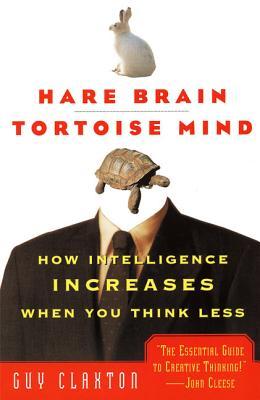
That’s not a typo. I have not been undermined at work. I’m rereading Guy Claxton’s Hare Brain Tortoise Mind, and he refers to the slow processes of creativity and insight as the undermind—the part of the brain that’s working beneath the level of verbal expression and logic, the part that can detect patterns the conscious surface of the mind misses. The part that creates what the surface mind cannot. I read the book eighteen years ago when it first came out, but I wasn’t writing fiction back then, just academic research papers. I perceive its ideas differently now.

On this reading, I see in it an explanation of how pantsing a plot works. Those of us who write that way often marvel at how we laid clues we didn’t know were there and how we brought in characters whose purpose was unclear at the time, but who later revealed why they showed up and asked to be included. The undermind is best at solving complex, ambiguous problems and recognizing hidden patterns. The other mode of thinking, what Claxton calls d-mode, for deliberative mode, is better at problems with clear rules and defined parameters. I see d-mode as the revision mind and the undermind as the first draft mind. I’m at a point of indecision near the end of a first draft. D-mode wants me to evaluate my options. The undermind wants me to keep writing and see what happens.

I can apply the concepts of the undermind and d-mode to how my characters solve problems as well.  Claxton describes experiments in which trying too hard, having time pressure, or having too much at stake can all inhibit subjects’ problem-solving and pattern-detecting abilities. The slow, unhurried tortoise mind is better at breakthroughs, and yet the nature of a mystery plot is anything but slow and unhurried. Still, a character may encounter a puzzle early on, be unable to solve it, attend to other problems while the initial puzzle simmers in the back of her mind, and then have a flash of insight. The flash isn’t a flash, though. All along, her undermind was at work. I’ve seen mystery writers use this pattern well, showing the protagonist’s frustrating sense that the solution is near while not quite grasping it yet, knowing that something in the mind-shadows wants to be understood.

D-mode works well while talking because it’s verbal and structured. When characters are doing the logical kind of problem-solving, dialogue is natural. Claxton cites studies in which subjects were asked to solve puzzles and either talk or be silent while they did it. With clear though challenging puzzles in which all the information was present and needed to be analyzed, talking improved the outcomes. However, with insight problems, bewildering visual puzzles that required creative shifts of perspective, talking got in the way or turned into babble such as, “I don’t know what I’m thinking. Nothing. I’m not actually thinking.” Silence gave better results. In fiction, this second process might take place in an internal scene, a sequel or reflection. The different modes of problem-solving could lead to conflict, as an analytical type needs to talk things out while an intuitive type needs to stop talking—and stop listening to words—in order to think.

My preference for creating my first draft from the undermind may be why I like a plot mandala better than an outline. I draw a circle and begin writing character names and story themes in what feel like the right places, then let my undermind connect the patterns among them.

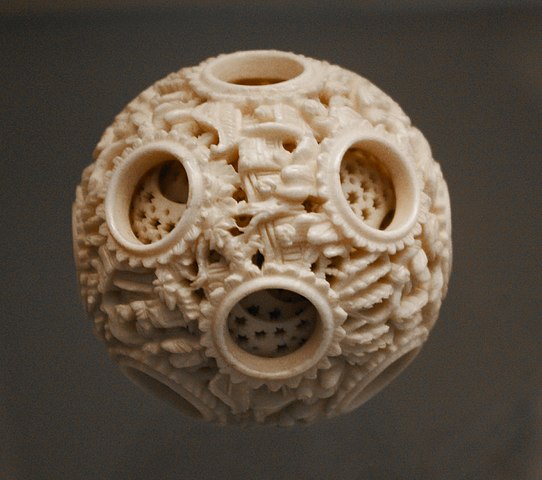
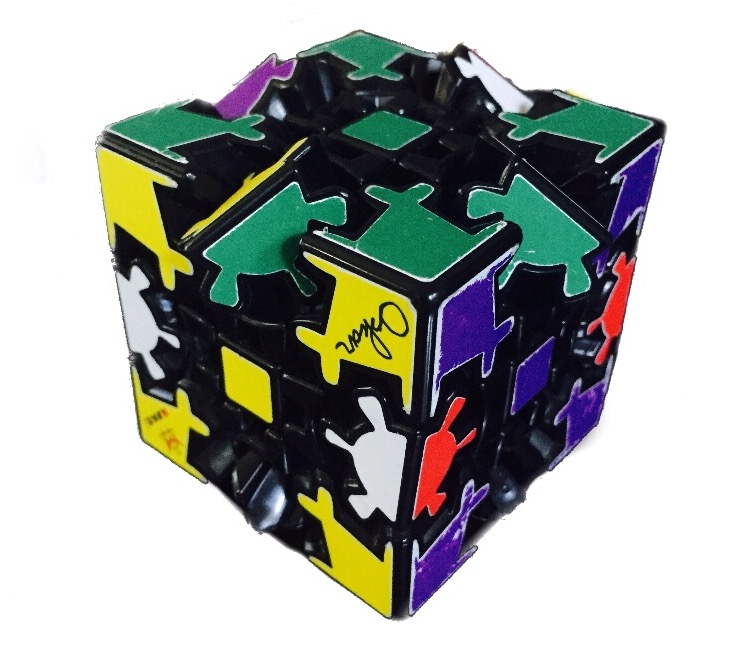
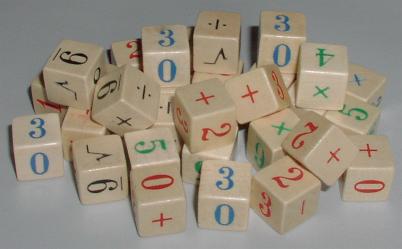
Images: 19th century Chinese puzzle ball with the twelve concentric balls inside; puzzle cube; math equation dice.

Promotion, Not My Favorite Task

As all writers know, promotion is a necessary part of being an author. Necessary if we are to sell our books. Though I can’t speak for ever author, I know that I’d much rather be spending my time writing.

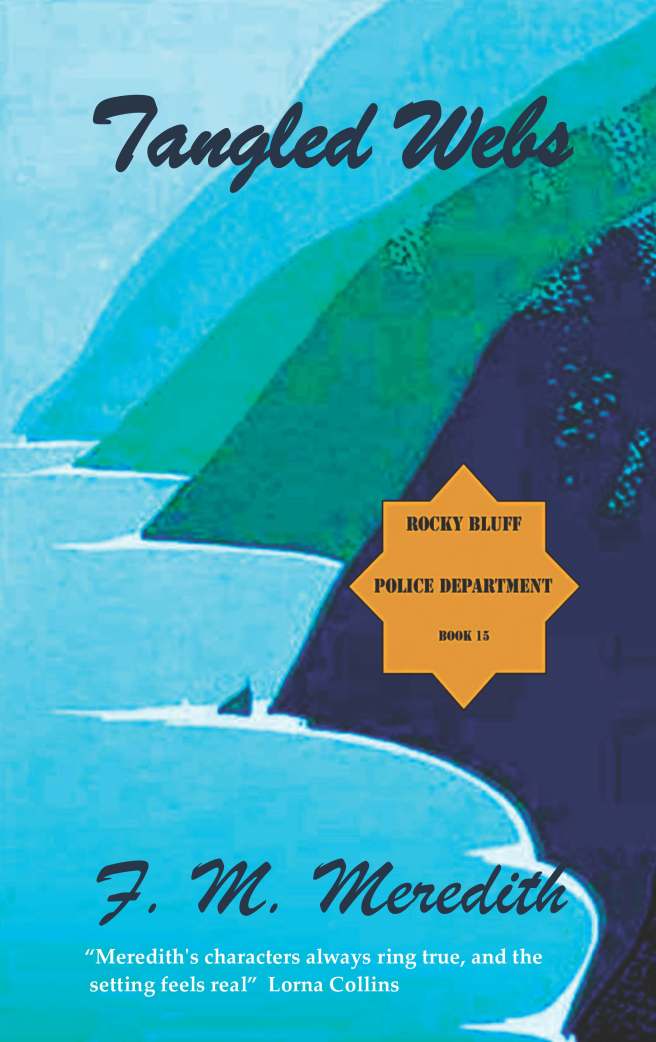
tangled web front cover jpeg

Because I have a new book out, Tangled Webs, I’ve been working hard on promotion. The first thing I did was plan a blog tour which takes a lot of time: finding hosts and setting up the calendar, writing a new post for each place I’m visiting, and sending it off along with a photo of the cover and one of me. The tour begins on October 26th here: https://jlgregerblog.blogspot.com and the topic is “Character Development.”

I’ve been doing several in-person events with more to come: book festivals and craft fairs, mystery panels, and speaking engagements. (I actually enjoy doing these.)

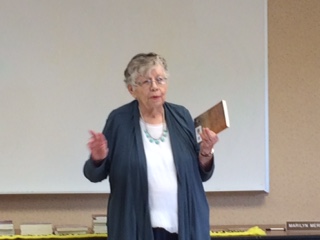
Me at Caruthers Library

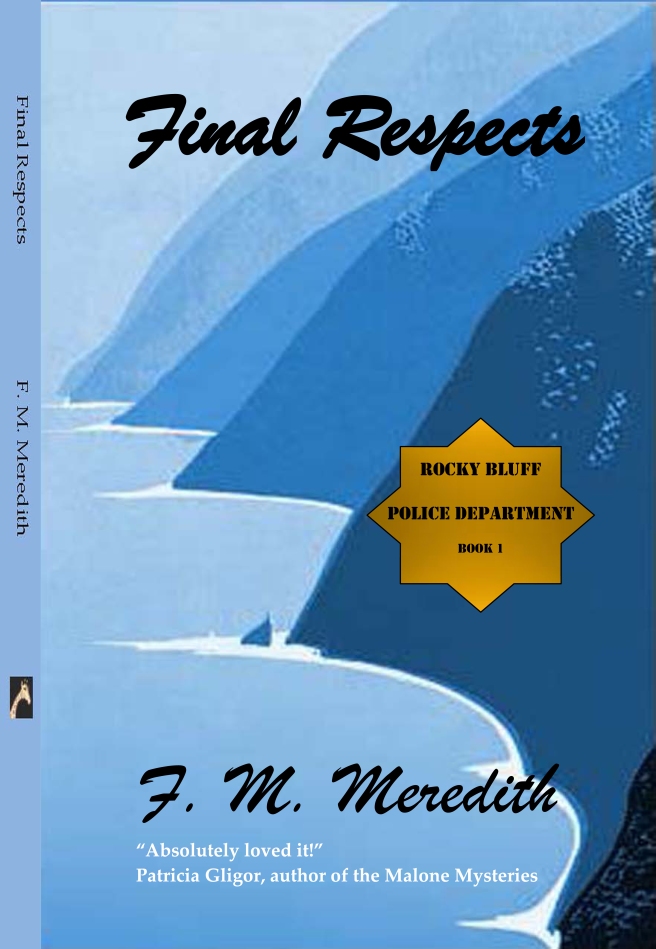
In an effort to interest readers in the series, the publisher has made the first book, Final Respects, free on Kindle from November 5-7. In order for this to work, of course it has to be promoted heavily and I found many sites who do this, some for free, some for a fee. https://www.amazon.com/Final-Respects-Rocky-Police-Department-ebook/dp/B078KFKPJX/ref=sr_1_1?s=digital-text&ie=UTF8&qid=1539027654&sr=1-1&keywords=final+respect+by+f.m.+meredith

perf5.500x8.500.indd

Of course I’ve promoted on Facebook, Twitter and my own blog. How much good any of this does, I won’t know until I hear something from the publisher. And speaking of the publisher, I’d like to share what he printed in the front pages of Tangled Webs.

Tangled Webs is the 15th book in the F. M. Meredith’s  Rocky Bluff Police Department series, and—as you can see on the copyright page—had a publication date of 2018. Final Respects, the first book in the series, was published in 2002, and we at Aakenbaaken & Kent were working on a second edition of that first book just a few months ago. So, we have in effect, been reading this series from both ends. And what stands out are the characters—how real they seem, how they grow and change as real people do, and how—after many books, we realize they are like friends.

In addition to engaging characters, Meredith also delivers unerring pacing, plotting and dialogue. It is no wonder this series has continued for so long and has so many devoted fans.”

Needless to say, I was thrilled.  And with such praise, I will continue to promote as much as I can.

Marilyn, who is also known as F.M.


The Importance of Setting by Karen Shughart

aerial view, architecture, autumn

As I write this, it’s raining. Heavily and steadily. And there’s a bit of a chill in the air. After all, it’s fall, a transition month of warm days, cool nights, brilliant sunshine and cloudless skies; apples, pumpkins, red orange, rust and yellow leaves and a profusion of brightly colored mums. And, of course, there’s also the rain, wind and a sea so noisy we can hear it with our windows closed. I’ve worked all morning on Murder in the Cemetery, the second book in the Edmund DeCleryk series, which is set in the fictional village of Lighthouse Cove, NY. I imagine Ed, and his wife, Annie, sitting in front of a roaring fire at the end of the day, drinking red wine and discussing the case.

Yesterday was different. It was one of those days when you just want to be outside enjoying the crisp fall air and the smell of the decaying leaves. I imagine a reflective Ed, walking on a deserted beach, waves lapping onto shore, cup of steaming coffee in hand.

In the winter my characters take long walks in the snow and meet friends at cozy pubs with wood-beamed ceilings that have parking lots filled with snowmobiles.  They eat hearty food and settle in with a good book in front of the fire.

In the spring the roads they drive on meander through acres of fruit trees covered with fragrant, fuzzy pink and white blossoms, and in summer, you might see them sailing on the teal blue waters of Lake Ontario or watching a splendid fireworks’ display from their decks.

Each season of the year has its own beauty and inspires me to interject that beauty into the plot of the Cozy mysteries I write. I have an affinity to Cozies because of their charm, but also because the reader gets to know not only the cast of characters but also the towns and villages where they live.

Think about Louise Penny’s Three Pines series- would it be as engaging if it weren’t set in a small, quaint Canadian village? And what about the works of Martha Grimes, whose character, Richard Jury, gets help solving cases from friends living in the quirky village of Long Piddleton.  If you’ve ever watched Midsomer Murders (one of my favorite “cozy” TV series), you’ll remember the festivals, concerts and fairs as well as the enticing Midsomer County woods, fields and streams that help set the scene for those murders.

The setting of a book is crucial to drawing the reader into the plot. “It was a dark and stormy night, ….” although comically trite, really does warn the reader that something ominous is about to occur. But then there’s also an intriguing juxtaposition between a day when the birds are singing, the sunrise glorious and all’s right with the world, and a horrific murder that occurs that same morning in dark and swampy woods.

What Makes A Writer? Nature or Nurture?

by Janis Patterson

What makes a writer? Is it genetic? Or the way we are raised? Or something we choose that we feel we must follow? Or all of the above?

To begin with let me say I am the third generation of a wordsmith family. One grandfather was a small-town newspaper publisher in a time and place where that was a position of power. Both grandmothers were at one time teachers. My father was editor and/or publisher of several Texas newspapers, taught journalism at Texas A&M (he also separated the journalism department from the English department and made it a separate discipline) and, with my mother started and owned one of the top 300 advertising agencies in the US. My mother was an English teacher, a play producer and a magazine columnist. I started working in the family agency when I was nine – as a stripper, no less. (And no, it’s not what you’re thinking, but it is a great line to use at a cocktail party!) I graduated to writing copy when I was twelve.

Obviously I didn’t have a snowball’s chance of becoming anything else but some variety of wordsmith!

But was it nature or nurture? Yes, our house was full of books. It still is. The Husband and I live in a house with two dedicated libraries and a hobby room with five enormous bookshelves. For that matter, little drifts of books stacked on the floor and almost every flat surface seem to breed in our house. But not all readers become writers, so I ask again, is it nature or nurture?

I don’t know, but the question did strike me a couple of days ago. I was going through some papers of my late father’s and there, between two of the radio scripts he had written long ago, was a copy of my birth announcement.

It’s a simple thing, a plain white piece of paper with black print with a left-hand fold so it opens like a book. On the cover is the image of a book with the title “Janis Susan – Announcing a New Edition – Best Book of the Year.” There is also a picture of a rather startlingly disgruntled looking stork in a top hat and glasses. I always wondered why he had such a peculiar look on his face.

Open the ‘book’ and it says “The Author and Publisher proudly announce the issuance of their 19XX (no, I’m not going to tell you the year!) edition entitled Janis Susan May.”

Below that, it says “Author – Donald W. May – Publisher – Aletha B. May.”

Below that it says “Publication Date – (the date of my birth) – DeLuxe Edition, with pink and white binding weighs X pounds X ounces (I’m not going to tell you that  either, then or now!). Cover jacket – white, removable. Reprints and Second Editions not available this year.”

See? I was doomed from the beginning. Nature or nurture makes no difference, for when one’s beginning of life is announced as a book, one really has no choice but to become a writer.

In the for what it’s worth department, my father did the announcement himself. He had a telling wit and I personally think the concept hilarious. My sentimentalist mother loathed it and, once recovered from her ordeal, sent out very proper handwritten announcements herself, probably confusing a lot of people as to whether the Mays had had one child or two.

Sometimes, knowing the many dichotomies of my nature, I wonder that myself. But then, I am a writer.