Guest – D.J. Adamson

18c9df8f-826a-4eda-93a2-fc844dea3118  The act of self-promotion. Getting Out There!

I worked in sales and marketing before deciding to self-publish. This background gave me the confidence to go forward. I’d trained many people to successfully sell and market. Combining what I knew before with what I know now, allows me to pass on some of the tips I’ve learned about selling and marketing my books.

At the beginning, I mimicked what others were doing.  I played with social media, went to conferences and networked, purchased promotional packages.  Did I have success?  Some. But nothing that put me on the Amazon’s  “most sales list” or matched Hugh Howie’s numbers.

As a past business person, I know a business needs to eventually run in the black. Maybe not the first year, but eventually.  So after two years, I pulled up my expenses and balanced them with my assets.  DEPRESSING.  Yet, instead of discouraging me, it has motivated me to do it all differently. Here is what I have found:

  1. I no longer go to conferences unless the attendees include readers as well as writers.  Writers don’t buy books. Or very few. I’m a reader and have an addiction for anything on paper.
  2. I go to conferences that are close by and don’t cost a flight and hotel to attend. One conference cost me two thousand dollars and I sold one book. I joined active association, like Sisters in Crime, National Women’s Book Association, SCBWI, Mystery Writers of America. I became active. If I wasn’t active, I generally found excuses not to go to the meetings. Kind of like having a gym membership.
  3. I remind myself that I am as good as my last book. I have received one award and was nominated for another. I have received 4+ stars on my novels. Many Goodreads people “Want to Read” my work. But, sales diminish after the book has been out there for a year. I need to produce one to two novels a year. And let me emphasis, Good Novels. That means, I need to be disciplined in my schedule, working on my writing at least four to six hours a day, and I spend about five hours a week on social networking and promoting.
  4. I used to work many social networks. Now, I am only on Facebook and Twitter. Trying to do it all meant I didn’t do any of it very well.  I also limit how much I promote my books, only doing so when I have a special promotion going on, revealing a new cover or mentioning a launch.  Don’t you thumb right past those twenty posts requesting, “Read My Book”?

I use social networking for networking, not marketing. I meet new people in the industry and by putting myself out there, I am received.

  1. I use my Kindle freebies only before I launch a new book.  I hold maybe one/two .99 cent promotions. I try to do a Goodreads giveaway once a month.  I offer two, sometimes three books.  I send them by camel.
  2. I use snail mail to keep others updated on my new work. I’ve found postal mail more beneficial than email. It takes nothing to hit the delete button on a computer. The person getting the postcard has to see what the card is about and who it’s from before giving it a toss in the trash basket.
  3. I set a dollar limit for promoting a book. If you look around, you’ll realize a whole industry has been developed to swallow author’s dollars, promising to get their books noticed. I have limited my promotional money to $500 a book. I know that sounds low, but I think I have sold more books in this past year than the two years combined. I advertise on free or low-cost sites. Amazon ads have been very successful, and the cost is low. Finding a way to get to readers or promote without spending a lot of money has become actually very fun. I had Fiverr.com create my book trailers. Go to my website http://www.djadamson.com to see for yourself. They aren’t bad. They are also on YouTube, and go figure this, the trailer of Outré has been seen by almost five thousand viewers. Did that turn into sales. Probably not. But five thousand people learned my name. Like a shampoos brand, Clairol. You may not buy it, but you recognize it as a shampoo.
  4. I put myself out there by creating a newsletter. Le Coeur de l’Artiste reviews books and interviews authors. I publish it monthly. It comes out, like any other deadlined project, on the 15th of every month. Sometimes not until midnight, but one minute before, I press the send button. The newsletter has not necessarily created sales, but it has branded my name a bit as a writer. Plus, I find a great satisfaction in promoting other authors.

Stephen King said in his work On Writing that to write you need to read a lot. You need to read what is good and what is bad. I read at least 5-6 books a month, just for the newsletter. I also try to read one or two books on promotion and craft.

  1. I began accumulating email addresses as soon as the newsletter idea came to me. So far, my Le Coeur de l’Artiste list is almost two thousand readers. I don’t promote myself in the newsletter, but it can be found on my website. I also offer it to many readers as a PDF. The newsletter has been so well accepted that I now have a blog, L’Artiste, that spends a little longer with an author and their work. I produce it three times a month. I also include others besides authors: musicians, scriptwriters, playwrights, etc. The blog emphasizes that getting the story out has many forms.
  2. There are great books out there by people offering promotional ideas. Read them all. Take an idea, put it on a card, then try it out. One idea at a time. If it doesn’t feel good to you or didn’t pan out, throw the card away and pick up another.  Don’t be bashful, ask others for their promote stories. I have rarely been told to “beat it.” In fact, I think it’s a writer’s responsibility to help other writers. We all know how defeatist we can feel when things aren’t going well.

I am not sure I was helpful to anyone reading this. I am merely sharing my experience so far. I want to write for a long time, which means I need to be sensible about what I do, both with time and money. It might also sound like my whole life is consumed behind my computer.  I still teach a full load of classes, grade papers, make dinner, clean house, and find the time to give my family a hug. Keeping to a schedule helps manage everything. Plus, I am my own boss when it comes to this publishing gig. If I want to take a day off, I do. I just don’t miss a deadline. Readers might fire me!

Putting yourself out there is the ultimate KEY to being SUCCESSFUL.  Please share with me your promotional stories, both the horror stories and those that gave you some success. You can reach me on Facebook, Twitter, or my Website. And don’t miss the latest issue of Le Coeur de l’Artiste.
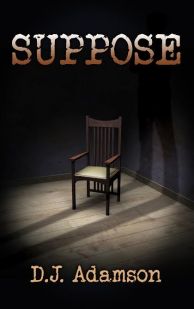
me-3D. J. Adamson is the author of the Lillian Dove Mystery series and the Deviation science fiction-suspense trilogy.  Suppose, the second in the Lillian series has just been released.  She also teaches writing and literature at Los Angeles colleges. And to keep busy when she is not writing or teaching, she is the Membership Director of the Los Angeles Sisters in Crime, Vice President of Central Coast Sisters in Crime and an active member of the Southern California Mystery Writers. Her books can be found and purchased in bookstores and on Amazon. To find her, her blog L’Artiste, or her newsletter that interviews and reviews authors go to http://www.djadamson.com. Make friends with her on Facebook or Goodreads.
 

I Couldn’t Have Done It Without You, or Critique Partnering

Amber in tree final

IMG_1610jordaina1

I have a writer friend who has never used a critique partner or any beta reader other than her husband. She’s done quite well that way, but not all of us could. Whether you’re a writer who hasn’t worked with a partner, or one who has tried the process but not yet found your critiquing soulmates, I hope you’ll enjoy reading about how it works when it goes well. Each member of my main critique team* takes a turn in this post. Although they talk about me more than they mention each other, it’s not because I’m more important in this trio; it’s because I’ve been working with each of them for years, while their partnership is more recent.

Amber

Before I published my first book, I joined an online critique group. I learned much from group members who came and went, but Jordaina Sydney Robinson and I have carried on long after our formal group chose to dissolve.

The Calling, my first book, had been chapter-by-chapter critiqued with a prior partner when Jordaina joined the group, so it’s the only one of my works she ever received in a fairly polished state. For all the others, she’s been the first reader, the person I trust with my possibly off-key experiments in plotting. I appreciate her attention to emotional and psychological detail. She notices what rings true or doesn’t and what needs clarification. And she comments on what she likes as well as what needs improvement. What writer wouldn’t like to know what pops into a reader’s mind?

I found my other indispensable critique partner, Janet Simpson, when I needed someone to read a completed draft of Shaman’s Blues. After processing Jordaina’s chapter-by-chapter feedback, I needed another perspective on the whole book. Janet turned out to be great at noticing the phrases and sentence structures I overused as well as looking at the big picture of the plot and the characters. I added her to my permanent team. A valuable critique partner tactfully but honestly tells you when something doesn’t work. Her feedback on my latest book, Ghost Sickness, motivated me to give a major subplot an overhaul.

When Janet needed an additional critique partner last year, I introduced her to Jordaina, and we are now a kind of circle. We are genuine fans of each other’s work. I think this is essential for writers working together long-term. In the formal group, which was dedicated to paranormal mysteries, there sometimes were members who wrote varieties of the genre such as vampire fiction or YA that didn’t appeal to me. No matter how well-crafted these chapters were, it made my commitment to weekly critiques more of a job than a labor of love. My offbeat variation on the mystery genre—no murders—isn’t everybody’s cup of tea, either. Jordaina’s and Janet’s humorous mysteries delight me. Both make me laugh. This isn’t a chore. It’s a pleasure.

We don’t have a schedule. Each of us sends what we need critiqued—a full manuscript or a chapter or a revised section or two—when it’s ready. Sometimes one of us has a deadline, sometimes not. It works, like a healthy relationship, with balanced give and take. No rules needed.

Jordaina

Personally, I think the biggest hurdle any writer has to overcome (ever!) is the fear of showing someone their work. Whatever state it’s in, whether that be the poorly punctuated first draft that doesn’t really make total sense (I’m allergic to commas – just ask Amber, she’ll tell you!) or the most polished and shiny draft you have in you (what Amber normally sends me under the ridiculous heading of “work in progress”).

It doesn’t matter though, because whatever I send Amber, I feel safe that she won’t judge (except for my lack of comma usage – I know she tuts over that) and that she’s committed to helping me make my story as compelling as I possibly can make it.

My first book, Beyond Dead, looks very different now from the first draft Amber critiqued, and many of the larger changes in the book came from her critiques. And that’s one of the best things about critique partners – they don’t just tell you about typos and plot holes, they give you options of how to fix them. Or, at least, the best ones do. And, with Amber and Janet, I’m lucky to have two of the best.

I have a few friends who are just starting out on the first drafts of their very first novels, and I keep telling them they need to start looking for critique partners now because finding a partner that you trust is more difficult than finding a husband (not that I’m particularly looking for a husband). And anyway, I think I’d rather have a great critique partner.

Note: Some commas in Jordaina’s section come courtesy of Amber.

Janet

 I have been around a bit. I was a good time girl looking for a permanent partner, flitting from critique relationship to critique relationship, never quite finding my perfect fit. And then I found Amber. The first book in my series had been published when we bumped into each other online at Sisters in Crime and we’ve never looked back.

When Amber told me the genre she wrote, I wasn’t sure it was going to be my cup of tea but once I started reading I was hooked. For me, her plots are secondary; it’s all about her characters, and if she takes them in a direction that doesn’t work for me, then I am happy to tell her that her characters are wandering off.

What do I get in return, other than a free read of her books well before the general public get a look in? Commas. Sad but true. I have no idea where commas go either. I go from sprinkling them liberally, like confetti at a wedding, to leaving them out altogether. However, Amber is good for more than a smack upside the head in regards to the proper use of punctuation.

I’ve got a confession to make. Don’t tell anyone, but I used to write romance, and sometimes I get carried away and forget that my Daisy Dunlop books are mysteries. There is a hint of, will they, won’t they, between my two main characters and when I wandered too far down the will they path in my last book, Lost Property, Amber dragged me back on track. A couple of other people who read the first draft loved the move towards a less platonic relationship and the drama of a cliff-hanger ending, but Amber didn’t think it worked. I trust her when it comes to my books, no matter how many other people cheered me on to keep going with what I had. If Amber says don’t do it, then a major rewrite is required. Was she right? Well, the positive reviews the book is getting would indicate that I made the right decision to trust her judgement.

Honest critique relationships take time to build. Some people don’t want the truth; they just want a pat on the head. Other people don’t want to tell you the truth; they just want to tear you down to build themselves up. Amber has never been anything other than honest and open, and I can’t imagine writing a book without her input. Not only Amber’s but Jordaina’s as well. Together they give my books the polish—and commas—they need. Thanks ladies! X

Another note: Amber may have removed some of the commas in Janet’s section to punctuate Jordaina’s.

 *****

*Although this post is about reciprocal critique partnering, I’m equally grateful to my beta readers who have helped me polish my work after my critique partners have worked with me through its early stages. Among them are Claire Murray, who saw why I needed to restore the original ending of Soul Loss, Heather Stetler, who has an attentive eye for the subtle details, and Kate Collier, who knows where to cut.

If you want to explore this topic further, a recent post on Maine Crime Writers, one of my favorite writing blogs, was about beta readers.

http://mainecrimewriters.com/brendas-posts/beta-love


Who’s In Charge Here?

by Janis Patterson

Once someone asked me to do a workshop on creating characters. He had read several of my books and was impressed with how ‘real’ they all were. Could I, he asked, share my creation process?

I told him I couldn’t do such a workshop, and explained why, but somehow I don’t think he believed me. And I couldn’t blame him, because it’s pretty unbelievable.

You see, I’ve taken all the workshops. I’ve done character sheets and created questionnaires for them, some even to the extent of their favorite flavor of Jello. And every character so created died. Just faded away into cardboard flatness. I have never ‘just created’ a major or even secondary character. Minor characters and walk-ons, yes; but let’s be honest – one doesn’t have to go very deeply into a character who appears just a time or two and has only a couple of lines, if that.

So what do I do to have these apparently wonderfully realistic characters? The basic truth is, I stay out of the way.

You see, my characters come to me. They march into the story and tell me what they’re going to do. If I say the leading man has to have sooty black hair and he says he has a curly red mop, I have to go along. If I don’t, he’ll go sit in the corner with his back to me and not say a word. He won’t speak to me, he won’t do what I tell him to – he just lies there like a lump. Trying to bend him to my will is sort of like trying to make pantyhose out of an oak tree. Sooner or later – if I’m smart – I give in.

It’s the way I’ve worked all my life. I believe in character-driven stories (always have) and therefore by necessity have become a thorough pantser. Though I do have some vague idea of where the story is going, and usually a pretty good idea of where it’s going to end (though not always!) for me writing is simply hanging on for dear life until the characters are satisfied.

On one of my mystery novels I knew from the beginning who the murderer was going to be. There were several villains of one persuasion or another, but the murderer was going to be someone special. I wrote along happily, until about the last third of the book, when I had a sinking sensation in my stomach that the person I had always thought the murderer couldn’t have done it.

Urk.

Okay, I thought for a while and decided that another character just had to be the murderer. Except a chapter later I found he couldn’t have done it either. All in all, I changed the murderer’s identity five times in the last third of the book, and for one reason or another not one of them could have done it.

Double urk.

I was almost to the point of giving up when like a light from above the perfect solution came to me. It was a character I had never associated with the murder and for a reason that had never occurred to me, but everything fit together as if it had been planned from the beginning – means, motive and opportunity in one well-wrapped package. I finished the book with ease. But then – there was the problem of clues. The solution was perfect, but now I quailed at the thought of having to go back through the entire book and plant clues to the murderer. One should always play fair with the reader, after all…

Finally I girded myself for the task and plunged in… where I found to my utter amazement that they were already there. I did add one or two more, just so I’d have some feeling of being in control, but the story would have worked equally as well if I hadn’t. When I think of how many hours I spent worrying and how many scenes I wrote and then trashed…! It would have been so much simpler if I had just sat back and let the characters do the heavy lifting.

That was several years ago and that book is still selling well. It has also won more awards than any other of my books.

My current Work-In-Progress is a straight romance set in the Palo Duro Canyon kindle world of the fantastic Carolyn Brown (who is also a friend, I’m proud to say) and it is ticking along most pleasingly, which means the characters are behaving quite well. Jeri and Doug are total opposites – she’s a sophisticated globe trotting photographer, he’s a tall, strong and handsome rancher – and their mutual attraction is working just fine. I was about 10K into the book when all of a sudden her half-sister who is also her agent (and who I had no idea even existed) started banging about and now she’s worming her way into being a major part of the story… and perhaps the heroine of yet another book that I had never even thought of!

Years ago my late – and adored – mother, a supremely practical woman, listened to me talking about writing with something like despair. “They’re your imagination,” she said half angrily, half condescendingly, “they should do what you say.” Of course, very few living people ever defied my mother… When she tried to write a book on her own, though, she changed her tune. Apparently her characters were a strong-willed as mine. It was a pretty good book, too, but unfortunately she died before it was finished. I’ve been asked why I didn’t finish it for her (like I did her memoir THE LAND OF HEARTS DELIGHT) I can only say that her characters won’t speak to me and I have no idea of where she was going with it. It’s sad.

The Husband has no intention of ever writing anything except a technical report, but when I tried to describe my writing process to him, he thought for a moment, then said “Sounds like possession to me.” He might be right. I just know that I can only pretend to be in control.

Hope and Despair

thumb_IMG_1225_1024

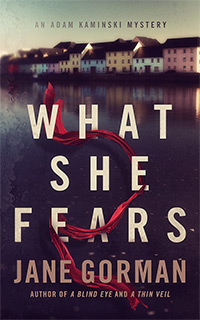
Tomorrow is the birthday of the fourth book in the Adam Kaminski Mystery Series! What She Fears goes live tomorrow, August 16, and that’s both exciting and nerve-wracking.

Of course, I’m already hard at work on the next book. No rest for the weary, as they say. Book 5 (no title yet) is about hope. Maybe even about faith. It’s about music, art, and color.

IMG_4122

I struggled a lot with the opening scenes. I’m a planner, so I already had my character sketches and outline done before I started writing. I knew who I was writing about and what would happen in each scene. But something was missing.

I figured maybe I was distracted by the upcoming book launch. I’ve been doing a lot of promotion for the first book in the series (and it’s going very well — pick up your free copy of A Blind Eye here if you haven’t started the series yet!) so I decided I was just nervous about that. Distracted from writing.

NO DISTRACTIONS ALLOWED

Makes sense, right?

Distracted, I should add, is an understatement. A complete emotional mess might be more accurate. Will my readers like it? Will they love it? I think it’s my best book yet. But I admit to being a little biased.

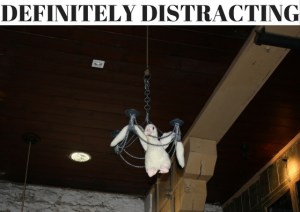
DEFINITELY DISTRACTING

Some days I wake up full of hope, just knowing What She Fears will be a hit. Fans of Adam Kaminski will love it. Other days I wake up in despair. Everyone will hate it. No one will understand what the book is about or what it says.

Then — finally — it hit me. That had been my problem all along with book 5. Here I thought I was writing a book about hope. But I’d left out the despair.

How can you regain hope if you haven’t first experienced despair?

I love it when a story comes together. That one, elusive element that finally makes it all click. The glue that holds it all together. The book is about hope. The book is about despair. And like all good books, it’s about the journey.

The writing is coming along well now. I so enjoy the time I spend putting words to paper, watching my ideas come out into the open, seeing them take form. It’s enthralling and it’s invigorating.

I’ll share more about the next book in future posts, as time permits. For now, I remain hopeful about the launch of What She Fears. Take a look for yourself and let me know what you think! What-She-Fears-Web-Small

Learn more about me and my writing at janegorman.com. Sign up for my newsletter or follow me on Facebook or Twitter. My books are available at Amazon and a variety of other retailers.


Public Speaking, Self-Publishing and Scars

by Janis Patterson

Last weekend I gave a workshop at our local MWA chapter on self-publishing. Not that I’m an expert, or anything like that, but you realize that to be an authority on something you only have to know a little more than everyone else, and I have been self-pubbing since 2013. Besides, I was dragooned into it by my fellow chapter board members!

Normally when I give a workshop or a public speech I write it out, agonizing on the exact nuances of words and the rhythm of sentences. Yes, I am a control freak. Unfortunately, that means I usually read the presentation, making sure each word is exactly as I wrote it – in other words, giving a boring program that would have been better as a magazine article.

I don’t mind public speaking; it’s not my favorite thing to do, but it is easy and not unpleasant. I know there are some who are absolutely terrified to speak in front of people – my own dear mother was one – but I just don’t understand that. Know that such panicky fear exists, and accept it, but don’t understand it. I don’t see any difference between talking to five people or five hundred.

Anyway, due to work and life and other uncontrollable things I didn’t write down my speech – only made notes of topics that had to be covered. And agonized about their order; apparently you can’t turn off the control freak gene. It would be okay, I thought; we’re a small chapter and I know everyone there. Ha!

I was astonished at how quickly the room filled up. We finally ended up with more than double our usual attendance, and there were some people there I had never seen before. Well, it was too late to back out, so I sat down at my improvised speaker’s table, and started to talk. The Husband says there has never been a time I couldn’t talk!

I talked for over an hour, almost an hour and a half. (My father used to say, Wind her up and she talks…) There were some very intelligent questions, and some very elementary questions, but that’s okay, because everyone starts out not knowing everything – or sometimes anything. I stressed that what I was saying was based on my experience, that their mileage or choices might vary, that there were choices to be made that only they could make. That is the essence of self-publishing, I think – self responsibility. The choices you make will affect the results you get but – aside from a few basics – like to sell a book you have to finish it and get it out there – every choice and everything that is done devolves on you. If it gets done, you have to do it.

The workshop went rather well, though I must admit it was a little unsettling to see all these people – friends and strangers alike – scribbling down seemingly every word I said, just like I had maniacally taken notes at the workshops of important people. Yes, it was a bit of a rush – half elation and half sheer terror. And although public speaking doesn’t really faze me, I’m glad it’s over.

Will I do another one? I honestly don’t know. I’m glad I did this one. I hope that everyone there has an easier path to self-publishing because of what I said. I know I owe a lot to those who went before me into this brave new world, but even so I still accumulated my share of scars and mistakes. Perhaps that’s called growth