Some Thoughts on Writing and Publishing

by Janis Patterson

It is the best of times to be a self-published author.

We can put our own books out without having to deal with the ‘writing by committee’ mentality that infects the world of traditional publishing. We can reach directly to the reader without having to bow to the whims, prejudices and rules of the traditional publishing gatekeepers. And, as an added benefit, the reader can choose from a vast array of books instead of being held down to the narrow pigeonholes of traditional publishing. Plus, as a self-published author, you get the largest slice of the monetary pie, as opposed to  the minuscule percentages offered by traditional publishing.

It is the worst of times to be a self-published author.

We not only have to handle the necessary quality controls of creating good books – great writing, good editing, great covers, proofing and printing standards – but we also have to deal with publicity, marketing techniques and legal issues. Some writers make enough money to hire all these things done – most don’t, and every minute spent on publishing/publicizing/whatever is a minute not spent on writing.

Moving beyond the personal, there is also the wider world of self-publishing that seems to become more surreal every day. There are always pirates who take books and them put them up for free on the internet without the author’s consent. Their rallying cries are “If it’s on the internet it should be free!” (Wrong!) and “Writers should just be happy that their words are being read!” (Even wronger! Try that twisted logic with your doctor or plumber or just about any professional…) Other pirates take your book and sell it, but without the author’s consent – and without ever sending the author any of the proceeds.

Then there are what I call the literary pirates – the singularly untalented ones who want to be thought of as an author so badly that they take someone else’s book, change the title, the main characters’ names, probably the name of the town and maybe even the occupations, and then publish it as an original book under their own name. Sadly, this criminality is hard to detect, as most of the retailers simply accept books and don’t run any sort of comparison software to make sure it is an original work. Most examples of it are never caught, and the few that have been were brought to the author’s attention by dedicated fans who saw the similarity to one of the author’s books.

Even worse, there is a growing corruption in the self-publishing world. Book stuffing is a big problem at the moment in Amazon’s KU. Some Book Stuffers have used book stuffing to game the system for fantastic amounts of money and driving legitimate authors off bestseller lists, all the while delivering little more than a badly written short story and lots of garbage. Lots of them also use clickfarms to up their pages read count into the realm of KU bonuses, which is what gets them most of the page reads – and the money. What’s sad is that Amazon doesn’t seem to care. They’re getting the money customers pay for these bloated nothings. Although – I have heard that they are meeting with some concerned authors and writers’ organizations – and I hope that is true – so maybe something positive and good for real writers is being done.

Another thing is that even if a book meets the criteria for a real book (actually written by the person claiming it, page count not inflated by rubbish and repeated short stories) it’s really just a bad book. The internet is simply swamped with ‘books’ that are terribly written, worse plotted and which have never seen either an editor or even spellcheck. Some people are so stupid – or who want to be ‘an author’ so badly – that that they think merely stringing X number of words together with a rough semblance of a storyline equates a book. They buy a cheap cover (I don’t care how much it costs, most of them are definitely cheap), stick up the resultant product and wait impatiently for fame and fortune to come flooding in.

Add to that that the market is waaaay down now. Sales are bad. My sales are so low at the moment that if they get any worse I’ll have to start paying people to not read my books!

So perhaps the pertinent question should be, under these conditions, why would anyone become a writer?

The answer is simple – because we can’t do anything else. If we never sell another book, we will still write. If the publishing world turns upside down, we will still write. No matter what happens, we will still write. We’re writers.

Judging a book …

Hey, y’all.

What’s new with you? Hope everything is good down your way. Read any good books lately? (Here’s a cyber cookie if you said you’d read mine and you thought they were “good”. I appreciate it, yo!)

If you didn’t say mine (not cool, bro) then how did you choose the book? Was it recommended to you by a friend? (I used to know a guy #douche who would get really offended when I didn’t rush out and buy whatever book he recommended. Like, sulk-for-a-whole-day offended. He used to think he had the best taste in books so he could never accept why I didn’t read what he suggested. I did mention he was a douche, right?)

Anyway, to get back on topic, how did you find your latest book? Recommendation from a non-douchey friend? Email from a promotions company? Did the cover catch your eye while you were browsing the digital Amazon/iBooks/Nook/Kobo shelves?


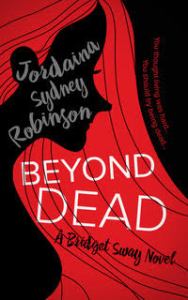
Beyond Dead
Old Bridget Sway cover

I ask because I recently changed all of my book covers. #nightmare Well, it’s wasn’t really a #nightmare as such but it was a LOT of work. Originally I hired a professional cover designer to do them, and I was super pleased with the result. I loved the cover for the first Bridget Sway book. It had been my idea (I wanted her hair to take up the cover and for you to not be able to see her face) and the designer ran with it. I remember I was ridiculously pleased with it at the time. It was my first ever cover! And then I got the second one done. And the third. And the fourth. And the shine completely wore off. 


The colour scheme was a bit limiting. (Straight up, I’m not really a black/red/grey/white type of girl. I do like those colours … but I’m more of a rainbow person.) And I was a bit fed up with how her face just moved around the cover. And I can’t tell you how many people asked me if they were horror books.


Beyond Dead - FINAL COVER-2
New Bridget Sway cover

So, I redid them. Yes, I did them myself. I didn’t know how much you know about that, but that is a huge no-no for independently published authors. It’s like an unspoken rule. But I did. And I LOVE them. I LOVE them so much. To me, the really express the tone of the stories the way the other covers didn’t. But you might not like the newer version, and that’s okay. Different strokes for different folks, yo. 


The biggest thing I took away from this is that you have to trust your gut when making these decisions. You have to trust your own instincts. Writing is a business, but it’s a personal one. It doesn’t matter whether it’s your covers or a comment that your editor makes. You have to trust that you have a story to tell and only you can tell it your way. 


Now, I believe you were about to tell me how awesome my covers were! Yeah, thought so!


Until next time …

Jordaina

An ‘ideal’ article

By Sally Carpenter

 Some years ago I had the pleasure of meeting Jeffrey Scott, the most prolific writer of TV animation, with over 600 produced scripts to his credit, and all-around nice person.

 In his book, “How to Write for Animation,” which has good advice for any writer, he talks about ideas.

 “There are an infinitive of ideas,” he writes. “All of us are inherently creative.”

 Scott makes a good point that we tend to over think creativity, which is often presented as some mystical, awesome force that only affects a few highly gifted individuals.

Or else we try to analyze creativity as science by probing the workings of the brain or studying the effects of environment or family life to determine the elements that lead to artistry, as if recreating Michelangelo’s studio will produce another Sistine Chapel painting.

Julia Cameron, author of “The Artist’s Way” books, agrees that everyone is born with creativity, only we get “blocked” by criticism, discouragement and rejection. Cameron’s books present exercises that help the reader to “unblock” and let the creativity flow.

While I’m not as prolific of a writer as Scott, from my experience I agree with his observation that the best way to break though a “block” is to write: “Good, bad or indifferent,” he says.

Some writers try to “summon the muse” through complicated rituals before they start working: brew a certain type of coffee, do yoga, take a walk, do writing prompts, meditate, wait until inspiration hits (which could be a very long holding pattern). But sometimes these rituals instead lead to writer’s procrastination, simply postponing time spent writing.

In my day job at a community newspaper, some of my tasks are writing headlines and photo captions. I can’t sit and wait for inspiration to hit. The paper is on deadline and the boss won’t pay for overtime. So I learned how to work quick and dirty, coming up with ideas on the fly.

 I’m not sure where I heard this, but the best way to reach the muse is to “show up at the page” (or the keyboard). In other words, start writing. An author can’t edit or polish a story until words are on the page.

When I was a kid, I had tons of story ideas. Unfortunately, at that age I lacked the discipline to write it all down; I just daydreamed. Even though the stories were childish, a writer must start somewhere. A runner can’t finish a marathon unless she first masters those first wobbly steps as an infant.

 Cameron suggests that artists begin each day with “morning pages,” three pages of free-form longhand (not typing or texting), just writing whatever comes to mind. The concept is to keep the pen moving even if the words are gibberish, to clear out the mental “junk” that blocks an artist, and to activate the richness of the subconscious. Soon gems will appear among the scribbling.

 I recently started writing a short story that I planned to include in the reprint edition of my first book. I wrote some pages, and then had to leave it for other projects. In the meantime, another story idea occurred and I decided to move ahead the second idea.

Did I waste my time with the first story? Of course not. I may use the first idea in a later book. Even if I never finish the story, it’s possible I might not have been open to receiving the second idea had my mind not been “primed” with the first.

For me, a good way to prime the pump is research, no doubt a holdover from grad school. I love to read and learn new things. For my new short story, I got some great ideas by reading a book on the subject.

Writers get ideas from the news, movies, TV, trips, family and friends, and their own experiences. My book “The Sinister Sitcom Caper” was inspired by my work at Paramount Studios.

Scott suggests that one way to general ideas is to pick an object in the room—such as a table, phone, bookcase—and generate stories from it. I see my record albums. I can use a record disc as a Frisbee, float it down a river, use it as a serving tray, hear secret messages if I play it backward, roll it like a hoop, wear it on my head, use it as a shield, hide behind it and peer though the hole—the possibilities are endless.

 If you write it, the ideas will come.


Working with Law Enforcement Agencies

In our area of upstate New York, county sheriffs’ offices, local police departments, and our state police work tirelessly to protect our citizens. They also do a whole lot more.

Shughart,Karen-0016_ADJ_5x7 (1)

Last fall, our sheriff’s office invited citizens to participate in a comprehensive, eight-week course about their programs and services. If interested, all we had to do was complete a simple application form and pass a background check. I was delighted to be among those chosen.

Each session lasted about three hours, and then we were treated to lunch and a Q&A. One week, after touring the jail and observing inmates working with staff to help them, once released, take their places as productive members of society, we ate exactly what the inmates ate! Another beautiful, sunny, autumn day, we stood outside to observe officers working with the German Shepherds that comprise the K-9 crew.

But that wasn’t all. We also learned about the drug task force; how officers issue warrants and make arrests; handle domestic violence, hostage, and terrorist situations; do criminal investigations; work in tandem with other law enforcement agencies; and provide a myriad of broad-based community outreach programs to families, schools and senior citizens.

I gained a huge amount of knowledge that helped make Ed DeCleryk’s criminal investigation in Murder in the Museum: An Edmund DeCleryk Mystery https://www.amazon.com/Murder-Museum-Edmund-DeCleryk-Mystery/dp/1946063509/ more authentic, but I also had specific questions that were not addressed in class.

The sheriff, deputy, one of his undersheriffs and I met for almost two hours a couple weeks after the course ended to address those questions, much to my pleasure and satisfaction. To a person, I found these folks professional, approachable and warm.

It was for me, in the final stages of writing my mystery, an invaluable experience.   The women and men who work at our sheriff’s department, as well as those from other state and local law enforcement agencies, commit to serving their communities and sacrificing their own lives, if necessary, to protect the citizens they serve.

Our communities offer many resources to those of us who write mysteries, among them criminal justice agencies, medical personnel, historical societies, district attorneys and prosecutors. For our readers, having access to these professionals and organizations helps add a level of authenticity to our stories.

The World Through My Eyes

thumb_IMG_1225_1024

The fifth book in the Adam Kaminski mystery series will come out this summer. I am so excited to share it with you! I’ve spent the past two years working on this book that looks at the world through the eyes of a photographer, while also telling the story of a cruise in which everyone is pretending to be someone they’re not.

One of the things I enjoy most about writing is the opportunity to look at the world through other peoples eyes. Because my series has one main character– Adam Kaminski – who always finds someone to help him out, I have the pleasure of creating a new point-of-view character for each book (that is, a character whose thoughts you, the reader, get to hear.)

In this book my second leading character is Julia Kaminski, sister to Adam. Julia has appeared in most of the other books in the series, so I’m not creating her from scratch. But this is the first time I’m writing from her perspective, describing the world through her eyes. In this case, the eyes of a photographer. There can be no doubt, we all see the world a little bit differently.


A-Pale-Reflection-Web-Small
A very blurry suggestion of the cover for A Pale Reflection  – the world as I might see it!

Personally, I’ve been wearing glasses since I was five (and probably needed them before that). The world through my eyes looks very different. Terribly near-sighted, without my glasses I see blurs of color without distinct shapes. Every pin prick of light becomes a giant, glowing snowflake. It’s actually quite beautiful! As long as I don’t need to see clearly. These days, I wear bifocals, so I get two different views of the world depending how I hold my head! (And does anyone hate progressive bifocals as much as I do? I couldn’t stand them.)

As an aside, I recently saw a video about very young children – one year or younger – getting glasses and being able to see their mothers’ faces clearly for the first time. The expression of joy on their faces was indescribable. How the doctors were able to figure out a) that they needed glasses and b) what their prescription was I have no idea. But it is remarkable.


IMG_3813
Bifocal and near vision only – just two of the many pairs of glasses in my life!

My husband, on the other hand, is farsighted. How strange! After a lifetime of holding things next to my face to read them, I can’t imagine only being able to see clearly when things are far away. The world he sees is very different from the world I see.

I’m pretty sure the same holds true for reading. I write a book and let it out into the world. Now it’s up to the reader to see whatever he or she sees in it. I love hearing other peoples perspectives of my books — don’t get me wrong — but I admit there are times when I hear someone describing one of my characters and I think: can’t I just give you a prescription that lets you see it the way I see it?

A Pale Reflection, my book about seeing the world – and other people – clearly, comes out this summer. Check out my Facebook page or sign up for my newsletter at my website to see the full cover soon. And follow me on Instagram to see photos of my world. I hope my perspective of other people’s perspective will keep you entranced – and wondering who the killer is!

Adam-Kaminski-Mystery-Series