It Never Rains in Southern California by Karen Shughart

We just returned from a visit with our son and daughter-in-law, who live in southern California. There was a song in the 1970s entitled It Never Rains in Southern California, and although the lyrics did not particularly inspire joy, the title is apt, it truly hardly ever rains in southern California. As my son reminded me when I mentioned how nice it was to not have to deal with the inconsistent weather events like blizzards and blinding rainstorms like we do here in the northeast, he reminded me that California has plenty of their own climate issues: mudslides, fires, earthquakes, and damaging winds. Good point.

During our visit we sat under a pergola in their backyard and snacked on tangerines picked from a nearby tree. One night for dinner we ate freshly-caught Pacific salmon with lemon slices we plucked from another. Avocados, plentiful in that part of the world, hang heavy on branches drooping over fences A bottle brush tree with vivid red flowers and clusters of bright yellow daylilies attract a multitude of hummingbirds and Monarch butterflies. The air is redolent with sun-ripened foliage and the salty brine that drifts inland from the broad, blue Pacific Ocean.
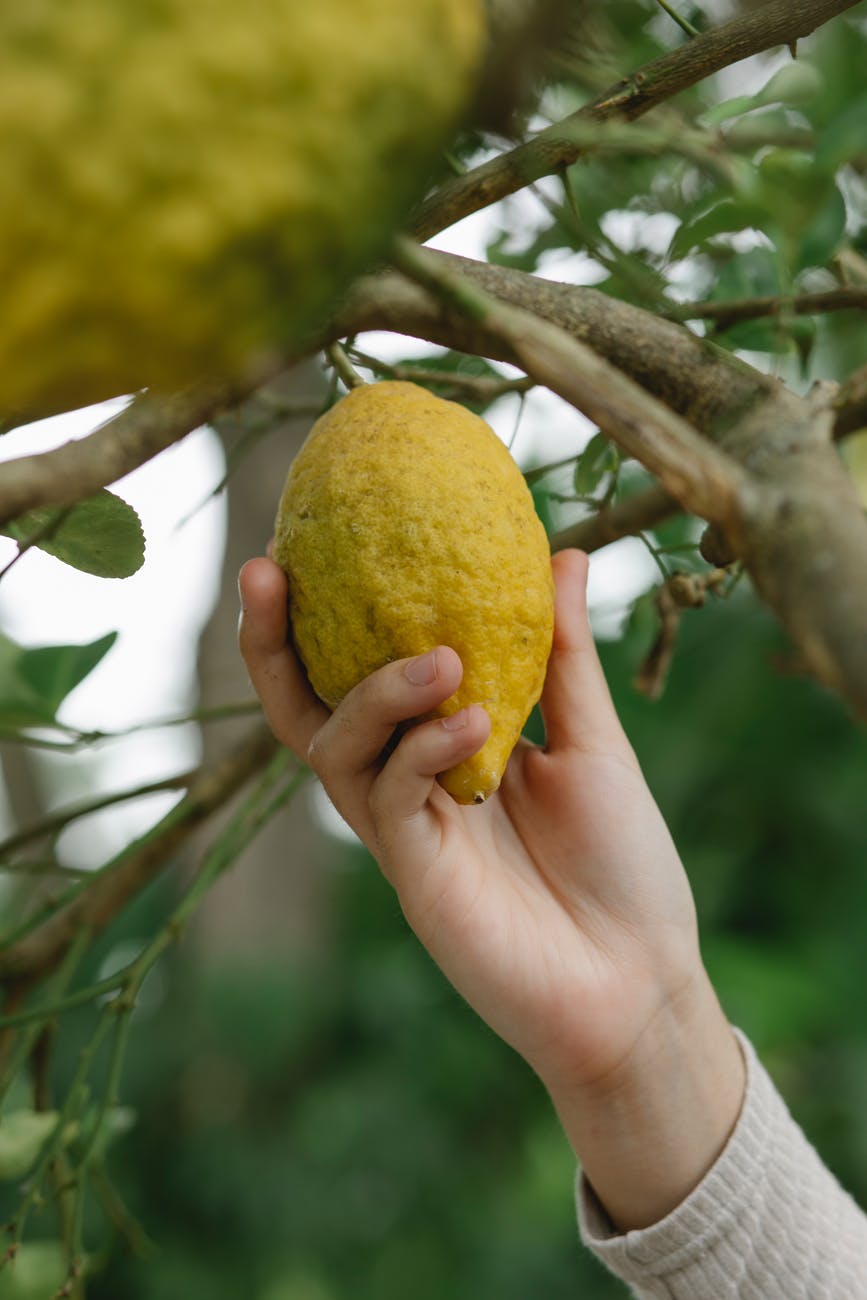
Photo by Gary Barnes on Pexels.com

We arrived back in New York to a gray, cloudy day with a drizzle of fine rain and yet, when we pulled into our driveway, our daffodils and forsythia were beginning to bloom, the hyacinths were emerging from the earth, and nestled in among our own burgeoning daylilies were bright, purple violets, signs that spring is surely on the way. While the weather is fickle, each day here brings a surprise; now some days are warm and bright, on others, winter doesn’t want to lose its frosty grip.

I thought about how climate and weather affect writing. My Cozies are set in a small village along the south shore of Lake Ontario, much like the village where we live.  Four defined seasons provide the setting to the mysteries:  a dark, stormy, windblown night is a metaphor for what’s to come, as is the juxtaposition of bright summer days and a murder that’s occurred in a lush garden setting.

If we lived in California, I would still be writing Cozies, but they would different. Mine have a backstory based on the history of our state: the Revolutionary War, the War of 1812, the Underground Railroad, to name a few. If we lived in California, I’d choose Spanish Missions, the Mexican American War, or the Gold Rush.   The setting, too, would change. A California beach town and one on Lake Ontario have few characteristics in common, our beaches are rocky and not as wide, we don’t have sidewalks and parking lots along the water, and the distance across the lake to Canada is a mere 80 miles, compared to more than 6,000 to China. We do, surprisingly, have pelicans, but we’ve never seen a whale. Still, it’s fun to contemplate what I’d do differently if my mysteries were set in a part of our country where it never snows, hardly ever rains, and the sun shines almost every day.

Typos and the rest of it

I’ve read several posts lately about the carelessness of authors and editors today, with typos and other errors missed, often to the point of driving the reader to dump the book for something else to read. I too notice the misspellings, confusion of names, missing words, and other slips in the text. And I too have learned to read right past them. No text is going to be perfect, and holding the writer to a strict standard of three or five errors misses the point of reading fiction or any other prose. I cringe just as much as any other writer when I come across a goof in what I’ve written, and for self-serving reasons I argue that it doesn’t hurt to be generous as a reader. That said, I have another perspective that hovers in the back of my mind.

The rate of error for any human endeavor is two percent. I first learned this in the library at the University of Pennsylvania when I occasionally thought I’d come across an error in the card catalogue (remember those?). A librarian, skeptical, mentioned that figure while examining the card in question one day, found it correct, and explained why I might have thought its location to be inaccurate. Two percent sounds minuscule, but in a collection of twenty-two million items, such as at the Boston Public Library, that means 440,000 could harbor an error. That’s not a negligible number even though it’s only two percent.

I think of this percentage when I come across an error in a printed book. In a novel of 80,000 words, the reader could expect to encounter 1,600 typos or other mistakes. That’s a lot of goofs in a typical book, and I’m guessing most of us would be too disgusted to continue reading past the first dozen.

There’s a reason we’ve come to expect a nearly perfect text. Over the decades, publishers have trained us to expect a clean page, and they achieved this with a battery of experts. Writers turned in a type-written, or sometimes a handwritten, manuscript, which then went to a content editor, next to a line editor, and finally to a copy editor. At each stage the writer reviewed the work. The text was then sent to a compositor who put words into type, and don’t think the compositor wasn’t also sometimes reading, noting what he was seeing. But once the text was set, it was printed, went into galleys, and was sent to at least one proofreader as well as the writer. Think of the number of trained people reading the novel, catching those 1,600 slips, saving the writer from embarrassment. (And consider this: many publishers charged for the correction of errors in proofs after the first ten or twenty. That may explain why some nonfiction books were riddled with errors in earlier decades.)

Most of those people don’t exist today, and if they do, they’re probably working in very specialized areas where accuracy counts more. Think of chemistry, mathematics, and other technical subjects.

I think of these things when I’m reading along and trip over a missing word or letter. Occasionally I think about writing the author so she or he can make a change in the next iteration, but I don’t do it. Instead I marvel at how proficient we’ve become at catching these little stumblers, and how clean our texts are now. We demand a lot of writers today, and for the most part we writers deliver a clean, readable narrative with few flaws to make a reader feel brilliant for catching the slip or smug that she or he never made that one. At least, we haven’t yet. Every time I catch an error in whatever I’m reading, I remember to be humble. That could be me next time.

The Truth About Idleness

by Janis Patterson

Perhaps one of the hardest things about writing is to convince non-writers that you are actually working when you’re just sitting and staring into space. Of course, part of the problem is the popular perception that writing a book consists of sitting down with pen and paper (for the romantics) or laptop (for the pragmatists and those with bad handwriting) and in a few days dashing off several thousand words, which are (1) sent to an agent grateful to receive them who sends them to a (2) publisher, who immediately responds with a large check and (3) a few weeks later the book – nicely printed and with a gorgeous cover – appears in all the bookstores while the author (4) is on a magical country-wide book-signing tour.

If you believe that, let me tell you the one about Little Red Riding Hood.

Yes, the above scenario has happened – but so rarely it isn’t even statistically viable. In the acting world it is called the ‘Cinderella syndrome’ – or by the more cynical, ‘deus ex machina.’ There’s nothing intrinsically wrong in wishing for a fairy tale publishing experience, but it’s foolish to believe in them and idiotic to expect one.

Writing is work. Writing is not only work, it is full-time work, because some part of your brain is working on your story while your hands and head are busy cleaning house or working at your day job or even while you sleep. Creation is a full-time business.

Which is why it is so irritating that when the writer does get a few minutes where nothing physical has to be done and can sit and deliberately think about his story (without actually being at the keyboard) the non-writers around either tease or castigate him for being lazy. One of my favorite quotes is from Robert Louis Stevenson in “An Apology for Idlers” (Cornhill Magazine, July 1877) – “Idleness so called, which does not consist in doing nothing, but in doing a great deal not recognized in the dogmatic formularies of the ruling class, has as good a right to state its position as industry itself.” So, for writers especially, sitting and (visually) doing nothing is actually work.

Last summer I was fortunate enough to visit the home of Francis Parkinson Keyes (pronounced, I learned, as K-eyes, not like the things that open locks) in New Orleans, even though I had vowed never to set foot in that benighted city again. It was an old house (late 1700s) in the French Quarter, which meant it sat right on the street with only a narrow strip of flower bed in front and some beautiful curving stairs up to the front door. A wildly popular mid-20th-century novelist, Mrs. Keyes usually wrote in what she called her office, a converted parlor at the front of the house. She was interrupted so many times by fans who wished to meet her (and had the gall to come and knock on her front door!) that she eventually converted the former servants’ quarters in the back of the house to her office, turned the parlor back into a parlor and had her maid say she wasn’t at home.

One incident which the guide recites is of how Mrs. Keyes was sitting in her parlor office, thinking (i.e., working) when a fan walked up and knocked on the door. Mrs. Keyes answered the door and when the fan (a culture vulture clubwoman) said that she had just come to tell Mrs. Keyes how much she liked her work, Mrs. Keyes – understandably miffed at such an intrusion – politely told the woman that no, she cannot invite her in for tea and a chat about her books because she is working. The woman then became huffy, saying that she was doing no such thing, she herself saw Mrs. Keyes just sitting and staring and that surely a short interruption of an hour or so to talk to a fan was more important than doing nothing. Later in one of her memoirs Mrs. Keyes said that she doesn’t understand why people – women especially – can’t understand that an interruption in the mental process of writing is just as devastating as interrupting the cooking of an angel food cake for an hour or so and expecting it to come out perfect when the cooking process is finally completed.

My own dear mother, who was not a writer herself, never grasped that, and with every interruption would say, “I’m just going to take a minute…” As she was a skilled seamstress, I once in frustration grabbed a spool of thread and said the thread was representative of an idea. Then I pulled out a foot or so and cut it, moving the ends apart. “That’s what happens when there is an interruption,” I said. “The thread is changed and can never be the same again.” “But I just took a minute,” Mother would reply. She never got – or never acknowledged – the concept.

There have been pundits who declare that the preparation for writing – researching, plotting, experimenting with ideas, etc., including simply staring into space thinking – accounts for 90-98% of the total time necessary to write a novel. The 2-10% left is for sitting at the keyboard, which is merely transcribing. My own personal percentages vary, but nothing changes the fact that most writing is done in the head.

When other people allow it.

While I love people and am very social and outgoing, I do understand and sometimes envy those writers who have the good fortune to be able to lock themselves away – either in an office with a lock on the door or a private island – and do their work, even if it does seem to be nothing but staring into space.

How many drafts?

On a variety of blogs lately, writers have been talking about drafts, and I’ve been taking note. I’ve enjoyed reading other writers’ processes, and learning where I can. My process is a little different from the others I’ve read.

I begin with an idea and an opening scene, which sets up the core problem for the main character. As the idea develops while I’m working on other things, I jot down more ideas—a scene later in the story, a line of dialogue, a supportive character, a subplot, an interesting name, setting details. After a while I have a few pages of these bits and pieces, and I can feel the story growing warm and alive. That’s when I begin writing. I know it’s the right time because I wake up in the morning looking forward to working on the story.

By about page fifteen I have added something else, a detail not on my original list, which will mean correcting an earlier statement. This happens all the way through, with sometimes larger changes and scenes inserted to bring the various threads into alignment. Is each change a new draft? By the end of writing out the story for the first time, which could be Draft 23, I’ve made numerous changes, added at least half a dozen scenes to flesh out information I hinted at, and changed the murderer at least twice. Each change shifts the story, tightens the plot, clarifies and sharpens. What I end with feels close to what I had imagined, but in execution it can seem quite different with a fullness I didn’t imagine.

And then comes what I consider the real work—reading through the entire ms again, before printing it out, to ensure that other details (motivations, physical appearance, timing of revelations) are consistent throughout. This is when I find it necessary to add another two or three scenes to reinforce the logic of the entire mystery, and the story begins to feel complete. After that, I print out the whole thing, which by now should be the word length I wanted, about eighty thousand words, and read it again, this time with pen in hand to polish and tinker with words. I may do this twice. I know I’m finished when I find less and less to change or improve, and can read through pages without scratching out or inserting anything.

Perhaps I have only two drafts—online and printed, or four, two online and two printed. Or perhaps I have about 25 online drafts and two printed. However they are counted, the drafts pile up slowly until the finished narrative feels new to me, partly a surprise and partly a relief that it actually holds together.

How many drafts do you produce? How do you count them?

Photography and Plotting

I don’t ever think of myself as having writer’s block but I know that when I’m not sure about what comes next in the novel I’m working on, I tend to turn to photography and play with the camera and old photographs. Aside from my love of photography in general, I find this other art form stimulating in a way different from writing.

lately I’ve been going through old photographs, some dating to the 1930s taken by various relatives and a few dating to just the early 1900s when my grandparents were courting. My grandfather photographed as a sideline and occasionally sold photographs to Look and Life when they were new.  Granddad preferred the modern world—photographing machinery, industrial sites, and 1950s gas stations and fast-food joints lining a highway. My mother preferred landscapes. I like people and color. Granddad was a milk inspector for much of is career.

My family traveled around the United States in the 1940s, 1950s, 1960s, so I have photographs of us visiting various national parks, camping, riding, hiking, and, rarely, looking into shop windows. One summer we rented an RV and traveled up and down the Pacific coast, pulling up next to an RV from California or another western state. My dad often commented, “Too bad we don’t have a license plate from home.” He meant Massachusetts. Any time a park service officer found out where we were from, we were treated like celebrities. This was in 1959, when you could arrive at the Grand Canyon at five o’clock in the afternoon and find a good camping spot still available. 

Most of the photos from this trip are of magnificent canyons, mountains, lakes, and other scenery. We never had trouble getting a good view; there were few crowds and no cell phones—no one taking selfies but lots of people taking pictures of each other on the top of a mountain or paddling a canoe.

It’s an odd habit but photographers often take several pictures of the same person in different positions and poses at the same event, and save all of them, not just the best one. Sometimes the photographer takes three or four of almost identical images. In one instance I came across so many of the same person that it looked like individual cells from an old movie. 

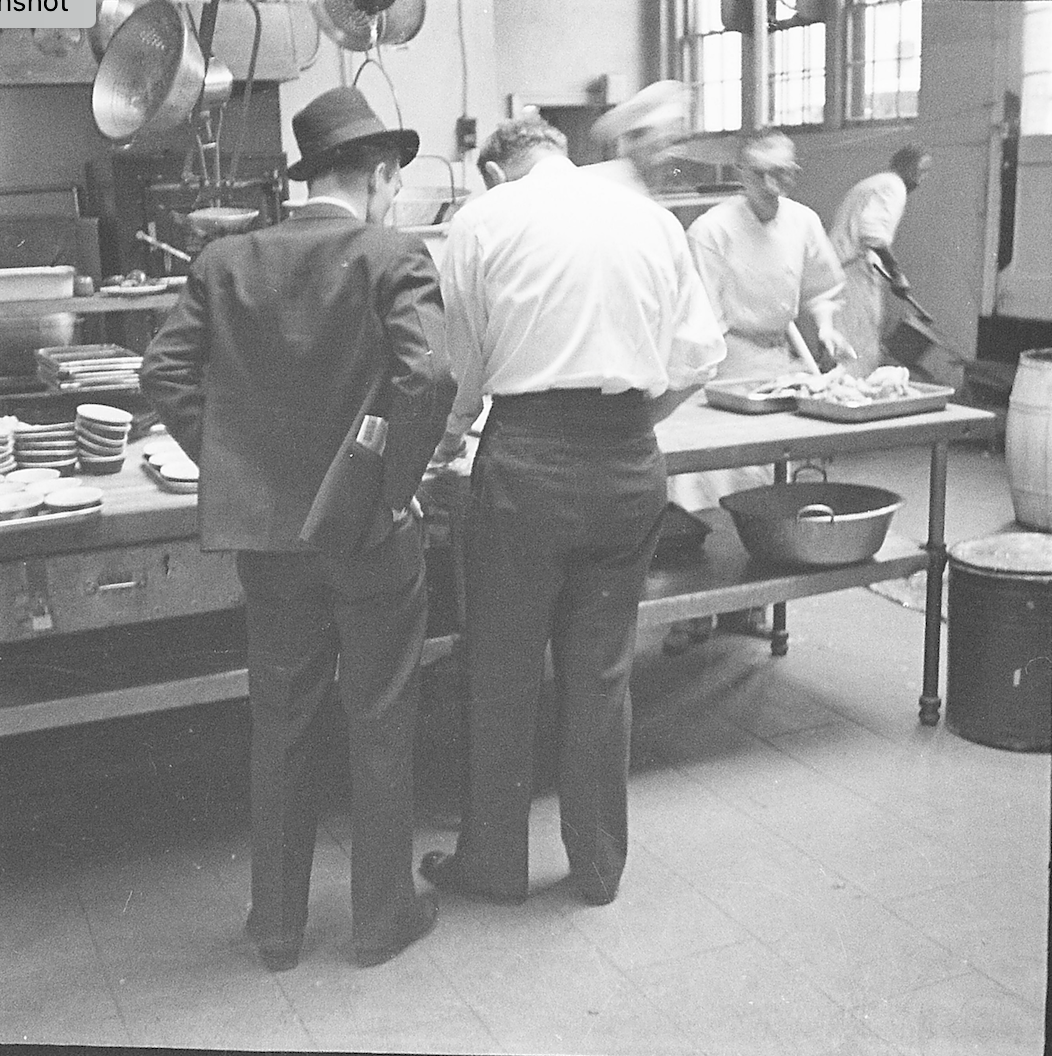
The images from the 1930s and 1940s are of people I didn’t know or know only through family lore, so I’m free to imagine their stories. I rearrange the images in different sequences, much like rearranging scenes in a mystery novel, and a variety of scenarios come up. I especially like the ones of my father chatting with new friends in Sicily in 1936, when my parents took an extended honeymoon to Italy and Greece. That’s Dad on the left.

After a few hours of this ideas for my current project start to bubble up and I quickly turn to taking notes. This afternoon, after feeling stalled about the ending though I was writing scenes that had to be written, I had a slew of ideas coming. I made lists of actions my characters had to take to get to the climax, each a scene by itself leading to the final confrontation. My attention is back on the novel, and I’m putting away the photography for another day. But it will be back.