Not Just a Pretty Face

I’ve been taking online workshops through the International Thrillerfest Online school. While a couple of topics are ones I’ve attended workshops on before, each presenter has their own unique spin they bring to it. Which means, I have picked up a few new tricks and things to try.

The first one was a workshop by Adam Hamdy on Pacing. While I had learned about most of what he talked about before, it was his discussion on how he went from a pantser (someone who just starts writing with no idea where they are headed) to someone who does plot out the book in a basic way. Not an outline or thorough scene by scene . He writes the tag line then expands that a bit, then expands that a bit more, until he has 5-7 lines for each chapter with the action or external plot of the story and maybe some of the internal plot that will play out.

I decided to try this for the latest book I’m working on. I’ve always known my beginning, a couple of plot points in the middle, and my end, but when he said by taking the time to do this step speeded up his writing process, I thought it was worth a try. And the last book I had so many interruptions, I’d repeated myself in several places- which was discovered by a beta reader.

It took me two days to discover what my book was about, write up my suspect list, and write the 5-7 sentences per chapter. This is just the investigation, or external plot, that will be brought up in each chapter. After starting the book, I added in a new secondary character who will help add more dimensions to my main character and also add more internal conflict in House Edge, book 2 in the Spotted Pony Casino Mysteries.

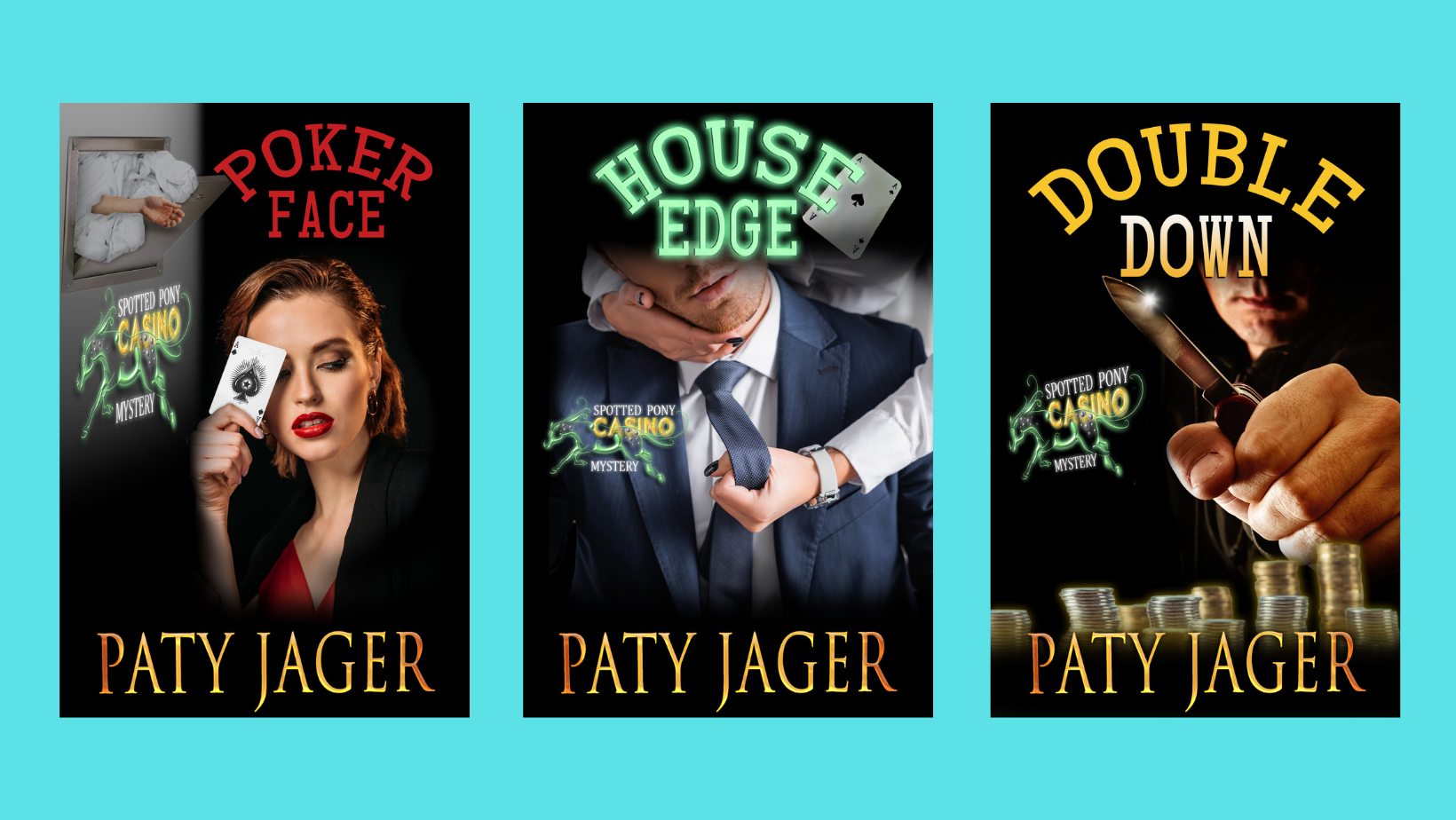
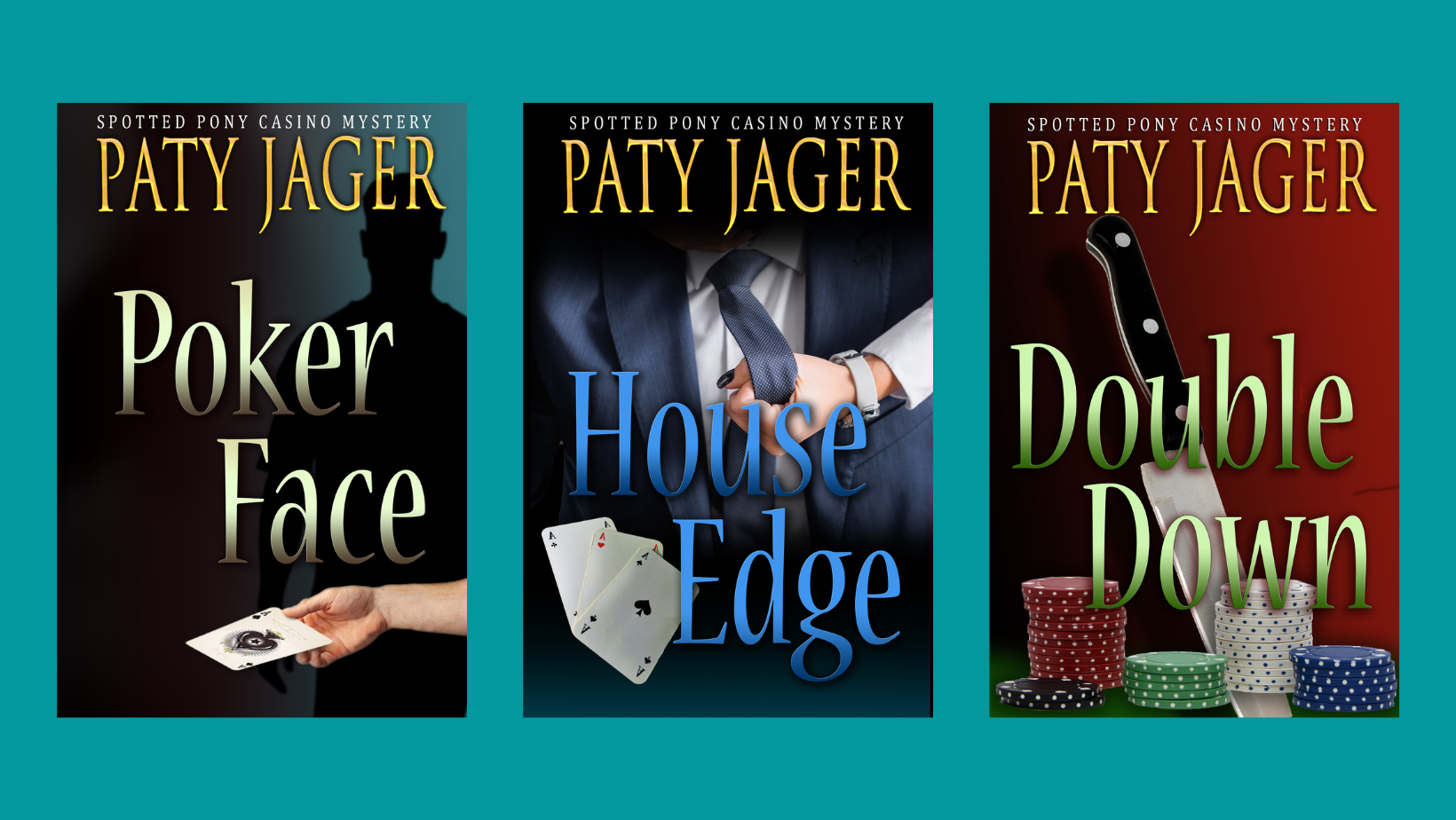
And you were wondering where the title of this post came from… A bonus workshop we received dealt with what mystery/suspense/thriller readers look for in a book cover. I found the information insightful. So much so, I sent an email to my cover designer to redesign the first three covers in the Spotted Pony Casino Mystery series. I have Poker Face published and available to the public but it is the first book. I decided it was best to get it and the next two I’d had made to get a consistency in the series from the beginning.

Here are the books I had made before the workshop:

These aren’t bad and convey a bit of the story. However, the survey taken by a marketing firm who works with all the big publishers and some of the larger writing organizations said that mystery/suspense/thriller readers don’t care if the image on the cover is anything like what’s in the book. They read the title first. They want a title that catches their imagination and is a play on words. Check- my titles do that. They don’t like people/faces on the books. They don’t mind shadowy figures and prefer covers that look like a puzzle. They want to see creepy, mysterious, or action depicted on the covers. And they prefer a description of the type of book: Mystery, Thriller, True Crime, Action Adventure, Suspense not A Novel.

And these are the new covers:

Simpler images, in-the-face title, and the word Mystery is easier to see than in the logo that sweetened the look of the books. These covers also leave more to the imagination.

I’m glad I had this workshop now and not a year from now when the fourth book would be coming out.

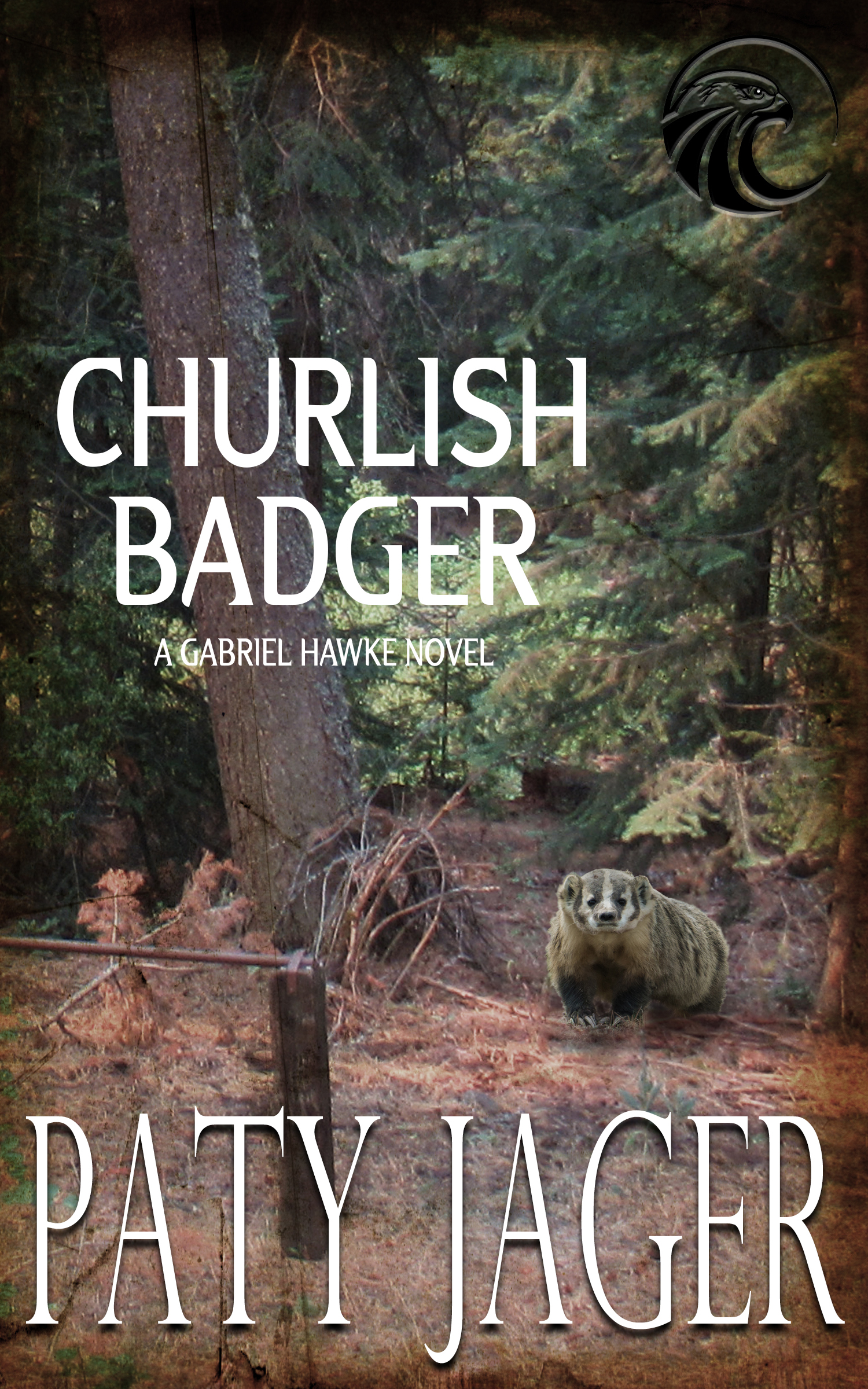
And I’m thankful I went with simple covers on the Gabriel Hawke books and I have a play on words for the titles.

It might be just a book cover, but it is the face of the book I want to draw readers into. So while pretty is nice, I want a cover that exudes mystery, intrigue, and a reader can’t pass without at least taking a peek inside.

What do you think of the change of cover?

The Paths through the Forest

A storm is brewing out my windows, clouds dense with rain hang heavy over the hills. You can feel the damp in your bones, in the air you breathe, and the chill that falls at your feet. Depending on your perspective, the promise of a deep drenching rain either fills you with trepidation or joy. Joy for me…always.

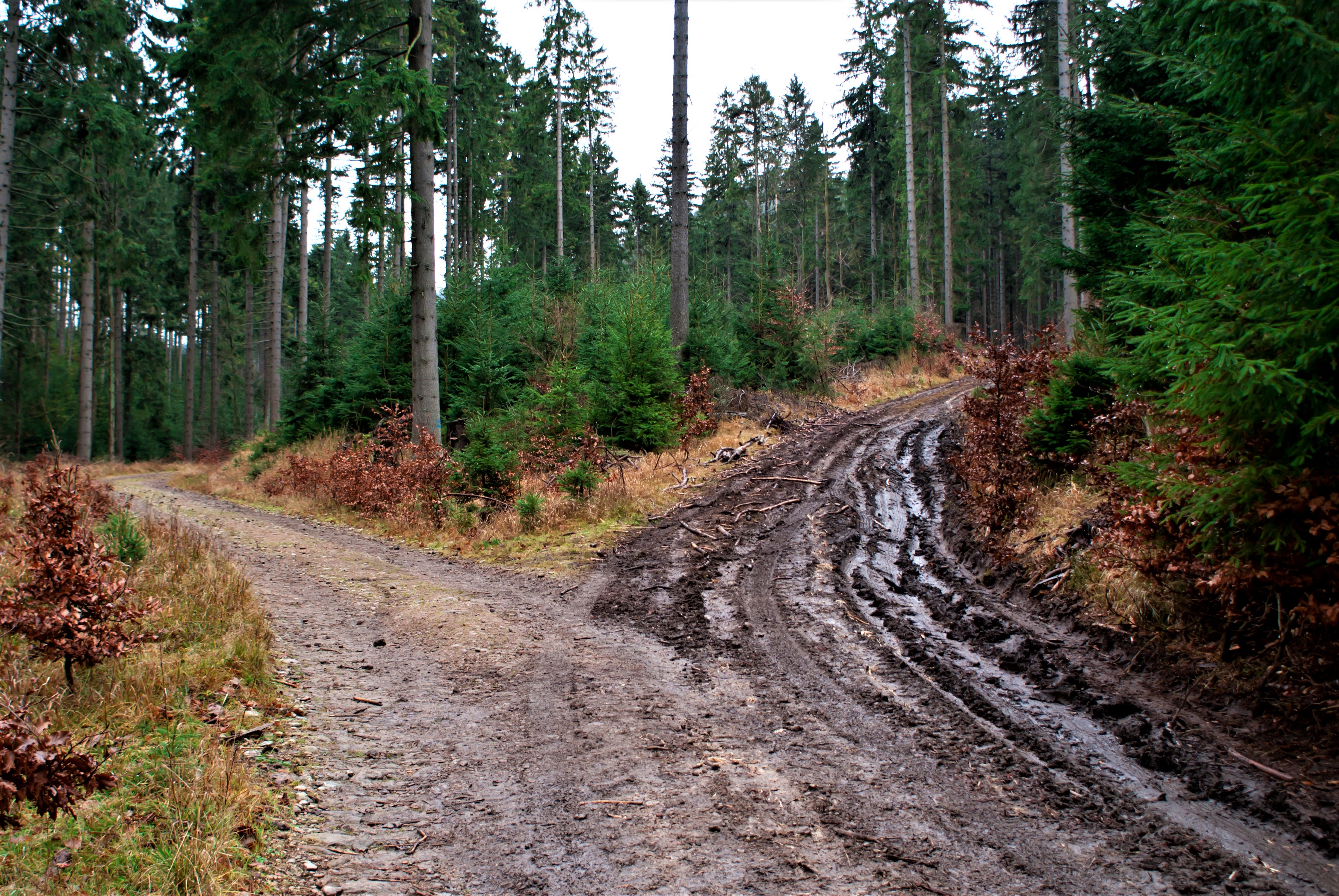
Weather has been part of my being since I was a child, thanks to my father, who flew through it all. And though I spent my time in the Navy in weather, I never once dreamed of taking that path in my life. But my broad brush with it has enriched me and my writing. I look at the sky, read the signs, and assess how what I see will affect my world, real or imaginary. In my stories, rocks, dirt, and slush roil down hillsides, a dry roadway on a frosty night hides a bridge slick with black ice, and the ocean sucks life from the beaches depositing its victims with the tide.

I have an affinity for the muddy side!

Like all of us, I’ve stared down many forks in the road and chosen a path through the forest of opportunity, fear, and hope lying undefined before me. I reinvented myself time and again to succeed in male-dominated businesses. I bucked trends, bosses, been on bucking horses, driven sixty-thousand miles a year back and forth over two states in a station wagon filled with educational assessments, flown hundreds of thousands of miles in the same quest, set up on demand scoring facilities nationwide, and my husband wants me to add, ridden an elephant.

My point is this . . . one of the great joys of writing is the ability it presents to follow anew the paths not taken. Each plot is an opportunity to ask what if I had become an anthropologist, a minister, a professor of English literature, a Naval aviator, or taken the bigtime NY advertising agency job when it was offered. Maybe I should have apprenticed at Vogue like my great aunt wanted or started at the bottom at National Geographic and worked my way up? What if I had purchased the family farm and lived that dream?

How different would my life have been if I had grown up in the town we were born in, married my high school sweetheart, and lived there still. Who would I be? I know I would be mad as a hatter and ready for the brick sanitarium with barred windows that once overlooked a sharply manicured lawn in the town I consider home. I can imagine being that person, bound to a town, a husband, a job, children, and family. How does that me react to the current me when we meet head-on in a plot?

Each path we don’t take informs and colors us as much as the one we did. The curiosity that drove us toward that choice lingers inside us. What we learned before we turned away still piques our curiosity and benefits our knowledge base. Writing is our opportunity to find out through our characters what might have been. Of course, as ladies of mystery, we spice it all up with a dead body or two, a conspiracy, a disappearance, or perhaps just the evil that stalks the dark of night. Boo!

I chose to leave the Navy when the life of one of my division members was destroyed by an unethical decision, supported by the Uniform Code of Military Justice, and three fearful men. What if I had chosen to stay in? I’ll never know. But the incident and my resulting decision rode my shoulder as I drafted the final book of the Cooper Quartet, my series about a military family in the Vietnam Era. Don’t Tell will be released November 11 and is already a Reedsy Must Read, noting, “This author is an expert at action-packed intrigue and mystery.” And just in, from Booklife, “In this military milieu, Church—a Vietnam-era Navy veteran herself—does a remarkable job of keeping multiple plotlines running with clarity and power. Church spins a lively tale where motives are unclear in a vividly realized hothouse naval environment. The engaging characters and their detailed histories make this a satisfying capstone to a wide-ranging epic.”

Don’t Tell will be available November 11 on Amazon as an ebook, paperback, or in hardcover. In the meantime here is a link to the Booklife Review: https://booklife.com/project/don-t-tell-59592

The Illusive Word

Early on in my writing, I would have times when I’d be writing along and…nothing. I knew what I wanted to say but I couldn’t find the word I wanted. That was before I was writing on a computer. I would pull out my dictionary and look up a word similar to what I wanted. And hopefully by process of elimination, the right word would reveal itself.

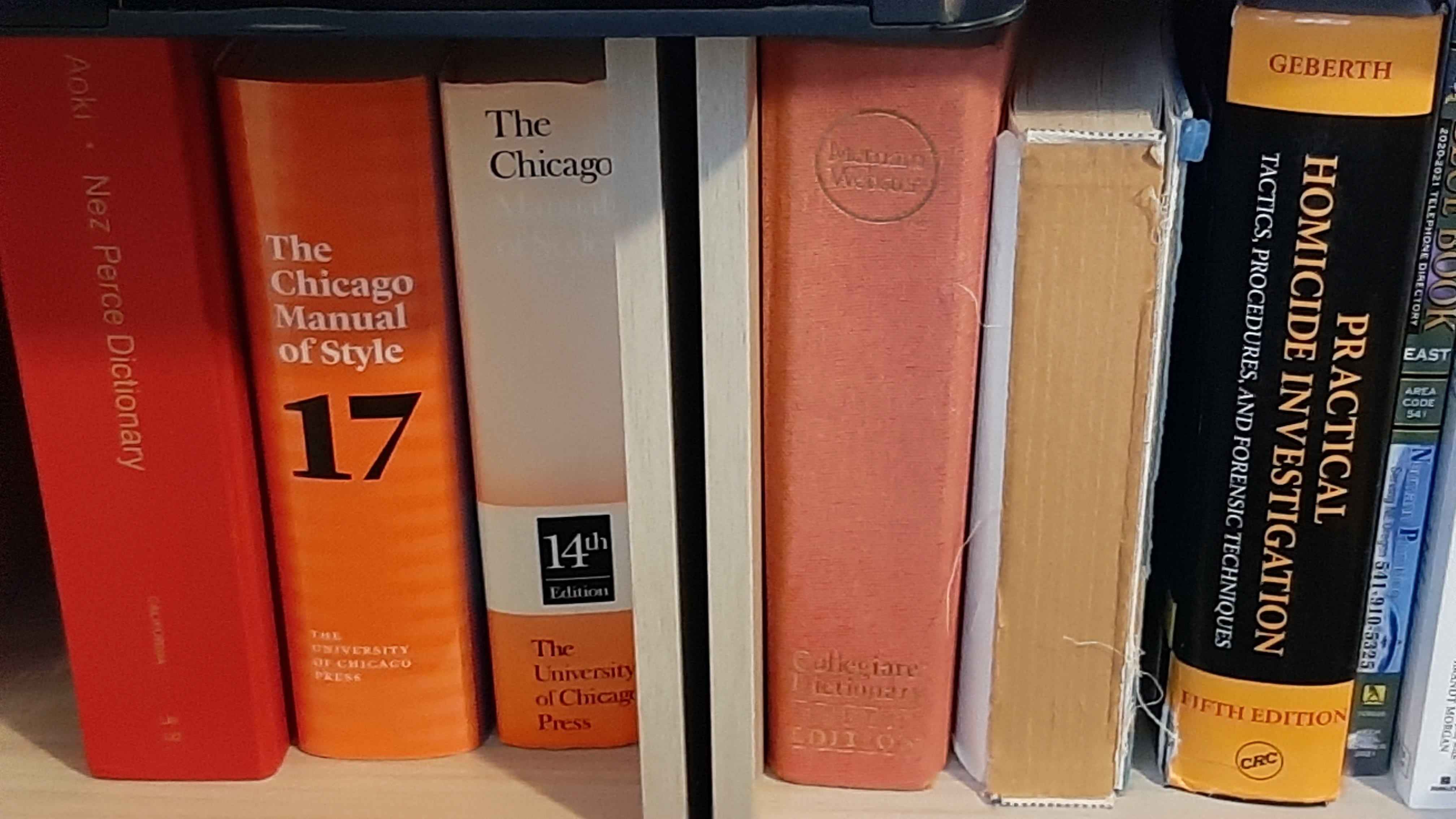
After attending my first RWA (Romance Writers of America) conference, I learned that every writer needs a dictionary( which I had), a thesaurus, The Chicago Manual of Style, and the book Goals, Motivation, and Conflict by Debra Dixon. I went home and found those books at my local bookstore and they have been on my shelf. I even purchased a newer version of The Chicago Manual of Style this year.

my shelf of reference books

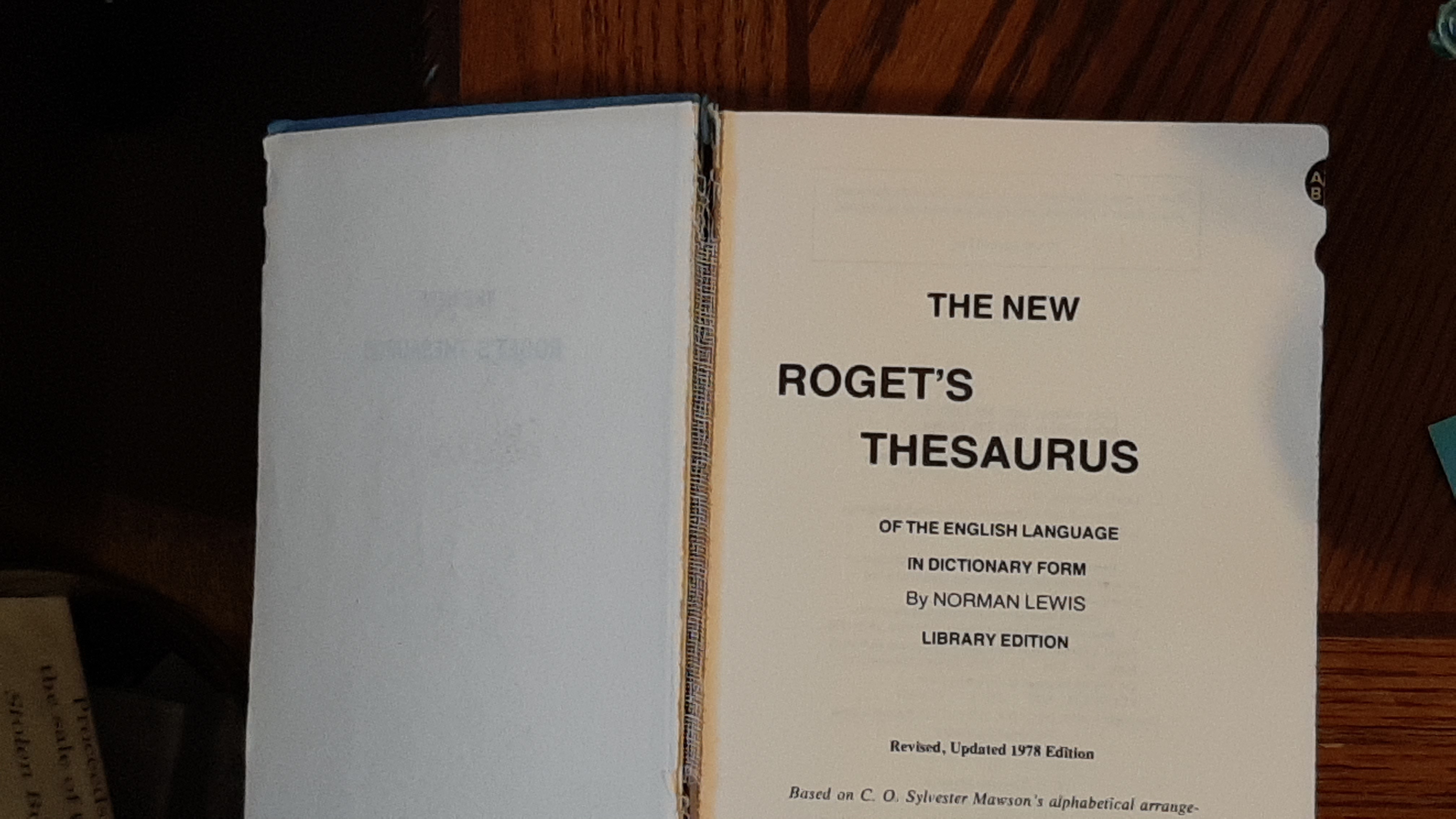
As you can tell by the ratty cover on the thesaurus, I have used it a lot. Even when I look up a word through Word Docs, I will end up going to the book. I sort through word after word, until I come up with the one that makes the sentence show what I want.

My falling apart thesaurus

There are days it feels like I stop my momentum more than I write. On those days my brain doesn’t spit out the words I want and I hunt and hunt. Then there are days I don’t touch any of the books as my fingers fly over the keys moving my story along with the precise words I need to convey the scene.

I know I will be going back and editing the story and could just put in what I want to say in parenthesis and move on. But my brain won’t let me. I have to have the exact word or I can’t move on with the story. Although there have been a couple of times when the right word couldn’t be conjured up with all my reference books. Then I do put down what I want to say in parenthesis and come back to it when I do the edits, hoping the brain is more engaged that day.

I think the need to have the “perfect” word is a curse to writers. I’m sure I’m not the only one who can use up writing time hunting down the illusive word that is on the tip of my fingers but can’t quite manifest in my mind.

For me, this is a second behind editing as the hardest and most dreaded part of writing for me. How about other writers? Do you also struggle at times to find the right word? Readers, have you ever read something and thought, “this word would have been a better choice?”

Pandemic Dilemma

Last year about this time I began work on a new novel, making random notes on the main character, the obstacles thrown in her path, snatches of dialogue that came to me while I was out walking, and minor characters who might be interesting. This stage of the process is fun and always interesting. But there was one aspect that I couldn’t decide about. 

We were in the middle of the pandemic. Should I include that fact as part of contemporary life, or write as though there was no pandemic, no masking, no social distancing, no crowding in hospitals, and no arguments over masks. I couldn’t make a decision. If I mentioned the pandemic and all that it entails, would the restrictions of the pandemic play a role in the mystery, or could it remain in the background? (A ludicrous idea, all things considered.) If I didn’t mention it, I’d have to be clear the novel wasn’t set in 2020 or 2021—or even 2022. I waffled for weeks. At last, I went on FB and posed the question there. Should I or shouldn’t I mention the virus? The responses ranged along with the passions of the commentator.

Some writers suggested mentioning some aspects that wouldn’t interfere with the plot. This is honest and pragmatic, but as I watched the pandemic evolve, I wondered how long it would be possible to curate features of the pandemic. Others made a case for maintaining realism, depicting life and circumstances as they are and how they affect individuals in crisis, which is an honest take on a difficult problem, and probably harder to execute in practice than express in theory. And then there were the writers who were adamantly opposed to any mention of Covid-19, mainly because it would date the story and limit its appeal. I’m not sure if I agree with this or not. When I pick up a mystery, I generally know when it was published, and if not I check the date. Unless the writer is clear about the time period being different from the present, I assume the story is contemporaneous with the writer. So, yes, mentioning the pandemic would definitely date the story to a specific period, which we think is going to be a limited period. 

Every story is dated in some way. Cell phones, automobiles, DVDs, 45s stacked on a record player, or Polo coats, pedal pushers (not cropped pants), and jeans with the hems rolled up tell us where we are in time. 

In the end I still had to make a choice. We writers face choices every day even though we may not think of our work that way. We can’t get from one sentence to the next without choosing a series of words to carry a particular idea, which could change in the middle of the predicate. Still, my new novel was taking shape, and I had to decide if that shape would include masks and talk about Covid-19. Would I use the details of this disease and its spread, the restrictions on gatherings and the dangers of the illness, to move the mystery along, or would it stay in the background? Could it remain in the background? That became the key question. 

The issue boiled down to what I wanted to write about. If I included the pandemic and all its attendant issues, I had to make significant changes to the mystery, and in the end I didn’t want to do that. I decided to omit any mention of the pandemic, and I did so believing that this health crisis would pass and life would return to normal. I’m not sure I believe that anymore, but the decision was made and the novel written. It’s now in the hands of my agent. 

But now I’m starting another one, and the question is once again before me. And I still don’t know the answer. But once again, I’m probably not going to include any mention of the pandemic. If you have decided differently, I’d like to hear about your experience.

One & Done: Writing Stars Sometimes Do Align

When you first put eyes on the man you knew who’d be your husband. The opening notes of a song that strums your soul, still gives you chills when you’re reunited years later. How a perfect canvas sky at sunrise or sunset leaves you spellbound. The awe you hold in a composer, a painter, or any other artist getting a project right on the first go, the first shot, the first time out.

I’ll let you on a little secret. Don’t tell anybody.

It. Does. Happen.

Let me explain.

Sometimes when you draft a scene, a character sketch, a chapter or chapters, whichever your writing project is under your fingertips, you can–and do!–get it right on the first try. I’m here to exclaim, take back, and boldly proclaim: IT HAPPENS!!! The magic pixie dust found you that day, took a liking to you, and left you some of its glittery jet wash in its fumes.

Here’s a few instances–

We Are The World,” co-written by Lionel Ritchie and Michael Jackson, both completed the song’s lyrics and melody in 2.5 hours, and recorded the song in a single session.

Sir Paul McCartney, in writing the 007 Live and Let Die theme, had movie execs wait five days for the work–when he’d written the music in a scant 45 minutes. According to the anecdote relayed in Casey Kasem’s American Top 40 countdown, “I didn’t want the movie brasses to think this was easy, but it was.”

Alanis Morrisette wrote her 1990s hit “Ironic” in an hour.

The blind guy who hit a hole-in-one on his only try.

Chapter 18 of JERSEY DOGS called “A Little Rusk Nikk’ed Us.”

Woodstock, 1969.

Any MLB team’s first try for, or breaking a century-long drought, at a World Series win.

And countless times when people played the lottery on a sole instance, and hit the number big.

So don’t tell me when you bang out a first draft of anything it’s impossible to get it right ON the first go, in the first go. Granted, this is a diff’rent post from calling that first one-and-done draft novel perfect; it ain’t. The book’s likely purple prose-y, your story’s taking forever to get to the point, it’s adverb- or passive voice-heavy, etc. You know who youse are :).

BUT . . . some chapters, or sentence phrasing(s), scenes, or certain word choices ARE perfect in the middle of that first draft crapstorm you can pluck free that which resonated most, and build around this in the coming revisions.

An article in the September 2019 issue of The Writer, “Stop Trash-Talking Your First Draft” puts it brilliantly: “You wouldn’t call your firstborn a sh*tty first draft, would you? Of course not! Even if the baby may have correctable health problems or non, that child is imperfectly perfect, period. Anyone saying to you that child is a crappy first draft, you’d say they’re abominable human beings. The first breaths of life in that early writing draft isn’t any different.” (paraphrasing mine.)

Whether you’re a veteran author or a brand-new writer ten minutes ago, the first draft is part of the writing process. But if the end result isn’t called the horrific names the first draft gets, why should the first draft be treated like a bastard at a family reunion? This reference is a great piece I can’t encourage to be read enough. Feel empowered when you come away from it–I’ll betcha you do, as you should. I did–and if anyone knows how much a hardass I am, I was a wet and snotty cottonball after the piece. (Forget you read that “wet and snotty cottonball” part–I’m a hardass, rememeber?)

So write the first draft with abandon! Come to its defense, warts and all; who else will if not you? The article also questioned when did it become sacred to trash the first shoots of life in a brand-new piece to begin with. It ruminates Anne Lamott’s Bird by Bird had much to do with the first draft getting the hot pile of bat guano label, but maybe, the article’s author muses, it might be time to put this line of thought in the trash. I could not agree more. Also paraphrasing mine: Just because Bird rode high on the writers’ reference bookshelves and bestsellers lists, doesn’t mean its apologia is airtight–or shouldn’t be questioned, revised, or even abandoned altogether if its information isn’t applicable or merited anymore.

First-run tries do periodically knock it out the park. Is this a fluke? An oddity? Chance? Absolutely. But trashing the first drafts have gotten the sacred cow status in the writing world–and perhaps your writing lives–long enough. The initial piece may be in rough shape, but you got the damn thing OUT in the first place. The potential the work holds is enough to NOT tag it as crappy, even if it isn’t in a no-need-to-edit perfect place on the first doggoned try.

I’ll let you in on another inside baseball secret: Every word above this paragraph virtually poured out of me for this month’s post on the first go, easy to align my thoughts on the article’s topic, only an edit or two for clarity, continuity, and relevance. But, as that damn bitch called The Muse mule does, when Bessie’s out of steam, she’s not moving for anyone until she’s good and ready. Then it hit me. Rather, Bessie, my mule of a Muse, kicked me (is this her helping me plow another 40 acres of a blog post? You decide. **smirk**) to bookend this aspect of my writing life in a way I didn’t think plausible. The second reason this post couldn’t be more timely: this article vindicates me to my now disbanded online critique group my first Casebook got ripped to hell for. I told that group at the time I knew I was instinctively right to defend the book’s parts that fit when the self-righteous–and traditionally published in the group–mob tried to justify their words in tearing it down. But that’s another blog post for another time.

Create? Yes. Re-Create? Sh*t, No!

Let’s revisit and unpack our “We Are the World” by USA For Africa example–can that magic be re-created? No, unfortunately. Or when you first read Harry Potter, saw the movies, had your first child, or found your car unicorn. Can you re-create that exact perfect first draft moment with all its magical elements falling into place where they should, as they should? Nope. This is why you don’t see Lionel Ritchie, Quincy Jones, J.K. Rowling, et al trying to re-do what sheer dumb luck, fantastic timing, and a lot of Tinkerbell’s dust helped that magic come together, and hold together, in the first place. Imagine trying to re-create Ferris Bueller’s Day Off. The Back to the Future, Toy Story, or the Indiana Jones flicks. If anything, somebody should’ve told Michael Wang this 1 Corinthians 10:23 lesson before taking the thought of creating Woodstock 50 in mind: Just because you can do something, dun mean you should do it.

“When it’s perfect, be it from the onset or after many rounds of revisions, then let it go. If you keep tweaking, you’ll tweak the perfect out of it.” —Julia Cameron, The Artist’s Way, 25th Anniversary Edition (paraphrasing mine)

If Cameron’s second-to-none resource is helping you to be okay with finally silencing your mother’s words, the inner editor and outer critics, naysayers, and downright haters of first drafts for being in that pole position, then be okay with it. Don’t even let Anne Lamott tell you diff’rent. Think about it: How much pressure is on her to defend her position?

The defense rests.

I attended a NYC 2011 workshop where Reed Farrell Coleman spoke on a similar topic. He knew a would-be author a few years prior revising his book’s opening chapter–both hands on the wheel, please, or swallow your hot beverage before reading on–27 times.

You read correctly. Twenty. Seven. Times.

But this was made more bittersweet because, Coleman said, this author had been one of the first detectives on scene hours after the Twin Towers were still hot ash, hot rubble, and chaos. He’d been diagnosed with Stage IV lung cancer as he drafted the novel, so Coleman point-blank told him, “Dude, you don’t have time to revise this much. Take the best of the suggestions and move on; the opening’s gonna be what it’s gonna be!”

The author took Coleman’s advice and moved on. But he died before ever completing his book. How much time he’d lost on something that didn’t need that much fussing about to begin with, and sadly, the world will never know what would have been.

This is what Cameron means about tweaking the perfect out of the imperfect, and this includes first time tries being right . . . the first time out. You, Dear Author, need not diss the WIPs in the zygotic stage of life. Let it go. Be proud you get to watch it fly–or cradle it to the next world with dignity and grace in one hell of a send off.

As always, you got this.

~ Missye

* * *

You’re still here?

Um . . .why?

The piece is over. I mean, I know you want more of me–or wished the Toy Story franchise ended at TS3 like I do, or more Pottermore following Harry and the wizarding gang all growed up–but sorry, ain’t got that for ya. I’ll be back next month, Lord willing, with another scintillating, firestarting post. Go feed your cat or clean his box, since he’s giving you that stink-eye felines perfected waiting on their humans to tend them.

No?

Sigh.

I didn’t want to do this, but . . . this goes dark in 3 . . . 2 . . . 1 . . .